Older unspayed dogs are at higher risk for pyometra because each heat cycle causes hormonal changes that progressively thicken the uterine lining, making bacterial infection far more likely over time. Understanding why older unspayed dogs are at higher risk for pyometra and what owners should watch for can save your dog’s life.
Pyometra is a life-threatening uterine infection that strikes without obvious warning. Many owners miss the early signs — and by the time symptoms are unmistakable, the condition is already an emergency. Far too many dogs suffer alone because their owners didn’t notice the early warning signs of serious illness.
Why Are Older Unspayed Dogs at Higher Risk for Pyometra?
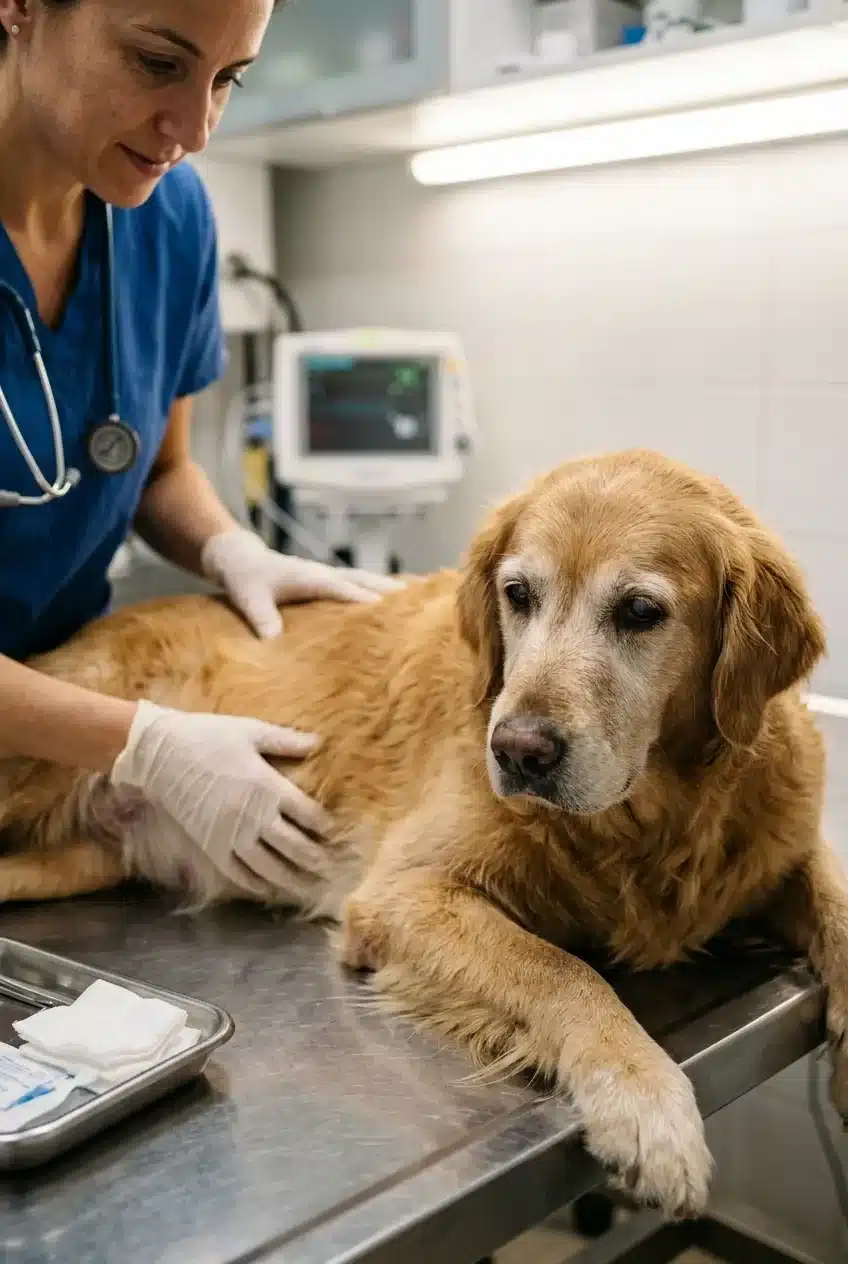
Older unspayed dogs are at higher risk for pyometra because repeated heat cycles cause cumulative hormonal damage to the uterus. Progesterone surges after each cycle stimulate the uterine lining to thicken — and over years, this creates an environment where bacteria thrive. The risk increases significantly after age five.
- Each heat cycle adds another layer of uterine wall thickening (cystic endometrial hyperplasia)
- Progesterone suppresses the immune response inside the uterus after every estrus
- Older dogs have had more cycles, meaning more cumulative tissue changes
- The cervix opens during heat, allowing bacteria like E. coli to enter
- Dogs that have never been pregnant face higher statistical risk than those that have whelped
- Progesterone-based medications (used for heat suppression) dramatically increase risk at any age
How Common Is Pyometra in Older Dogs?
Pyometra is more common than many owners realize. A study published in Acta Veterinaria Scandinavica (2012) found that approximately 25% of intact female dogs develop pyometra by age 10.
Certain breeds face even steeper odds. The same research identified Rough Collies, Rottweilers, and Cavalier King Charles Spaniels among the highest-risk breeds.
According to the American Kennel Club Canine Health Foundation, pyometra is one of the most common reproductive emergencies seen in veterinary practice, with middle-aged to older intact females being the primary population affected.
The condition peaks in the weeks following a heat cycle, typically four to eight weeks after estrus ends. That window is when owners need to be most alert.
What Are the Warning Signs Owners Should Watch For?
Get Free Dog Health Tips!
Weekly guides on keeping your dog healthy & happy
🔒 No spam. Unsubscribe anytime.
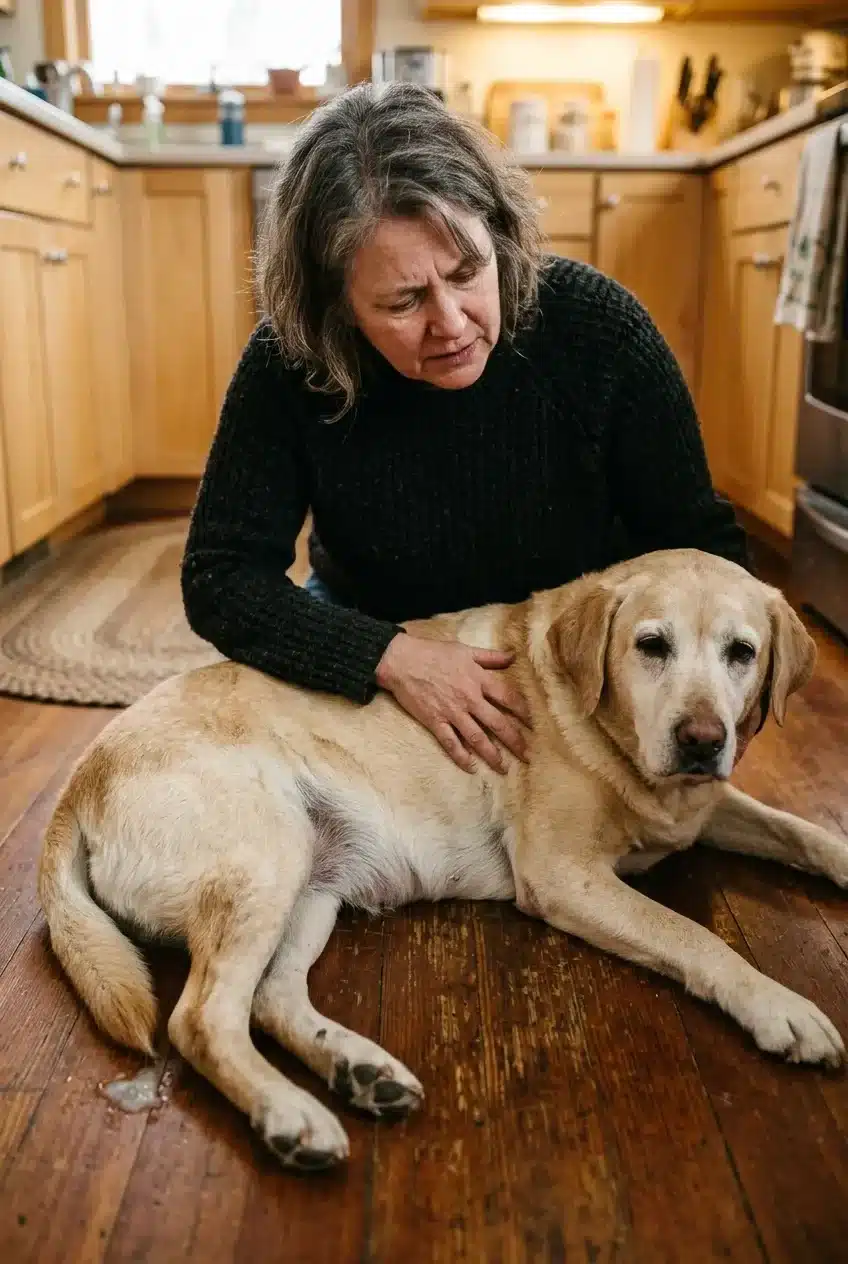
Pyometra presents in two forms — open and closed — and the signs differ between them. Open pyometra means the cervix is open, allowing discharge to escape. Closed pyometra is more dangerous because infection stays trapped inside.
Open Pyometra Signs
- Foul-smelling vaginal discharge, ranging from yellow to green or bloody
- Excessive licking of the vulva
- Increased thirst and urination
- Lethargy and reduced appetite
Closed Pyometra Signs
- Visibly distended or bloated abdomen
- Vomiting and nausea without discharge
- Rapid deterioration — collapse can occur within 24–48 hours
- Fever above 103°F (39.4°C)
Closed pyometra can kill a dog within days — it is a true emergency requiring same-day veterinary care.
A dog showing any combination of these signs within two months of her last heat cycle needs a veterinary examination immediately. Don’t wait to see if symptoms improve on their own.
The Hormonal Mechanism Behind Pyometra Risk
Pyometra risk builds gradually through a process called cystic endometrial hyperplasia (CEH). After each heat cycle, progesterone stimulates uterine gland growth and suppresses uterine immune defenses.
MOST POPULAR THIS WEEK
Vet-Recommended Articles: 👇
👉 Why Does My Dogs Skin Turn Dark And Thick After Years Of Allergy Treatment
👉 Best Home Remedies For Arthritis In Dogs With Limping
👉 How Long Does An Elimination Diet Take For Dogs With Skin Allergies
Over multiple cycles, these glands enlarge and form fluid-filled cysts. The cystic tissue creates an ideal environment for bacterial colonization — particularly Escherichia coli originating from the dog’s own gut flora.
The cervix, which opens briefly during estrus, allows bacteria to migrate upward. In a young dog with a healthy uterine lining, the body often clears this exposure. In an older dog with years of CEH buildup, it cannot.
Age itself does not cause pyometra — the accumulation of hormonal cycles does. But age and cycle count are inseparable in intact dogs.
How Vets Diagnose and Treat Pyometra
Veterinarians typically diagnose pyometra using a combination of physical examination, blood work, and ultrasound. Ultrasound is the most reliable tool, clearly showing a fluid-filled, enlarged uterus.
Diagnostic Steps
- Physical exam — the vet assesses abdominal distension, discharge, and vital signs
- Complete blood count (CBC) — elevated white blood cells indicate infection
- Abdominal ultrasound — confirms uterine enlargement and fluid accumulation
- Blood chemistry panel — checks kidney and liver function before surgery
Treatment Options
| Treatment | When Used | Survival Rate |
|---|---|---|
| Emergency spay (ovariohysterectomy) | Most cases; first-line standard | Approximately 90%+ with prompt surgery |
| Prostaglandin medical therapy | Selected open-pyometra cases in breeding dogs | Lower; high recurrence risk |
| Supportive IV fluids and antibiotics | Stabilization before surgery only | Not curative alone |
Emergency spay is the standard of care for most dogs. A recovery cone collar is typically needed post-surgery to prevent your dog from interfering with her incision during healing.
Medical management alone is rarely recommended because recurrence rates are high — studies estimate relapse in up to 77% of medically treated dogs within two years, according to research cited in Veterinary Clinics of North America: Small Animal Practice.
Prevention: When Spaying Makes Sense
Spaying eliminates pyometra risk entirely by removing the uterus and ovaries. For dogs not intended for breeding, most veterinary organizations recommend spaying before the first or second heat cycle.
The American Veterinary Medical Association (AVMA) acknowledges that spay timing involves breed-specific and individual health considerations — particularly for large and giant breeds where early spaying may affect orthopedic development. Discuss timing with your veterinarian directly.
For older intact dogs, spaying is still an option — but the surgical risk increases with age and if an active infection is present. A post-surgical warming pad can support recovery in older dogs who may regulate body temperature less efficiently after anesthesia.
If your intact dog is over five years old, routine wellness check-ups every six months — not annually — are worth discussing with your vet.
Owners of older dogs managing other age-related conditions like separation anxiety in older dogs often benefit from more frequent vet contact anyway, making those check-ins a natural opportunity to monitor reproductive health.
Common Mistakes Owners Make With Pyometra
- Waiting to see if discharge clears up on its own. Vaginal discharge after heat is not normal. Waiting even 24 hours can allow sepsis to develop — call your vet the same day you notice it.
- Assuming a dog is too old for surgery. Age alone does not disqualify a dog from emergency spay. A dog in good baseline health at age 10 or 11 can survive the procedure. Untreated pyometra is almost always fatal.
- Confusing pyometra with a normal heat cycle. Heat discharge is typically clear to slightly bloody and brief. Pyometra discharge is heavy, foul-smelling, and appears weeks after heat ends — a key distinction.
- Skipping vet visits because the dog “seems fine.” Closed pyometra shows no external discharge. A dog can appear relatively normal right up until she collapses. Post-heat wellness checks matter.
- Using hormonal heat-suppression drugs long-term without monitoring. Progestins like medroxyprogesterone acetate significantly increase pyometra risk. If these medications have been used, tell your vet — and schedule regular uterine ultrasounds.
A dog health monitoring journal can help you track heat cycle dates, behavioral changes, and symptoms — giving your vet a clearer timeline during any examination.
Frequently Asked Questions About Why Older Unspayed Dogs Are at Higher Risk for Pyometra and What Owners Should Watch For
At what age does pyometra risk become serious in dogs?
Pyometra risk becomes serious in dogs generally after age five, though it can occur at any age after the first heat cycle. Research published in Acta Veterinaria Scandinavica found about 25% of intact females are affected by age 10.
Can a dog survive pyometra without surgery?
A dog can survive open pyometra with medical treatment in limited cases, but recurrence rates are very high and the condition can become fatal rapidly. Emergency spay remains the most reliable treatment with the best long-term outcome.
How quickly does pyometra progress once it starts?
Pyometra can progress from early infection to septic shock within 48 to 72 hours, especially in closed pyometra cases. Any dog showing symptoms needs same-day veterinary evaluation — not a wait-and-see approach.
What does pyometra discharge look like?
Pyometra discharge is typically thick, foul-smelling, and ranges from yellowish to greenish or blood-tinged. It appears two to eight weeks after the end of a heat cycle, which distinguishes it from normal estrus discharge.
Does spaying an older dog prevent pyometra if she already has early signs?
Spaying an older dog with early pyometra can be life-saving and is the standard recommended treatment. The surgical risk is higher when active infection is present, but leaving pyometra untreated is far more dangerous.
Are some dog breeds more likely to get pyometra than others?
Yes, some breeds are more prone to pyometra than others. Rough Collies, Rottweilers, Bernese Mountain Dogs, and Cavalier King Charles Spaniels show higher rates in peer-reviewed breed-specific research.
Final Thoughts: What to Do Right Now
Pyometra is predictable, preventable, and treatable — but only when caught in time. The single most protective step for an intact female dog over five is scheduling a conversation with your vet about spaying or setting up a post-heat monitoring protocol.
If your dog had a heat cycle in the last eight weeks and is drinking more water, seems unusually tired, or has any vaginal discharge, don’t wait. Call your veterinarian today.
Staying informed about the hidden health risks older dogs face is part of responsible ownership. Understanding how many dogs suffer silently from unrecognized illness is a reminder that routine vigilance — not just crisis response — is what keeps dogs healthy longest. You can also read more about other health threats that affect dogs to stay ahead of risks your vet may not always raise unprompted.
For further reading on canine reproductive health and pyometra, the American Veterinary Medical Association’s pyometra resource provides reliable owner-facing guidance updated by veterinary professionals.