Pyometra discharge in unspayed older dogs typically looks like a thick, foul-smelling fluid that ranges from creamy white or yellowish to reddish-brown or greenish. It often appears on your dog’s bedding, fur near the vulva, or the floor where she rests.
If your older unspayed dog is showing unusual vaginal discharge, you are right to investigate immediately. Pyometra in unspayed older dogs — what the discharge actually looks like — is one of the most searched questions by worried owners, and the answer can be the difference between life and death.
What Does Pyometra Discharge Look Like in Dogs?
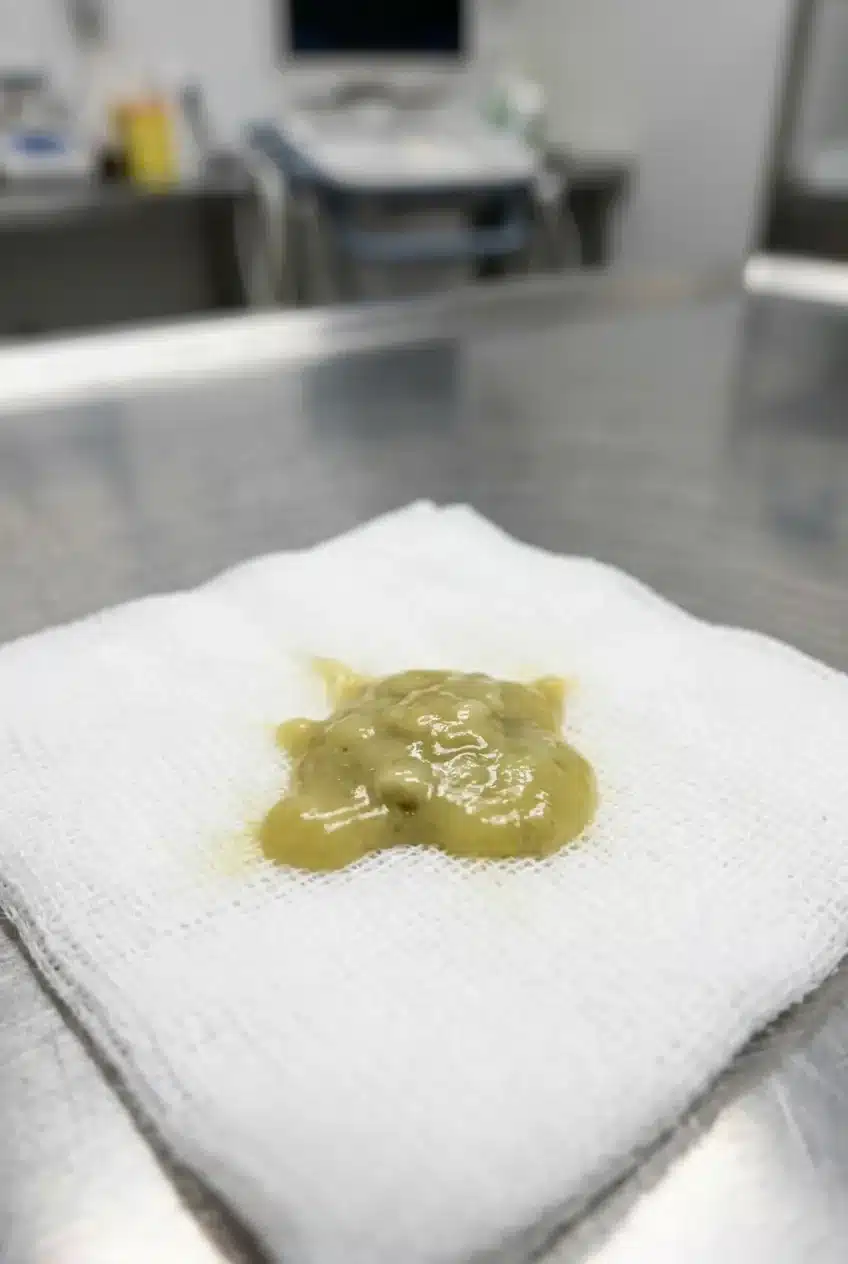
Pyometra discharge is typically thick and pus-like, ranging in color from cream or yellow to reddish-brown or dark green. It almost always carries a strong, foul odor. The appearance depends on whether the cervix is open or closed.
- Color ranges from off-white and yellow to brown, red, or dark green.
- Texture is usually thick, mucus-like, or purulent (pus-filled).
- Odor is distinctively foul — often described as rotting or metallic.
- Volume can be light spotting or heavy flow, depending on severity.
- Discharge may dry into crusty patches on the tail or hindquarters.
- In closed pyometra, there is no visible discharge at all — making it more dangerous.
Open vs. Closed Pyometra: A Critical Difference
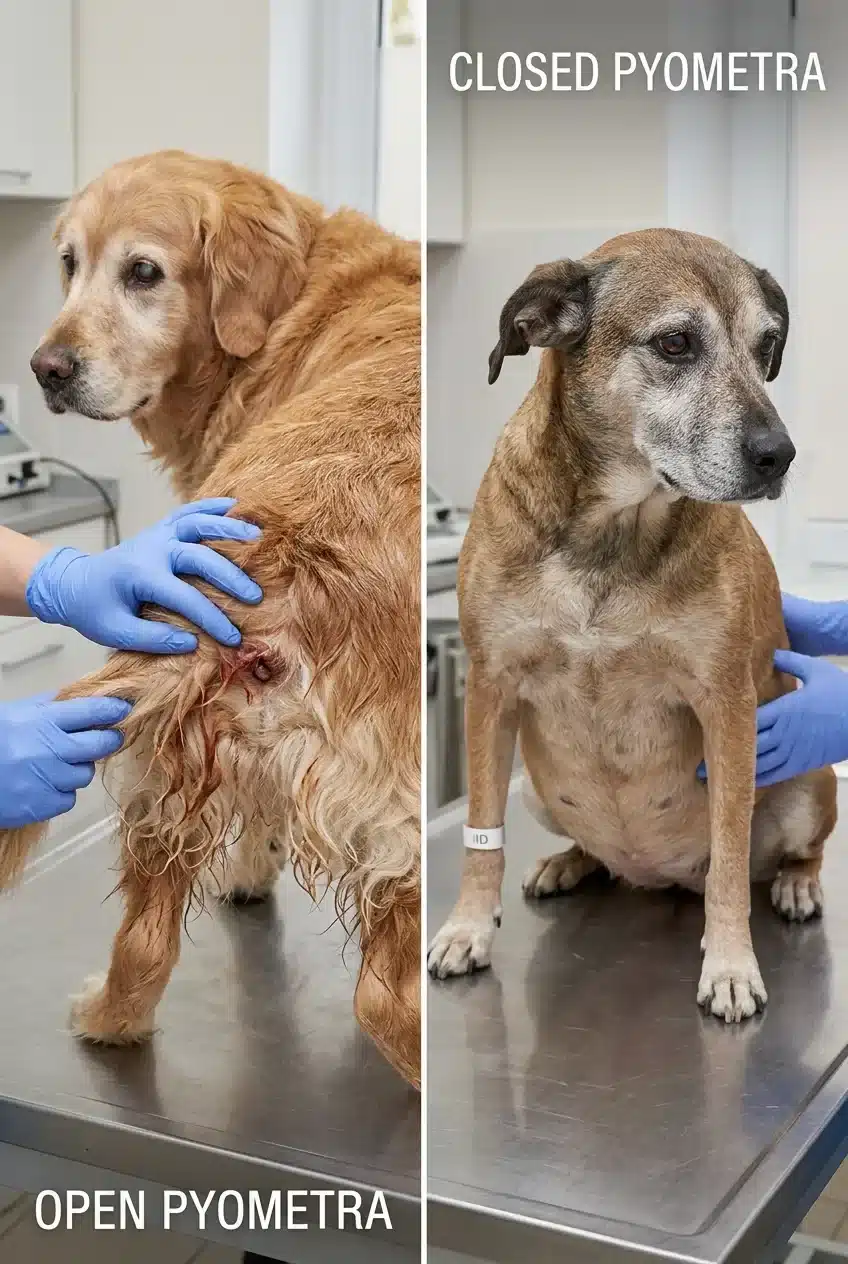
Pyometra comes in two forms, and the type determines whether you will even see discharge. This distinction is medically significant and affects how quickly the condition becomes life-threatening.
Open pyometra means the cervix is open, allowing pus to drain out — this is what produces visible discharge.
Open Pyometra Discharge
In open pyometra, pus drains continuously or intermittently from the uterus through the cervix. You may notice your dog licking her vulva more than usual, or find stains on her bedding.
The discharge in open pyometra is often mistaken for a normal heat cycle at first. But unlike heat discharge, pyometra discharge is thicker, more opaque, and carries a noticeably bad smell.
Closed Pyometra: No Discharge, Higher Risk
In closed pyometra, the cervix stays shut. Pus accumulates inside the uterus with nowhere to go. There is no visible discharge, which makes diagnosis harder and the condition far more dangerous.
Get Free Dog Health Tips!
Weekly guides on keeping your dog healthy & happy
🔒 No spam. Unsubscribe anytime.
According to veterinary internal medicine references, closed pyometra can cause uterine rupture and sepsis within days. Dogs with closed pyometra often deteriorate faster than those with the open form.
| Feature | Open Pyometra | Closed Pyometra |
|---|---|---|
| Discharge visible? | Yes — pus drains from vulva | No external discharge |
| Cervix position | Open | Closed |
| Odor present? | Yes — foul smell | Not externally detectable |
| Risk level | Serious | Extremely high — emergency |
| Detection ease | Easier — visible signs | Harder — no discharge clue |
What Color Is Pyometra Discharge, Specifically?
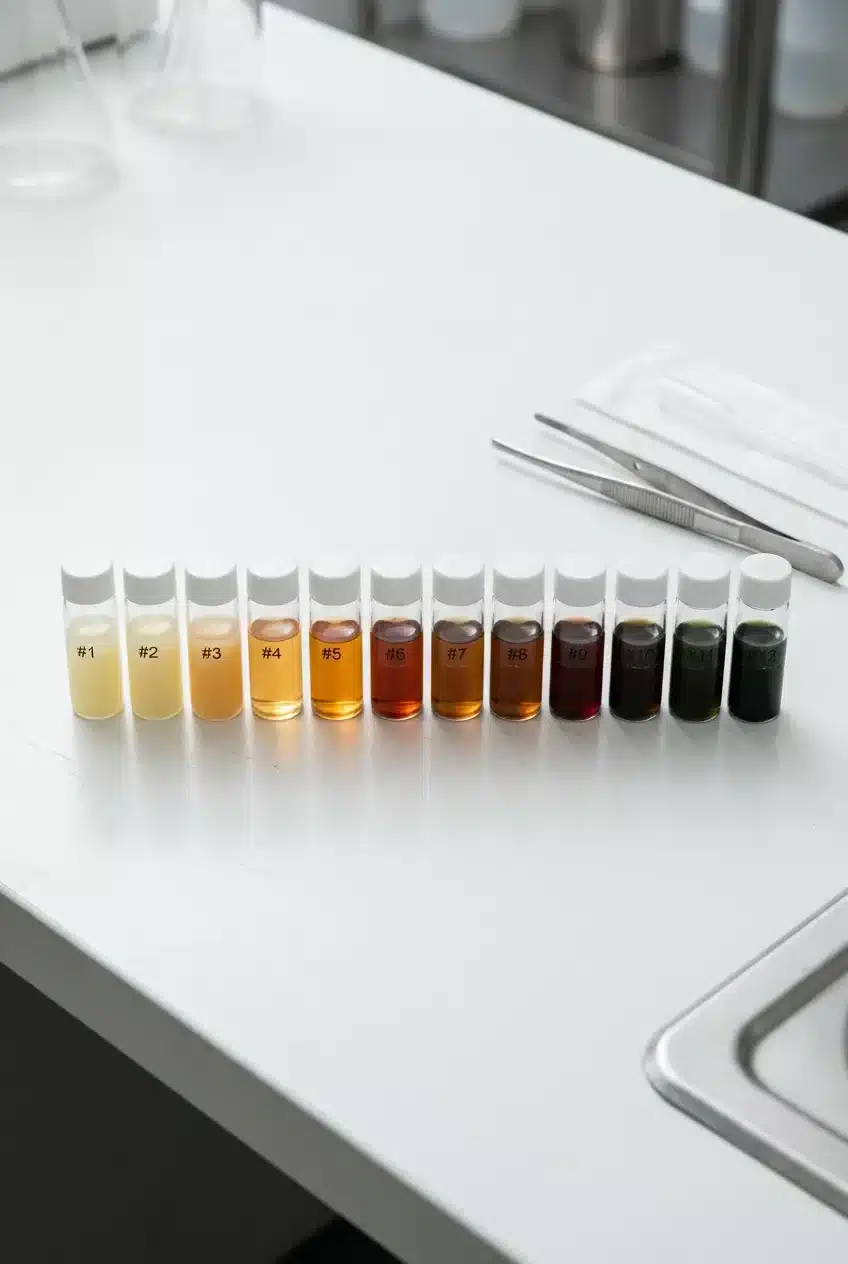
The color of pyometra discharge shifts as the infection progresses. Early-stage discharge tends to be lighter; advanced infection produces darker, more alarming colors.
MOST POPULAR THIS WEEK
Vet-Recommended Articles: 👇
👉 Why Does My Dogs Skin Turn Dark And Thick After Years Of Allergy Treatment
👉 Best Home Remedies For Arthritis In Dogs With Limping
👉 How Long Does An Elimination Diet Take For Dogs With Skin Allergies
- Creamy white or off-white: Often seen early, resembles thick mucus.
- Yellow or yellowish-green: Active bacterial infection, pus-dominant.
- Reddish-brown: Blood mixed with pus, common in moderate-to-severe cases.
- Dark brown or blackish: Old blood and tissue breakdown — a serious warning sign.
- Dark green: Less common, associated with certain bacterial strains.
A 2018 review published in Reproduction in Domestic Animals confirmed that Escherichia coli is the most common bacterium cultured from pyometra cases, explaining why the discharge often carries such a distinctly foul, bacteria-driven odor.
Any discharge that is dark, bloody, or green-tinged is a veterinary emergency — do not wait to see if it resolves on its own.
Other Symptoms That Accompany the Discharge
Pyometra rarely presents with discharge alone. Your dog will usually show several other signs alongside the vaginal fluid, especially in older unspayed females over six years of age.
The condition typically develops within four to eight weeks after a heat cycle, according to the American College of Veterinary Internal Medicine. Older dogs are at significantly higher risk because progesterone exposure accumulates over years of cycling.
- Excessive thirst and increased urination (polydipsia and polyuria)
- Lethargy and reluctance to move or exercise
- Distended or painful abdomen
- Vomiting or reduced appetite
- Frequent licking of the vulva area
- Fever — though some dogs run a low or normal temperature
If your older dog is also showing signs of distress at night or behavioral changes, combined with any discharge, take both symptoms seriously as a combined health picture.
Pyometra is one of the most common life-threatening reproductive emergencies in intact female dogs, with some studies reporting mortality rates up to 3–4% even with surgical treatment. — American Veterinary Medical Association guidance on reproductive health.
How to Identify Pyometra Discharge vs. Normal Heat Discharge
Many owners confuse pyometra discharge with a normal heat cycle, especially in older dogs whose cycles may have become irregular. Knowing the differences can save your dog’s life.
Normal Heat Discharge
During a normal heat cycle, discharge starts as bloody and gradually becomes more straw-colored or pinkish as ovulation approaches. It is relatively odorless and thin in consistency.
Heat discharge typically lasts around 7–10 days in the bloody phase. Your dog will also show behavioral signs like flagging her tail, restlessness, and interest in male dogs.
Pyometra Discharge
Pyometra discharge is thicker, pus-like, and strongly malodorous. It does not follow the predictable color progression of a heat cycle and appears weeks after heat has ended, not during it.
Your dog will look and act unwell with pyometra — unlike during a normal heat when appetite and energy are usually maintained. That systemic illness is the key differentiator.
| Feature | Normal Heat | Pyometra |
|---|---|---|
| Color | Red to straw/pink | Yellow, brown, green, or bloody |
| Smell | Mild or none | Strong, foul, rotting odor |
| Timing | During heat cycle | Weeks after heat ends |
| Dog’s health | Normal energy, appetite | Lethargic, off food, unwell |
| Consistency | Thin to watery | Thick, pus-like, mucoid |
A recovery cone collar can prevent your dog from licking the discharge area and causing secondary infection while you prepare for the vet visit.
What to Do If You See Pyometra Discharge
If you notice discharge matching these descriptions in your older unspayed dog, act the same day. Pyometra is not a condition that improves with home management — it requires veterinary intervention.
- Document the discharge — take a clear photo showing color, volume, and any staining on bedding. This helps your vet assess severity before examination.
- Check for accompanying symptoms — note whether your dog is drinking more water, vomiting, or has a swollen abdomen.
- Call your vet immediately — describe the discharge color, smell, and when you first noticed it. Mention her last heat cycle date if you know it.
- Avoid bathing or cleaning the discharge area before the appointment — your vet needs to assess it in its natural state.
- Keep her calm and warm — a dog-safe heating pad can provide comfort during the wait, but avoid anything that could cause overheating.
- Do not give human antibiotics or supplements — these will not cure pyometra and may mask symptoms, delaying diagnosis.
Emergency spay (ovariohysterectomy) is the standard and most reliable treatment for pyometra in most dogs.
Medical management with prostaglandins is sometimes used in younger breeding dogs, but veterinary guidelines from the American College of Veterinary Internal Medicine generally advise surgery as the safest approach for older dogs.
Common Mistakes Owners Make With Pyometra Discharge
- Mistaking it for a late heat cycle: Pyometra discharge appears after heat ends, not during it. Waiting to see if it resolves on its own wastes critical time.
- Ignoring discharge because the dog seems “okay”: Some dogs maintain normal energy in early pyometra. The discharge itself is the warning sign — do not wait for the dog to collapse.
- Assuming closed pyometra is safer because there is no mess: No visible discharge means the infection has nowhere to drain — this is actually the more dangerous form.
- Using a dog hygiene wipe and hoping it clears up: Cleaning the area only hides the symptom. It does not address the infection building inside the uterus.
- Delaying the vet because of cost concerns: Untreated pyometra progresses to sepsis. Emergency treatment for a severely ill dog costs significantly more than early intervention.
Frequently Asked Questions About Pyometra in Unspayed Older Dogs: What the Discharge Actually Looks Like
Can pyometra discharge look like normal bloody heat discharge?
Pyometra discharge can look bloody, but it differs from normal heat discharge by its thick, pus-like texture and strong foul odor. Normal heat discharge is thin, mild-smelling, and occurs during the heat cycle — not weeks after it ends.
How much discharge is normal with pyometra?
There is no “normal” amount — pyometra discharge volume varies widely. Some dogs show only light spotting while others have heavy drainage. Volume alone does not indicate severity; color, odor, and your dog’s overall health matter more.
Does pyometra discharge have a smell?
Yes, pyometra discharge almost always has a distinctively foul, putrid smell caused by bacterial infection — primarily E. coli. A strong odor from vaginal discharge in an unspayed dog is one of the most reliable warning signs.
Can an older dog survive pyometra without surgery?
Survival without surgery is unlikely in older dogs. Medical management exists but carries higher failure and relapse rates. Emergency spay is the treatment most veterinary guidelines recommend for older unspayed females with pyometra.
How long after heat does pyometra discharge appear?
Pyometra discharge typically appears two to eight weeks after a heat cycle ends. This timing is a key diagnostic clue — discharge developing in this window in an unspayed older dog should be treated as pyometra until proven otherwise.
What does pyometra discharge look like on dog bedding?
On bedding, pyometra discharge leaves yellowish, brownish, or reddish stains that are thicker than normal heat stains. The stains often have a strong smell that lingers even after the bedding is moved away from the dog.
The Most Important Thing to Take Away
Pyometra discharge in unspayed older dogs ranges from creamy white and yellow to reddish-brown or dark green — always thick, always foul-smelling, and always a sign that something is seriously wrong inside the uterus.
If you spot any of these signs today, call your vet right now. Do not monitor it overnight, and do not assume it is just a late heat. Early treatment saves lives and significantly reduces surgical risk.
Keeping older dogs healthy means staying alert to all the ways their bodies signal distress. Alongside reproductive health, being aware of conditions like infectious diseases that can affect dogs and other senior health risks gives you the full picture your dog deserves.
A senior dog health supplement can support your older dog’s immune function post-recovery, but nothing replaces prompt veterinary care when pyometra is suspected.