The best home remedies for arthritis in dogs with limping include warm compresses, omega-3 fish oil supplements, controlled low-impact exercise, weight management, and orthopedic bedding. These approaches reduce joint inflammation, ease stiffness, and improve mobility without replacing veterinary care.
Watching your dog favor a leg or struggle to stand up is painful to witness. Canine arthritis affects roughly 1 in 5 dogs over the age of 1, and the number climbs to 65–80% in dogs over 7 years old, according to the American Veterinary Medical Association. If your dog is already living with arthritis, these evidence-based remedies can make a real difference day to day.
What Are the Best Home Remedies for Dogs With Arthritis and Limping?

The most effective home remedies for arthritic dogs combine joint-supporting supplements, gentle movement, heat therapy, and environmental adjustments. Together, they target the two main problems — inflammation inside the joint and mechanical stress on cartilage.
- Omega-3 fish oil: 20–55 mg EPA/DHA per kilogram of body weight daily reduces joint inflammation.
- Warm compresses: Apply for 10–15 minutes, 2–3 times daily to stiff joints before exercise.
- Controlled walks: 2–3 short walks of 10–15 minutes daily maintain muscle without overloading joints.
- Weight loss: Reducing body weight by just 6–8% significantly decreases lameness scores in clinical studies.
- Orthopedic foam beds: 3–4 inch memory foam reduces pressure-point discomfort overnight.
- Non-slip mats: Prevent slipping on hard floors, which worsens hind-limb instability.
Arthritis in Dogs at a Glance

- Definition: Canine osteoarthritis is a progressive degeneration of joint cartilage causing pain, swelling, and reduced range of motion.
- Prevalence: Affects an estimated 20% of dogs over age 1 and up to 80% of dogs over age 7.
- Common joints affected: Hips, knees (stifles), elbows, and spine are the most frequently involved.
- Key symptom: Intermittent or persistent limping that is often worse after rest and in cold, damp weather.
- When to act immediately: Non-weight-bearing lameness lasting more than 24 hours requires same-day veterinary assessment.
- Commonly confused with: Ligament tears (cranial cruciate disease), Lyme disease, and panosteitis in young large-breed dogs — all require different treatment.
How Does Omega-3 Fish Oil Help Arthritic Dogs?
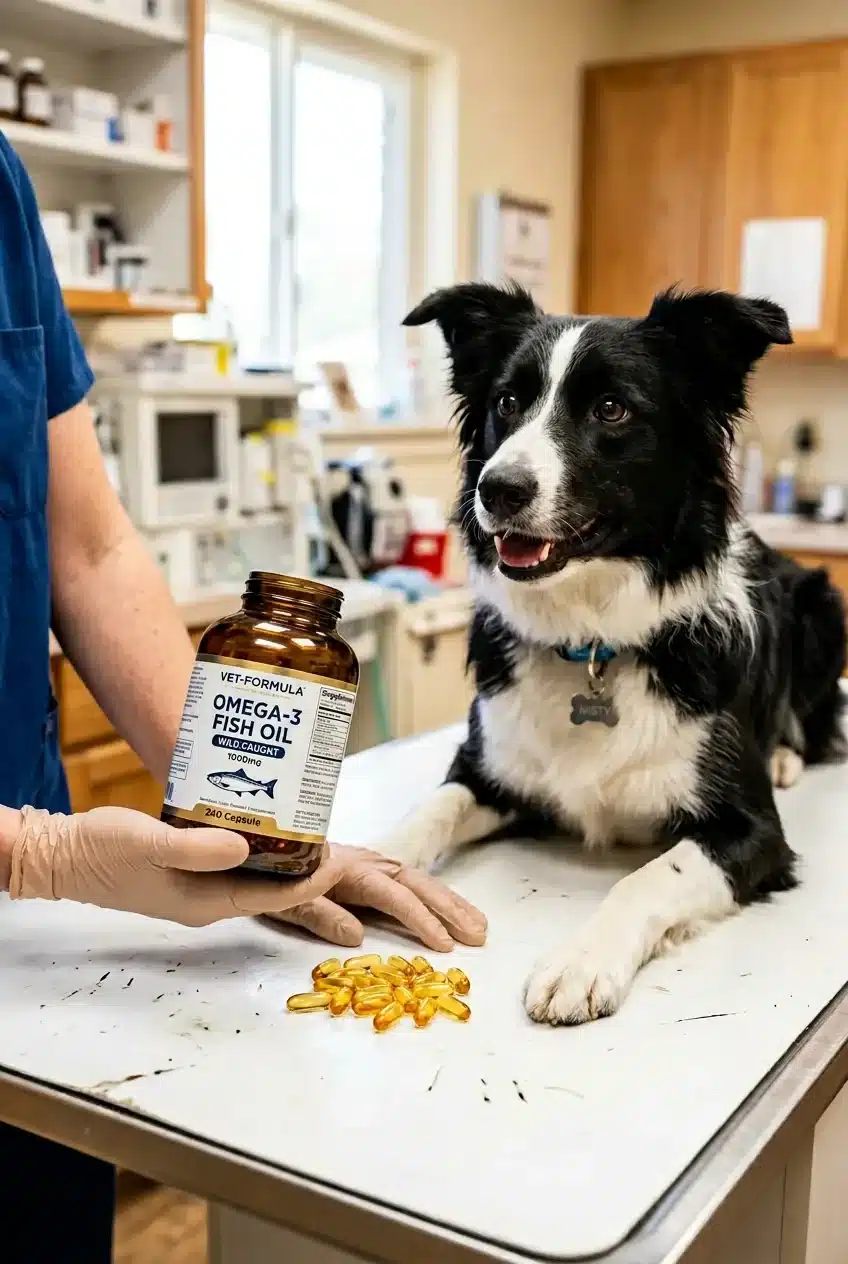
Omega-3 fatty acids — specifically EPA and DHA — reduce the inflammatory cytokines that break down cartilage in arthritic joints. Cornell University College of Veterinary Medicine research confirms that fish oil supplementation can measurably reduce joint pain scores in dogs within 6–8 weeks of consistent use.
The recommended dose is 20–55 mg of combined EPA and DHA per kilogram of body weight per day. A 25 kg (55 lb) dog, for example, needs roughly 500–1,375 mg of EPA/DHA daily. Always choose a veterinary-grade fish oil for dogs rather than human softgels, which may contain additives like xylitol.
According to the Merck Veterinary Manual, omega-3 supplementation is one of the few nutraceuticals with genuine clinical evidence supporting its use in canine osteoarthritis management.
Start at the lower end of the dosage range and increase over 2 weeks to avoid loose stools. Results are gradual — expect noticeable improvement in limping and stiffness between weeks 4 and 8.
Get Free Dog Health Tips!
Weekly guides on keeping your dog healthy & happy
🔒 No spam. Unsubscribe anytime.
Tip: Liquid fish oil drizzled over food is better absorbed than capsules for most dogs.
Can Warm Compresses and Massage Relieve Dog Limping From Arthritis?

Warm heat therapy increases blood flow to stiff joints, relaxes surrounding muscles, and temporarily reduces the nerve sensitivity that causes pain-related limping. Apply a warm — not hot — compress at a temperature of around 104°F (40°C) for 10–15 minutes before your dog’s morning walk, when joints are at their stiffest.
Use a clean towel soaked in warm water or a reusable microwavable heat pack designed for pets. Always wrap it in a cloth layer — never apply heat directly to skin. Check the skin underneath every 5 minutes for redness.
Gentle Massage Technique
- Start 3–4 inches away from the sore joint and work inward slowly.
- Use circular motions with light finger pressure — roughly the pressure you’d use on your own closed eyelid.
- Spend 3–5 minutes per limb, 1–2 times daily.
- Stop immediately if your dog tenses, growls, or pulls away.
Massage also gives you regular hands-on time with your dog’s joints, helping you notice swelling or warmth that may signal a flare-up requiring veterinary attention. If your dog also has skin concerns, reviewing guidance on home remedies for aging dog skin changes can help you monitor the full picture during these sessions.
What Exercise Is Safe for a Dog Limping From Arthritis?

Short, frequent, low-impact exercise is far better than one long walk for arthritic dogs. The American Animal Hospital Association (AAHA) guidelines recommend 2–3 walks of 10–15 minutes each day on flat, even surfaces rather than a single 45-minute outing. Consistent movement lubricates joints and preserves the muscle mass that stabilizes them.
Avoid high-impact activities that worsen limping:
- Jumping on or off furniture (use a dog ramp for furniture access instead)
- Fetch on hard surfaces like concrete or asphalt
- Stair climbing more than necessary
- Running alongside bikes or joggers
Swimming or hydrotherapy is the gold standard low-impact option. Water supports up to 90% of a dog’s body weight, meaning arthritic joints move freely with minimal pain. Even 10–15 minutes of assisted swimming, 2–3 times per week, produces measurable improvements in range of motion within 4 weeks.
Watch your dog for 30 minutes after exercise — increased limping that does not settle back to baseline means the session was too intense.
Does Weight Management Actually Reduce Limping in Dogs?
Weight management is the single most impactful home intervention for arthritic dogs with limping. A landmark study cited by the AVMA found that overweight dogs with osteoarthritis showed significant reductions in lameness scores after losing just 6–8% of body weight — without any other treatment change.
Every extra kilogram a dog carries adds roughly 3–4 kg of force through each joint with every step. For a 30 kg dog that should weigh 25 kg, that excess load compounds thousands of times daily.
Safe Weight Loss Rate for Dogs
| Dog’s Current Weight | Target Weekly Loss | Typical Timeline to Goal |
|---|---|---|
| Under 10 kg (22 lb) | 50–100 g per week | 8–16 weeks |
| 10–25 kg (22–55 lb) | 100–250 g per week | 10–20 weeks |
| Over 25 kg (55 lb) | 250–500 g per week | 12–24 weeks |
Reduce daily caloric intake by 20–25% and replace high-calorie treats with low-calorie options like raw carrot sticks or green beans. Using a snuffle mat to slow feeding also reduces meal-time stress without extra calories.
Home vs. Vet Treatment for Dog Arthritis: When to Stop and Call the Vet
Home remedies manage mild-to-moderate arthritis symptoms effectively, but they are not a substitute for veterinary diagnosis or prescription pain management. Knowing the boundary matters — treating the wrong condition at home can delay care for something serious like a ligament rupture or bone tumor.
Use home remedies when your dog:
- Has a confirmed arthritis diagnosis from a veterinarian
- Is bearing weight on the affected limb at least part of the time
- Responds positively (less limping, more movement) within 2–4 weeks
Stop home treatment and see a vet within 24 hours if your dog:
- Refuses to bear any weight on a limb for more than 12–24 hours
- Has visible swelling, heat, or joint deformity that appeared suddenly
- Cries out when the joint is touched gently
- Shows rapid deterioration over 48–72 hours despite remedies
A common mistake is using human pain relievers like ibuprofen or acetaminophen — both are toxic to dogs at any dose, according to the ASPCA Animal Poison Control Center. NSAIDs labeled for dogs (such as carprofen at 2 mg per pound twice daily) require a veterinary prescription for good reason.
Common Mistakes When Treating Dog Arthritis at Home
- Giving human NSAIDs: Ibuprofen and naproxen cause kidney failure and gastrointestinal bleeding in dogs — use veterinary-prescribed options only.
- Forcing exercise through visible pain: If your dog is limping during a walk, continuing the walk increases joint damage — shorten the outing immediately.
- Using heat on an acutely swollen joint: Acute swelling means active inflammation; use a cold pack (wrapped in cloth, 10 minutes) instead of heat for the first 48 hours after a flare.
- Stopping supplements after 2 weeks: Most joint supplements require 6–8 weeks of consistent use before measurable effects appear — early discontinuation is the most common reason owners report “it didn’t work.”
- Ignoring environmental hazards: Slippery floors cause dogs to splay and strain already-compromised joints; non-slip runners or yoga-mat strips cost very little and make an immediate difference.
Frequently Asked Questions About Best Home Remedies for Arthritis in Dogs with Limping
How long before home remedies for dog arthritis start working?
Most home remedies for dog arthritis begin showing results in 4–8 weeks with consistent use. Omega-3 supplements typically take 6–8 weeks, while environmental changes like orthopedic bedding and non-slip mats can reduce limping within days.
Is turmeric a good home remedy for dogs with arthritis?
Turmeric’s active compound curcumin has anti-inflammatory properties, but canine bioavailability is low without a fat source and black pepper extract. A typical safe dose is 15–20 mg per kilogram of body weight daily — always consult your vet before adding it.
Should I let my arthritic dog rest all day?
No — complete rest worsens arthritic limping long-term by causing muscle atrophy. The AAHA recommends 2–3 short walks of 10–15 minutes daily to maintain joint lubrication and muscle mass that supports damaged joints.
What type of bed is best for a dog with arthritis and limping?
An orthopedic memory foam dog bed at least 3–4 inches thick is best for arthritic dogs. It distributes body weight evenly, reduces pressure on sore joints, and is significantly easier for stiff dogs to rise from than thin flat beds.
Can I use a heating pad on my dog’s arthritic joints every day?
Daily warm heat therapy is safe if applied correctly — 104°F (40°C) maximum, always wrapped in cloth, for 10–15 minutes per session. Never use heat on a joint that is visibly swollen or hot to the touch, as this worsens acute inflammation.
Is limping from arthritis worse in the morning or after exercise?
Arthritis limping is typically worst in the morning after overnight inactivity and again after prolonged rest following exercise. It usually improves within 10–20 minutes of gentle movement as synovial fluid redistributes through the joint.
Conclusion
The most impactful thing you can do today is assess your dog’s weight — a 6–8% reduction in body weight produces measurable improvement in limping without a single supplement or prescription. Pair that with daily omega-3 fish oil at 20–55 mg EPA/DHA per kilogram of body weight, two short 10–15 minute walks, and a quality orthopedic memory foam dog bed and you have a solid foundation. For dogs dealing with multiple comfort issues alongside arthritis, exploring home remedies for dog skin irritation can help you address overlapping discomfort holistically. Home remedies work best as a consistent daily habit alongside — not instead of — your veterinarian’s guidance.
Sources
This article references guidance from the following authorities:
- American Veterinary Medical Association (AVMA) — Canine osteoarthritis prevalence and weight management research
- American Animal Hospital Association (AAHA) — Exercise guidelines for arthritic dogs
- Merck Veterinary Manual — Omega-3 supplementation and nutraceutical evidence in canine joint disease