Seizures are not normal in standard poodles, but they are not rare either. If your standard poodle has had a seizure, seeing a veterinary neurologist is often the right next step — especially after a second episode.
Standard poodles have a known genetic predisposition to idiopathic epilepsy, which makes this a breed-specific concern worth taking seriously. Understanding what is happening and when to act can make a real difference in your dog’s outcome.
Are Seizures Normal in Standard Poodles or Should You See a Neurologist?
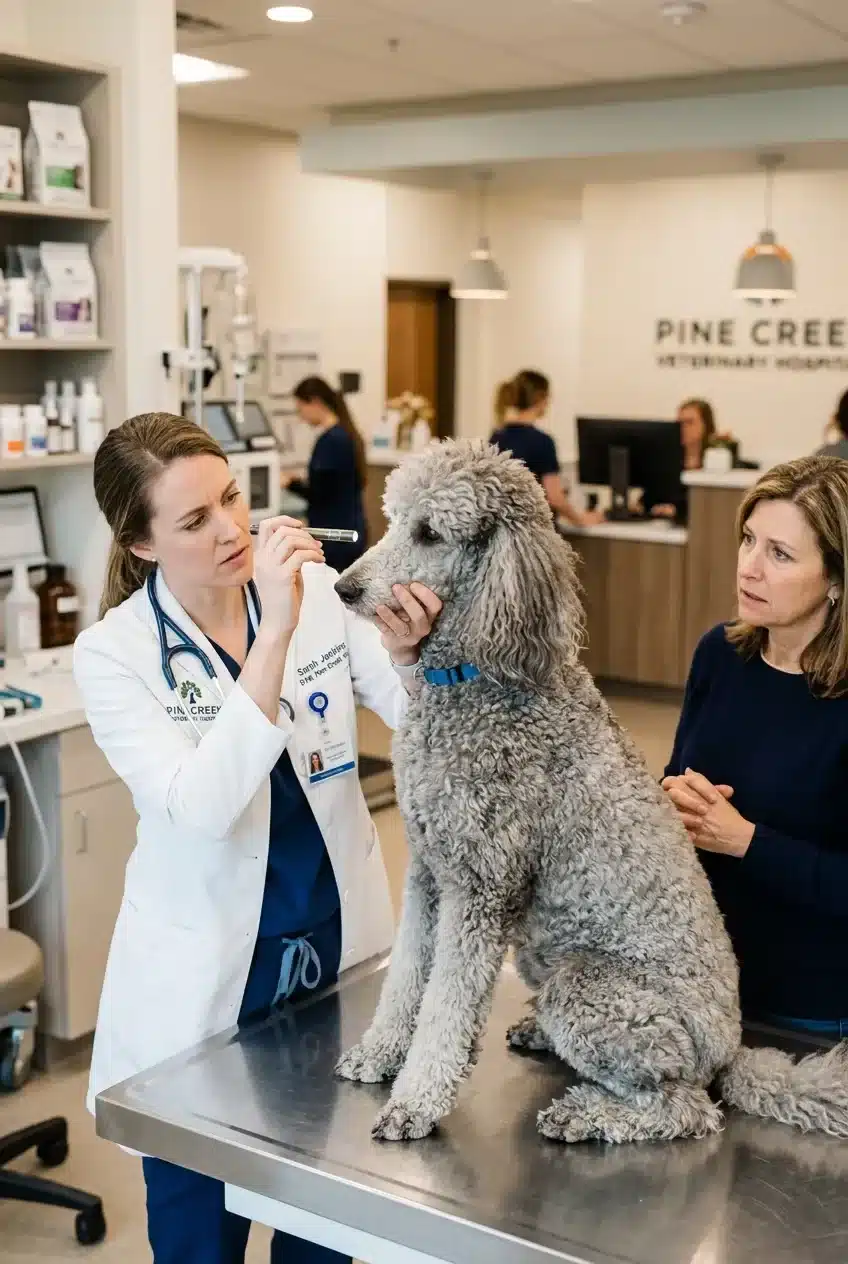
Seizures are not a normal part of life for standard poodles, but the breed does carry a higher-than-average risk for idiopathic epilepsy. A single seizure warrants a vet visit; recurring seizures, seizures lasting more than five minutes, or cluster seizures (two or more within 24 hours) require a veterinary neurologist.
- Standard poodles are among the breeds with a documented genetic epilepsy risk.
- Idiopathic epilepsy typically appears between ages one and five.
- A single brief seizure is not always an emergency, but it should never be ignored.
- Cluster seizures or status epilepticus (seizure lasting 5+ minutes) are life-threatening emergencies.
- A neurologist can confirm epilepsy and rule out brain tumors, infections, or metabolic causes.
- Early diagnosis often leads to better long-term seizure control.
Why Standard Poodles Are Prone to Seizures

Standard poodles are genetically predisposed to idiopathic epilepsy — epilepsy with no identifiable structural cause in the brain. The American Kennel Club Canine Health Foundation lists poodles as one of several breeds with a hereditary epilepsy risk.
Idiopathic epilepsy is the most common neurological disorder in dogs overall, affecting roughly 0.75% of the general dog population — but rates are significantly higher in predisposed breeds like standard poodles.
The condition is believed to be polygenic, meaning multiple genes contribute to the risk. Responsible breeders track seizure histories across bloodlines for this reason.
Other Causes of Seizures in Standard Poodles
Not every seizure comes from epilepsy. Other causes include metabolic disorders, toxin exposure, brain tumors, or infections like encephalitis.
- Hypoglycemia — low blood sugar, more common in young or sick dogs
- Liver disease — toxins that the liver cannot clear can affect the brain
- Brain tumors — more likely in poodles over seven years old
- Toxin ingestion — xylitol, certain mushrooms, and some pesticides can trigger seizures
- Inflammatory brain disease — conditions like necrotizing meningoencephalitis
Age at first seizure is a useful clue. Seizures starting before age one or after age five in a poodle are more likely to have a structural or metabolic cause than idiopathic epilepsy.
Get Free Dog Health Tips!
Weekly guides on keeping your dog healthy & happy
🔒 No spam. Unsubscribe anytime.
What a Seizure Actually Looks Like in a Standard Poodle
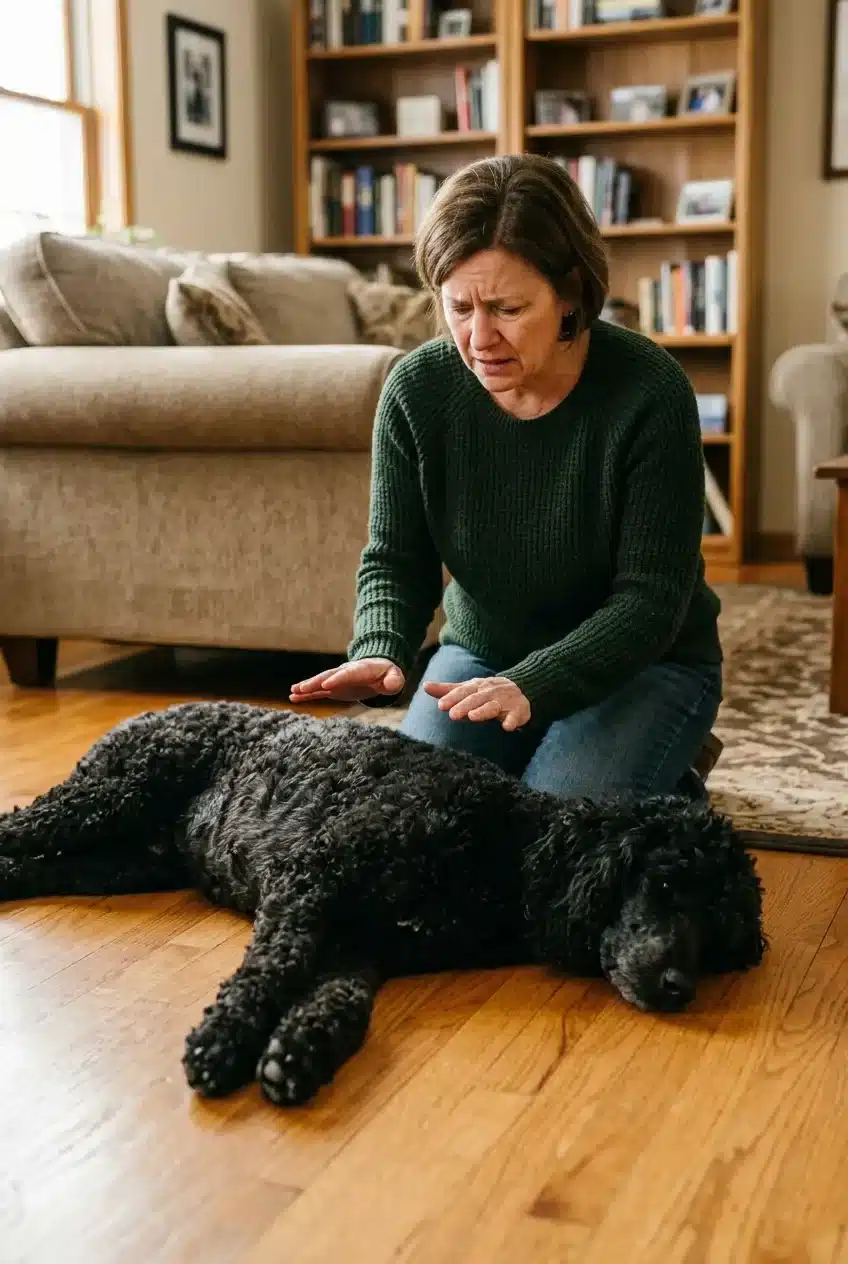
Seizures can look very different depending on type. Knowing what to watch for helps you give your vet an accurate description — which directly influences diagnosis.
Generalized (Grand Mal) Seizures
These are the most recognizable. Your dog loses consciousness, falls on their side, and shows rhythmic muscle jerking, paddling legs, or stiffening.
DON’T MISS THESE
Paw-pular Reads: 👇
👉 How Many Puppies Can Poodle Have
👉 How Long Is A Poodle Pregnant
Drooling, urination, or defecation during the episode is common. Most generalized seizures last 30 seconds to two minutes.
Focal Seizures
Focal seizures affect only one part of the body or brain. Your dog might twitch one leg, blink repeatedly, turn their head to one side, or appear suddenly confused.
These are easier to miss. Some owners describe them as their dog “acting strange” or “staring into space” for a brief period.
“Focal seizures in dogs can be subtle — a fly-biting behavior, sudden aggression, or repetitive movements can all be focal seizure activity.” — American College of Veterinary Internal Medicine (ACVIM) consensus statement on canine epilepsy, 2015
The Postictal Phase
After a seizure ends, most dogs enter a postictal phase — a period of disorientation, temporary blindness, pacing, or excessive thirst. This can last minutes to hours.
The postictal phase is not dangerous on its own, but it can be distressing to watch. Keep your dog calm, quiet, and away from stairs during this time.
When to Go Straight to an Emergency Vet
Some seizure situations in standard poodles require immediate emergency care — not a scheduled appointment. Acting fast can prevent permanent brain damage or death.
Go to an emergency vet immediately if any of these apply:
- The seizure lasts more than five minutes (status epilepticus)
- Your dog has two or more seizures within 24 hours (cluster seizures)
- Your dog does not regain full consciousness between seizures
- Your dog is a puppy under six months old
- You suspect your dog ingested a toxin before the seizure
Keeping a seizure log book helps you track episode frequency, duration, and triggers — information neurologists rely on to make treatment decisions.
What a Veterinary Neurologist Will Actually Do
A veterinary neurologist has three to four years of specialist training beyond a general veterinary degree. They are the right specialist for recurring or unexplained seizures in standard poodles.
Diagnostic Tests You Can Expect
The neurologist will start with a full neurological exam and review your dog’s seizure history. From there, they typically recommend a structured workup.
- Blood panel and urinalysis — rules out metabolic causes like liver disease or hypoglycemia
- MRI of the brain — detects tumors, inflammation, or structural abnormalities
- Cerebrospinal fluid (CSF) analysis — checks for infections or inflammatory brain disease
- Electroencephalography (EEG) — less common in dogs but used in specialist centers
If all results are normal and your dog is between one and five years old, idiopathic epilepsy is the likely diagnosis. This is a diagnosis of exclusion — meaning other causes are ruled out first.
Treatment Options for Epileptic Standard Poodles
The most commonly prescribed anti-seizure medications in dogs include phenobarbital and potassium bromide. The ACVIM recommends starting medication when a dog has two or more seizures within a six-month period, experiences cluster seizures, or has status epilepticus.
Some dogs require a combination of medications for adequate control. Newer drugs like levetiracetam and zonisamide are also used, particularly when phenobarbital causes liver-related side effects.
Regular blood monitoring is essential on phenobarbital — your neurologist will schedule rechecks every six months to watch for liver changes. A daily medication organizer can help you stay consistent with dosing schedules.
How to Support a Standard Poodle With Epilepsy at Home
Managing epilepsy at home is just as important as what happens in the clinic. Consistency, observation, and a safe environment all contribute to your dog’s quality of life.
Standard poodles are intelligent, active dogs — learning more about what standard poodles are capable of helps set realistic expectations while managing a neurological condition.
- Keep a written or video seizure log with date, time, duration, and description of each episode
- Pad sharp furniture corners or use baby gates near stairs during high-risk periods
- Never leave a newly diagnosed epileptic poodle unsupervised near water
- Maintain a consistent daily routine — stress and sleep disruption can lower seizure thresholds
- Tell groomers and pet sitters about the condition and what to do if a seizure occurs
Grooming needs do not change with an epilepsy diagnosis. Keep up with regular coat care — a detangling conditioner for poodle coats makes brushing sessions easier and less stressful for a dog that may already be anxious. You can also explore advice on the best conditioners for poodles to keep their coat healthy without added stress.
Understanding your dog’s baseline size and weight matters too — unexpected weight changes can signal medication side effects. Tracking this is straightforward when you know how to measure your standard poodle’s size, weight, and height accurately.
Common Mistakes Owners Make After a Poodle’s First Seizure
The first seizure is shocking. Mistakes made in the hours and days afterward can slow diagnosis and treatment.
- Waiting too long to see a vet: A single seizure needs a vet visit within 24–48 hours, not weeks later. Delaying means losing time to identify reversible causes. Schedule an appointment the same day if possible.
- Not recording the seizure: Verbal descriptions are incomplete. Use your phone to video the episode — neurologists rely on footage to classify seizure type accurately.
- Assuming it was a one-time event: Idiopathic epilepsy rarely stops at one seizure. Assuming it will not happen again means your dog may be unsupervised during a second, more dangerous episode.
- Skipping the neurologist referral: General vets are excellent, but a neurologist has the imaging tools and specialist knowledge to rule out brain tumors and other serious causes. A referral is not an overreaction.
- Stopping medication without guidance: Abruptly discontinuing anti-seizure drugs can trigger rebound seizures that are harder to control. Always consult your neurologist before any change.
If you have ever wondered whether poodles have other challenging health or behavioral traits, reading about common poodle owner frustrations gives useful context for managing this breed’s overall health needs.
Frequently Asked Questions About Are Seizures Normal in Standard Poodles or Should You See a Neurologist?
How common are seizures in standard poodles?
Seizures in standard poodles are more common than in the average dog due to a genetic predisposition to idiopathic epilepsy. The condition is well-documented in the breed by veterinary neurology organizations including the ACVIM.
At what age do standard poodles typically develop epilepsy?
Standard poodles with idiopathic epilepsy typically have their first seizure between one and five years of age. Seizures starting outside that window are more likely to have a structural or metabolic cause.
Should I go to a regular vet or a neurologist for my poodle’s seizures?
Start with your regular vet for initial bloodwork and assessment, then seek a veterinary neurologist if seizures recur, if initial tests are normal, or if your vet recommends an MRI to rule out brain disease.
Can standard poodle seizures be cured?
Idiopathic epilepsy in standard poodles cannot be cured, but it can usually be managed well with medication. Many dogs achieve good seizure control and maintain a normal quality of life with consistent treatment.
Is it safe to breed a standard poodle that has had seizures?
Breeding a standard poodle with confirmed epilepsy is strongly discouraged by veterinary geneticists, since the condition has a heritable component. Most reputable breed clubs advise removing affected dogs from breeding programs.
What should I do during my standard poodle’s seizure?
Stay calm, move furniture away from your dog, and do not put your hands near their mouth. Time the seizure and call an emergency vet immediately if it lasts more than five minutes.
Conclusion: What to Do Right Now
Seizures are not normal in standard poodles — they are a signal that something in the nervous system needs attention. The breed’s genetic epilepsy risk makes taking even a single episode seriously the right call.
The single most important action you can take today: call your vet and request a referral to a veterinary neurologist if your standard poodle has had more than one seizure or if any episode lasted over two minutes.
Early evaluation gives you the clearest picture of what is happening and the best chance of keeping your dog healthy and seizure-free for years to come. For more on standard poodle health and behavior, explore what standard poodles can and cannot do as part of your family. You know your dog better than anyone — trust that instinct and act on it.
For breed-specific epilepsy research, the AKC Canine Health Foundation maintains updated resources on canine neurological conditions and ongoing genetic studies.