To desensitize a puppy to clippers before their first groom, introduce the clippers gradually over several short sessions — starting with sight, then sound, then vibration — while pairing each step with high-value treats. This process typically takes one to three weeks and makes a lasting difference to how your dog handles grooming for life.
Many owners book that first grooming appointment and only then realize their puppy has never heard a clipper buzz. Starting desensitization early — ideally between 8 and 16 weeks — gives you the best window before fear responses solidify.
What Is the Best Way to Desensitize a Puppy to Clippers?
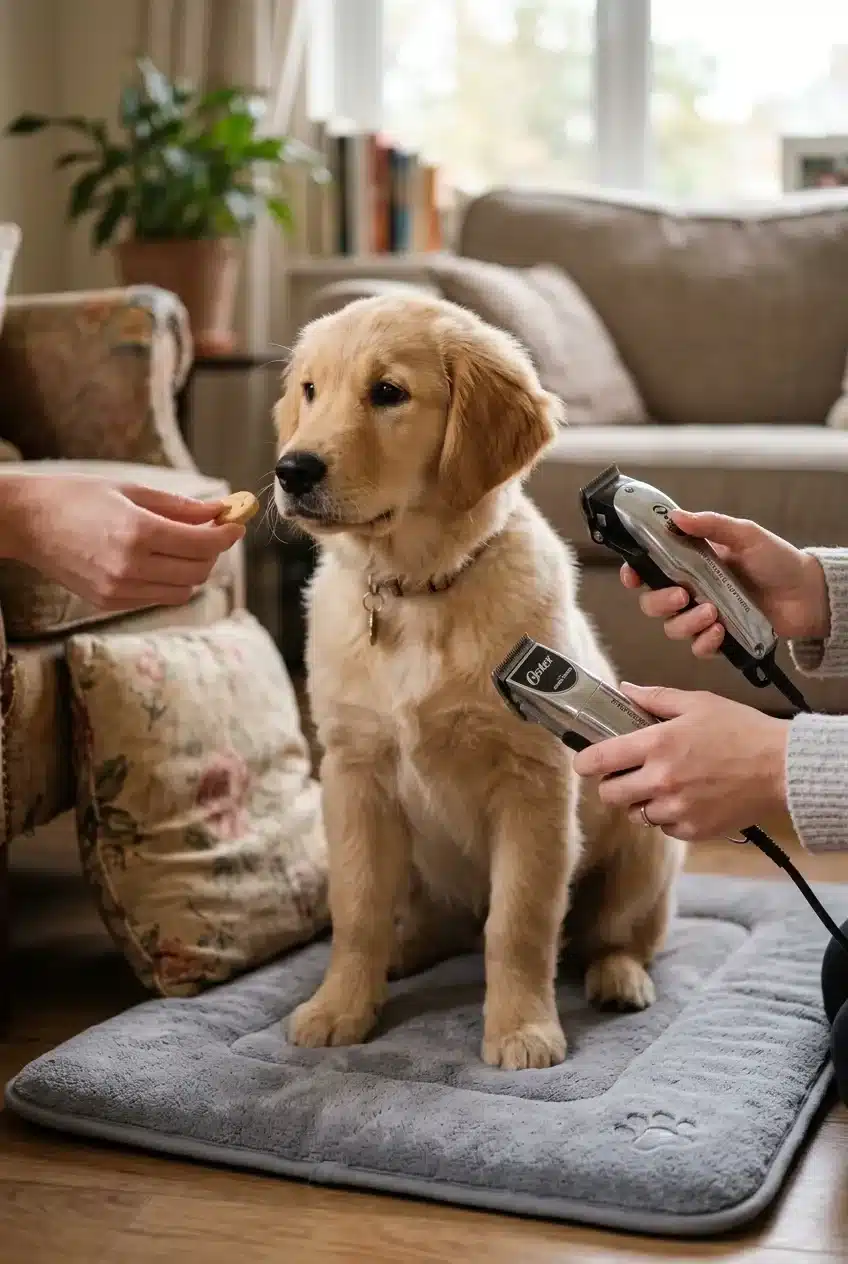
The best way to desensitize a puppy to clippers is through a gradual, reward-based process called counter-conditioning. You pair the clippers — first as an object, then running, then touching the coat — with something the puppy loves, until the tool predicts good things instead of fear.
- Start with the clippers switched off and let the puppy sniff them freely.
- Reward calm behaviour at every stage before moving to the next.
- Introduce clipper sound from across the room before bringing it closer.
- Let vibration touch the puppy’s body only after the sound is accepted.
- Keep every session under five minutes to avoid overstimulation.
- Progress at the puppy’s pace — never rush to the next stage.
Why Early Desensitization Matters for Grooming Success

The socialization window for puppies closes between roughly 12 and 16 weeks, according to the American Veterinary Medical Association. Positive exposures during this period create lasting associations that shape a dog’s confidence around new stimuli — including grooming tools.
A puppy who reaches their first professional groom already comfortable with clipper noise and vibration is far less likely to become a difficult or fearful grooming client. Groomers regularly report that fear-based behaviour at the table is one of the most common challenges they face.
Getting this right in puppyhood is genuinely easier than retraining a fearful adult dog later.
If your dog is a breed with high grooming demands — such as a white Standard Poodle or a Golden Retriever — early clipper desensitization is especially worth prioritising. You can read more about long-term coat care in this guide on how often to groom a Golden Retriever.
Step-by-Step: How to Desensitize a Puppy to Clippers at Home
Get Free Dog Health Tips!
Weekly guides on keeping your dog healthy & happy
🔒 No spam. Unsubscribe anytime.
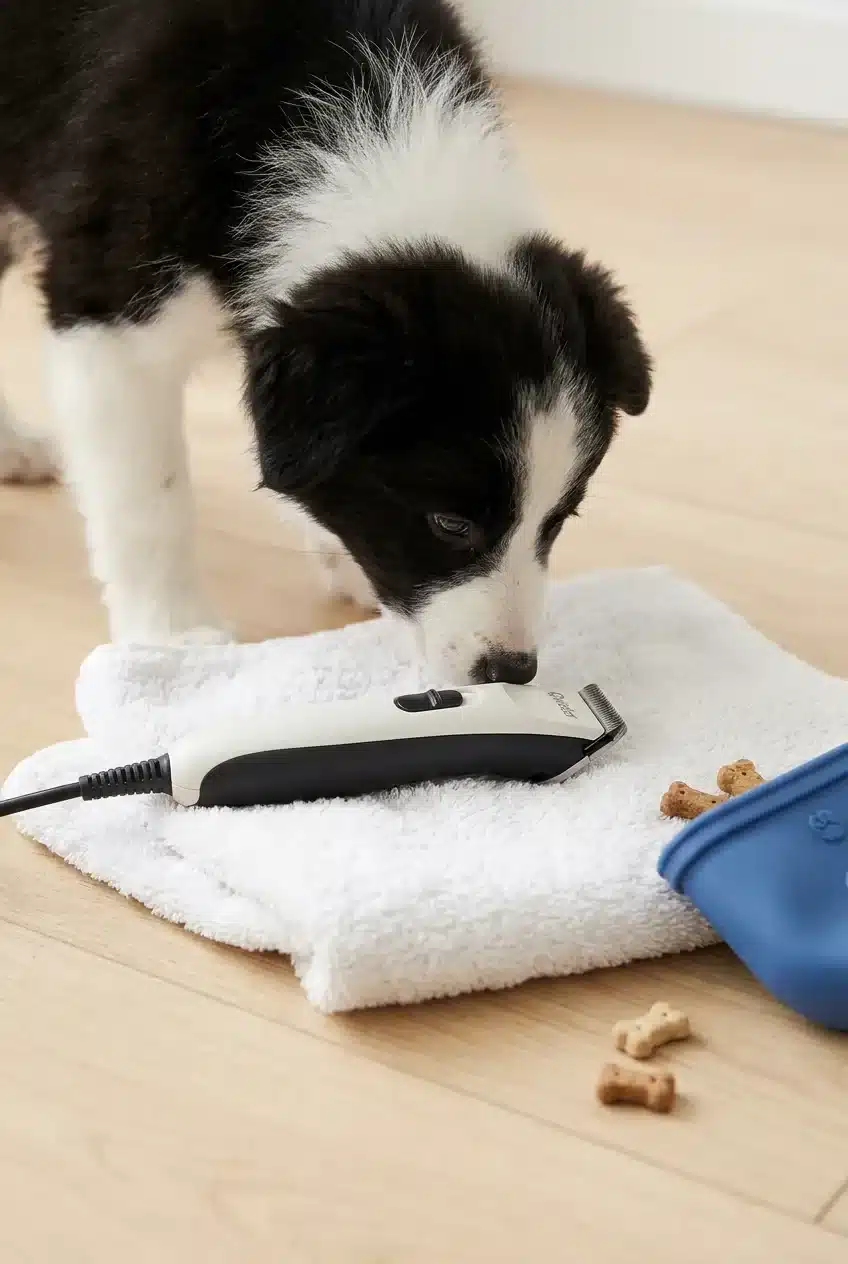
This process works for cordless or corded clippers, nail grinders, and even scissors. Follow each step in order and only advance when the puppy is relaxed — not merely tolerating.
- Introduce the clippers as an object. Place the switched-off clippers on the floor near the puppy. Let them sniff and investigate freely. Drop treats near the clippers until the puppy approaches without hesitation.
- Handle the clippers near your puppy. Pick them up, hold them beside the puppy while feeding treats. Do this over two to three short sessions. Success looks like no flinching or backing away.
- Turn the clippers on across the room. Switch them on from several feet away and immediately feed treats. Keep the session to 60 seconds. Gradually move them a few inches closer each session.
- Bring running clippers to the puppy’s body without touching. Hold the running clippers two to three inches from the coat. Feed treats continuously. The puppy should remain relaxed and focused on the food.
- Touch running clippers to a low-sensitivity area. The back or shoulder is a good starting point. Touch, treat, lift, repeat. Avoid ears, paws, and face until the puppy is fully comfortable elsewhere.
- Extend contact gradually. Work toward longer passes along the body. Introduce a quiet low-vibration puppy clipper if the standard model causes stress — lower decibel models are widely available and noticeably calmer for sensitive pups.
Each step should feel boring and easy for your puppy before you move forward.
Handling Paws and Sensitive Areas
Paws are often the hardest area to desensitize. Start by touching and massaging paws daily from the first week you bring your puppy home. This builds tolerance before a clipper ever gets near them.
DON’T MISS THESE
Paw-pular Reads: 👇
👉 How Many Puppies Can Poodle Have
👉 How Long Is A Poodle Pregnant
For nail areas, a quiet nail grinder can be easier to introduce than clippers because the vibration is smaller and more predictable. Use the same step-by-step approach — sound first, then contact.
How Long Each Session Should Last
| Puppy Age | Recommended Session Length | Sessions Per Week |
|---|---|---|
| 8–10 weeks | 2–3 minutes | 4–5 |
| 10–14 weeks | 3–5 minutes | 3–4 |
| 14–20 weeks | 5 minutes | 3 |
Puppies fatigue quickly, and a session that ends on a stressed note can undo previous progress. Always end before the puppy wants to leave.
Choosing the Right Tools for a First-Time Puppy Groom
The tool you choose matters as much as the technique. Some clippers are significantly louder than others, and noise is often what triggers the strongest fear response in young puppies.
- Cordless clippers reduce the stress of a dangling cord near the puppy’s face.
- Low-decibel models (under 60 dB) are far less startling during initial introductions.
- Ceramic blades run cooler, reducing the chance of heat-related discomfort on a first groom.
Bathing is also part of the grooming picture. Using a gentle tearless puppy shampoo during practice bath sessions helps puppies associate the whole grooming routine — not just clippers — with calm and comfort. For breed-specific bathing advice, see this guide on how often to bathe a Yorkie puppy.
A good-smelling puppy shampoo can also make the overall grooming environment more positive — scent association works alongside sound and touch desensitization.
Common Mistakes When Desensitizing a Puppy to Clippers
Even owners who start with good intentions can accidentally slow their puppy’s progress. These are the most frequent errors — and how to fix them.
- Moving too fast. Jumping from “clippers off” to “clippers running on the coat” in one session overwhelms the puppy. Fix: honour each step fully before advancing — even if progress feels slow.
- Stopping treats too early. Some owners phase out treats once the puppy seems calm, then the fear returns when the novelty wears off. Fix: keep pairing treats with clippers through the first several full grooms.
- Using the puppy’s regular food. Kibble rarely motivates enough during something frightening. Fix: use high-value treats — small pieces of chicken, cheese, or commercial training treats — reserved only for grooming practice.
- Sessions that run too long. A ten-minute session that ends with a stressed puppy is worse than no session at all. Fix: keep it short, watch for stress signals (yawning, lip licking, turning away), and stop before they appear.
- Skipping the sound stage. Going straight from “smell the clippers” to “clippers touching body” misses the most frightening element for most dogs. Fix: spend at least two sessions on sound alone before any body contact.
Reading Your Puppy’s Stress Signals
Knowing when to pause is as important as knowing what to do next. Puppies show stress in subtle ways that are easy to miss if you’re focused on the task.
“Dogs communicate discomfort long before they growl or snap. Lip licking, yawning, and looking away are early stress signals most people overlook entirely.” — Dr. Sophia Yin, veterinary behaviourist (referenced in Low Stress Handling, Restraint and Behavior Modification of Dogs & Cats, 2009)
Watch for these signs during every clipper session:
- Yawning repeatedly when not tired
- Excessive lip licking or nose licking
- Turning the head away from the clippers
- Tense body posture or tucked tail
- Refusing treats they normally take eagerly
Refusing treats is one of the most reliable signs a puppy is over threshold. When that happens, stop immediately and end on something easy the puppy enjoys.
Frequently Asked Questions About How to Desensitize a Puppy to Clippers Before Their First Groom
At what age should I start desensitizing my puppy to clippers?
Start desensitizing your puppy to clippers as early as 8 weeks old. The socialization window between 8 and 16 weeks is the most effective period for building positive associations with new tools and sounds.
How many sessions does it take before a puppy is ready for a full groom?
Most puppies are ready for a full groom after two to four weeks of consistent short sessions. Progress depends on the individual puppy — some take longer, especially if they are naturally more cautious.
Should I take my puppy to a professional groomer for desensitization?
Some professional groomers offer puppy intro or “puppy’s first groom” appointments specifically for desensitization. These shorter sessions let the puppy experience the salon environment without a full groom, which is a valuable complement to home practice.
What if my puppy is already showing fear of clippers?
If your puppy already shows fear of clippers, restart the process from the very beginning — clippers off, at a distance. Progress more slowly than you think necessary and consider consulting a certified professional dog trainer (CPDT-KA) if fear is severe.
Can I use a hair dryer desensitization approach for clippers too?
Yes — the same counter-conditioning steps work for a hair dryer, nail grinder, or clippers. Introduce each tool separately, since each has a different sound and vibration that puppies experience as distinct stimuli.
Do certain breeds need more desensitization time than others?
Breeds with more sensitive temperaments — such as Maltese or toy breeds prone to anxiety — often need more gradual desensitization. If your dog licks its paws excessively, that can signal underlying anxiety worth addressing before grooming starts; learn more about why Maltese lick their paws.
Start Today: Your Puppy’s First Step Toward Stress-Free Grooming
The single most important thing you can do right now is place a switched-off clipper on the floor near your puppy and let them investigate it freely with zero pressure. That one small action begins the desensitization process.
How to desensitize a puppy to clippers before their first groom comes down to one consistent principle: go slower than feels necessary and reward every calm moment. Puppies that learn clippers predict good things become dogs that groomers genuinely enjoy working with.
Start with that first session today — under five minutes, treats ready, no rushing. Your future self and your groomer will both thank you.