An unspayed female cat suddenly attacks other cats in the house primarily because of hormonal surges linked to her heat cycle. These hormonal shifts can flip her behavior from calm to aggressive within hours, leaving other pets — and you — caught off guard.
If your female cat has always gotten along with housemates and is now hissing, swatting, or chasing them, you are not imagining the change. Understanding what is driving this behavior makes it far easier to manage and, in most cases, resolve entirely.
Why Does My Unspayed Female Cat Suddenly Attack Other Cats?
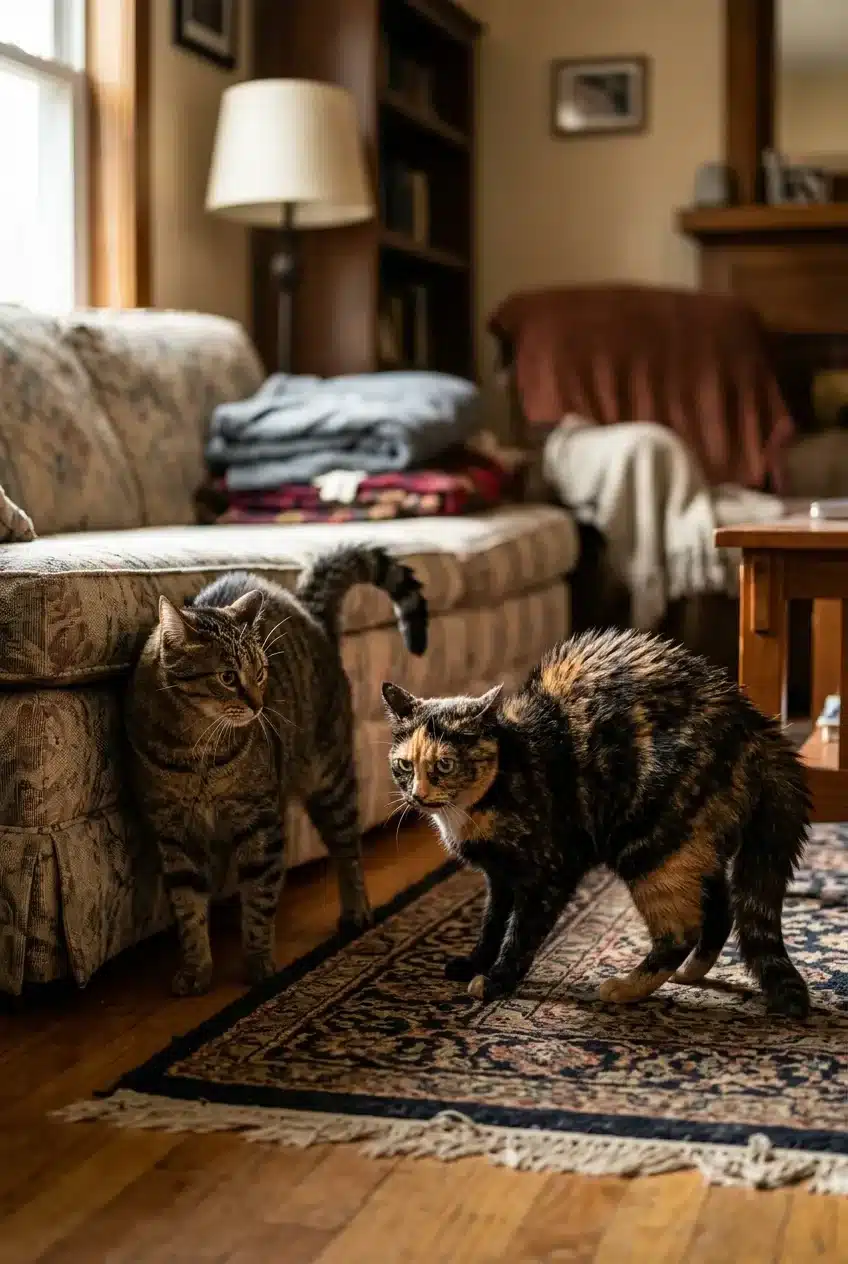
An unspayed female cat suddenly attacks other cats mainly due to hormonal aggression during estrus (heat). Rising estrogen and luteinizing hormone levels trigger territorial, redirected, and competitive behaviors that can make a previously friendly cat seem like a different animal altogether.
- Heat cycles occur every 2–3 weeks and last 4–10 days in unspayed cats.
- Hormonal surges increase irritability, restlessness, and territorial tension.
- Other cats’ scent or presence can trigger redirected aggression during estrus.
- Stress from heat-related frustration often spills onto housemates.
- Female cats can become briefly dominant or territorial while in heat.
- The aggression usually subsides when the heat cycle ends — then restarts.
How the Heat Cycle Drives Sudden Aggression
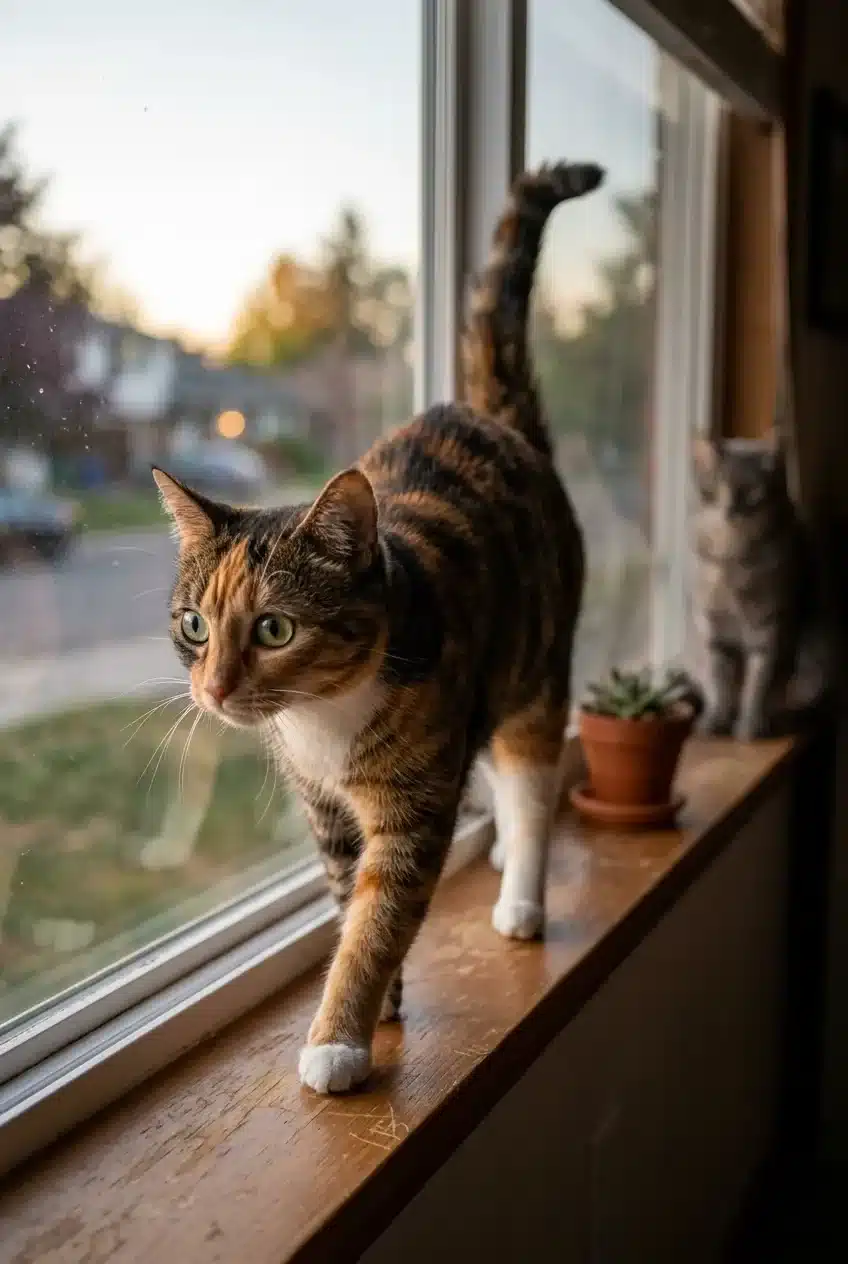
A female cat’s estrous cycle is the single biggest driver of sudden inter-cat aggression in unspayed females. During estrus, estrogen levels spike dramatically, raising her baseline arousal and making her far more reactive to any perceived threat — including a cat she has lived with peacefully for years.
The American Animal Hospital Association (AAHA) notes that intact females cycle continuously during longer daylight months, meaning aggression episodes can repeat every few weeks without intervention.
Her heightened state during heat makes normal feline social cues feel like challenges.
What Redirected Aggression Looks Like
Redirected aggression happens when your cat is highly aroused — often by the scent of an outdoor male cat — but cannot reach the source. She turns on the nearest cat instead.
Signs include sudden, unprovoked attacks with no obvious trigger, dilated pupils, and a puffed tail. The attacked cat is often as confused as you are.
Get FREE Guide Every Week
Join 10,000+ dog & cat owners. Vet-approved advice every week
🔒 No spam. Unsubscribe anytime.
Territorial Shifts During Estrus
Some females temporarily claim larger territories while in heat. A cat who normally shares space without conflict may suddenly guard resting spots, food bowls, or doorways.
This territorial expansion usually collapses once the heat cycle ends, but repeated cycles can leave lasting tension between housemates. If this keeps happening, consider whether the household layout is giving every cat enough personal space that cats genuinely need to feel secure.
DON’T MISS THESE
Related Posts:
👉 Are Copper Bowls Safe For Cats
👉 Should I Give My Cat Supplements Or Vitamins
Other Medical Reasons for Sudden Aggression
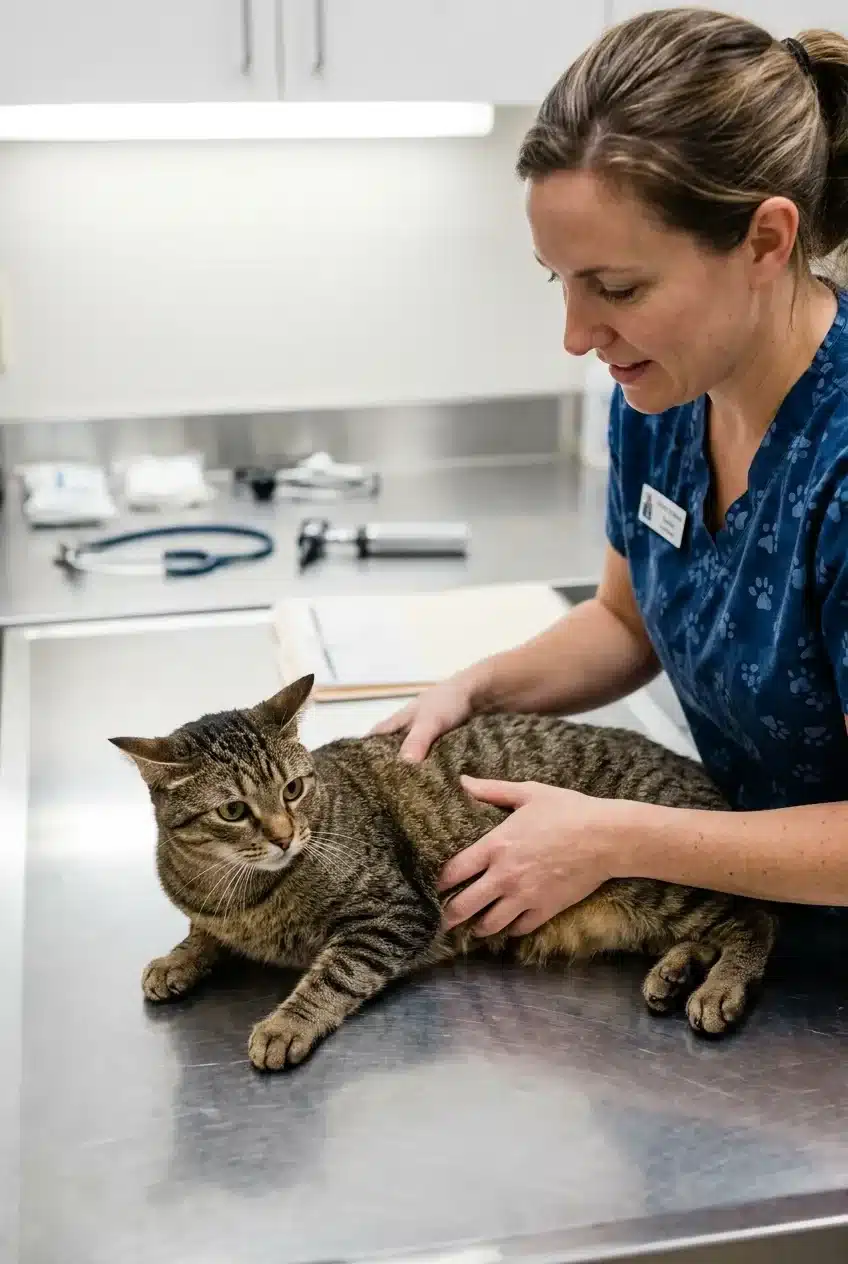
Hormones are the most likely cause, but sudden aggression in any cat can also signal an underlying health problem. Pain, neurological changes, and infections can all produce behavior that looks identical to hormone-driven aggression.
- Pain: Arthritis, dental disease, or an injury causes cats to lash out when touched or approached.
- Hyperthyroidism: An overactive thyroid increases irritability and hyperactivity, especially in cats over 8.
- Cognitive dysfunction: Older cats may become confused and react aggressively to familiar companions.
- Urinary tract infection: Discomfort makes cats short-tempered — watch for changes in litter box behavior alongside aggression.
- Neurological disease: Rare but possible — sudden personality shifts warrant a vet exam.
If the aggression continues outside of obvious heat cycles, or if your cat seems disoriented or in pain, schedule a veterinary check-up before assuming hormones are the only factor.
How to Tell If It Is Heat-Related Aggression
Heat-related aggression follows a pattern. Spotting that pattern helps you distinguish hormonal behavior from a medical or environmental problem.
| Sign | Heat-Related? | Needs Vet? |
|---|---|---|
| Attacks occur in 1–2 week cycles | Yes | No (unless severe) |
| Yowling, rolling, raised hindquarters | Yes | No |
| Constant aggression, no pattern | Unlikely | Yes |
| Aggression when touched near back/tail | Possibly (pain) | Yes |
| Urine marking increases alongside attacks | Yes | No (expected) |
| Sudden onset with no prior history | Possibly | Yes, rule out pain |
Urine marking often spikes alongside the aggression. If you are also dealing with inappropriate urination around the house, this reinforces that hormones are likely the root cause.
How to Manage the Aggression Right Now
Spaying is the most effective long-term solution, but while you are waiting for an appointment — or if you need immediate relief — there are steps you can take today.
- Separate the cats during peak aggression. Use a spare room, baby gate, or cat-safe room divider to prevent injury and reduce stress for all cats involved.
- Add more resources. Provide one litter box per cat plus one extra, multiple water stations, and separate feeding spots to reduce competition triggers.
- Use a pheromone diffuser. A Feliway Classic diffuser releases synthetic feline facial pheromones that can reduce tension during the heat period. The Cornell Feline Health Center recognizes pheromone products as a valid behavioral aid.
- Redirect attention. Engage the aggressive cat with a wand toy or puzzle feeder to burn off excess energy and break the fixation on housemates.
- Avoid punishing aggression. Scolding or spraying water raises arousal and can make attacks more intense, not less.
- Reintroduce carefully. Once the heat cycle ends and the aggressor has calmed, do a slow, scent-based reintroduction before allowing full access again. The same principles used when bringing a new cat into a multi-cat home apply here.
Separation during peak heat days is not a failure — it prevents wounds and broken trust between cats that may take weeks to repair.
When to Call a Vet Immediately
Seek veterinary attention right away if any cat sustains a puncture wound, if attacks are happening multiple times per day, or if the aggressive cat seems disoriented or in physical pain.
Cat bite wounds can abscess within 24–48 hours. Even shallow-looking punctures need veterinary assessment.
Why Spaying Is the Long-Term Fix
Spaying eliminates the hormonal cycles driving the aggression. According to the American Veterinary Medical Association (AVMA), spaying also eliminates the risk of pyometra, ovarian cysts, and dramatically reduces mammary tumor risk — especially when performed before the first heat cycle.
“Spaying before the first heat cycle reduces the lifetime risk of mammary tumors by approximately 91% compared to intact females.” — American Veterinary Medical Association
Most veterinarians recommend spaying from around 4–6 months of age, though adults can be spayed safely at any age with appropriate pre-operative bloodwork.
After spaying, inter-cat aggression driven purely by hormones typically resolves within 4–8 weeks as hormone levels stabilize. Some learned territorial habits may persist and require additional behavioral management with tools like a cat calming collar during the transition period.
Common Mistakes Cat Owners Make During This Period
- Letting attacks continue unchecked: Even if no wounds appear, repeated attacks damage the social bond between cats permanently. Separate them during high-risk periods.
- Assuming it will pass without action: Heat cycles repeat every 2–3 weeks. Each cycle can reset or worsen inter-cat tension. A single calm week does not mean the problem is solved.
- Punishing the aggressive cat: Physical punishment increases fear and arousal, which intensifies aggression. Calm redirection is always more effective.
- Skipping the vet when pain is possible: Attributing all aggression to hormones when an underlying illness is present delays treatment and allows inter-cat conflict to continue unnecessarily.
- Rushing reintegration: Putting cats back together too quickly after an attack often triggers another incident immediately. Give at least 24–48 hours of full separation before a slow scent-based reintroduction.
Frequently Asked Questions About Why Does My Unspayed Female Cat Suddenly Attack Other Cats in the House
How long will my unspayed female cat stay aggressive toward other cats?
An unspayed female cat’s aggression typically lasts as long as her heat cycle — 4 to 10 days — then temporarily resolves. Without spaying, the cycle repeats every 2–3 weeks throughout the breeding season.
Can two female cats who fight during heat eventually get along again?
Yes, two female cats who fight during heat can rebuild their relationship once the heat cycle ends. A slow, structured reintroduction using scent swapping usually restores tolerance between them within a few weeks.
Will spaying stop my female cat from attacking other cats?
Spaying stops hormone-driven aggression in most cats within 4–8 weeks as estrogen levels drop. Learned territorial behaviors may need additional management, but the underlying hormonal trigger disappears after the procedure.
Does age affect how aggressive an unspayed female gets during heat?
Younger females in their first or second heat often show the most intense behavioral swings. Aggression patterns can become more predictable — but not less disruptive — as cats mature through repeated cycles.
My female cat attacks only one specific cat in the house — why?
A female cat in heat often targets one specific housemate because that cat’s scent, posture, or proximity triggers a territorial response. The targeted cat may be the lowest-ranking or the one closest to her core territory.
Is it normal for a female cat to mark territory more during heat?
Yes, urine marking increases significantly during heat as females signal availability to outdoor males. This can also escalate tension with indoor housemates who perceive the marking as a territorial claim.
The Bottom Line
An unspayed female cat suddenly attacking other cats in the house is almost always driven by the hormonal surges of her heat cycle — and spaying is the most reliable, permanent solution available.
The single most effective action you can take today is booking a spay consultation with your veterinarian. While you wait, separate the cats during peak aggression periods and use pheromone diffusers to reduce household tension. With the right steps, most multi-cat households return to calm within weeks of the procedure.
For more on building a harmonious multi-pet household, see how to handle introducing cats safely into shared spaces — the same patience and structure that works there works here too.