You spotted a stray cat outside and your heart just melted. Maybe you’ve been feeding them for weeks, or maybe they just showed up one rainy night. Either way, you’re thinking about bringing them inside — and you want to do it right.
If you already have cats at home, this decision takes a little more thought. Introducing a stray to a resident cat can go smoothly, or it can turn into a stressful mess for everyone involved. The good news? With patience and the right steps, most cats can learn to coexist.
This guide walks you through everything you need to know — from that first vet visit to the moment your cats finally share a sunspot. You’ve got this, and your new furry friend is lucky to have someone like you.
🛒 Products Our Readers Use Every Day
Can You Bring a Stray Cat Inside If You Already Have Cats?

Yes, you can bring a stray cat indoors when you already have cats — but you should never just open the door and hope for the best. A proper introduction process protects your resident cats, the stray, and your own peace of mind.
Here’s what you need to know upfront:
Get FREE Guide Every Week
Join 10,000+ dog & cat owners. Vet-approved advice every week
🔒 No spam. Unsubscribe anytime.
- Strays may carry diseases, parasites, or infections that can spread to your cats
- A vet checkup before any introduction is non-negotiable
- Cats are territorial — rushing the process causes stress and aggression
- The introduction should happen gradually over days or even weeks
- Scent swapping is the secret weapon most people skip
- Some cats bond quickly; others take months to fully accept each other
- Your resident cats’ comfort should guide the pace of the introduction
Start With a Vet Visit — No Exceptions

Before the stray cat comes anywhere near your other cats, they need a full veterinary checkup. This isn’t just a nice-to-do — it’s essential for keeping your whole household safe.
A vet will test for common diseases like FIV (feline immunodeficiency virus) and FeLV (feline leukemia virus). They’ll also check for ear mites, ringworm, respiratory infections, and intestinal parasites that could easily spread to your resident cats.
🛒 Vet-Approved Products for Indoor Cats
Make sure the stray is also treated for fleas before they enter your home. A single flea-infested cat can quickly cause a full household infestation — and that’s a headache you don’t want. You can read more about how parasites spread between pets in this guide on how fleas can travel between different animals.
Set Up a Safe Isolation Room First
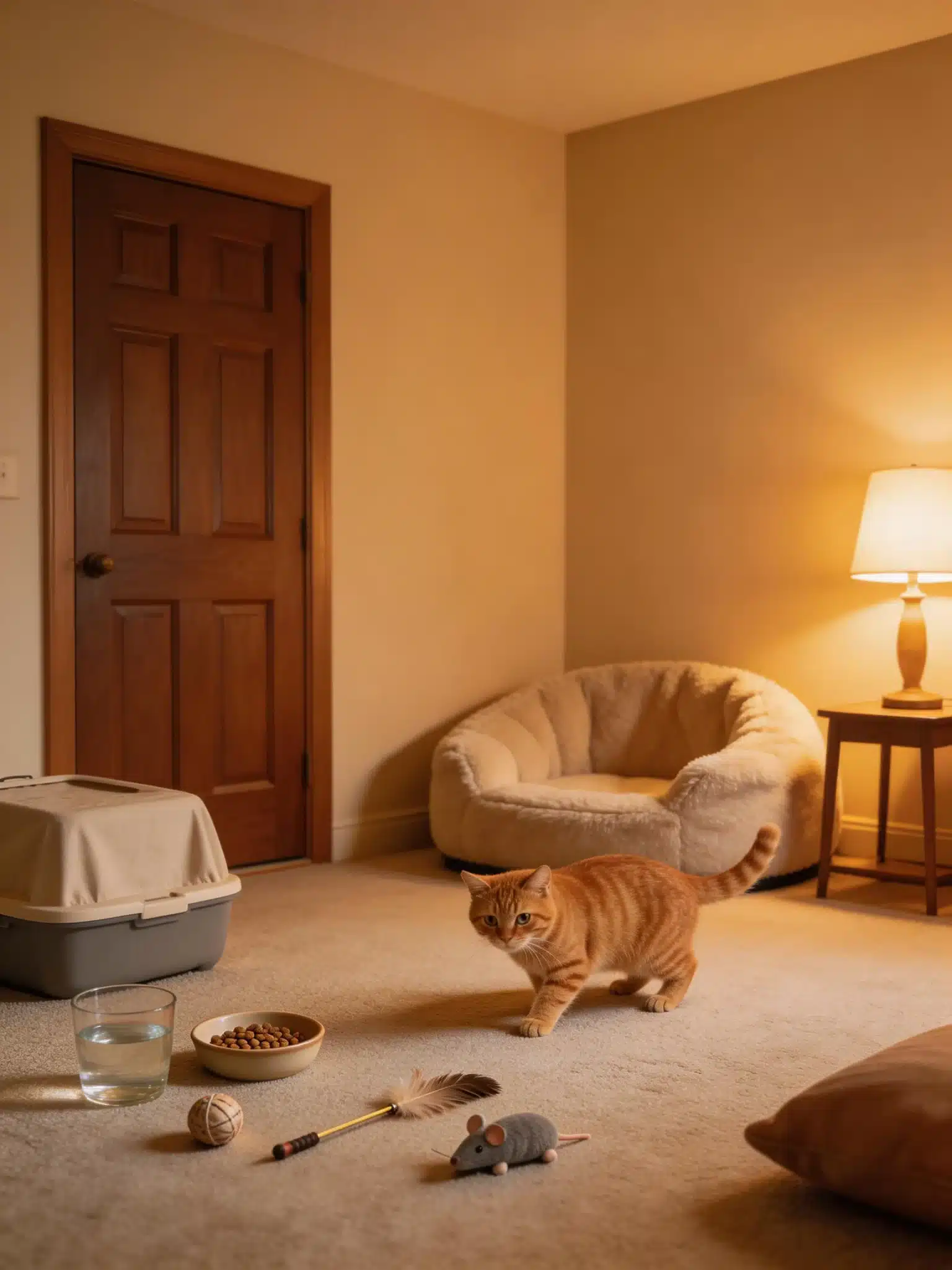
Once the stray gets the green light from the vet, bring them home — but not into the general living space. Set up a quiet, separate room just for the new cat. This is called an isolation or “base camp” room.
What to Put in the Isolation Room
- A litter box (away from food and water)
- Fresh water and food bowls
- A cozy bed or blanket
- A cat scratching post to reduce stress
- A cat hiding cube or covered bed for security
- Some quiet toys to keep them entertained
Keep the new cat in this room for at least one to two weeks. This gives them time to decompress and feel safe. Strays are often overwhelmed by indoor life at first — the quiet room helps them adjust without the added pressure of meeting other cats.
You can also use this time to bond with the stray yourself. Sit on the floor, speak softly, and let them come to you. Trust-building now pays off big later.
How to Introduce the Cats Step by Step
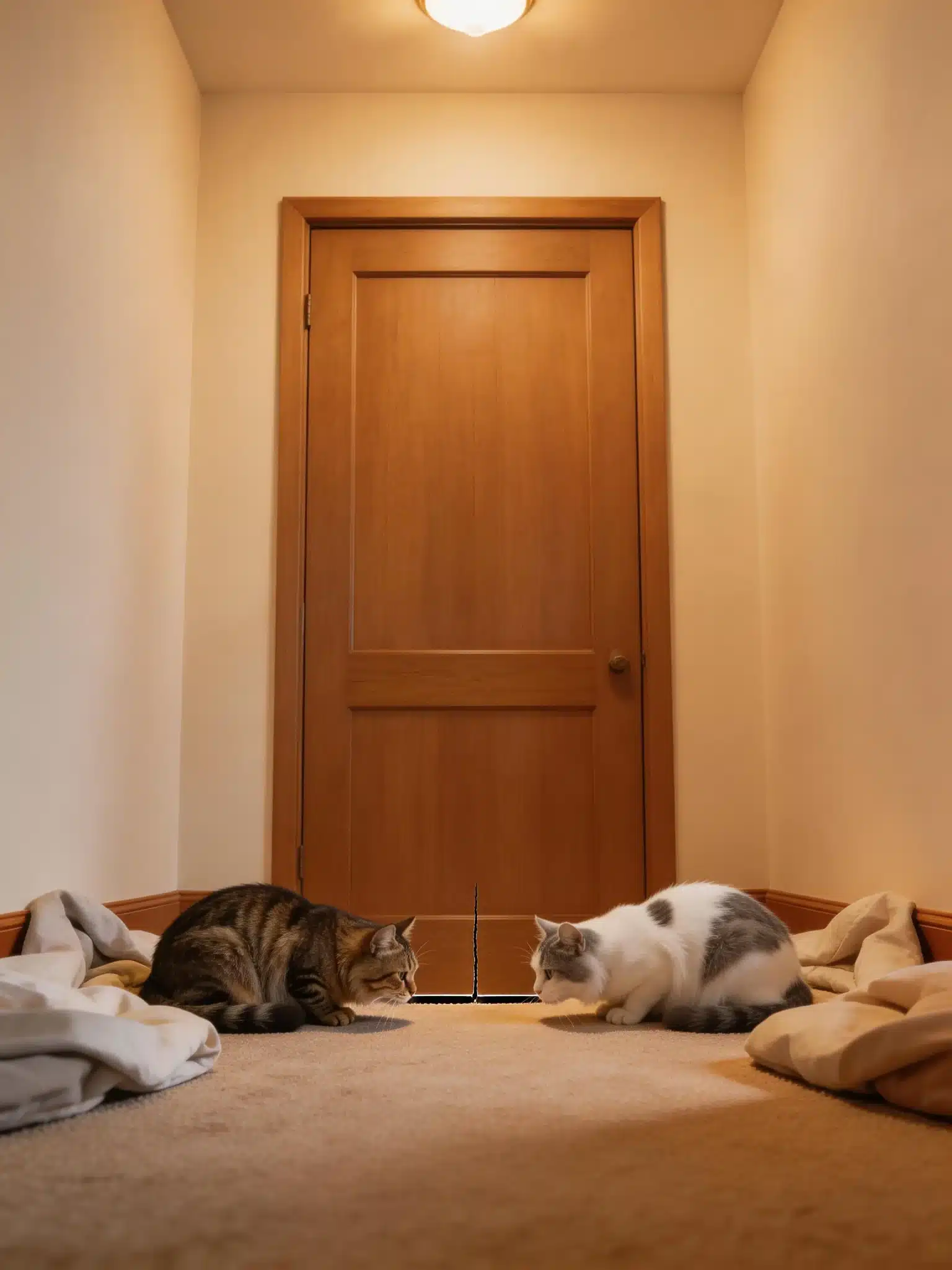
Once the stray seems settled and healthy, you can begin the introduction process. Don’t rush this — even if everyone seems calm, moving too fast can set you back weeks.
- Scent swapping: Swap bedding between the new cat and your resident cats. Let each cat sniff the other’s scent before any face-to-face meeting.
- Feed near the door: Place food bowls on opposite sides of the closed isolation room door. This builds a positive association with the other cat’s scent.
- Crack the door open: After a few days of calm feeding, use a pet gate or door stopper to let cats see and smell each other without full contact.
- Supervised face-to-face time: Allow short, supervised visits in a neutral space. Keep sessions to 10–15 minutes at first.
- Watch body language closely: Hissing and growling is normal. Flat ears, puffed tails, or lunging are signs to slow down.
- Gradually increase time together: Slowly extend the time they spend together as tension decreases.
- Full integration: Only give the new cat full access to the home when both cats are consistently calm around each other.
The whole process can take anywhere from two weeks to three months. Every cat is different, and that’s completely okay.
Reading Cat Body Language During Introductions
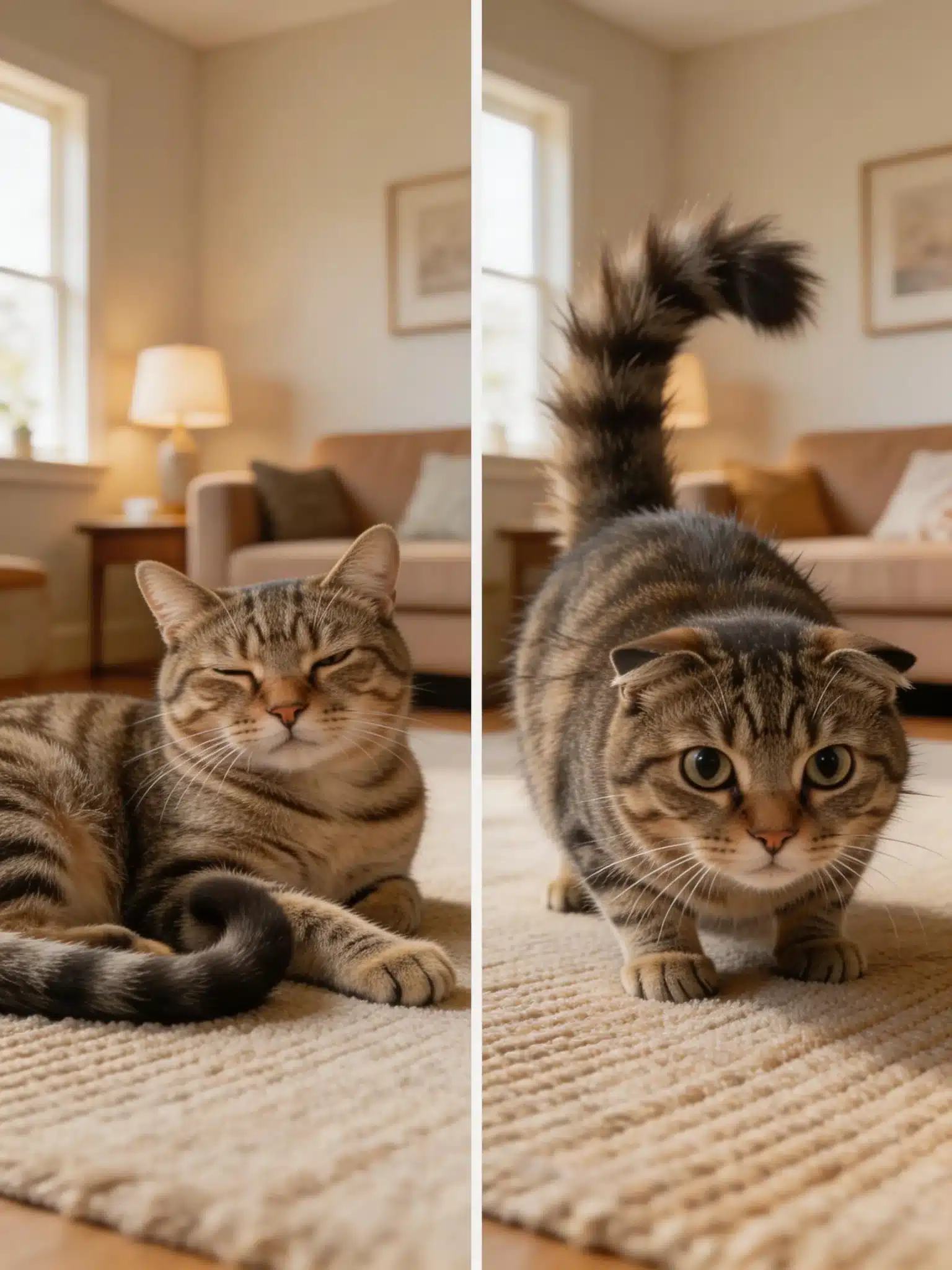
Understanding what your cats are telling you makes the whole process much smoother. Body language is their main way of communicating — and it tells you when to push forward or pump the brakes.
Signs Things Are Going Well
- Slow blinking at each other
- Relaxed tails (not puffed or tucked)
- Eating normally in each other’s presence
- Curiosity without aggression
- Grooming themselves near the other cat
Signs You Need to Slow Down
- Constant hissing or growling beyond the first few meetings
- One cat refusing to eat or hiding all day
- Stalking or chasing behavior
- Any physical fighting — separate them immediately
If tension is high, try using a Feliway MultiCat diffuser in your home. These plug-in diffusers release calming synthetic pheromones that can help reduce conflict between cats. Many cat owners swear by them during introductions.
Keeping the Peace Long Term
Once your cats are living together, your job isn’t quite done. A harmonious multi-cat home needs a little ongoing management to stay that way.
Follow the “one plus one” rule for resources: You should have one litter box per cat, plus one extra. The same goes for food bowls and water stations. Competition over resources is one of the biggest causes of tension in multi-cat homes.
Make sure every cat has their own vertical space — cats feel safer when they can climb and observe from above. A tall multi-level cat tree gives everyone their own territory without fighting over floor space. You can also find great enrichment ideas in this roundup of the best toys for indoor cats to keep all your cats mentally stimulated and happy.
Be mindful never to force affection or punish cats for hissing during the adjustment period. Forcing interactions can seriously damage trust. Learn more about common mistakes in this important read on things cat owners do that can break a cat’s heart and spirit.
What the Experts Say
Dr. Mikel Delgado, a certified cat behavior consultant, recommends thinking of introductions as a marathon, not a sprint. She notes that “forcing cats together before they’re ready is the number one reason introductions fail.” Patience and consistency are everything.
🛒 This Is What Vets Use For Their Own Cats
According to a 2024 survey by the American Pet Products Association, over 46% of US cat-owning households have more than one cat — meaning millions of families have successfully navigated exactly what you’re going through right now. You’re far from alone, and it absolutely can work.
If you’re welcoming a stray and thinking about names for your new family member, check out these fun ideas for cat names for male and female cats to help them feel truly at home.
Frequently Asked Questions About Bringing a Stray Cat Indoors With Other Cats
How Long Should I Keep the Stray Separated From My Other Cats?
Plan for at least one to two weeks of full separation, followed by a gradual introduction phase. The entire process from isolation to free roaming together can take two weeks to three months depending on your cats’ personalities. Never rush it — the slower you go, the better the long-term outcome.
What If My Resident Cat Hates the New Cat?
Some hissing and grumbling is completely normal and doesn’t mean they’ll never get along. Go back a step in the introduction process and slow things down. In rare cases, some cats genuinely cannot coexist — but most conflicts can be resolved with time, patience, and proper resource management.
Do I Need to Quarantine a Stray Before Letting Them Inside at All?
Yes — even before entering your home, the stray should see a vet. Once inside, they should stay in a separate room away from your other cats during the quarantine period. This protects your resident cats from any illnesses or parasites the stray may be carrying.
Can a Formerly Feral or Semi-Feral Stray Ever Fully Adjust to Indoor Life?
Many former strays become wonderfully affectionate indoor cats with time and patience. Semi-feral cats may take longer to trust humans and other pets, but consistent gentle interaction makes a huge difference. Some cats just need more time to feel safe — and that’s perfectly okay.
Should I Get the Stray Cat Spayed or Neutered Before Introducing Them?
Absolutely yes. Spaying or neutering the new cat significantly reduces territorial aggression and makes the introduction process much smoother. Most vets recommend completing this procedure and allowing recovery time before beginning introductions with your resident cats. It’s one of the best things you can do for long-term harmony.
Your Next Step
Start with that vet visit — everything else flows from there. Set up a cozy isolation room, be patient with the introduction process, and trust that your cats can find their way to each other. Giving a stray cat a loving home is one of the kindest things you’ll ever do. You’ve already taken the most important step just by caring enough to do it right.