You glance over and see your cat pressed against the window, tail flicking, eyes locked on a bird outside. Maybe they’re scratching at the door or crying every time you open it. It’s a tough situation, and you’re not alone in dealing with it.
This is one of the most common concerns among cat owners in the US. You want your cat to be happy, but you also want to keep them safe. Those two things can feel like they’re pulling in opposite directions.
The good news? There are real, practical solutions that work. Whether your cat has always been indoors or recently developed the urge to roam, you can meet their needs without putting them at risk.
🛒 Products Our Readers Use Every Day
Why Your Indoor Cat Wants Outside — And What You Can Do
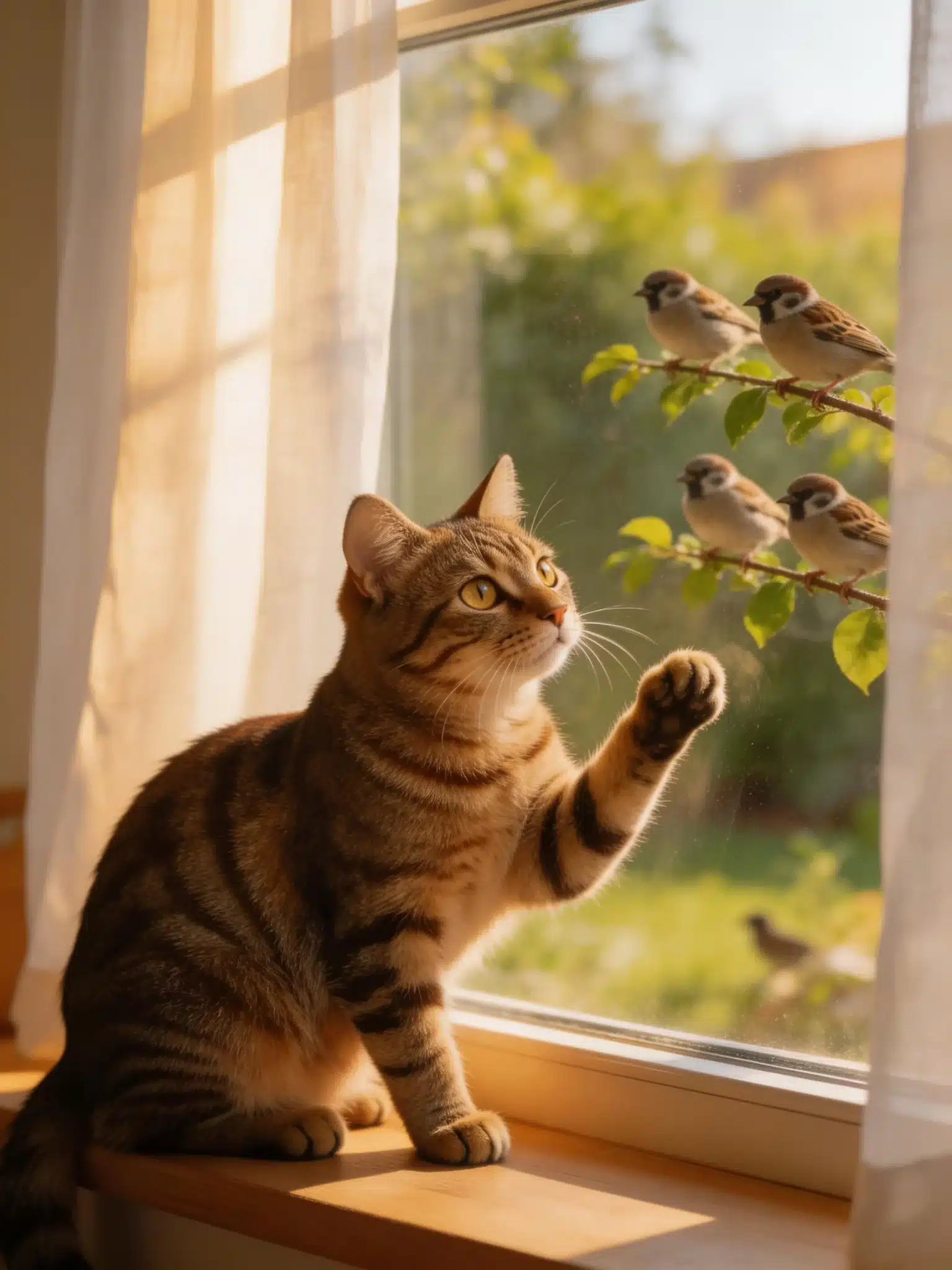
Your cat isn’t being dramatic. They’re responding to natural instincts — hunting, exploring, and stimulation. Understanding why they want out is the first step to solving the problem. Most of the time, the fix isn’t about letting them outside — it’s about giving them what the outdoors represents.
- Cats are wired to hunt, stalk, and explore
- Boredom and under-stimulation are the most common triggers
- Smells, sounds, and sights from outside awaken their instincts
- Seasonal changes (spring especially) can increase the urge
- Unneutered cats feel a stronger drive to roam
- A new pet or change at home can make outside seem more appealing
- Some cats simply have a higher energy level and need more outlets
Why Keeping Your Cat Indoors Is the Safer Choice
Get FREE Guide Every Week
Join 10,000+ dog & cat owners. Vet-approved advice every week
🔒 No spam. Unsubscribe anytime.
It’s not overprotective to keep your cat inside. Indoor cats live significantly longer on average — up to 15 years compared to just 2–5 years for outdoor cats, according to the American Humane Society.
Outdoor life comes with real risks: traffic, predators, toxic plants, and disease. Even in quiet neighborhoods, danger is closer than it seems.
There’s also an environmental side to this. Cats are natural hunters, and outdoor cats kill billions of birds and small animals each year in the US. Keeping your cat inside protects local wildlife too.
🛒 Vet-Approved Products for Indoor Cats
How to Enrich Your Cat’s Indoor Life
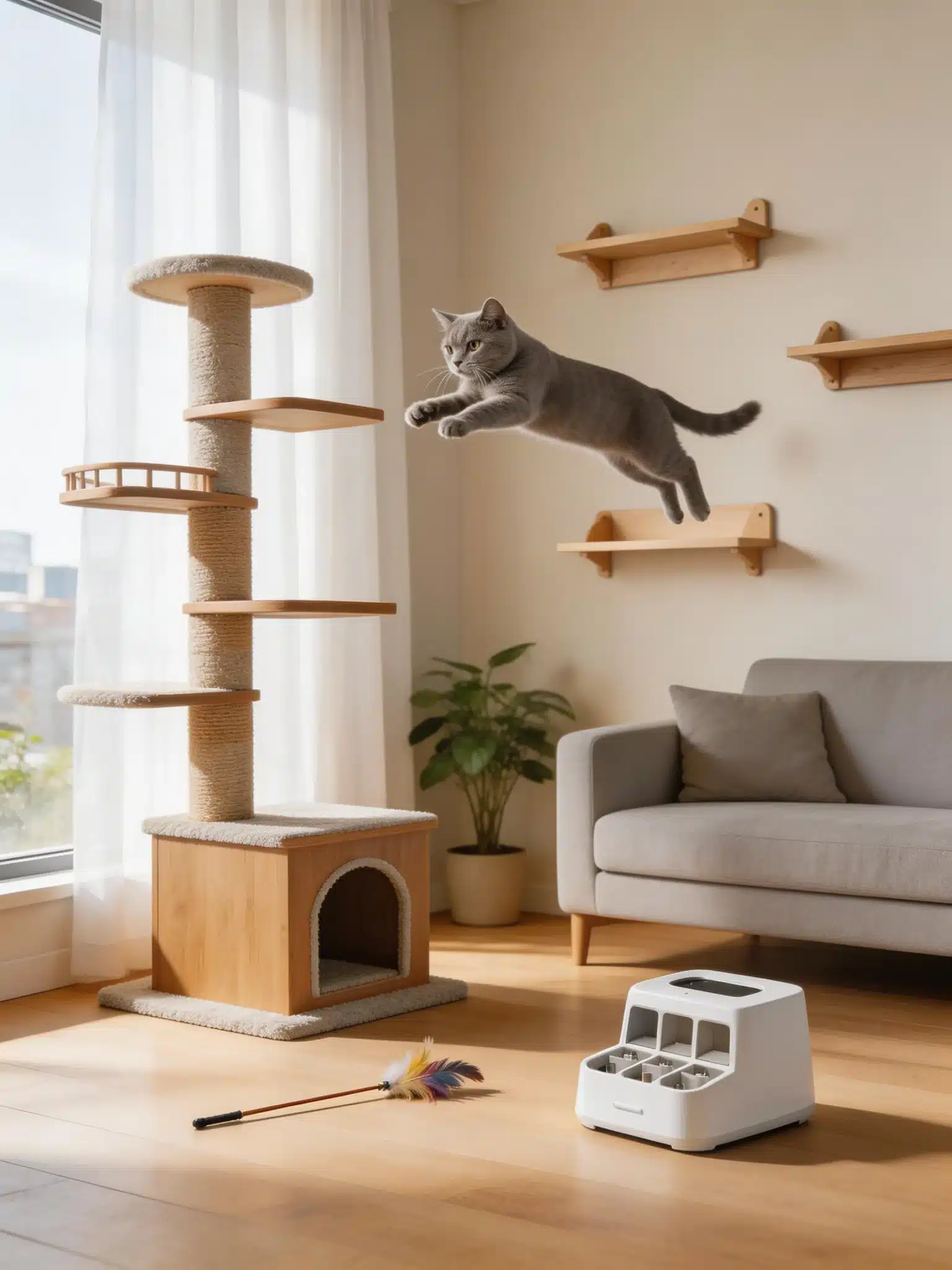
The single best thing you can do is make indoors more exciting than outdoors. A bored cat will always want what’s on the other side of the door. A stimulated cat? Not so much.
Add Vertical Space
Cats love to climb and observe from high places. A tall cat tree placed near a window gives them a bird’s-eye view without going outside.
Add cat wall shelves if floor space is limited. Vertical space doubles your cat’s territory without adding a single square foot to your home.
Rotate Their Toys
Cats get bored with the same toys fast. Keep a rotation going — put some away and bring them back out after a week. Check out ideas from our guide on best toys for indoor cats to find options that really hold their attention.
Interactive toys that mimic prey movement are especially effective. Think wand toys, motorized mice, and feather teasers.
Create a Window Perch
A window perch with suction cups gives your cat hours of entertainment. Birds, squirrels, and passing cars are like live TV for them.
You can even set up a bird feeder outside the window. Just be aware of how your cat reacts — some cats get more frustrated, while others are perfectly content just watching.
Safe Ways to Give Your Cat Some Outside Time
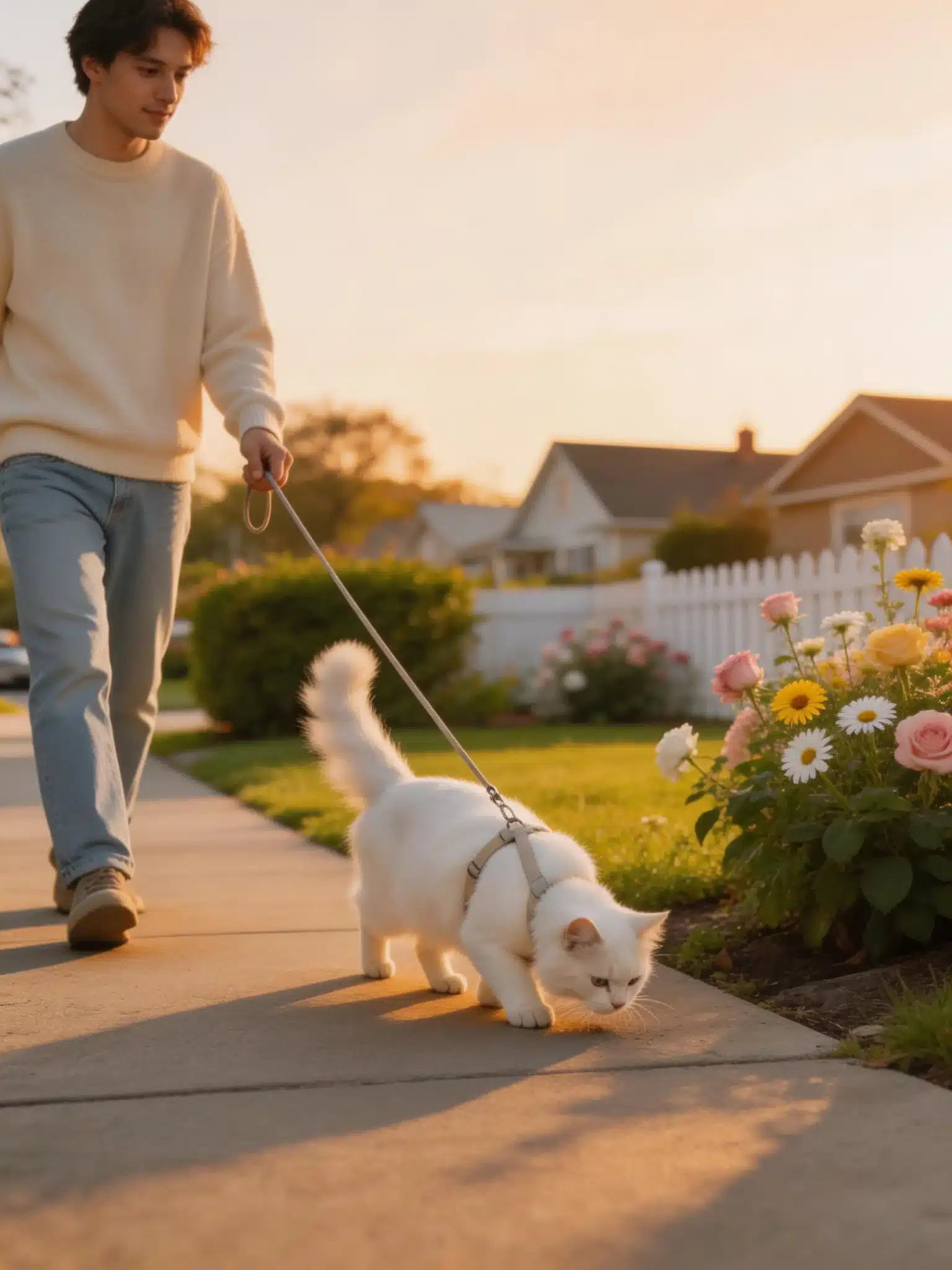
If your cat’s desire to go out is intense, completely ignoring it may not be realistic. The goal is controlled, safe outdoor access — not free-roaming.
Try Leash Training
Yes, you can walk a cat. It takes patience, but many cats take to it surprisingly well. Start with a well-fitted escape-proof cat harness and let your cat wear it indoors first before heading out.
Keep early walks short — just 5 to 10 minutes. Let your cat lead the pace. Never drag or rush them.
Build or Buy a Catio
A catio (cat patio) is an enclosed outdoor space your cat can enjoy safely. You can buy a ready-made outdoor cat enclosure or build a custom one attached to a window or door.
Catios are one of the best long-term solutions for cats that want outside time. They get fresh air, outdoor smells, and sunlight — all without any of the risks.
Use a Stroller for Calmer Cats
For cats that are nervous or older, a cat stroller lets them experience the outdoors without stress. It sounds a little silly, but many cats genuinely love it.
🛒 This Is What Vets Use For Their Own Cats
It’s also a great option for cats recovering from illness or injury who still want fresh air.
Step-by-Step: How to Stop Door-Dashing

If your cat bolts for the door every time you open it, that’s a safety emergency waiting to happen. Here’s how to tackle it:
- Never open the door wide right away — slip through a small gap and close it quickly behind you
- Set up a baby gate or secondary barrier just inside the front door
- Practice desensitizing — walk to the door repeatedly without opening it until your cat stops reacting
- Use a squirt of water or a noise deterrent the moment they approach the door (consistency matters)
- Redirect immediately — toss a toy or treat away from the door before you open it
- Reward calm behavior near the door with praise and treats
- Never punish — just redirect and reward
It takes time, but most cats learn door manners within a few weeks of consistent training.
Play More — Seriously, a Lot More
Most indoor cats don’t get nearly enough active playtime. Vets generally recommend at least two 15-minute play sessions daily — more for younger or high-energy cats.
Use play to mimic the hunt cycle: stalk, chase, catch, kill, eat. End sessions with a meal or treat so your cat feels the full satisfaction of a successful hunt.
If you have a kitten or a very active breed like a Bengal or Siamese, they may need even more. A tired cat is a happy cat — and one that’s far less interested in escaping.
Expert Insights on Indoor Cat Enrichment
Dr. Mikel Delgado, a certified cat behavior consultant, emphasizes that environmental enrichment is as important as physical health for indoor cats. She recommends thinking like a cat — focus on opportunities to hunt, climb, scratch, and hide.
According to a 2024 study published in the journal Animals, cats with access to window views and regular interactive play showed significantly lower stress behaviors than those without. Simple changes to your home really do make a measurable difference.
Frequently Asked Questions About Indoor Cats Wanting to Go Outside
Is It Cruel to Keep a Cat Indoors?
No — as long as their physical and mental needs are met. Indoor cats that are well-stimulated live longer, healthier lives. The key is enrichment: play, climbing space, and social interaction.
My Cat Has Never Been Outside — Why Do They Suddenly Want Out?
Changes in routine, a new pet, or simply maturing instincts can trigger the desire. Hormones play a role too — if your cat isn’t spayed or neutered, that’s often the main driver. A vet check is a good first step.
Will My Cat Run Away If I Let Them Outside?
It depends on the cat, but the risk is real — especially for cats that haven’t been microchipped. If you do allow outside time, always use a harness or enclosed space. Never let them roam unsupervised until they’re very well trained to return.
Can I Introduce My Indoor Cat to a Yard Safely?
Yes, but slowly. Start with a leash or catio before giving any free access. Check your yard for toxic plants, gaps in fencing, and potential predators first. Our guide on how to introduce a cat to new experiences has tips that apply here too. Gradual exposure is always safer than a sudden change.
What Breeds Are Hardest to Keep Indoors?
High-energy breeds like Bengals, Savannahs, Abyssinians, and Maine Coons tend to have the strongest drive to roam. These cats need extra enrichment and more daily play. If you’re choosing a new cat for indoor life, calmer breeds like Ragdolls or British Shorthairs adapt more easily. You might also enjoy browsing some cat name ideas while you’re at it.
Final Thoughts
Your cat wanting to go outside is completely normal — and completely manageable. Start with one enrichment change today, whether that’s a new toy, a window perch, or a short leash walk. Small steps add up fast, and your cat will thank you for it.