Normal heat discharge and pyometra discharge can look similar at first glance — but one is a life-threatening emergency. Knowing the difference between pyometra vs normal heat discharge in dogs could save your dog’s life.
Many dog owners panic during a heat cycle, or worse, dismiss early pyometra signs as routine. This guide breaks down exactly what to look for, when to act, and what questions to ask your vet.
What Is the Difference Between Pyometra and Normal Heat Discharge in Dogs?
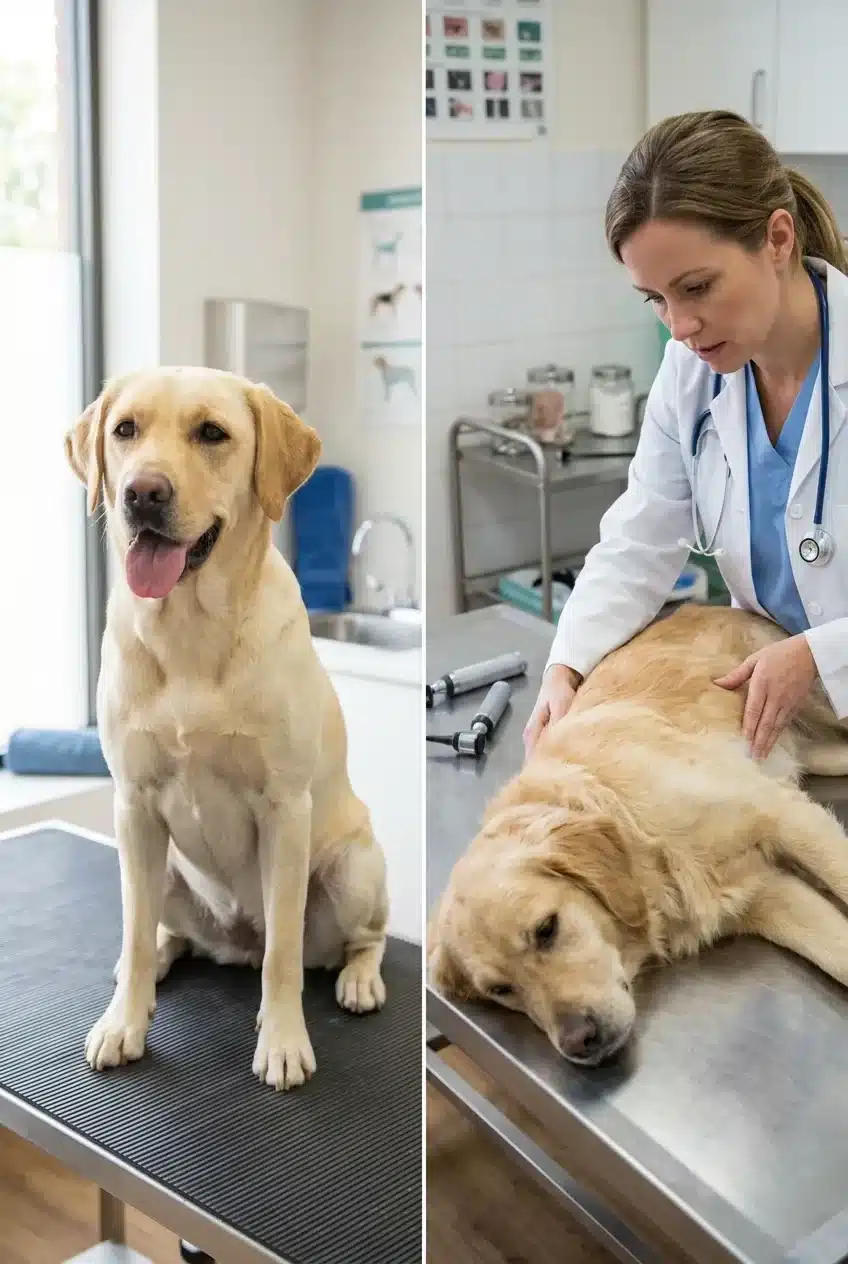
Normal heat discharge is part of a healthy reproductive cycle — it appears around the time of estrus and resolves on its own. Pyometra discharge comes from a uterine infection and requires emergency veterinary treatment, often surgery.
- Normal discharge: typically bloody or straw-colored, occurs during heat cycle weeks
- Pyometra discharge: often creamy, yellow, green, or foul-smelling
- Normal discharge: dog behaves normally, eats well, stays alert
- Pyometra: dog is lethargic, drinks excessively, may vomit
- Timing matters: pyometra usually develops 4–8 weeks after a heat cycle ends
- Open pyometra drains visibly; closed pyometra shows no discharge at all
What Does Normal Heat Discharge Look Like?
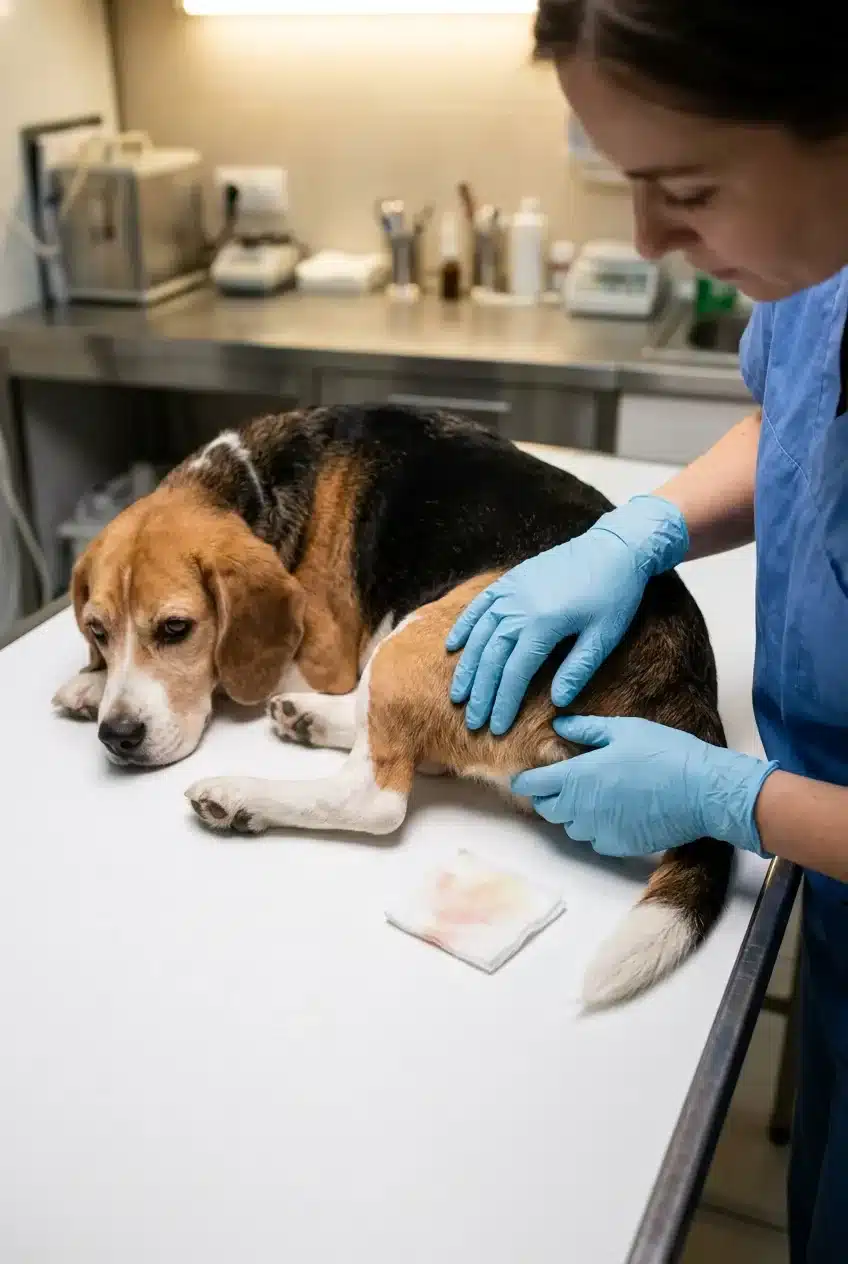
Normal heat discharge changes throughout the four stages of a dog’s estrus cycle. Understanding each stage helps you spot what belongs — and what doesn’t.
The Four Stages of a Dog’s Heat Cycle
The heat cycle has four stages: proestrus, estrus, diestrus, and anestrus. Discharge is most visible during the first two stages.
- Proestrus (Days 1–9): Bright red or pink bloody discharge, swollen vulva
- Estrus (Days 9–14): Discharge lightens to straw-yellow or pink, dog becomes receptive to mating
- Diestrus: Discharge fades and stops; cycle winds down over 2–3 months
- Anestrus: No discharge; resting phase lasting several months
The discharge during proestrus is often mistaken for injury. It is a normal part of the hormonal shift as estrogen rises.
Normal heat discharge has no foul odor and the dog acts completely like herself.
Using dog heat diapers during proestrus and estrus can help manage discharge around the home without causing the dog distress.
Get Free Dog Health Tips!
Weekly guides on keeping your dog healthy & happy
🔒 No spam. Unsubscribe anytime.
What Does Pyometra Discharge Look Like?
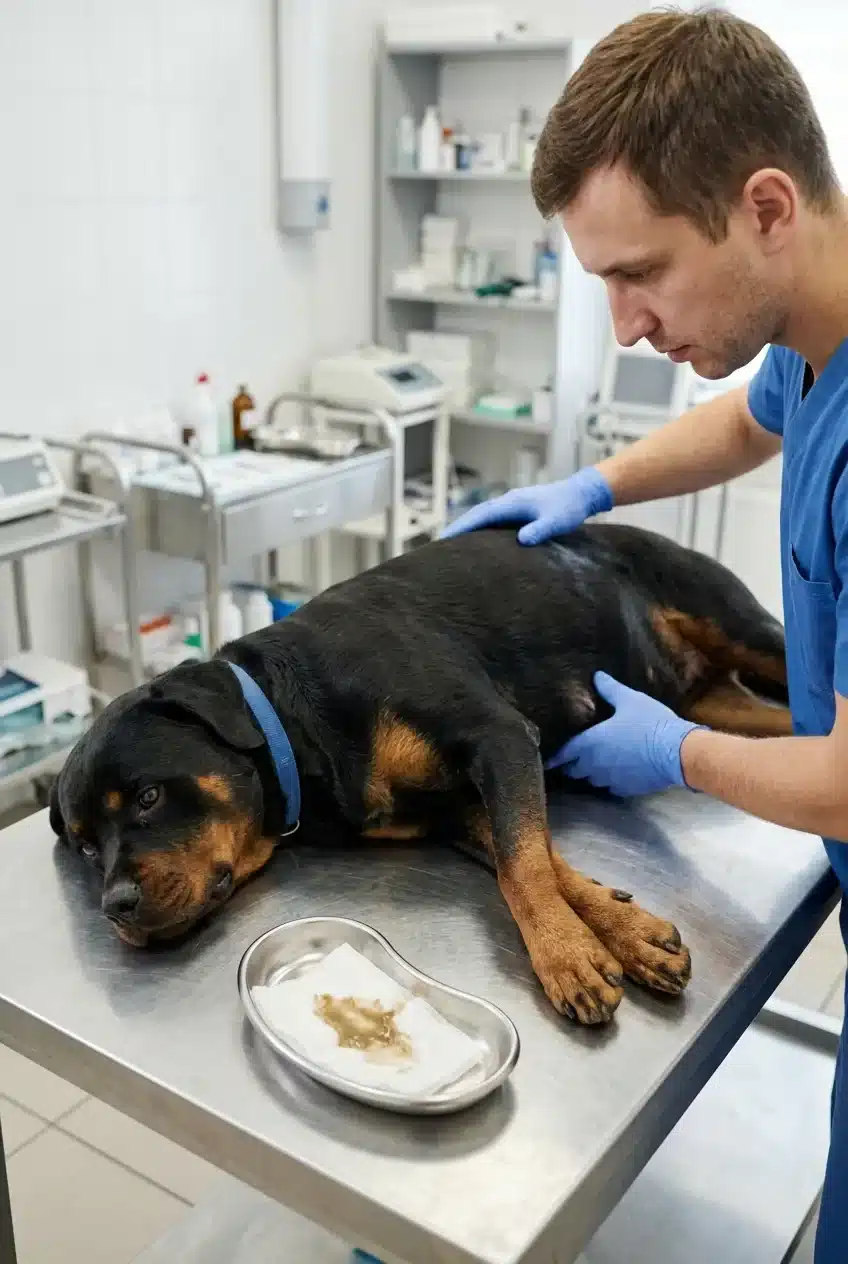
Pyometra is a bacterial infection of the uterus that typically develops in the weeks following a heat cycle. According to research published in the Journal of Small Animal Practice, pyometra affects approximately 25% of intact female dogs by age 10.
Open vs Closed Pyometra
There are two forms, and they look very different from the outside.
MOST POPULAR THIS WEEK
Vet-Recommended Articles: 👇
👉 Why Does My Dogs Skin Turn Dark And Thick After Years Of Allergy Treatment
👉 Best Home Remedies For Arthritis In Dogs With Limping
👉 How Long Does An Elimination Diet Take For Dogs With Skin Allergies
| Type | Visible Discharge? | Appearance | Risk Level |
|---|---|---|---|
| Open Pyometra | Yes | Creamy, yellow, green, or brown; often foul-smelling | High — still an emergency |
| Closed Pyometra | No | None visible; pus trapped internally | Critical — faster deterioration |
Closed pyometra is more dangerous because there are no visible warning signs. The infection progresses silently until systemic symptoms appear.
A dog with open pyometra may obsessively lick her vulva and leave stains on bedding. The discharge often has a distinct, unpleasant odor that differs sharply from normal heat discharge.
If the discharge smells rotten or looks green or grey, treat it as an emergency — do not wait to see if it improves.
How to Tell the Difference: Key Signs Side by Side
The discharge itself is only one clue. Your dog’s behavior and physical condition tell the rest of the story.
Behavioral and Physical Symptoms to Compare
| Sign | Normal Heat | Pyometra |
|---|---|---|
| Discharge color | Red, pink, or straw-yellow | Yellow, green, grey, or brown |
| Discharge smell | Mild or none | Foul, pungent |
| Timing | During heat cycle | 4–8 weeks after heat ends |
| Thirst/urination | Normal | Noticeably increased |
| Appetite | Normal or slightly reduced | Reduced or absent |
| Energy level | Normal | Lethargic, weak |
| Abdomen | Normal | May appear swollen or tender |
| Vomiting/diarrhea | Uncommon | Common in moderate to severe cases |
Excessive thirst combined with discharge after a heat cycle is a major red flag. The American Kennel Club identifies this combination as one of the most consistent early warning signs of pyometra.
Keeping track of your dog’s heat cycles on a calendar makes it much easier to notice when something falls outside the normal pattern. A pet health journal is a simple way to log cycle dates, discharge changes, and behavioral notes.
When to See a Vet Immediately
Pyometra is fatal if untreated. The uterus can rupture, causing sepsis — a condition that can kill a dog within hours. This is not a “wait and see” situation.
“Pyometra is one of the true surgical emergencies in small animal practice. Delaying treatment by even 12–24 hours can significantly worsen the prognosis.” — American Animal Hospital Association clinical guidance on reproductive emergencies
Call your vet the same day if you notice any of the following after a recent heat cycle:
- Discharge that smells bad or has changed color to yellow, green, or grey
- Your dog drinking two to three times her normal amount of water
- Lethargy, reluctance to move, or loss of interest in food
- A visibly distended or painful abdomen
- Vomiting alongside any discharge at all
For dogs showing signs of closed pyometra — no discharge but extreme lethargy and swollen belly — go straight to an emergency vet. Do not wait for a routine appointment.
If you own multiple dogs or are worried about other health threats entering your home, it is worth knowing how bird flu can affect dogs and what signs to monitor alongside reproductive health concerns.
How Is Pyometra Diagnosed and Treated?
Vets diagnose pyometra through a combination of physical exam, bloodwork, and abdominal ultrasound. Ultrasound is the most reliable tool — it shows uterine enlargement and fluid accumulation directly.
Treatment Options
The standard treatment is an ovariohysterectomy (spay surgery), which removes the infected uterus and ovaries. According to the Merck Veterinary Manual, surgical success rates are high when the dog is stabilized before the procedure.
A medical option using prostaglandins exists for breeding dogs, but it carries higher risks and a significant recurrence rate. Most veterinarians recommend surgery as the safest and most definitive solution.
Recovery after surgery typically takes 10–14 days. Using a soft recovery collar helps prevent your dog from licking or interfering with the incision site during healing.
Common Mistakes Dog Owners Make
- Assuming discharge after heat is still “part of the cycle”: Normal discharge ends with the heat cycle. Discharge appearing 4–8 weeks later is not normal — get it checked.
- Waiting because the dog is still eating: Some dogs with early pyometra maintain appetite briefly. Eating is not a reliable safety signal — combine it with all other symptoms.
- Confusing closed pyometra with digestive illness: Vomiting and a swollen belly without visible discharge often get attributed to stomach issues. If your intact female dog shows these signs post-heat, pyometra must be ruled out first.
- Skipping the vet because the discharge looks “not that bad”: Open pyometra discharge can start mild and worsen rapidly. Early presentation does not mean low urgency.
- Using home remedies to treat suspected infection: No supplement, herbal preparation, or dietary change treats pyometra. Only veterinary intervention works.
If you share your home with other small animals and are already monitoring general pet health carefully, articles like whether bed bugs can live on dogs show how easy it is to overlook household health risks when focused on one issue.
How Spaying Prevents Pyometra Entirely
Spaying eliminates pyometra risk completely by removing the uterus and ovaries. The American Veterinary Medical Association (AVMA) supports early spaying as a key preventive measure for intact female dogs not intended for breeding.
Dogs spayed before their first heat have the lowest lifetime risk of both pyometra and mammary tumors. Spaying after multiple heat cycles still eliminates future pyometra risk entirely.
If you are considering a breed that is easier to manage long-term, exploring medium sized hypoallergenic dogs or large non-shedding dogs may be useful — many owners factor in health management when choosing a breed.
For any intact female dog not being used for breeding, spaying is the single most effective way to prevent this life-threatening condition.
After a spay recovery, mental stimulation helps keep dogs calm during rest periods. A snuffle mat for dogs is a low-energy enrichment option that works well during post-surgical downtime. You can also find more guidance on enrichment in our guide to the best snuffle mats for small dogs.
Frequently Asked Questions About Pyometra vs Normal Heat Discharge: How to Tell the Difference in Dogs
Can pyometra discharge look like normal heat blood?
Pyometra discharge rarely looks like fresh heat blood. It is typically yellow, green, or grey rather than red or pink, and it has a noticeably unpleasant smell that normal heat discharge does not have.
How long after heat does pyometra usually develop?
Pyometra in dogs most often develops 4–8 weeks after a heat cycle ends. If you notice any unusual discharge or behavioral changes in this window, contact your vet promptly.
Can a dog have pyometra with no discharge at all?
Yes — closed pyometra produces no visible discharge because the cervix remains closed. This form is more dangerous and is typically identified through symptoms like lethargy, excessive thirst, vomiting, and abdominal swelling.
Is pyometra painful for dogs?
Pyometra does cause discomfort and can become severely painful as the uterus distends. Many dogs show pain indirectly through reluctance to move, hunched posture, or sensitivity when the abdomen is touched.
What age dogs are most at risk for pyometra?
Pyometra most commonly affects middle-aged to older intact female dogs, typically over six years old. However, it can occur at any age after a heat cycle, including in young dogs after their first heat.
Can pyometra resolve without surgery?
Pyometra rarely resolves without veterinary treatment. Medical management using prostaglandins exists but carries significant risks and high recurrence rates. Surgery remains the recommended treatment for most dogs according to the Merck Veterinary Manual.
The Bottom Line
The single most important distinction between pyometra vs normal heat discharge in dogs is timing and smell. Normal discharge happens during the heat cycle and has no foul odor. Pyometra discharge appears weeks after the cycle ends and often smells distinctly bad — or there is no discharge at all with closed pyometra.
If your intact female dog shows any combination of unusual discharge, excessive thirst, lethargy, or vomiting within two months of a heat cycle, call your vet today — not tomorrow.
The one action you can take right now: mark your dog’s last heat date on your calendar and set a reminder to monitor her closely for the following 8 weeks. That simple habit gives you the best chance of catching pyometra early.