A proper elimination diet for dogs with skin allergies takes a minimum of 8 to 12 weeks to produce reliable results. Most veterinary dermatologists recommend 12 weeks as the standard trial length for dogs showing chronic skin symptoms.
If your dog is scratching, chewing paws, or dealing with recurring hot spots, food allergies could be a factor — and an elimination diet is the gold-standard way to find out. Understanding how dogs live with allergies long-term starts with identifying the trigger.
How Long Does a Proper Elimination Diet Take for Dogs With Skin Allergies?
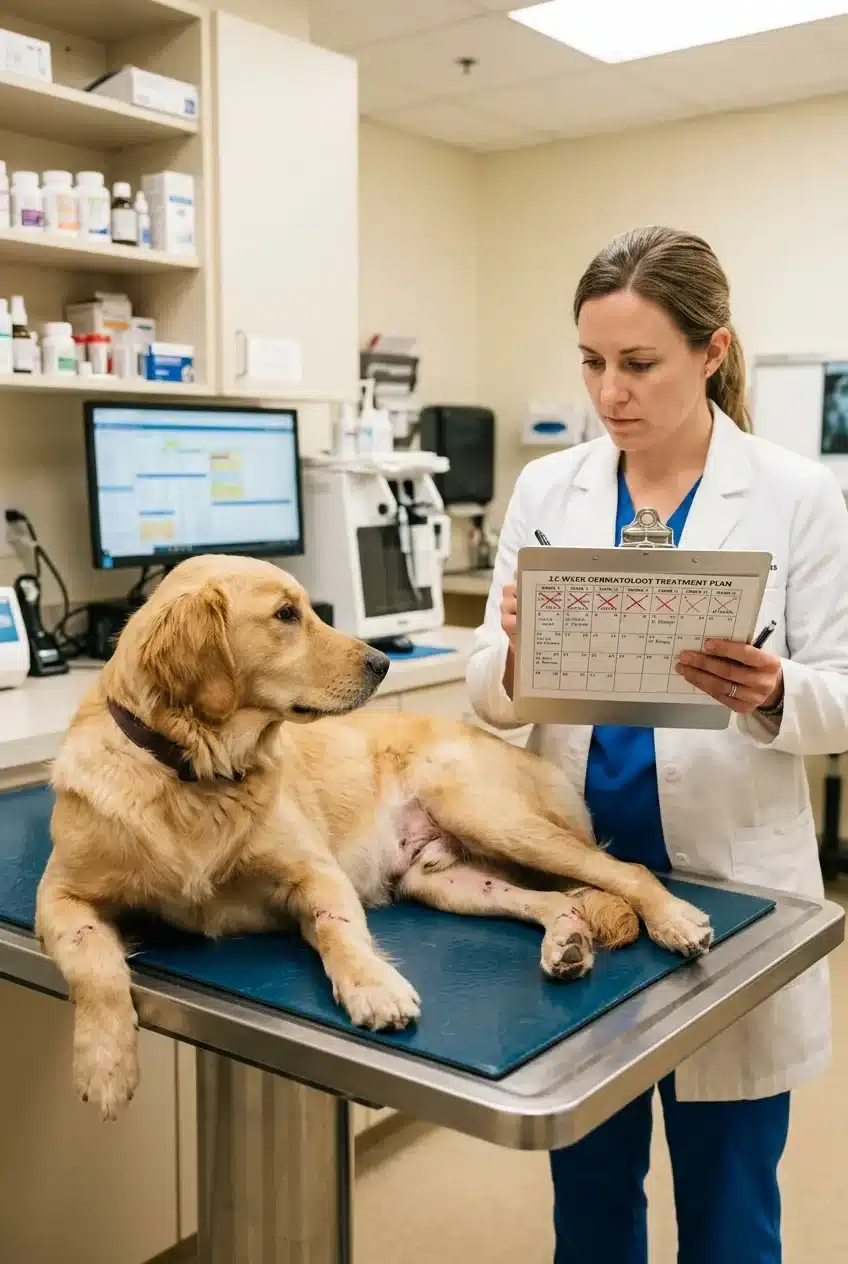
A proper elimination diet for dogs with skin allergies takes 8 to 12 weeks minimum. The American College of Veterinary Dermatology recommends 12 weeks because skin symptoms caused by food allergies can take that long to fully clear. Shorter trials often produce false negatives.
- Minimum trial length: 8 weeks for mild cases
- Recommended standard: 12 weeks per veterinary dermatology guidelines
- Some dogs with severe or chronic symptoms may need up to 16 weeks
- Improvement in itching can begin as early as weeks 4–6
- Full skin healing typically lags behind symptom relief by 2–4 weeks
- The food challenge phase adds another 2–4 weeks after the trial ends
Why 8 to 12 Weeks — and Not Less
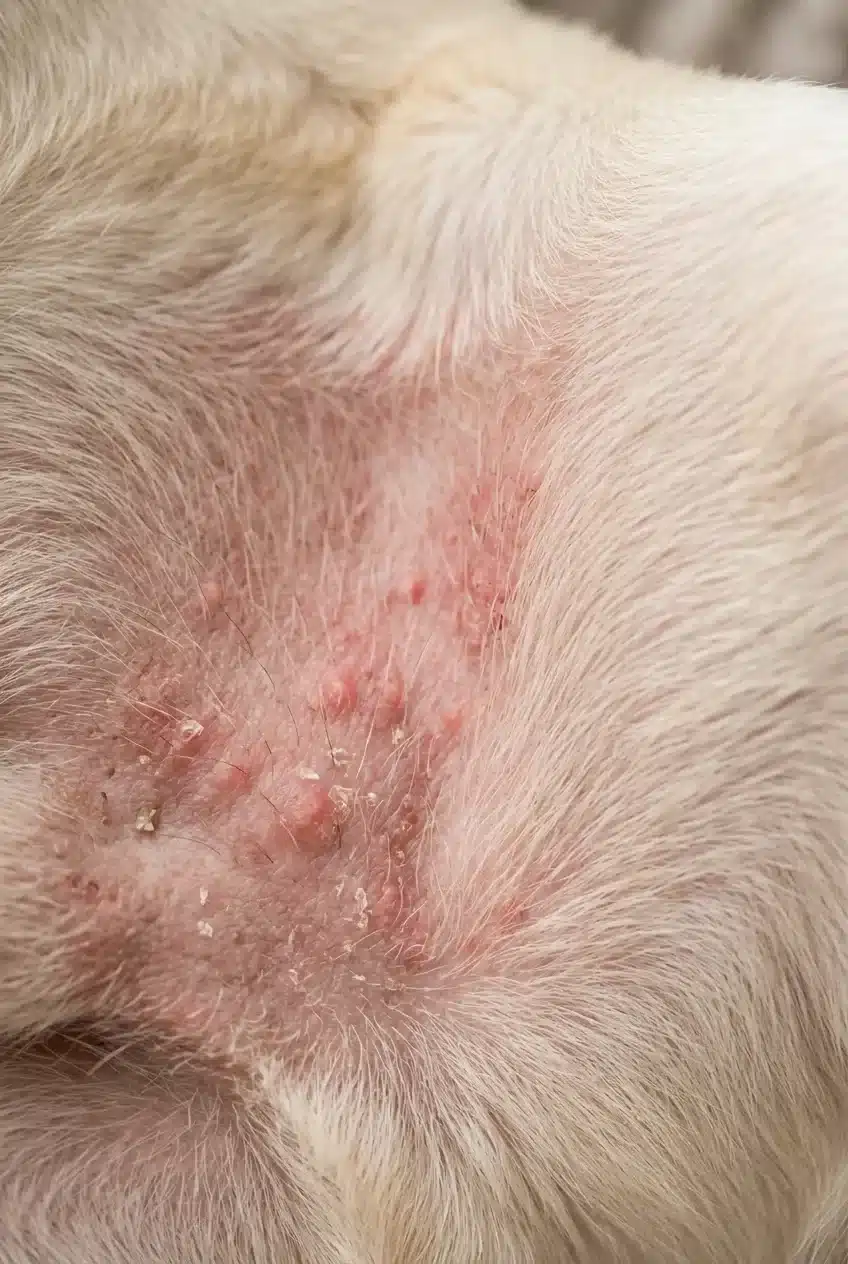
Skin allergies don’t resolve overnight. When a dog reacts to a food protein, the immune response involves IgE antibodies and inflammatory pathways that take weeks to calm down after the offending ingredient is removed.
A 2016 review published in Veterinary Dermatology found that only 25% of food-allergic dogs showed improvement within 4 weeks. By week 8, that number rose to 60%. Full resolution in most dogs required the complete 12-week window.
Cutting the trial short is the single most common reason elimination diets fail to give a clear answer.
Skin is also a slow-healing organ. Even after the immune system stops reacting, the skin barrier needs time to repair. That delay is why your dog might still look itchy at week 6 even if the diet is already working.
What Happens Each Phase
| Week Range | What to Expect |
|---|---|
| Weeks 1–3 | No visible change; allergen clearing from system |
| Weeks 4–6 | Possible mild reduction in itching |
| Weeks 7–10 | Clearer improvement in scratching and redness |
| Weeks 11–12 | Baseline skin condition established for challenge |
| Weeks 13–16 | Provocation/food challenge phase begins |
Choosing the Right Food for the Trial
Get Free Dog Health Tips!
Weekly guides on keeping your dog healthy & happy
🔒 No spam. Unsubscribe anytime.

The elimination diet only works if the food contains proteins your dog has never eaten before. This is called a novel protein diet — think venison, kangaroo, rabbit, or duck if your dog has only ever eaten chicken and beef.
Alternatively, a hydrolyzed protein diet breaks proteins into fragments too small for the immune system to recognize. These are prescription diets available through your vet, such as Royal Canin Anallergenic or Hill’s z/d.
“Hydrolyzed diets are the most reliable option when you are unsure what proteins the dog has been exposed to, especially in multi-pet households.” — Dr. Thierry Olivry, Professor of Veterinary Dermatology, North Carolina State University
Over-the-counter foods labeled “limited ingredient” are not guaranteed to be safe for a diagnostic trial. A 2017 study in BMC Veterinary Research tested 14 commercial limited-ingredient diets and found that 13 contained undeclared protein sources.
For a reliable trial, use a hydrolyzed protein prescription dog food or a vet-approved novel protein diet — not a store-bought “sensitive stomach” formula.
What About Treats and Supplements?
Every single thing your dog eats during the trial must come from the elimination diet. That includes treats, chews, flavored medications, and toothpaste.
A single beef-flavored chew given once a week is enough to invalidate the trial. Use plain novel-protein treats — or small pieces of the elimination diet kibble — as rewards instead. A single-ingredient novel protein dog treat is worth keeping on hand throughout the trial.
How to Run the Food Challenge After the Trial
The food challenge is the step that confirms food allergy is actually the cause — and it is just as important as the trial itself. Without it, you cannot be certain whether the diet worked or whether the dog simply improved on its own.
- Wait for baseline. Only start the challenge once your dog’s skin has been stable for at least 2 consecutive weeks.
- Reintroduce one protein at a time. Feed the original food or a single ingredient for up to 14 days.
- Watch for a reaction. Most food-allergic dogs will flare within 1–7 days of reintroducing the culprit ingredient.
- Document symptoms. Keep a daily log of scratching, redness, paw chewing, and ear odor to spot patterns clearly.
- Return to the elimination diet. If a reaction occurs, go back to the safe diet until skin clears, then test the next ingredient.
A positive reaction during the food challenge is actually good news — it confirms the diagnosis so you can build a permanent safe diet.
If soothing irritated skin between phases is a concern, knowing how to soothe dog skin allergies during flare-ups can help keep your dog comfortable while the skin recovers.
Factors That Change the Timeline
Not every dog follows the same schedule. Several factors can push the trial closer to 16 weeks or shorten it toward 8.
- Multiple food allergies: Dogs reacting to 3+ proteins take longer to clear and longer to show improvement
- Concurrent environmental allergies: Pollen, dust mites, or mold can mask food allergy improvements
- Secondary skin infections: Bacterial or yeast infections caused by scratching must be treated separately or they obscure results
- Age and immune history: Older dogs with years of chronic skin disease may show slower healing
- Breed predisposition: West Highland Terriers, Labrador Retrievers, and French Bulldogs are more prone to food allergies and may show more complex responses
If your dog also has environmental triggers, the elimination diet will not resolve all symptoms. Your vet may recommend testing for environmental allergies alongside or after the food trial. Some owners also ask about how long Cytopoint lasts in dogs as a way to manage itch while the elimination trial runs its course.
When to Talk to a Veterinary Dermatologist
A board-certified veterinary dermatologist is the best resource when a standard elimination trial has not produced clear results after 12 weeks. They can run intradermal skin testing to separate food and environmental triggers.
The American College of Veterinary Dermatology maintains a searchable directory of certified specialists by location. A referral from your regular vet is usually all you need to access one.
Common Mistakes That Extend the Timeline
- Starting with a store-bought limited ingredient diet: Cross-contamination with undeclared proteins can invalidate weeks of work. Fix: Use a prescription or vet-verified novel protein diet from the start.
- Giving flavored medications or chews: Flavored heartworm preventives and dental chews often contain beef or chicken. Fix: Ask your vet for unflavored versions or tablet alternatives before starting the trial.
- Stopping early because there is no visible improvement: Most dogs do not show change until week 4–6. Fix: Commit to the full 12 weeks before drawing conclusions.
- Not tracking symptoms daily: Gradual improvements are easy to miss without a log. Fix: Use a simple notebook or a pet health journal to record scratch frequency and skin condition each day.
- Skipping the food challenge: Without reintroducing the old food, you cannot confirm food allergy was the actual cause. Fix: Always complete the provocation phase after a successful trial.
Frequently Asked Questions About How Long Does a Proper Elimination Diet Take for Dogs With Skin Allergies
Can an elimination diet take longer than 12 weeks?
Yes, an elimination diet can take up to 16 weeks for dogs with multiple food allergies or concurrent skin infections. Veterinary dermatologists may extend the trial if results at 12 weeks are inconclusive.
Will my dog’s itching stop completely during the trial?
Itching may not stop completely during the trial if environmental allergens are also present. Most food-allergic dogs see a significant reduction in scratching by weeks 8–10 when the correct diet is used.
Can I use a home-cooked diet instead of commercial prescription food?
A home-cooked elimination diet can work, but it must be formulated by a board-certified veterinary nutritionist to ensure it is nutritionally complete. Nutritional deficiencies during a 12-week trial can cause separate health problems.
Is an elimination diet the same as an allergy blood test?
An elimination diet is not the same as a blood allergy test. Serum allergy tests for food reactions have poor diagnostic accuracy according to the Veterinary Dermatology guidelines; a dietary trial is still the gold standard.
What do I do if my dog refuses to eat the new diet?
Transition slowly over 5–7 days by mixing increasing amounts of the new food with the old. If your dog refuses outright, ask your vet about a different novel protein or a palatable hydrolyzed option.
Can puppies do an elimination diet for skin allergies?
Puppies can undergo an elimination diet, but the food must meet growth-stage nutritional requirements. A veterinary nutritionist should approve the diet before starting a trial in any dog under 12 months old.
The Bottom Line
A proper elimination diet for dogs with skin allergies takes 8 to 12 weeks at minimum — and the food challenge phase adds another 2 to 4 weeks on top of that. The full process from start to confirmed diagnosis typically runs 10 to 16 weeks.
The most concrete step you can take today is to book a vet appointment and ask specifically about a hydrolyzed or novel protein prescription diet. Starting with the right food from week one is what separates a clear result from a wasted three months.
Managing allergies is a long game, and knowing exactly what your dog reacts to makes every future feeding decision simpler. For a broader look at what life looks like after diagnosis, the guide on how dogs live with allergies is a practical next read.