Spinal disease and neurological episodes in older dogs are related but distinct conditions — spinal disease involves physical damage to the spine or discs, while neurological episodes like seizures or vestibular attacks stem from brain or nerve signaling problems. Knowing the difference shapes every decision you make next.
Watching your senior dog stumble, collapse, or lose control of their legs is terrifying. Understanding what you are actually seeing — spinal disease vs. neurological episodes in older dogs — helps you act fast and communicate clearly with your vet.
What Is the Difference Between Spinal Disease and Neurological Episodes in Dogs?
Spinal disease in dogs refers to structural problems — disc herniation, vertebral instability, or spinal cord compression — that disrupt nerve signals between the brain and body. Neurological episodes, such as seizures or vestibular attacks, involve abnormal electrical activity or inner ear dysfunction rather than a physical blockage.
- Spinal disease causes progressive weakness, pain, or paralysis in the limbs.
- Seizures involve uncontrolled muscle activity, loss of consciousness, or paddling.
- Vestibular episodes cause sudden head tilt, rolling, and loss of balance.
- Spinal symptoms usually worsen over hours to days, not seconds.
- Neurological episodes typically start and stop abruptly.
- Both conditions require veterinary assessment — home observation alone is not enough.
Recognizing Spinal Disease in Older Dogs
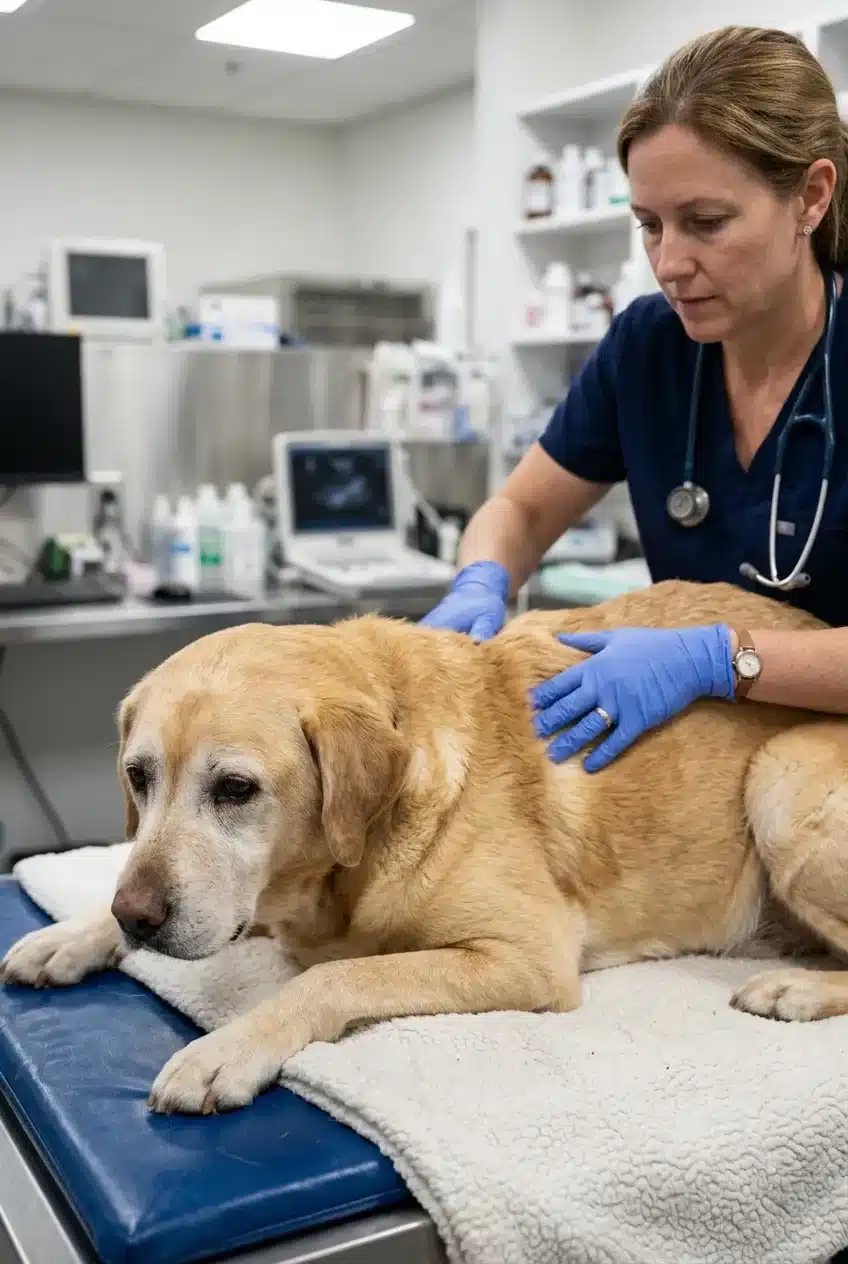
Spinal disease in senior dogs most often shows up as weakness, reluctance to move, or pain along the back and neck. The most common cause is intervertebral disc disease (IVDD), where a disc bulges or ruptures and presses on the spinal cord.
Key Physical Signs
- Dragging one or more limbs when walking
- Hunched posture or reluctance to jump or climb stairs
- Crying out when touched along the spine
- Loss of bladder or bowel control
- Knuckling — walking on the tops of paws instead of the pads
These signs develop over hours, days, or weeks. They do not typically appear and disappear the way a seizure or vestibular attack does.
IVDD affects chondrodystrophic breeds — Dachshunds, Beagles, Cocker Spaniels — at higher rates, but any older dog can develop degenerative spinal disease.
Degenerative myelopathy (DM) is another common spinal condition in older dogs. It causes slowly progressive hind limb weakness and is seen frequently in German Shepherds, Boxers, and Pembroke Welsh Corgis. According to the Orthopedic Foundation for Animals, DM has a confirmed genetic marker (SOD1 mutation) that can be tested.
Recognizing Neurological Episodes in Older Dogs
Get Free Dog Health Tips!
Weekly guides on keeping your dog healthy & happy
🔒 No spam. Unsubscribe anytime.
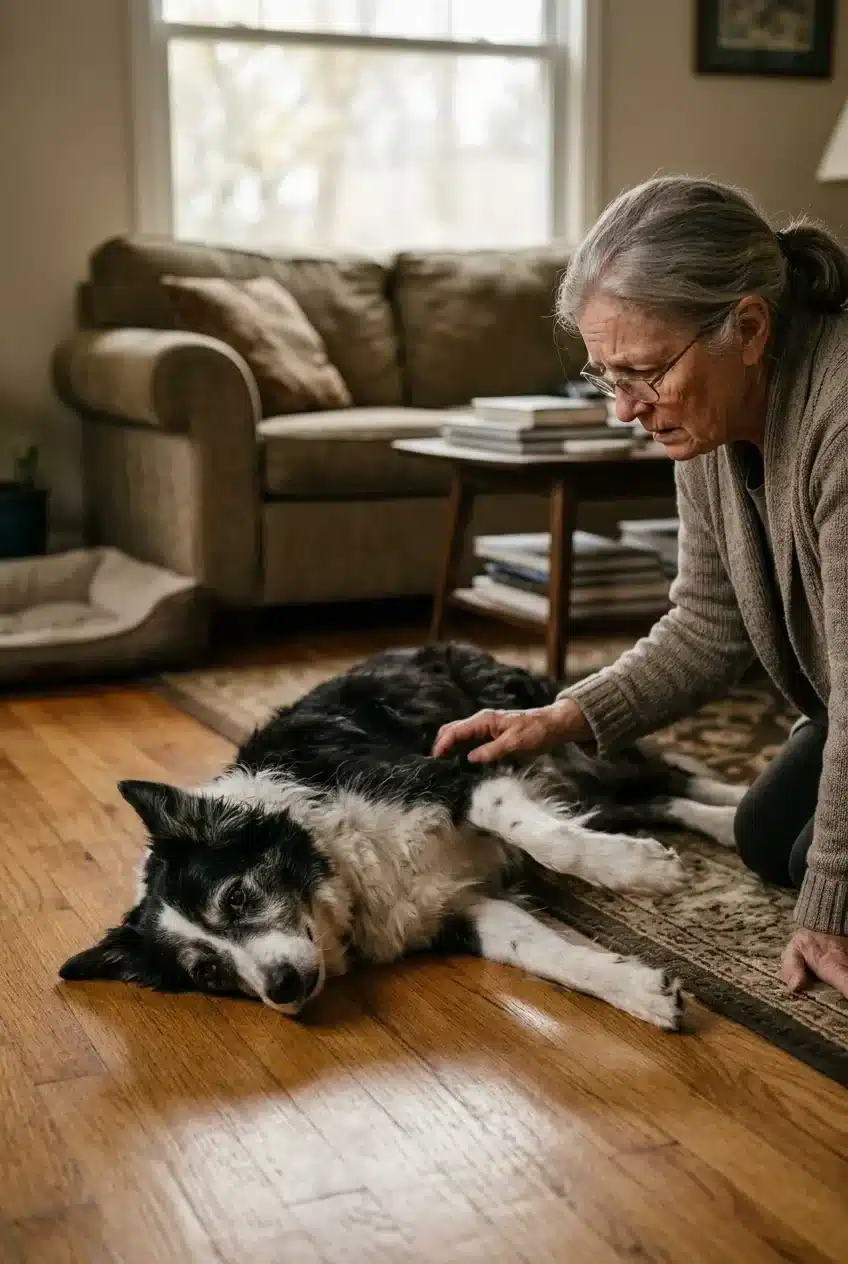
Neurological episodes in older dogs come on suddenly and usually resolve within minutes. The two most common types are seizures and vestibular attacks — and they look alarming but have very different causes.
Seizures
Seizures involve abnormal electrical discharges in the brain. In senior dogs, new-onset seizures are often linked to brain tumors, metabolic disease, or toxin exposure rather than idiopathic epilepsy, which typically begins in younger dogs.
- Signs: paddling limbs, jaw chomping, loss of consciousness, involuntary urination
- Duration: usually 1–3 minutes
- After the episode: a post-ictal phase of confusion, temporary blindness, or exhaustion lasting minutes to hours
A dog who has had one seizure after age seven should be evaluated for underlying disease. The American College of Veterinary Internal Medicine recommends blood panels, urinalysis, and brain imaging for any senior dog with new-onset seizures.
MOST POPULAR THIS WEEK
Vet-Recommended Articles: 👇
👉 Why Does My Dogs Skin Turn Dark And Thick After Years Of Allergy Treatment
👉 Best Home Remedies For Arthritis In Dogs With Limping
👉 How Long Does An Elimination Diet Take For Dogs With Skin Allergies
Vestibular Episodes
Vestibular disease affects the inner ear or brainstem and causes sudden, dramatic loss of balance. Many owners mistake it for a stroke.
- Signs: head tilt, rapid involuntary eye movement (nystagmus), falling or rolling to one side
- Onset: seconds, often worse in the first 24–72 hours
- Recovery: most idiopathic cases improve significantly within 72 hours
If your dog has shown sudden imbalance, reading about the key differences between seizures and vestibular disease in dogs will help you identify which event actually occurred.
Side-by-Side Comparison: Spinal Disease vs. Neurological Episodes
This table shows the core differences at a glance. Use it to help describe what you saw to your veterinarian.
| Feature | Spinal Disease | Neurological Episode |
|---|---|---|
| Onset speed | Hours to weeks | Seconds |
| Duration of signs | Persistent | Minutes (then resolves) |
| Pain present? | Often yes | Rarely |
| Consciousness affected? | No | Yes (seizures) |
| Limb weakness pattern | Progressive, asymmetric possible | Generalized or absent |
| Head tilt / eye movement | Rare | Common in vestibular |
| Improves with rest? | Sometimes briefly | Yes, within hours to days |
When in doubt, record a video of the episode on your phone — it is one of the most useful tools you can give your vet.
What to Do Next: Step-by-Step
Acting quickly and calmly gives your dog the best outcome. Follow these steps whether you are dealing with a suspected spinal event or a neurological episode.
- Keep your dog still and safe. Move furniture away. Do not restrain a seizing dog forcefully — guide them away from hazards using a folded blanket.
- Time the episode. Note when it started and stopped. Any seizure lasting more than five minutes is a medical emergency requiring immediate veterinary care.
- Record what you see. A short video on your phone captures behaviors — eye movement, limb position, posture — that are hard to describe accurately later.
- Assess after the event. Can your dog stand? Walk? Is there pain when you gently touch the spine? Note any loss of bladder or bowel control.
- Call your vet immediately. For spinal signs — especially sudden paralysis or inability to urinate — do not wait for a morning appointment. Spinal cord compression can become irreversible within 24–48 hours without treatment.
- Transport carefully. For dogs with suspected spinal injury, carry them on a flat, firm surface. A small animal stretcher board minimizes spinal movement during transport.
- Prepare your history. Bring a list of all current medications, recent vaccinations, diet changes, and any other symptoms — even ones that seemed minor.
The American Animal Hospital Association (AAHA) states that rapid intervention in acute spinal cord injury significantly improves the chance of functional recovery, with outcomes worsening after a delay beyond 24 hours.
Diagnostics Your Vet Will Use
Differentiating spinal disease from neurological episodes requires more than a physical exam. Your vet will build a picture using several tools.
For Suspected Spinal Disease
- Neurological exam: Tests reflexes, pain response, and proprioception (paw placement awareness)
- X-rays: Identify disc space narrowing, bony changes, or vertebral instability
- MRI or CT scan: The gold standard for visualizing disc herniation and spinal cord compression
- Myelogram: Contrast imaging used when MRI is unavailable
For Suspected Neurological Episodes
- Blood panel and urinalysis: Rule out metabolic causes like liver disease, hypoglycemia, or kidney failure
- Blood pressure measurement: Hypertension can trigger seizures in older dogs
- MRI of the brain: Evaluates for tumors, inflammation, or infarcts
- CSF tap: Cerebrospinal fluid analysis to detect inflammation or infection
Senior dogs with new neurological signs should also be screened for systemic diseases. Conditions like Cushing’s disease and heart disease can both produce neurological symptoms that mimic primary brain or spinal conditions.
Using a supportive orthopedic dog bed during recovery from a spinal event helps reduce pressure on the spine while your dog rests between vet visits.
Common Mistakes Dog Owners Make
- Waiting to see if it gets better: Spinal cord compression can cause permanent paralysis if not treated within 24–48 hours. Call your vet the same day symptoms appear, not the next morning.
- Assuming it was “just a bad dream”: Paddling, vocalizing, or stiffening during sleep can be seizure activity. A sleep movement disorder and a seizure look very different on video — record it next time and show your vet.
- Giving human pain medication: Ibuprofen and acetaminophen are toxic to dogs. Do not administer anything without veterinary guidance, even if your dog is clearly in pain.
- Skipping the post-episode vet visit: A dog that recovers fully from a vestibular attack still needs a workup — some episodes are caused by middle ear infections or, less commonly, a brainstem lesion.
- Misreading Lyme disease signs as spinal disease: Lyme disease in dogs can cause joint pain and shifting lameness that resembles early spinal disease. A tick panel is worth including in the diagnostic workup.
Supporting Your Dog at Home During Recovery
After diagnosis and initial treatment, home care plays a big role in recovery. For spinal disease managed medically — rather than surgically — strict rest for 4–6 weeks is standard protocol.
Restrict your dog to a small, padded area using a soft-sided indoor exercise pen. This prevents jumping or twisting that could re-injure a healing disc.
For dogs recovering from vestibular episodes, non-slip surfaces are essential. Place non-slip floor mats throughout the house to prevent falls while coordination returns.
Dogs with concurrent systemic conditions like heartworm disease may need modified recovery protocols — always confirm with your vet before starting any exercise reintroduction.
Consistent, calm reassurance during recovery reduces stress-related complications and helps your dog settle into a rest routine more quickly.
Frequently Asked Questions About Spinal Disease vs. Neurological Episodes in Older Dogs: The Difference and What to Do Next
Can a dog recover fully from a spinal disease episode?
Full recovery from spinal disease in dogs depends on severity and how quickly treatment begins. Dogs with mild to moderate compression treated within 24 hours have significantly better outcomes than those treated after paralysis sets in.
How do I know if my dog had a seizure or a vestibular attack?
Seizures typically involve loss of consciousness, paddling, and a post-event confusion phase. Vestibular attacks keep the dog conscious but cause head tilt, rolling, and rapid eye movement — usually resolving within 72 hours.
Is vestibular disease in older dogs the same as a stroke?
Vestibular disease in older dogs is not the same as a stroke, though they look similar. Idiopathic vestibular syndrome has no known cause and usually resolves on its own, while a true stroke requires imaging to diagnose.
At what age do spinal problems typically start in dogs?
Spinal problems in dogs often appear between ages 3–7 in breeds prone to IVDD, and from age 7 onward for degenerative myelopathy. Any breed can develop spondylosis or disc disease with age.
Should I use a dog wheelchair if my dog has spinal disease?
A dog wheelchair can help maintain mobility and muscle mass in dogs with hind-limb weakness from spinal disease. Your veterinarian or a veterinary rehabilitation specialist should assess your dog before fitting one.
Can dental disease or other infections trigger neurological episodes?
Severe dental disease in dogs can lead to bacteremia and, in rare cases, affect the brain or spinal cord. Routine dental care is one preventive step in overall neurological health for older dogs.
The Single Most Important Step You Can Take Today
The clearest takeaway from spinal disease vs. neurological episodes in older dogs is this: timing matters more than almost anything else.
A dog showing sudden hind-limb weakness, inability to urinate, or back pain needs same-day veterinary care — not a wait-and-see approach. A dog who had a brief, self-resolving episode still needs a full workup within 24–48 hours.
Book that appointment today, bring your phone video, and write down exactly when the symptoms started — that information alone can change the diagnosis.