To stop a puppy from chewing garden plants without sacrificing your landscaping, use a combination of physical barriers, taste deterrents, and redirected chewing behavior. Most puppies chew out of teething discomfort, boredom, or curiosity — not stubbornness.
If your garden beds are taking a beating, you are not alone. Puppies explore the world with their mouths, and lush greenery is irresistible. The good news is you can protect your plants and keep your puppy safe without tearing up everything you have grown.
How Do I Stop My Puppy From Chewing Garden Plants?
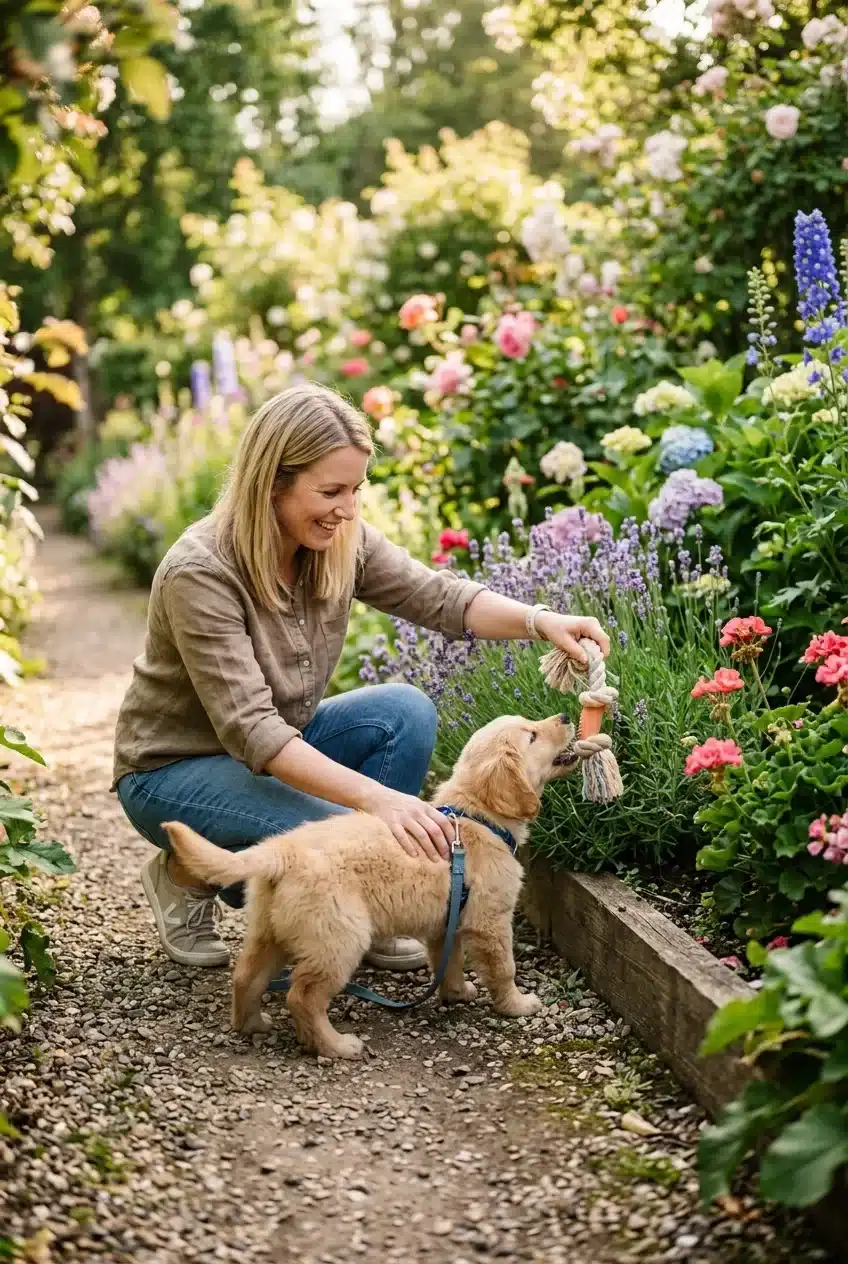
Stop a puppy from chewing garden plants by blocking access to plant beds, applying safe bitter sprays to foliage, and teaching a firm “leave it” command. Supervision and consistent redirection to appropriate chew toys are the fastest routes to lasting results.
- Use low garden fencing or wire barriers to physically block plant beds.
- Apply bitter apple or citrus-based sprays directly to plant leaves and stems.
- Teach the “leave it” command using positive reinforcement training.
- Provide durable chew toys as a legal outlet for teething energy.
- Supervise outdoor time until reliable recall and “leave it” behaviors are solid.
- Remove or fence off any plants confirmed to be toxic to dogs.
Why Puppies Chew Plants in the First Place
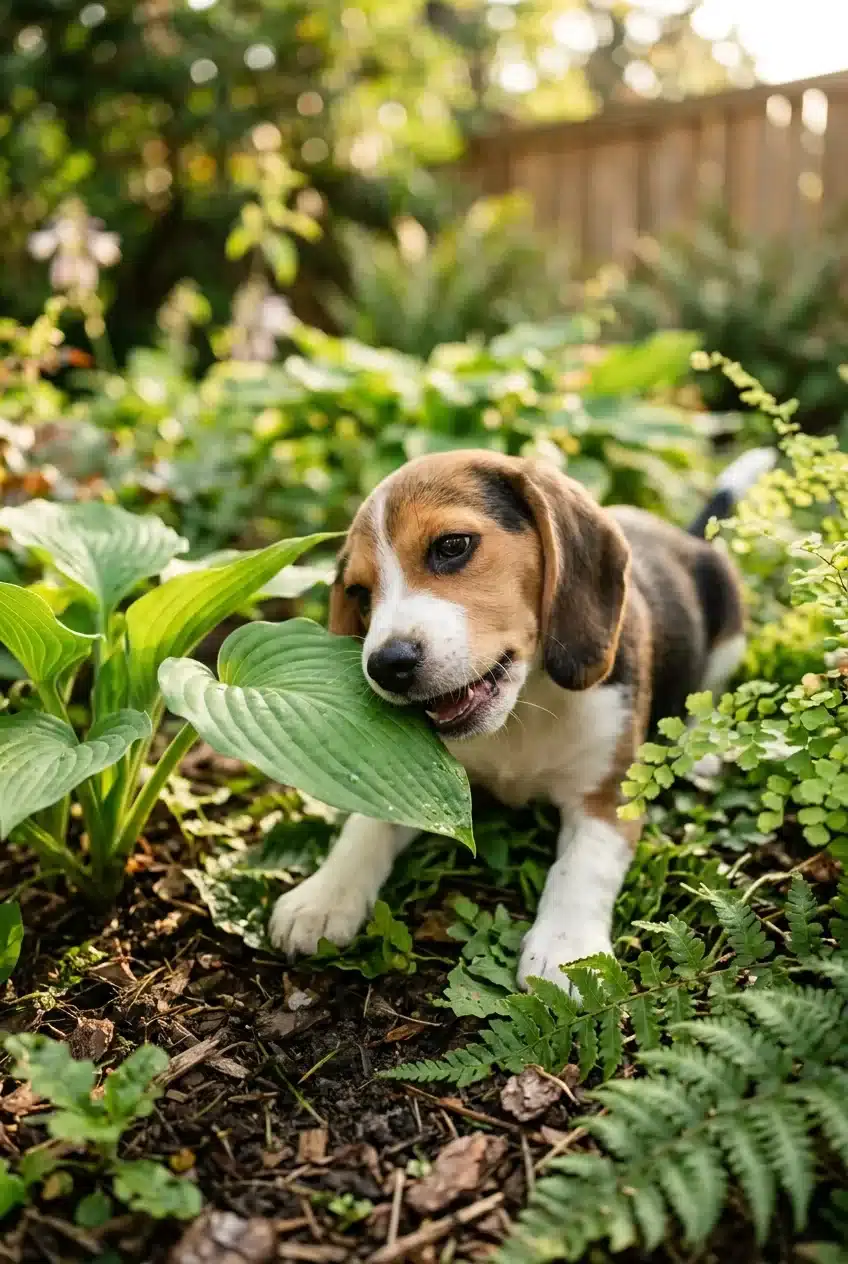
Puppies chew plants primarily because of teething, sensory exploration, and under-stimulation. Understanding the root cause helps you choose the right fix.
Between 3 and 7 months of age, puppies lose their baby teeth and grow adult teeth. The American Veterinary Medical Association notes that chewing provides relief during this uncomfortable period — plants, with their varied textures, become convenient targets.
“Destructive chewing in puppies is almost always a sign of a need that is not being met — teething pain, boredom, or insufficient exercise.” — American Kennel Club, Puppy Behavior Resources
Boredom is the other big driver. A puppy left alone in the garden with nothing to do will self-entertain, and your rose bushes will pay the price.
Identifying the trigger — teething versus boredom — determines which solution to prioritize first.
Get Free Dog Health Tips!
Weekly guides on keeping your dog healthy & happy
🔒 No spam. Unsubscribe anytime.
Signs Your Puppy Is Chewing From Teething vs. Boredom
| Chewing Type | Signs | Best Fix |
|---|---|---|
| Teething | Chews anything firm, drools more, seeks cool textures | Frozen chew toys, textured rubber chews |
| Boredom | Chews intermittently, paces, digs alongside chewing | Exercise, puzzle feeders, supervised play |
| Curiosity | Mouths then drops plants, sniffs first | Redirection and “leave it” training |
Physical Barriers That Actually Protect Your Plants
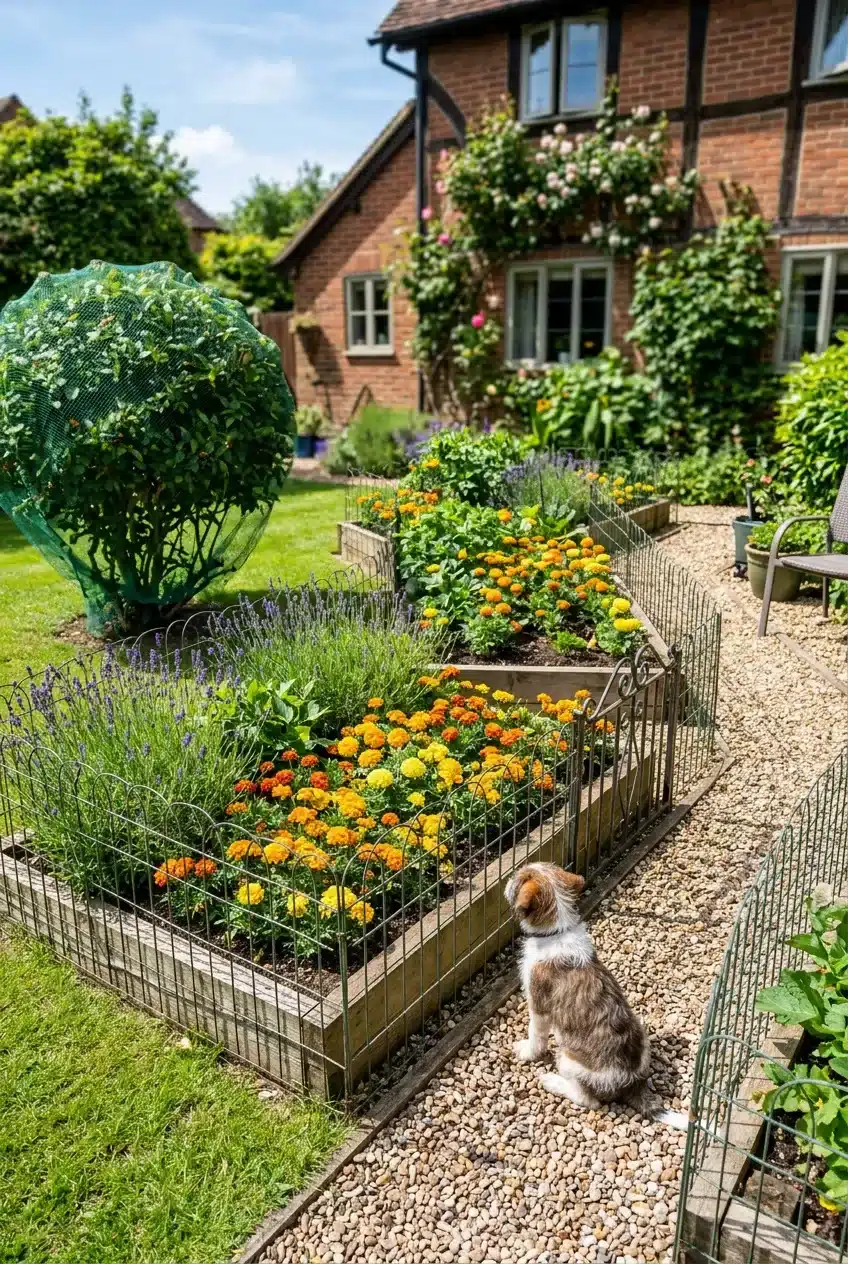
Physical barriers are the most reliable short-term solution to stop a puppy from chewing garden plants. They work immediately, require no training, and protect your landscaping while you build better habits.
Garden Fencing and Edging
Low decorative fencing creates a clear boundary without ruining the look of your garden. Options like decorative garden border fencing come in metal or bamboo and blend into most landscaping styles.
A height of 18 to 24 inches deters most puppies from stepping into plant beds. Pair it with consistent correction if the puppy attempts to jump or push through.
MOST POPULAR THIS WEEK
Vet-Recommended Articles: 👇
👉 Why Does My Dogs Skin Turn Dark And Thick After Years Of Allergy Treatment
👉 Best Home Remedies For Arthritis In Dogs With Limping
👉 How Long Does An Elimination Diet Take For Dogs With Skin Allergies
Wire Plant Cages
Individual plant cages protect specific specimens — like a prized hydrangea or newly planted shrubs — without fencing the entire border. They are temporary and removable once the puppy matures past the chewing phase.
Physical barriers buy you time. Training builds the permanent solution.
Raised Beds and Planters
Raised garden beds elevated 24 inches or more put plants out of reach entirely for smaller breeds. For larger breeds, elevated planters on patios serve the same purpose. This doubles as good garden design with zero compromise to your landscaping.
Taste Deterrents: What Works and What Doesn’t
Bitter taste deterrents exploit a puppy’s dislike of certain flavors. When applied consistently, they train a negative association with specific plants.
Products containing bitter apple (denatonium benzoate) are widely used and recognized as safe by veterinary professionals. A bitter apple spray for dogs applied to plant stems and lower leaves creates an unpleasant taste without harming the foliage.
Natural DIY Deterrents
- Diluted white vinegar: Spray on stems and soil edges. Test on one leaf first to check for plant sensitivity.
- Citrus peel: Place orange or lemon peel around the base of plants. Most dogs dislike citrus scent strongly.
- Cayenne pepper: Lightly sprinkle around plant bases — not directly on leaves. Avoid if your puppy tends to rub their face on the ground, as it can irritate eyes.
Reapply any deterrent after rain or watering. Consistency is what makes them effective — a single application rarely holds.
If you prefer a ready-made option, dog repellent spray for garden plants formulas are designed to last longer than DIY solutions between applications.
Training Your Puppy to Leave Plants Alone
Training is the only solution that generalizes across your whole garden — and every other garden your puppy ever visits. The “leave it” command is the single most useful tool here.
How to Teach “Leave It” in the Garden
- Start indoors with a low-value object. Place a treat on the floor, cover it with your hand, and say “leave it” firmly. Reward with a different treat when the puppy backs off.
- Progress to outdoor objects once the indoor version is reliable. Use a long training lead so you can interrupt plant-chewing attempts without chasing.
- Mark the exact moment the puppy moves away from the plant using a clicker or a sharp “yes.” Timing matters — reward within 2 seconds of the correct behavior.
- Practice near actual plants daily for short 5-minute sessions. Gradually reduce the lead length as reliability improves.
- Expect 4 to 8 weeks for consistent outdoor reliability, according to training guidelines from the Association of Professional Dog Trainers.
Pair “leave it” with an immediate redirect to a durable puppy chew toy. The puppy learns that ignoring the plant earns something better.
If your puppy also chews furniture and other household items when unsupervised, the same principles apply — you can find a detailed breakdown in this guide on how to stop a puppy from chewing furniture when you’re not home.
Training takes patience, but it is the only fix that works when you are not watching.
Managing Energy Before Garden Time
A tired puppy is a safer puppy. Exercise your puppy before letting them loose in the garden — a 10 to 15 minute walk or play session dramatically reduces the urge to mouth everything in sight.
Puppies that spend large amounts of time alone in gardens are more likely to develop repetitive destructive behaviors. For puppies showing signs of distress when left outside alone, review strategies for teaching your puppy to be alone without separation anxiety.
Plant Safety: Removing the Toxic Risk First
Before focusing on behavior, audit your garden for toxic plants. Some common garden plants are genuinely dangerous to dogs — and a chewing puppy is at real risk.
The ASPCA’s Animal Poison Control Center maintains a searchable database of plants toxic to dogs. Common garden offenders include sago palm, foxglove, rhododendron, azalea, and yew.
- Sago palm: all parts highly toxic, can cause liver failure
- Foxglove: contains cardiac glycosides, dangerous in small amounts
- Rhododendron and azalea: cause vomiting, drooling, and heart issues
- Yew: berries and foliage can cause sudden cardiac arrest
- Autumn crocus: toxic to the gastrointestinal and respiratory systems
Check your full plant list against the ASPCA’s toxic plant database before moving on to deterrents or training. Removing or fully fencing toxic plants is non-negotiable.
If you are setting up dedicated outdoor zones for your puppy — including potty training areas — you might also find it helpful to read about training your puppy to use fake grass potty areas, which can help define boundaries in the garden early.
Common Mistakes That Make the Problem Worse
- Only punishing, never redirecting: Saying “no” without offering an alternative leaves the puppy with nowhere to direct its chewing energy. Always follow correction with a chew toy offer.
- Inconsistent access rules: Allowing the puppy in plant beds sometimes but not others creates confusion. Set a clear boundary and enforce it every single time.
- Relying on deterrents alone: Taste sprays and barriers slow the behavior but do not eliminate it. Without training, puppies often find workarounds — or simply chew plants the spray missed.
- Skipping supervision too early: Many owners assume a few good sessions means the puppy is trained. Until “leave it” is reliable across many environments, outdoor supervision is still needed.
- Underestimating enrichment needs: A puppy that chews plants obsessively often lacks mental stimulation. Puzzle feeders, sniff walks, and interactive games reduce the drive to chew indiscriminately.
Frequently Asked Questions About How to Stop a Puppy From Chewing Garden Plants Without Sacrificing Your Landscaping
At what age do puppies stop chewing plants?
Most puppies stop compulsive chewing between 6 and 12 months once adult teeth are fully in. With consistent training and enrichment, plant-chewing behavior usually fades significantly by 8 months.
Is bitter spray safe to put on garden plants?
Bitter apple spray is safe for most plants and non-toxic to dogs. Always spot-test on a single leaf first, since some sensitive plants may react to the alcohol or citrus-based carrier.
What garden plants are safe if my puppy does chew them?
Dog-safe plants include sunflowers, snapdragons, marigolds, and rosemary. The ASPCA’s toxic plant database is the most reliable resource for confirming whether a specific plant is safe for dogs.
Will vinegar kill my plants if I use it as a deterrent?
Undiluted vinegar can damage or kill plants, especially seedlings. Dilute to a 1:10 ratio with water and apply only to stems and soil edges — not directly on foliage or roots.
How do I stop my puppy chewing plants when I can’t watch them?
The safest approach is to restrict unsupervised garden access entirely until training is solid. Use a puppy-safe playpen or indoor confinement during periods when direct supervision is not possible.
Can a puppy be trained not to chew plants without professional help?
Yes — most puppies respond well to consistent “leave it” training and barrier management without needing a professional trainer. Persistent cases may benefit from one or two sessions with a certified applied animal behaviorist.
The Bottom Line
Stopping a puppy from chewing garden plants without sacrificing your landscaping comes down to three things working together: barriers to protect plants now, taste deterrents to reinforce boundaries, and consistent “leave it” training to build lasting habits.
Start today by checking your garden for toxic plants and picking up a bitter deterrent spray — that single step reduces risk while you work on the training side.
Puppies are fast learners when the rules are clear and consistent. Stick with it, and your garden and your dog can genuinely coexist.