Bringing home a new puppy is one of the most exciting things in the world — until the accidents start. If you live in an apartment, have limited outdoor space, or just want a cleaner alternative to stepping outside in the rain at midnight, a fake grass potty area might be exactly what you need.
Training your puppy to use artificial turf is completely doable, even for first-time dog owners. The key is understanding how puppies learn and setting up a routine that makes success easy. The good news? Most puppies can get the hang of it within a few weeks with consistent effort.
This guide walks you through everything — from choosing the right setup to fixing common mistakes. By the end, you’ll have a clear plan to make fake grass potty training as smooth as possible for both you and your pup.
🛒 Products Our Readers Use Every Day
👉 Glucosamine & Chondroitin Chews for Dogs
The Basics of Fake Grass Potty Training for Puppies
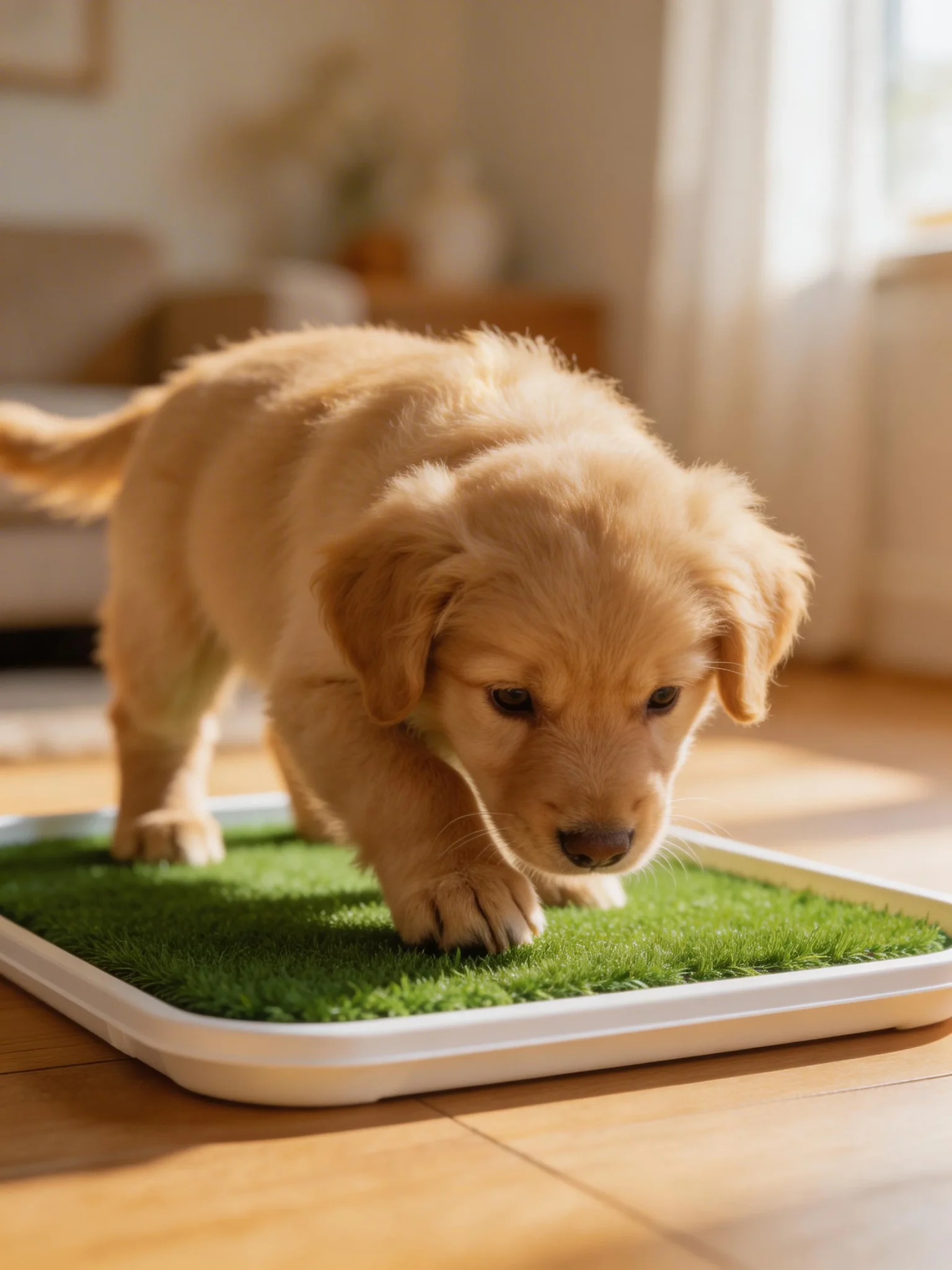
Fake grass potty training works by teaching your puppy that one specific spot — the artificial turf — is where they’re supposed to go. It mimics the feel and look of real grass, which makes the transition easier for puppies who are already learning to associate grass with bathroom time.
Here’s a quick overview of what works:
Get Free Dog Health Tips!
Weekly guides on keeping your dog healthy & happy
🔒 No spam. Unsubscribe anytime.
- Start training as soon as your puppy comes home — the earlier, the better
- Pick one consistent spot for the fake grass tray and keep it there
- Use a potty command word every time your puppy goes on the turf
- Reward immediately after they finish — timing matters a lot
- Clean the tray regularly to prevent odor buildup and encourage reuse
- Never punish accidents — redirect calmly and move on
- Most puppies need 4 to 8 weeks of consistent training before it becomes a habit
Immediate action: Set up your artificial grass puppy potty tray in a low-traffic area before your puppy explores the whole home. Limiting their space early on makes it much easier to guide them to the right spot.
Choosing the Right Fake Grass Potty Setup
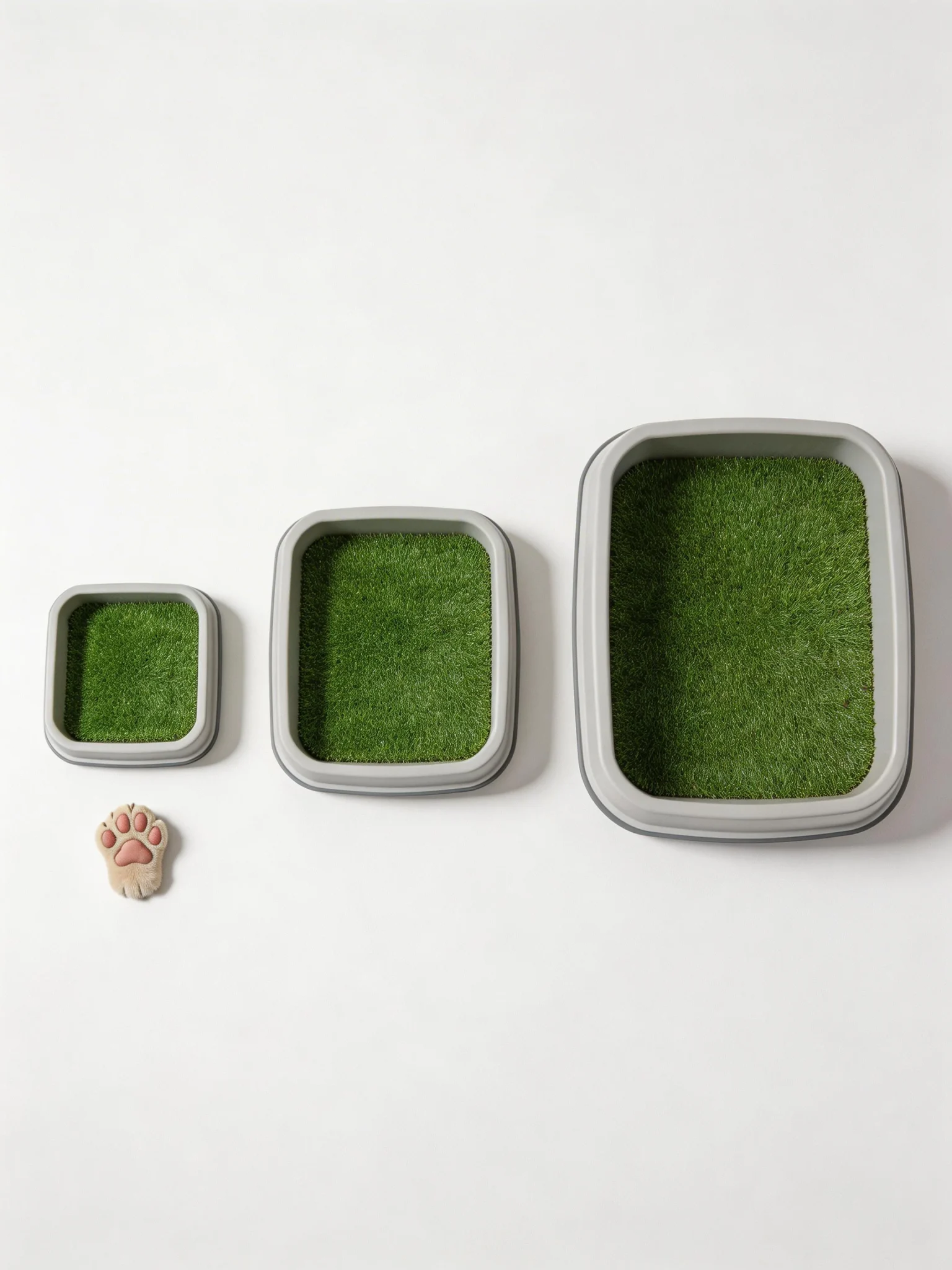
Not all fake grass trays are created equal. Picking the right one for your puppy’s size and your living situation can make training much easier from day one.
🛒 Vet-Recommended Wellness Picks
👉 Dog Probiotic & Prebiotic Powder
Size Matters
Make sure the tray is big enough for your puppy to walk onto comfortably and turn around. A tray that’s too small will frustrate them and they may miss the edges. If you have a larger breed puppy, go bigger than you think you need — puppies grow fast.
Drainage and Odor Control
Look for a tray with a raised grid or drainage holes so urine flows away from the surface. This keeps the top layer drier and reduces smell. Some trays come with an odor-neutralizing layer underneath, which is a big plus for indoor use.
A indoor dog potty with drainage is worth the investment if you’re planning to use it long-term.
Real Grass vs. Fake Grass
Real grass pads smell more like the outdoors, which can help some puppies make the connection faster. But they need replacing every week or two. Fake grass lasts much longer, is washable, and costs less over time. For most indoor setups, fake grass wins for convenience.
How to Set Up Your Potty Area for Success
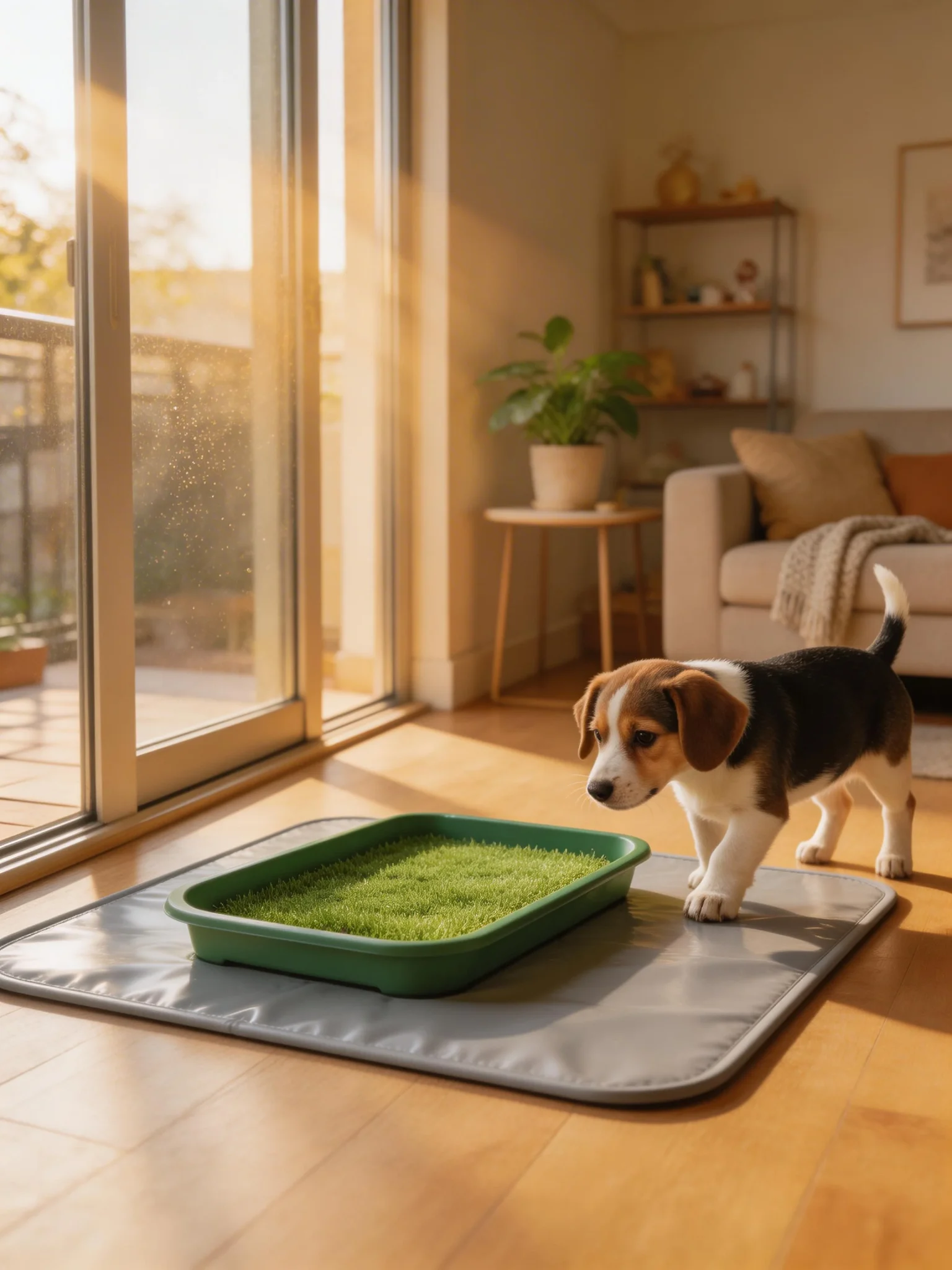
Where you place the fake grass tray and how you introduce it makes a real difference in how quickly your puppy catches on.
Pick the Right Location
Choose a spot that’s easy for your puppy to reach quickly — especially important for young pups who can’t hold it long. Good spots include:
- Near the door you use for outdoor walks
- In a corner of the laundry room or bathroom
- On a balcony or covered porch if you have one
Avoid placing it near your puppy’s food and water bowls. Dogs naturally avoid going to the bathroom near where they eat.
Use Puppy Pee Attractant Spray
This is a game-changer for early training. A puppy potty training attractant spray mimics the scent of urine and signals to your puppy that this is the right place to go. Spray a small amount on the turf when you first set it up.
Limit Your Puppy’s Space Early On
Don’t give your puppy free run of the whole house right away. Use baby gates or a playpen to keep them in a smaller area that includes the potty tray. As they get more reliable, you can expand their access gradually.
Step-by-Step: Training Your Puppy to Use Fake Grass
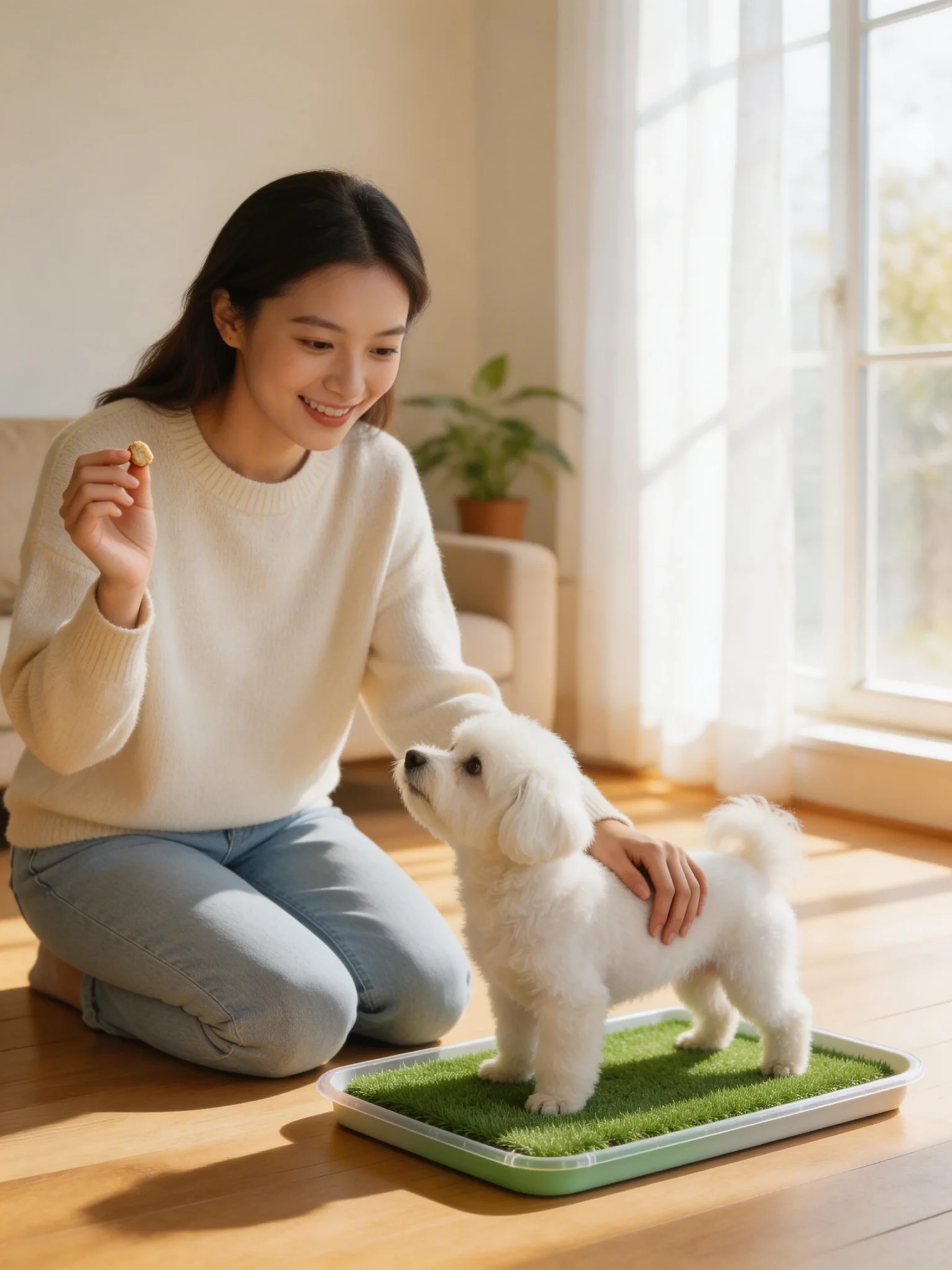
Follow this process consistently and your puppy will learn much faster. The key word here is consistent — doing this the same way every time is what makes it stick.
- Set up the tray before your puppy arrives. Have everything ready so you can start from day one. Add attractant spray to the turf surface.
- Take your puppy to the tray first thing. As soon as they wake up, after meals, after playtime, and before bed — carry or lead them to the tray every time.
- Use a potty command. Pick a simple phrase like “go potty” or “do your business” and say it calmly every time you bring them to the tray.
- Wait patiently. Stay nearby but don’t hover too closely. Give them a minute or two to sniff and settle. Don’t play with them during this time.
- Reward the moment they finish. The second they’re done, praise them warmly and give a small training treat. This timing is critical — rewarding too late confuses puppies.
- Clean up accidents without drama. If they go somewhere else, clean it up with an enzymatic cleaner and move on. Never scold or punish — it only creates anxiety and slows progress.
- Repeat on a schedule. Young puppies need to go every 1 to 2 hours. Set a timer if you need to. Consistency builds the habit.
Understanding why staying engaged during potty time matters can help you avoid a common mistake many new puppy owners make without realizing it.
Common Mistakes to Avoid
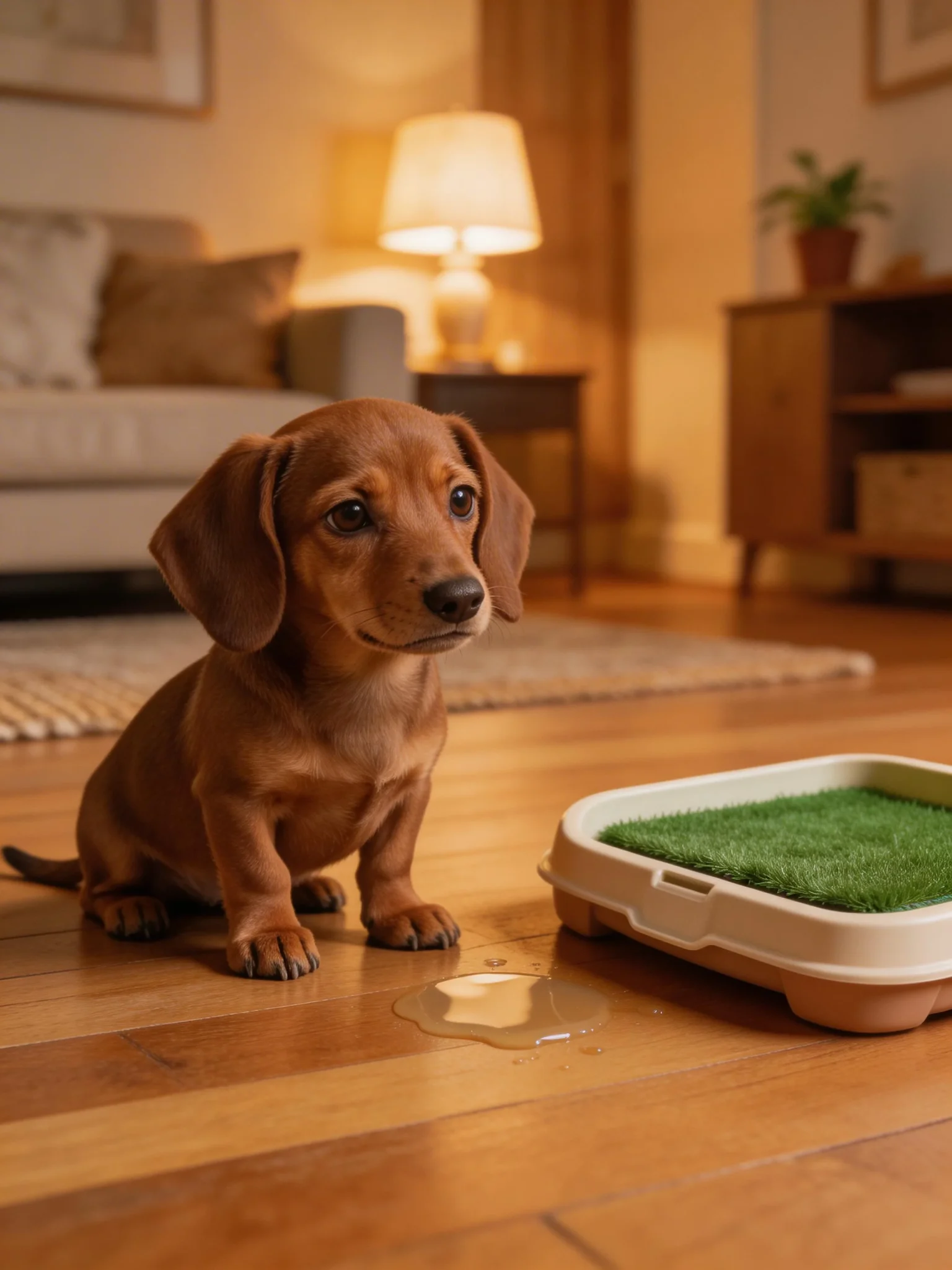
Even with the best intentions, a few common errors can slow down your training progress. Watch out for these:
Moving the Tray Around
Puppies rely heavily on scent and location memory. If you keep moving the tray, it breaks their mental map of where to go. Pick a spot and stick with it.
🛒 This Is What Vets Use For Their Own Dogs
👉 Dog Allergy Relief Immune Support Chews
Cleaning with the Wrong Products
Regular household cleaners often don’t fully remove the urine scent — and if your puppy can still smell it somewhere else, they’ll keep going back to that spot. Always use an enzymatic pet odor cleaner for accidents.
Skipping Rewards
Some owners stop rewarding once the puppy seems to “get it.” But positive reinforcement needs to continue consistently until the habit is fully locked in — usually around 8 weeks of reliable use.
Expecting Too Much Too Soon
A 2-month-old puppy physically cannot hold their bladder for more than about 2 hours. It’s not stubbornness — it’s biology. Adjust your expectations based on your puppy’s age.
Expert Insights and What the Data Shows
Veterinary behaviorists consistently emphasize that reward timing is the most critical factor in puppy training. Treats and praise need to happen within 2 seconds of the desired behavior. After that window closes, your puppy doesn’t connect the reward with what they just did.
According to the American Pet Products Association’s 2023–2024 National Pet Owners Survey, over 66% of U.S. households own a pet, and dog ownership continues to rise — particularly in urban areas where indoor potty solutions like fake grass trays are becoming increasingly popular. This growth has driven significant improvements in the quality and design of artificial turf potty products available today.
Professional trainers also recommend pairing your indoor fake grass training with short outdoor walks whenever possible. This helps your puppy understand that outside is also an acceptable potty location — which becomes important as they grow and gain more freedom.
Frequently Asked Questions About How to Train Your Puppy to Use Fake Grass Potty Areas
How Long Does It Take to Train a Puppy on Fake Grass?
Most puppies start showing consistent use within 2 to 4 weeks if training is done daily and with positive reinforcement. Full reliability usually comes around the 6 to 8 week mark. Younger puppies may take a little longer simply because their bladder control is still developing.
Will My Puppy Get Confused Between Fake Grass and Real Grass Outside?
Some puppies may try to go on real grass outside too, which is actually a good thing — it means they’re making the connection. You can train both behaviors at the same time by using the same command word in both locations. Most dogs adjust well to using both.
How Often Should I Clean the Fake Grass Tray?
Rinse the turf with water daily if possible and do a deeper clean with mild soap or a pet-safe cleaner 2 to 3 times a week. Regular cleaning prevents odor buildup and keeps your puppy comfortable using the area. A smelly tray can actually discourage some puppies from using it.
My Puppy Chews the Fake Grass — What Should I Do?
Chewing the turf is common in teething puppies. Redirect them with appropriate puppy chew toys when you see them mouthing the turf. Saying “no” calmly and offering the toy works well. Most puppies grow out of this phase as their teething eases.
Can I Use Fake Grass Training for an Older Dog Too?
Yes — older dogs can learn to use artificial turf, though it may take a bit more patience since they already have established habits. The same positive reinforcement method works well for adult dogs. Attractant spray is especially helpful when transitioning an older dog to a new potty location.
What If My Puppy Refuses to Go on the Fake Grass at All?
If your puppy is avoiding the tray completely, try adding more attractant spray and keeping them on a leash near the tray during potty breaks so they can’t wander off. Make sure the tray is large enough and that you’re not hovering in a way that makes them nervous. Give it a few days of consistent effort before trying a different approach.
You’ve Got This — Start Simple and Stay Consistent
Training your puppy to use a fake grass potty area is one of the most practical skills you can teach them, especially if you’re in an apartment or dealing with unpredictable weather. The process isn’t complicated — it just requires patience, a good routine, and plenty of positive reinforcement. Keep the tray clean, reward every success, and don’t stress over the accidents. They’re part of the process.
Your next step is simple: set up your fake grass tray today in the spot you’ve chosen, add some attractant spray, and take your puppy to it the very next time they wake up from a nap. That first guided visit is where the training begins. You’re already ahead of the game just by knowing what to do — now go make it happen.