What Are Yeasty Paws in Dogs?
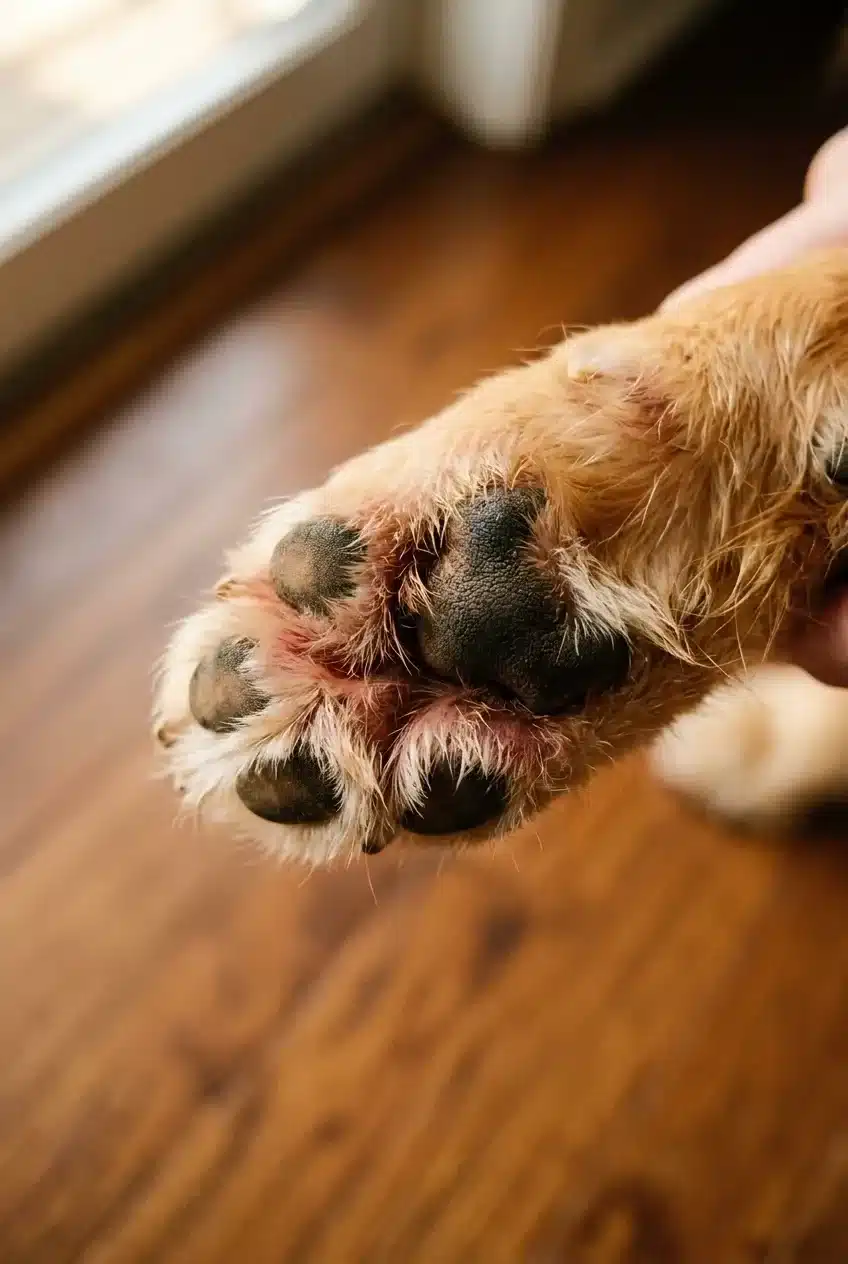
Yeasty paws in dogs refer to a fungal infection caused by an overgrowth of Candida or, more commonly, Malassezia pachydermatis — a yeast that naturally lives on a dog’s skin. When conditions favor its growth, it multiplies rapidly in warm, moist areas like the paw folds and between the toes.
This condition is more common than most dog owners realize. According to veterinary dermatology estimates, yeast-related skin infections account for a significant portion of the skin cases seen in general practice, and paws are one of the top three affected sites alongside ears and skin folds.
If your dog won’t stop licking or chewing their paws, has a musty or corn-chip smell coming from their feet, or you’ve noticed reddish-brown staining between the toes — this article is exactly what you need. You’re not alone, and the good news is that yeasty paws are treatable and preventable.
How Do You Know If Your Dog Has Yeasty Paws?
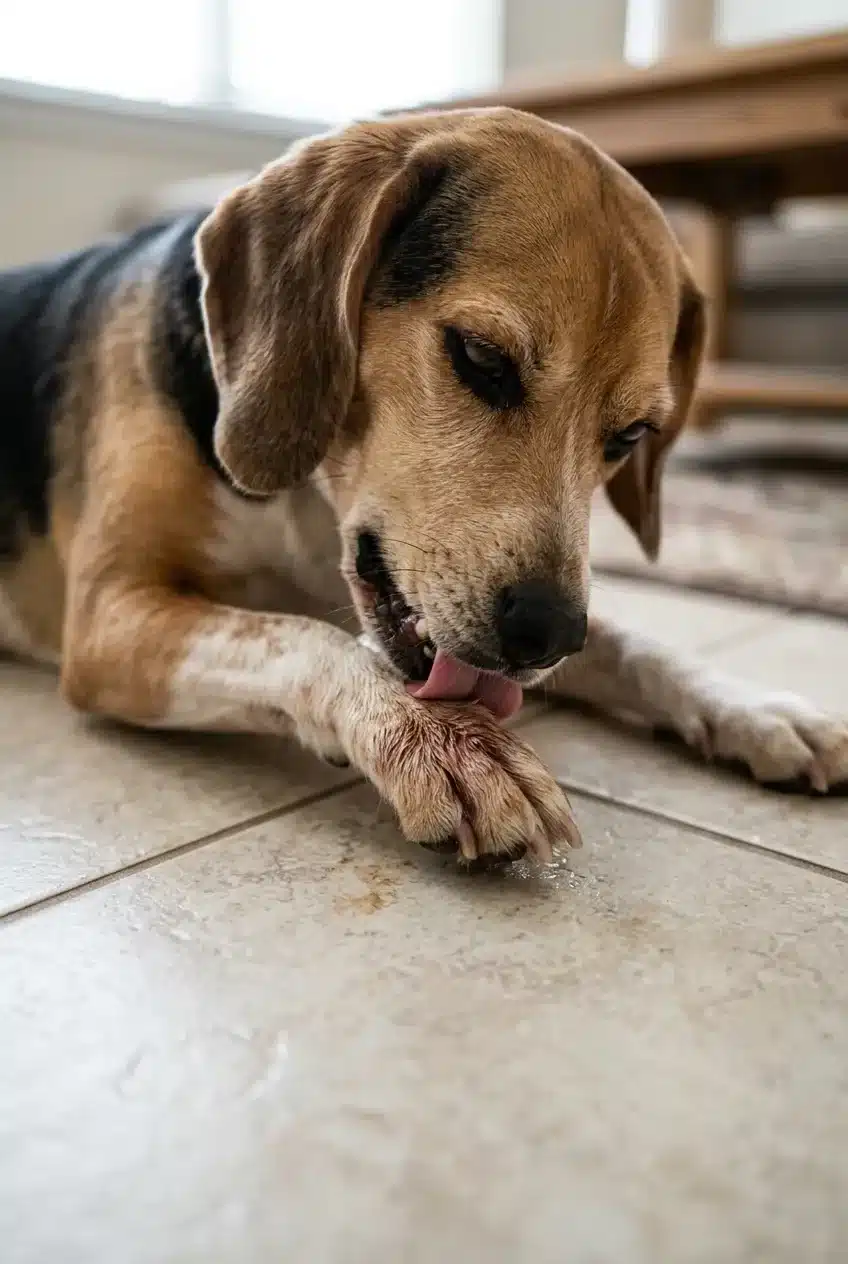
The key signs of yeasty paws in dogs include: persistent licking or chewing of the feet, a distinct yeasty or “Fritos” corn-chip odor, reddish-brown fur staining between the toes, swollen or inflamed skin around the nail beds, and greasy or crusty discharge. A veterinarian can confirm the diagnosis with a simple skin cytology test.
What Does a Yeast Infection on Dog Paws Look and Smell Like?
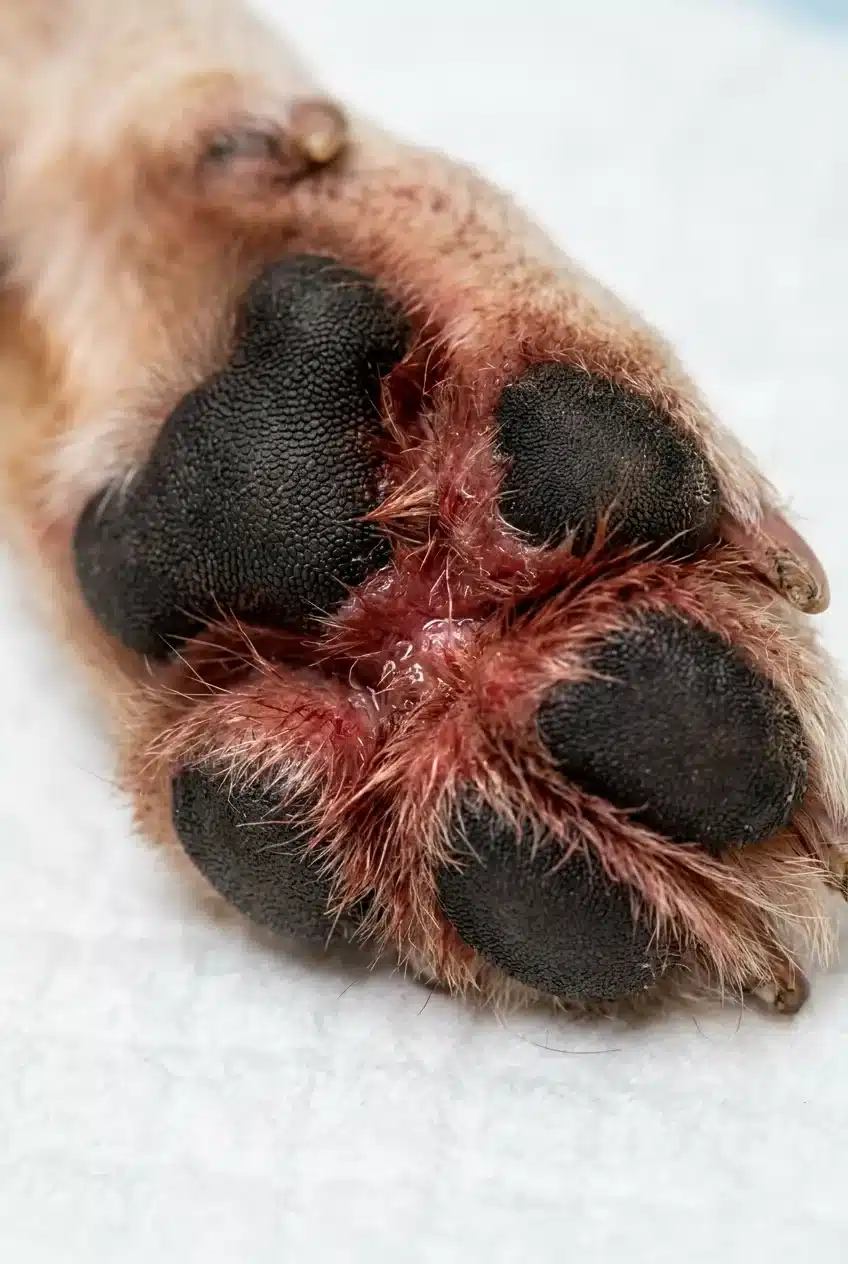
The signature sign most dog owners notice first is the smell. Malassezia produces a musty, bread-like or corn-chip odor that becomes especially strong after your dog has been walking, licking, or in a humid environment.
Visual Signs to Look For
- Reddish-brown staining on the fur between the toes (caused by porphyrins in dog saliva mixing with yeast byproducts)
- Inflamed, pink, or red skin in the webbing between the toes
- Thickened or greasy skin around the nail beds
- Crusty buildup or discharge near the paw pads
- Hair loss in small patches around affected areas
- Swollen nail folds, sometimes called paronychia
Many owners mistake these signs for allergies alone. While allergies are often the root cause, the visible and olfactory symptoms you’re seeing are usually the result of secondary yeast overgrowth — not the allergy itself.
What Causes Yeast Infections on Dog Paws?
Yeast infections on dog paws are almost always triggered by an underlying imbalance, not a random infection. Malassezia already lives on your dog’s skin — it only becomes a problem when conditions allow it to overgrow.
Common Triggers Include:
- Environmental allergies (atopic dermatitis) — the most common cause; affects an estimated 10–15% of dogs in the U.S.
- Food sensitivities — particularly to chicken, beef, dairy, or wheat in some dogs
- Compromised immune system — from illness, medications like steroids, or underlying disease
- Moisture and humidity — paws that stay wet after walks or baths create the perfect breeding ground
- Antibiotic use — which can disrupt the skin’s natural microbial balance
- Hypothyroidism or Cushing’s disease — hormonal disorders that alter skin health
It’s also worth noting that certain dog breeds are genetically predisposed. Basset Hounds, West Highland White Terriers, Cocker Spaniels, Bulldogs, Dachshunds, and Golden Retrievers are among the most commonly affected. If you’re considering a lower-allergen breed to minimize future skin issues, you might find our guide on medium sized hypoallergenic dogs useful.
🛒 Vet Recommended for Yeasty Paws
👉 Antifungal Spray for Dog Paws
Get Free Dog Health Tips!
Weekly guides on keeping your dog healthy & happy
🔒 No spam. Unsubscribe anytime.
How Is a Yeast Paw Infection Diagnosed?
A veterinarian diagnoses yeasty paws through skin cytology — a quick, inexpensive in-office test where a tape impression or swab is taken from the affected area and examined under a microscope. Yeast cells are clearly visible and identifiable, making this one of the more straightforward skin diagnoses in veterinary practice.
Your vet may also recommend allergy testing, blood panels, or a food elimination trial if recurring infections are suspected to have an underlying cause. Don’t skip this step — treating the yeast without addressing the root cause almost always leads to relapse.
How Do You Treat Yeasty Paws in Dogs?
Treatment depends on the severity of the infection and usually involves a combination of topical and systemic approaches. Mild cases can often be managed at home with veterinary-approved products, while moderate-to-severe cases typically require prescription medication.
Topical Treatments
For mild infections, antifungal foot soaks and wipes are highly effective. Antifungal dog paw wash products containing chlorhexidine, ketoconazole, or miconazole are commonly recommended by vets. Soaking the affected paws in a diluted solution for 5–10 minutes, two to three times per week, can significantly reduce yeast load.
Antifungal mousse or spray products are also practical for dogs that resist soaking. Look for products with at least 2% miconazole or 2–4% chlorhexidine.
Medicated Shampoos
Using a medicated antifungal dog shampoo during bath time adds another layer of treatment. These shampoos need to sit on the skin for 5–10 minutes before rinsing to be effective — rinsing immediately defeats the purpose.
Oral Antifungal Medications
For moderate to severe cases, a veterinarian may prescribe oral antifungals such as fluconazole, itraconazole, or ketoconazole. These are typically given for 2–8 weeks depending on severity and response. Never use human antifungal medications without veterinary guidance, as dosing and formulations differ significantly.
Addressing the Underlying Cause
This step is critical. If allergies are the root trigger, your vet may recommend Cytopoint injections, Apoquel, or an elimination diet. Without managing the underlying driver, yeast will return within weeks of stopping treatment.
You might also explore whether other health conditions are at play. Our overview of what diseases pets get and their treatments provides broader context on fungal and systemic disease management across species.
What Is the Best Home Remedy for Yeasty Dog Paws?
The most evidence-supported home approach is a diluted apple cider vinegar (ACV) foot soak — one part ACV to one part water. ACV creates an acidic environment that inhibits yeast growth. However, never use this on broken, raw, or ulcerated skin, as it will cause significant pain and tissue irritation.
Other practical home steps include:
- Drying paws thoroughly after every walk or bath — use a dog paw drying towel for convenience
- Wiping paws with antifungal wipes after outdoor exposure
- Adding a probiotic supplement to support gut and skin microbiome balance
- Reducing high-sugar, high-carbohydrate diets that can feed yeast systemically
Home remedies work best as preventive maintenance or for very mild early-stage infections. If symptoms persist beyond 1–2 weeks without improvement, see a vet.
How Do You Prevent Yeast Infections on Dog Paws?
Prevention comes down to three pillars: moisture control, immune support, and early intervention.
Practical Prevention Checklist
- Dry paws completely after every walk, swim, or bath — especially between the toes
- Trim the fur between toes regularly to reduce moisture trapping
- Use antifungal wipes weekly as a maintenance measure, particularly during humid months
- Feed a balanced, species-appropriate diet — consult your vet about whether a grain-free or limited-ingredient diet may help for allergy-prone dogs
- Manage allergies proactively — don’t wait for a full flare-up before treating
- Add a dog probiotic supplement to support healthy skin flora year-round
- Schedule regular vet check-ins if your dog has a history of recurring infections
Dogs with chronic yeast issues often benefit from year-round environmental allergen management — including HEPA air purifiers, regular bedding washes in hot water, and limiting exposure to known allergen triggers like grass pollen or mold.
If you’re concerned about other environmental pests contributing to your dog’s skin irritation, it’s worth reviewing whether bed bugs can live on dogs, as secondary irritation can sometimes mimic or worsen yeast-related inflammation.
Expert Insight: What Vets Say About Recurring Yeast Paw Infections
Veterinary dermatologists consistently emphasize that recurring yeast paw infections are a symptom management challenge, not just an infection problem. Dr. Karen Helton Rhodes, a board-certified veterinary dermatologist, has noted that the majority of dogs with recurrent Malassezia dermatitis have an undiagnosed or undertreated underlying allergy — and without addressing that, treatment becomes a revolving door.
A 2023 survey published in Veterinary Dermatology found that atopic dermatitis affects approximately 10–15% of the global dog population, with paws being among the three most commonly affected body areas. Dogs treated for both the yeast infection and the underlying allergy simultaneously had a significantly lower relapse rate than those treated for yeast alone.
For breeds prone to skin issues, owners may also want to consider hypoallergenic or low-shedding breeds for future pets. Our article on large non-shedding dogs covers options that may carry lower skin-issue risk.
Can Yeast Infections on Paws Spread or Become Serious?
Yeast paw infections are not contagious to humans or other pets in the traditional sense — Malassezia is species-specific and lives on all dogs naturally. However, if left untreated, the infection can deepen, spread to the nail beds (onychomycosis), or create open wounds vulnerable to secondary bacterial infections.
Secondary bacterial infections — often caused by Staphylococcus pseudintermedius — are a common and more serious complication. Dogs at this stage typically show increased pain, swelling, bleeding, and resistance to walking. At that point, systemic antibiotics combined with antifungals become necessary.
There are also broader health concerns to be aware of. Just as we explore in our piece on whether bird flu can affect dogs, immune-compromised dogs are more vulnerable to a range of infections — yeast being one of the most common early indicators of immune dysfunction.
Frequently Asked Questions
Why do my dog’s paws smell like corn chips?
The corn-chip smell is caused by bacteria and yeast — specifically Pseudomonas and Proteus bacteria combined with Malassezia yeast — that naturally colonize paw skin. A mild smell is normal, but a strong or persistent odor signals overgrowth that needs treatment.
How long does it take to clear a yeast paw infection?
Mild infections treated consistently with topical antifungals typically improve within 2–4 weeks. Severe or systemic cases requiring oral medication may take 6–8 weeks or longer, especially if an underlying allergy is also being managed.
Can I use human antifungal cream on my dog’s paws?
Some human antifungal creams like miconazole or clotrimazole are used off-label in dogs, but you should always consult your vet before applying any human product. Dosing, formulation, and safety profiles vary, and dogs frequently lick their paws, creating ingestion risks.
Is a yeast infection on dog paws related to diet?
Yes, diet can play a role. High-carbohydrate or high-sugar diets may support yeast overgrowth systemically, and food allergies — particularly to proteins like chicken or beef — are a recognized trigger for the skin inflammation that enables yeast infections to take hold.
Should I use dog boots to prevent yeast paw infections?
Dog boots can help protect paws from environmental allergens and moisture during walks, but they can also trap heat and humidity if left on too long — which worsens yeast. Use breathable breathable dog paw boots and remove them promptly after walks, drying paws thoroughly.
Conclusion
Yeasty paws are common, treatable, and preventable. Identify the signs early, treat with the right antifungal approach, and address the root cause — whether allergies, diet, or moisture — to stop the cycle for good.