Bringing a new puppy home is one of the most exciting things you can do as a pet owner. But once the honeymoon phase settles in, reality hits — you can’t be home every single minute. And when you leave, your puppy may cry, bark, chew, or panic like the world is ending.
Separation anxiety in puppies is one of the most common challenges dog owners face in the US. It’s not just stressful for you — it’s genuinely distressing for your pup. Left untreated, it can grow into a serious behavioral problem that affects your dog’s health and your daily life.
The good news? With the right approach, patience, and consistent training, you can teach your puppy to feel safe and calm when alone. This article walks you through everything you need to know — from the basics to step-by-step methods that actually work.
🛒 Products Our Readers Use Every Day
👉 Glucosamine & Chondroitin Chews for Dogs
What Every Puppy Owner Should Know First
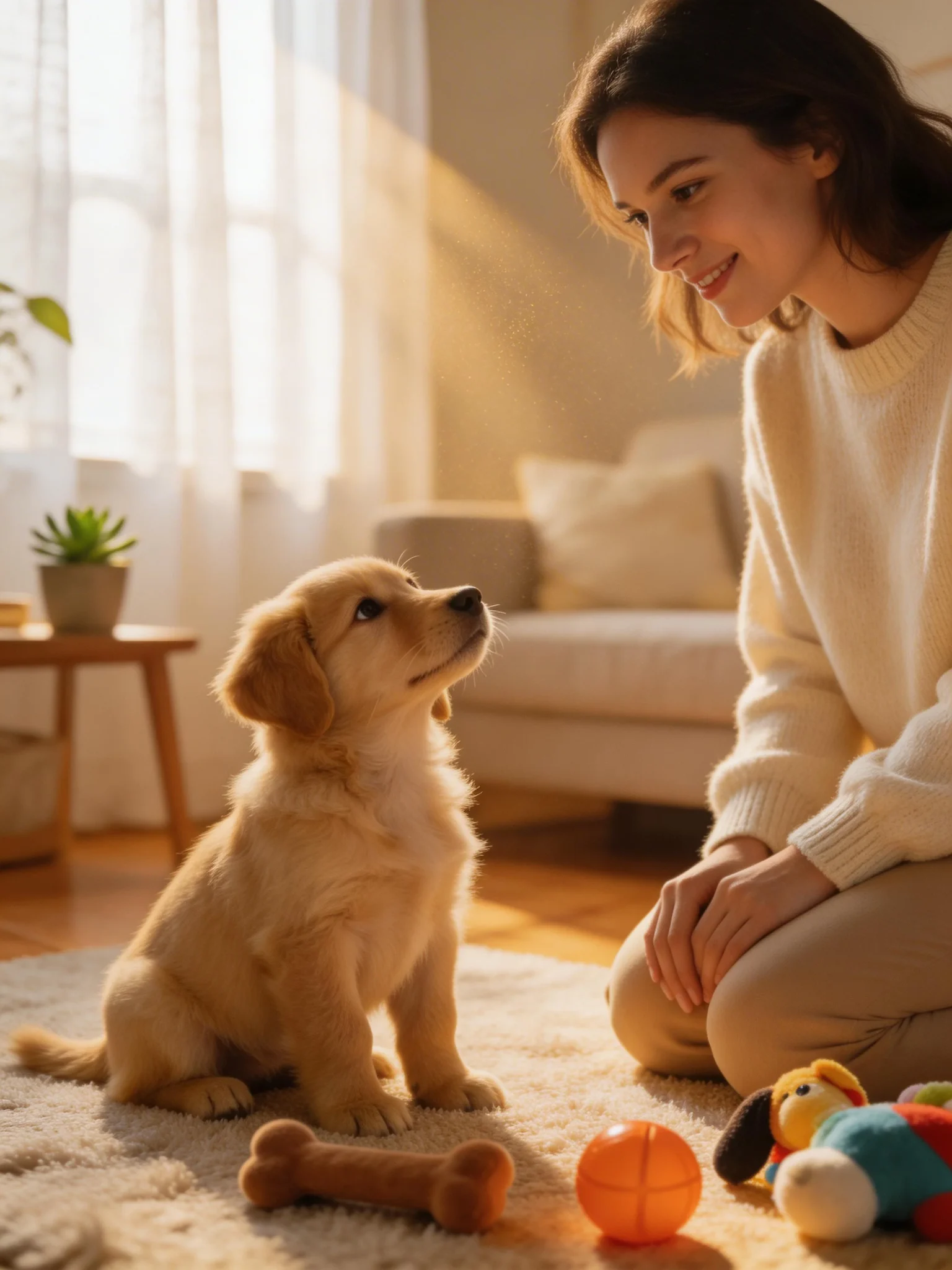
Teaching your puppy to be alone is a skill — and like all skills, it takes time. You’re not going to fix it overnight, but you absolutely can fix it.
Here’s the short version of what works:
Get Free Dog Health Tips!
Weekly guides on keeping your dog healthy & happy
🔒 No spam. Unsubscribe anytime.
- Start with very short alone time and gradually increase it
- Never make a big deal of leaving or coming home
- Give your puppy a safe, comfortable space like a crate or playpen
- Use puzzle toys and chews to keep them occupied
- Practice leaving and returning multiple times a day
- Avoid punishing anxious behavior — it makes things worse
- Be consistent every single day, even on weekends
If your puppy is already showing serious signs of distress — like injuring themselves, refusing to eat, or having accidents — it’s worth talking to your vet or a certified dog behaviorist sooner rather than later. You can also read more about how to manage separation anxiety in puppies for a deeper dive into comfort strategies.
Why Puppies Struggle to Be Alone
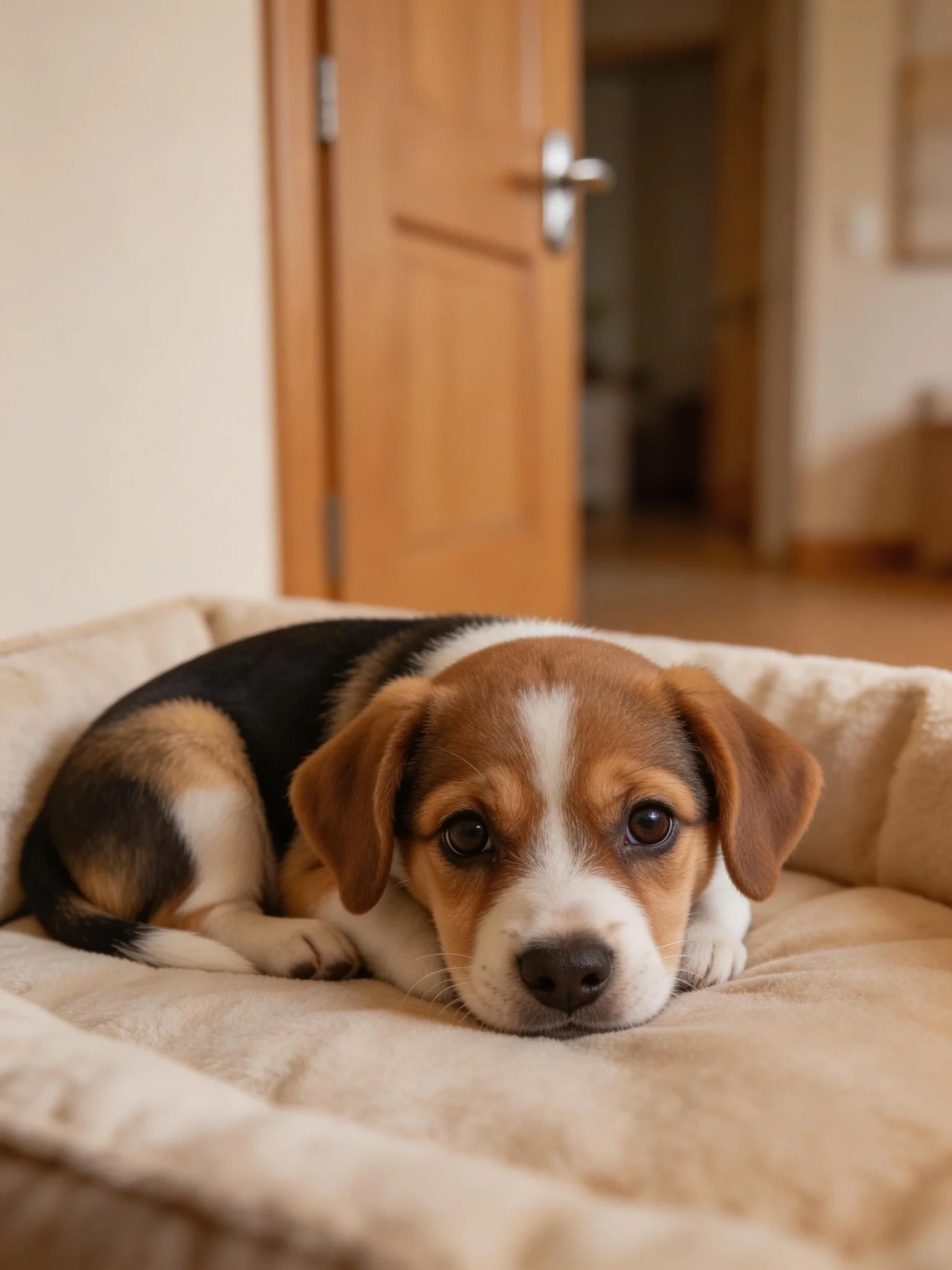
Before you can fix the problem, it helps to understand why it happens in the first place.
🛒 Vet-Recommended Wellness Picks
👉 Dog Probiotic & Prebiotic Powder
Pack Instincts Are Powerful
Dogs are social animals. In the wild, being alone meant danger. Your puppy’s brain is wired to stay close to their group — which is now your family. When you leave, that instinct kicks in and triggers stress.
New Environments Feel Overwhelming
Puppies under six months are still getting used to everything — sounds, smells, routines. Being left alone in an unfamiliar space can feel terrifying, not just boring.
You May Have Accidentally Reinforced the Anxiety
It’s easy to do without realizing it. If you always rush back when your puppy cries, or give lots of attention right before leaving, you’re actually teaching them that being alone equals panic — and that panicking brings you back.
The key is to teach your puppy that alone time is safe and temporary — not scary.
Setting Up the Right Space for Your Puppy
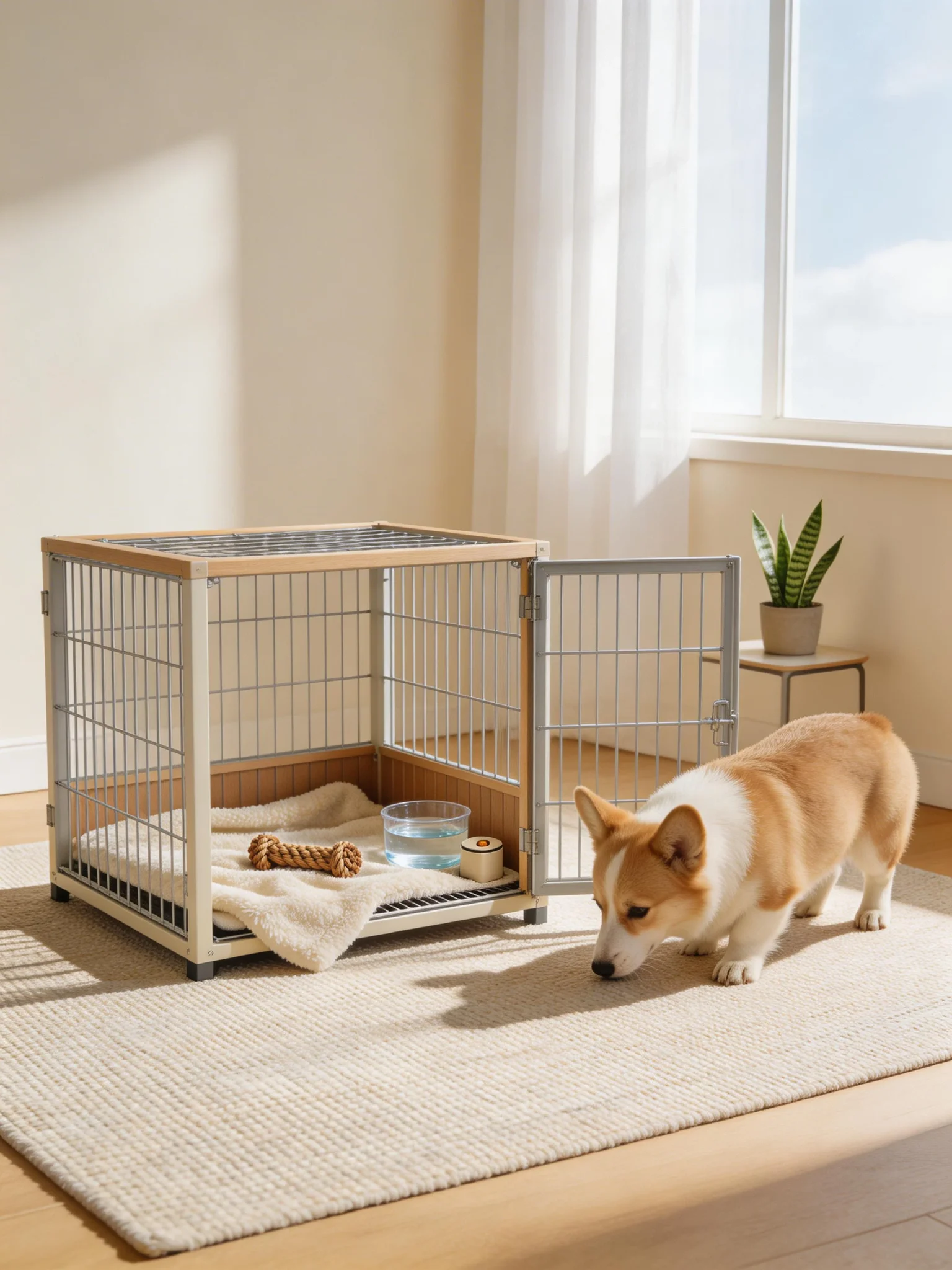
Where your puppy stays when you’re gone matters a lot. A safe, cozy space helps your pup relax instead of feeling trapped or exposed.
Crate Training Is One of the Best Tools
A puppy training crate gives your dog their own den — a place that feels secure. When introduced correctly, most puppies actually love their crates. Never use it as punishment. Instead, make it the best spot in the house.
Put a soft crate mat or puppy bed inside, along with a piece of your clothing so your scent is nearby. That alone can lower stress significantly.
Playpens Work Too
If your puppy is too young or too big for a crate, a puppy playpen gives them a safe area with room to move. Block off dangerous spots in your home and make the pen feel like a fun zone, not a jail.
Comfort Items Help
A heartbeat stuffed puppy toy can mimic the warmth and rhythm of a littermate, which is surprisingly calming for young puppies. These are especially helpful for puppies under 12 weeks.
How to Teach Your Puppy to Be Alone: Step-by-Step
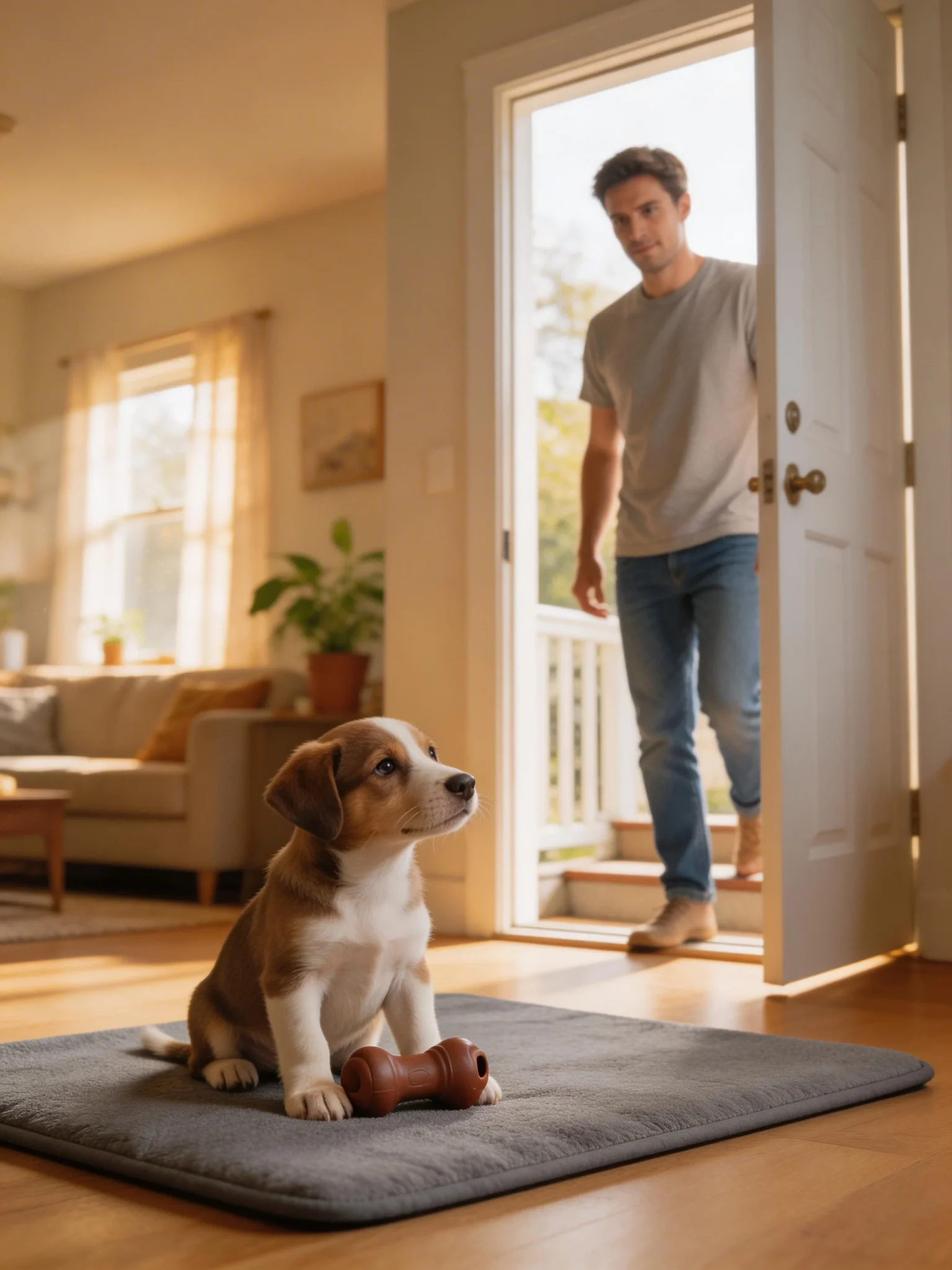
This is the method that professional trainers recommend. It’s called gradual desensitization — which basically means taking it slow so your puppy never feels overwhelmed.
- Start with one to two minutes. Leave your puppy in their crate or safe space and step out of sight — not out of the house. Return calmly before they start crying. Repeat this five to ten times a day.
- Build up slowly. Once your puppy is calm for two minutes, try five. Then ten. Then twenty. Add time only when they handle the current duration without distress. Don’t rush this step.
- Practice your departure cues. Grab your keys, put on your shoes, then sit back down. Do this often so those actions stop triggering panic. Your puppy will learn that keys don’t always mean you’re leaving forever.
- Leave the house briefly. Once your puppy is calm for 15 to 20 minutes inside, try actually leaving for five minutes. Come back calm and neutral. No big hellos — just walk in and go about your business.
- Increase the time gradually. Work your way up to 30 minutes, then an hour, then two hours over the course of several weeks. Most healthy adult dogs can handle four to six hours once trained.
- Use a stuffed toy or chew when you leave. Give your puppy a Kong stuffed with treats only when you leave. This creates a positive association — you leaving means something awesome happens.
- Stay consistent every day. Skipping practice on weekends or days off sets you back. Even if you’re home, practice short alone sessions so your puppy stays used to it.
Common Mistakes That Make Separation Anxiety Worse
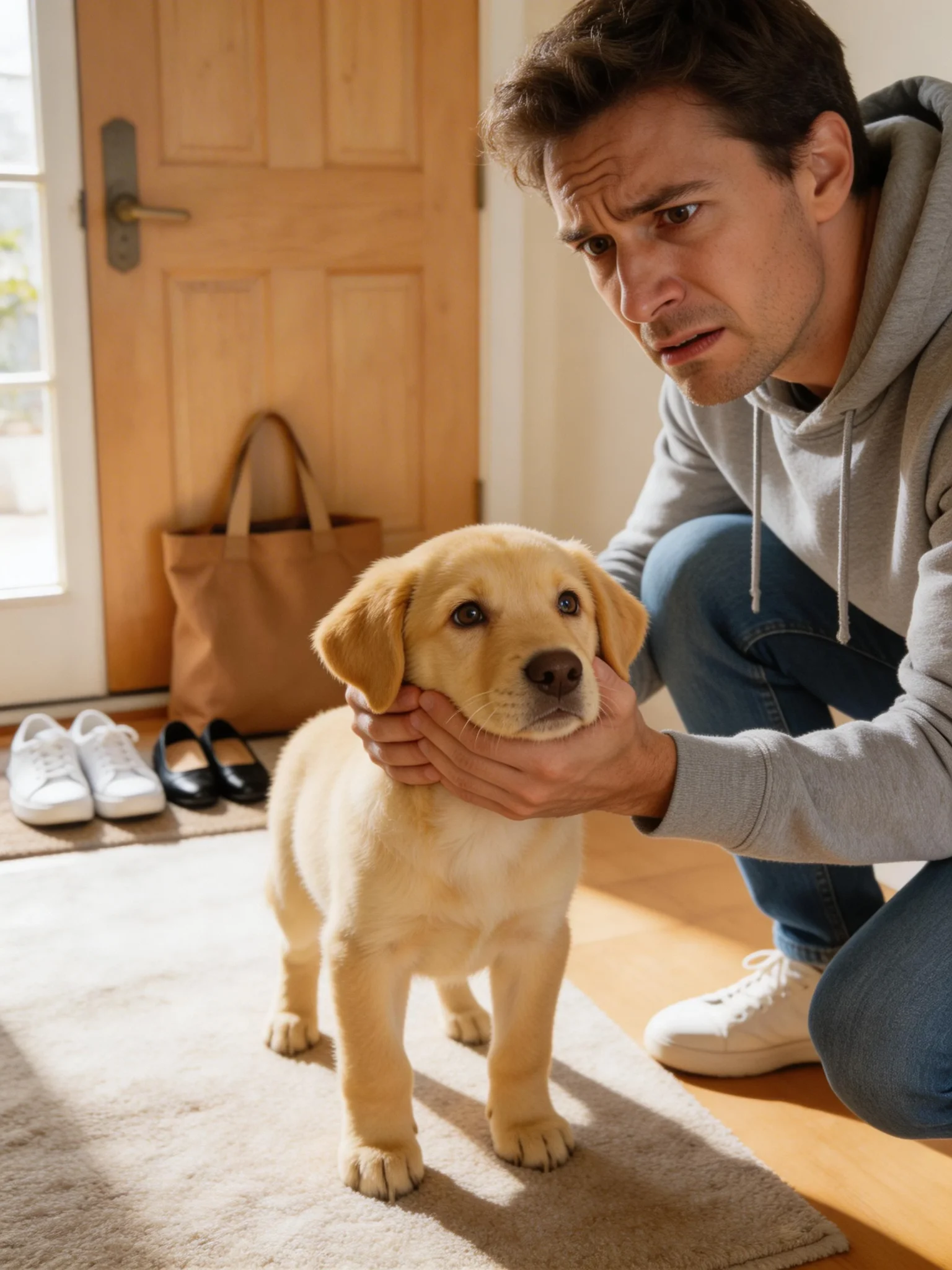
Even well-meaning owners accidentally make separation anxiety harder to fix. Here are the big ones to avoid.
Making Goodbyes a Big Event
Long, emotional goodbyes signal to your puppy that something worrying is happening. Keep it boring. Say a quiet “bye” and walk out. Same for coming home — wait until your puppy is calm before giving attention.
Only Practicing When You Actually Leave
If the only time your puppy goes in the crate is when you’re gone for hours, they’ll associate it with long stretches of loneliness. Practice short crate time throughout the day, even when you’re home.
🛒 This Is What Vets Use For Their Own Dogs
👉 Dog Allergy Relief Immune Support Chews
Giving In Every Time They Cry
If your puppy learns that crying brings you back, they’ll cry harder and longer next time. Wait for a moment of quiet — even a few seconds — before returning. This teaches them that calm behavior, not crying, gets your attention.
Too Much Together Time Early On
If your puppy is glued to you 24/7 during their first weeks home, being alone will feel shocking. Build in intentional alone time from day one, even if it’s just ten minutes while you’re in another room.
Keep in mind that excessive barking from anxiety can also become a real problem. It’s worth knowing that dog barking can affect more than just your nerves — it’s a sign your pup needs support.
Expert Insights and What the Research Says
Certified applied animal behaviorists consistently emphasize one thing: prevention is far easier than treatment. Starting alone-time training during the critical socialization window — roughly three to fourteen weeks — makes a huge difference in how your dog handles independence later in life.
Dr. Karen Overall, a well-known veterinary behaviorist, has noted that dogs experiencing separation anxiety aren’t being “bad” or “spiteful.” They are in a genuine panic state, which is why punishment never works and often makes the anxiety worse.
According to a 2024 survey by the American Pet Products Association, over 67 million US households own a dog — and separation-related behavior problems are consistently ranked among the top reasons owners seek professional training help. The earlier you address it, the easier it is to resolve.
Frequently Asked Questions About How to Teach Your Puppy to Be Alone Without Separation Anxiety
How Long Does It Take to Train a Puppy to Be Alone?
It depends on your puppy’s age, temperament, and how consistent you are. Most puppies make noticeable progress within two to four weeks of daily practice. Some may take longer, especially if anxiety is already established.
What Age Should I Start Alone-Time Training?
The earlier, the better. You can begin gentle alone-time practice as soon as you bring your puppy home, even at eight weeks old. Short, positive sessions are completely appropriate for very young puppies.
Should I Use a Camera to Watch My Puppy While I’m Gone?
Yes — a pet camera is a great tool. It lets you see how your puppy is actually behaving when you’re not there, which helps you understand whether they’re calm or distressed. Just don’t use it to talk to them constantly, as that can increase anxiety.
Is Separation Anxiety the Same as Normal Puppy Whining?
Not always. Normal puppies may whine briefly and then settle. True separation anxiety involves persistent crying, destructive behavior, house soiling, or attempts to escape — even after the puppy has had exercise and bathroom breaks. If you’re unsure, read more about managing puppy separation anxiety to understand the difference.
Can I Leave My Puppy Alone for Eight Hours Right Away?
No — and it’s not fair to try. Young puppies need bathroom breaks every two to three hours and can’t emotionally handle eight hours alone without training. Work up to longer stretches gradually, and consider a dog walker or puppy daycare on longer days.
Do Calming Products Actually Help?
They can support your training, but they’re not a substitute for it. Products like calming chews for puppies or pheromone diffusers may take the edge off, but the real fix comes from consistent desensitization training.
You’ve Got This — Start Small and Stay Consistent
Teaching your puppy to be alone without anxiety is one of the most valuable things you can do for both of you. It takes time, patience, and daily repetition — but it absolutely works. The foundation is simple: go slow, stay calm, and make alone time feel safe and even rewarding for your pup.
Start today with just one or two minutes. Put your puppy in their crate or safe space, step out of sight, come back before they cry, and keep your energy calm and neutral. That one small step, repeated consistently, is how confident, independent dogs are made. You and your puppy have everything you need to get there.