A dog elbow callus is a thickened, rough patch of skin that forms on a dog’s elbow from repeated pressure against hard surfaces. Most calluses are harmless, but left unmanaged they can crack, bleed, or become infected.
If you’ve noticed a gray, hairless patch on your dog’s elbow, you’re not alone — it’s one of the most common skin concerns in large and giant breeds. Understanding dog elbow callus causes, treatment, and prevention helps you act early and avoid complications.
What Is a Dog Elbow Callus?
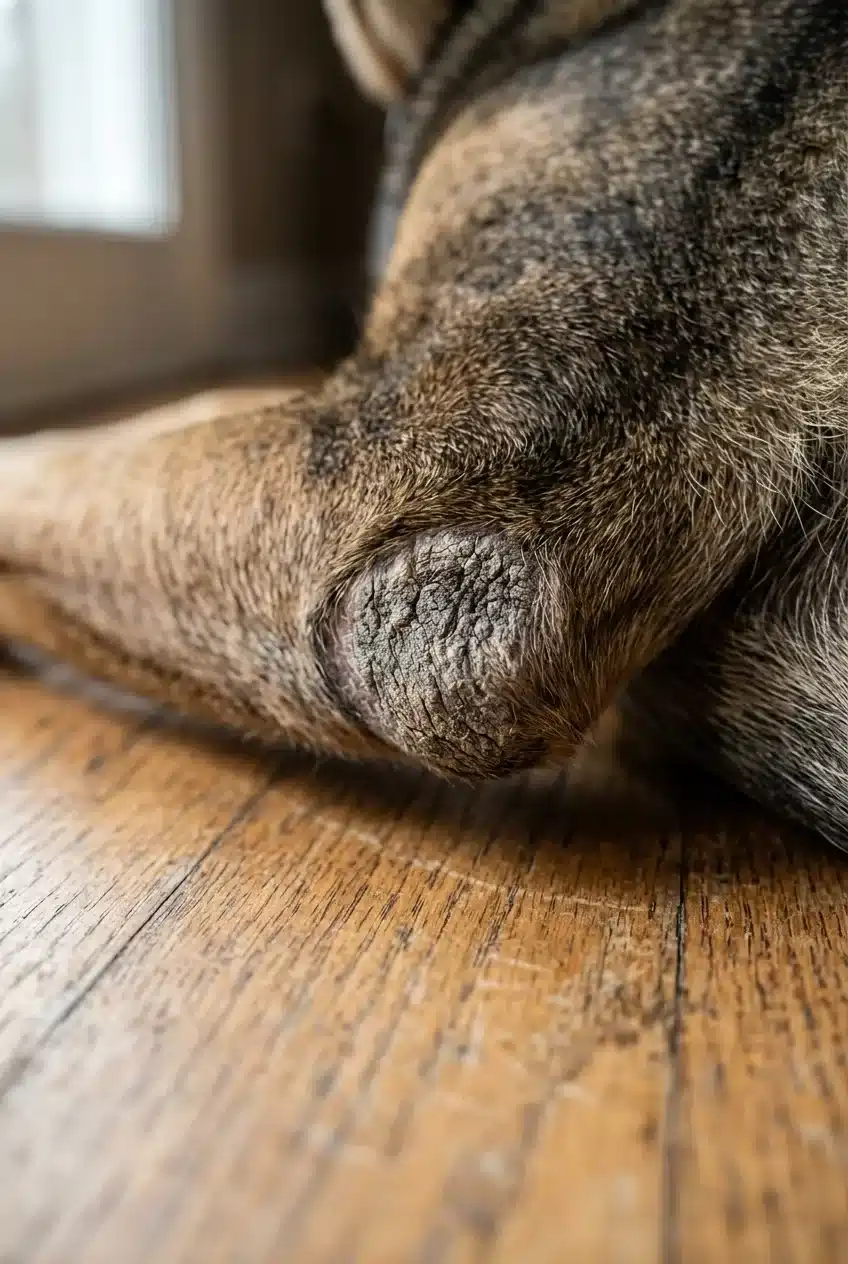
A dog elbow callus forms when the skin over the elbow joint thickens in response to repeated friction and pressure. The body builds up extra layers of keratin as a protective response — similar to how human hands develop calluses from manual work.
The skin becomes gray, rough, and hairless over time. In mild cases, the callus is flat and painless. In severe cases, it cracks open and creates an entry point for bacteria.
- Most common on the point of the elbow (the olecranon)
- Ranges from a small dry patch to a large, cracked wound
- Can affect one or both elbows simultaneously
- More common in dogs over 2 years old
- Usually painless unless cracked or infected
A callus is the skin’s defense mechanism — but when it breaks down, it becomes a health problem.
What Causes Dog Elbow Calluses?
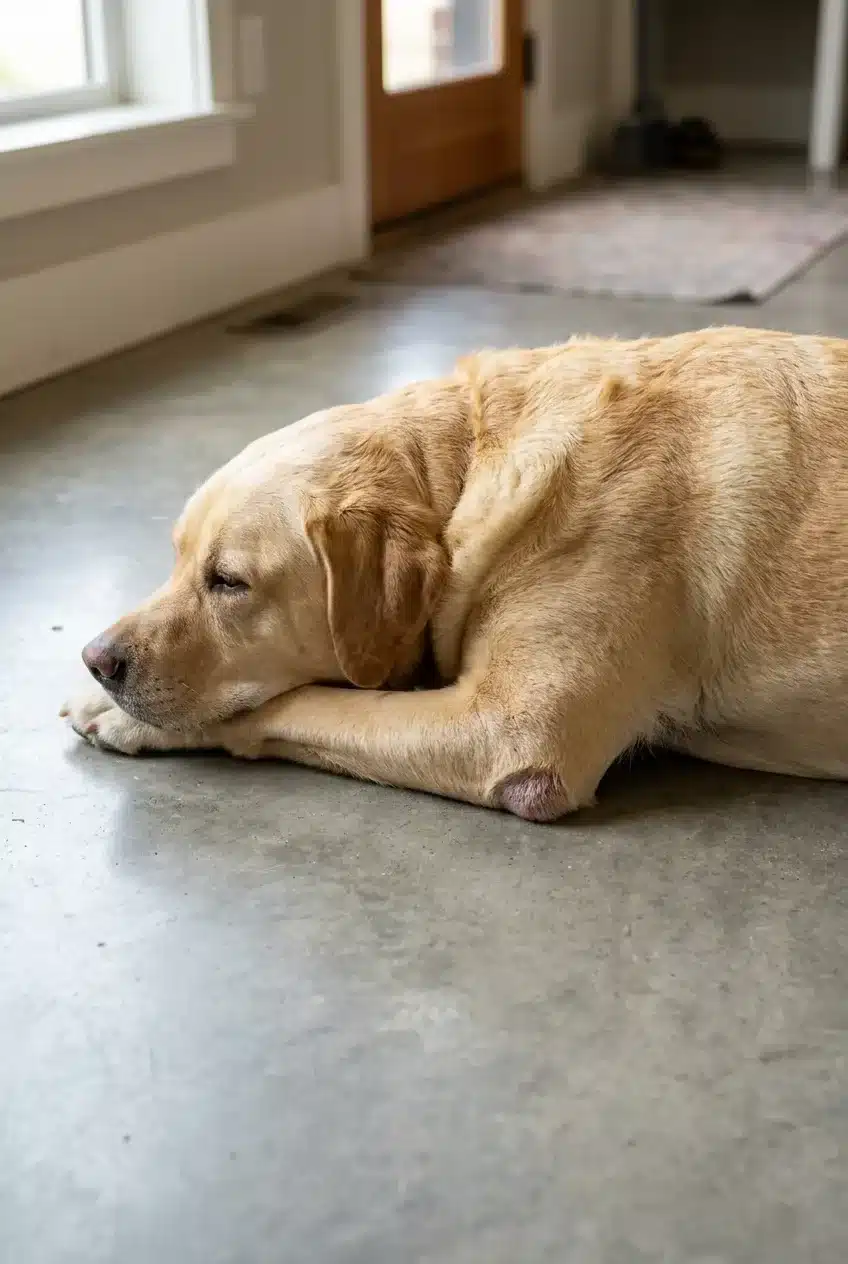
Dog elbow calluses are caused primarily by repeated pressure on hard flooring surfaces. Every time a dog lies down on tile, hardwood, or concrete, the bony elbow point takes the full impact of the dog’s weight.
Primary Causes
- Hard resting surfaces: Tile, hardwood, and concrete floors offer no cushioning for bony joints.
- Body weight: Heavier dogs exert more pressure on the elbow point with each rest.
- Breed anatomy: Short-coated, large-boned breeds have less natural padding over the elbow.
- Frequency of lying down: Dogs that rest for long periods accelerate callus formation.
- Age: Older dogs rest more often and have thinner skin, making them more susceptible.
Breeds Most at Risk
Large and giant breeds develop elbow calluses far more often than small breeds. Their greater body weight concentrates more force on the elbow’s bony point with every rest.
| Breed Category | Common Examples | Risk Level |
|---|---|---|
| Giant breeds | Great Dane, Mastiff, Saint Bernard | High |
| Large breeds | Labrador, German Shepherd, Rottweiler | Moderate–High |
| Medium breeds | Bulldog, Boxer, Basset Hound | Moderate |
| Small breeds | Chihuahua, Pomeranian, Shih Tzu | Low |
If your dog also has joint issues, you may want to review dog elbow dysplasia surgery and recovery, since dysplasia can alter how a dog positions its weight and worsen callus formation.
Get Free Dog Health Tips!
Weekly guides on keeping your dog healthy & happy
🔒 No spam. Unsubscribe anytime.
How Do You Treat a Dog Elbow Callus?
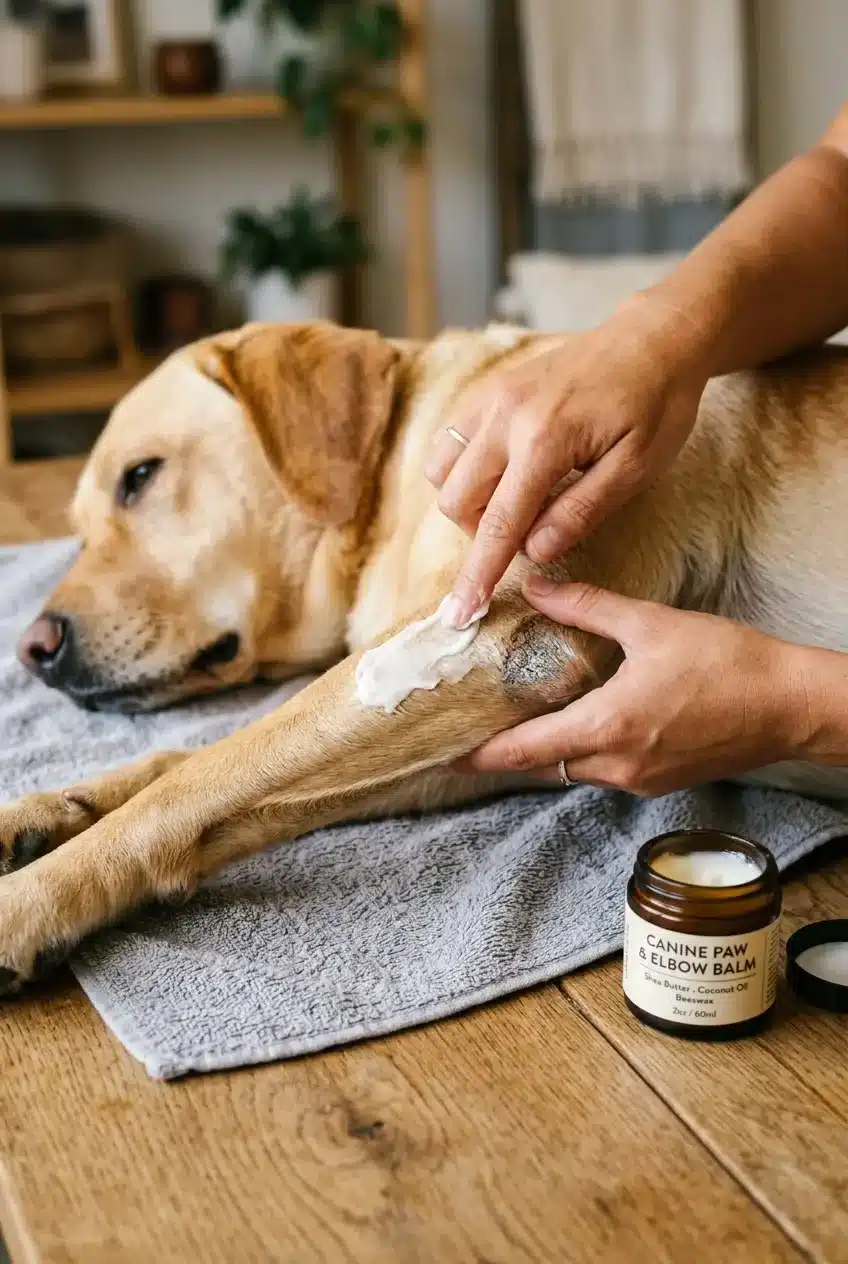
Dog elbow callus treatment depends on severity — mild calluses respond well to moisturizing at home, while cracked or infected calluses need veterinary care. Early treatment prevents a simple skin patch from turning into a serious wound.
At-Home Treatment for Mild Calluses
- Clean the area gently with warm water and a mild antiseptic. Pat dry completely before applying any product.
- Apply a veterinary-approved moisturizer such as dog elbow callus balm once or twice daily. Look for products containing shea butter, lanolin, or coconut oil.
- Cover lightly with a dog elbow protector sleeve to reduce friction while the skin heals. Success looks like softer, less cracked skin within 2–3 weeks.
- Redirect your dog to a cushioned resting spot immediately. Moisturizing alone won’t work if the pressure continues.
- Monitor daily for signs of cracking, bleeding, or discharge, which signal a need for veterinary attention.
When to See a Veterinarian
Some calluses escalate into elbow hygromas — fluid-filled swellings — or develop deep bacterial infections called callus pyoderma. The American Kennel Club notes that infected elbow calluses can require antibiotics, surgical debridement, or both.
MOST POPULAR THIS WEEK
Vet-Recommended Articles: 👇
👉 Why Does My Dogs Skin Turn Dark And Thick After Years Of Allergy Treatment
👉 Best Home Remedies For Arthritis In Dogs With Limping
👉 How Long Does An Elimination Diet Take For Dogs With Skin Allergies
“Elbow calluses that develop ulcers or hygroma should be evaluated by a veterinarian promptly — home treatment alone is insufficient once infection sets in.” — American Kennel Club Health Resources
Signs that warrant a vet visit include foul odor, visible pus, swelling around the elbow, or a dog that flinches when the area is touched. Don’t wait on these symptoms.
While managing skin issues, it’s worth knowing how to handle other skin concerns too — dog belly rash treatment and when to vet covers related warning signs you should recognize.
How Do You Prevent Dog Elbow Calluses?
Dog elbow callus prevention centers on reducing pressure on the elbow joint before thickening begins. Prevention is significantly easier than treating an established callus.
- Provide orthopedic bedding: A quality orthopedic dog bed for large breeds distributes body weight evenly and removes point pressure from bony joints.
- Add area rugs or mats: Place soft rugs over tile or hardwood in your dog’s favorite resting spots.
- Use elbow pads proactively: Elbow protector sleeves can be used before calluses form, not just after.
- Maintain a healthy weight: Excess body weight increases joint pressure on every rest. Talk to your vet about appropriate weight targets.
- Apply preventive balm: Regular moisturizing keeps the elbow skin supple and less likely to crack under pressure.
The single most effective prevention step is replacing hard flooring rest spots with padded bedding before any thickening appears.
Since skin health can reflect broader wellness issues, it’s also useful to monitor other symptoms. If your dog is showing signs like vomiting white foam alongside skin changes, a full veterinary workup is worth considering.
How to Tell If a Callus Is Infected
An infected dog elbow callus — called callus pyoderma — is a secondary bacterial infection that develops inside cracked callus tissue. It looks and smells distinctly different from a simple dry callus.
Signs of Infection vs. Normal Callus
| Feature | Normal Callus | Infected Callus |
|---|---|---|
| Skin texture | Dry, rough, gray | Moist, crusty, or weeping |
| Smell | None | Foul or yeasty odor |
| Discharge | None | Pus or bloody fluid |
| Dog’s reaction | No pain on touch | Flinching or licking area |
| Swelling | Flat or slightly raised | Noticeably swollen |
Yeasty odors on skin often signal secondary infections — the same principle covered in yeasty paws in dogs applies to callus infections as well.
If you spot these infection signs, veterinary treatment typically includes topical or oral antibiotics, wound cleaning, and sometimes protective bandaging. Delaying care allows the infection to reach deeper tissue layers.
Common Mistakes Dog Owners Make With Elbow Calluses
Several well-meaning approaches can make elbow calluses worse rather than better.
- Using human lotions: Products like petroleum jelly or hand cream often contain fragrances or additives that irritate dog skin. Use only veterinary-formulated balms designed for canine skin pH.
- Wrapping too tightly: Bandaging an elbow callus too firmly restricts circulation and traps moisture — both accelerate infection. Wrap loosely or use a purpose-built dog elbow wrap designed for airflow.
- Treating the callus without fixing the surface: Applying balm twice daily while the dog still sleeps on tile achieves very little. Address the root cause — the hard surface — at the same time.
- Waiting too long to see a vet: Owners often assume any callus is cosmetic. A callus with cracks deeper than 2–3mm, any discharge, or noticeable swelling needs professional evaluation promptly.
- Scrubbing or picking at the callus: Aggressive cleaning removes the protective outer layer and opens microscopic wounds. Gentle washing only.
For other skin-related issues that can look deceptively minor, white papules on dog skin is another example where early identification changes outcomes significantly.
Frequently Asked Questions About Dog Elbow Callus: Causes, Treatment & Prevention
Are dog elbow calluses painful?
A dog elbow callus is not painful in its simple, uncomplicated form. Pain develops when the callus cracks deeply, bleeds, or becomes infected — at that stage, your dog may limp or avoid putting weight on the affected leg.
Can a dog elbow callus go away on its own?
A dog elbow callus will not go away on its own without removing the cause — pressure from hard surfaces. With consistent moisturizing and padded bedding, mild calluses soften significantly over several weeks, though complete reversal is rare in established cases.
What is the best product to put on a dog elbow callus?
The best products for a dog elbow callus contain natural emollients like shea butter, lanolin, or coconut oil, formulated specifically for dogs. Avoid human skincare products, which may contain irritants unsuitable for canine skin.
How do I know if my dog’s elbow callus needs a vet?
A dog’s elbow callus needs a vet when it shows discharge, foul odor, deep cracking, visible swelling, or causes the dog pain on contact. These signs indicate infection or hygroma formation, which require professional treatment beyond home care.
Can small dogs get elbow calluses?
Small dogs can develop elbow calluses but rarely do so. Their lower body weight places far less pressure on the elbow point during rest, making callus formation uncommon unless the dog consistently lies on unusually hard or abrasive surfaces.
How long does it take to treat a dog elbow callus?
Treating a mild dog elbow callus takes 4–8 weeks of consistent moisturizing and padded bedding before noticeable softening occurs. Infected calluses treated by a veterinarian may take longer depending on the depth of the infection and the treatment used.
The Bottom Line on Dog Elbow Calluses
Dog elbow calluses are common, manageable, and largely preventable with the right bedding and routine skin care. The earlier you act, the simpler the solution.
Start today by placing an orthopedic dog bed in your dog’s main resting spot and applying a veterinary-formulated elbow balm to any existing roughness. That one change addresses both cause and symptom at the same time.
If cracking, discharge, or swelling is already present, book a veterinary appointment this week — infected calluses respond well to early treatment and poorly to delay. Your dog’s comfort is worth the early action.
For broader context on keeping your dog’s skin healthy, the American Kennel Club’s guidance on elbow calluses offers additional veterinary-backed detail on when professional care is needed.