Grain free dog food can still cause yeast problems in older dogs because many grain free formulas replace grains with high-starch ingredients like sweet potatoes, peas, and lentils — and yeast thrives on sugar, not grains specifically.
If your senior dog is scratching, smelling musty, or developing dark skin patches despite eating grain free, you are not alone in being confused. Understanding why grain free dog food can still cause yeast problems in older dogs requires looking beyond the label.
Why Does Grain Free Dog Food Still Cause Yeast Infections in Dogs?
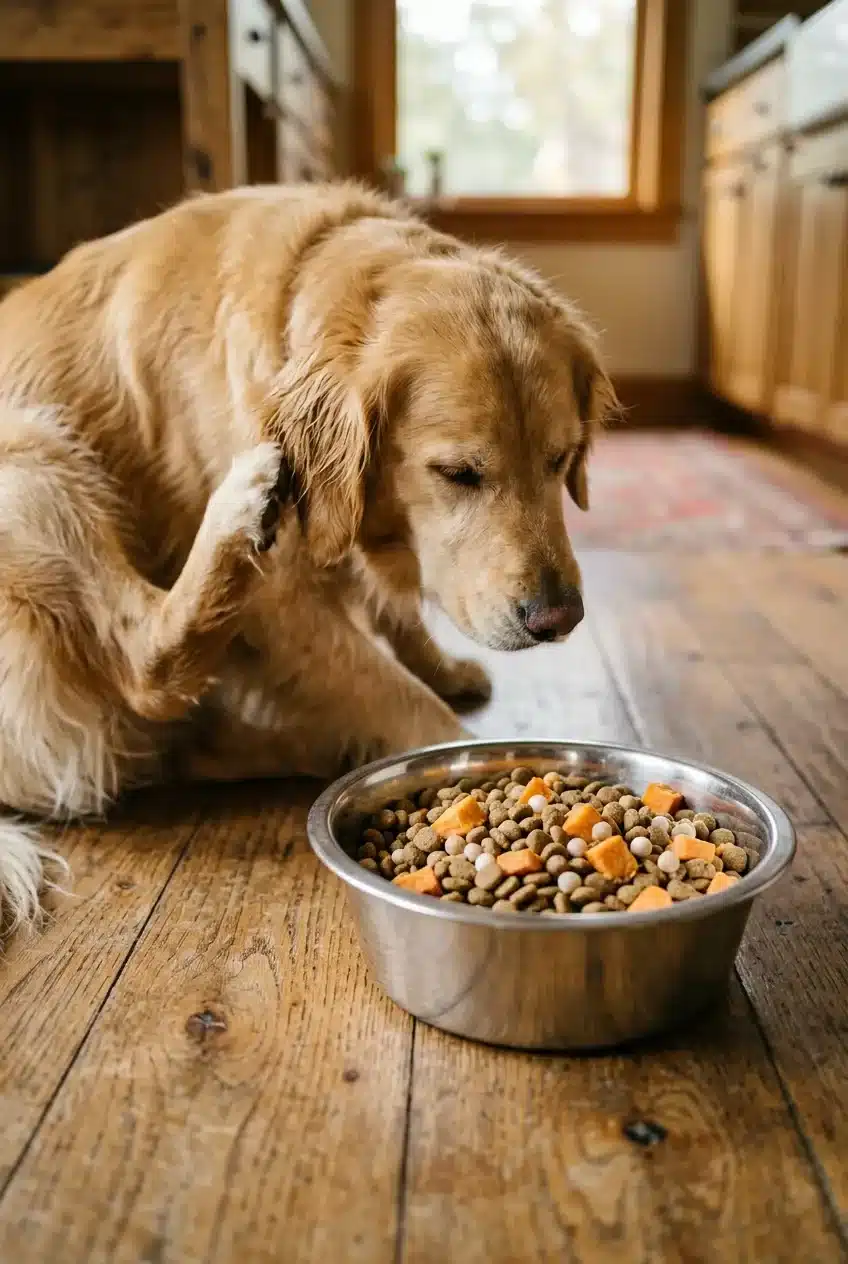
Grain free dog food still causes yeast infections because yeast feeds on fermentable carbohydrates — not grains themselves. Swapping wheat or corn for sweet potato or tapioca keeps the sugar load high, which fuels Malassezia yeast overgrowth on the skin and in the ears.
- Yeast feeds on simple sugars and starches, not gluten or grain proteins
- Sweet potatoes rank high on the glycemic index, spiking blood sugar
- Peas and lentils are common grain free fillers with significant starch content
- Older dogs process carbohydrates less efficiently due to slower metabolism
- A weakened senior immune system struggles to keep yeast populations in check
- Ear and paw yeast infections are the most common signs in older dogs
What Ingredients in Grain Free Food Feed Yeast?
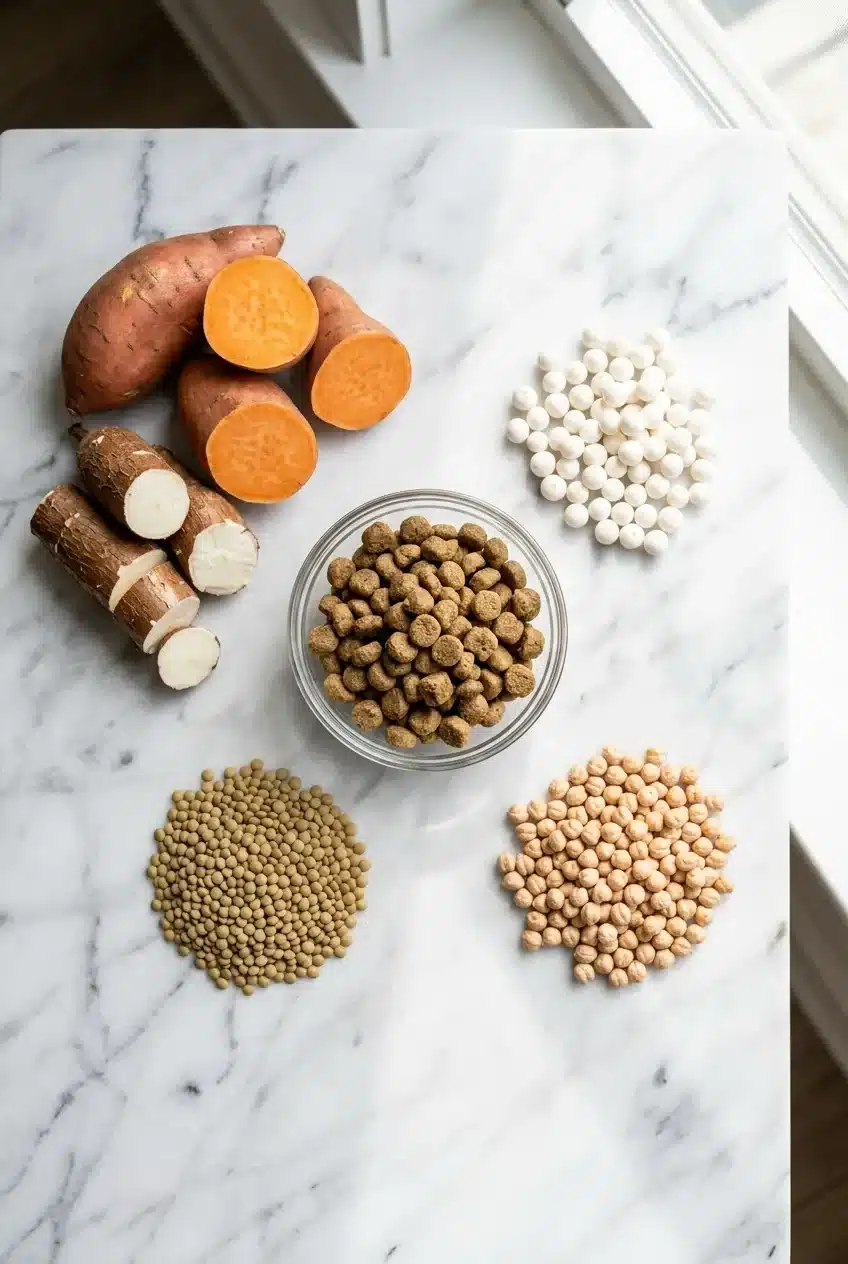
The biggest yeast-feeding culprits in grain free formulas are high-glycemic starches used as binding agents and energy sources. These ingredients raise blood glucose, which in turn raises sugar availability in skin secretions — exactly where Malassezia colonizes.
High-Starch Grain Free Ingredients to Watch
| Ingredient | Approximate Starch % | Yeast Risk Level |
|---|---|---|
| Sweet potato | ~18–20% | High |
| Tapioca | ~25–38% | Very High |
| Peas | ~14–16% | Moderate–High |
| Lentils | ~16–18% | Moderate |
| Chickpeas | ~22–27% | High |
Many pet owners check for corn and wheat on the ingredient list and stop there. They miss tapioca listed third or fourth, which can carry a higher glycemic load than the grains it replaced.
Reading the full ingredient list — not just the front-of-bag claim — is the only way to spot hidden starch.
Why Are Senior Dogs More Vulnerable to Yeast Overgrowth?
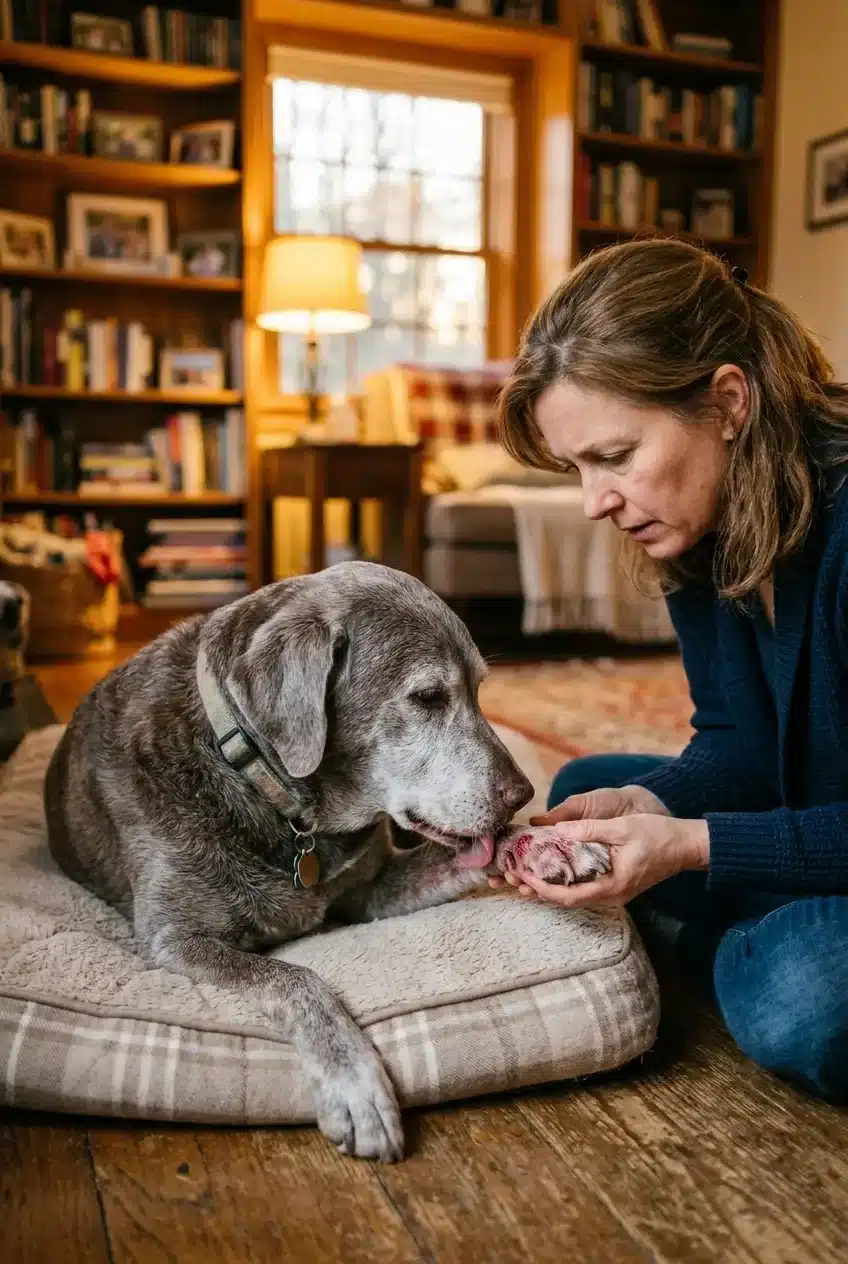
Senior dogs face yeast overgrowth at higher rates than younger dogs because aging affects three systems at once: immune function, skin barrier integrity, and carbohydrate metabolism. Any one of these changes alone increases risk — all three together create a perfect environment for chronic yeast.
Get Free Dog Health Tips!
Weekly guides on keeping your dog healthy & happy
🔒 No spam. Unsubscribe anytime.
Immune System Changes
A dog’s immune system naturally becomes less responsive with age. The immune cells that normally keep Malassezia populations controlled become slower to react, letting yeast numbers climb before the body mounts a defense.
According to veterinary immunology research published in Veterinary Dermatology, Malassezia overgrowth is significantly more common in dogs with underlying immune dysfunction — a condition that becomes more frequent in dogs over eight years old.
Skin Barrier and Hormonal Changes
Older dogs also experience hormonal shifts, particularly drops in thyroid function. Hypothyroidism, which is more prevalent in middle-aged and senior dogs, thickens the skin and increases sebum production — giving yeast more food and a warmer, oilier surface to colonize.
MOST POPULAR THIS WEEK
Vet-Recommended Articles: 👇
👉 Why Does My Dogs Skin Turn Dark And Thick After Years Of Allergy Treatment
👉 Best Home Remedies For Arthritis In Dogs With Limping
👉 How Long Does An Elimination Diet Take For Dogs With Skin Allergies
If your senior dog is also showing signs of lethargy or weight gain, a low-calorie, balanced diet formulated for older small breeds combined with thyroid testing may address both issues simultaneously.
Slower Carbohydrate Metabolism
Senior dogs metabolize carbohydrates more slowly than younger adults. This means blood glucose stays elevated longer after meals, feeding systemic yeast and skin surface yeast for extended windows throughout the day.
A grain free food with 40%+ carbohydrate content can actually be worse for a yeast-prone senior dog than a grain-inclusive food with a lower total carb load.
How to Tell If Your Older Dog Has a Yeast Problem
Yeast infections in older dogs have a distinctive set of symptoms. Catching them early prevents the chronic skin damage and ear damage that makes treatment much harder.
- Musty or corn-chip odor — especially from paws, ears, or skin folds
- Persistent scratching or licking — particularly paws, groin, and armpits
- Dark, thickened, or elephant-like skin — common on the belly and inner legs
- Reddish-brown staining between toes — from chronic licking
- Head shaking and ear discharge — brown or black waxy buildup
- Greasy coat — skin overproduces oil as yeast disrupts the barrier
These signs overlap with allergies, so veterinary confirmation through a skin cytology test is the most reliable way to identify a yeast overgrowth rather than a bacterial infection or contact allergy.
While evaluating your dog’s health, note that some topical flea and tick treatments can also stress the immune system — worth discussing with your vet if your dog uses them regularly, particularly given what we know about how flea and tick preventatives can affect a dog’s neurological system.
What to Feed a Yeast-Prone Senior Dog Instead
The goal for a yeast-prone older dog is not necessarily to eliminate grains — it is to reduce total fermentable carbohydrate content. Some dogs do better on a low-glycemic grain inclusive diet than on a high-starch grain free one.
Look for These Diet Characteristics
- Total carbohydrate content below 30% (calculate: 100% minus protein%, fat%, moisture%, ash%, fiber%)
- No tapioca, potato starch, or white potato in the top five ingredients
- Named animal protein as the first and second ingredient
- Added omega-3 fatty acids to support the skin barrier
- Probiotics or prebiotic fiber to maintain gut microbiome balance
A low carbohydrate senior dog food formulated specifically for older dogs will typically carry lower starch levels than standard adult grain free options.
Omega-3 supplementation also helps. A quality fish oil supplement for dogs supports skin barrier function and reduces the inflammation that makes yeast easier to establish.
The Role of Protein Quality
High-quality animal protein supports immune function directly. Dogs with diets dominated by plant proteins from peas and lentils may have lower bioavailable amino acids, which can weaken immune responses over time.
This matters more in senior dogs because their protein absorption efficiency already declines with age. Choose foods where chicken, turkey, salmon, or beef appear before any legume.
“Reducing dietary glycemic load is often more effective than eliminating grains outright when managing recurrent Malassezia dermatitis in dogs.” — Veterinary Dermatology clinical guidance on canine yeast management
How to Transition Your Senior Dog’s Food Safely
Switching an older dog’s food too quickly triggers digestive upset. A slow transition protects the gut microbiome — which is already your front line of defense against yeast overgrowth.
- Days 1–3: Mix 75% old food with 25% new food. Watch for loose stools or gas — this signals too-fast a change.
- Days 4–6: Move to a 50/50 split. Your dog’s stool should remain formed and consistent.
- Days 7–9: Shift to 25% old food, 75% new food. Introduce a dog-specific probiotic here if you have not already.
- Day 10 onward: Feed 100% new food. Monitor skin and ear odor over the following 4–6 weeks for improvement.
- Week 6 check: If yeast symptoms have not reduced, schedule a veterinary cytology to rule out secondary bacterial infection needing antibiotic treatment.
Success at each stage looks like normal stool consistency, no new scratching episodes, and your dog eating the new food willingly. Appetite rejection in a senior dog warrants a vet call.
For dogs on specialty diets due to small breed sensitivities, the guidance on choosing the best dog food for Bichon Frises covers low-glycemic options that also apply to other yeast-prone small breeds.
Common Mistakes Dog Owners Make When Dealing With Yeast
- Mistake: Assuming grain free automatically means low-sugar. Consequence: The yeast problem continues or worsens. Fix: Calculate total carbohydrate content from the guaranteed analysis panel before buying.
- Mistake: Treating ears or skin without changing the diet. Consequence: Yeast returns within weeks of stopping topical treatment. Fix: Address the dietary fuel source and the surface infection at the same time.
- Mistake: Over-bathing with antifungal shampoos. Consequence: Strips the natural skin barrier, making reinfection faster. Fix: Follow your vet’s recommended frequency — typically once every 1–2 weeks during active infection.
- Mistake: Adding yogurt as a home probiotic without checking sugar content. Consequence: Flavored yogurts add sugars that feed yeast. Fix: Use plain, unsweetened yogurt in small amounts or switch to a vet-approved canine probiotic powder instead.
- Mistake: Not testing for underlying hypothyroidism. Consequence: Yeast keeps returning because the root hormonal cause is untreated. Fix: Ask your vet for a full thyroid panel if your senior dog has recurrent yeast plus weight changes or lethargy.
For more on how environmental and external factors affect your dog’s overall health, the research on whether bird flu can affect dogs is a useful reminder that immune resilience matters across multiple threats.
Frequently Asked Questions About Why Grain Free Dog Food Can Still Cause Yeast Problems in Older Dogs
Can a dog be allergic to grain free food and get yeast infections from it?
Yes — grain free dog food can trigger yeast infections not through allergy but through high starch content that feeds Malassezia yeast. The reaction looks like an allergy but is driven by a dietary sugar load, not an immune response to a protein.
How long does it take to see improvement after switching to a low-starch diet?
Most dogs show noticeable skin and ear improvement within four to six weeks of switching to a lower-carbohydrate diet. Full skin barrier recovery in senior dogs can take two to three months.
Are certain senior dog breeds more prone to yeast problems than others?
Yes — breeds with skin folds, floppy ears, or known seborrhea tendencies (Cocker Spaniels, Bulldogs, Basset Hounds, West Highland Terriers) are more susceptible. Senior dogs of these breeds on grain free diets face the highest combined risk.
Does grain free dog food cause heart problems in addition to yeast issues?
The FDA investigated a potential link between grain free diets high in peas, lentils, and legumes and dilated cardiomyopathy (DCM) in dogs starting in 2018. The investigation remains ongoing; consult your veterinarian before making dietary changes for a senior dog with any cardiac history.
Can I use an antifungal ear cleaner alongside a diet change?
Yes — combining a veterinary-approved antifungal ear cleaner with a diet change addresses both the surface infection and its dietary fuel source. Using only one approach typically leads to recurrence within weeks.
Is raw food a better option for yeast-prone older dogs?
Raw diets are generally lower in fermentable carbohydrates, which can reduce yeast fuel. However, senior dogs with compromised immunity face higher risk from raw meat pathogens — discuss this tradeoff with a veterinary nutritionist before switching.
The Bottom Line
Grain free does not mean low-sugar, and for older dogs battling yeast, the total starch content of their food matters far more than whether it contains grain. The fix is simpler than most owners expect: read the full ingredient list, calculate total carbohydrates, and choose a formula where animal protein leads and high-glycemic starches are absent from the top ingredients.
The single most useful action you can take today is to pull out your dog’s current food bag and calculate total carbohydrate content from the guaranteed analysis. If it exceeds 35%, that food is likely feeding the problem regardless of what the front label says.
For broader context on keeping older dogs healthy, exploring how environmental pests like bed bugs affect dogs is a reminder that skin health in senior dogs has multiple external and internal contributors — diet is the most controllable one. Start there.
For authoritative guidance on Malassezia dermatitis diagnosis and management, the International Committee on Veterinary Dermatological Guidelines publishes peer-reviewed consensus recommendations that veterinarians use when treating chronic yeast conditions in dogs.