Imagine you’re on a peaceful morning walk with your dog, everything feels calm and normal, and then suddenly your dog collapses to the ground and starts convulsing. It’s terrifying. Your heart races, your mind goes blank, and you have no idea what to do next.
This is a situation more dog owners face than you might expect. Seizures can happen without any warning, and being caught off guard on a public path or in a park makes it even more frightening. Knowing what to do in those first few critical minutes can genuinely make a difference for your dog.
The good news is that you don’t need to be a vet to help your dog through this. By the end of this article, you’ll know exactly what steps to take, what to avoid doing, and when it’s time to get emergency help. Let’s walk through it together.
🛒 Products Our Readers Use Every Day
👉 Glucosamine & Chondroitin Chews for Dogs
What To Do If Your Dog Has a Seizure on a Walk: The Quick Answer

If your dog has a seizure while out walking, stay calm, keep them safe from traffic and hard surfaces, do not restrain them or put your hands near their mouth, time the seizure, and call your vet as soon as it ends. Most seizures last under two minutes and are not immediately life-threatening.
- Stay calm — your dog needs you focused and in control
- Clear the area — move them away from roads, steps, or sharp objects if safely possible
- Do not hold them down — restraining a seizing dog can cause injury to both of you
- Never put your hand near their mouth — dogs cannot swallow their tongue, but they can bite involuntarily
- Time the seizure — this information is vital for your vet
- Keep other people and pets back — your dog needs space and quiet
- Call your vet immediately after — every seizure needs to be reported, even if your dog seems fine
How To Recognize a Seizure in Your Dog
Get Free Dog Health Tips!
Weekly guides on keeping your dog healthy & happy
🔒 No spam. Unsubscribe anytime.

Before you can respond, you need to know what you’re actually looking at. Seizures in dogs don’t always look the same, and some are more subtle than you’d expect.
Common signs of a seizure include:
- Sudden collapse or falling to the side
- Stiff, rigid limbs or jerking muscle movements
- Paddling legs as if swimming
- Loss of consciousness or appearing completely unresponsive
- Drooling heavily or foaming at the mouth
- Uncontrolled urination or defecation
- Blank staring or sudden confusion just before or after
Some dogs also show a pre-seizure phase called an aura, where they may act anxious, clingy, or disoriented for a few seconds before the seizure begins. After a seizure ends, your dog may seem confused, wobbly, or exhausted. This is called the post-ictal phase and is completely normal.
🛒 Vet-Recommended Wellness Picks
👉 Dog Probiotic & Prebiotic Powder
Step-By-Step: What To Do During the Seizure

These steps are designed to be simple and clear, even when you’re panicking. Read them now so they feel familiar if you ever need them.
- Take a breath and stay calm. Your dog cannot understand what is happening, but your energy does affect the environment around them. Panicking won’t help either of you.
- Check for immediate danger. Is your dog near a road, a slope, or hard concrete? If you can safely reposition them without putting yourself at risk, do it gently. Slide them onto grass or soft ground if possible.
- Do not restrain them. I know the instinct is to hold your dog still, but restraining a seizing dog can cause muscle tears, broken bones, or injuries to you. Let the seizure run its course.
- Keep your hands away from their mouth. Dogs do not swallow their tongues during seizures. This is a myth. But they can and do bite hard without meaning to. Keep your fingers clear.
- Start timing the seizure right now. Use your phone. This is one of the most helpful things you can do. Your vet will ask how long it lasted.
- Talk softly if you want. Some owners find that speaking gently near their dog helps them feel less alone. There’s no harm in it, just keep your face away from their mouth.
- Keep other people and animals back. Ask bystanders to give you space. Other dogs approaching can make the situation more dangerous and stressful.
- Record it on your phone if you safely can. A short video of the seizure can help your vet understand exactly what type it was.
Safety Note: If the seizure lasts longer than five minutes, this is a medical emergency called status epilepticus. Call an emergency vet immediately and arrange transport right away.
What To Do After the Seizure Ends

Once your dog stops seizing, they’re going to need a moment. The post-seizure period can last anywhere from a few minutes to a few hours depending on the dog.
Here’s what to do next:
- Stay with your dog and speak gently to reassure them
- Do not try to walk home immediately — let them rest first
- Offer water if they seem alert enough to drink safely
- Keep them cool if the weather is warm, as seizures raise body temperature
- Call your vet as soon as your dog is stable enough — even if this is a first-time seizure or a known condition
- Note the time, duration, and any behaviors you noticed before and after
If you’re far from home and your dog seems disoriented or weak, contact someone to bring a car. Carrying a large dog any distance after a seizure is not ideal for either of you. It’s worth having a good dog walking bag stocked with your vet’s number, a small blanket, and water for exactly these kinds of situations.
Why Do Dogs Have Seizures? Common Causes
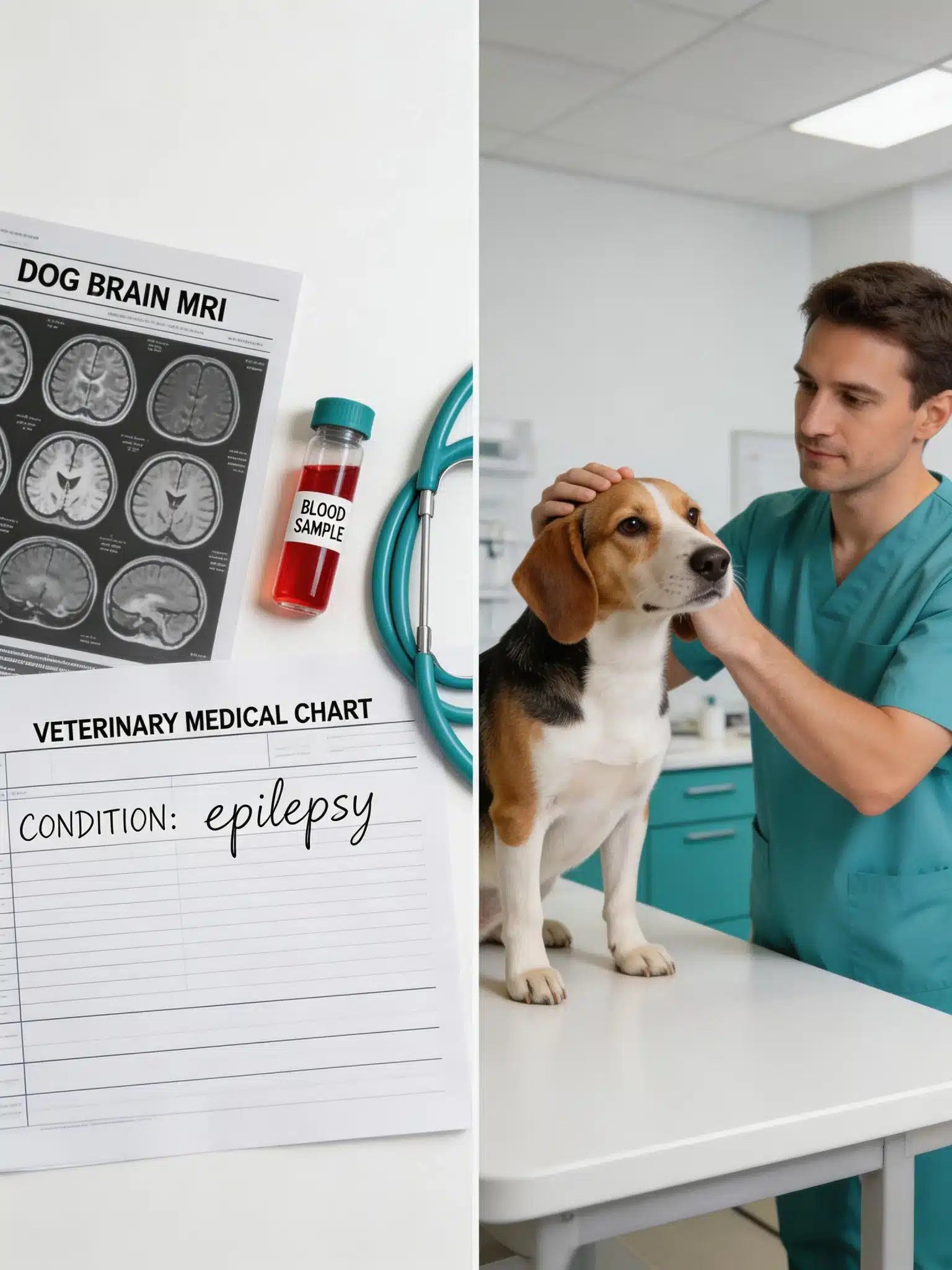
Understanding why seizures happen can help you feel less helpless. There’s almost always an underlying reason, even if it takes time to identify.
Common causes of seizures in dogs include:
- Epilepsy — the most common cause, especially in younger dogs. It’s often genetic and manageable with medication
- Brain tumors or lesions — more common in older dogs
- Low blood sugar (hypoglycemia) — can occur during or after intense exercise
- Toxin exposure — eating something poisonous on a walk, such as certain plants, mushrooms, or chemicals
- Heatstroke — overheating can trigger seizures, especially in summer
- Head trauma — if your dog was hit or had a fall
- Liver or kidney disease — affecting how the brain functions
According to the veterinary community, epilepsy affects approximately 0.6–0.75% of the dog population, making it one of the most common neurological conditions in dogs. That means millions of dog owners are managing this every day.
I’ve seen this happen with dogs that had zero previous health issues, which is why it’s so shocking when it occurs out of nowhere. A full vet workup after a first seizure is always the right call.
What Not To Do During a Dog Seizure
Just as important as knowing what to do is knowing what to avoid. Some common instincts can actually make things worse.
- Don’t put anything in your dog’s mouth — not your hand, not a stick, nothing
- Don’t try to give water or food during the seizure — they can choke
- Don’t move them unnecessarily — only move if they’re in immediate physical danger
- Don’t leave them alone — even if you need to call for help, try to stay close
- Don’t assume it’s over if they seem confused — the post-ictal phase can look like another episode
- Don’t panic in front of your dog — when it ends and they come around, a calm presence helps them recover
Helpful Items To Carry On Dog Walks
Being prepared is one of the kindest things you can do for your dog. A few simple items can make a stressful moment much more manageable.
- Dog Emergency First Aid Kit — compact and worth every penny
- Collapsible Dog Water Bowl — to help cool and hydrate your dog after a seizure
- Portable Dog Cooling Mat — useful after seizures in warm weather
- Dog Walking Bag with Pockets — keep all your essentials organized and accessible
- Dog Medical ID Tag — lets anyone who finds your dog know they have a seizure condition
It’s also a smart idea to save your vet’s number and an emergency vet number directly in your phone contacts so you’re not searching when you’re stressed.
Can CBD Help Dogs With Seizures?
You may have heard about CBD as a natural option for dogs prone to seizures. It’s a topic worth understanding, especially if your dog has been diagnosed with epilepsy. Some early research suggests CBD may help reduce seizure frequency in dogs, though it’s not a replacement for prescribed medication. Always speak to your vet before trying anything new. You can read more about giving CBD to your dog safely if you’re curious.
🛒 This Is What Vets Use For Their Own Dogs
👉 Dog Allergy Relief Immune Support Chews
When To Seek Emergency Veterinary Help
Not every seizure requires a 999 call in that exact moment, but some situations absolutely do. Know these red flags.
Call an emergency vet immediately if:
- The seizure lasts more than five minutes
- Your dog has more than one seizure within 24 hours
- Your dog doesn’t recover or regain consciousness after the seizure ends
- You suspect your dog ate something toxic on the walk
- Your dog is very young, very old, or has a known heart condition
- The dog seems in extreme distress during recovery
In my experience, it’s always better to call your vet even if you think everything is fine. Cluster seizures — multiple seizures close together — can be very dangerous, and your vet may want your dog seen straight away.
If your dog has been showing other unusual symptoms alongside this, such as drinking too much water, that could point to an underlying condition worth investigating.
Frequently Asked Questions About Dog Seizures on Walks
Can a dog die from a seizure on a walk?
Most single seizures are not life-threatening. However, a prolonged seizure lasting more than five minutes (status epilepticus) is a medical emergency that can be fatal without treatment. Getting veterinary help quickly in those cases is critical.
Should I pick my dog up during a seizure?
Only move your dog if they are in immediate danger, such as near a road or at the top of steps. If they’re on soft ground and safe, it’s better to let them be. Moving them unnecessarily during a seizure can cause injury.
How long do dog seizures usually last?
Most seizures last between 30 seconds and two minutes. Any seizure lasting over five minutes is an emergency. Timing the seizure from the moment it starts is one of the most helpful things you can do for your vet.
My dog seemed fine after the seizure. Do I still need to call the vet?
Yes, always. Even if your dog recovers quickly and seems totally normal, a vet needs to know about any seizure. It helps identify patterns, rule out serious causes, and decide if treatment or monitoring is needed.
Can heat or exercise trigger a seizure in dogs?
Yes. Overheating, intense exercise, and low blood sugar can all be seizure triggers in dogs. Keep walks cooler during hot weather, carry water, and avoid overexertion especially in dogs with known conditions.
What if my dog has never had a seizure before?
A first-time seizure always warrants a full veterinary assessment. Your vet will likely run blood tests, check for toxins, and may refer you to a specialist. Early diagnosis leads to much better outcomes.
Conclusion
Seeing your dog have a seizure is one of the scariest things a pet owner can go through, especially when you’re out in public and feel completely alone. But now you know: stay calm, keep them safe, don’t restrain them, time it, and call your vet as soon as it’s over. Those five things alone can make a real difference.
The one step you can take today is to save your vet’s number and an emergency vet number in your phone, and consider putting together a small walk bag with a water bowl and basic first aid supplies. A little preparation goes a long way. You’ve got this, and your dog is lucky to have someone who cares enough to be ready.