Why do dogs get dark spots under their eyes? If you have noticed brown, red, or black staining near your dog’s eyes, you are not alone.
These marks often look harmless at first, but they can point to tears, irritation, allergies, infection, or even pain. Spotting the cause early helps you protect your dog’s comfort and eye health.
This guide explains the most common reasons, what dark spots look like, when you should call your vet, and what you can do at home. We will also cover simple care steps that many owners use to keep the area cleaner and lighter.
Why Do Dogs Get Dark Spots Under Their Eyes?

Dogs usually get dark spots under their eyes because tears overflow onto the fur and leave pigment behind. The most common cause is tear staining, but allergies, blocked tear ducts, eye irritation, yeast, and infection can also play a role.
- Tear staining leaves brown or reddish marks on fur.
- Light-colored dogs show stains more clearly.
- Blocked tear ducts can cause constant wetness.
- Allergies often trigger more tearing and rubbing.
- Eye infections can darken and crust the area.
- Facial shape affects tear drainage in some breeds.
- Sudden changes need a vet check.
What Those Dark Spots Usually Mean
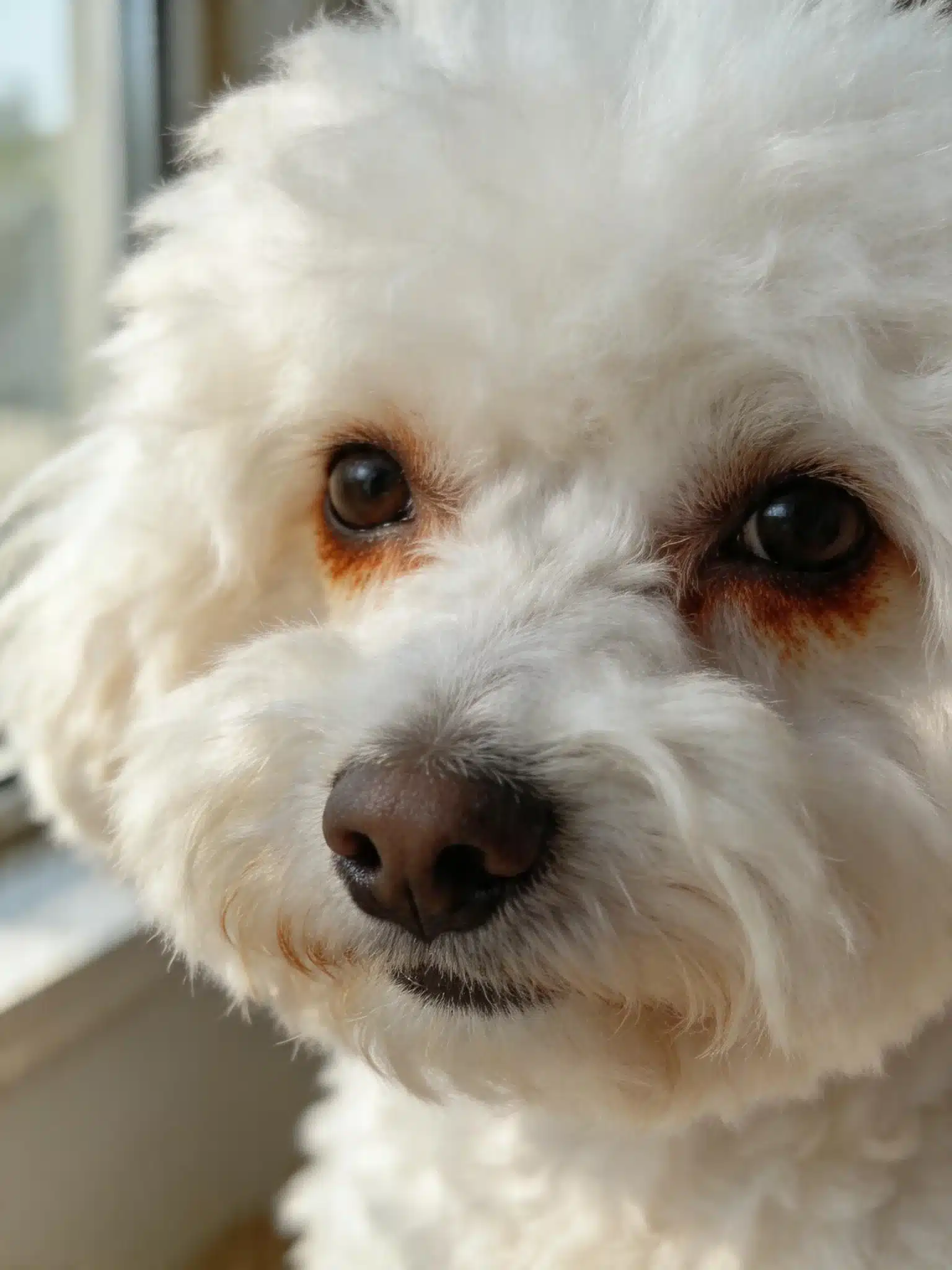
Most dark spots under a dog’s eyes are not true skin spots. They are usually stained fur caused by tears, also called epiphora, which means excess tearing.
Tears contain natural compounds called porphyrins that can leave reddish-brown staining on fur. When the area stays damp, yeast and bacteria can grow and make the staining look darker.
Tear Stains Vs. Skin Pigment
Stained fur sits on top of the coat and often feels damp or crusty. Real skin pigmentation stays on the skin itself and does not wipe away when the hair gets trimmed.
In our experience, owners often notice the difference after a grooming visit. If the dark mark disappears when the fur gets clipped short, staining caused it, not permanent skin color.
Get Free Dog Health Tips!
Weekly guides on keeping your dog healthy & happy
🔒 No spam. Unsubscribe anytime.
Why Some Dogs Show It More
White and cream dogs show tear stains faster because the contrast is stronger. Breeds like Maltese, Shih Tzus, Poodles, and Bulldogs often deal with this issue more than darker-coated dogs.
A client named Bella, a 3-year-old Maltese, developed rust-colored marks within two weeks after her eyes started watering daily. Her skin looked healthy, but the fur stayed damp until her vet treated the underlying irritation.
🛒 Products Our Readers Use Every Day
👉 Glucosamine & Chondroitin Chews for Dogs
Common Causes Of Dark Spots Under Dog Eyes

Dark spots under the eyes have a cause, and finding it matters more than covering the stain. The most common triggers include excess tears, blocked drainage, eye irritation, infection, and facial anatomy.
Many of our readers tell us the staining seems to appear overnight, but the moisture usually builds over days or weeks. The fur slowly changes color as tears keep soaking the same area.
Excess Tearing
Some dogs simply produce more tears than their eyes can drain. Wind, dust, smoke, grooming products, and even strong household cleaners can trigger that overflow.
Blocked Tear Ducts
Tears normally drain through small ducts near the eyes into the nose. If those ducts narrow or block, tears spill onto the face instead.
Allergies
Environmental allergies can make the eyes watery, itchy, and inflamed. Dogs with pollen, dust mite, or food sensitivities often rub their faces, which adds more irritation and staining.
If your dog also scratches other spots, compare the eye issue with broader skin signs. Our guide on dogs live with hot spots explains how moisture and irritation can team up on the skin.
Infection Or Yeast Overgrowth
Bacteria and yeast love warm, damp fur under the eyes. They can create a deeper brown color, a bad smell, sticky discharge, or crusting.
Breed Structure
Flat-faced breeds often have shallow eye sockets and facial folds that change how tears move. Hair that grows toward the eye can also keep the eye irritated and watery.
Max, a 5-year-old Shih Tzu, had dark under-eye fur plus constant squinting. His vet found hair rubbing the cornea, and trimming that hair reduced tearing within one week.
When Dark Spots Signal A Health Problem
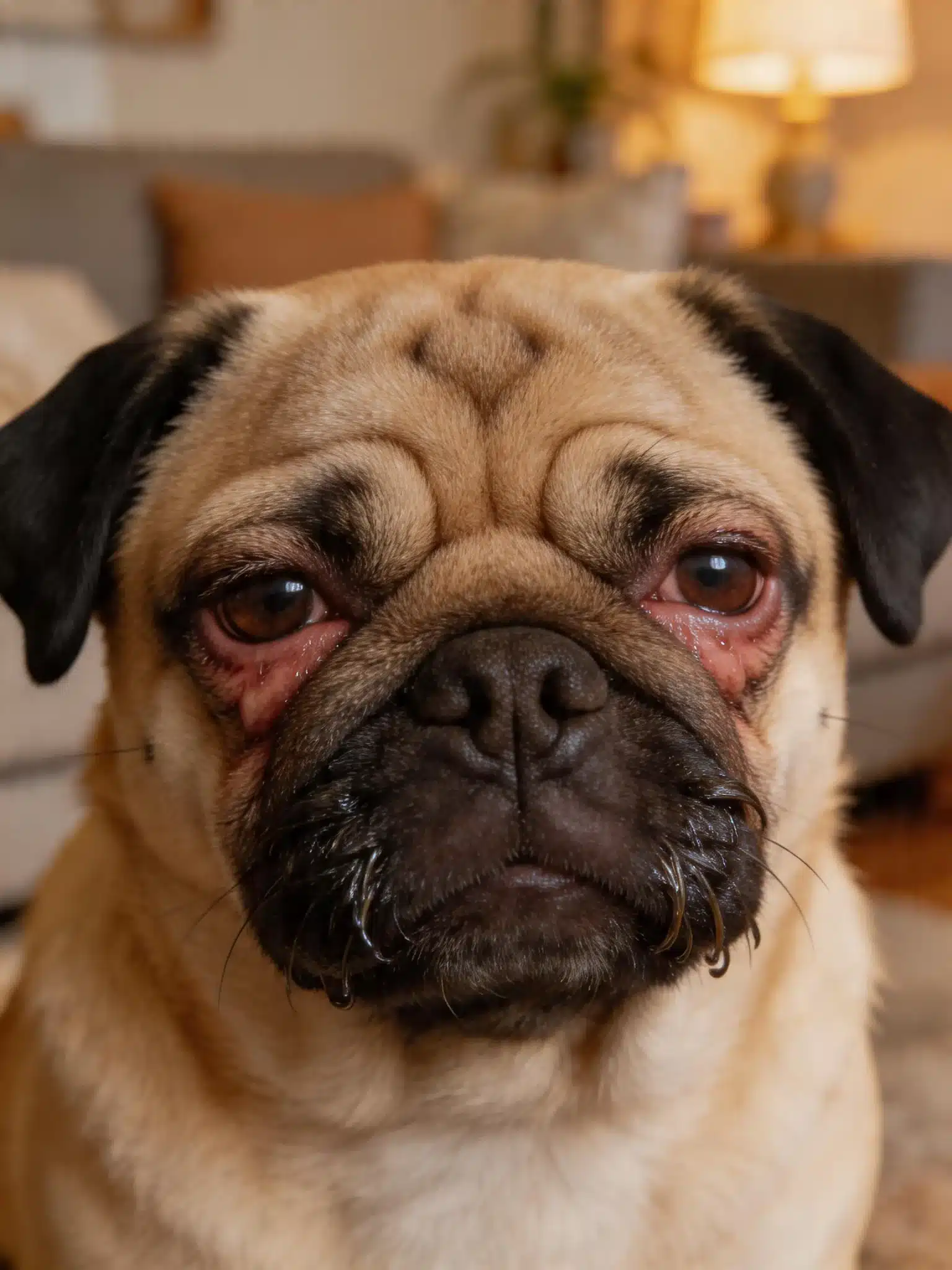
Dark staining alone does not always mean danger, but some signs should push you to act fast. Pain, swelling, thick discharge, or one-sided tearing deserve prompt veterinary care.
Building on what we covered about blocked tear ducts, drainage problems often affect one eye more than the other. A sudden stain under one eye can point to a scratch, ulcer, tooth root issue, or a duct blockage.
🛒 Vet-Recommended Wellness Picks
👉 Dog Probiotic & Prebiotic Powder
Warning Signs You Should Not Ignore
- Yellow or green eye discharge
- Squinting or keeping one eye closed
- Redness on the white of the eye
- Foul odor under the eye
- Swelling near the eyelid or nose
- Bloody tears or dark crusts
- Sudden behavior changes from pain
Dr. Marty Becker, a well-known veterinarian and author, often reminds owners that eye problems can worsen quickly. A simple-looking watery eye can become a corneal ulcer if irritation continues.
We have seen this consistently with dogs that paw at the face after grooming or play. Ranger, a 6-year-old Pug, looked like he had a normal tear stain, but his vet found a small corneal scratch that needed medication.
If your dog also seems uncomfortable and you almost missed the early clues, this article on how many dogs suffer alone because their owners didnt notice this can help you spot subtle warning signs sooner.
How Vets Diagnose The Cause
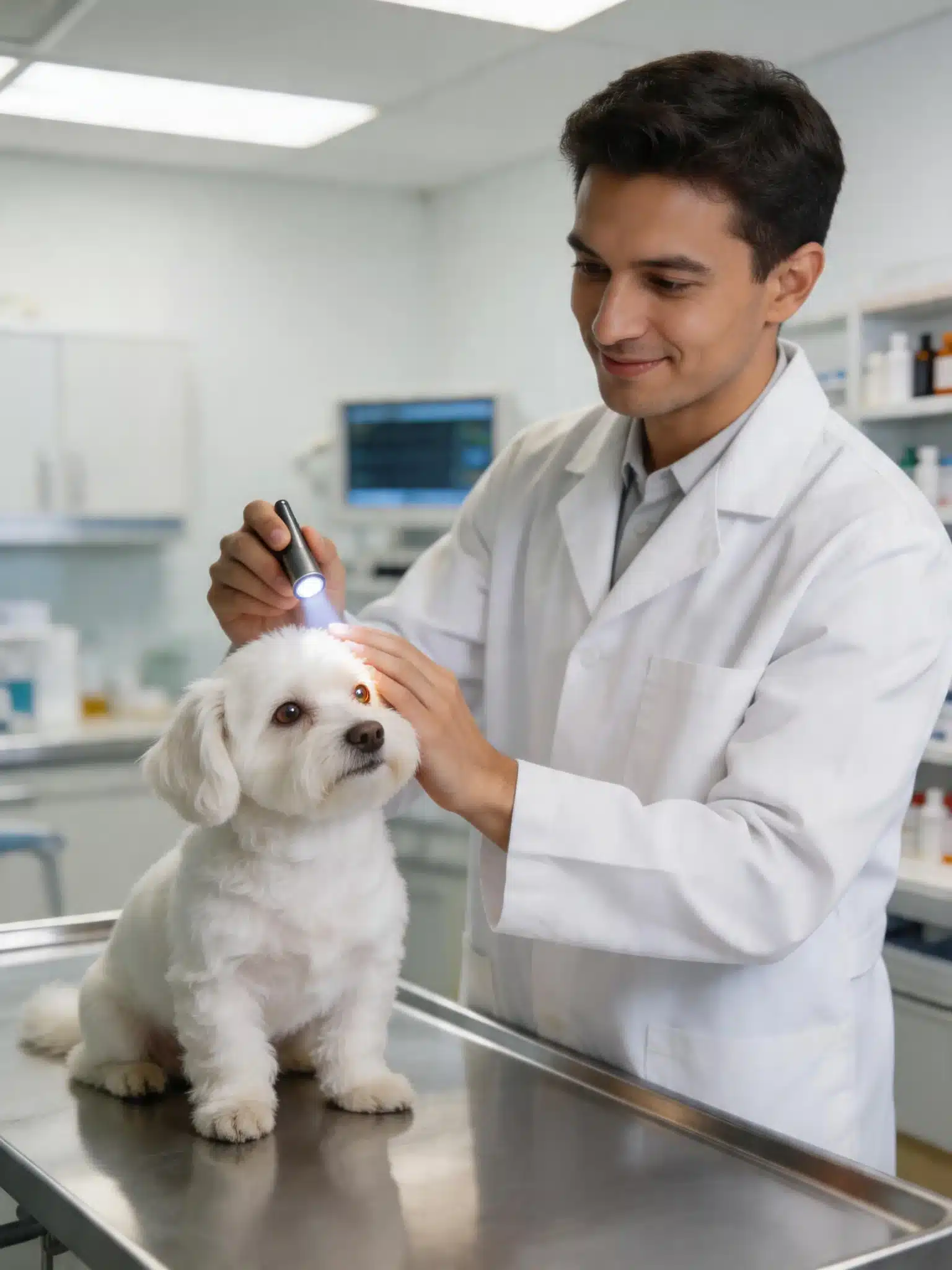
A vet does more than look at the stain itself. They check tear production, tear drainage, eyelid shape, eyelashes, corneal health, and signs of allergy or infection.
What we have found works best is focusing on the reason for the moisture, not just the color. If the face stays wet, the staining usually returns no matter how often you clean it.
Tests Your Vet May Use
- Eye exam with magnification
- Fluorescein stain to check for corneal ulcers
- Schirmer tear test for tear production
- Tear duct flush to check drainage
- Swab or culture if infection appears likely
The American College of Veterinary Ophthalmologists notes that excessive tearing can stem from pain, poor drainage, or eyelid issues. That is why a proper eye exam matters more than guessing from stain color.
Daisy, a 4-year-old Poodle, had dark marks that her owner treated with wipes for months. After one tear duct flush and allergy treatment, the area dried up and the staining faded as new fur grew in.
How To Clean And Manage Dark Spots At Home
You can often improve mild tear staining at home, but safe care matters. Never use harsh bleach products, hydrogen peroxide, or anything that could enter the eye.
As the What Those Dark Spots Usually Mean section showed, the stain forms because fur stays wet. Your goal is to keep the area clean, dry, and free from extra irritation.
Step-By-Step Daily Care
-
Wash your hands before touching your dog’s face. This lowers the chance of adding bacteria near the eye.
-
Use a soft cotton pad with warm water or a vet-approved eye rinse. Wipe away from the eye, not into it.
-
Dry the fur gently with a clean cloth. Moisture left behind helps staining and yeast linger.
-
Trim long facial hair if it pokes the eye. Ask a groomer or vet for help if your dog wiggles.
-
Clean food and water bowls daily. Stainless steel bowls often stay cleaner than plastic.
-
Track flare-ups after walks, pollen spikes, new foods, or grooming products. Patterns often reveal the trigger.
Helpful Products That Fit Naturally
A gentle dog eye wipes product can make daily cleanup easier when your dog hates soaked cotton pads. Choose fragrance-free wipes made for use around the eyes.
For crusty buildup, many owners like a pet eye wash for dogs that rinses debris without stinging. Use only products labeled for canine eye-area care.
If long face hair keeps poking the eye, a small dog grooming scissors round tip set can help with careful trimming. Keep the blades pointed away from the eye at all times.
Charlie, a 2-year-old Bichon Frise, improved after his owner cleaned the corners twice daily and switched to stainless bowls. His staining did not vanish in three days, but new fur grew in much lighter after four weeks.
What Actually Helps Prevent Tear Stains
Prevention works better than constant cleanup. If you reduce the overflow, the dark spots usually fade as stained hair sheds or gets trimmed away.
Many of our readers tell us they tried several wipes before checking for an underlying trigger. That approach often leads to frustration because the source of the moisture stays active.
Prevention Tips That Make A Difference
- Keep hair trimmed around the eyes.
- Use filtered water if your vet suggests it.
- Manage allergies with veterinary guidance.
- Clean facial folds on flat-faced breeds.
- Schedule regular dental and eye exams.
- Replace old plastic bowls with stainless steel.
A clean stainless steel dog bowls set helps some dogs by reducing bacteria and residue near the face. While bowls do not cure tear stains, they support better hygiene.
If your dog has folds that trap moisture, a soft dog wrinkle wipes product may help keep skin cleaner. Use them only on outer skin folds, not inside the eye.
Lucy, an 8-year-old Bulldog, had dark wet streaks because tears pooled in her facial folds. Once her owner cleaned the folds twice a day and treated seasonal allergies, the skin irritation settled within ten days.
Some owners dealing with broader parasite or skin questions also ask whether other pets spread irritation in the home. If that sounds familiar, these guides on can chinchillas get fleas from dogs and can chinchillas get mites offer related hygiene insights.
Expert Insights On Tear Staining And Eye Health
Dr. Debora Lichtenberg, VMD, has written that chronic tearing often reflects irritation, anatomy, or blocked drainage rather than a cosmetic issue alone. That matches what vets see in clinic every day.
The Merck Veterinary Manual explains that epiphora means overflow of tears onto the face. Common causes include eyelid abnormalities, nasolacrimal duct blockage, and eye pain, which lines up with the dark-stain patterns owners notice at home.
What we have found works best matches veterinary advice: solve the moisture problem first. Stain removers help appearance, but they do not fix hair rubbing the eye, a duct blockage, or an infection.
Milo, a 7-year-old Pekingese, used whitening products for two months with little change. After an ophthalmic exam found eyelid irritation, prescription treatment reduced the tearing and the stains slowly grew out.
If your household also includes small pets and you want to rule out broader illness risks, you may also find can chinchillas get rabies and can chinchillas get fleas useful for general pet-health planning.
Frequently Asked Questions About Why Do Dogs Get Dark Spots Under Their Eyes
Are Dark Spots Under My Dog’s Eyes Normal?
Mild tear staining is common, especially in light-colored and flat-faced breeds. It is not always normal if it appears suddenly, smells bad, or comes with redness or pain.
Can Dog Tear Stains Be Black Instead Of Brown?
Yes, they can look very dark when moisture mixes with debris, yeast, or dense fur. Black-looking crusts also deserve a vet check because infection or injury can cause them.
Do Certain Dog Foods Cause Tear Stains?
Food does not directly stain the fur, but food allergies can increase eye irritation and tearing. If your dog also has itchy skin or ear issues, ask your vet about diet triggers.
Should I Use Human Makeup Removers Or Peroxide?
No, those products can irritate or injure the eye area. Use only warm water, vet-approved cleansers, or products made for dogs.
How Long Does It Take For Tear Stains To Go Away?
Existing stained fur usually stays discolored until it grows out or gets trimmed. Once you fix the cause, many dogs show cleaner new growth within several weeks.
Can Puppies Get Dark Spots Under Their Eyes?
Yes, puppies can develop staining from teething, mild irritation, anatomy, or early allergies. A vet should check any puppy with squinting, thick discharge, or constant tearing.
Conclusion
Dark spots under your dog’s eyes usually come from tear staining, but they can also signal irritation, blocked drainage, allergies, or infection. The smartest move is to treat the cause, not just the color.
Start today by cleaning the area gently, trimming irritating hair, and watching for warning signs like redness or thick discharge. If anything looks painful or suddenly worse, book a vet visit and feel confident you are doing the right thing.