Elbow Dysplasia Surgery Recovery Timeline for Dogs Complete Guide starts with one big truth: recovery takes patience, structure, and close follow-up. If your dog just had elbow surgery, you likely want a clear week-by-week picture of what happens next.
This topic matters because the first eight to twelve weeks can shape your dog’s comfort for years. Good aftercare can lower pain, protect the joint, and help your dog return to safer movement.
This guide walks you through the typical timeline, home care, rehab, warning signs, and expert tips. We will also show you what questions to ask your vet and how to make daily recovery easier.
Elbow Dysplasia Surgery Recovery Timeline for Dogs At A Glance
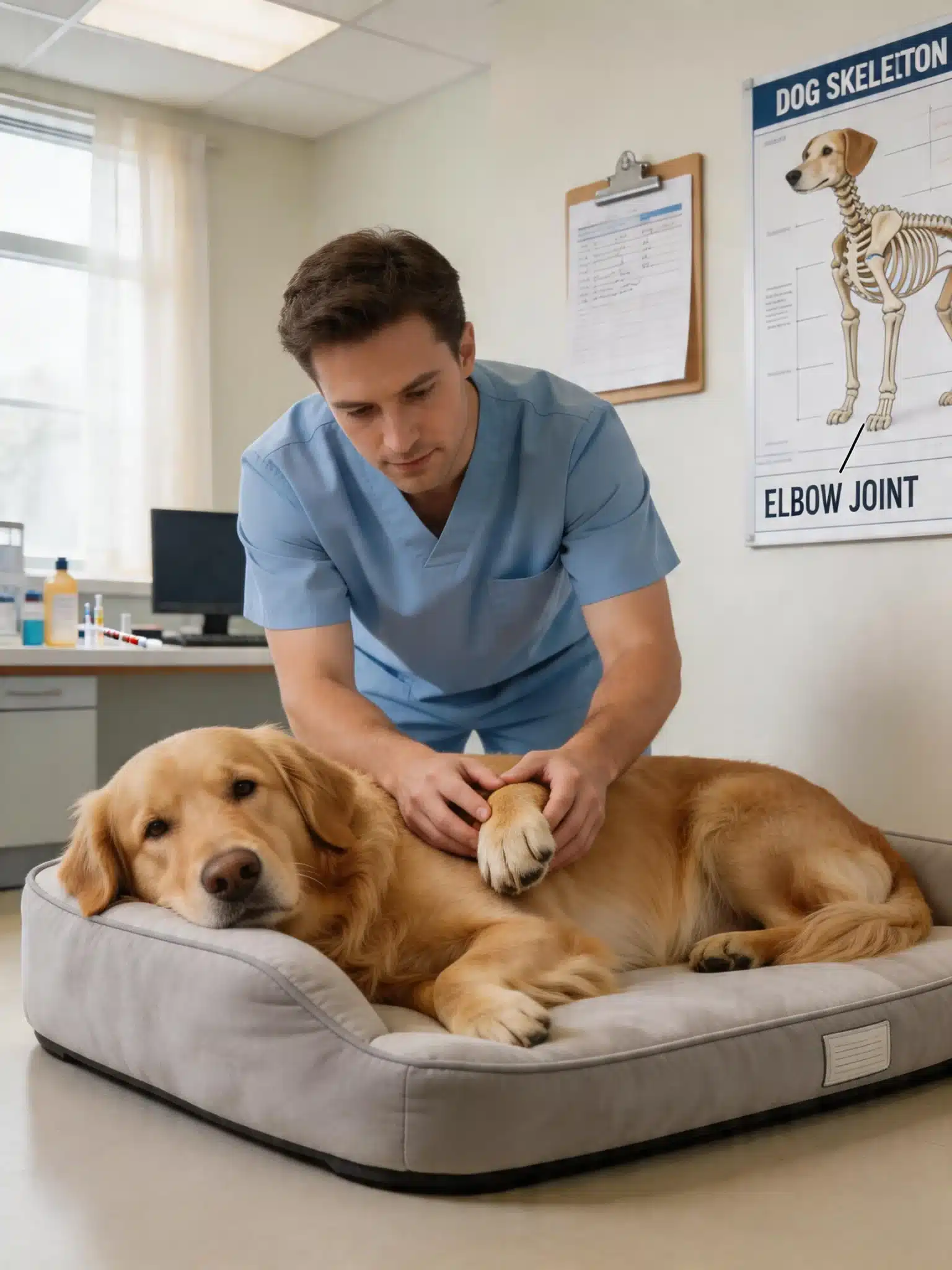
Most dogs need 8 to 12 weeks for early surgical recovery, though full strength and long-term management often take several months. Recovery speed depends on the surgery type, cartilage damage, age, weight, and how closely you follow activity limits.
- Days 1-3 focus on pain control and rest.
- Weeks 1-2 require strict crate or room confinement.
- Stitches often come out around days 10-14.
- Weeks 3-6 add short leash walks.
- Physical therapy often starts early if your surgeon approves.
- Most dogs improve steadily by weeks 6-8.
- Long-term arthritis care often remains necessary.
What A Normal Recovery Timeline Looks Like
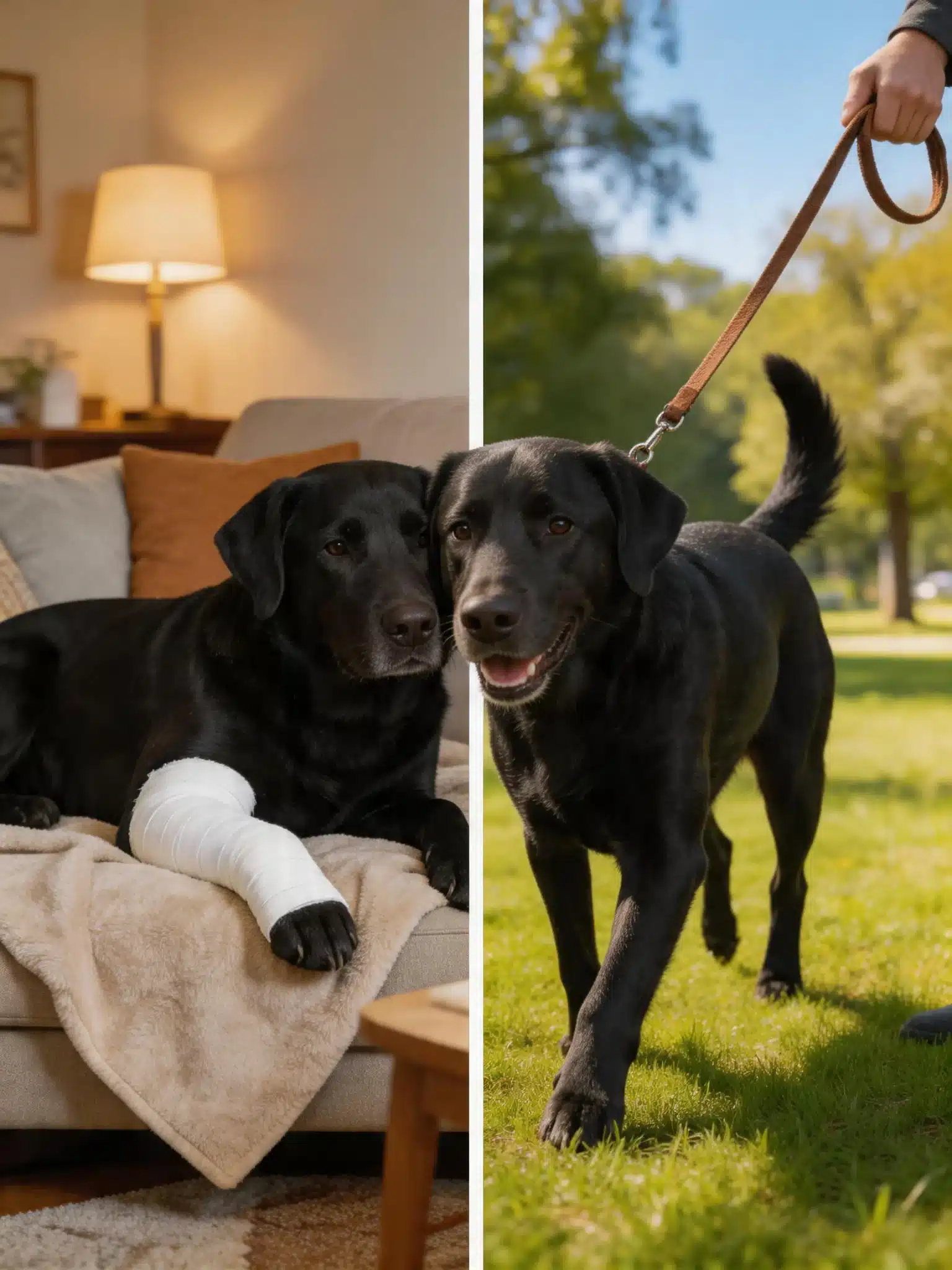
Your dog’s exact path depends on whether the surgeon used arthroscopy, removed fragmented bone, corrected incongruity, or treated severe arthritis. In our experience, owners do best when they expect progress in small steps, not one dramatic turnaround.
Many of our readers tell us the hardest part is the slow pace during the first two weeks. That stage feels quiet, but it often protects the joint more than anything else you do later.
Days 1 To 3
Your dog may feel sleepy, sore, and slightly unsteady after anesthesia and pain medicine. Appetite can dip for a day, and mild swelling around the elbow can appear.
Keep movement short and controlled for bathroom breaks only. Use a flat leash, non-slip floors, and an dog recovery cone or surgeon-approved alternative if your dog licks the incision.
Get Free Dog Health Tips!
Weekly guides on keeping your dog healthy & happy
🔒 No spam. Unsubscribe anytime.
Weeks 1 To 2
This stage centers on strict rest and incision healing. Your dog should avoid stairs, jumping, rough play, furniture, and slippery surfaces.
Some surgeons allow gentle passive range-of-motion work during this window. Others want complete rest first, so follow your discharge instructions exactly.
🛒 Products Our Readers Use Every Day
👉 Glucosamine & Chondroitin Chews for Dogs
Weeks 3 To 6
Building on what we covered about strict rest, this is when many dogs begin very short leash walks. Pain usually improves, but overdoing activity now can still cause setbacks.
Oscar, a 4-year-old Labrador we followed after arthroscopic elbow surgery, started with five-minute leash walks three times daily in week three. By week six, his surgeon cleared him for 15-minute controlled walks because he showed no swelling or limping after exercise.
Weeks 7 To 12
Most dogs regain better comfort and use of the leg during this stage. Your vet may increase walking time, add rehab exercises, and allow a gradual return to normal home activity.
What we have found works best is a slow increase every few days, not daily big jumps. Even if your dog looks great, the joint still needs time to adapt.
How To Care For Your Dog At Home During Recovery
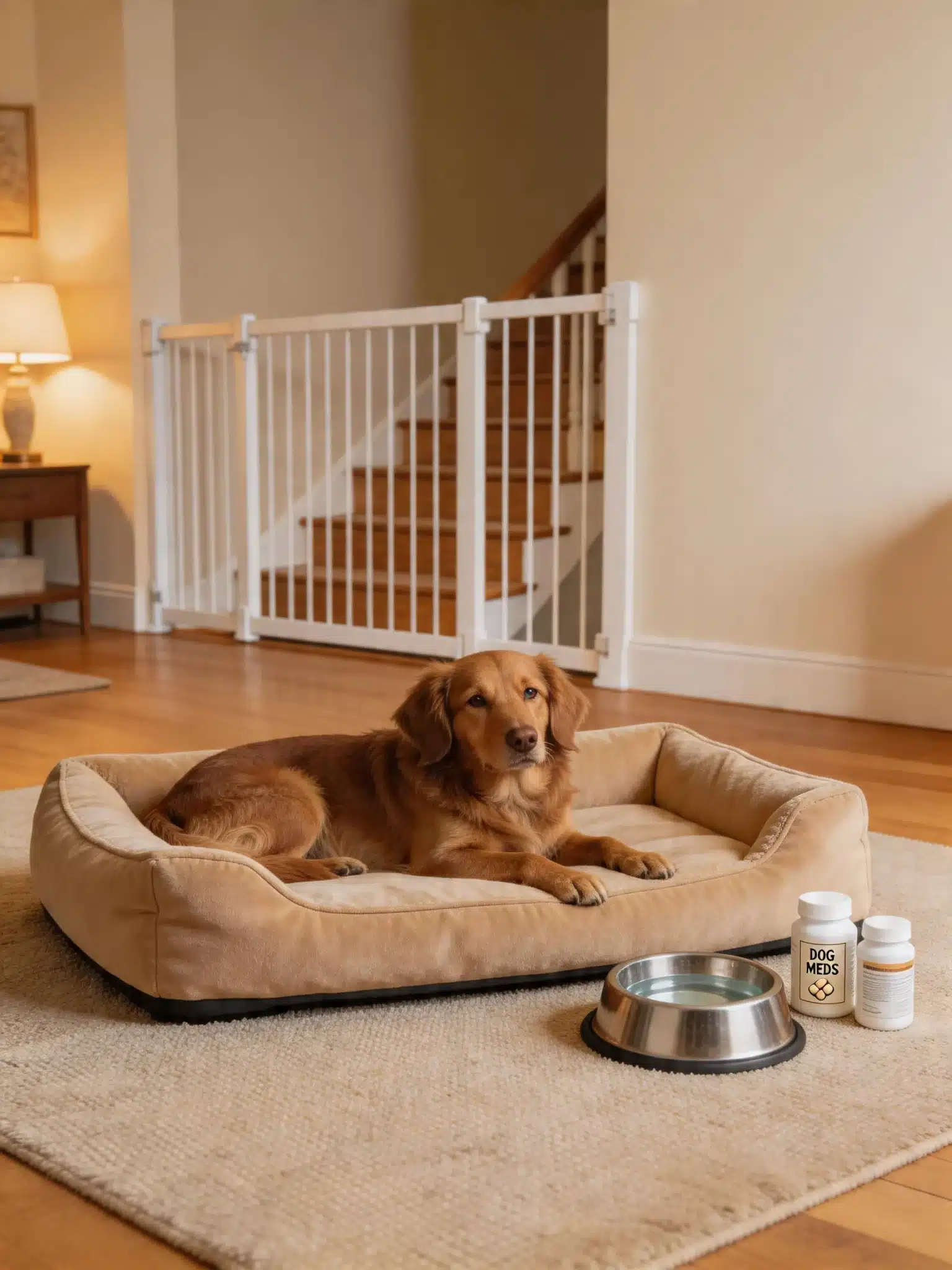
Home care can make or break elbow surgery recovery. You need a calm setup, steady routines, and close observation.
Create one recovery area with enough space to stand, turn, and lie down comfortably. A orthopedic dog bed helps reduce pressure on sore joints, especially for large breeds.
Setting Up A Safe Recovery Space
Choose a quiet room with easy-to-clean floors and no chance to run. Use baby gates or a crate if your dog tends to zoom when excited.
Place food, water, and bedding within a few steps. If your dog dislikes crates, a small exercise pen or blocked-off laundry room often works well.
Pain Medicine And Incision Care
Give every medication exactly as prescribed and on schedule. Do not add human pain relievers, since many can seriously harm dogs.
Check the incision once or twice daily for redness, drainage, heat, or gaps. A simple inflatable recovery collar can help some dogs, but ask your surgeon before switching from a cone.
Preventing Slips And Reinjury
Traction matters more than many owners expect. Add rugs, yoga runners, or non-slip dog socks if your dog slides on wood or tile.
🛒 Vet-Recommended Wellness Picks
👉 Dog Probiotic & Prebiotic Powder
We have seen this consistently with active dogs like Bella, a 2-year-old Bernese Mountain Dog. She looked stronger by week four, slipped during an unsupervised hallway run, and needed another two weeks of restricted activity.
If surgery costs or follow-up rehab bills feel overwhelming, review your coverage options before future procedures with this guide to choosing pet insurance. Financial planning often helps owners stick with recommended rehab visits.
Physical Therapy, Exercise, And Weight Control

Rehab helps many dogs rebuild muscle, improve joint motion, and move more comfortably. Your surgeon may suggest home exercises, a rehab vet, underwater treadmill work, or laser therapy.
As the home care section showed, rest protects healing tissue early on. After that, controlled movement becomes the next key tool.
When Physical Therapy Starts
Some dogs start gentle rehab within days of surgery, especially after arthroscopy. Others need longer rest if the procedure was more invasive or the joint showed severe damage.
Ask your surgeon for a written rehab plan with dates, exercise limits, and stop signs. That prevents guesswork when your dog starts acting more energetic.
Best Types Of Recovery Exercise
Most early exercise stays simple and controlled. Common examples include leash walks, sit-to-stand drills, weight shifting, and careful incline walking later.
A dog support harness can help you guide large dogs safely during short walks. It also gives you more control on stairs if your vet allows stair use.
Why Weight Management Matters So Much
Extra pounds put extra force on an already damaged elbow. Even a modest weight reduction can improve comfort and lower long-term arthritis strain.
In one practical case, Tyson, a 78-pound mixed breed, dropped to 71 pounds over four months after surgery. His owner reported easier standing, fewer limping episodes, and better stamina during 20-minute rehab walks.
For owners managing more than one orthopedic issue, our guide on dogs living with hip dysplasia can help you think through long-term joint support. Similar principles often apply to elbow arthritis care.
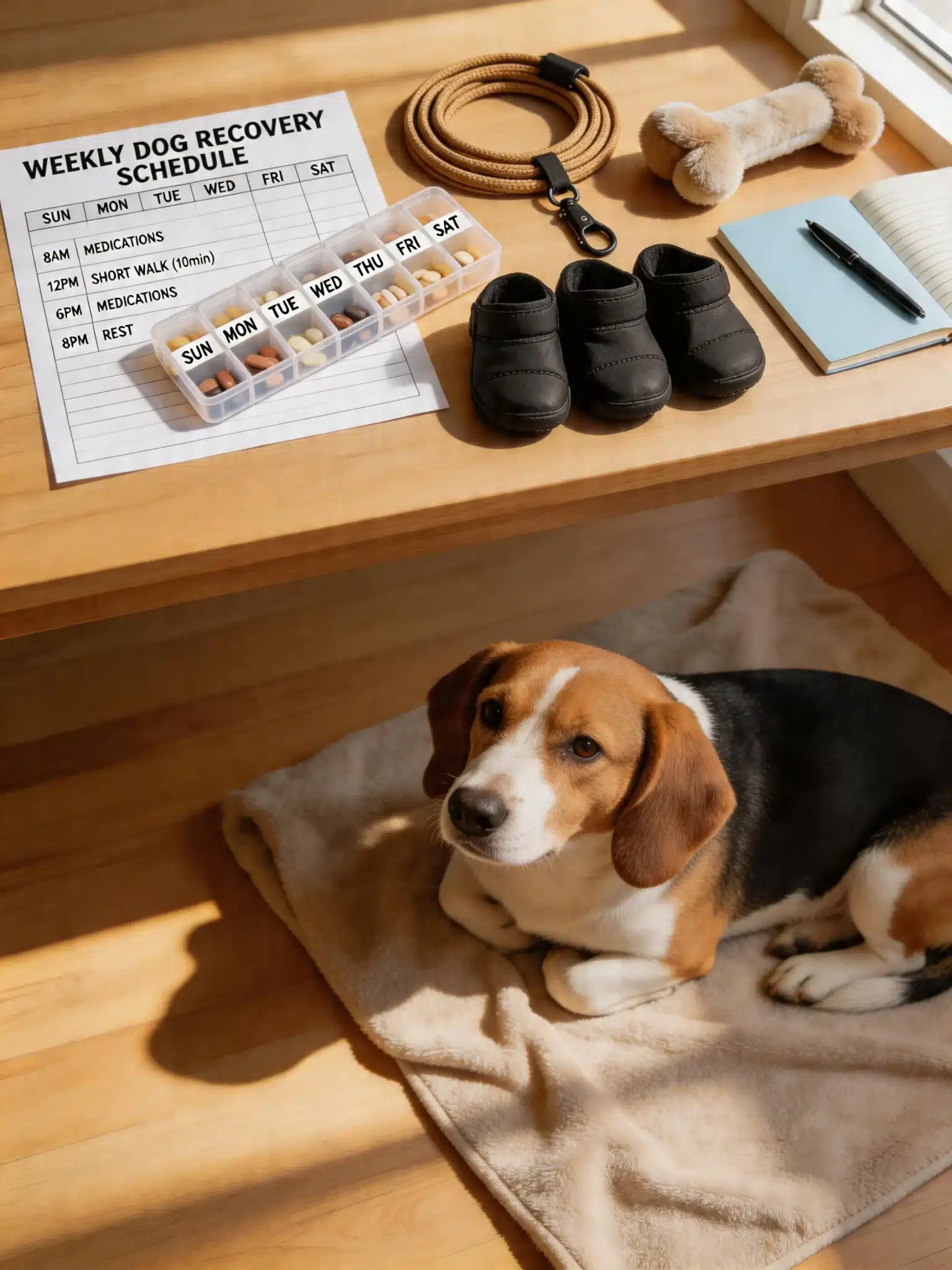
Step-By-Step Recovery Plan For The First Eight Weeks
-
Prepare your dog’s recovery space before surgery day. Set up bedding, rugs, medications, and a bathroom route with the fewest steps.
-
Use only leash walks for potty breaks during the first two weeks. Keep each trip short, calm, and on flat ground.
-
Check the incision every day at the same time. Call your vet if you see discharge, bad odor, opening skin, or growing redness.
-
Track pain, appetite, sleep, and leg use in a phone note. Small changes become easier to spot when you record them daily.
-
Attend the recheck visit, which often happens around days 10 to 14. Ask whether your dog can begin rehab, longer walks, or joint supplements.
-
Increase activity only by your surgeon’s plan. If limping worsens after exercise, cut back and report it.
-
Keep your dog lean with measured meals and limited treats. Ask your vet for a target weight, not a guess.
-
Plan for long-term joint care after week eight. Many dogs benefit from ongoing exercise control, rehab refreshers, and arthritis monitoring.
Warning Signs That Mean You Should Call The Vet
Some soreness and mild swelling can fit normal recovery, but certain changes need fast attention. Trust your observations, especially if your dog’s behavior shifts suddenly.
Call your veterinary team if you notice any of these signs:
- Incision bleeding, pus, or opening skin
- Fever, shaking, or unusual lethargy
- Refusing food for more than 24 hours
- Vomiting after medication
- Worsening limp after initial improvement
- Toe dragging or inability to bear weight
- Constant licking despite a cone
Many of our readers tell us they worry about bothering the clinic with small questions. A quick call often prevents a bigger problem.
Jake, a 6-year-old German Shepherd, started toe-touching less in week two, then suddenly refused to use the leg after an excited greeting at the door. His recheck found increased inflammation, and strict rest plus medication changes got him back on track.
If your dog has another condition that could affect anesthesia or healing, planning matters even more. This article on dog surgery with a heart murmur explains how careful monitoring lowers risk.
Expert Insights On Recovery Expectations And Long-Term Outlook
Veterinary surgeons often remind owners that elbow dysplasia usually involves lifelong joint disease, even after successful surgery. The goal often shifts from cure to better function, less pain, and slower arthritis progression.
According to the American College of Veterinary Surgeons, elbow dysplasia commonly affects both front limbs, even when one side looks worse first. That helps explain why some dogs still need long-term management after surgery.
Dr. Karen Tobias, a well-known board-certified veterinary surgeon, has emphasized in orthopedic education that controlled rehabilitation and weight control strongly affect outcome. We have seen this consistently in dogs whose owners follow structured plans rather than judging recovery by excitement level.
Dr. Jennifer Renwick, a specialist in canine rehabilitation, often highlights muscle rebuilding as a major piece of orthopedic recovery. Strong shoulder and core muscles can reduce stress on painful joints during daily movement.
What we have found works best is treating recovery like a full program, not just incision healing. That means surgery, rehab, body weight, traction, and long-term arthritis care all work together.
For behavior support during confinement, some owners also need help reducing household chaos around other pets. This guide on stopping a dog from chasing cats can help keep recovery periods calmer.
Frequently Asked Questions About Elbow Dysplasia Surgery Recovery Timeline for Dogs Complete Guide
How Long Does It Take A Dog To Recover From Elbow Dysplasia Surgery?
Most dogs need 8 to 12 weeks for early recovery. Full improvement and long-term joint management can take several months.
Will My Dog Walk Normally Again?
Many dogs walk more comfortably after surgery, but some keep a mild limp. The result depends on arthritis severity, surgery type, weight, and rehab follow-through.
Can My Dog Use Stairs During Recovery?
Many surgeons restrict stairs during the first few weeks. Ask your vet, because the answer depends on your dog’s procedure and stability.
When Can My Dog Run After Surgery?
Most dogs should not run freely for at least several weeks. Your surgeon usually clears running only after rechecks show stable healing.
Do Dogs Still Need Arthritis Treatment After Surgery?
Yes, many dogs still need long-term arthritis support. That may include weight control, joint supplements, rehab, anti-inflammatory medication, or lifestyle changes.
Should I Use Supplements Or Special Products During Recovery?
Use only products your veterinarian approves for your dog’s case. Some owners find a dog joint supplement helpful later, but timing and choice should match your vet’s plan.
Conclusion
Elbow dysplasia surgery recovery takes weeks, not days, and steady care usually beats rushing. The biggest wins come from strict early rest, controlled rehab, weight control, and fast action when something looks wrong.
Today, set up a safe recovery area and write down your dog’s medication and walk schedule. If you want more pet home-care guidance, our readers also like practical resources such as keeping cats indoors safely and French Bulldog skin rash treatment.