You set up the crate, said goodnight, and went to bed feeling hopeful. Then you woke up to a wet, unhappy puppy and a messy crate. If this sounds familiar, you’re not alone — and you’re not doing anything wrong.
Nighttime accidents in the crate are one of the most common struggles new puppy owners face. It’s frustrating, exhausting, and can feel like your training isn’t working. But in most cases, there’s a clear reason why it’s happening, and simple fixes that actually help.
This article will walk you through exactly why young puppies pee in the crate overnight, what mistakes to avoid, and how to build a routine that leads to dry, peaceful nights for both of you.
🛒 Products Our Readers Use Every Day
👉 Glucosamine & Chondroitin Chews for Dogs
Why Puppies Pee in the Crate at Night (and What You Can Do Right Now)
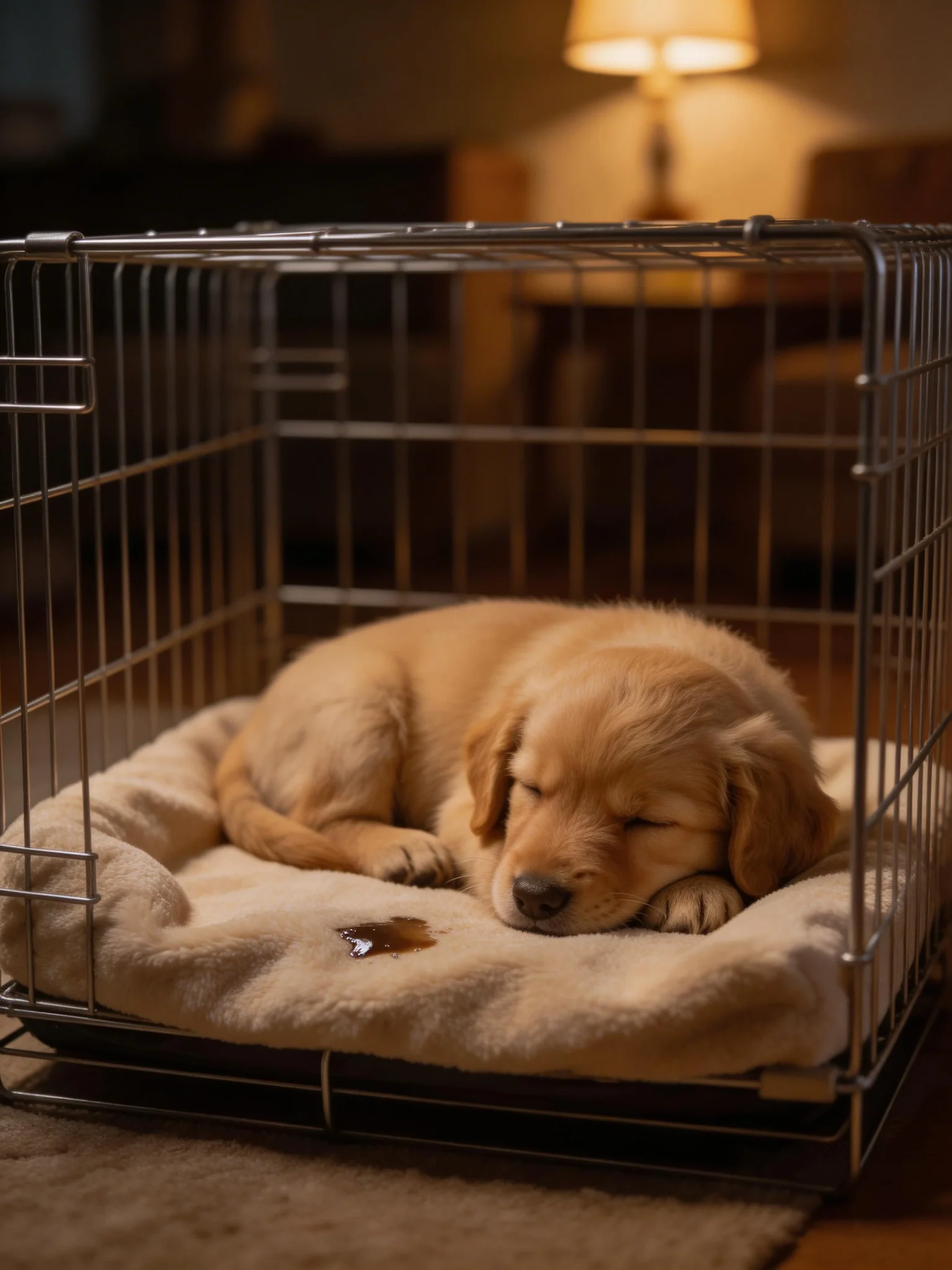
Young puppies pee in the crate overnight mainly because their bladders are too small to hold urine through the night. They simply can’t help it yet. Other factors — like a crate that’s too big, eating too late, or drinking water right before bed — make accidents even more likely.
Here’s a quick summary of the most important things to know:
Get Free Dog Health Tips!
Weekly guides on keeping your dog healthy & happy
🔒 No spam. Unsubscribe anytime.
- Puppies under 12 weeks can only hold their bladder for about 1–2 hours at a time.
- A general rule: A puppy can hold it for one hour per month of age, plus one — so a 2-month-old puppy needs a trip outside every 3 hours at most.
- Crates that are too large give puppies space to pee in one corner and sleep in another, which defeats the purpose of crate training.
- Feeding or watering too close to bedtime dramatically increases the chance of overnight accidents.
- High stress or anxiety can cause puppies to lose bladder control more easily.
- Some puppies have underlying medical issues like UTIs that make accidents more frequent — worth ruling out with a vet visit.
- Immediately after an accident: Clean the crate thoroughly with an enzyme-based pet odor cleaner to remove scent markers that can encourage repeat accidents.
The Real Reason Young Puppies Can’t Hold It Through the Night
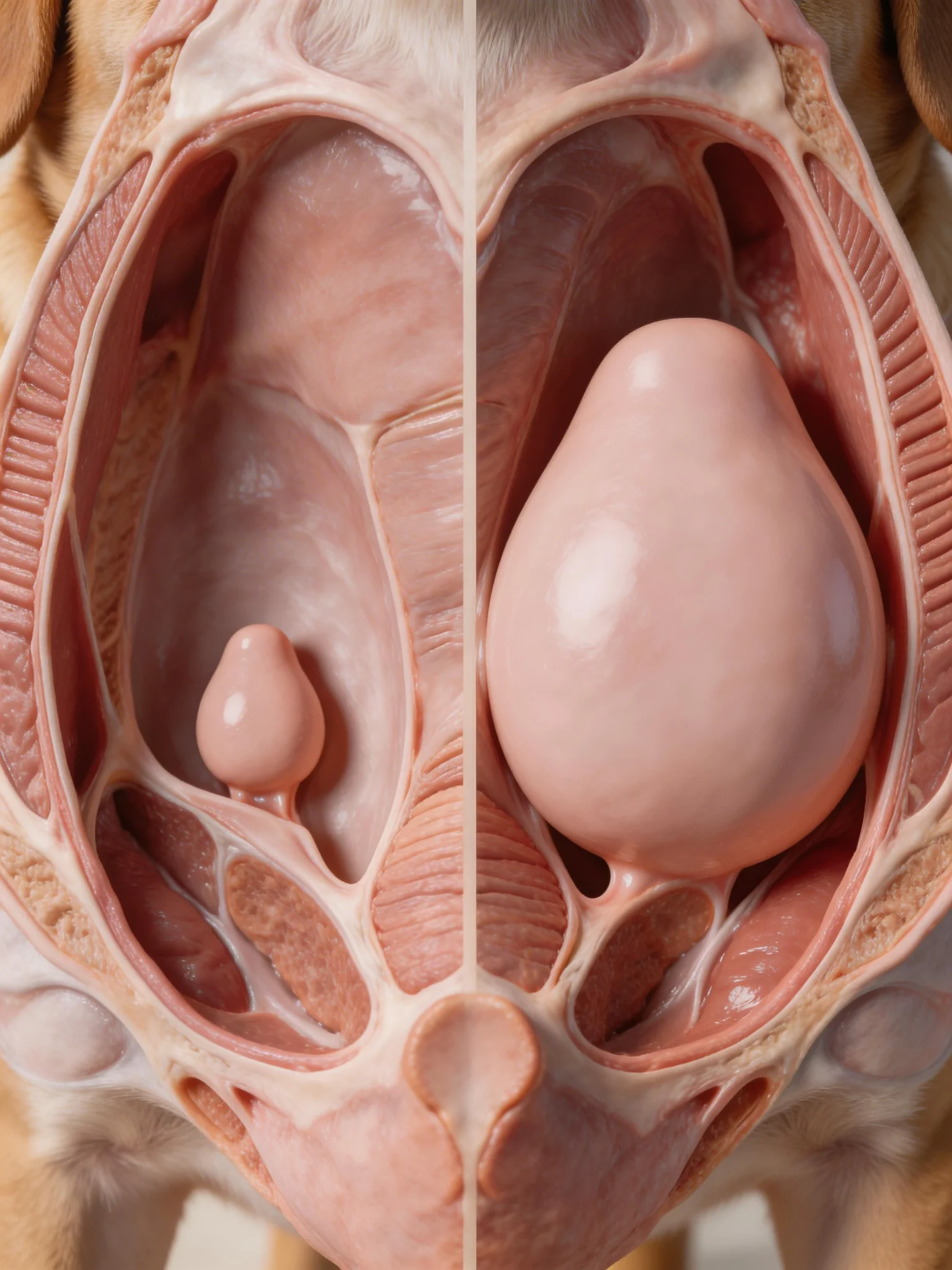
It helps to understand what’s happening inside your puppy’s body. Puppies are born with underdeveloped bladders and weak sphincter muscles. These muscles are what allow a dog — or a human — to consciously hold urine until it’s the right time to go.
Those muscles take time to strengthen. Most puppies don’t have reliable bladder control until around 4 to 6 months of age. Until then, the urge to pee comes on fast and strong, and there’s very little your pup can do to stop it.
🛒 Vet-Recommended Wellness Picks
👉 Dog Probiotic & Prebiotic Powder
This means nighttime accidents at 8 or 10 weeks old aren’t a training failure. They’re a biological reality. The goal isn’t to expect your puppy to hold it all night — it’s to set up a system that sets them up for success.
How Age Affects Bladder Control
- 6–8 weeks: Can hold bladder for about 1–2 hours max
- 8–10 weeks: Up to 2–3 hours with consistent routine
- 3–4 months: Can often go 3–4 hours overnight with good habits
- 5–6 months: Many puppies can sleep through a 6–7 hour night without an accident
Every puppy is different, and smaller breeds tend to have smaller bladders, which means they need more frequent trips outside for longer. If you’re raising a small breed, be patient — it can take a little more time.
Common Mistakes That Make Nighttime Accidents Worse
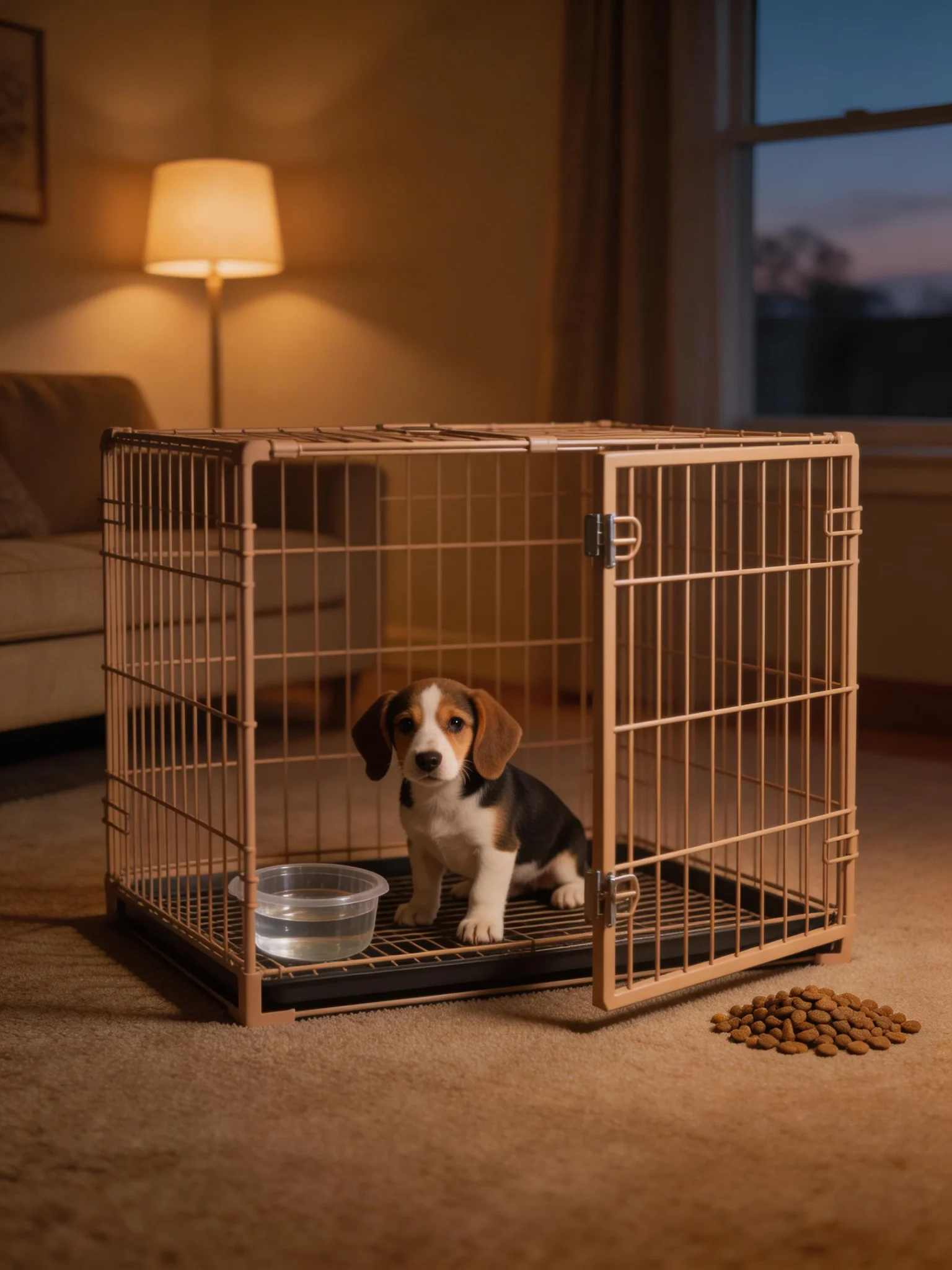
Sometimes the issue isn’t just your puppy’s age — it’s a few easy-to-fix habits that are working against you. Here are the most common mistakes owners make:
Using a Crate That’s Too Big
This is the number one crate training mistake. Dogs naturally avoid soiling their sleeping area, but only if the space is cozy and den-like. If the crate is large enough for your puppy to walk to a back corner and pee, they will.
Your puppy’s crate should be just big enough for them to stand up, turn around, and lie down comfortably. Nothing more. If you have a large breed puppy, buy a crate with a divider panel so you can adjust the size as they grow. A good dog crate with a divider saves money and gives you flexibility.
Feeding or Watering Too Late
Whatever goes in must come out — usually within 20 to 30 minutes for a young puppy. If your puppy eats dinner at 9 PM and goes to bed at 10 PM, a midnight accident is almost guaranteed.
Try to finish feeding and limit water at least 2 hours before bedtime. Make sure your puppy gets a good outdoor potty break right before going into the crate for the night.
Skipping a Late-Night Potty Break
Many new owners assume their puppy can sleep through the night from the start. They can’t. Plan for at least one middle-of-the-night potty trip during the first few months. Set an alarm, take them outside quietly and calmly, and put them straight back to bed. Keep it boring — no play, no big fuss.
Not Cleaning Accidents Thoroughly
Dogs are guided by scent. If even a trace of urine smell remains in the crate, your puppy will be drawn back to that same spot. Regular soap and water won’t break down the urine proteins — you need an enzyme cleaner specifically made for pet messes. This is one of the most practical tools you’ll use during the puppy stage.
How to Set Up a Successful Overnight Routine

A consistent routine is the backbone of crate training success. Puppies thrive on predictability — when they know what to expect, their stress levels drop and their training clicks faster.
- Set a consistent bedtime. Pick a time and stick to it every night. Puppies do best with routine.
- Stop food and water 2 hours before bed. This gives their body time to process before being crated.
- Take your puppy outside right before bed. Stay out until they fully empty their bladder and bowels. Don’t rush this step.
- Make the crate comfortable. Add a washable puppy crate mat and a worn T-shirt with your scent to help them feel secure.
- Place the crate in your bedroom or nearby. Puppies feel less anxious when they can hear or smell you. Less anxiety means fewer accidents.
- Set a middle-of-the-night alarm. Based on your puppy’s age, take them out once or twice before morning.
- Take them straight outside first thing in the morning. Don’t let them wander — carry them if needed to get them outside before an accident happens.
When to Talk to Your Vet About Nighttime Accidents

In most cases, overnight crate accidents are completely normal and improve with age and routine. But there are times when frequent accidents point to a medical issue worth investigating.
Talk to your vet if:
- Your puppy is older than 5–6 months and still having frequent nighttime accidents
- They seem to strain or show discomfort when peeing
- The urine has a strong, unusual odor or looks cloudy or bloody
- They’re drinking unusually large amounts of water
- Accidents are happening during the day even when you’re home and taking them out regularly
Urinary tract infections are fairly common in young dogs and are easy to treat. Don’t assume it’s always a training issue — if something feels off, get it checked out.
🛒 This Is What Vets Use For Their Own Dogs
👉 Dog Allergy Relief Immune Support Chews
Practical Tips to Speed Up Nighttime Crate Training
Beyond the basics, here are a few targeted strategies that can make a real difference:
Use a Crate Cover
Covering the crate with a blanket creates a den-like feel, which naturally calms many puppies. It blocks out light and visual distractions that might keep them alert. A fitted crate cover works better than a thrown-on blanket and allows proper airflow.
Try a Heartbeat Toy
Separation from their littermates is stressful for young puppies. A puppy heartbeat toy mimics the feel of snuggling with another dog and can reduce anxiety-related accidents dramatically. Many owners swear by these for the first few weeks.
Keep Nighttime Trips Low-Key
When you do take your puppy out in the middle of the night, keep everything calm and quiet. Use a simple cue word like “go potty,” wait patiently, praise softly when they go, and head straight back inside. High energy at 2 AM teaches your puppy that nighttime is playtime — which you definitely don’t want.
Track Progress in a Simple Log
Keep a quick note on your phone of when accidents happen. You’ll often spot a pattern — maybe 3 AM is always the issue — which helps you adjust your alarm schedule and potty routine accordingly.
If your puppy is also scratching the crate at night, that’s often a sign of anxiety or discomfort. Check out why dogs scratch their crate at night for more helpful guidance on this common issue.
Expert Signals: What Professionals Say About Puppy Bladder Training
Veterinary behaviorists consistently emphasize that nighttime accidents in young puppies are developmental, not behavioral. Punishing a puppy for peeing in the crate is not only ineffective — it can create fear and anxiety that makes training harder and takes longer.
According to the American Kennel Club, most puppies can be reliably house trained between 4 and 6 months of age with consistent routine and positive reinforcement. Some puppies — especially smaller breeds — may take until 12 months to be fully reliable.
A 2024 survey conducted by the American Pet Products Association found that over 65% of new puppy owners cited house training as their top challenge in the first three months. You are very much not alone in this.
Positive, patient, consistent training is always the most effective approach. Celebrate the wins, clean up the messes without drama, and trust the process.
Frequently Asked Questions About Why Young Puppies Pee in the Crate Overnight
How Long Does It Take for a Puppy to Stop Having Nighttime Accidents?
Most puppies start having fewer nighttime accidents around 3 to 4 months of age when their bladder control improves. With a consistent routine and proper crate sizing, many puppies can sleep through the night without an accident by 5 to 6 months old.
Should I Put Puppy Pads in the Crate at Night?
It’s generally better not to. Puppy pads in the crate can actually encourage your puppy to pee inside rather than learning to hold it. The goal of crate training is to use the dog’s natural instinct to keep their sleeping space clean — pads work against that instinct.
Is It Normal for a 10-Week-Old Puppy to Pee Every Hour?
Yes, completely normal. At 10 weeks, puppies have very little bladder control and may need to go every 1 to 2 hours during the day and at least once or twice overnight. This improves steadily as they grow.
What If My Puppy Cries After Peeing in the Crate?
Puppies often cry after an accident because they’re uncomfortable sitting in a wet space. Clean the crate thoroughly, comfort your puppy briefly, and take them outside. Try not to make a big fuss, as this can create more anxiety around the crate over time.
Could My Puppy Be Peeing in the Crate Out of Fear?
Yes, stress and anxiety can trigger submissive urination or stress-related accidents. If your puppy seems very anxious about the crate in general — whining excessively, refusing to enter, or showing signs of distress — focus on making crate time a positive, safe experience before worrying about nighttime accidents. A heartbeat toy or a worn piece of your clothing can help ease anxiety.
How Often Should I Take My Puppy Out Overnight?
A good starting point is once every 3 to 4 hours for puppies under 3 months. As your puppy grows and shows they can go longer without accidents, gradually extend the time between trips. Most puppies can go the full night without a trip by around 5 to 6 months with consistent training.
You’ve Got This — One Night at a Time
Nighttime crate accidents are one of the most normal parts of raising a young puppy. It’s not a sign that your puppy is difficult or that your training isn’t working — it’s simply a stage that every puppy owner goes through. With the right crate setup, a consistent bedtime routine, and a little patience, things will improve faster than you might think.
Tonight, try one simple change: make sure your puppy gets a full potty break right before going into the crate, and set an alarm for a middle-of-the-night trip outside. That one adjustment alone can make a noticeable difference. You and your puppy are figuring this out together — and you’re already on the right track.