Bulldog ear infections are common, painful, and often recurring — but they are treatable and largely preventable. Recognizing the early signs of a bulldog ear infection gives you the best chance of stopping it before it becomes serious.
Bulldogs, including English and French Bulldogs, have narrow ear canals and skin folds near the ears that trap heat and moisture. That combination creates the perfect environment for bacteria and yeast to grow.
What Are the Signs of a Bulldog Ear Infection?
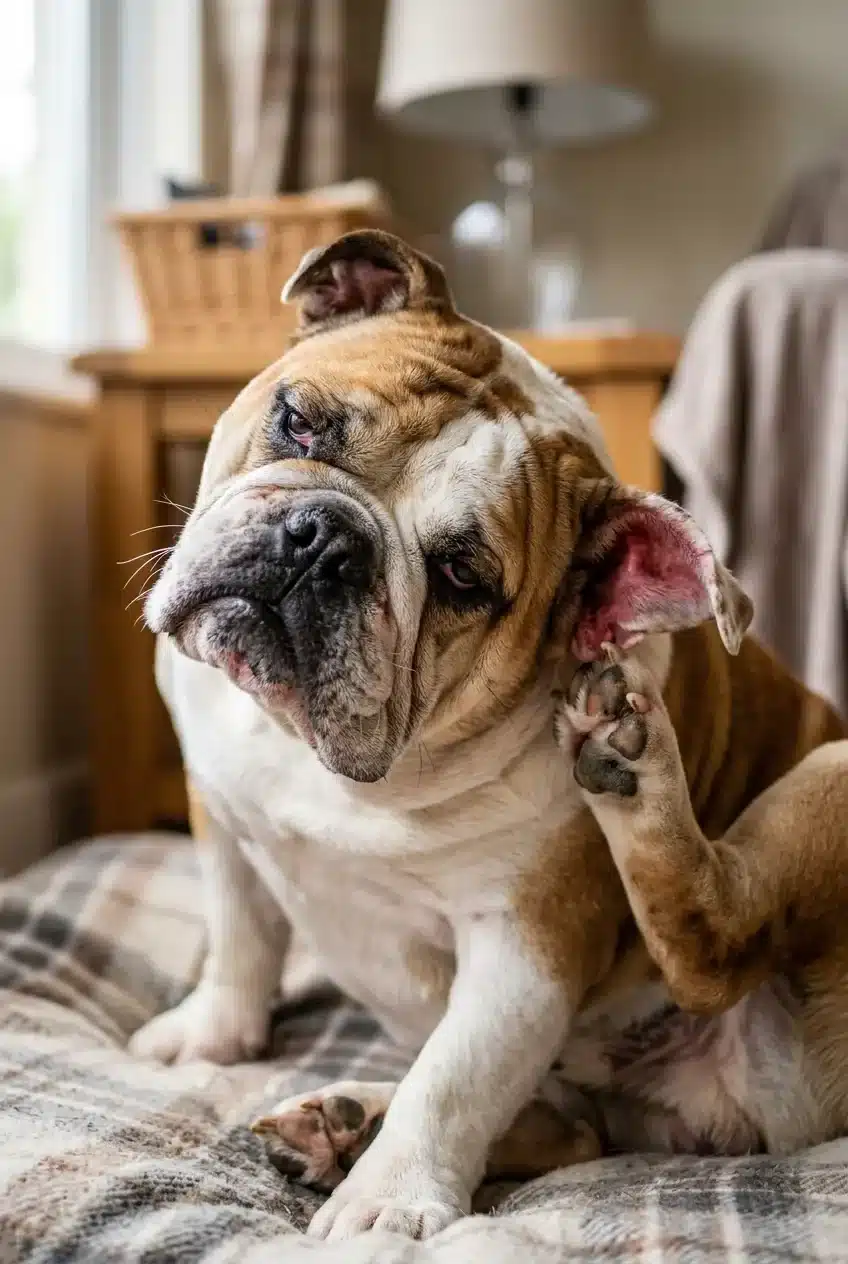
A bulldog ear infection typically shows up as head shaking, ear scratching, redness inside the ear canal, and a strong odor. These signs can appear within days of an infection taking hold and should not be ignored.
- Frequent head shaking or tilting the head to one side
- Scratching at one or both ears with a paw
- Dark brown, yellow, or black discharge inside the ear
- Foul or musty smell coming from the ear
- Redness or swelling inside the ear flap or canal
- Whimpering or flinching when the ear is touched
Any combination of two or more of these signs warrants a same-week vet visit.
When It Becomes an Emergency
Most ear infections start as outer ear (otitis externa) issues. Left untreated, they can progress to the middle or inner ear, causing balance problems and permanent hearing loss.
If your bulldog is walking in circles, has a head tilt that does not go away, or loses balance, see a vet the same day.
What Causes Ear Infections in Bulldogs?
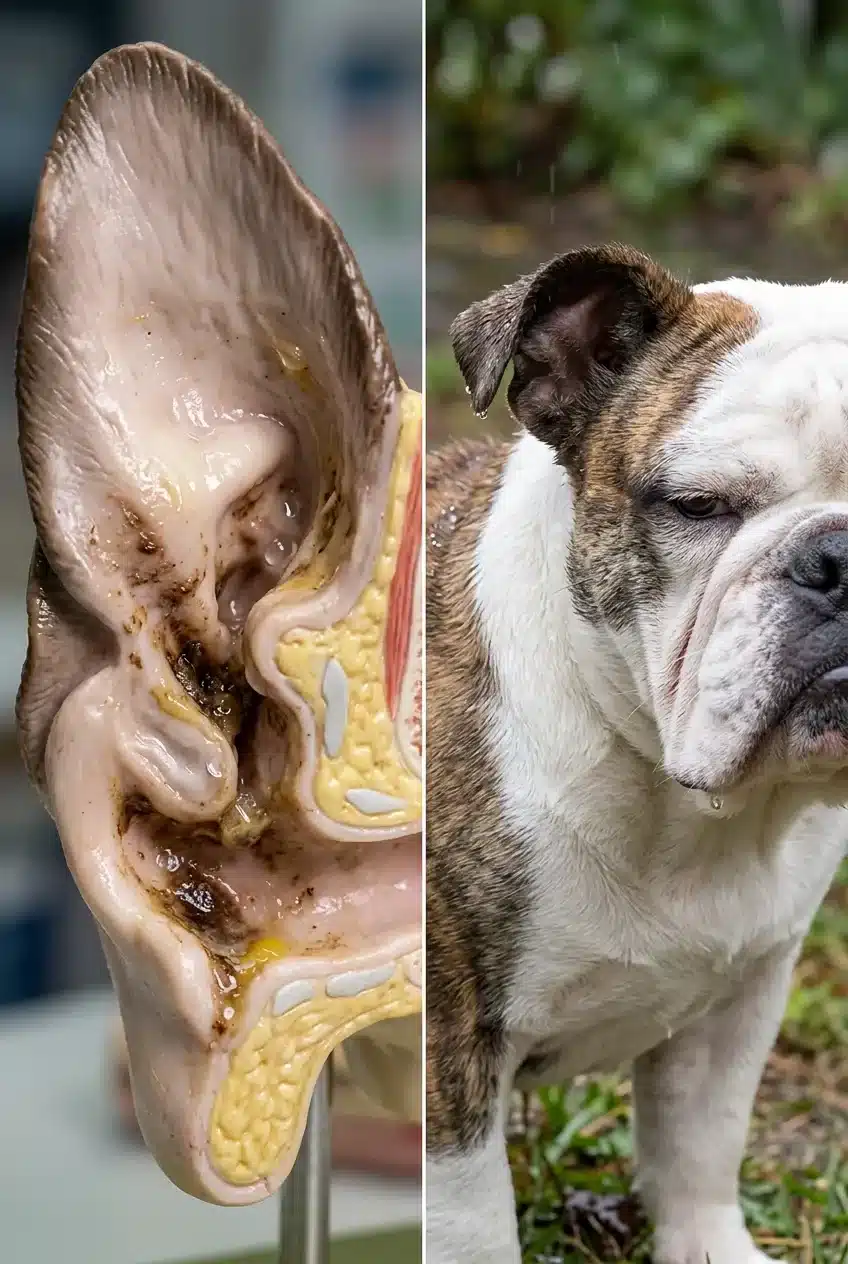
Bulldog ear infections are caused by bacteria, yeast, or a combination of both — often triggered by moisture, allergies, or a physical feature of the breed itself. Understanding the root cause determines which treatment actually works.
| Cause | Type | Key Sign |
|---|---|---|
| Yeast (Malassezia) | Fungal | Dark waxy discharge, corn-chip smell |
| Bacteria (Pseudomonas, Staph) | Bacterial | Yellow/green pus, strong odor |
| Environmental allergies | Trigger | Recurring infections, itchy skin elsewhere |
| Food allergies | Trigger | Chronic ear issues paired with gut problems |
| Trapped moisture | Physical | Infection after swimming or bathing |
According to the American Kennel Club, brachycephalic breeds like Bulldogs have ear canals shaped in a way that reduces natural airflow. This makes moisture buildup far more likely than in dogs with upright ears.
Get Free Dog Health Tips!
Weekly guides on keeping your dog healthy & happy
🔒 No spam. Unsubscribe anytime.
Food allergies are a major hidden driver. A 2018 review published in Veterinary Dermatology found that recurrent otitis was one of the most common presentations of food hypersensitivity in dogs. If your bulldog keeps getting ear infections despite treatment, an elimination diet trial may be worth discussing with your vet.
If your Bulldog also shows persistent scratching across the body, allergies are a likely shared root cause.
MOST POPULAR THIS WEEK
Vet-Recommended Articles: 👇
👉 Why Does My Dogs Skin Turn Dark And Thick After Years Of Allergy Treatment
👉 Best Home Remedies For Arthritis In Dogs With Limping
👉 How Long Does An Elimination Diet Take For Dogs With Skin Allergies
How Are Bulldog Ear Infections Treated?
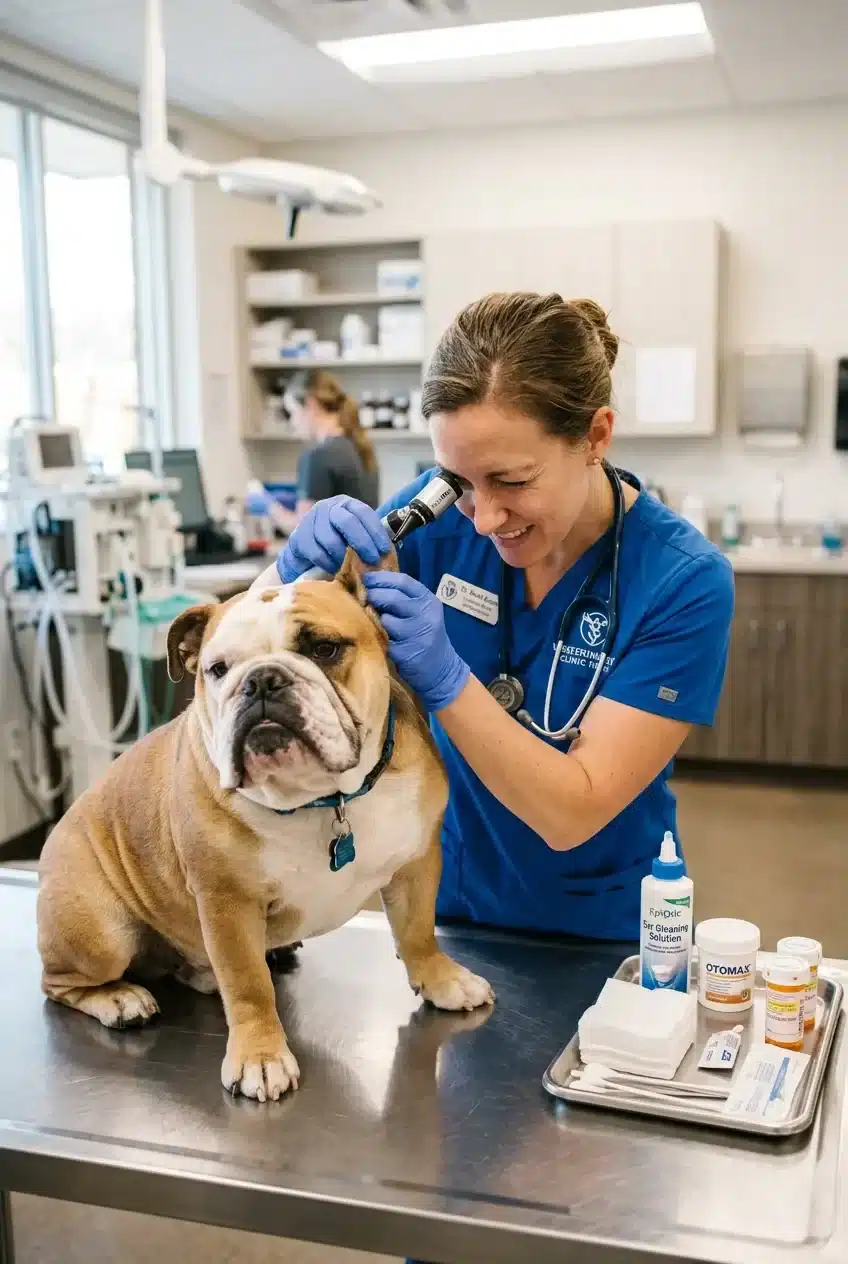
Treatment for a bulldog ear infection depends on whether the cause is bacterial, fungal, or both — and your vet will determine this by examining a sample under a microscope (cytology). Starting the right medication quickly reduces the risk of the infection spreading deeper.
Veterinary Treatments
- Ear cytology — Your vet takes a swab and identifies the organism. This step prevents treating a yeast infection with antibiotics, which would not work.
- Prescription ear drops — Bacterial infections are treated with antibiotic drops (such as enrofloxacin). Yeast infections use antifungal drops (such as clotrimazole or miconazole).
- Professional ear flush — A deep flush clears debris the drops need to reach. Never attempt a deep flush at home without guidance.
- Oral medications — Severe or recurring infections may need oral antibiotics or antifungals alongside topical treatment.
- Allergy workup — For chronic cases, your vet may refer you to a veterinary dermatologist to identify environmental or food triggers.
For a detailed look at how French Bulldogs specifically respond to ear infection treatment, see this guide on French Bulldog ear infection signs and best treatment.
At-Home Care Between Vet Visits
Between appointments, keeping the ear clean and dry is your main job. Use a vet-approved dog ear cleaning solution — never hydrogen peroxide or alcohol, which irritate the canal lining.
Apply the cleaner, gently massage the base of the ear for 30 seconds, then let your bulldog shake. Wipe the outer canal with a cotton ball. Do not use cotton swabs inside the canal.
Yeast infections can also affect other parts of the body. If you notice a corn-chip smell from the paws, read about French Bulldog yeast infection in paws and how to fix it — the causes often overlap.
How to Prevent Bulldog Ear Infections
Preventing bulldog ear infections comes down to routine cleaning, moisture control, and managing any underlying allergy. Consistent prevention is far less costly — and less painful for your dog — than repeated treatment cycles.
- Clean ears every 1–2 weeks with a pH-balanced bulldog ear cleaner to remove wax buildup
- Dry the ears thoroughly after every bath or swim
- Check ears weekly for redness, smell, or discharge
- Keep ear folds near the base of the ear clean and dry
- Feed a high-quality diet and discuss allergy testing if infections recur
- Schedule routine vet checkups at least twice a year
“Otitis externa in dogs is almost always manageable — but the owner’s role in maintenance cleaning between veterinary visits is what determines long-term outcomes.” — Veterinary Information Network (VIN), Clinical Guidance Notes
If your bulldog also develops skin irritation around the face or body alongside ear issues, it may share the same allergy root. The French Bulldog skin rash treatment guide covers the overlapping triggers well.
Bulldogs with known yeast tendencies may also benefit from yeasty paw identification and prevention strategies — the same Malassezia yeast affects multiple sites.
Common Mistakes Bulldog Owners Make With Ear Infections
Avoiding these five mistakes can prevent minor infections from becoming major ones.
- Using cotton swabs inside the canal. They push debris deeper rather than removing it. Use cotton balls on the outer flap only.
- Stopping medication too early. Symptoms often improve before the infection is fully cleared. Always complete the full course your vet prescribed.
- Cleaning too aggressively or too often. Over-cleaning strips protective oils and can cause irritation. Once every 1–2 weeks is the right rhythm for most bulldogs.
- Treating without a diagnosis. Using leftover ear drops from a previous infection can worsen the current one if the organism is different. Get cytology done first.
- Ignoring recurring infections. Three or more infections per year is a red flag for an underlying allergy. Treating only the infection without addressing the cause means the cycle continues.
Neurological signs sometimes appear alongside chronic ear disease. If your bulldog shows unusual head movements unrelated to itching, learn about idiopathic head tremors in dogs — a separate condition that is sometimes confused with ear-related behavior.
For ongoing ear hygiene, a pack of gentle dog ear cleaning wipes makes quick between-session wipe-downs easy. Keep a pack near where you groom your bulldog.
Learn more about canine ear infection management from the American Veterinary Medical Association’s pet owner guidance on ear infections.
Frequently Asked Questions About Bulldog Ear Infection: Signs, Causes, Treatment & Prevention
How do I know if my bulldog has an ear infection or just dirty ears?
A bulldog with dirty ears will have visible wax or debris but no smell, pain, or redness. An ear infection typically involves a foul odor, discharge with color, and visible discomfort when the ear is touched.
Can I treat my bulldog’s ear infection at home without a vet?
Mild early-stage infections may respond to cleaning, but most require prescription medication to fully clear. Treating without knowing whether the cause is bacterial or fungal risks making the infection worse.
How long does a bulldog ear infection take to heal?
Most uncomplicated bulldog ear infections resolve within 1–2 weeks of appropriate treatment. Deeper or chronic infections can take 4–6 weeks and may require follow-up cytology to confirm clearance.
Why does my bulldog keep getting ear infections?
Recurring ear infections in bulldogs are most often caused by underlying environmental or food allergies. Addressing the allergy — not just each infection — is the only way to break the cycle.
Are bulldog ear infections contagious to other dogs?
Bacterial and yeast ear infections are not contagious between dogs in normal circumstances. Ear mites, however, are highly contagious — your vet can distinguish mites from other causes during an exam.
What does a yeast ear infection smell like in a bulldog?
A yeast ear infection in a bulldog typically produces a musty or corn-chip-like smell. It is often paired with dark, waxy discharge and intense itching around the ear and nearby skin.
The Bottom Line
Bulldog ear infections are one of the most manageable health issues the breed faces — when caught early and treated correctly. The single most effective action you can take today is to inspect both ears, check for smell or discharge, and book a vet appointment if anything looks or smells off.
Build a weekly ear-check into your grooming routine. A pet otoscope makes it easier to see inside the canal at home between vet visits. Catching infections early keeps your bulldog comfortable — and keeps treatment simple.