To crate train a small breed puppy who keeps peeing in the house, start with a correctly sized crate, set a strict potty schedule, and reward every outdoor bathroom success immediately. Consistency beats everything else.
Small breeds have tiny bladders and fast metabolisms. That combination means accidents happen quickly — and without a clear system in place, housetraining stalls for weeks or even months.
How Do You Crate Train a Small Breed Puppy Who Keeps Peeing in the House?
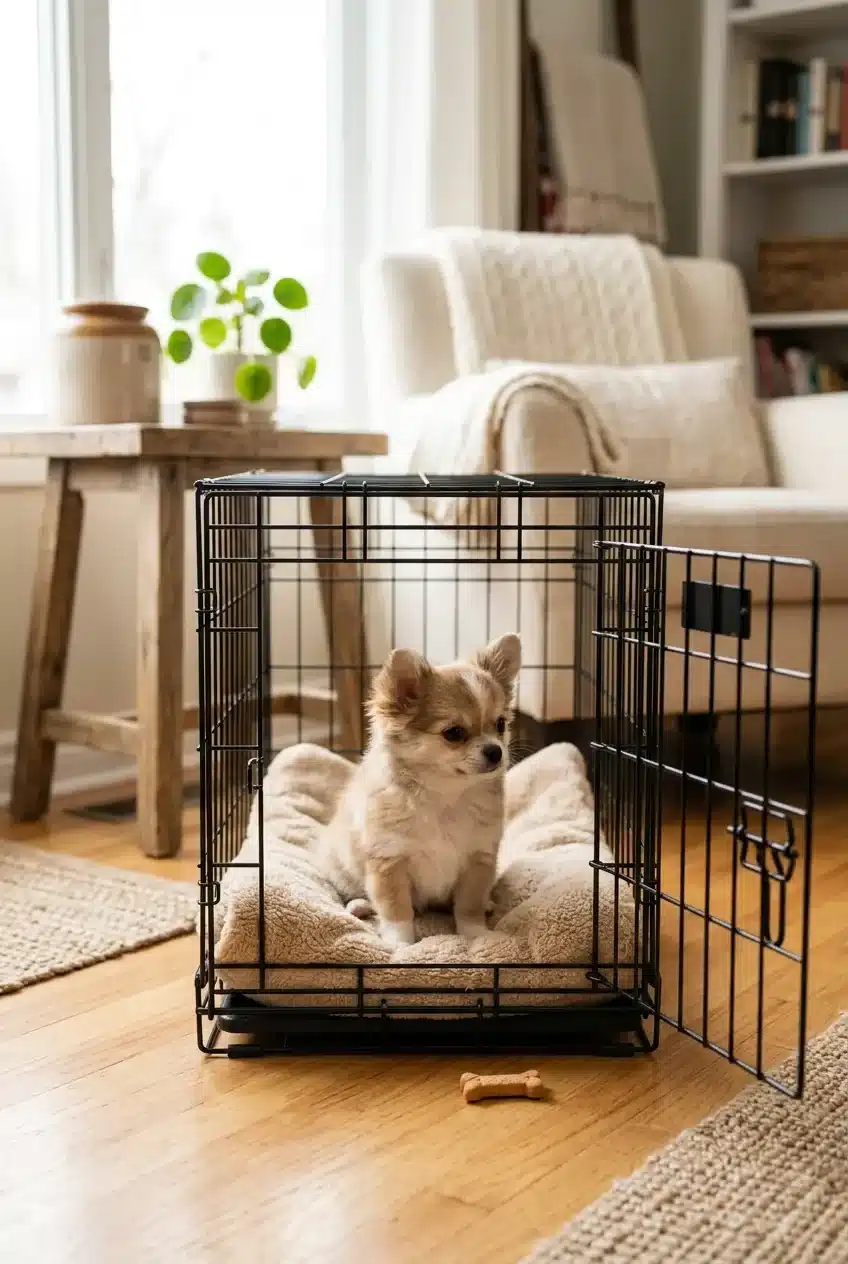
Crate training a small breed puppy who keeps peeing in the house works by using the crate as a safe space the puppy won’t want to soil, combined with a tight outdoor potty schedule that matches their bladder capacity. Most small breed puppies gain reliable bladder control between 4 and 6 months of age.
- Use a crate only large enough for the puppy to stand, turn, and lie down.
- Take puppies outside every 1–2 hours during the day.
- Reward outdoor elimination within 3 seconds with a high-value treat.
- Never use the crate as punishment — it must stay a positive space.
- Clean indoor accidents with an enzyme-based cleaner to remove scent triggers.
- Track accident times to spot patterns and adjust the schedule.
Why Small Breed Puppies Have More Accidents Than Large Breeds

Small breed puppies urinate more frequently than large breed puppies because their bladders are physically smaller relative to their body weight. A Chihuahua or Yorkshire Terrier puppy may need to go every 45–60 minutes during active play.
Their higher metabolic rate also speeds up digestion. Food moves through their system faster, which means the urge to eliminate comes sooner after eating.
According to the American Kennel Club, a puppy can hold its bladder for roughly one hour per month of age — meaning a 2-month-old can last about two hours maximum, often less in small breeds.
If your small breed puppy is urinating very frequently, also rule out a urinary tract infection. The American Veterinary Medical Association recommends a vet check for puppies with sudden or excessive urination before assuming it is purely a training issue.
A medical problem and a training problem can look identical — check health first, then train.
Get Free Dog Health Tips!
Weekly guides on keeping your dog healthy & happy
🔒 No spam. Unsubscribe anytime.
If you are also dealing with similar issues in a multi-pet household, the guide on why cats pee in the house covers the medical and behavioral triggers that apply across species.
Choosing the Right Crate Size for a Small Breed Puppy

Crate size is the single most overlooked factor when housetraining stalls. If the crate is too large, the puppy will sleep in one corner and use the other corner as a bathroom.
The Right Fit
The crate should allow your puppy to stand without crouching, turn a full circle, and stretch out flat. Nothing more.
For most small breeds under 10 lbs, a 24-inch wire dog crate with a divider panel works well. The divider lets you shrink the usable space and expand it as the puppy grows.
Crate Material Options
| Crate Type | Best For | Key Drawback |
|---|---|---|
| Wire crate with divider | Home training, ventilation | Less den-like feel |
| Plastic airline crate | Den feel, travel | Less airflow in warm rooms |
| Soft-sided crate | Calm, non-destructive puppies | Easy to escape, hard to clean |
Avoid decorative or fabric crates during the accident-heavy phase. Urine soaks into fabric and the scent lingers, which encourages repeat accidents in the same spot.
Building a Potty Schedule That Actually Works
A reliable potty schedule is the engine behind successful crate training for small breed puppies. Without one, even the best crate setup produces inconsistent results.
When to Take Your Puppy Outside
- Immediately after waking — carry the puppy directly to the outdoor spot, no detours.
- Within 15 minutes of eating — small breeds digest quickly; do not wait.
- After any play session — excitement triggers the urge to go.
- Every 1–2 hours during awake time — set a phone timer if needed.
- Right before crating — always give a bathroom opportunity before closing the door.
- First thing in the morning — bladders fill overnight; this trip cannot be skipped.
Use a consistent outdoor spot each time. The lingering scent from previous visits cues the puppy to eliminate faster, which shortens the trip and reinforces the habit.
If outdoor access is difficult, a fake grass potty area can bridge the gap for apartment-dwelling small breed owners.
Nighttime Crating
Puppies under 12 weeks typically cannot hold their bladder through an 8-hour night. Set an alarm for a 3–4 AM bathroom trip during the first few weeks.
By 16 weeks, most small breeds can sleep 5–6 hours without an accident if the last outing happens right before bed.
Step-by-Step: How to Introduce the Crate Without Fear
Forcing a puppy into a crate and shutting the door immediately causes anxiety, which makes housetraining harder. The introduction should be gradual.
- Place the crate in a social area — a living room or bedroom, not an isolated laundry room.
- Toss treats and toys inside with the door open for 2–3 days before any door closing.
- Feed meals inside the crate to build a positive food association with the space.
- Close the door for 30 seconds while the puppy eats, then open it. Gradually extend to 5 minutes over several days.
- Build up to 1-hour sessions while you are home before leaving the puppy crated alone.
- Never return to open the door while the puppy is whining — wait for a pause in noise, then open.
A crate cover for small dog crates can help create a darker, den-like atmosphere that calms anxious puppies faster.
The goal is a puppy who walks into the crate voluntarily — that is the sign introduction is working.
Common Crate Training Mistakes That Keep Small Puppies Peeing Indoors
Most housetraining failures come from a handful of repeating errors. Recognizing them early saves weeks of frustration.
- Crate is too large. The puppy sections off a bathroom corner. Fix: use a divider or downsize the crate.
- Punishing accidents after the fact. Puppies cannot connect a scolding to something that happened minutes ago. Fix: clean quietly with an enzyme-based urine cleaner and move on.
- Skipping the reward. Treats must arrive within 3 seconds of outdoor elimination or the puppy does not make the connection. Fix: carry treats on every outdoor trip.
- Crating too long. Small puppies crated beyond their bladder limit will soil the crate, which erodes the den instinct. Fix: match crate time to age in months plus one hour maximum.
- Inconsistent schedule on weekends. Sleeping in disrupts the routine. Fix: keep the morning potty trip within 30 minutes of the weekday time.
If you have a particularly stubborn small breed, the specific advice in this guide on how to potty train a stubborn Dachshund puppy fast applies across most small breeds with a resistant streak.
Tracking Progress and Knowing When to Ask for Help
Keep a simple accident log for the first two weeks. Note the time, location, and what the puppy was doing beforehand. Patterns appear fast — most accidents cluster around the same 2–3 times each day.
Once patterns are visible, adjust the schedule to add an outdoor trip 10 minutes before each accident-prone window.
If a puppy over 6 months still has daily accidents despite a consistent schedule and correct crate size, consult a certified professional dog trainer or your veterinarian. The Association of Professional Dog Trainers maintains a searchable directory of certified trainers by location.
Some small breeds — particularly those bred for companionship like Bichon Frises and Maltese — are statistically slower to housetrain than working breeds. Patience and consistency matter more than technique alone.
If you are considering a small breed specifically for lower allergen traits, the overview of small hypoallergenic dog breeds includes notes on trainability alongside coat characteristics.
Frequently Asked Questions About How to Crate Train a Small Breed Puppy Who Keeps Peeing in the House
How long does it take to crate train a small breed puppy?
Most small breed puppies show consistent improvement within 4–8 weeks of a structured crate training routine. Full reliability — meaning zero indoor accidents — typically takes 4–6 months depending on the breed and the consistency of the schedule.
Should I put puppy pads inside the crate?
Puppy pads inside the crate teach the puppy that eliminating in the crate is acceptable, which undermines the entire training system. Keep the crate pad-free and use pads only in a separate, designated indoor zone if needed.
Is it okay to crate a small puppy overnight?
Crating a small puppy overnight is fine as long as the duration matches bladder capacity. Puppies under 12 weeks need at least one nighttime bathroom break; by 16 weeks, most can last 5–6 hours with a pre-bed potty trip.
Why does my puppy pee immediately after coming inside from outside?
Puppies sometimes do not fully empty their bladder during an outdoor trip, especially if distracted. Wait outside until elimination happens, then return inside — do not cut the trip short after just sniffing around.
What if my small breed puppy cries in the crate all night?
Crying usually signals the need to eliminate, anxiety from a too-fast introduction, or both. Rule out a bathroom need first, then return to slower crate introduction steps during the day using treats and meals to rebuild a positive association.
Can I use a playpen instead of a crate for a small breed puppy?
A playpen gives too much space for a puppy to designate a bathroom corner, making it less effective than a crate for housetraining. Use a crate for sleep and confinement, and a small dog exercise playpen only for supervised free time.
Start Tonight: The One Change That Makes the Biggest Difference
Crate training a small breed puppy who keeps peeing in the house comes down to one non-negotiable: match the crate size to the puppy, and match the schedule to the bladder. Everything else builds from there.
The single action to take today is to measure your current crate and confirm the puppy cannot use one end as a bathroom. If there is extra space, add a divider or swap to a smaller crate before tonight.
Small breeds can absolutely become reliable, clean house dogs. The schedule feels demanding in the first few weeks — but that investment pays off in years of living with a dog who never has accidents indoors. You have got this.