Swimming therapy is one of the most effective treatments for dogs with hip and joint pain. The water supports your dog’s body weight, allowing full-range movement with minimal stress on damaged joints — making it ideal for dogs with arthritis, hip dysplasia, or post-surgical recovery.
If your dog is slowing down on walks, struggling to stand, or has been diagnosed with a joint condition, hydrotherapy is worth understanding in detail. Many dogs with hip dysplasia see measurable improvement within 4–6 weeks of consistent sessions.
Is Swimming Good for Dogs With Hip and Joint Pain?
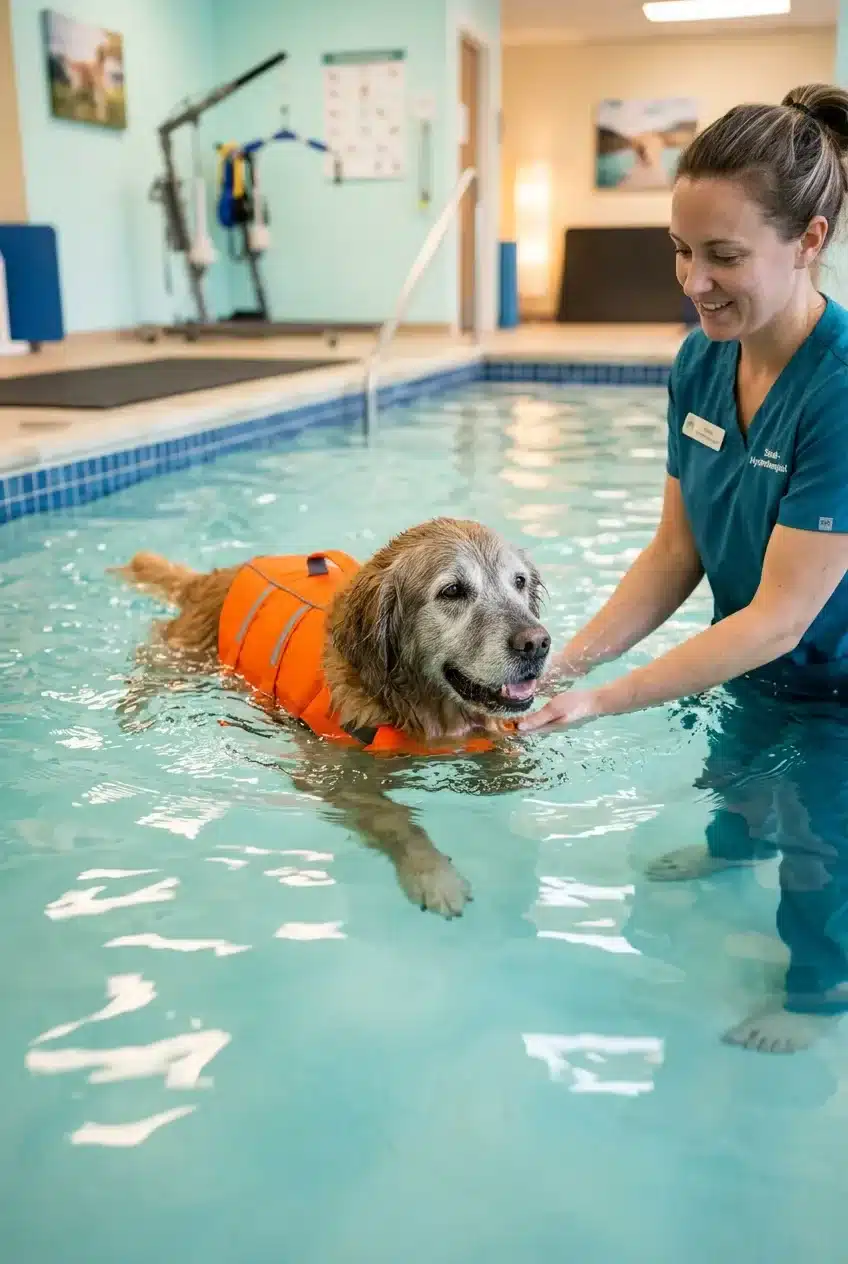
Yes — swimming is widely considered the gold-standard low-impact exercise for dogs with hip and joint pain. Water buoyancy reduces effective body weight by up to 90%, allowing dogs to move joints through their full range of motion without the impact forces that worsen inflammation.
- Buoyancy reduces joint load by up to 90% compared to land exercise
- Water resistance builds muscle without stressing cartilage
- Typical session length: 10–20 minutes, 2–3 times per week
- Most dogs show measurable improvement after 4–6 weeks
- Safe for dogs as young as 8 weeks post-surgery
- Suitable for arthritis, hip dysplasia, cruciate injuries, and spinal conditions
Swimming Therapy for Dogs With Hip and Joint Pain at a Glance
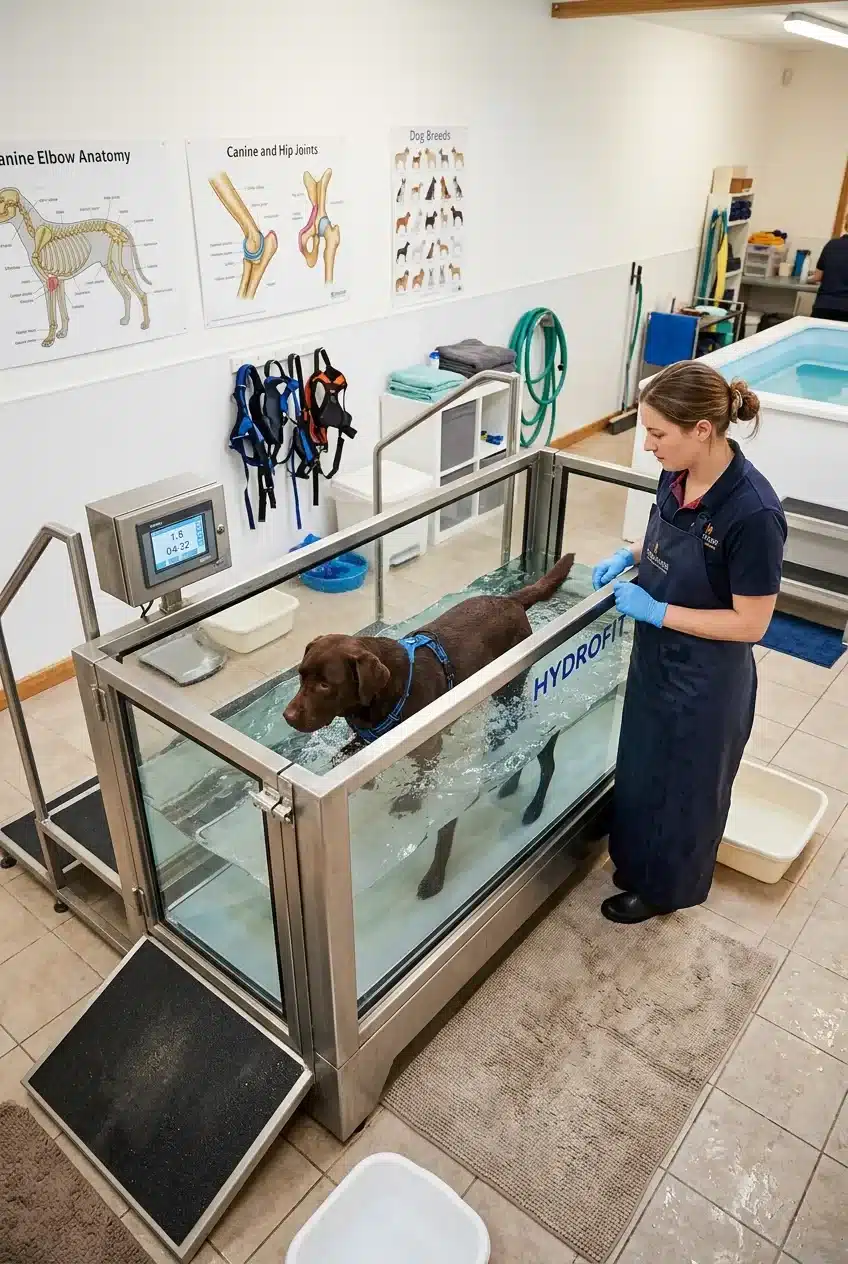
- Definition: Canine hydrotherapy uses controlled water exercise to reduce pain, rebuild muscle, and restore mobility in dogs with joint conditions.
- Who it helps: Dogs with hip dysplasia, osteoarthritis, cruciate ligament injuries, spinal disc disease, or post-surgical rehabilitation needs.
- Session frequency: Typically 2–3 sessions per week, each lasting 10–20 minutes depending on the dog’s fitness level.
- When to start: Most vets recommend beginning hydrotherapy 8–14 days post-surgery, or as soon as a chronic condition is diagnosed.
- Key benefit vs. land exercise: Water reduces compressive joint forces while maintaining cardiovascular and muscular conditioning.
- Commonly confused with: General swimming in a lake or pool — clinical hydrotherapy uses temperature-controlled water (typically 28–32°C / 82–90°F) and trained therapists.
How Does Hydrotherapy Actually Work for Dog Joints?
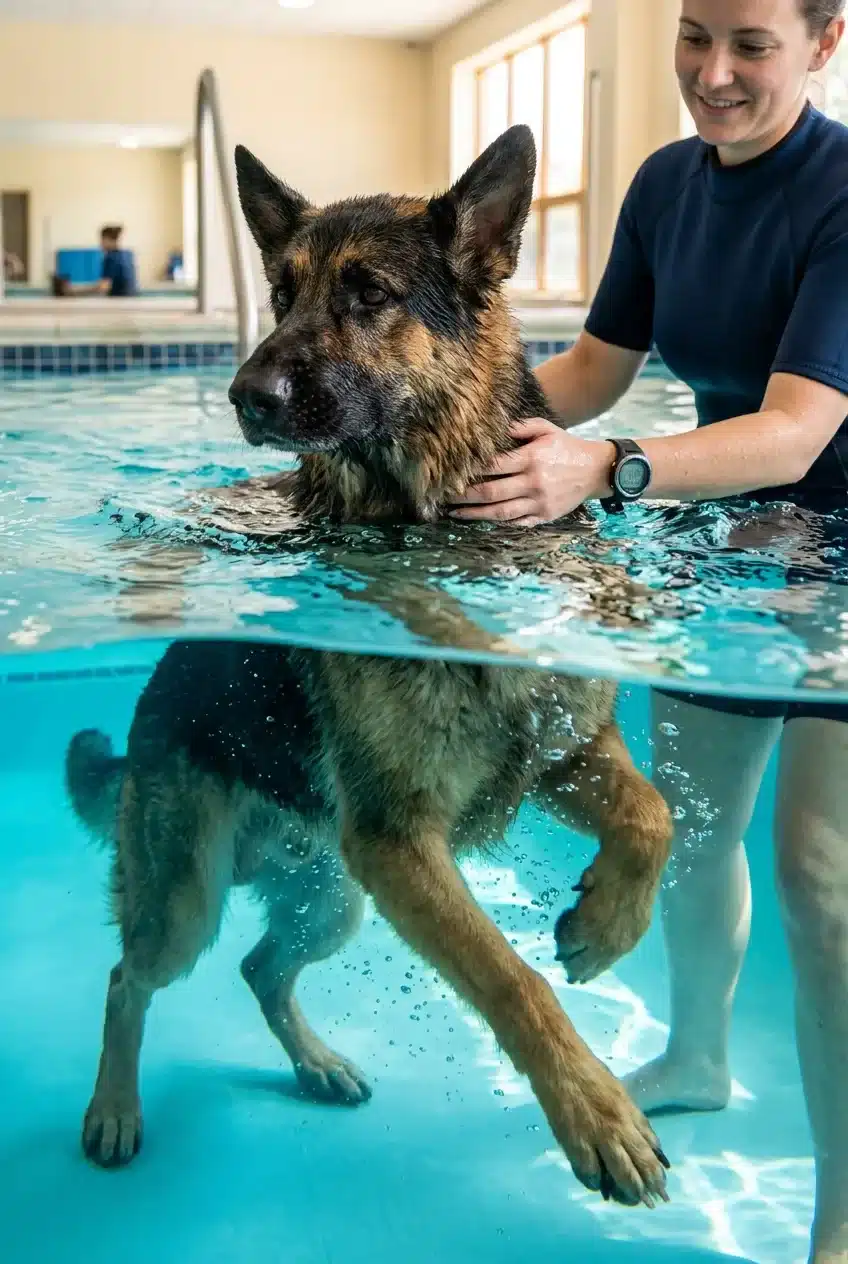
Canine hydrotherapy works through three physical properties of water: buoyancy, resistance, and hydrostatic pressure. Together, these reduce pain, strengthen supporting muscles, and improve circulation to damaged joint tissue — all at the same time.
Buoyancy is the most important factor. When a dog is submerged to shoulder depth, body weight drops by roughly 62%. At neck depth, that reduction reaches up to 90%. This allows a dog with severe hip dysplasia to walk and move freely without pain signals firing with every step.
Hydrostatic pressure — the gentle squeeze of water on the body — also reduces swelling in affected joints. The American Veterinary Medical Association (AVMA) recognizes hydrotherapy as a validated rehabilitation modality for musculoskeletal conditions in companion animals.
- Buoyancy at shoulder depth: ~62% body weight reduction
- Buoyancy at neck depth: up to 90% body weight reduction
- Water temperature maintained at 28–32°C (82–90°F) in clinical settings
- Hydrostatic pressure measurably reduces limb edema and joint swelling
Underwater Treadmill vs. Pool Swimming: Which Is Better?
Both underwater treadmills and pool swimming are effective, but they target different goals. The right choice depends on your dog’s specific condition, fitness level, and what your vet wants to achieve during rehabilitation.
Get Free Dog Health Tips!
Weekly guides on keeping your dog healthy & happy
🔒 No spam. Unsubscribe anytime.
| Feature | Underwater Treadmill | Pool Swimming |
|---|---|---|
| Primary benefit | Gait retraining, muscle strengthening | Cardiovascular fitness, full ROM |
| Weight bearing | Partial (water level adjustable) | Near-zero (full flotation) |
| Best for | Post-surgical recovery, neurological rehab | Arthritis, obesity, severe dysplasia |
| Therapist control | High — speed and depth controlled | Moderate — therapist guides in water |
| Session length | 10–15 minutes typically | 15–20 minutes typically |
Underwater treadmills are often preferred for post-operative dogs because therapists can control exactly how much weight the dog bears. Pool sessions suit dogs with severe joint pain who benefit most from near-zero impact movement.
A 2022 study published in the Veterinary Record found that dogs using underwater treadmills after tibial plateau leveling osteotomy (TPLO) surgery returned to normal gait 3–4 weeks faster than dogs receiving land-only rehabilitation.
How to Start Swimming Therapy for Your Dog
- Get a veterinary referral first. A vet should confirm hydrotherapy is appropriate and rule out conditions like uncontrolled heart disease or open wounds where water immersion is contraindicated.
- Find a certified canine hydrotherapist. Look for practitioners registered with the Canine Hydrotherapy Association (CHA) or equivalent national body. Certification matters — unqualified handlers can worsen injuries.
- Start with a fitness assessment. Most centers run a 20–30 minute initial consultation before the first session. The therapist evaluates gait, muscle mass, range of motion, and pain responses.
- Begin with short sessions. First sessions typically last just 5–10 minutes. Overdoing early sessions causes muscle fatigue and next-day soreness, which can set back recovery by 1–2 weeks.
- Fit your dog with a hydrotherapy vest. A well-fitted dog hydrotherapy life jacket keeps anxious or weak dogs stable in the water without restricting limb movement.
- Increase duration gradually. Add 2–3 minutes per session each week, targeting 15–20 minutes by week 3 or 4 depending on progress.
- Track progress with video. Recording your dog’s gait before, during, and after the program gives the therapist objective data to adjust the plan.
What Results Can You Expect — and How Fast?
Most dog owners notice early changes within 2–3 weeks: reduced stiffness after rest, easier rising from lying positions, and improved willingness to walk. Significant functional improvement — longer walks, better stair use — typically appears between weeks 4 and 8.
Dogs with mild-to-moderate osteoarthritis tend to respond fastest. Dogs recovering from hip replacement surgery may need 12–16 weeks of consistent hydrotherapy before returning to normal activity levels.
“Hydrotherapy consistently outperforms land-based exercise alone for post-surgical canine patients in both speed of recovery and long-term joint health outcomes.” — Canine Rehabilitation Institute research summary, 2021
Weight loss also accelerates results. According to the AVMA, every 1 lb of body weight lost reduces joint load by approximately 4 lbs during normal walking. Pairing hydrotherapy with a controlled diet compounds the benefit significantly.
- Early signs of improvement: weeks 2–3
- Functional improvement (walking, stairs): weeks 4–8
- Post-surgical full recovery timeline: 12–16 weeks
- Maintenance sessions after recovery: typically 1 session per week ongoing
Investing in a good orthopedic dog bed for joint support between sessions also helps reduce overnight stiffness and supports recovery.
Common Mistakes Dog Owners Make With Hydrotherapy
- Starting without a vet check: Hydrotherapy is contraindicated for dogs with certain heart conditions, skin infections, or unhealed surgical wounds. Skipping the vet can cause serious harm — always get clearance first.
- Using an unqualified facility: Not all dog swimming pools are hydrotherapy centers. A pool without trained therapists and temperature-controlled water is recreational swimming, not rehabilitation — and can worsen injuries.
- Pushing sessions too long too soon: Fatigued muscles provide less joint support, increasing injury risk. Keep early sessions under 10 minutes even if your dog seems willing to continue.
- Skipping land-based exercises between sessions: Hydrotherapy works best alongside gentle land exercises like controlled leash walks of 10–15 minutes. Passive recovery between sessions slows overall progress.
- Stopping too early: Many owners stop therapy when the dog “seems better.” Discontinuing before muscle strength is fully restored often leads to relapse within 6–8 weeks. Follow the full program your therapist recommends.
Is Swimming Safe at Home, or Does It Need to Be Clinical?
Supervised home swimming — in a pool, lake, or paddling pool — is not the same as clinical hydrotherapy. Home swimming can be a useful supplement but lacks the temperature control, therapist oversight, and resistance gradients that make clinical sessions therapeutic.
Water that is too cold (below 25°C / 77°F) causes muscle tension, which counteracts the relaxation benefit needed for joint mobility. Water that is too warm (above 35°C / 95°F) risks cardiovascular strain, especially in older dogs.
If clinical hydrotherapy is outside your budget, a heated inflatable dog pool with a thermometer, combined with gentle guided movement, is a reasonable at-home option — but tell your vet what you are doing so they can monitor progress appropriately.
Dogs with severe hip dysplasia should use clinical facilities, not home pools, especially in the first 8–10 weeks of a program.
Frequently Asked Questions About Swimming Therapy for Dogs With Hip and Joint Pain
How many times a week should a dog with joint pain swim?
A dog with joint pain should swim 2–3 times per week in a clinical setting. Sessions typically last 10–20 minutes, increasing gradually as fitness improves over 3–4 weeks.
Can swimming make my dog’s hip pain worse?
Swimming can worsen pain if the water is too cold, sessions are too long, or the dog is pushed beyond fatigue. Properly managed hydrotherapy at the correct temperature (28–32°C) with a certified therapist rarely causes setbacks.
At what age can dogs start hydrotherapy for joint issues?
Dogs can start hydrotherapy at any age once cleared by a vet. Puppies with developmental joint conditions may begin gentle sessions from 12–16 weeks old, while senior dogs benefit throughout their lifetime.
How long before I see results from dog hydrotherapy?
Most dog owners notice early improvements — reduced stiffness, easier rising — within 2–3 weeks. Functional gains like longer walks and better stair use typically appear between weeks 4 and 8 of consistent sessions.
Is hydrotherapy covered by pet insurance?
Many pet insurance policies cover canine hydrotherapy when prescribed by a veterinarian as part of a rehabilitation plan. Check your policy for “complementary therapy” or “rehabilitation” coverage — limits typically range from £500–£2,000 per year in the UK.
Should I use a life jacket for my dog during hydrotherapy?
Yes — a properly fitted dog rehabilitation life jacket is recommended for weak, anxious, or post-surgical dogs. It keeps the dog stable without restricting limb movement, allowing the therapist to focus on guiding correct movement patterns.
Conclusion
Swimming therapy for dogs with hip and joint pain is one of the most evidence-backed rehabilitation tools available — and 2–3 sessions per week over 4–8 weeks can produce real, measurable changes in mobility and pain levels.
The single best step you can take today is to call your vet and ask for a referral to a certified canine hydrotherapist. A joint health supplement like a glucosamine and chondroitin supplement for dogs can also support the process between sessions.
For dogs managing long-term conditions, understanding how dogs live with hip dysplasia day-to-day helps you make smarter decisions about exercise, rest, and environment — not just therapy sessions.
Sources
This article references guidance from the following authorities:
- American Veterinary Medical Association (AVMA) — Canine rehabilitation and hydrotherapy as a recognized treatment modality
- Canine Rehabilitation Institute — Research summary on hydrotherapy outcomes vs. land-based rehabilitation
- Veterinary Record (2022) — Study on underwater treadmill use in post-surgical canine recovery