Early signs of arthritis in dogs under 10 years old include subtle changes like stiffness after rest, reluctance to climb stairs, reduced play drive, and occasional limping that seems to come and go. Many owners miss these signals because they assume arthritis only affects senior dogs — but the condition can develop in dogs as young as 1–2 years old, especially in larger breeds.
Understanding what to look for early gives you a real window to slow joint damage and keep your dog comfortable for years. If you already suspect your dog may have mobility issues, learning more about how dogs live with arthritis long-term can help you plan ahead.
What Are the First Signs of Arthritis in Young Dogs?

The first signs of arthritis in dogs under 10 typically appear as subtle behavioral shifts rather than obvious pain. A dog that once jumped onto the sofa without hesitation may now pause, circle, or avoid the attempt entirely. These small changes are the body’s earliest response to joint inflammation.
- Stiffness for 5–15 minutes after waking or resting — especially in cold weather
- Visible limping or favoring one leg that improves after a few minutes of movement
- Reduced willingness to walk, run, or play for their usual 20–30 minute sessions
- Difficulty with stairs, getting in and out of the car, or jumping onto furniture
- Licking, chewing, or nibbling at one joint — often a knee, hip, or elbow
- Personality shifts: increased irritability, withdrawal, or snapping when touched near joints
Morning stiffness that fades within 10–15 minutes is one of the clearest early markers owners can track at home.
Early Arthritis in Dogs Under 10: Key Facts at a Glance
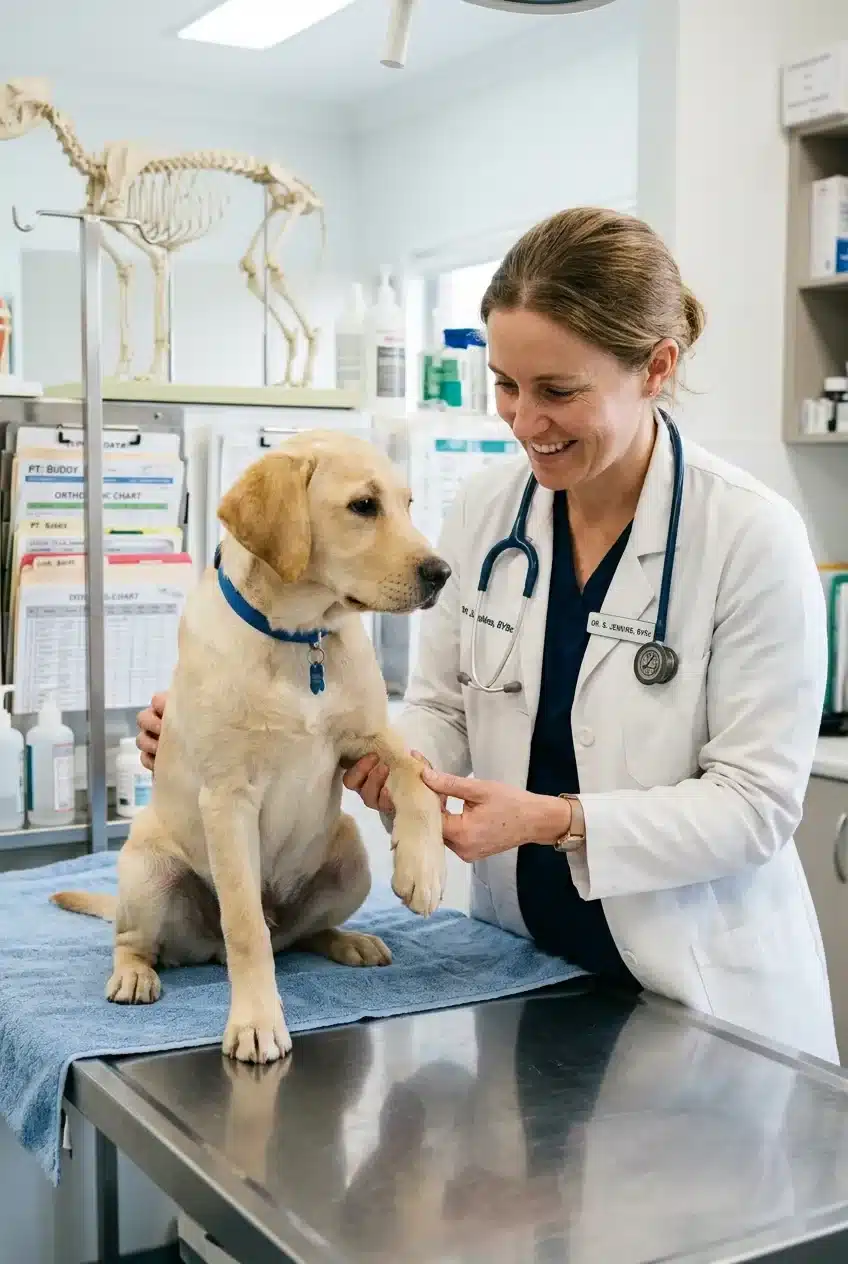
- Definition: Canine osteoarthritis (OA) is progressive degeneration of joint cartilage, causing inflammation, pain, and reduced range of motion.
- Prevalence: According to the American Veterinary Medical Association (AVMA), osteoarthritis affects approximately 1 in 5 adult dogs — and it is not exclusively a senior condition.
- Age of onset: Large and giant breeds can show clinical signs as early as 12–18 months old, often due to developmental conditions like hip dysplasia.
- Most affected joints: Hips, elbows, stifles (knees), and the spine are the most commonly affected in dogs under 10.
- Commonly confused with: Ligament tears (CCL injury), Lyme disease-related joint pain, and post-exercise muscle soreness — all require different treatment.
- When to act: Any limping lasting more than 24–48 hours, or stiffness appearing on more than 3 days in a two-week period, warrants a veterinary exam.
Which Dog Breeds Show Arthritis Signs Before Age 10?

Certain breeds are significantly more likely to develop arthritis well before age 10, due to genetic predisposition, body structure, and growth rate. Large and giant breeds are the highest-risk group, but smaller dogs with specific structural traits are not immune. Breed awareness helps owners start monitoring early — ideally from age 2–3 in high-risk dogs.
| Breed Category | Common Affected Joints | Typical Onset Age |
|---|---|---|
| Labrador Retriever | Hips, elbows | 2–5 years |
| German Shepherd | Hips, spine | 3–6 years |
| Golden Retriever | Hips, stifles | 3–6 years |
| Rottweiler | Elbows, hips | 1–4 years |
| Dachshund | Spine (IVDD-related) | 3–7 years |
| Bulldog / French Bulldog | Hips, elbows | 2–5 years |
According to Cornell University College of Veterinary Medicine, elbow dysplasia — a leading cause of early arthritis — is most common in medium-to-large breeds and often shows signs between 4 and 18 months of age during growth phases.
If your dog is a large breed, baseline joint screening at age 1–2 years is worth discussing with your vet.
Get Free Dog Health Tips!
Weekly guides on keeping your dog healthy & happy
🔒 No spam. Unsubscribe anytime.
Arthritis vs. Other Causes of Limping in Dogs Under 10
Not every limp in a young dog means arthritis. Three conditions are frequently confused with early osteoarthritis: cruciate ligament (CCL) tears, Lyme disease-related joint pain, and panosteitis — a growth-related bone condition in young large breeds. Getting the right diagnosis changes treatment completely, which is why a vet exam with X-rays is the essential next step.
How to Tell the Difference
- CCL tear: Often sudden onset; dog may hold the affected leg up completely; does not improve with rest the way arthritis stiffness does.
- Lyme disease arthritis: Shifting lameness (different leg affected on different days), fever of 103–105°F (39.4–40.5°C), and lethargy; requires a blood test to confirm.
- Panosteitis: Affects dogs aged 5–18 months; pain shifts between legs over weeks; no joint swelling; typically self-resolves by 18–20 months.
- Osteoarthritis: Stiffness worst after rest, gradually improves with gentle movement, worsens again after intense activity.
The Merck Veterinary Manual notes that radiographic (X-ray) changes in arthritic joints — including osteophyte (bone spur) formation and joint space narrowing — are often visible before a dog shows obvious pain. A vet may recommend X-rays even when symptoms seem mild to establish a baseline.
Using a dog orthopedic joint supplement is sometimes discussed at this stage, but always confirm the diagnosis first so supplements are targeted to the right condition.
How Does Early Arthritis Affect a Dog’s Daily Behavior?
Early arthritis in dogs under 10 changes daily behavior in ways that are easy to misread as laziness, aging, or mood shifts. Dogs rarely vocalize joint pain directly — instead, the discomfort shows up as reluctance, avoidance, and subtle posture changes. Watching for these patterns over 1–2 weeks gives you a much clearer picture than a single observation.
Behavioral Patterns to Track
- Sitting in an unusual position — one hind leg extended out rather than tucked under
- Sleeping more than usual (more than 14–16 hours per day for an adult dog)
- Reluctance to go on walks they previously enjoyed
- Bunny-hopping gait (both rear legs moving together) — a classic hip arthritis indicator
- Audible grunting or groaning when lying down or getting up
Tracking these behaviors in a simple daily log — even just 3–4 lines per day — gives your vet concrete data rather than impressions. Note the time of day, weather conditions, and recent exercise level, since joint pain often worsens in cold or damp weather and after high-intensity activity.
A dog that shows 3 or more of these behavioral signs consistently over 10–14 days should be evaluated by a veterinarian.
Keep in mind that some neurological conditions like idiopathic head tremors in dogs can also alter behavior and movement — a vet exam helps rule those out alongside joint conditions.
What to Do When You Spot Early Arthritis Signs in Your Dog
When you notice early arthritis signs in a dog under 10, the first step is a veterinary appointment within 1–2 weeks — sooner if your dog is non-weight-bearing or in visible distress. Early intervention is the single most important factor in slowing joint degeneration. Dogs diagnosed and managed early maintain significantly better quality of life over time than those treated only after symptoms become severe.
- Document symptoms for 7–14 days before your vet visit: note which leg, time of day, duration, and any triggers. This data directly shapes the diagnostic approach.
- Request X-rays of the affected joints — physical exam alone misses approximately 30–40% of early OA changes that appear radiographically.
- Discuss a multimodal pain management plan with your vet: NSAIDs like carprofen (typical dosage: 2 mg per pound of body weight twice daily) are often used alongside joint supplements containing omega-3 fatty acids, glucosamine, and chondroitin.
- Adjust home environment immediately: add non-slip mats on hard floors, provide a supportive orthopedic memory foam dog bed, and use a dog ramp for furniture access to reduce joint impact.
- Start low-impact exercise — swimming and leash walks on grass (20–30 minutes, 2–3 times per week) maintain muscle mass without loading inflamed joints.
- Schedule a 4–6 week recheck to assess whether the treatment plan is working and adjust as needed.
The American Animal Hospital Association (AAHA) recommends that dogs diagnosed with osteoarthritis have a formal pain assessment at every routine visit — not just when owners report problems.
Common Mistakes Owners Make With Early Arthritis Signs
- Mistake: Waiting months to see a vet. Consequence: Joint damage progresses silently during that window. Fix: Book an appointment within 1–2 weeks of noticing consistent signs.
- Mistake: Giving human pain relievers like ibuprofen or acetaminophen. Consequence: Both are toxic to dogs and can cause severe gastrointestinal bleeding or liver failure. Fix: Use only vet-prescribed medications.
- Mistake: Cutting exercise entirely. Consequence: Muscle loss accelerates joint instability and worsens pain. Fix: Switch to low-impact activity rather than stopping movement altogether.
- Mistake: Assuming stiffness is “just getting older.” Consequence: Delayed treatment allows structural damage that is irreversible. Fix: Track symptoms and present findings to a vet — do not self-diagnose.
- Mistake: Using a dog joint supplement as a substitute for veterinary care. Consequence: Supplements support joint health but cannot reverse existing cartilage damage. Fix: Use them as part of a vet-directed plan, not instead of one.
Frequently Asked Questions About Early Signs of Arthritis in Dogs Under 10 Years Old
Can a 2-year-old dog have arthritis?
Yes, a 2-year-old dog can have arthritis, particularly in large breeds with underlying developmental conditions like hip or elbow dysplasia. Signs in very young dogs often include stiffness after rest and reluctance to exercise for age-appropriate durations of 30–60 minutes.
Is occasional limping in a young dog always a sign of arthritis?
Occasional limping in a young dog is not always arthritis — it can result from a minor injury, a thorn in the paw, or post-exercise muscle soreness. Limping that persists beyond 24–48 hours or recurs over 2 weeks warrants a veterinary evaluation.
How do I know if my dog is in pain from arthritis?
Dogs in pain from arthritis often show behavioral signs rather than vocalizing: reluctance to move, posture changes, licking at a joint, and irritability when touched near the affected area. A veterinarian uses a structured pain scale assessment to evaluate discomfort more objectively than visual observation alone.
What is the best diet for a dog showing early arthritis signs?
For a dog showing early arthritis signs, a diet supporting a healthy body weight is the highest priority — every extra pound adds roughly 4 pounds of pressure on joints. Diets enriched with omega-3 fatty acids (EPA and DHA) from fish oil have documented anti-inflammatory effects in canine joints.
Should I give my dog with arthritis more or less exercise?
A dog with early arthritis needs consistent low-impact exercise — not rest and not intense activity. Short leash walks of 15–20 minutes on soft surfaces, 2–3 times daily, maintain muscle support around joints without causing post-activity flare-ups that last more than 2 hours.
Can arthritis in dogs be reversed if caught early?
Arthritis in dogs cannot be fully reversed because cartilage does not regenerate, but early intervention significantly slows progression. Dogs managed from the early stages with weight control, appropriate exercise, and multimodal treatment often maintain good mobility and quality of life for 5–8 years or more.
The Bottom Line on Early Arthritis in Young Dogs
The most important fact to carry forward: arthritis can and does affect dogs under 10 years old — and the window between first signs and significant joint damage is where intervention matters most. A dog that shows 3 or more behavioral changes consistently over a two-week period deserves a veterinary exam with X-rays, not a wait-and-see approach.
Start today by spending 5 minutes watching how your dog rises from rest, navigates stairs, and responds to touch near the hips and elbows. If something looks different from 2–3 months ago, document it and call your vet. Early action is the one thing no supplement or medication can replace once that window closes. For dogs already managing joint disease, understanding how dogs live with arthritis day to day can help you set realistic and compassionate expectations.
Sources
This article references guidance from the following authorities:
- American Veterinary Medical Association (AVMA) — Osteoarthritis prevalence and management in dogs
- American Animal Hospital Association (AAHA) — Pain assessment guidelines for dogs with osteoarthritis
- Cornell University College of Veterinary Medicine — Elbow dysplasia and early joint disease in large breeds
- Merck Veterinary Manual — Radiographic diagnosis and clinical presentation of canine osteoarthritis