How to potty train a stubborn dachshund puppy when nothing else works becomes a daily stress fast. If your little sausage dog pees inside five minutes after going out, you are not alone.
Dachshunds can challenge even experienced dog owners because they are smart, sensitive, and amazingly stubborn. Their small bladders, low-to-the-ground bodies, and dislike of cold or wet grass often make house training drag on for months.
This guide gives you a practical reset plan that works when praise, puppy pads, and random trips outside have failed. You will learn why your dachshund resists, what mistakes keep accidents going, and how to build a routine that finally sticks.
Building a full training routine also helps with other care basics during puppyhood. If you also raise a toy breed, this guide on training a Yorkie well shows how consistency shapes behavior across small dogs.
How To Potty Train A Stubborn Dachshund Puppy When Nothing Else Works
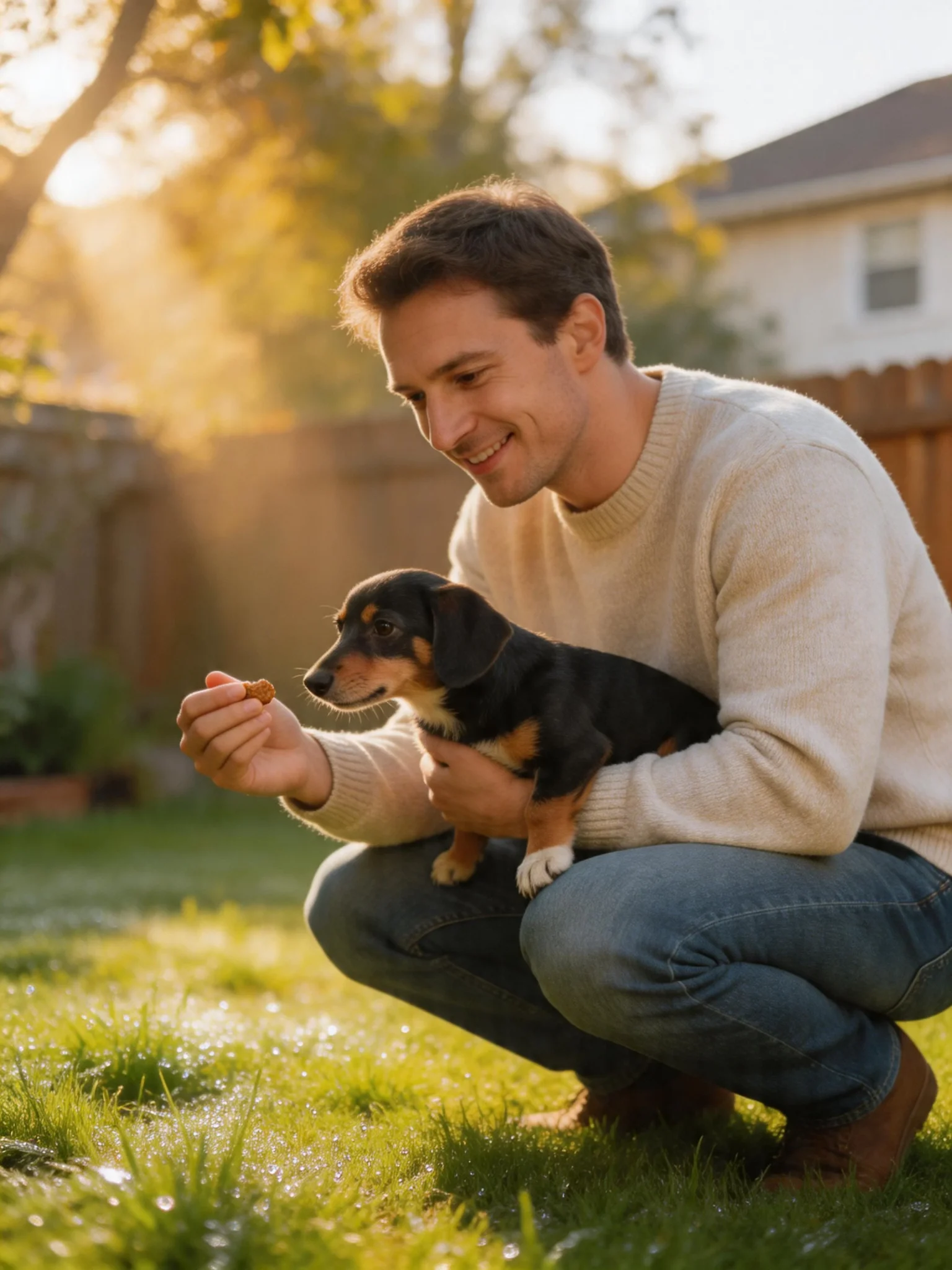
Start over with a strict schedule, tight supervision, crate time, and high-value rewards the second your puppy goes in the right spot. Remove freedom indoors, track every meal and potty trip, and clean accidents with an enzyme cleaner.
- Take your puppy out every 30 to 60 minutes.
- Use one outdoor potty spot only.
- Reward within two seconds of success.
- Crate or tether indoors between trips.
- Do not punish accidents after the fact.
- Use enzyme cleaner on every indoor mess.
- Track patterns for seven straight days.
Why Dachshunds Fight Potty Training
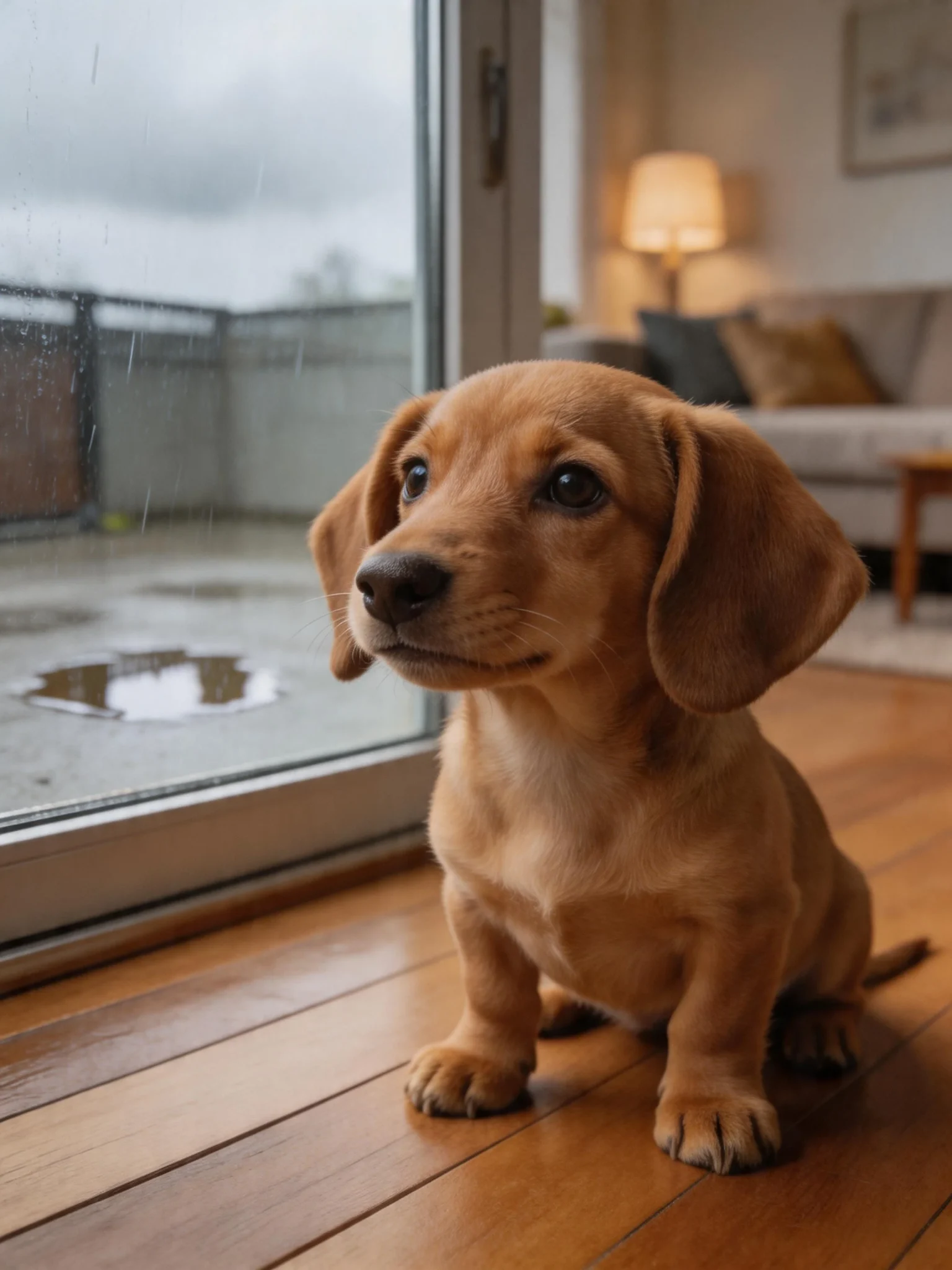
Dachshunds do not fail potty training because they are spiteful. They usually struggle because their routine feels unclear, the weather feels unpleasant, or they learned that indoor rugs work just as well.
Your puppy is not being bad. Your puppy is repeating whatever behavior has paid off most often, and that includes sneaking behind the couch to poop when nobody watches.
Small Body, Strong Opinions
Dachshund puppies have tiny bladders and fast digestion, so they need frequent bathroom trips. They also love comfort, and cold rain or wet grass can feel like a hard no.
Get Free Dog Health Tips!
Weekly guides on keeping your dog healthy & happy
🔒 No spam. Unsubscribe anytime.
In our experience, weather matters more with dachshunds than many owners expect. A fleece coat and a covered potty area can suddenly reduce accidents because your puppy no longer avoids the yard.
Accidents Create Habits Fast
Every indoor accident teaches your puppy that peeing inside works. Soft rugs, bath mats, and carpet corners hold scent, which pulls your puppy back to the same spot again.
🛒 Products Our Readers Use Every Day
👉 Glucosamine & Chondroitin Chews for Dogs
A reader named Melissa in Ohio saw this with her 11-week-old dachshund, Benny. When she removed three rugs and blocked the hallway for ten days, his accident rate dropped from four daily to one.
Building on what we covered about indoor scent, this article on why ignoring your dog during potty time can backfire explains why timing and attention matter so much.
The Mistakes That Keep The Problem Going
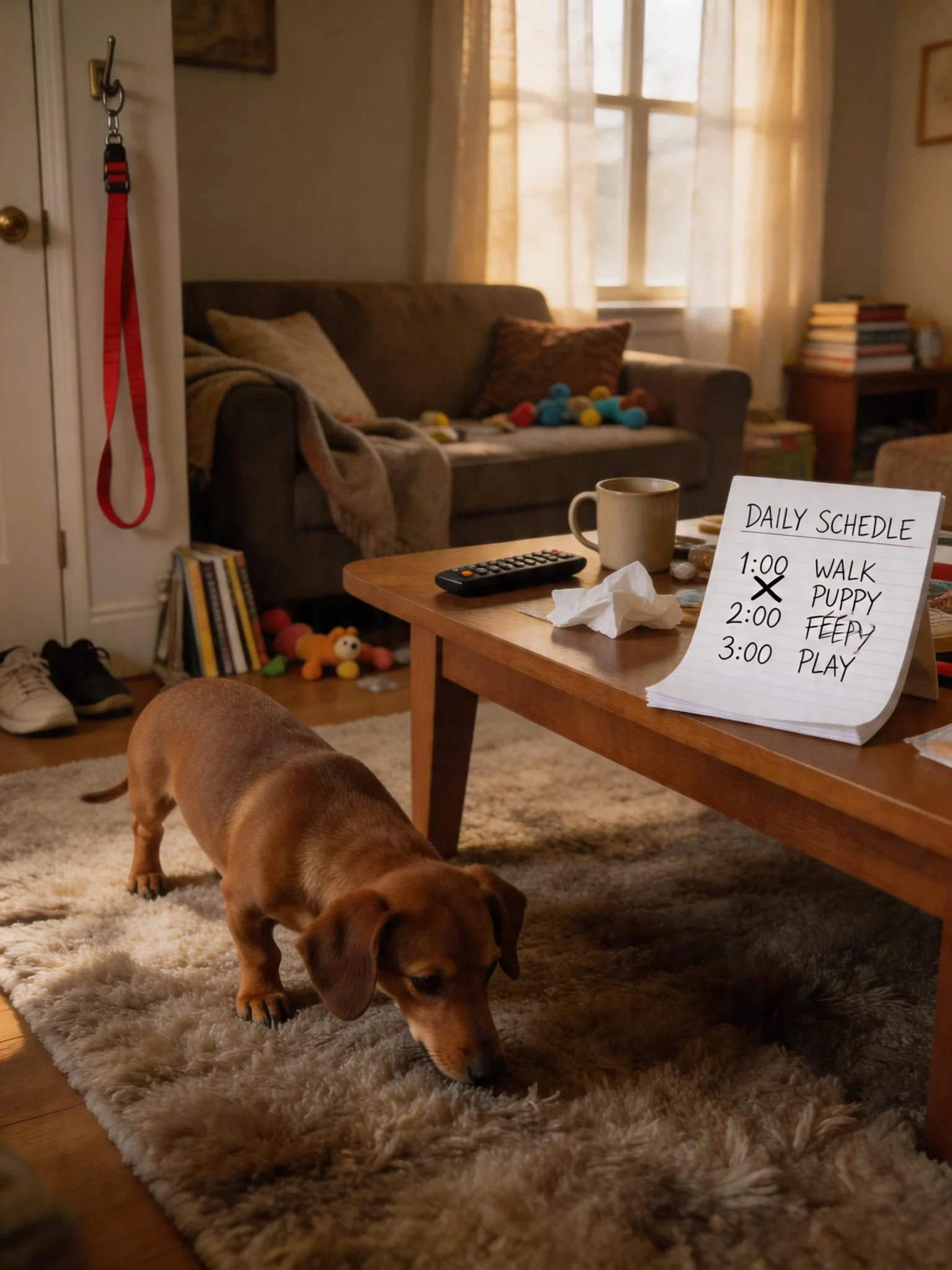
Most stubborn potty problems continue because the plan changes every day. One late morning, one missed trip, or one hour of unsupervised freedom can wipe out progress with a dachshund puppy.
Freedom is earned, not given. If your puppy still has accidents, your puppy has too much space and not enough structure.
Common Setbacks To Stop Today
- Waiting for your puppy to signal every time.
- Using puppy pads and outdoor grass at the same time.
- Giving treats minutes after the potty instead of instantly.
- Letting your puppy roam after meals.
- Scolding when you find an old accident.
What we have found works best is choosing one clear toilet surface and one clear routine. Mixed signals slow training, especially for dachshunds that already test boundaries.
Why Punishment Usually Backfires
If you yell after an accident, your puppy learns that peeing near you feels unsafe. Then your puppy hides to potty, which makes the whole problem harder to catch and fix.
Trainer Victoria Stilwell often teaches owners to reward wanted behavior instead of punishing mistakes. That approach matters here because dachshunds remember stressful reactions and can become sneaky fast.
A client named Jordan in Texas stopped saying “no” after every puddle and switched to quiet cleanup. Within two weeks, his 4-month-old dachshund, Olive, began peeing outside on 80 percent of trips.
The Reset Plan That Works When Nothing Else Has
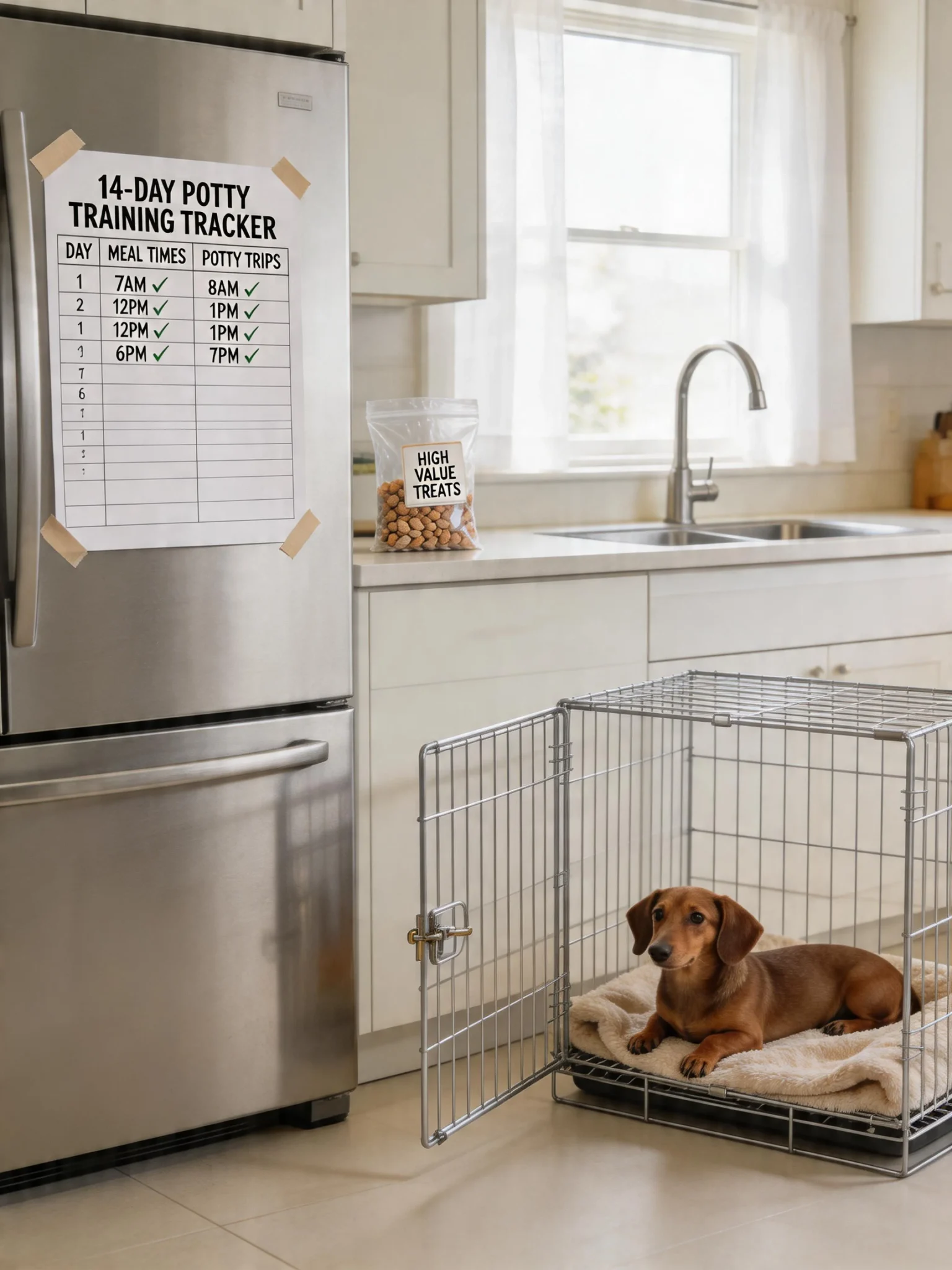
If your current plan feels messy, start from day one again. For the next 14 days, control food timing, water timing, movement indoors, and every bathroom trip.
This reset feels intense, but it works because it removes guessing. Many of our readers tell us the first real breakthrough came after they stopped “seeing how it goes” and used a strict schedule.
Your Core Tools
You only need a few essentials to reset training well. A properly sized wire dog crate for small dogs, a dog enzyme cleaner, and a bag of puppy training treats cover most needs.
🛒 Vet-Recommended Wellness Picks
👉 Dog Probiotic & Prebiotic Powder
A lightweight leash matters too because it keeps your puppy focused outdoors. On rainy days, a small dog rain coat can remove a huge source of resistance.
How To Set Up The House
Limit your puppy to one small, easy-to-clean room or a playpen when not crated. If your puppy is with you, tether the leash to your waist so you can spot sniffing, circling, and sudden wandering.
We have seen this consistently with dachshunds under six months old. When owners cut the living area by half, accidents usually fall within three to five days.
Emily from North Carolina used baby gates and a six-foot tether for her puppy, Rosie. After seven days, Rosie went from six hidden accidents a week to one supervised accident near the door.
As the house setup section showed, limiting freedom changes behavior faster than repeating commands. Similar structure helps with other breeds too, including this guide on training a Staffordshire Bull Terrier.
Step-By-Step Potty Training Schedule For A Stubborn Dachshund
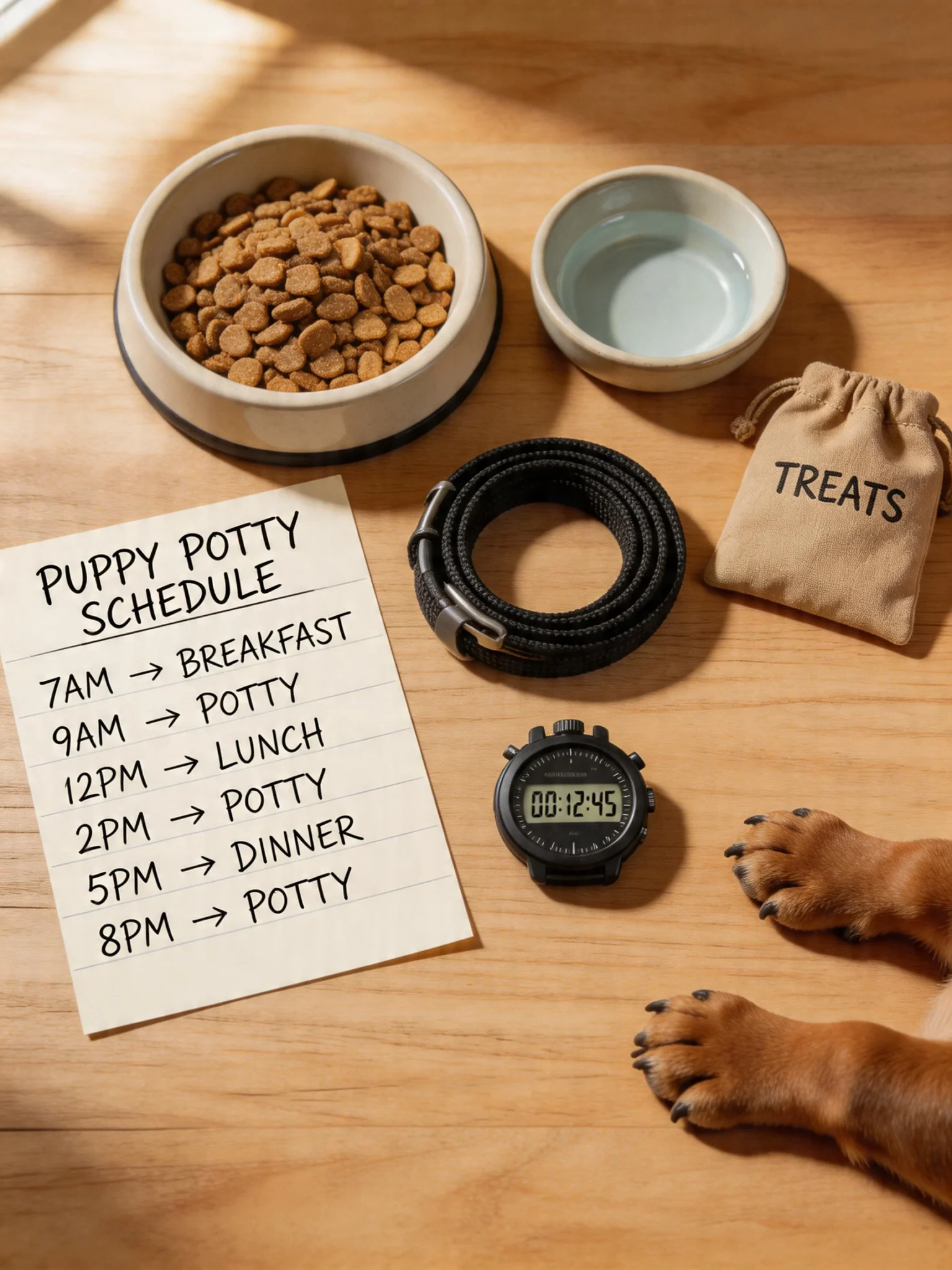
- Wake up and go outside immediately. Carry your puppy if needed so no accident happens on the way.
- Stand in one potty spot for five minutes. Say one cue like “go potty” once, then stay boring and still.
- Reward the second your puppy finishes. Give three tiny treats and warm praise within two seconds.
- Allow 10 to 15 minutes of supervised freedom. If your puppy does not potty outside, return to the crate for 10 minutes.
- Try outside again after the short crate break. Repeat this loop until your puppy goes in the right place.
- Take your puppy out after every meal, nap, play session, and drink. Young dachshunds often need a trip within 5 to 20 minutes.
- Use the crate between outings. Most puppies avoid soiling their sleeping space if the crate fits correctly.
- Log every pee, poop, meal, and accident. Patterns usually appear by day three.
A sample schedule for a 10-week-old puppy might include trips at 6:30, 7:00, 8:00, 9:00, and every hour after. You also need extra trips right after zoomies, chewing sessions, and car rides.
What we have found works best is setting timers on your phone for the first week. A timer beats memory when life gets busy, especially during work calls, school pickup, or dinner prep.
Kevin in Michigan used a simple note app to track his puppy, Fritz, for eight days. He learned Fritz almost always pooped 12 minutes after breakfast, which made mornings much easier.
How To Handle Rain, Cold, And Refusal To Go Outside
Dachshunds often act stubborn when they really feel uncomfortable. Cold wind, wet grass, and deep snow hit them harder because their bodies sit so low to the ground.
Make the outdoor spot easier, not optional. If your puppy hates the yard, improve the setup before assuming your puppy refuses to learn.
Make The Potty Spot Better
- Choose a sheltered area close to the door.
- Use a porch overhang or pop-up cover.
- Keep the grass trimmed short.
- Shovel a path in snow.
- Use a coat in bad weather.
A small outdoor dog potty grass patch can help on balconies or covered patios. This works well for apartment owners who need a reliable, weather-protected surface.
What To Do During A Potty Standoff
If your puppy stands outside for ten minutes and does nothing, go back inside calmly. Crate for ten minutes, then head out again to the same spot.
Do not start a play session after a failed potty trip. That teaches your puppy to hold it outside, then earn fun indoors.
Sarah from Illinois solved this with her dachshund, Louie, during winter. She added a jacket, cleared a six-foot path, and stopped post-trip play until Louie peed first.
If cleanup becomes part of your rainy-day struggle, keeping your puppy comfortable after wet outings helps too. Owners who manage tiny breeds often like routines similar to this article on how often to bathe a Yorkie puppy.
Cleaning, Rewards, And Signs Your Puppy Is Finally Getting It
Good potty training depends on perfect timing and great cleanup. Reward outside success instantly, and erase indoor scent completely so your puppy does not keep returning to the same area.
In our experience, owners often underestimate how much old odor drives repeat accidents. Standard household cleaners can remove the stain while leaving scent behind.
How To Clean Accidents The Right Way
Blot the mess first, then soak the area with an enzyme product made for pet urine. A black light for pet urine helps you find hidden spots under beds, along baseboards, and near rugs.
If your puppy keeps choosing one place, block it for at least a week. Move a chair, close a door, or place the crate nearby to break the habit loop.
How To Know Your Dachshund Is Improving
- Your puppy heads toward the door before peeing.
- Accidents happen less often and at predictable times.
- Your puppy potties within five minutes outside.
- You get seven dry days in a row.
Once your puppy stays accident-free for two full weeks, slowly expand indoor freedom. Add one room at a time, not the whole house at once.
Nina in Colorado waited until her dachshund, Mocha, had 15 clean days before opening the bedroom. Mocha stayed dry because Nina still used timed trips and rewards during the transition.
As the cleaning section showed, odor control matters as much as schedule control. For owners building a full puppy-care routine, even grooming choices like choosing a puppy shampoo fit best after training progress feels stable.
Expert Insights On Potty Training Stubborn Puppies
Dr. Ian Dunbar, veterinarian and dog behavior expert, has long emphasized prevention over correction in housetraining. That means supervision, confinement, and rewarding the exact behavior you want.
The American Kennel Club also advises frequent trips, consistency, and immediate rewards during house training. Those basics sound simple, but they match what actually works with dachshunds that test every rule.
Certified professional trainers often use the “umbilical cord” method for stubborn puppies. You keep the puppy attached by leash indoors so you can interrupt sniffing and get outside before the accident happens.
We have seen this consistently with dachshunds between 8 and 20 weeks old. Puppies improve faster when owners prevent mistakes instead of trying to correct them after the floor is already wet.
Frequently Asked Questions About How to Potty Train a Stubborn Dachshund Puppy When Nothing Else Works
How Long Does It Take To Potty Train A Stubborn Dachshund Puppy?
Many dachshund puppies need several months for reliable house training. With a strict reset plan, you can often see clear progress within 7 to 14 days.
Should I Use Puppy Pads For My Dachshund?
Puppy pads can confuse dogs if your goal is outdoor potty only. If you already use them, phase them out quickly and stick with one surface.
Why Does My Dachshund Pee Inside Right After Going Out?
Your puppy may feel distracted outside and finish relaxing indoors. Keep the trip boring, use one potty spot, and reward immediately when your puppy goes.
Is Crate Training Mean For A Dachshund Puppy?
No, not when you use the crate correctly and for short periods. A crate helps your puppy build bladder control and prevents hidden accidents.
What If My Dachshund Hates Going Out In The Rain?
Use a coat, choose a covered area, and keep the trip short and focused. Many dachshunds improve once weather discomfort drops.
Should I Wake My Dachshund Puppy At Night To Potty?
Very young puppies often need one nighttime trip. If your puppy wakes, whines, or had a late drink, take a calm potty trip with no play.
Conclusion
When nothing else works, structure usually does. A stubborn dachshund puppy needs fewer choices, faster rewards, cleaner floors, and a schedule you follow every single day.
Start today by picking one outdoor potty spot and logging every trip for the next seven days. If you stay consistent, your dachshund can absolutely learn this, and your house can feel calm again.
If you enjoy puppy content beyond training, lighter reads can make the journey feel more fun too. Some readers even unwind with cute craft ideas like these poodle puppy amigurumi crochet patterns after a long training week.