You can start adding new commands to a young puppy’s training routine as early as 7–8 weeks old. Puppies this age are neurologically ready to learn simple cues, and early training builds a lifelong habit of paying attention to you.
Most new puppy owners wonder when to start adding new commands to a young puppy’s training routine — and whether pushing too fast will backfire. The short answer is: go earlier than you think, but add commands one at a time.
When Should You Start Adding New Commands to a Puppy’s Training?
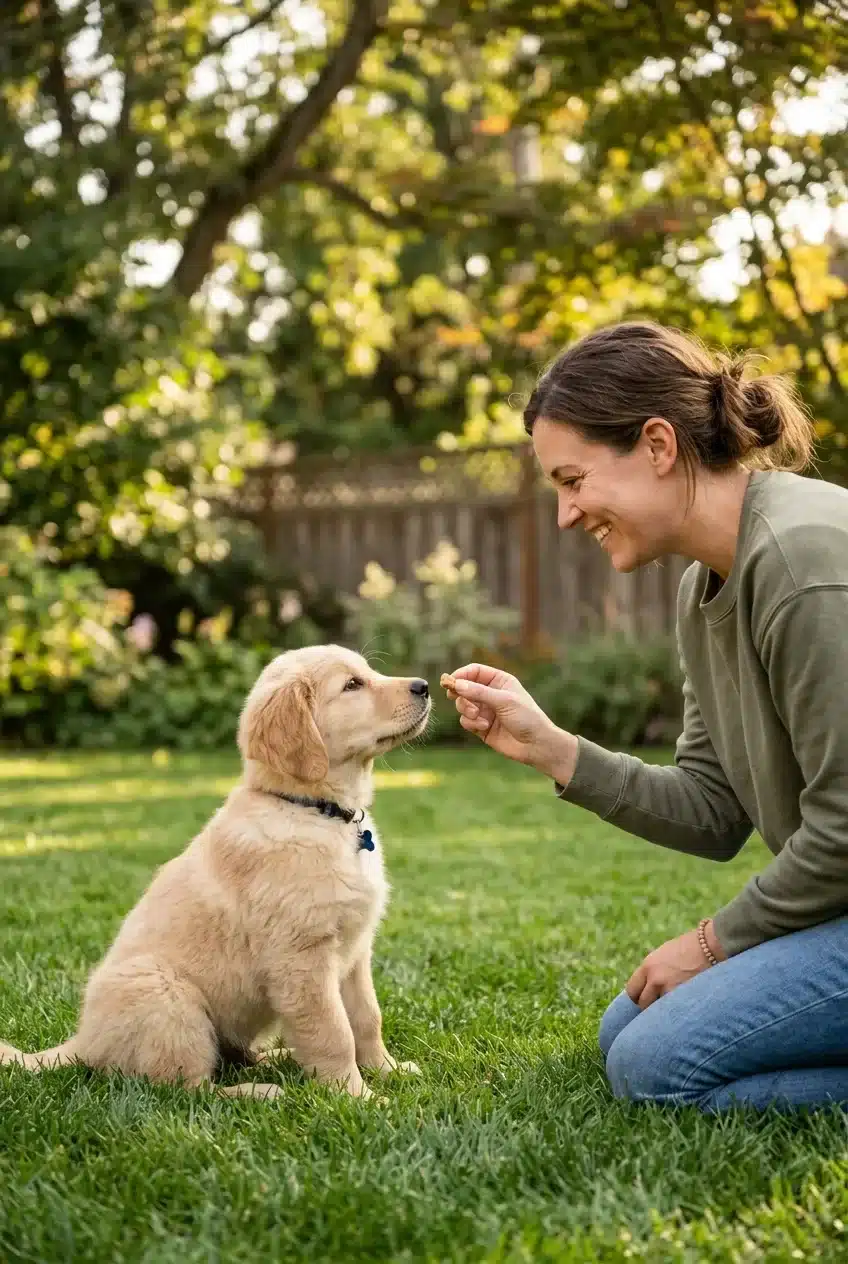
Puppies can begin learning basic commands from 7–8 weeks of age. The American Kennel Club recommends starting formal training as soon as a puppy arrives home, focusing on one command at a time and keeping sessions under five minutes. Waiting until 6 months misses a critical socialization and learning window.
- Start basic commands (sit, name recognition) at 7–8 weeks old.
- Add a new command only after the previous one has an 80%+ success rate.
- Keep each training session to 3–5 minutes maximum.
- Run 2–3 short sessions per day rather than one long one.
- Introduce commands in a low-distraction environment first.
The Best Age Milestones for Introducing Each Command
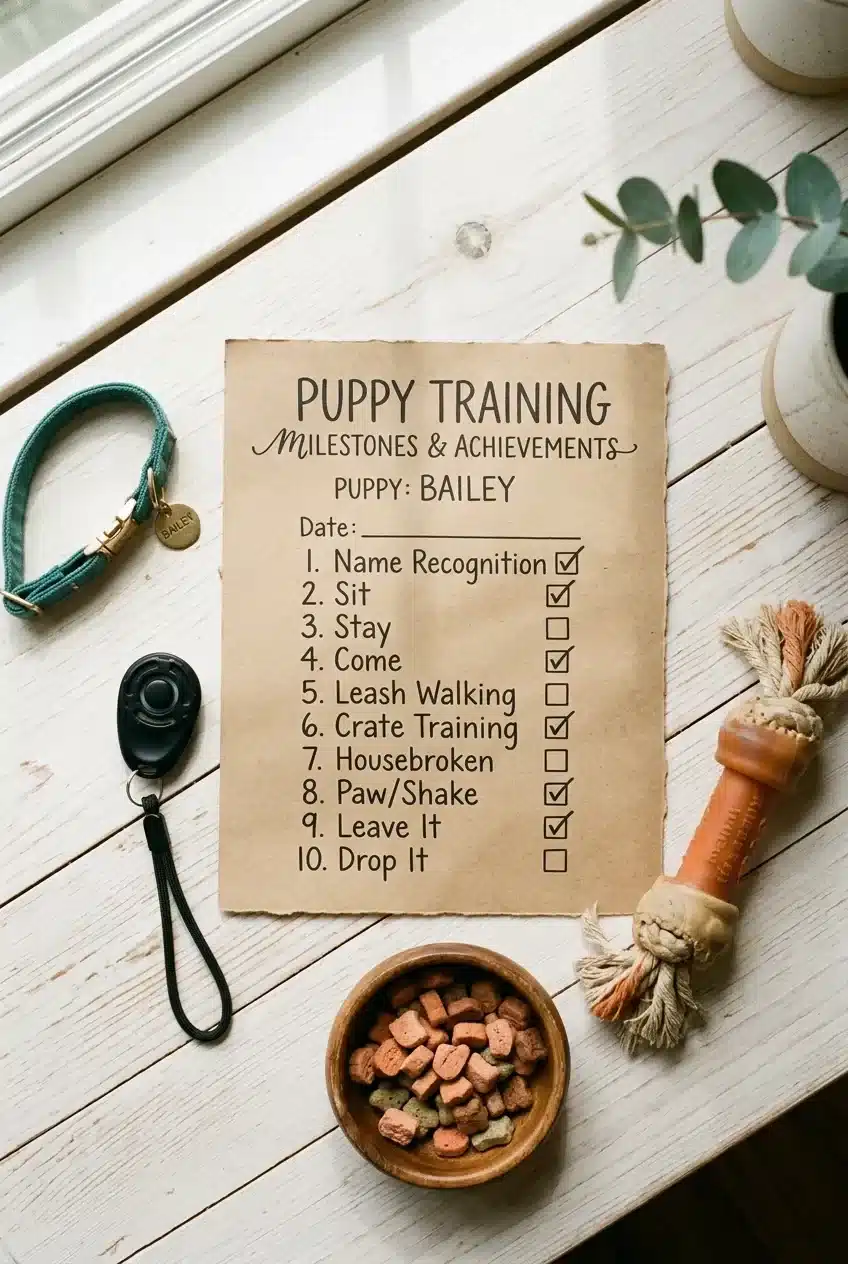
Puppy brain development follows predictable stages, and matching commands to those stages gets faster results. The socialization window — roughly 3 to 14 weeks — is when new experiences stick most easily, according to research published in Applied Animal Behaviour Science.
7–10 Weeks: The Foundation Commands
At this stage, keep it simple. Focus on name recognition, sit, and come. These three commands form the base everything else builds on.
Use a small, soft training treat to reward every correct response. Tiny rewards mean you can practice more repetitions without overfeeding.
10–16 Weeks: Building the Core Vocabulary
Once your puppy reliably responds to sit and come, add down, stay (just 2–3 seconds at first), and leave it. This age range is still inside the socialization window, so new commands absorb quickly.
If your puppy seems distracted or uninterested, check whether hunger or overstimulation is the issue. Learning about how to build food drive in young puppies who ignore kibble can make a real difference in training engagement.
Get Free Dog Health Tips!
Weekly guides on keeping your dog healthy & happy
🔒 No spam. Unsubscribe anytime.
4–6 Months: Adding Complexity
By four months, a puppy’s attention span grows noticeably. This is the right time to introduce heel, place, and wait at doorways.
Sessions can extend to 5–10 minutes now. Still end each session on a success — never on a failed repetition.
| Age Range | Commands to Introduce | Session Length |
|---|---|---|
| 7–10 weeks | Name, sit, come | 2–3 minutes |
| 10–16 weeks | Down, stay, leave it | 3–5 minutes |
| 4–6 months | Heel, place, wait | 5–10 minutes |
| 6–12 months | Off, drop it, advanced stay | Up to 15 minutes |
How to Know Your Puppy Is Ready for a New Command
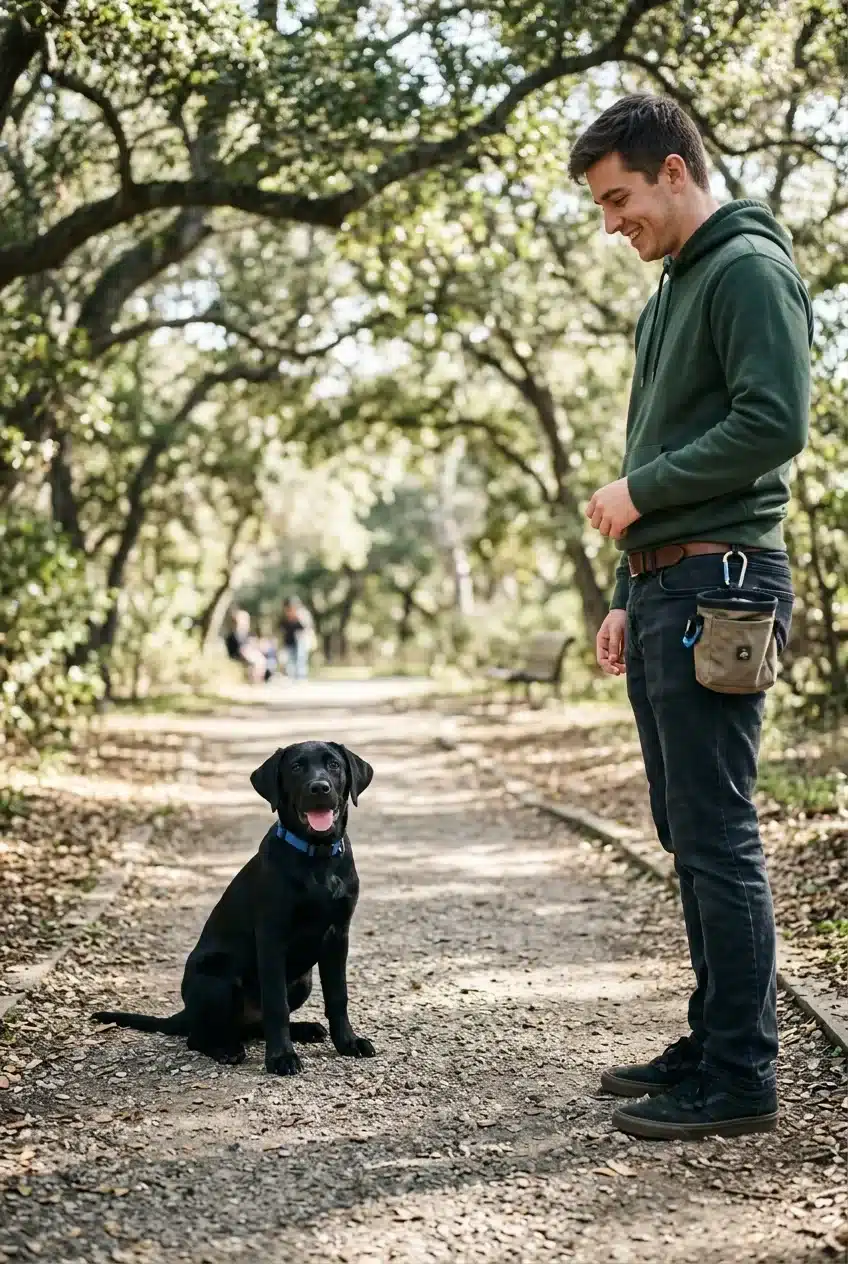
Adding a new command too soon is one of the most common training mistakes. A puppy is ready when the current command gets a correct response at least 8 out of 10 attempts, in multiple locations, without a treat visible in your hand.
Seeing that 80% success rate in two or three different rooms is your green light to move forward.
If your puppy struggles with distractions, that is a generalization problem, not a readiness problem. Practice the existing command in busier environments before layering in something new.
- Test in at least two different locations before calling a command “learned.”
- Remove the treat from your hand — reward from your pocket instead.
- Add mild distractions (another person walking by, outdoor sounds) gradually.
- If success rate drops below 70%, pause new commands and reinforce the current one.
How to Introduce a New Command Without Confusing Your Puppy
Introducing commands the right way prevents the frustration of a puppy that “knows” a word but ignores it. The lure-then-label method is widely recommended by certified professional dog trainers and endorsed by the Association of Professional Dog Trainers (APDT).
Step-by-Step: Adding a New Command Cleanly
- Lure the behavior first. Use a treat to guide your puppy into the correct position without saying the word yet.
- Mark the moment. The instant the behavior happens, say “yes” or click a training clicker and deliver the treat immediately.
- Repeat 10–15 times across two sessions until the puppy offers the behavior fluidly for the lure.
- Add the verbal cue. Say the word once, just before the lure. Never repeat the cue mid-attempt.
- Fade the lure. Over the next 5–10 sessions, transition from a food lure to an empty hand signal, then to just the verbal cue.
- Test without the lure visible. Only count it as learned when the puppy responds to the word alone, 8 out of 10 times.
“Dogs do not generalize well. A dog that sits perfectly in the kitchen may not sit at all in the park — that is normal, not disobedience.” — Ian Dunbar, veterinarian and founder of the Association of Pet Dog Trainers
Common Mistakes When Adding New Commands Too Quickly
Moving through commands at the wrong pace creates confusion that takes weeks to untangle. These are the most frequent errors and how to fix them.
- Adding commands before the last one is solid: The new command competes with the incomplete one. Fix: enforce the 80% rule before moving on.
- Repeating the cue multiple times: Saying “sit, sit, sit” teaches the puppy to wait for the third repetition. Fix: say the cue once, then reset and try again.
- Sessions that run too long: A tired puppy stops responding and starts making errors. Fix: end every session within 5 minutes for puppies under 12 weeks.
- Skipping generalization: Practicing only in one room creates a puppy that “only sits in the kitchen.” Fix: train each command in at least three different locations.
- Using inconsistent cues: Switching between “down” and “lie down” stalls learning. Fix: pick one word per behavior and stick to it across everyone in the household.
If your puppy is also adjusting to a new environment, training progress may be slower than expected. Understanding how to help an anxious dog adjust to a new home can remove that stress barrier before formal training begins.
Breed and Individual Differences That Affect the Timeline
No two puppies learn at exactly the same pace. Herding breeds like Border Collies and Australian Shepherds often absorb new commands faster, while brachycephalic breeds may tire more quickly during sessions.
High-energy breeds sometimes need more physical activity before they can focus. A five-minute play session before training can sharpen attention dramatically. For breed-specific approaches, resources like expert tips for training a high-energy Cocker Spaniel show how to adjust the method to the dog in front of you.
Treat sensitivity also varies. Some puppies work hard for kibble; others need higher-value rewards. Choosing the right training treats for puppies with sensitive stomachs keeps the sessions rewarding without causing digestive issues.
The right pace is the one that keeps your puppy succeeding — not the fastest one possible.
External Resources
The American Kennel Club’s puppy training timeline provides a reliable command-by-command breakdown from 8 weeks through adulthood. The Association of Professional Dog Trainers (APDT) maintains a directory of certified trainers and evidence-based training guidelines.
Frequently Asked Questions About When to Start Adding New Commands to a Young Puppy’s Training Routine
How many commands can a puppy learn at once?
Puppies learn best when working on one command at a time. Introduce a new command only after the current one reaches an 80% success rate across multiple locations.
Is 6 months too late to start teaching commands?
Six months is not too late to start teaching commands, but it does miss the peak socialization window. Puppies trained after 6 months can absolutely learn, though it may take slightly more repetitions to build a strong response.
What is the very first command to teach a puppy?
Name recognition is the very first command to teach, because every other cue depends on the puppy paying attention to you. Pair the puppy’s name with a treat every time it makes eye contact.
How long should each training session be for a young puppy?
Training sessions for puppies under 12 weeks should last 2–3 minutes maximum. From 3–6 months, sessions can extend to 5–10 minutes, provided the puppy remains engaged and responsive.
Should I use a clicker or just my voice to teach new commands?
Both methods work well for teaching new commands, and the choice depends on your consistency. A clicker training kit provides a precise, consistent marker that many trainers prefer for the early learning phase.
Why does my puppy know a command at home but ignore it outside?
This happens because puppies do not automatically transfer a learned behavior to new environments — a process called generalization. Practice each command in progressively busier locations to build a reliable response everywhere.
Final Thoughts
The clearest takeaway: start early, add one command at a time, and wait for an 80% success rate before moving forward. That single rule prevents most of the confusion that slows puppy training down.
Today, pick the one command your puppy needs most right now and run three two-minute sessions before the end of the day. Consistency in small doses is what creates a dog that actually listens.
If nighttime routines are also on your mind alongside daytime training, understanding why young puppies pee in the crate overnight and how to stop it will help the whole routine come together faster.