Best training treats for puppies with sensitive stomachs can make puppy lessons easier without causing gas, loose stools, or vomiting. If your puppy loves rewards but reacts badly to rich snacks, you need gentler options that still keep attention strong.
This topic matters because puppies learn fastest with frequent, tiny rewards. When treats upset digestion, training slows down and your puppy may start to fear food, stress, or both.
This guide shows you what to look for, which ingredients to avoid, and how to use treats without overfeeding. You will also get expert-backed tips, simple steps, and practical product ideas that fit real daily training.
Best Training Treats For Puppies With Sensitive Stomachs
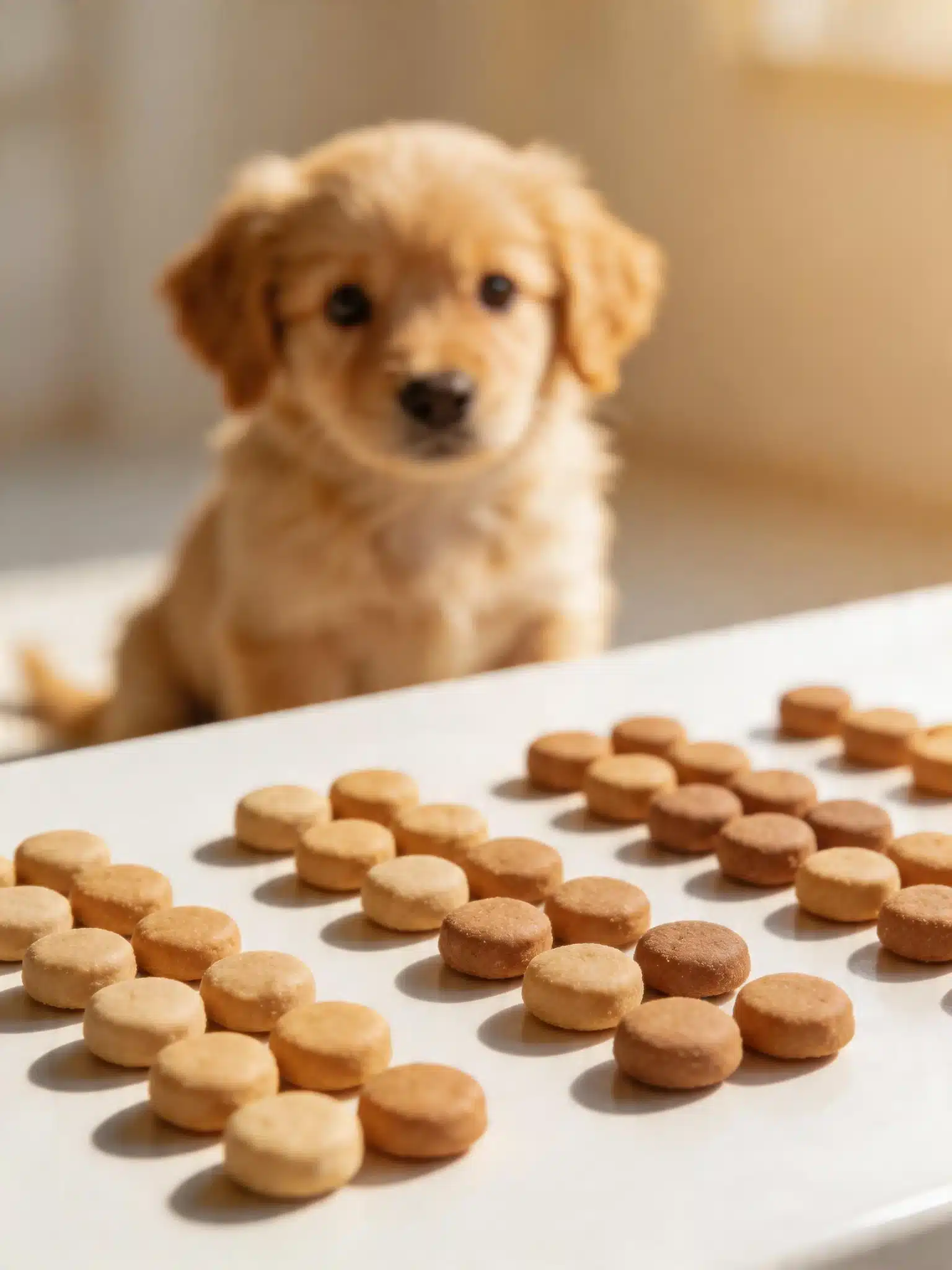
The best training treats for puppies with sensitive stomachs use short ingredient lists, gentle proteins, and small portions. Look for soft, pea-sized treats with one main protein and no heavy fillers, artificial colors, or greasy coatings.
- Choose single-protein treats like salmon, turkey, or lamb.
- Pick soft treats you can split into tiny pieces.
- Avoid onions, garlic, dairy, and rich smoked meats.
- Use fewer than 10 percent of daily calories for treats.
- Try freeze-dried or limited-ingredient options first.
- Stop any treat that triggers diarrhea, itching, or vomiting.
- Ask your vet if symptoms last more than 24 hours.
Why Some Puppies React Badly To Training Treats

Puppies have immature digestive systems, so rich treats can hit hard. A snack that seems tiny to you can still trigger loose stool, burping, or stomach pain, especially during busy training days.
Common triggers include fatty meats, multiple proteins, dairy, wheat, soy, and strong preservatives. Building on what we covered about small portions, even a gentle treat can cause trouble if you hand out too many in one session.
Common Signs Of A Sensitive Stomach
Watch for soft stool, frequent gas, lip licking, gulping, vomiting, or sudden refusal to eat. Some puppies also scratch more or get red ears after eating certain proteins.
In our experience, the pattern matters most. If symptoms show up within a few hours after training, your treat choice deserves a close look.
Get Free Dog Health Tips!
Weekly guides on keeping your dog healthy & happy
🔒 No spam. Unsubscribe anytime.
Real-World Example
Mia, a 12-week-old Mini Goldendoodle, got diarrhea after a puppy class that used bacon-flavored treats. Her owner switched to tiny salmon bites and capped rewards at 20 pieces, and her stool normalized within two days.
If your puppy also needs calm outlets between sessions, the ideas in best toys for Cavapoo puppies can help reduce overexcitement that sometimes worsens tummy trouble.
What Ingredients Work Best In Gentle Puppy Treats

The safest starting point usually includes one animal protein, one starch or none at all, and a short ingredient list. Simple recipes make reactions easier to spot and help you test foods without guessing.
What we have found works best includes salmon, turkey, duck, rabbit, and lamb in tiny portions. Freeze-dried meats also work well because they often skip extra flavorings and heavy binders.
Ingredients That Often Sit Well
- Single-protein salmon or turkey
- Pumpkin in small amounts
- Oats, if your puppy tolerates grains
- Sweet potato in small pieces
- Plain cooked chicken breast for short-term testing
- Limited-ingredient freeze-dried liver, used sparingly
Ingredients To Watch Carefully
- Cheese and other dairy
- Beef fat and greasy meat scraps
- Artificial smoke flavor
- Corn syrup and sugar
- Mixed proteins in one bag
- Strong spices or broth powders
One product style many owners like is limited ingredient puppy training treats. Check the label closely, because some “limited” recipes still include several fillers and flavoring agents.
As the ingredient section showed, fewer parts usually mean fewer surprises. Many of our readers tell us their puppies do best when they stick with one protein for two full weeks before testing anything new.
How To Choose The Right Treat Texture, Size, And Calories
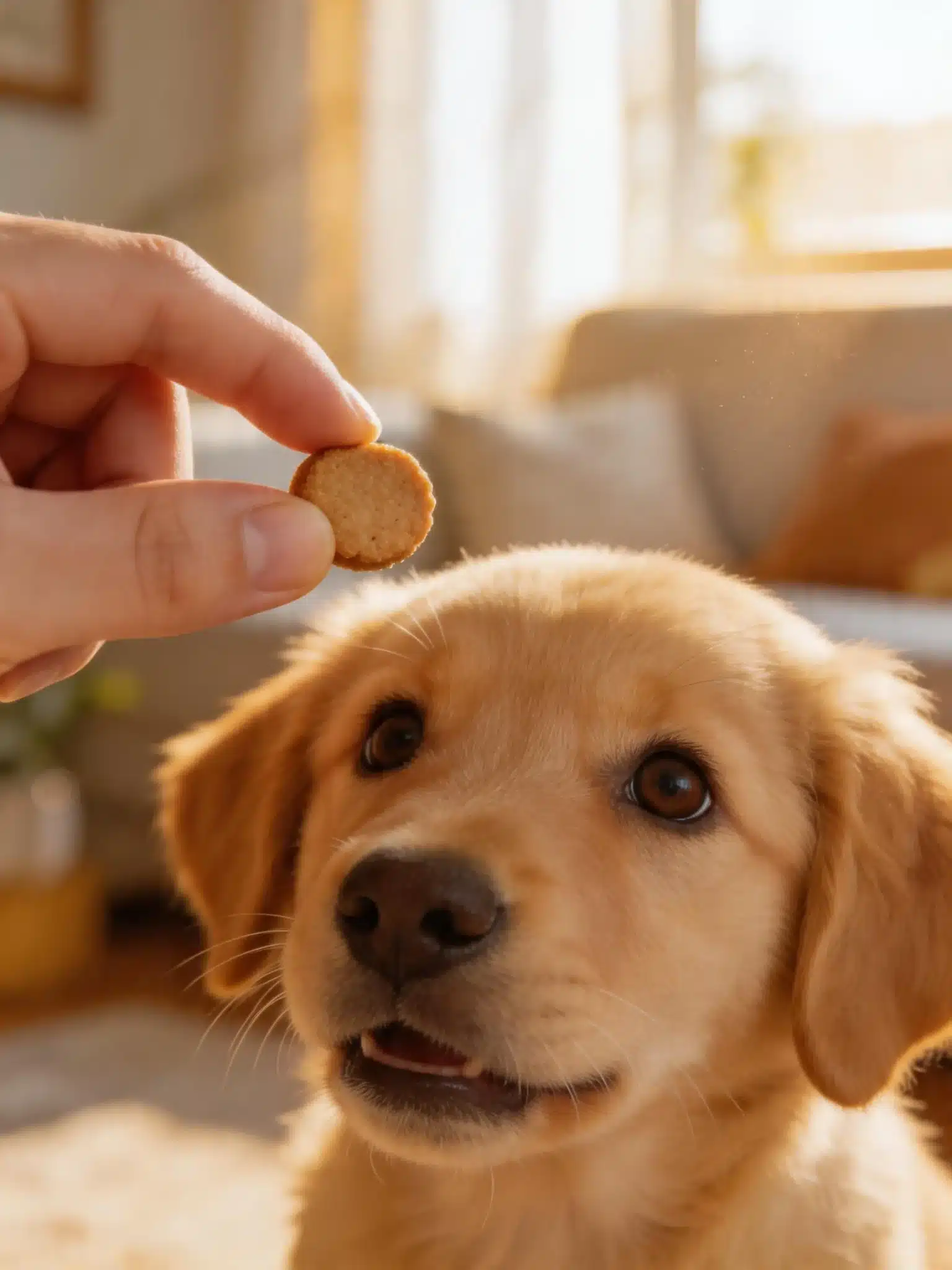
Texture matters more than many owners think. Soft treats break easily, disappear fast, and keep your puppy focused because chewing takes almost no time.
BEFORE YOU SCROLL PAST
Don’t Miss to Read: 👇
👉 Tear Stains Worse In Puppies
Hard biscuits can work at home, but they usually slow training and crumble into bigger pieces. For sensitive stomachs, large chunks also increase the chance of overfeeding during short sessions.
Best Size For Training Sessions
A treat should be about the size of a pea or smaller for most young puppies. If your puppy weighs under 10 pounds, break soft treats into even tinier bits.
Tiny rewards count just as much as big ones when your timing is good. Your puppy cares about speed and repetition more than treat size.
Real-World Example
Jake, a 9-pound Cavapoo, stopped finishing training when his owner used chunky jerky pieces. Switching to 3-millimeter soft bites doubled his sit-and-stay practice from 15 rewards to 30 rewards without stomach upset.
When grooming stress affects your puppy’s digestion, simple routines help. If you have a curly-coated breed, the best conditioner for poodles offers ideas for gentle coat care that can support calmer handling overall.
Best Types Of Training Treats For Sensitive Puppy Tummies
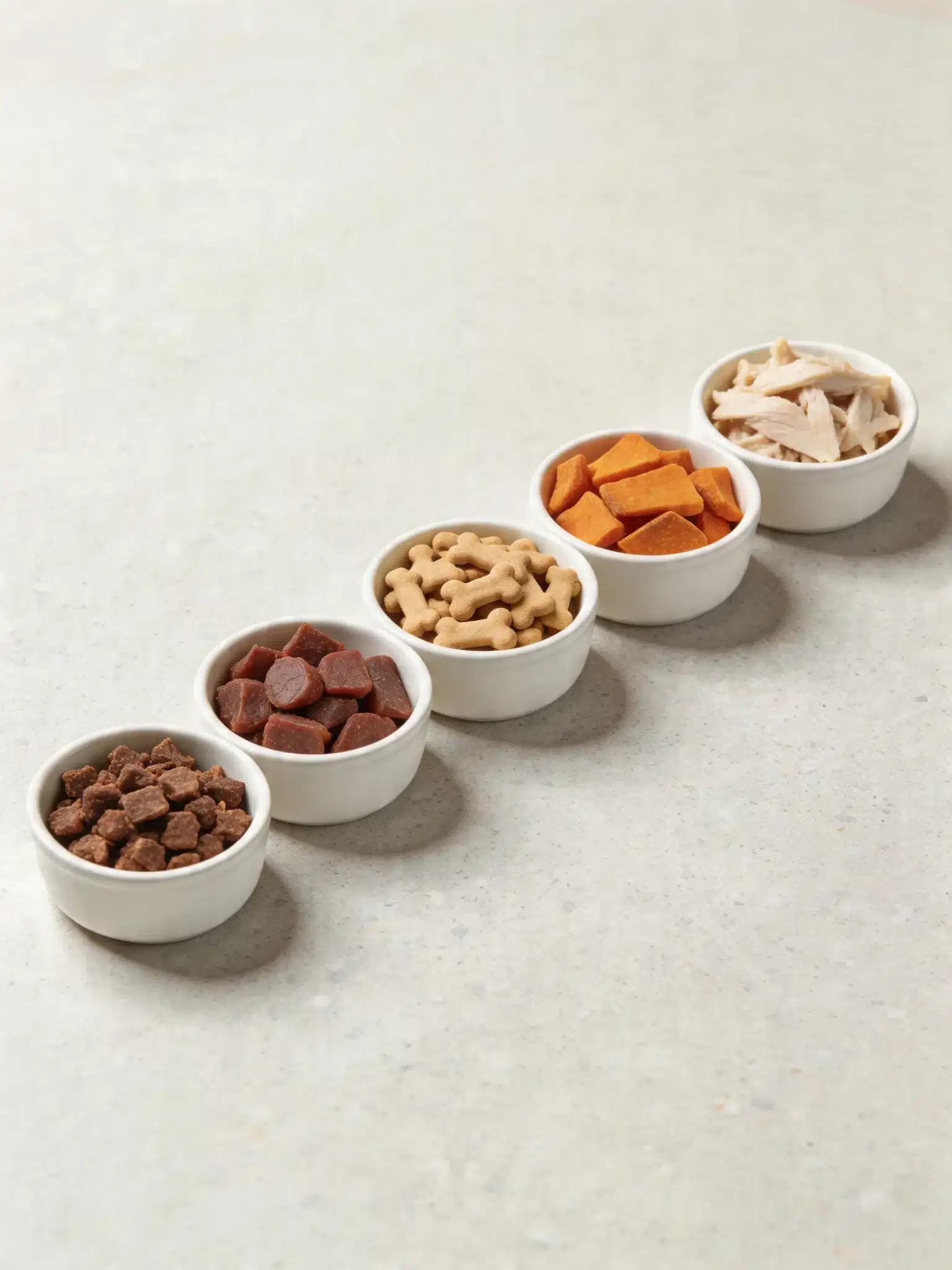
You do not need one perfect brand for every puppy. You need a gentle treat category that matches your puppy’s stomach, age, and motivation level.
We have seen this consistently with young puppies: rotating between too many products causes more issues than sticking with one safe option. Start narrow, then branch out only when your puppy stays stable.
Soft Limited-Ingredient Treats
These work well for most training because they are easy to split and quick to eat. Look for one named protein, no artificial dyes, and a calorie count that lets you reward often.
A good example is soft limited ingredient dog treats. Pick formulas made for small dogs or training use, since those usually come in better sizes.
Freeze-Dried Single-Ingredient Treats
Freeze-dried salmon, turkey, or rabbit can work beautifully for puppies who react to additives. They smell strong enough for training, but the ingredients stay simple.
Use them sparingly because some freeze-dried meats feel rich if you overdo it. Break them into crumbs for tiny puppies, then count each crumb as one reward.
Homemade Plain Food Rewards
Plain cooked turkey breast, chicken breast, or dehydrated sweet potato can be useful for elimination diets or early testing. Keep homemade rewards plain and refrigerate them safely.
For one-week testing, many owners prefer homemade pieces because they fully control the ingredients. Emma used boiled turkey cubes with her 14-week-old Shih Tzu and saw no diarrhea during five days of crate training.
Veterinary Or Digestive-Support Treats
Some puppies with repeat digestive problems need hydrolyzed or veterinary-formulated snacks. Ask your veterinarian before buying, especially if your puppy already eats a prescription diet.
One option to explore with your vet is hydrolyzed protein dog treats. These can help when common proteins trigger symptoms, but they cost more and are not always needed.
How To Introduce New Training Treats Without Upsetting Digestion
If your puppy has a sensitive stomach, test treats like you would test a new food. Slow changes help you spot reactions early and avoid confusing your puppy’s system.
- Choose one new treat with a short ingredient list.
- Start with 3 to 5 tiny pieces on day one.
- Watch stool, appetite, gas, and energy for 24 hours.
- If all looks normal, use 8 to 10 pieces on day two.
- Keep every other food the same for three days.
- Stop immediately if vomiting, diarrhea, or itching appears.
- Write down the brand, protein, and date in your phone.
In our experience, a simple food log saves time and stress. If your puppy reacts, you can show your vet exact details instead of relying on memory.
Real-world example: Noah tested a duck training treat with his 11-week-old Poodle mix. He used only four crumbs the first day, then increased slowly, and his puppy completed a full week of leash training with normal stools.
Building on what we covered about introducing change slowly, avoid adding chews, toppers, and new kibble at the same time. Too many changes at once make it hard to know what caused the problem.
Expert Insights On Sensitive Stomachs In Puppies
Dr. Jerry Klein, Chief Veterinary Officer for the American Kennel Club, often reminds owners that treats should make up only a small part of a dog’s daily calories. That advice matters even more for puppies with digestive issues, because overfeeding can mimic food intolerance.
The American Kennel Club also notes the 10 percent guideline for treats in a dog’s daily intake. That number gives you a useful ceiling, though small puppies may need even less during sensitive periods.
Board-certified veterinary nutritionist Dr. Lisa M. Freeman at Tufts Cummings School has written widely about reading pet food labels carefully and avoiding marketing claims without substance. Her work supports a practical rule: focus on ingredients and nutritional fit, not flashy packaging.
What we have found works best lines up with that expert advice. A short label, measured portions, and one protein at a time usually beat trendy “all natural” bags with five meats and extra flavor boosters.
Real-world example: after repeated stomach flare-ups, Oliver’s vet had his owner drop training extras from 60 calories to 20 calories daily. Within a week, his stool score improved and class focus stayed strong because the treats were smaller, not more exciting.
If you are raising a Poodle or Poodle mix, puppy planning helps with food choices too. The guide on how many puppies a Poodle can have gives useful breed context for owners learning about growth stages.
Frequently Asked Questions About Best Training Treats For Puppies With Sensitive Stomachs
What Is The Best Protein For A Puppy With A Sensitive Stomach?
Salmon and turkey often work well because many puppies digest them easily. Start with one protein only, then watch stool and appetite for at least three days.
Are Grain-Free Treats Better For Sensitive Stomachs?
Not always. Some puppies do fine with oats or rice, while others react more to the protein or fat source than the grain.
How Many Training Treats Can A Puppy Have Per Day?
Keep treats under 10 percent of daily calories, and go lower if your puppy has stomach issues. Use pea-sized pieces so you can reward often without feeding too much.
Can I Use Kibble Instead Of Treats For Training?
Yes, and kibble works very well for many puppies with sensitive stomachs. If your puppy loses interest, mix in a few higher-value treats for harder tasks only.
When Should I Call The Vet About Treat Reactions?
Call your vet if vomiting repeats, diarrhea lasts more than 24 hours, or your puppy seems tired or painful. Seek urgent care sooner if you see blood, swelling, or trouble breathing.
Are Homemade Training Treats Safe For Puppies?
They can be safe if you use plain, puppy-friendly ingredients and store them properly. Avoid onions, garlic, butter, heavy seasoning, and fatty meat scraps.
Conclusion
The best training treats for puppies with sensitive stomachs stay simple, small, and easy to digest. A short ingredient list and careful portion control usually solve more problems than switching brands every week.
Today, pick one gentle treat, test it with just a few tiny pieces, and track your puppy’s response. If your puppy stays comfortable, you can train with more confidence and a lot less cleanup.
If your home includes other pets too, keep enrichment species-specific. For bird owners, guides like best bird toys for budgies, what perches are best for budgies, and best perches for cockatiels can help you build better routines across your whole pet household.