Why do dogs get dark spots under their eyes? Most often, these marks come from tear staining, irritation, allergies, blocked tear drainage, saliva, or skin pigment changes that affect the fur and skin below the eyes.
If you have noticed reddish-brown or dark smudges on your dog’s face, you are not alone. Many owners first spot them during grooming, then wonder if they signal a cosmetic issue or a health problem.
This topic matters because eye-area changes can point to discomfort, infection, or ongoing tearing. For a broader look at similar concerns, see why dogs get dark spots under their eyes.
This guide explains the most common causes, what to watch for, and when to call your vet. You will also learn safe home care steps that help keep the area cleaner and more comfortable.
Why Do Dogs Get Dark Spots Under Their Eyes
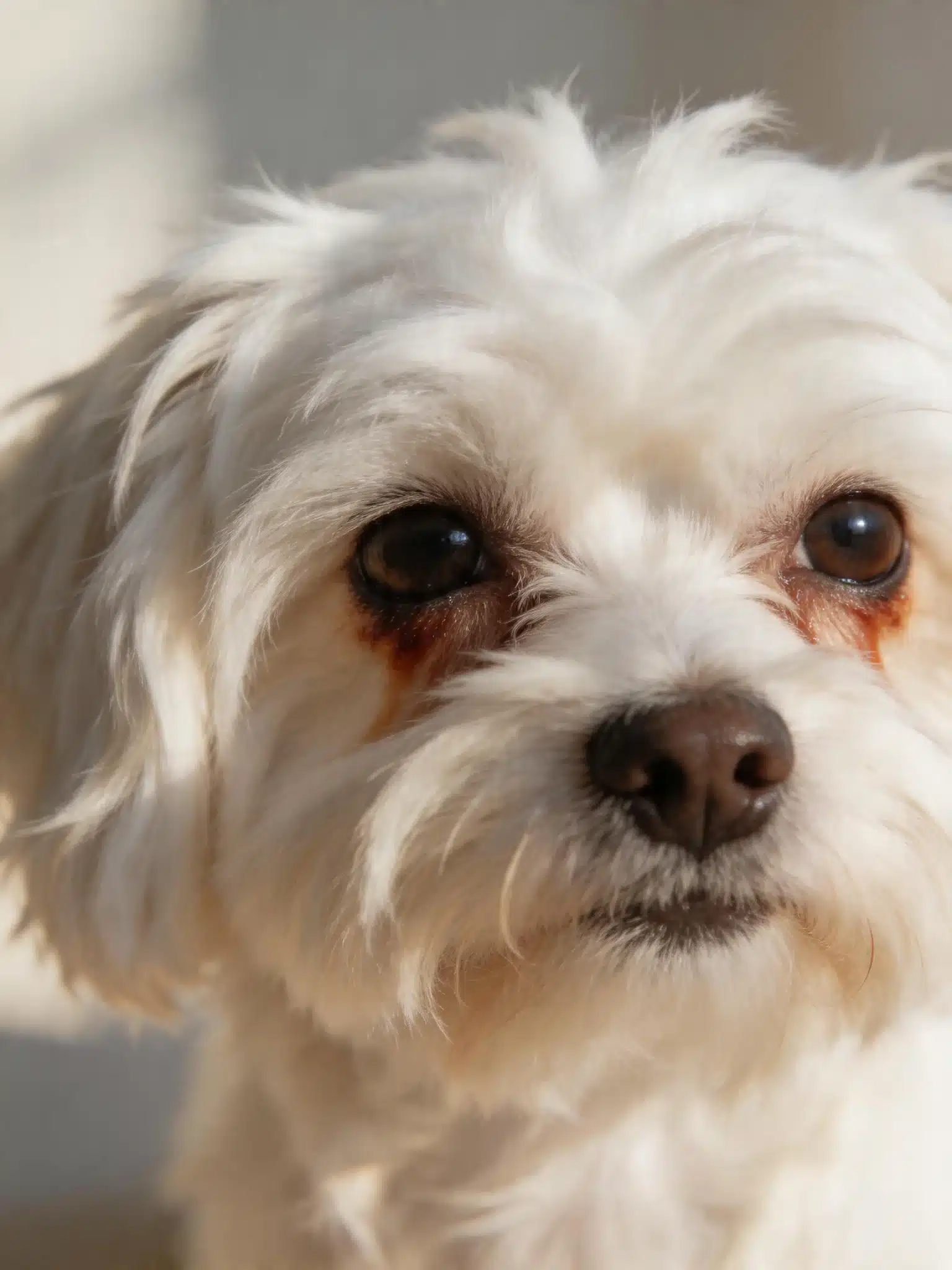
Dogs get dark spots under their eyes because tears, inflammation, and pigment can darken the fur or skin. The most common reason is chronic tearing that leaves behind rusty, brown, or black-looking stains.
- Tear staining often causes reddish-brown discoloration.
- Blocked tear ducts can make tears overflow.
- Allergies may trigger watering and rubbing.
- Eye irritation can darken fur over time.
- Yeast or bacteria may worsen the color.
- Flat-faced breeds develop staining more often.
- Sudden swelling or pain needs a vet visit.
What Tear Stains Really Are
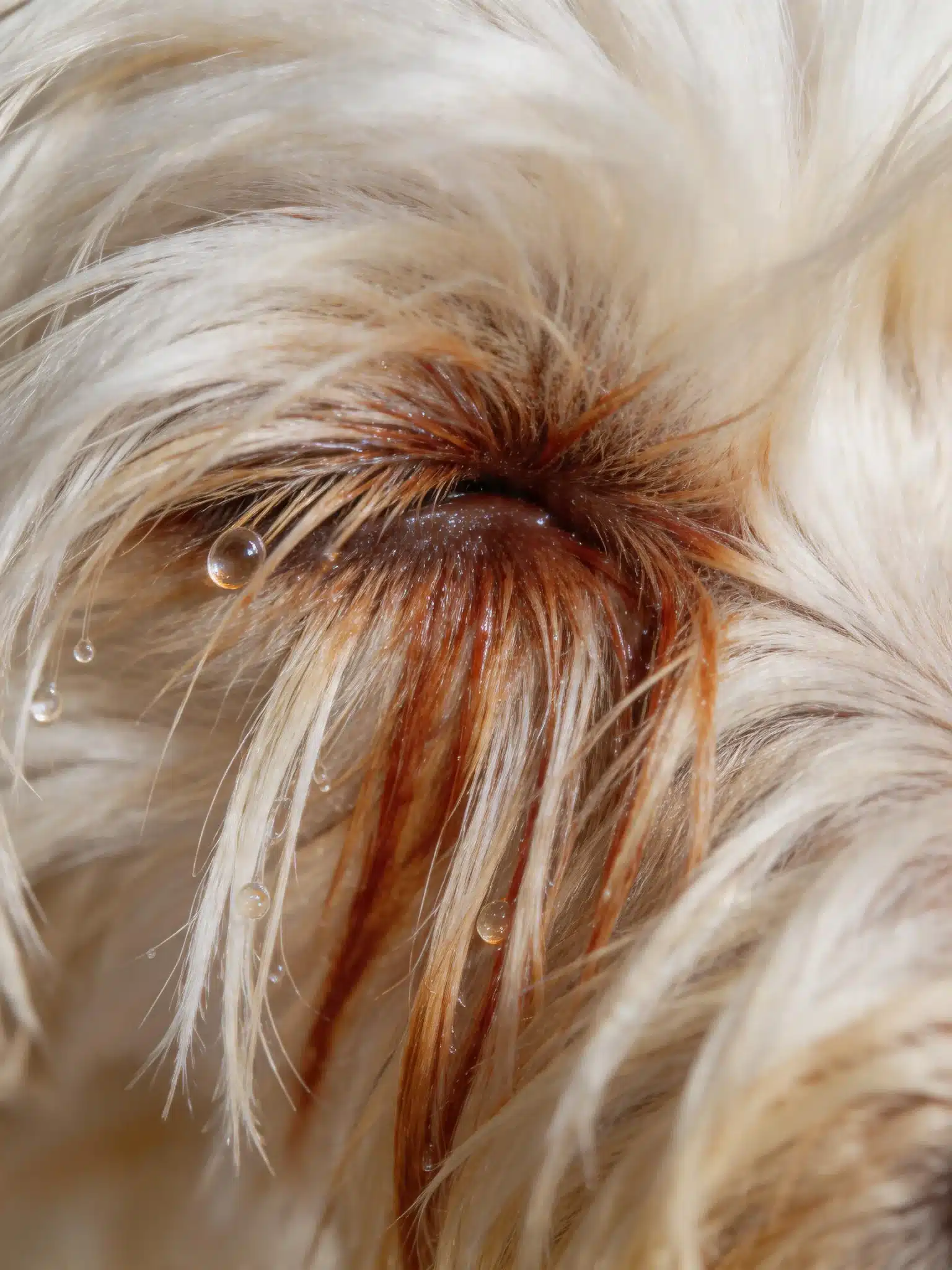
Tear stains form when your dog’s tears sit on the fur under the eyes for hours or days. As the moisture dries, pigments called porphyrins can leave a reddish-brown mark that may look darker on light coats.
We have seen this consistently in white Maltese, Shih Tzus, and Poodles with shallow eye sockets. In one case, Bella, a 4-year-old Maltese, showed lighter staining within three weeks after her vet treated chronic tearing.
Why The Color Looks Brown, Red, Or Black
The shade depends on your dog’s coat color, lighting, and how long the area stays wet. Bacteria and yeast can also build up in moist fur and make the stain appear darker or nearly black.
Get Free Dog Health Tips!
Weekly guides on keeping your dog healthy & happy
🔒 No spam. Unsubscribe anytime.
Fresh staining usually looks rusty or pinkish. Older staining often turns deeper brown as debris, oils, and microbes collect in the damp hair.
When A Spot Is On The Skin, Not Just The Fur
Sometimes the dark area affects the skin itself rather than the hair. That can happen with long-term licking, rubbing, inflammation, or normal pigment changes called hyperpigmentation.
Building on what we covered about tear stains, skin darkening deserves more attention because it can signal chronic irritation. If your dog also chews inflamed patches elsewhere, this guide on dogs living with hot spots may help you compare symptoms.
Common Causes Of Dark Spots Under Dog Eyes
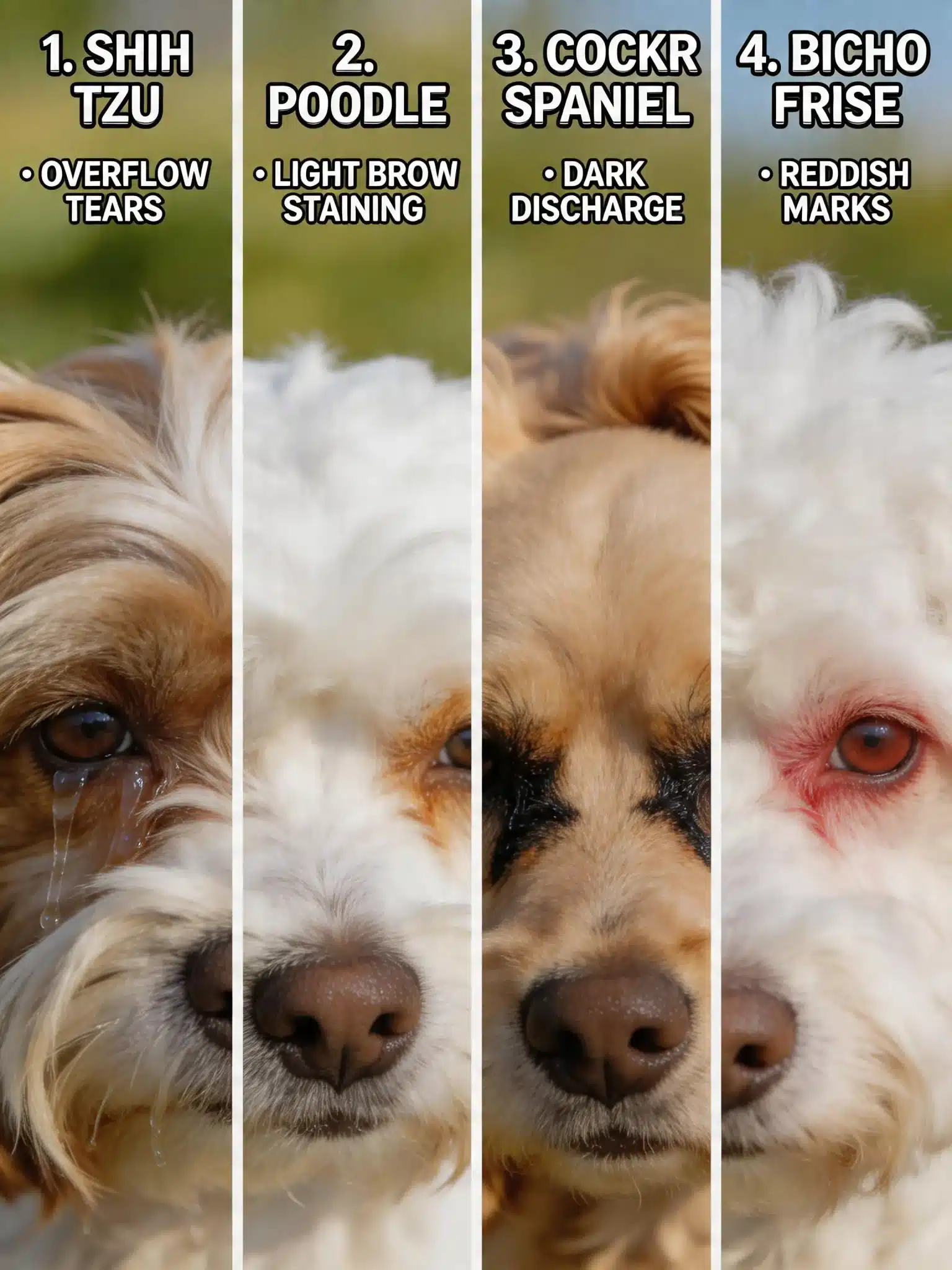
Several specific problems can lead to dark spots under the eyes. Knowing the likely cause helps you decide whether simple cleaning will help or your dog needs an exam.
Excess Tearing
Some dogs simply produce more tears than others. Small breeds, flat-faced breeds, and dogs with hair rubbing the eyes often develop constant overflow that stains the face.
In our experience, owners often notice staining first after the coat grows longer around the eyes. Charlie, a 7-pound Shih Tzu, stopped getting new marks after his groomer trimmed the inner eye hair every four weeks.
Blocked Tear Ducts
Tears should drain through small openings near the eyelids into the nose. When those openings narrow or block, tears spill onto the face instead of draining normally.
BEFORE YOU SCROLL PAST
Don’t Miss to Read: 👇
👉 Tear Stains Worse In Puppies
This issue often starts young in toy breeds. A vet can test tear drainage with a fluorescent dye, then suggest flushing, treatment, or referral if the blockage keeps returning.
Allergies And Irritation
Environmental allergies can make eyes water, itch, and redden. Your dog may rub the face on carpets, paws, or furniture, which adds irritation and can darken the skin over time.
Common triggers include pollen, dust, smoke, scented cleaners, and some foods. If your dog also scratches the body or licks paws, ask your vet whether allergies could connect those signs.
Infection Or Eyelid Problems
Conjunctivitis, eyelid inflammation, ingrown lashes, and corneal irritation can all cause tearing. These problems often bring redness, squinting, discharge, or sensitivity to light along with dark staining.
Painful eyes always need prompt care. Duke, a 6-year-old Pug, looked like he had “just stains,” but his vet found a hair rubbing the cornea and treated it before an ulcer formed.
Breed, Face Shape, And Coat Color Matter
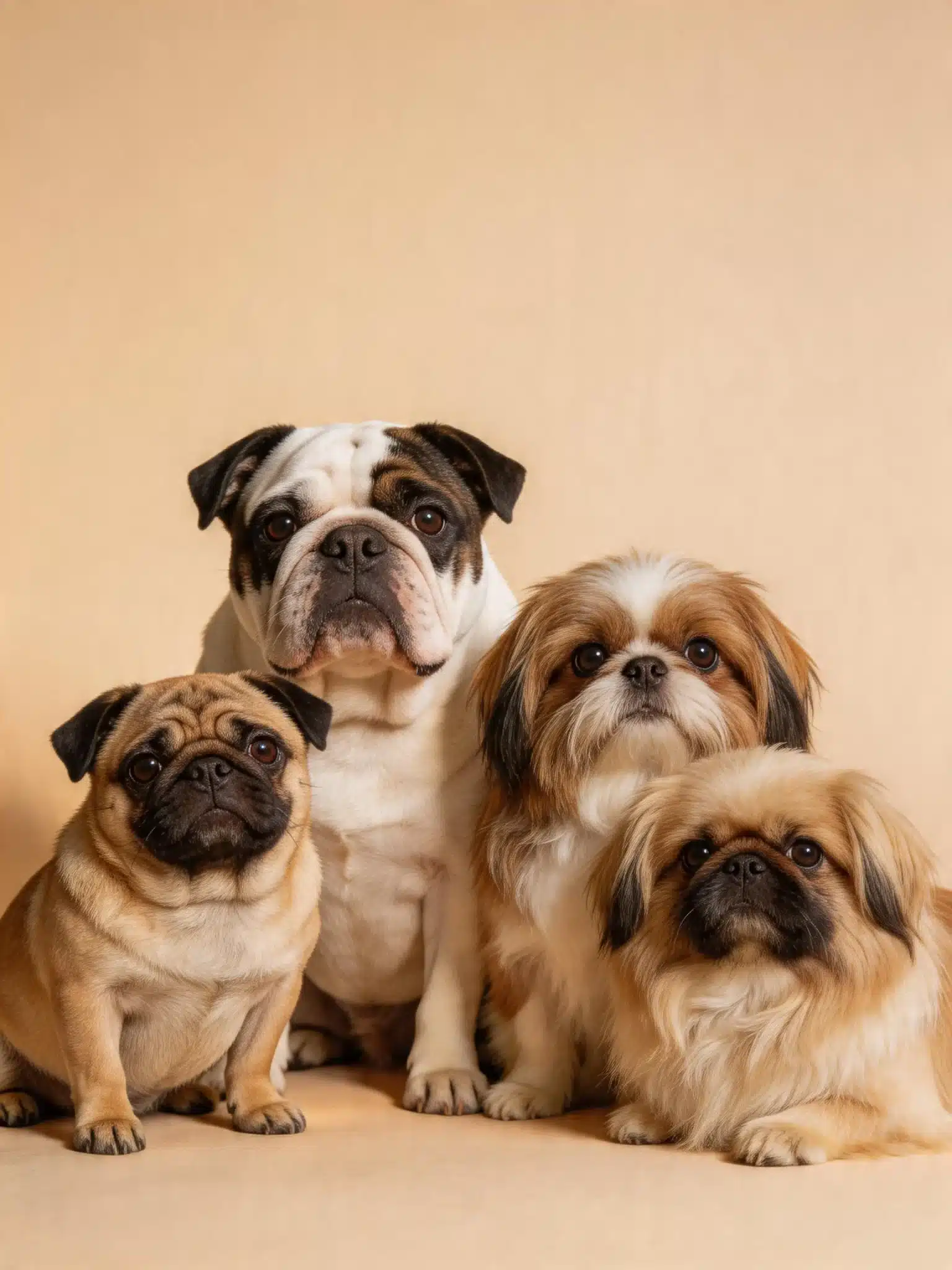
Some dogs get dark spots more often because of how their faces are built. Short noses, prominent eyes, and dense facial hair all make tear overflow more likely.
Breeds commonly affected include Maltese, Shih Tzus, Pekingese, Pugs, Bulldogs, and Bichon Frises. Light coats show staining more clearly, but dark-coated dogs can still develop skin changes underneath the hair.
Flat-Faced Breeds
Flat-faced dogs often have shallow eye sockets and nasal folds that trap moisture. Tears can collect in the wrinkles, and damp skin in those folds can become irritated or infected.
What we have found works best for these breeds is frequent wiping and wrinkle checks. Lola, an 18-month-old French Bulldog, improved after her owner cleaned her facial folds twice daily with vet-approved wipes.
Long Facial Hair
Hair that points toward the eye can wick tears outward and keep the area wet. It can also poke the eye and trigger more tearing, which creates a cycle.
A careful trim by a professional groomer often helps more than owners expect. If your dog resists face handling, ask your vet or groomer to show you the safest approach.
Age And Skin Pigment Changes
Older dogs sometimes develop darker skin under the eyes after years of mild inflammation. Puppies can also show temporary staining while adult facial structure and tear drainage continue to develop.
As the Breed, Face Shape, And Coat Color Matter section showed, structure plays a big role. Still, new pigment changes in a senior dog deserve a check if they appear fast or come with swelling.
When Dark Spots Signal A Health Problem
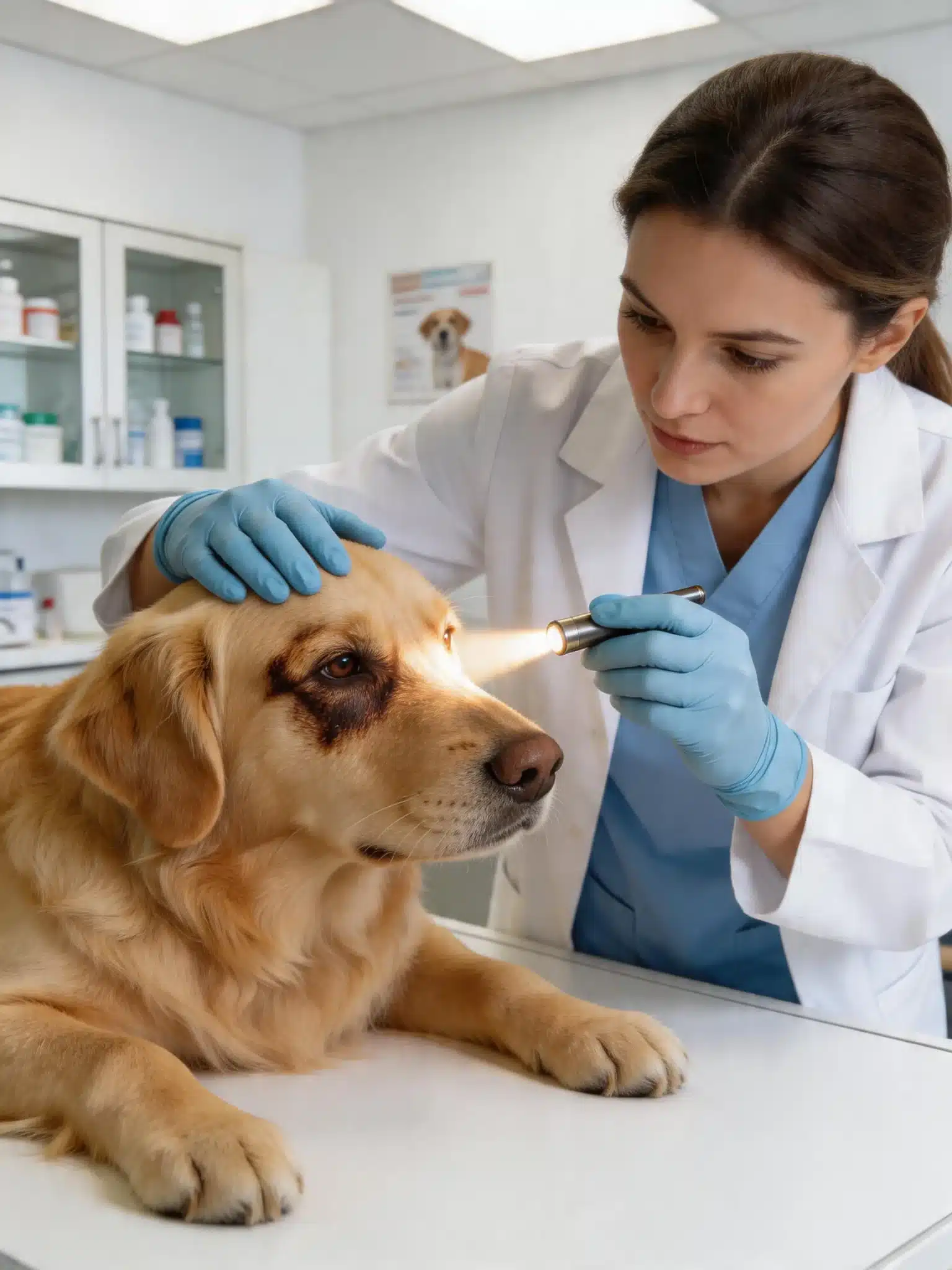
Not every dark spot means danger, but some signs should move you toward a vet visit. The key is whether your dog seems comfortable and whether the marks change quickly.
Many of our readers tell us they waited because the spots looked minor. Then they noticed blinking, rubbing, or yellow discharge, which pointed to a deeper eye issue.
Warning Signs To Watch
- Squinting or keeping one eye closed
- Redness inside the eye or eyelids
- Yellow, green, or thick discharge
- Cloudiness on the eye surface
- Swelling, odor, or open sores
- Sudden darkening on one side only
One-sided symptoms often deserve faster attention. Milo, a 9-year-old Cockapoo, had staining under one eye for two days, and his vet found a small scratch that needed medication.
Could It Be Skin Disease
Sometimes the dark area spreads beyond the tear line and feels thick, greasy, or itchy. That pattern can suggest yeast, bacterial skin infection, or chronic dermatitis rather than simple tear staining alone.
If your dog develops sore, moist, or crusty patches elsewhere, compare them with these signs in this guide on skin problems owners miss. The overlap can help you describe symptoms more clearly to your vet.
How To Clean And Manage Dark Spots Safely
Gentle daily care can reduce new staining and keep the skin healthier. The goal is to keep the area clean and dry without irritating the eye itself.
Do not use peroxide, harsh soaps, or homemade mixes near the eyes. Products that sting can increase tearing, which makes the problem worse.
Simple Daily Care That Helps
- Wash your hands before touching your dog’s face. Use a soft cotton pad or clean gauze.
- Moisten the pad with warm water or a vet-approved eye cleanser. Wipe away from the eye, not into it.
- Dry the fur gently after cleaning. Damp hair traps moisture and encourages darker staining.
- Keep facial hair trimmed if it touches the eye. Ask a groomer for a round-face safety trim.
- Check for redness, odor, or discharge each day. Track changes with weekly photos.
For routine wiping, some owners like dog tear stain wipes. Choose fragrance-free options made for pets, and stop if your dog shows redness or discomfort.
Supportive Products That May Help
A stainless steel water bowl sometimes helps dogs with staining because it stays cleaner than plastic. Fresh filtered water may also help if your dog drinks poorly or has mild mineral buildup concerns.
We have seen this consistently with small indoor dogs that slobber into shallow bowls. Peanut, a 5-year-old Bichon, had less face wetness after switching to a stainless steel dog water bowl and getting daily eye wipes.
What Your Vet May Check And Treat
If home care does not help, your vet will look for the cause of the tearing or pigment change. That exam usually focuses on the eyes, eyelids, skin, and facial structure.
Your vet may use fluorescein stain to check for corneal scratches and a Schirmer tear test to measure tear production. They may also inspect eyelash direction, eyelid shape, and tear duct openings.
Common Veterinary Treatments
- Eye drops for infection or inflammation
- Allergy treatment for chronic watering
- Tear duct flushing if drainage blocks
- Hair trimming around the eyes
- Wrinkle care for flat-faced breeds
- Skin treatment for yeast or bacteria
Dr. Marty Becker, a well-known veterinarian and author, often reminds owners that eyes should stay clear and comfortable, not run constantly. That simple rule helps separate normal face staining from a problem that deserves treatment.
Some owners ask about supplements or stain removers. Use them only after your vet rules out medical causes, and consider a gentle dog eye cleanser before stronger options.
Expert Insights On Tear Staining And Eye Health
The American College of Veterinary Ophthalmologists explains that excessive tearing, called epiphora, often comes from irritation or drainage problems. That expert framing matters because it points owners toward the cause, not just the stain.
Dr. Debbie Stoewen of the American Veterinary Medical Association has written that squinting, discharge, and redness call for prompt veterinary attention. Eye issues can worsen fast, so waiting several days can make treatment harder.
In our experience, the biggest mistake owners make is treating every dark spot like a grooming issue. Sadie, a 3-year-old Poodle mix, looked “stained,” but her exam showed seasonal allergies and mild eyelid inflammation.
Building on what we covered about warning signs, expert advice stays consistent on one point. Chronic tearing is a symptom, not a diagnosis.
Frequently Asked Questions About Why Do Dogs Get Dark Spots Under Their Eyes
Are Dark Spots Under My Dog’s Eyes Always Tear Stains
No. Some are tear stains, while others come from skin pigment, yeast, irritation, or infection.
Do Dark Spots Mean My Dog Has An Eye Infection
Not always. Infection becomes more likely if you also see redness, thick discharge, swelling, or squinting.
Can I Remove Dog Tear Stains Permanently
You can often reduce them, but permanent removal depends on fixing the cause. Dogs with face shape issues or allergies may need ongoing care.
Why Does My White Dog Show More Dark Marks
Light fur makes tear pigments easier to see. The same moisture can affect darker dogs, but the color blends in more.
Should I Worry If Only One Eye Has A Dark Spot
Yes, especially if the change appeared suddenly. One-sided staining can point to a blocked duct, scratch, foreign body, or localized irritation.
Can Other Pet Parasite Problems Cause Eye Staining
Not directly in most cases, but overall skin health still matters. If you keep small pets too, these guides on whether chinchillas get fleas from dogs, whether chinchillas get fleas, whether chinchillas get fleas from cats, and whether chinchillas get mites may help you rule out other household skin concerns.
Conclusion
Dark spots under your dog’s eyes usually come from tear staining, irritation, allergies, or skin changes. The biggest takeaway is to watch your dog’s comfort, not just the color of the fur.
Start today by gently cleaning the area, trimming any hair that touches the eye, and taking a photo for comparison. If you see redness, squinting, or one-sided changes, book a vet visit and trust your instincts.