If your cat has just been diagnosed, food suddenly feels like medicine. What Is The Best Diet For A Cat With Hyperthyroidism? is a smart question, because the right diet can support treatment, protect muscle, and help your cat feel better day to day.
Hyperthyroid cats often eat more but keep losing weight. That mismatch is why diet matters, even when medication, radioactive iodine, or surgery are part of the plan.
If you are also settling into life with a newly diagnosed cat, lighter reads like best Japanese cat names can wait until feeding is sorted.
What is the best diet for a cat with hyperthyroidism?
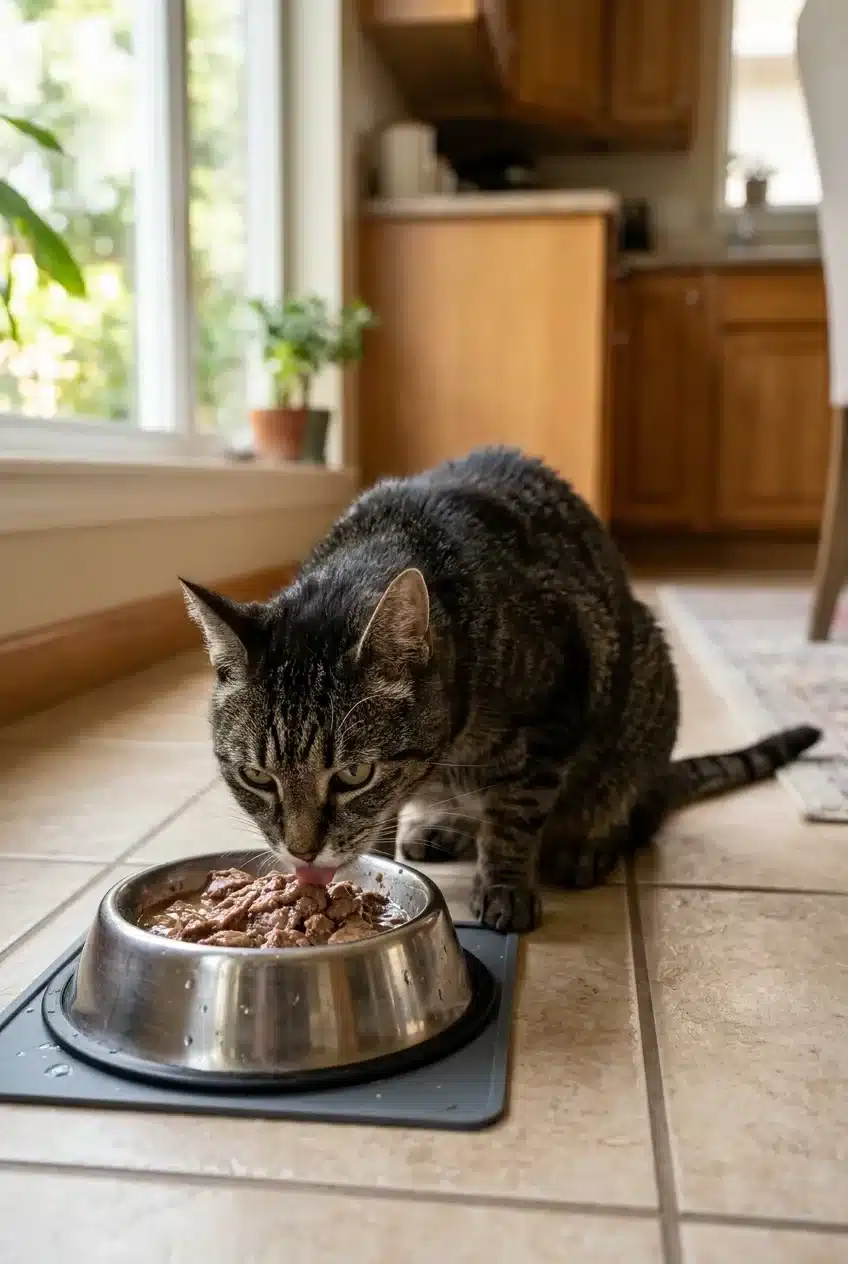
The best diet for a cat with hyperthyroidism is usually a high-protein, highly digestible, calorie-dense food that helps maintain muscle and body weight, unless your veterinarian prescribes a strict iodine-restricted diet. The best choice depends on whether your cat is being treated with methimazole, radioactive iodine, surgery, or diet alone.
- Most hyperthyroid cats need more calories, not less.
- High protein helps reduce muscle loss.
- Iodine-restricted food works only if fed exclusively.
- Wet food can help hydration and kidney monitoring.
- Diet should match the treatment plan.
BEFORE YOU SCROLL PAST
Cat Owners Also Read:
👉 Why Does My Cat Bite My Kittens Neck
👉 Why Does My Cat Pee On The Carpet
👉 Cute White Cats Who Hide Their Real Intentions Behind Their Beautiful Looks
Get FREE Guide Every Week
Join 10,000+ dog & cat owners. Vet-approved advice every week
🔒 No spam. Unsubscribe anytime.
Why does diet matter so much in feline hyperthyroidism?
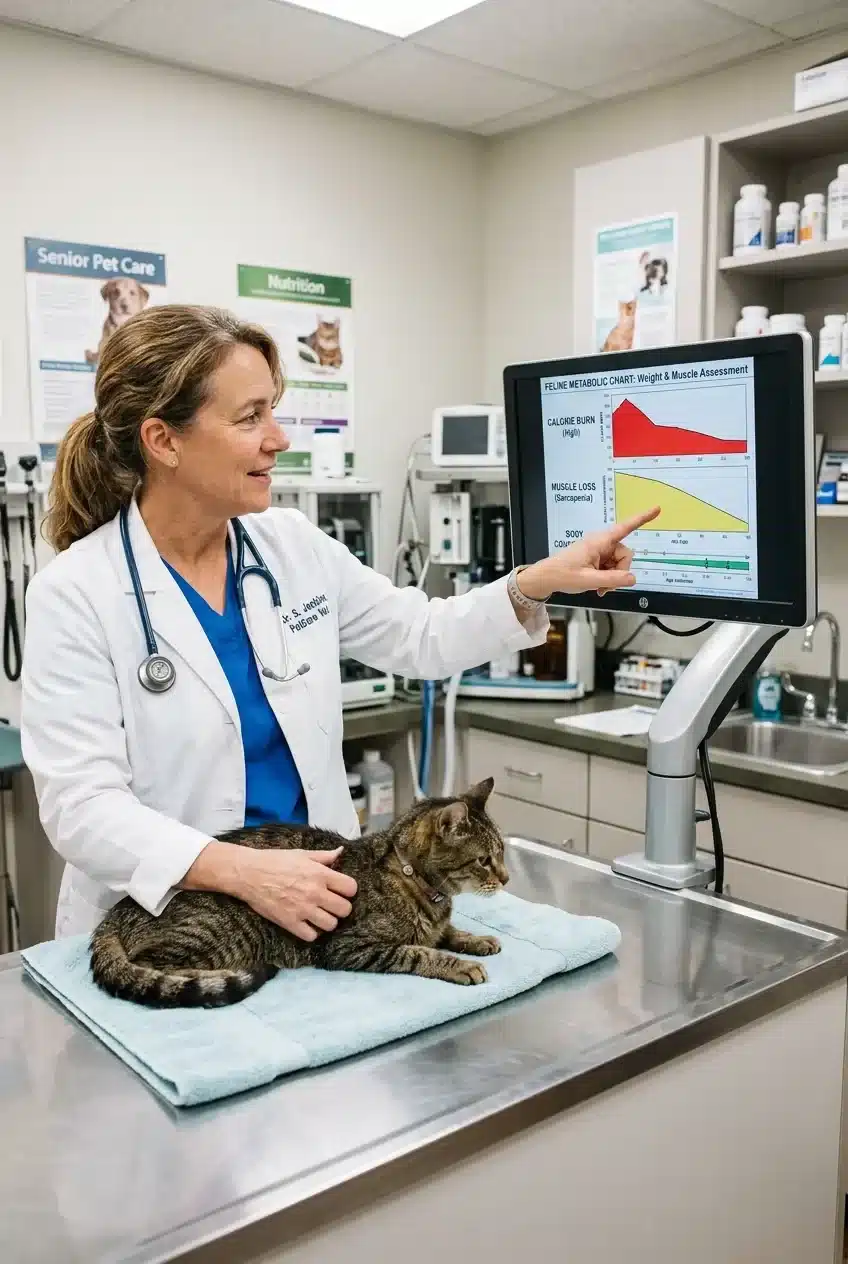
Diet matters because hyperthyroidism speeds up metabolism, so many cats burn calories and muscle faster than they can replace them. That is why a cat can seem ravenous yet still lose weight.
The 2016 American Association of Feline Practitioners guidelines on feline hyperthyroidism note that affected cats commonly lose weight and muscle mass despite polyphagia. Those same guidelines also stress screening for kidney disease, because treatment can change how kidney function appears.
Food cannot replace diagnosis and monitoring, but it can strongly affect weight, muscle, hydration, and quality of life.
What the disease does to your cat’s body
Too much thyroid hormone raises energy use in nearly every tissue. Cats often become thin, restless, thirsty, and hungrier than usual.
Muscle wasting is a major issue. A 2013 review in the Journal of Feline Medicine and Surgery by Mark E. Peterson, DVM, explains that weight loss and muscle loss are classic findings in feline hyperthyroidism.
- Higher metabolism increases calorie needs.
- Muscle breakdown raises protein needs.
- Vomiting or diarrhea can reduce nutrient absorption.
- Older cats may have dental disease that limits eating.
Why treatment changes the diet question
A cat treated with methimazole or radioactive iodine usually does not need an iodine-restricted diet. That cat often benefits more from a meat-based diet that supports body condition.
A cat managed with diet alone is different. In that case, the food must keep iodine intake very low, and even small extras can interfere with control.
If your cat needs easier meals or elevated dishes while appetite is poor, simple feeding tools like an elevated cat bowl may help some seniors eat more comfortably.
“An iodine-restricted diet should be fed only if no other food sources are available to the cat.” — Guidance consistent with Hill’s Prescription Diet y/d feeding instructions and AAFP recommendations
Should cats with hyperthyroidism eat high-protein food or low-iodine food?
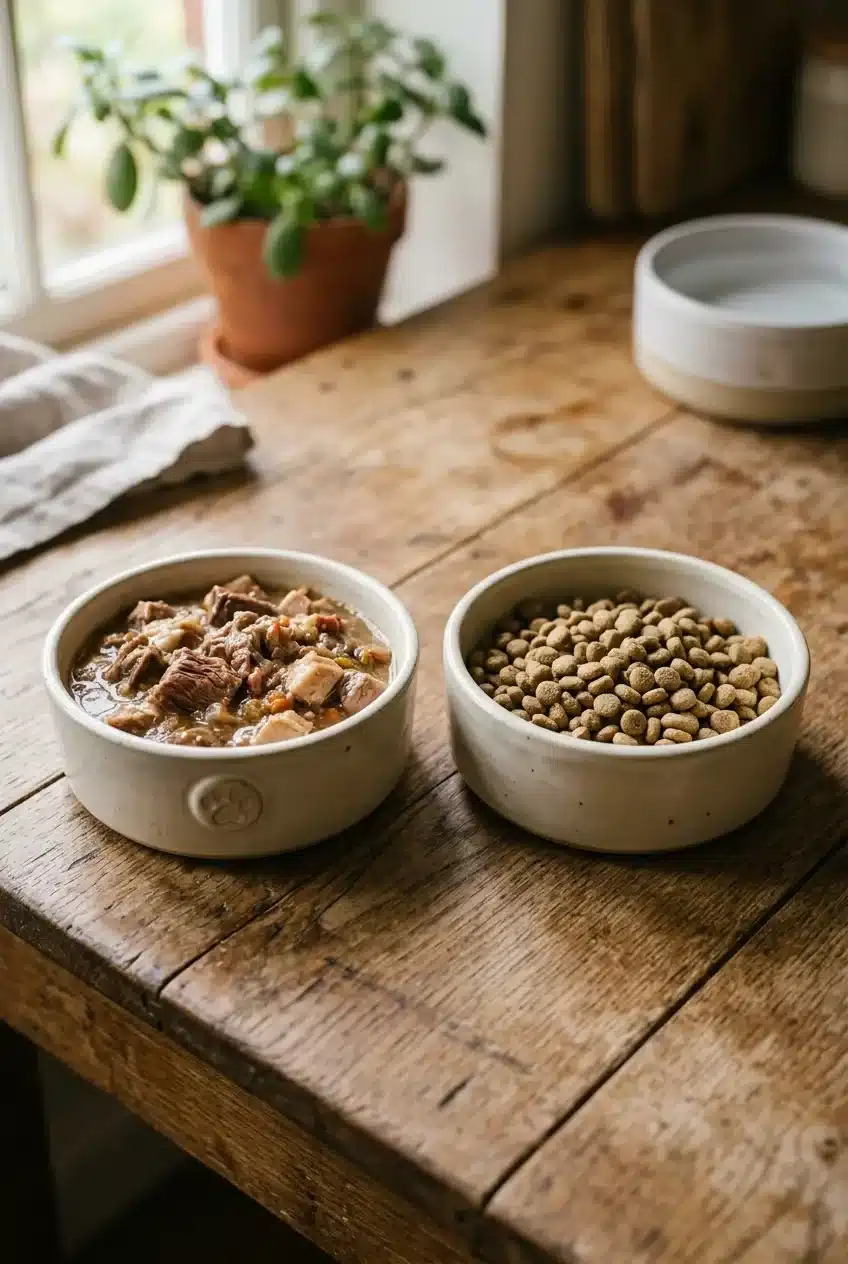
Cats with hyperthyroidism usually do best on high-protein food if they are receiving standard treatment, while low-iodine food is mainly for cats managed by diet alone. The best answer depends on whether the goal is supporting recovery or controlling thyroid hormone through food restriction.
| Diet approach | Best fit | Main caution |
|---|---|---|
| High-protein, calorie-dense diet | Cats on methimazole, radioactive iodine, or post-surgery | May need adjustment if kidney disease is present |
| Iodine-restricted prescription diet | Cats managed with diet as primary therapy | Must be fed exclusively |
| Standard senior or weight-control food | Rarely ideal without vet guidance | Often too low in calories or protein |
When high protein is usually the better answer
Cats are obligate carnivores, and older hyperthyroid cats are especially prone to losing lean body mass. Mark Peterson has written that higher protein intake can help preserve muscle in older cats, especially once thyroid levels are controlled.
Many clinicians favor canned foods with strong animal-protein content for treated cats. Wet food can also increase water intake, which helps in seniors where kidney status is being watched closely.
- Choose animal protein high on the ingredient list.
- Avoid weight-loss formulas unless your vet says otherwise.
- Favor foods your cat will actually eat consistently.
- Recheck weight and muscle condition every few weeks.
When low iodine makes sense
Prescription iodine-restricted diets are designed to limit the thyroid gland’s raw material for making hormone. Hill’s Prescription Diet y/d is the best-known option, and published studies have shown it can reduce serum thyroxine in many cats when fed exclusively.
The word exclusively matters. Treats, table scraps, hunting, flavored medications, and even another pet’s food can raise iodine intake and make the plan fail.
If your cat is picky about canned textures, a strong-smelling topper such as freeze-dried cat treats is only appropriate if your veterinarian confirms it will not disrupt an iodine-restricted plan.
Low-iodine food is not “better” in general. It is better only when it matches the treatment strategy and is fed with zero cheating.
What nutrients matter most for a cat with hyperthyroidism?
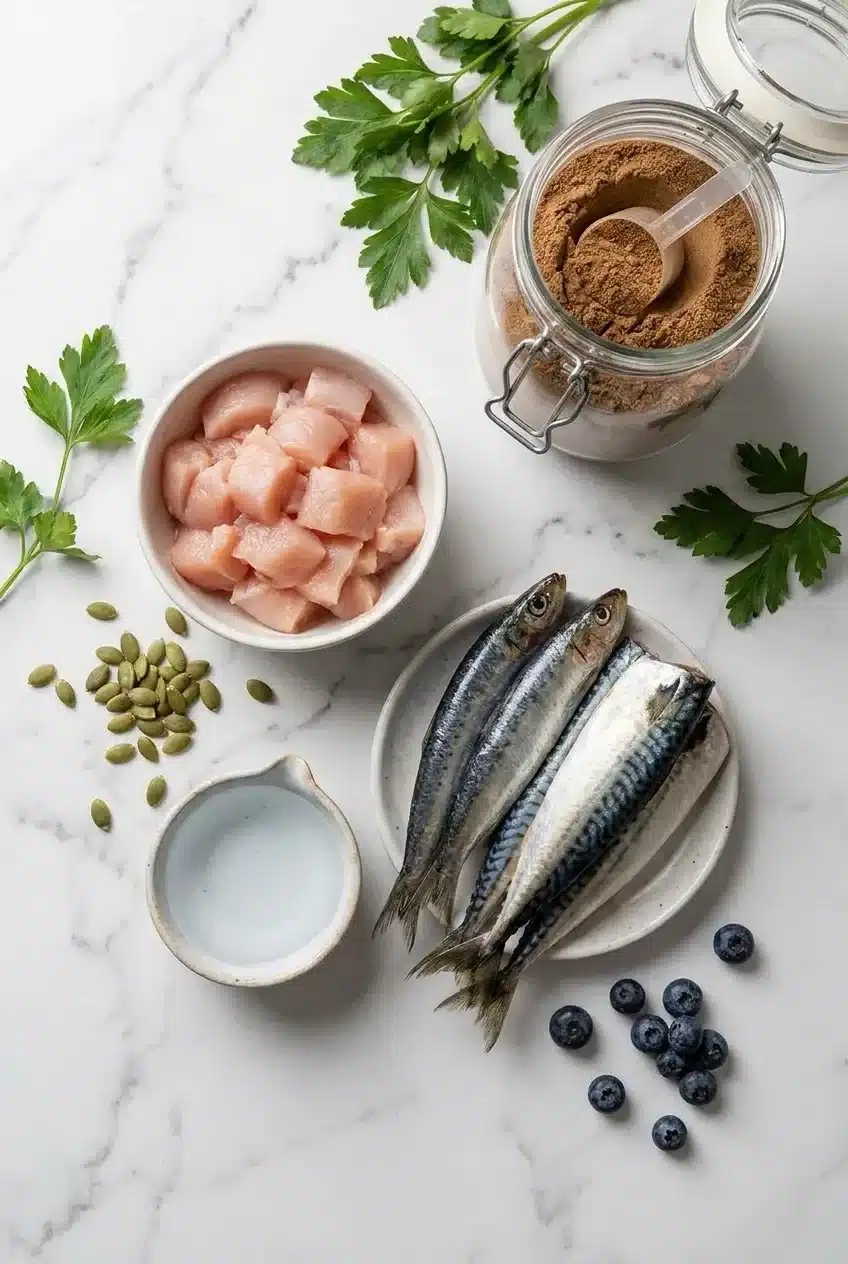
The most helpful nutrients are protein, adequate calories, moisture, and a balanced mineral profile matched to any other disease your cat has. There is no single over-the-counter “hyperthyroid formula” that fits every cat.
The WSAVA Global Nutrition Toolkit advises choosing foods made by companies with strong quality control and veterinary nutrition expertise. That matters more than trendy claims on the front of the label.
- Protein supports muscle maintenance.
- Calories help reverse weight loss.
- Moisture supports hydration.
- Phosphorus level matters if kidney disease is present.
- Palatability matters because sick cats may eat poorly.
Protein and calories
Hyperthyroid cats often need energy-dense meals because they tire easily and may not eat large portions at once. Small, frequent meals can work better than two big feedings.
Ask your veterinarian to track both body weight and body condition score. A heavier cat is not always a healthier cat if muscle loss is still happening.
Moisture and kidney considerations
Kidney disease and hyperthyroidism commonly overlap in older cats. After thyroid treatment starts, hidden kidney disease may become easier to detect because blood flow and filtration rates change.
That is one reason canned food is often favored. It can help hydration and makes it easier to mix medication for some cats, though methimazole should only be handled as directed by your veterinarian.
What about supplements?
Supplements are not first-line treatment for hyperthyroidism. Be careful with seaweed, kelp, or thyroid-support products, because they may contain iodine or other ingredients that conflict with treatment goals.
If your veterinarian wants extra calories, a recovery food or nutrient-dense canned diet may be safer than random add-ons. For assisted feeding phases, a cat feeding syringe can be useful only under veterinary instruction.
How do you choose the best food if your cat also has kidney disease or other problems?
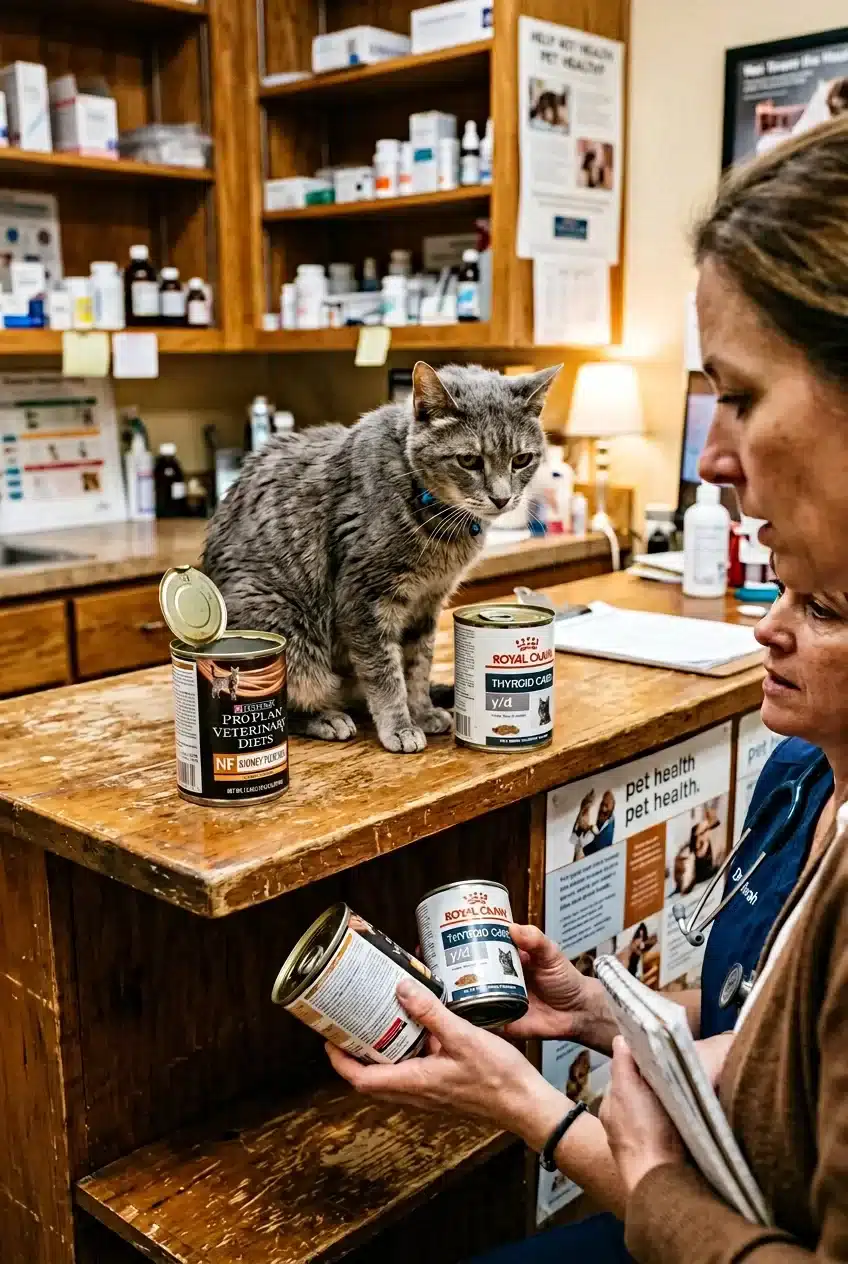
The best food for a hyperthyroid cat with another illness is the one that addresses the bigger immediate risk while still supporting weight and appetite. In many older cats, that means balancing thyroid control with kidney support instead of chasing a perfect label.
This is where lab work matters more than internet advice. Your veterinarian may prioritize calories and protein first, then make gradual adjustments once thyroid levels stabilize.
| Situation | Diet priority | What to ask your vet |
|---|---|---|
| Hyperthyroidism only | High protein, calorie-dense, very palatable | Wet or dry, and how many calories daily? |
| Hyperthyroidism plus kidney disease | Balance appetite, protein needs, and phosphorus control | How low should phosphorus be for this stage? |
| Diet-only thyroid management | Strict iodine restriction | Which treats, meds, or foods are not allowed? |
| Poor appetite or nausea | Palatability and hydration first | Should appetite or anti-nausea medication be added? |
Kidney disease changes the math
Kidney diets often lower phosphorus and may moderate protein, while hyperthyroid cats usually need help holding onto muscle. That tension is why many cats need a custom plan rather than a one-size-fits-all answer.
The AAFP guidelines recommend reassessing kidney values after treatment begins. A food choice that made sense before thyroid control may need to change later.
- Do not switch to a renal diet without lab guidance.
- Do not assume “senior” food is kidney-safe.
- Ask about phosphorus, not just crude protein.
- Recheck bloodwork after treatment changes.
Diabetes, heart disease, and appetite loss
Some hyperthyroid cats also have diabetes, hypertension, or heart changes. In those cases, the feeding plan may need tighter meal timing or sodium discussion, but appetite still stays near the top of the list.
A cat that refuses the ideal food may need a second-best option it will actually eat. Short-term intake often matters more than label perfection when weight loss is active.
For other pet-care reads in the same home, topics like best conditioner for poodles or what are the best toys for bird cages are useful, but they should not distract from regular recheck appointments.
How do you switch a hyperthyroid cat to a new diet safely?
The safest way to change a hyperthyroid cat’s food is to transition slowly, track appetite and weight, and stop if the cat eats dramatically less. Older cats can decline fast when they do not eat enough.
- Confirm the goal. Ask whether the new food is for thyroid control, weight support, kidney support, or easier medication use.
- Start small. Mix about 25% new food with 75% current food for two to three days if your veterinarian agrees.
- Increase gradually. Move to 50%, then 75%, watching for vomiting, diarrhea, or food refusal.
- Track intake. Success looks like your cat finishing normal portions and maintaining interest at mealtime.
- Weigh weekly. Success looks like stable or improving weight and no visible increase in muscle loss.
- Recheck labs. If the diet is part of treatment, your veterinarian needs bloodwork to confirm it is working.
If your cat is on an iodine-restricted prescription diet, do not “transition” with treats and extras forever. The diet only works when it becomes exclusive.
Some cats accept warmed wet food more easily because smell increases as food warms. You can also try flatter plates for cats with whisker sensitivity or dental discomfort.
What feeding mistakes make hyperthyroidism harder to manage?
The biggest feeding mistakes are underfeeding calories, choosing low-protein foods without a reason, and mixing non-approved foods into an iodine-restricted plan. Small daily habits can undo good medical treatment.
- Picking weight-control food: It often lacks the calories a hyperthyroid cat needs. Fix: Ask for a target calorie range.
- Ignoring muscle loss: A cat may gain fat but keep losing lean tissue. Fix: Have your vet assess body and muscle condition.
- Cheating on low-iodine diets: Treats and shared food can stop the diet from working. Fix: Feed the prescription diet only.
- Changing food too fast: Sudden switches can trigger refusal or stomach upset. Fix: Transition over several days when possible.
- Skipping rechecks: Diet needs can change after thyroid control improves. Fix: Follow the bloodwork schedule your vet sets.
For evidence-based guidance, see the AAFP hyperthyroidism guidelines and the WSAVA Global Nutrition Guidelines.
Frequently Asked Questions About What Is The Best Diet For A Cat With Hyperthyroidism?
Can a cat with hyperthyroidism eat regular cat food?
Yes, a cat with hyperthyroidism can eat regular cat food if the cat is being treated with methimazole, surgery, or radioactive iodine and the food fits its calorie and protein needs. Regular food is not appropriate when an iodine-restricted diet is the main therapy.
Is wet food better than dry food for hyperthyroid cats?
Wet food is often better than dry food for hyperthyroid cats because it adds moisture and is usually easier to eat for older cats. Dry food can still work if your cat eats it well and your veterinarian approves the nutrient profile.
Should I give my hyperthyroid cat grain-free food?
Grain-free food is not automatically better for a hyperthyroid cat. The more useful question is whether the food provides enough animal protein, calories, and palatability without conflicting with other health needs.
Can food alone treat feline hyperthyroidism?
Yes, food alone can treat feline hyperthyroidism only when a prescription iodine-restricted diet is used exactly as directed. Food alone does not mean any special over-the-counter diet will work.
What should I do if my hyperthyroid cat is always hungry?
If your hyperthyroid cat is always hungry, ask your veterinarian to review thyroid control, calorie intake, and body weight trend. Constant hunger can mean the disease is still active or that your cat is not getting enough usable calories.
How often should I feed a cat with hyperthyroidism?
A cat with hyperthyroidism often does well with smaller, more frequent meals because energy needs are higher and some cats feel nauseated with big meals. Many owners find three to six small meals easier than two large ones.
The Bottom Line
The best diet for a cat with hyperthyroidism is the one that fits the treatment plan and helps your cat keep muscle, weight, and appetite. For most treated cats, that means a high-protein, palatable food; for diet-only management, it means a strict iodine-restricted prescription diet.
Your best next step today is simple: ask your veterinarian for a clear feeding goal in writing, including calories per day and whether any treats are allowed. Once food is matched to treatment, your cat has a much better chance of feeling like itself again.
And when feeding time is settled, you can get back to lighter pet topics like best bird toys for budgies, what perches are best for budgies, or best wooden toys for parrots.