Most male cats stop yowling and acting out within two to four weeks after neutering. For some cats, the behavioral changes happen faster — sometimes within days.
If your newly neutered cat is still howling at night or spraying around the house, you are not alone. Understanding what drives the timeline helps you set realistic expectations and know when to call your vet.
How Long After Neutering Does a Male Cat Stop Yowling and Acting Out?
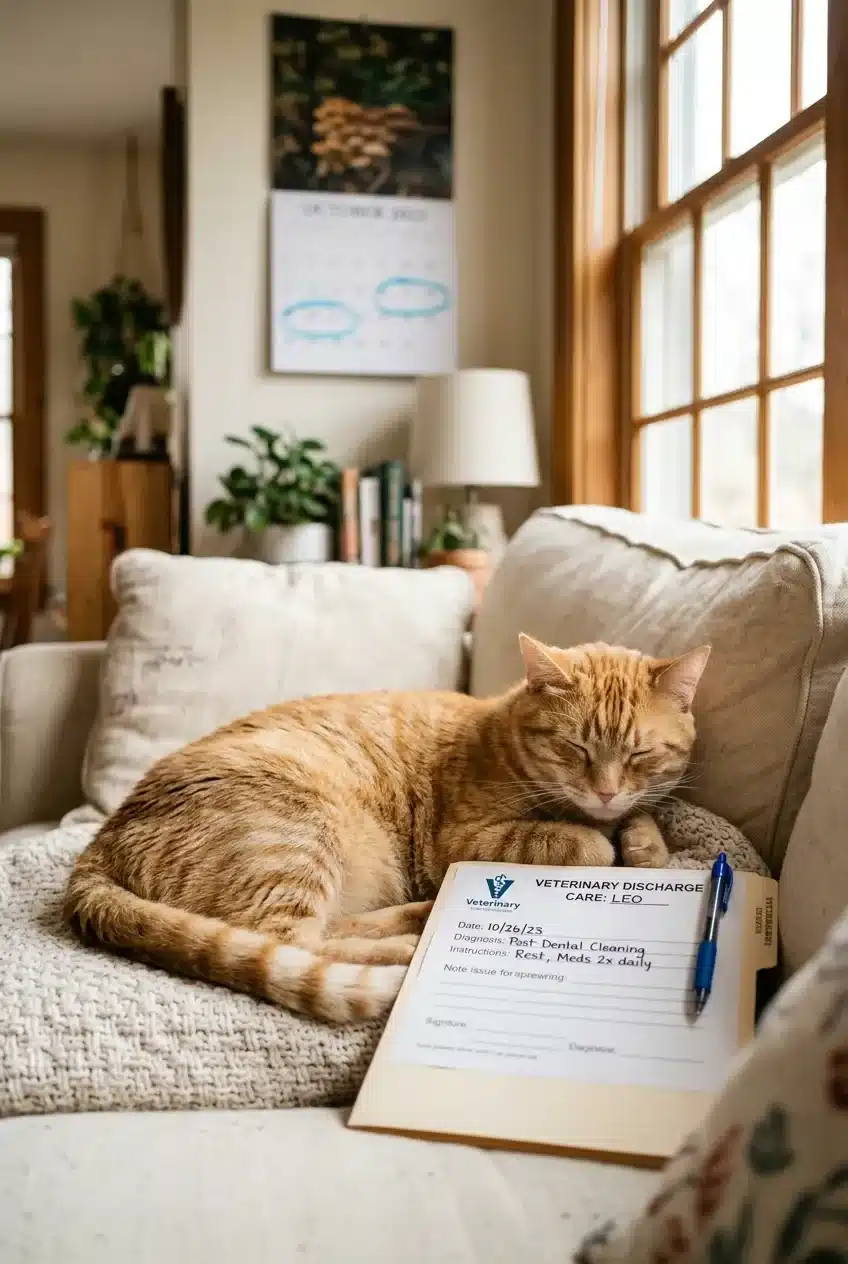
Male cats typically stop yowling, roaming, and spraying within two to six weeks after neutering as testosterone levels drop. Most owners notice a significant behavioral shift by the four-week mark, though cats neutered later in life may take longer to fully settle.
- First behavioral changes can appear within 24–72 hours post-surgery.
- Testosterone clears the bloodstream gradually — not overnight.
- Most cats reach a calmer baseline by weeks two to four.
- Cats neutered after 12 months may retain some learned behaviors longer.
- Full hormonal stabilization can take up to six weeks in some males.
- A small number of cats show persistent behaviors beyond six weeks — always worth a vet check.
Why Male Cats Yowl and Act Out Before Neutering

The yowling, spraying, and restless pacing of an intact male cat are driven almost entirely by testosterone. The testes produce testosterone continuously once a cat reaches sexual maturity — typically between five and eight months of age, according to the American Veterinary Medical Association (AVMA).
Testosterone signals the brain to seek mating opportunities. That produces a specific set of behaviors that are hard to ignore.
- Yowling: Loud, repetitive calls designed to attract females in heat.
- Urine spraying: Territorial marking using strong-smelling, hormone-laced urine.
- Aggression: Fighting with other males to establish dominance.
- Roaming: Trying to escape the home to find mates.
- Restlessness: Pacing, inability to settle, disrupted sleep patterns.
These behaviors are not personality flaws. They are normal hormonal responses in an intact male cat.
Neutering removes the testosterone source — which is why it works so reliably.
The Post-Neutering Timeline: What to Expect Week by Week
Get FREE Guide Every Week
Join 10,000+ dog & cat owners. Vet-approved advice every week
🔒 No spam. Unsubscribe anytime.
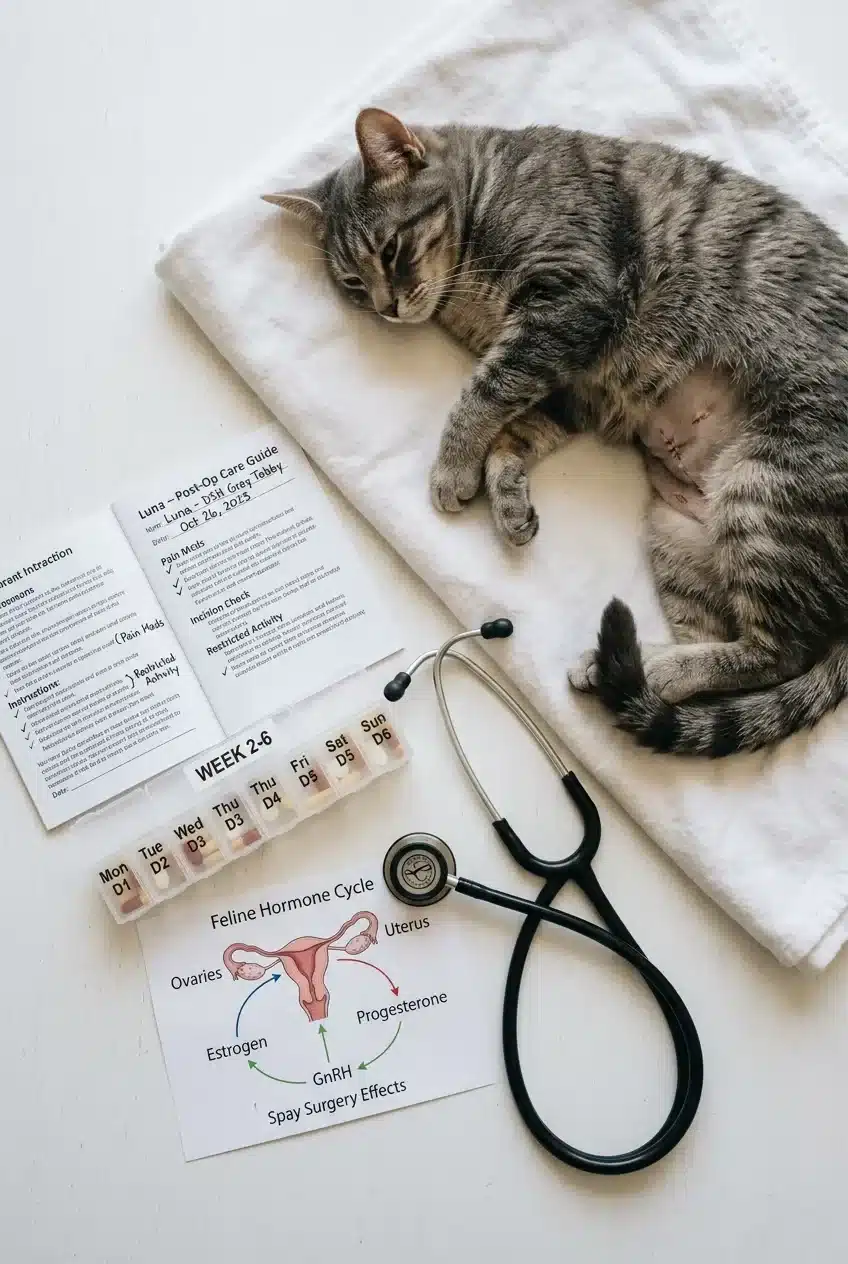
After neutering, testosterone does not vanish instantly. The hormone was already circulating in your cat’s blood and tissues before the surgery, so the behavioral wind-down follows the rate at which testosterone clears the body.
Days 1–3: Recovery Mode
Your cat will focus on healing rather than hormonal behaviors. Expect drowsiness, reduced appetite, and soreness around the incision. Yowling at this stage is more likely pain-related than hormonal.
Keep activity limited and follow your vet’s post-operative care instructions closely. Using an adjustable cat recovery e-collar helps prevent licking the wound site.
BEFORE YOU SCROLL PAST
Cat Owners Also Read:
👉 Why Does My Cat Bite My Kittens Neck
👉 Why Does My Cat Pee On The Carpet
👉 Cute White Cats Who Hide Their Real Intentions Behind Their Beautiful Looks
Week 1: Early Hormonal Drop
Testosterone levels begin declining noticeably in the first week. Some owners report a quieter, calmer cat by day five to seven. Spraying may already decrease in frequency.
Not every cat shows visible changes this early — do not assume the surgery failed if behaviors continue through week one.
Weeks 2–4: The Main Behavioral Shift
This window is when most owners see the biggest change. Yowling becomes less frequent, nighttime restlessness fades, and spraying often stops entirely. The AVMA notes that neutering eliminates spraying in approximately 85% of male cats.
Weeks two to four are the core behavioral transition period for most neutered male cats.
Weeks 4–6: Full Stabilization
By six weeks, testosterone is effectively cleared in most cats. Any remaining behavioral issues at this point are likely learned habits rather than hormonal drives — a meaningful distinction for treatment.
Factors That Affect How Quickly Behavior Changes
The two-to-six-week window is a general range, not a guarantee. Several factors shift where your cat falls on that timeline.
| Factor | Effect on Timeline |
|---|---|
| Age at neutering | Earlier neutering = faster behavioral resolution |
| Time spent as intact male | Longer intact period = more entrenched learned behaviors |
| Exposure to females in heat | Recent exposure can extend hormonal activation |
| Individual hormonal levels | Some cats naturally produce more testosterone |
| Stress in the environment | High-stress homes may prolong acting out |
Cats neutered before five months of age — often called “early neuter” or pediatric neuter — tend to show the smoothest behavioral transitions. The American Association of Feline Practitioners (AAFP) supports early neutering as safe and effective for kittens as young as eight weeks under appropriate veterinary supervision.
If your cat was already marking furniture before neutering, be aware that removing cat urine from carpet and furniture thoroughly is essential — residual scent can trigger repeat marking even after hormones drop.
When Behavior Continues Beyond Six Weeks
Persistent yowling or spraying past the six-week mark does not necessarily mean something went wrong. There are several explainable causes worth ruling out.
Learned Behaviors
If a cat spent years as an intact male, some behaviors become habits independent of hormones. Territorial spraying, for example, can become a conditioned response to stress even without testosterone driving it.
Working with a veterinary behaviorist can help break these patterns. Feliway-type cat calming pheromone diffusers are a commonly recommended first-line tool for stress-related spraying.
Retained Testicular Tissue
In rare cases, a condition called cryptorchidism — where one or both testes were undescended and not fully removed — leaves hormone-producing tissue in place. This is a medical issue requiring veterinary assessment.
If your cat’s behaviors show zero improvement by week four, ask your vet about a testosterone blood test to rule this out.
Underlying Medical Causes
Excessive vocalization can also signal pain, cognitive changes, or hyperthyroidism — none of which are resolved by neutering. Older cats that yowl persistently after surgery should have a full health check.
Urinary issues can also contribute to yowling and restlessness. If you notice straining in the litter box, review what to do when a male cat is not peeing but acting normal — it can help distinguish behavioral from physical causes.
Any cat still acting out significantly at six weeks post-neuter deserves a vet visit, not just more waiting.
How to Support Your Cat Through the Transition
You can actively reduce stress and speed behavioral improvement during the post-neuter window. These steps work with the hormonal wind-down, not against it.
- Clean all previously marked areas thoroughly. Enzymatic cleaners break down urine proteins that standard cleaners miss. Scent residue is a major trigger for repeat marking — especially on hard floors. Our guide on removing cat pee from wood floors covers the right technique.
- Maintain a consistent daily routine. Feeding, play, and sleep at predictable times lower ambient stress levels significantly.
- Increase structured play sessions. A interactive cat wand toy used for 10–15 minutes twice daily redirects predatory energy that previously fueled roaming behavior.
- Provide vertical space. Cat trees and wall shelves give your cat territory to own without the need to spray-mark it.
- Limit access to windows near other cats. Seeing an intact male outside can restimulate territorial responses, especially in the first few weeks post-neuter.
- Use a pheromone diffuser in core living areas. The AAFP includes synthetic feline facial pheromones in its guidelines for managing stress-related feline behaviors.
Common Mistakes Cat Owners Make After Neutering
- Expecting instant calm: Assuming the cat will be transformed the day after surgery leads to frustration. Give the hormonal timeline space to work — at least two full weeks before drawing conclusions.
- Skipping incision site cleaning: Ignoring wound care increases infection risk, which adds pain-related distress on top of hormonal behavior. Follow your vet’s post-op instructions exactly.
- Punishing marking behavior: Scolding a cat for spraying during the transition period adds stress and can actually prolong acting out. Redirect and clean; never punish.
- Reintroducing multi-cat tension too fast: Rushing the reintroduction of other pets before your cat has settled physically and hormonally can derail recovery and restart territorial behavior.
- Missing a follow-up vet check: If no improvement is visible by week four, a testosterone test or full exam can catch cryptorchidism or other medical causes before they become bigger problems.
For additional reading on feline health and behavior, the American Association of Feline Practitioners (AAFP) publishes free owner-facing guidelines on neutering, feline behavior, and post-operative care.
Frequently Asked Questions About How Long After Neutering Does a Male Cat Stop Yowling and Acting Out
Will my cat stop spraying completely after being neutered?
Neutering stops spraying in approximately 85% of male cats, according to the AVMA. Cats that developed the habit over a long period may continue occasionally due to learned behavior rather than hormones.
My cat was neutered yesterday and is still yowling — is that normal?
Yes, yowling in the first 24–48 hours after neutering is typically pain or anesthesia-related, not hormonal. Contact your vet if it seems severe or if your cat shows signs of distress beyond normal recovery.
Does neutering change a male cat’s personality permanently?
Neutering reduces testosterone-driven behaviors but does not alter your cat’s core personality. Playfulness, affection, and individual temperament remain the same — most owners describe their cat as calmer but still fully themselves.
How old is too old to neuter a male cat for behavioral benefits?
There is no strict upper age limit, but behavioral improvement is more complete when cats are neutered before 12 months. Older cats can still benefit, though learned behaviors may persist and require additional management.
Can a neutered cat still be attracted to a female in heat?
Yes, briefly. Residual testosterone can keep a recently neutered male responsive to a female in heat for up to six weeks. Separate them during this window to avoid stress and unwanted attempts to mate.
What if my neutered cat starts yowling again months later?
Late-onset yowling in a neutered cat is rarely hormonal. Hyperthyroidism, pain, cognitive dysfunction, or hearing loss are more likely causes — a vet exam is the right first step, not behavioral management alone.
The Bottom Line on Post-Neuter Behavior
Most male cats stop yowling and acting out within two to four weeks of neutering, with full behavioral stabilization by six weeks. The earlier the neuter, the smoother the transition — but even older cats see meaningful improvement.
The one concrete action to take today: mark six weeks on your calendar from the surgery date. Track any remaining behaviors week by week. If acting out continues past that date, book a vet appointment — not to second-guess the surgery, but to rule out learned habits, retained tissue, or unrelated medical causes.
Your cat’s calmer chapter is coming. Give the process its full timeline, keep the environment low-stress, and clean every marked surface thoroughly. That combination gives neutering the best chance to fully do its job.