You check the litter box and notice something odd — your male cat hasn’t peed, or at least you can’t find any wet clumps. Yet he’s eating, playing, and purring like nothing is wrong.
A male cat not peeing but acting normal is one of those situations where the calm exterior can mask a serious medical problem. Male cats have a narrow urethra that makes them far more prone to dangerous urinary blockages than females.
This guide covers every likely cause, the warning signs that separate a minor issue from an emergency, and exactly what to do next.
What Does It Mean When a Male Cat Is Not Peeing?
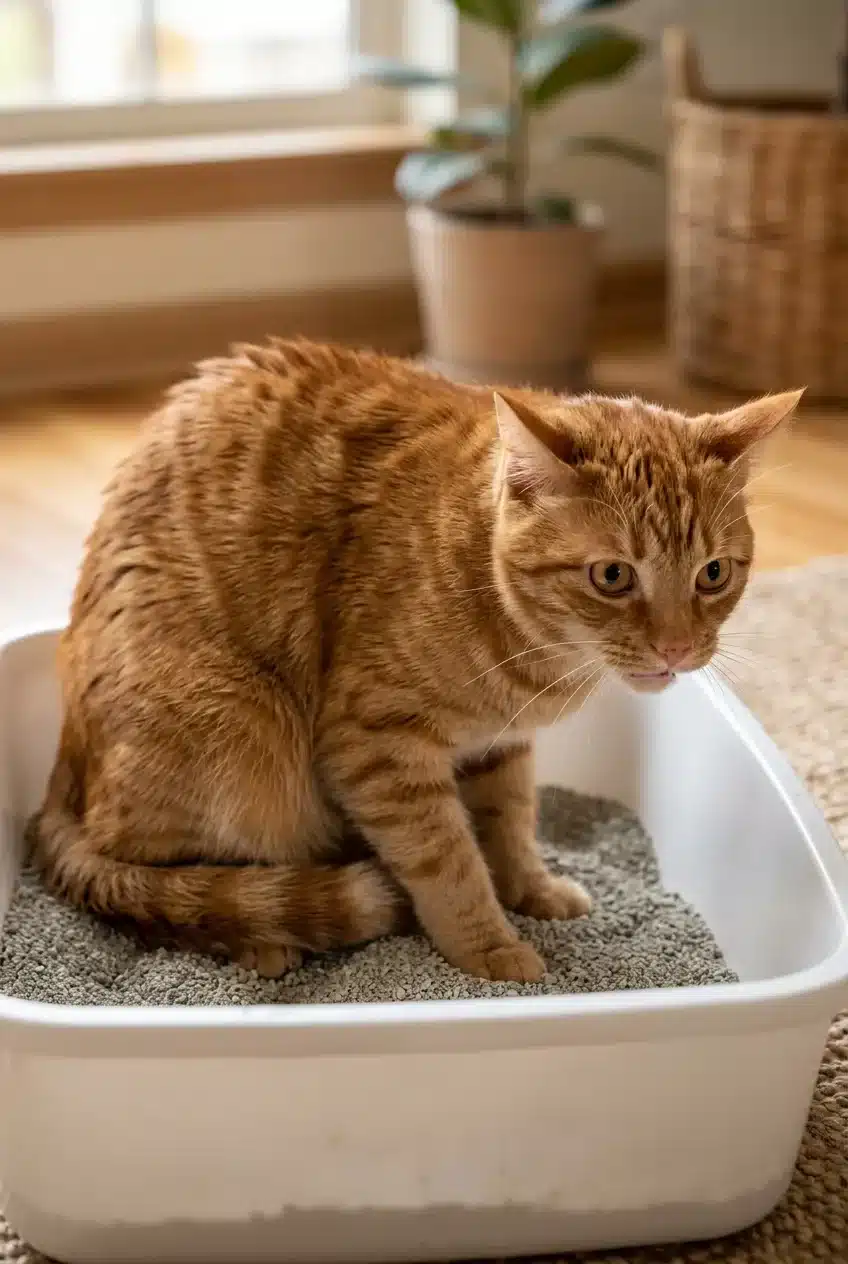
When a male cat is not peeing, it typically means either the bladder is obstructed and urine cannot pass, or the cat is urinating somewhere you haven’t found yet. A full urinary blockage is life-threatening and requires emergency veterinary care, often within 24–48 hours of onset.
- A blocked urethra is the most dangerous cause — urine backs up into the kidneys rapidly.
- Stress or a litter box change can cause temporary urinary suppression in some cats.
- Cats may urinate outside the box, making it seem like they haven’t gone at all.
- Feline idiopathic cystitis (FIC) can cause painful straining with little or no urine output.
- Urinary crystals or stones can partially or fully block urine flow.
- Dehydration reduces urine production, so the litter box looks dry even when the cat is urinating.
If your male cat has not produced any urine in 12–24 hours, treat it as an emergency.
BEFORE YOU SCROLL PAST
Cat Owners Also Read:
👉 Why Does My Cat Bite My Kittens Neck
👉 Why Does My Cat Pee On The Carpet
Get FREE Guide Every Week
Join 10,000+ dog & cat owners. Vet-approved advice every week
🔒 No spam. Unsubscribe anytime.
👉 Cute White Cats Who Hide Their Real Intentions Behind Their Beautiful Looks
Why Male Cats Are at Higher Risk for Urinary Blockages
Male cats are significantly more vulnerable to urethral blockages than females because their urethra is much narrower and longer — roughly 3 times the length of a female’s. This anatomy makes it easy for crystals, mucus plugs, or inflammatory debris to create a full obstruction.
The Biology Behind the Risk
The feline urethra narrows to a point called the penile urethra, which is only about 1–2mm in diameter in male cats. According to the Merck Veterinary Manual, urethral obstruction is almost exclusively a condition of male cats for this anatomical reason.
Neutered males may be at slightly higher risk than intact males because neutering can reduce urethral diameter. However, the benefits of neutering far outweigh this small anatomical consideration.
Common Underlying Triggers
- Struvite or calcium oxalate crystals — form in urine and clump near the urethral opening.
- Mucus plugs — inflammatory material that solidifies and blocks the narrow passage.
- Stress — a recognized trigger for feline idiopathic cystitis, which accounts for roughly 55–65% of lower urinary tract disease cases according to a 2011 study published in the Journal of Veterinary Internal Medicine.
- Dry food diets — lower water intake concentrates urine and promotes crystal formation.
- Obesity — linked to reduced water intake and decreased activity, both risk factors for urinary problems.
If your male cat also shows signs like vomiting alongside the litter box issues, the guide to cat vomiting causes and warning signs can help you assess whether symptoms are connected.
Signs That Separate a Blockage From a Minor Issue
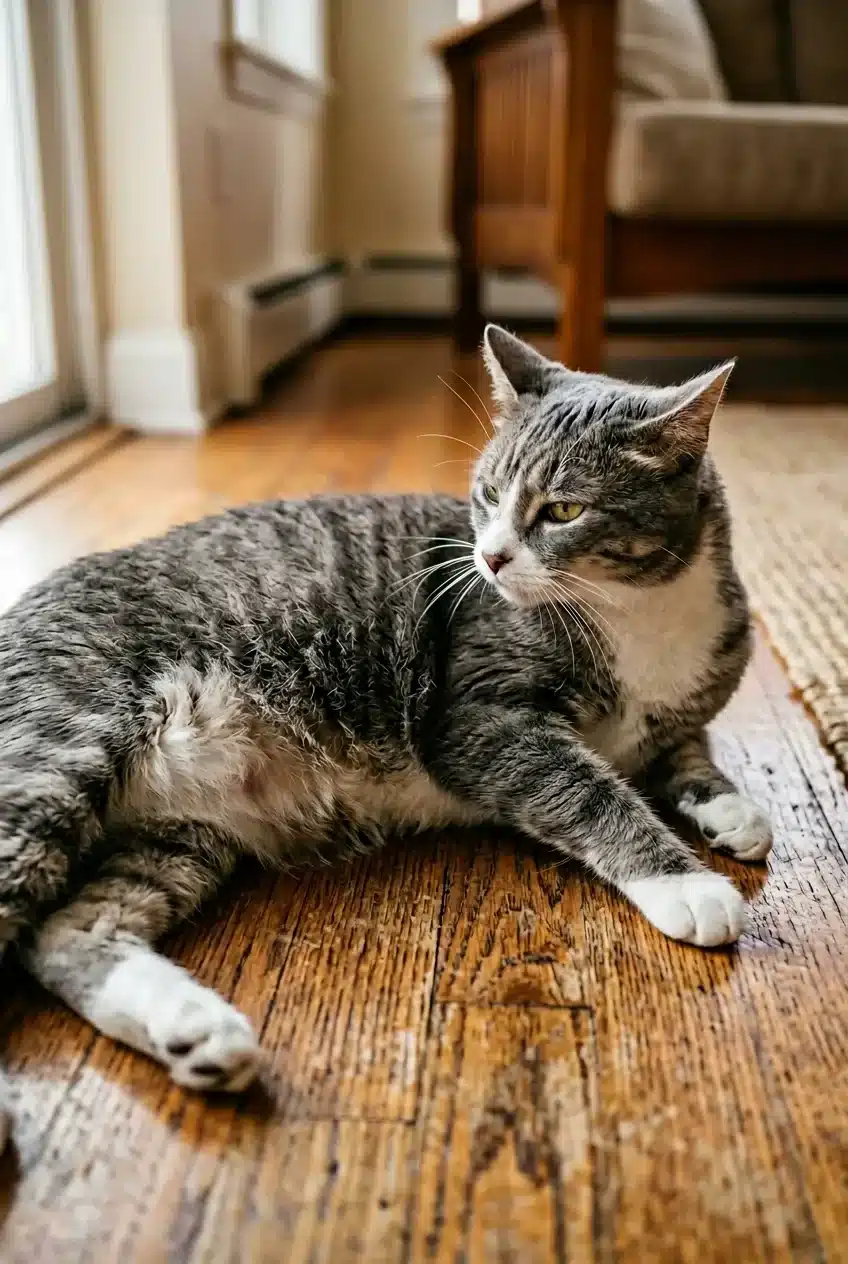
The difference between a cat with a full urinary blockage and one with mild cystitis often shows up in behavior — but the early stages of both can look surprisingly similar. Knowing which signs signal a true emergency can save your cat’s life.
| Sign | Minor Issue (Cystitis/Stress) | Full Blockage (Emergency) |
|---|---|---|
| Litter box visits | Frequent, small amounts of urine pass | Frequent visits, zero urine produced |
| Posture in box | Squatting, mild straining | Prolonged straining, crying out |
| Belly feel | Normal or mildly tense | Hard, distended, painful to touch |
| Appetite | Usually normal | Drops off rapidly |
| Energy level | Mostly normal | Lethargic, hiding, weak |
| Vomiting | Rare | Common as toxins build up |
A hard, painful abdomen combined with no urine output means go to a vet immediately — do not wait until morning.
How to Check at Home
Gently feel your cat’s lower abdomen, just in front of the hind legs. A blocked bladder often feels like a firm golf ball or small orange under the skin.
Also monitor the litter box closely for 2–4 hours. Use a clumping cat litter so even tiny urine spots are visible — this makes monitoring far more reliable than non-clumping varieties.
What to Do if Your Male Cat Is Not Peeing
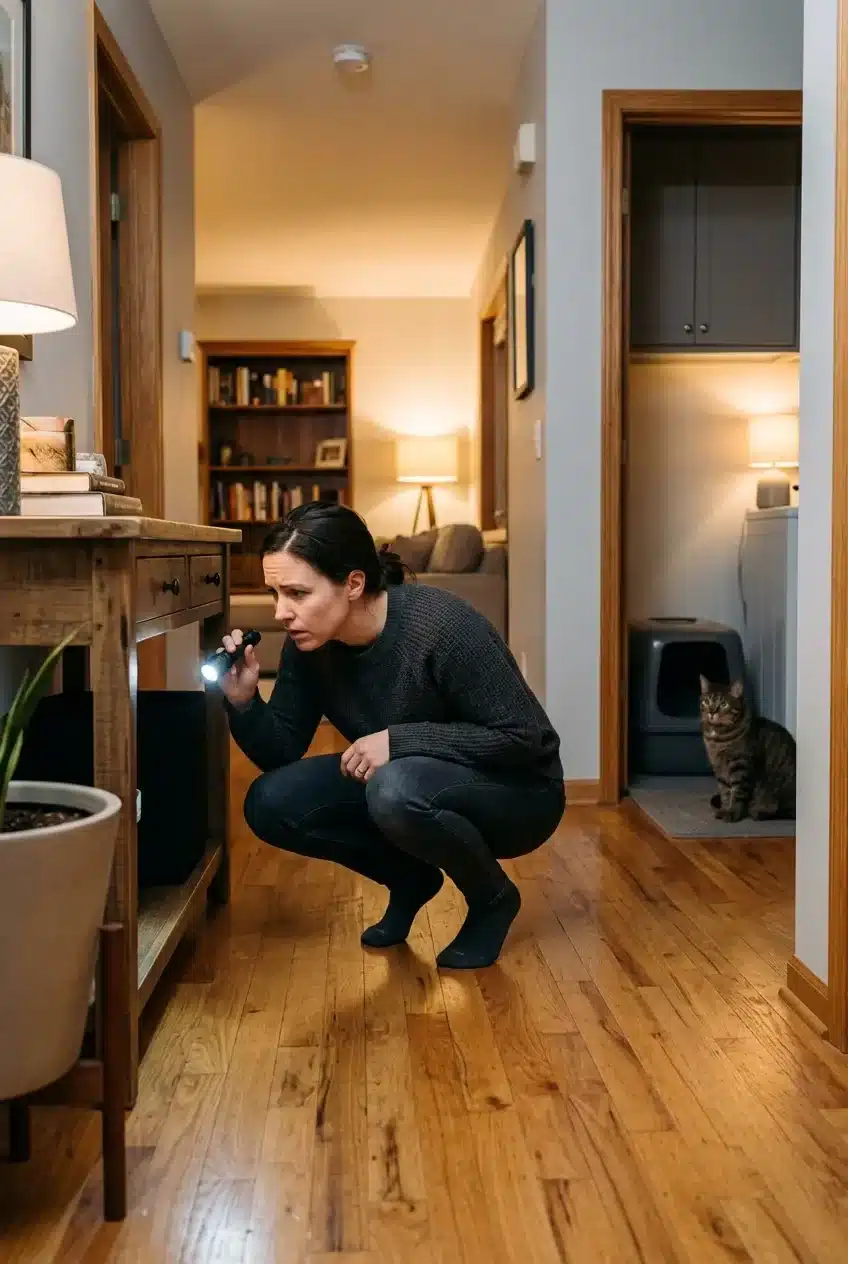
Acting quickly and methodically gives your cat the best outcome. Follow these steps in order, and do not skip ahead to home remedies if a blockage is possible.
- Check every room and surface. Cats sometimes urinate on soft furnishings, laundry, or behind furniture. Confirm he genuinely has not urinated before assuming a medical problem.
- Clean and reset the litter box. Use a fresh, unscented cat litter and scoop the box fully. Some cats refuse to use a soiled box, which can look like urinary suppression.
- Offer fresh water immediately. Place a bowl near his resting area. A cat water fountain encourages more drinking than a static bowl for many cats.
- Observe for 2–4 hours maximum. Watch for any urine production, straining, crying, or lethargy. Set a timer — do not rely on memory.
- Feel the abdomen gently. If you notice a hard, distended lower belly or your cat cries when you touch it, skip the remaining steps and go to an emergency vet now.
- Call your vet. Even if symptoms seem mild, describe the situation clearly. Most vets will recommend a same-day appointment when a male cat hasn’t urinated in over 12 hours.
Building on the warning signs comparison above, any combination of a firm abdomen, vomiting, and zero urine output makes steps 1–5 unnecessary — go directly to emergency care.
Veterinary Treatment Options for a Blocked Male Cat
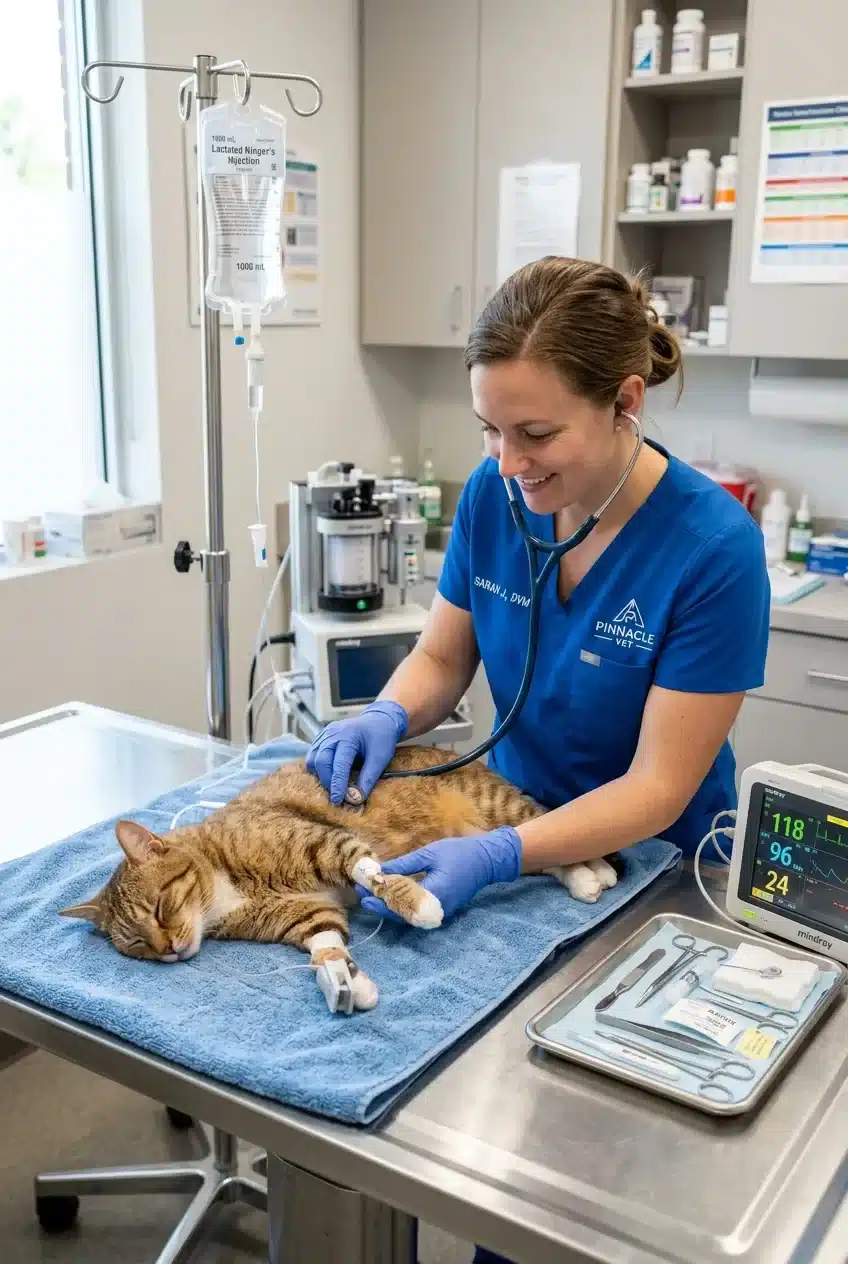
Veterinary treatment for a male cat with a urinary blockage typically involves sedation, passing a urinary catheter to clear the obstruction, and IV fluids to flush toxins that have built up in the bloodstream. Most cats need 24–72 hours of hospitalization.
What the Vet Will Do
- Blood panel to check kidney values (BUN and creatinine levels reflect how long the blockage has been present)
- Urinalysis and possibly a bladder ultrasound to identify crystals, stones, or inflammation
- Urethral catheterization under sedation to relieve the obstruction
- IV fluid therapy to rehydrate and flush the kidneys
- Pain medication and anti-spasm drugs to reduce urethral inflammation
The American Veterinary Medical Association (AVMA) notes that cats who receive prompt treatment for urinary blockages generally recover well, though recurrence rates are significant without dietary and lifestyle changes.
Perineal Urethrostomy (PU Surgery)
Cats that block repeatedly may be candidates for perineal urethrostomy — a surgery that widens the urethral opening permanently. This is typically reserved for cats with three or more blockage events.
After treatment, your vet will likely recommend a prescription urinary diet. A wet urinary health cat food increases moisture intake and helps keep urine dilute, reducing the chance of crystal formation.
Long-Term Prevention: Reducing the Risk of Recurrence
Once a male cat has had a urinary blockage or episode of cystitis, the risk of it happening again is real — studies suggest recurrence rates of around 35–50% within the first year without management changes. Prevention focuses on diet, hydration, and stress reduction.
- Switch to wet food — canned food is roughly 70–80% water versus 10% in dry kibble, making a significant difference in urine concentration.
- Add a water fountain — cats drink more from moving water sources, which supports kidney and bladder health.
- Reduce household stress — feline idiopathic cystitis is directly triggered by stress; consistent routines, enrichment, and safe spaces help.
- Schedule follow-up urinalysis — your vet can catch crystal formation before it becomes a blockage.
- Maintain a healthy weight — obesity is a modifiable risk factor for lower urinary tract disease in cats.
If your cat has also been urinating in unusual places around the house, the article on why cats pee in the house and the guide to stopping a cat from peeing indoors address the behavioral side of this problem.
Hydration is the single most modifiable dietary factor in feline lower urinary tract disease. Increasing water intake through wet food or fountains is consistently recommended as a first-line prevention strategy. — Cornell University College of Veterinary Medicine, Feline Health Center
Common Mistakes Cat Owners Make in This Situation
- Waiting to see if it resolves on its own. A full blockage causes kidney damage within hours. If no urine appears in 12–24 hours, waiting is not safe — call a vet immediately.
- Assuming normal behavior means no blockage. In the early stages of a blockage, cats can appear completely normal. Behavior alone is not a reliable indicator of severity.
- Using home remedies first. Cranberry supplements or herbal products have no evidence base for relieving a feline urethral obstruction. They delay life-saving treatment.
- Only checking one litter box. If you have multiple cats, it can be hard to confirm which cat last urinated. Separate your cats temporarily to monitor individual output accurately.
- Ignoring recurrence. A second blockage often happens faster and hits harder than the first. Skipping the follow-up vet visit and dietary changes after the first episode significantly raises the risk.
If your cat is also refusing food alongside the urinary issues, the article on cats not eating — causes and solutions covers that overlap in useful detail.
Frequently Asked Questions About Male Cat Not Peeing But Acting Normal
How long can a male cat go without peeing before it becomes dangerous?
A male cat not peeing for more than 24 hours is in a medically urgent situation. Kidney damage and dangerous toxin buildup can occur within 24–48 hours of a complete urethral obstruction.
Can stress alone stop a cat from peeing?
Stress can trigger feline idiopathic cystitis, which causes straining and reduced urine output, but a full stress-induced blockage is less common. Any male cat showing urinary symptoms after a stressful event still needs a vet assessment.
Is it possible my cat peed somewhere I didn’t notice?
Yes — cats frequently urinate on soft surfaces like laundry, rugs, or furniture during urinary distress. Check those areas before assuming no urine has been produced.
Should I try to push fluids at home while I wait for a vet appointment?
Offering fresh water is always a good step, but pushing fluids does not resolve a physical obstruction. A water fountain can help mildly dehydrated cats, but it is not a substitute for veterinary care if a blockage is suspected.
What does a blocked cat’s belly feel like?
A blocked cat’s abdomen typically feels hard and round, like a small firm ball, in the lower belly just in front of the hind legs. The cat will often react with pain or tension when that area is touched.
Will my cat need surgery after a urinary blockage?
Most cats recover with catheterization and do not need surgery after a first blockage. Perineal urethrostomy surgery is usually only recommended for cats that experience repeated blockages despite dietary and lifestyle management.
The Bottom Line on a Male Cat Not Peeing
A male cat not peeing but acting normal deserves immediate attention — not a wait-and-see approach. The window between early symptoms and a life-threatening obstruction can be very short.
The one action to take today: check your litter box right now, feel your cat’s lower abdomen gently, and call your vet if there is any doubt. Early treatment is the difference between a quick recovery and a serious, expensive emergency.
Your cat depends entirely on you to catch this early. Trust your instincts, monitor closely, and never hesitate to call your vet when something feels off.