Dog anal gland inflammation causes scooting, licking, and a foul smell near your dog’s rear end. Catching these signs early — and knowing when to express the glands versus when to call a vet — can prevent a painful abscess.
Many owners notice something is off but aren’t sure what they’re dealing with. This guide on dog anal gland inflammation: signs, expression and when to see a vet gives you a clear, practical path forward. For a broader look at long-term management, see how dogs live with anal gland problems.
What Are the Signs of Anal Gland Inflammation in Dogs?
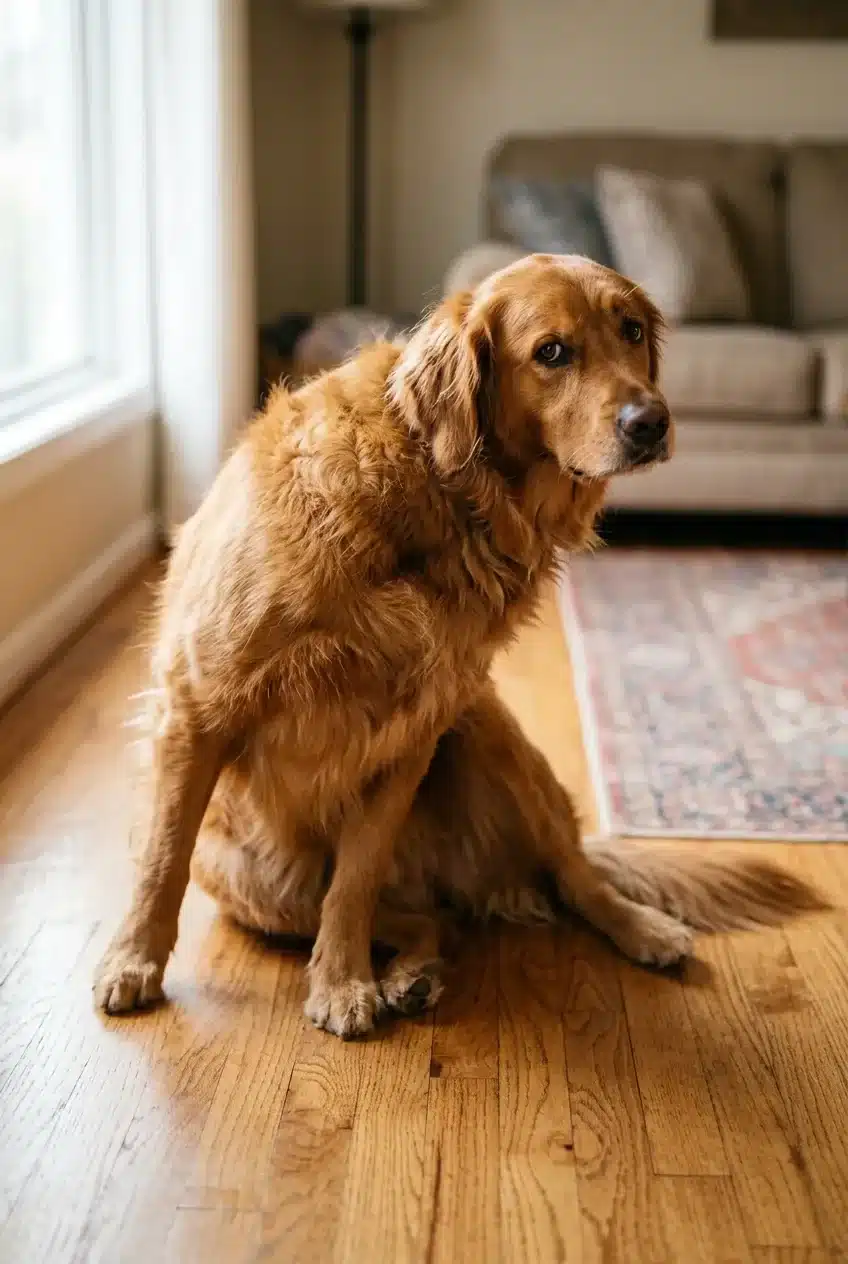
The most common signs of anal gland inflammation in dogs are scooting along the floor, excessive licking or biting at the rear, a strong fishy odor, and visible swelling or redness near the anus. These symptoms appear when the small sacs on either side of the anus become impacted, infected, or inflamed.
- Scooting or dragging the rear end on the floor or carpet
- Persistent licking or chewing at the base of the tail
- A strong, fishy or metallic smell from the rear area
- Visible swelling, redness, or a lump near the anus
- Straining or discomfort when defecating
- Sudden sitting down or yelping when touched near the tail
Any combination of these signs warrants a closer look — don’t wait for them to resolve on their own.
Why Anal Glands Become Inflamed
Anal glands are small scent sacs that normally empty during bowel movements. When stool is too soft, the pressure needed to express them naturally isn’t there.
Allergies are one of the leading triggers. According to the American Veterinary Medical Association (AVMA), environmental and food allergies frequently contribute to recurring anal gland issues in dogs. Anatomical factors, obesity, and low-fiber diets also play a role.
How Do You Express a Dog’s Anal Glands at Home?
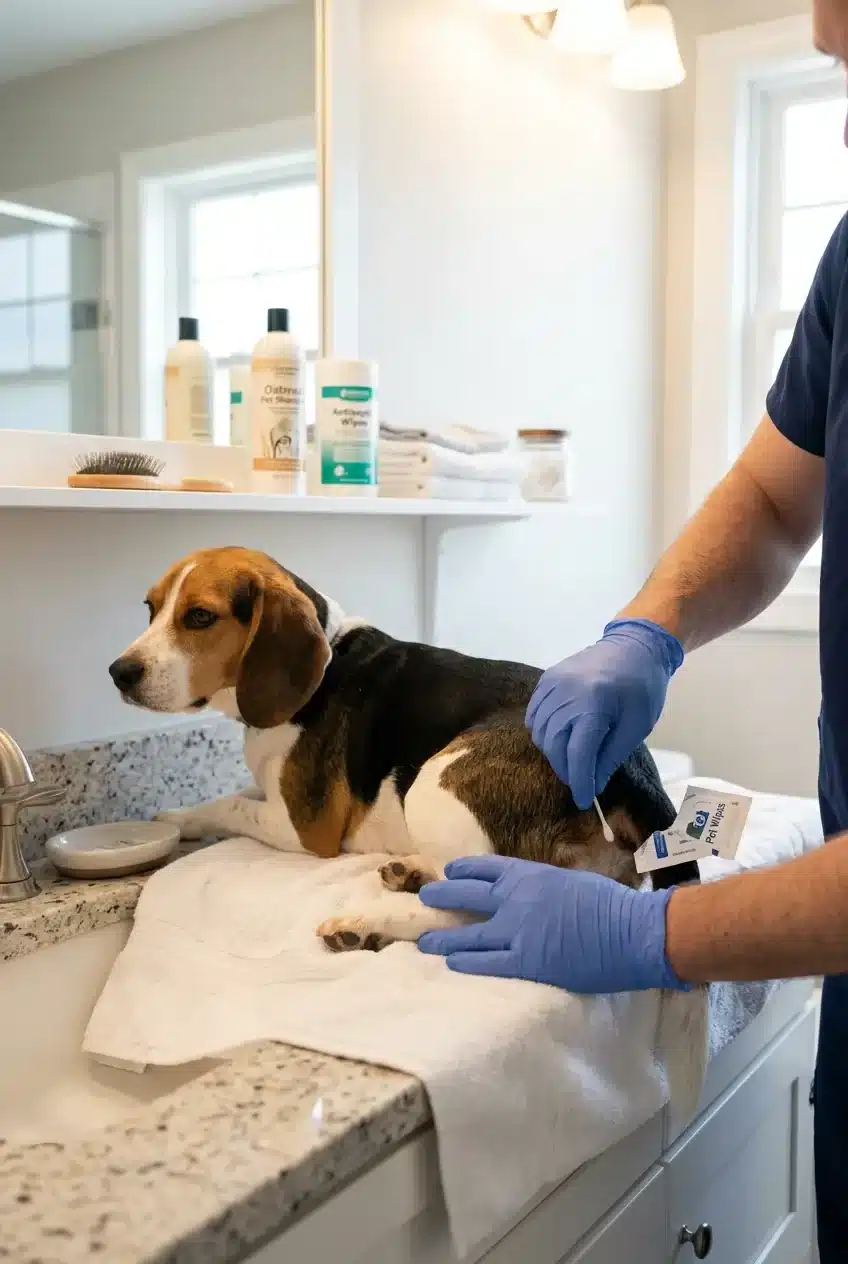
External anal gland expression at home is possible for mild impaction, but internal expression — where a finger is inserted into the rectum — should only be done by a veterinarian or trained groomer. Home expression works only when glands are full but not infected or abscessed.
- Gather supplies. You’ll need disposable gloves, paper towels, and a warm damp cloth. A pair of disposable grooming gloves keeps the process hygienic.
- Position your dog. Have your dog stand on a non-slip surface. A second person to hold the dog steady is very helpful.
- Locate the glands. The glands sit at the 4 o’clock and 8 o’clock positions around the anus. Place a paper towel over the area to catch any fluid.
- Apply gentle pressure. Use your thumb and index finger to gently squeeze inward and upward. Do not use force.
- Check the result. A successful expression produces a small amount of brownish, tan, or grayish fluid. Thick, chunky, bloody, or pus-like discharge means stop and call your vet immediately.
- Clean the area. Wipe the area with a warm damp cloth. A gentle dog grooming wipe works well for cleanup.
If you feel resistance, pain in your dog, or see abnormal discharge — stop. This is a job for your vet.
Get Free Dog Health Tips!
Weekly guides on keeping your dog healthy & happy
🔒 No spam. Unsubscribe anytime.
BEFORE YOU SCROLL PAST
Cat Owners Also Read:
👉 Why Anal Gland Secretions Become Solid or Impacted in Dogs
👉 Why Does My Cat Pee On The Carpet
👉 Cute White Cats Who Hide Their Real Intentions Behind Their Beautiful Looks
When Should You See a Vet for Anal Gland Problems?
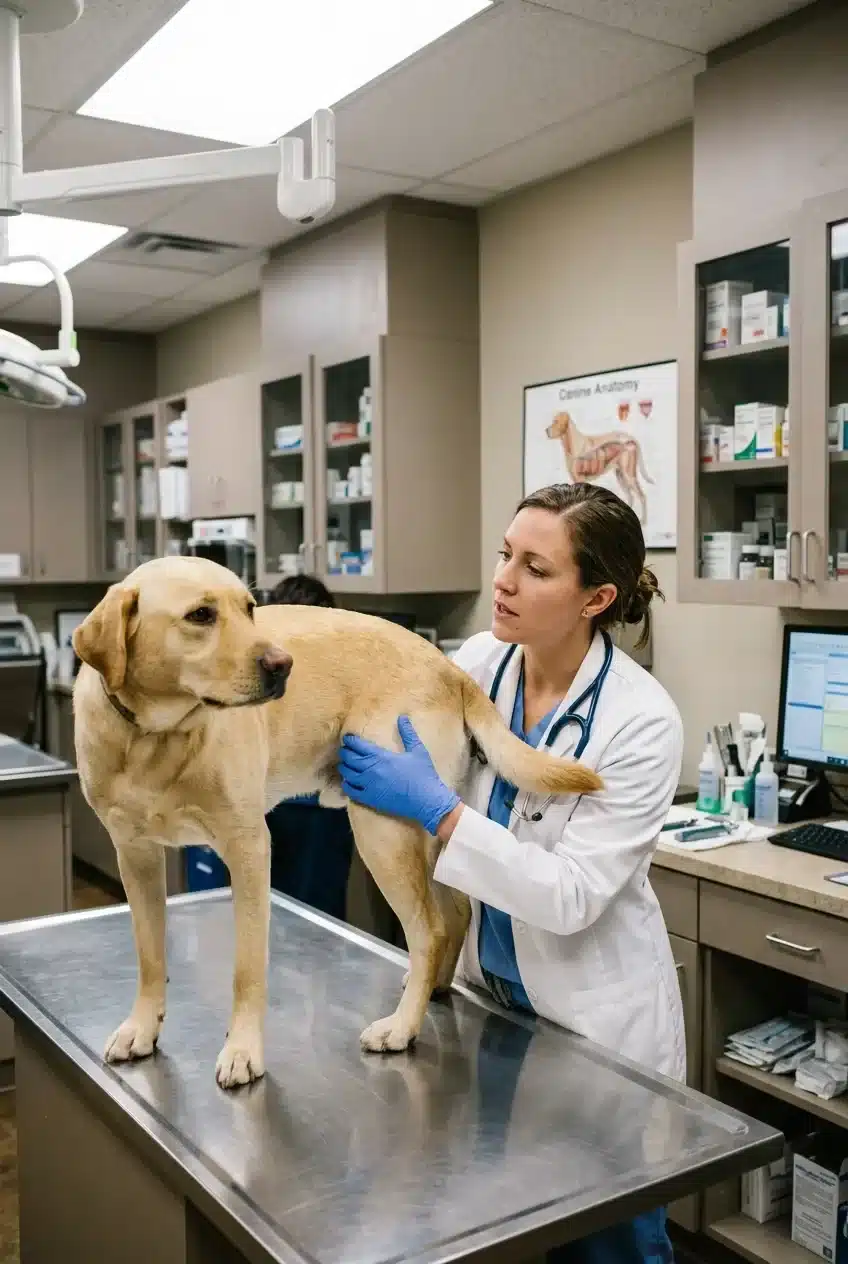
See a vet if your dog shows signs of pain, the area is visibly swollen or red, discharge looks bloody or contains pus, or if home expression provides no relief. These signs point to infection, abscess, or a ruptured gland — all of which need professional treatment.
| Symptom | Home Care OK? | Vet Visit Needed? |
|---|---|---|
| Mild scooting, full glands, normal fluid | Yes | Optional |
| Recurring impaction (monthly or more) | No | Yes |
| Bloody or pus-like discharge | No | Urgently |
| Visible abscess or open wound | No | Emergency |
| Dog cries when touched near tail | No | Yes, same day |
A ruptured anal gland abscess is a medical emergency. The sac can burst through the skin, creating an open wound that requires antibiotics, flushing, and sometimes surgery.
Recurring anal gland issues also need investigation. Your vet may recommend a dietary change, allergy testing, or — in severe cases — surgical removal of the glands (anal sacculectomy). You should also watch for other signs your dog is in discomfort, such as those covered in the warning signs your dog is unhappy that most owners miss.
Which Dogs Are Most Prone to Anal Gland Inflammation?
Small and toy breeds are significantly more prone to anal gland problems than large breeds. According to veterinary dermatology literature, dogs under 20 lbs — including Chihuahuas, Toy Poodles, and Shih Tzus — are disproportionately affected due to narrower anal openings relative to gland size.
- Small breeds: Chihuahua, Toy Poodle, Shih Tzu, Dachshund, Beagle
- Overweight dogs: Excess body fat reduces natural gland expression during defecation
- Dogs with allergies: Chronic skin or food allergies cause ongoing inflammation in the anal tissue
- Dogs on low-fiber diets: Soft stools don’t create enough pressure to empty the glands naturally
“Anal gland disease is one of the most common reasons dogs visit the vet. Diet, weight, and allergy management are the three most controllable risk factors.” — Veterinary practice guidance from Cornell University College of Veterinary Medicine
Increasing dietary fiber is a well-supported first step. Adding a fiber supplement designed for dogs can firm up stools and encourage natural gland emptying.
How to Prevent Anal Gland Inflammation in Dogs
Preventing anal gland inflammation focuses on diet, weight management, and regular monitoring. Most dogs that receive consistent care can go months or years between problems.
Diet and Fiber
A high-fiber diet produces firmer stools, which apply the pressure needed to empty the glands during each bowel movement. Talk to your vet before making major dietary changes, especially if your dog has other health conditions.
Some owners add plain canned pumpkin (not pie filling) to meals. One to four tablespoons per meal — depending on dog size — is a commonly cited approach in veterinary nutritional guidance.
Weight and Exercise
Keeping your dog at a healthy weight reduces pressure on the anal area and improves natural expression. Daily walks also stimulate regular bowel movements, which helps keep glands clear.
If your dog is recovering from a vet procedure and is stressed afterward, these tips for comforting a dog after a stressful vet visit can help with recovery at home.
Regular Grooming Checks
Ask your groomer to check and express the glands during every grooming appointment. Many groomers include this as standard. Between appointments, watch for early scooting or licking before it becomes a full impaction.
A vet-recommended anal gland support supplement containing fiber, digestive enzymes, and probiotics may help dogs with recurring issues between vet visits.
Common Mistakes Dog Owners Make With Anal Gland Problems
- Expressing glands too frequently: Over-expression can weaken the muscles that help dogs express glands naturally. Only express when signs are present or your vet recommends it.
- Ignoring early scooting: Occasional scooting is easy to dismiss. Left unaddressed, a simple impaction can progress to an abscess within days.
- Attempting internal expression at home: Internal expression requires training and carries infection risk. Leave this to your vet or a professional groomer.
- Skipping vet visits for recurring problems: Monthly impactions aren’t a grooming issue — they signal an underlying cause that needs diagnosis, not just repeated expression.
- Using harsh cleaning products near the anus: Scented wipes or alcohol-based products can irritate already-inflamed tissue. Stick to plain warm water or vet-approved wipes. If your dog also develops skin irritation nearby, the guide on dog belly rash treatment, causes, and relief covers skin care options.
Frequently Asked Questions About Dog Anal Gland Inflammation: Signs, Expression and When to See a Vet
How do I know if my dog’s anal glands are infected versus just full?
Infected anal glands produce thick, chunky, or bloody discharge and are usually accompanied by visible swelling, heat, and significant pain. Full but uninfected glands feel firm and produce normal brownish fluid when expressed.
Can I express my dog’s anal glands myself at home?
External home expression is possible for mild cases, but only if glands are full with no signs of infection. If there’s pain, swelling, or abnormal discharge, a vet should handle it.
How often should anal glands be expressed in dogs?
Most dogs never need manual expression because healthy bowel movements do it naturally. Dogs with recurring problems may need expression every four to eight weeks, as directed by their vet.
What does anal gland fluid smell like?
Anal gland fluid has a strong, fishy, or metallic odor that is distinctly unpleasant. If you notice this smell suddenly from your dog’s rear end, it’s a reliable early indicator that the glands need attention.
Can diet really fix anal gland problems in dogs?
Diet is one of the most effective tools for preventing anal gland inflammation. A higher-fiber diet that produces firmer stools significantly reduces impaction frequency in many dogs, according to veterinary nutritional guidance.
When is anal gland removal (sacculectomy) recommended?
Anal sacculectomy is recommended when a dog experiences chronic, painful impactions or abscesses that don’t respond to dietary and medical management. It’s considered a last resort and carries some risk of fecal incontinence.
The Bottom Line
Anal gland inflammation is uncomfortable, but it’s very manageable when caught early. The most important step you can take today is to check your dog’s rear end if you notice scooting, licking, or a fishy smell — then decide whether it’s a home expression situation or a vet visit.
For dogs with recurring problems, book a vet appointment focused specifically on the underlying cause, not just another expression. That conversation about diet, allergies, and weight can break the cycle for good.