If you’re worried about male cat urinary blockage symptoms, treat the situation as urgent. A blocked male cat can worsen fast, and early signs may look like repeated litter box trips, straining, or vocalizing in pain.
Male cats are at higher risk because their urethra is narrow, so even a small plug can stop urine flow. Sources such as the Merck Veterinary Manual and the Cornell Feline Health Center describe urinary blockage as a true emergency.
What Are The Male Cat Urinary Blockage Symptoms?
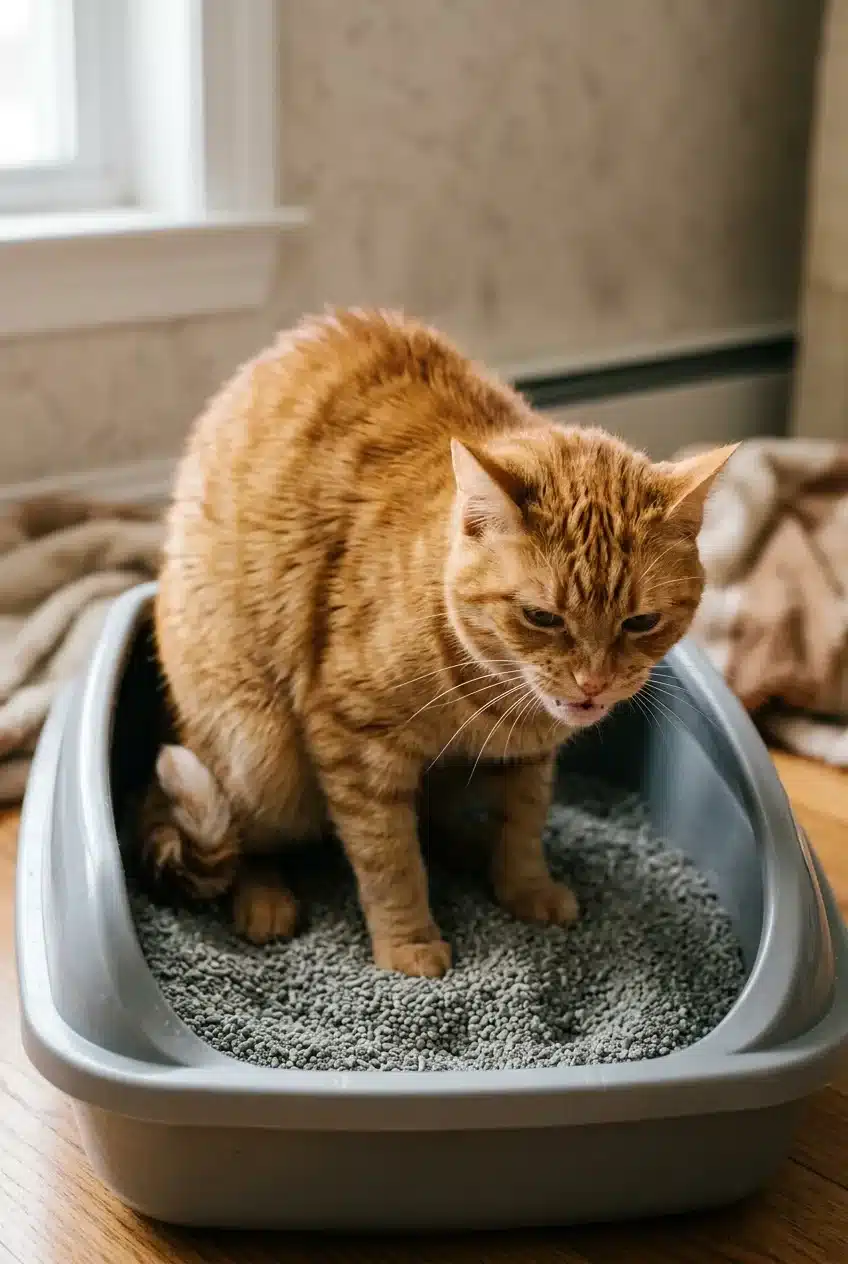
Male cat urinary blockage symptoms include repeated attempts to urinate, little or no urine output, crying in the litter box, and signs of pain. If your cat is straining and only passing drops, or nothing at all, he needs urgent veterinary care.
Any male cat that cannot urinate normally for hours may be blocked, not just “having a urinary problem.”
- Frequent litter box visits with little output
- Straining, crouching, or stretching to urinate
- Vocalizing, restlessness, or hiding
- Licking the genital area more than usual
- Blood in urine or urine spots outside the box
The Cornell Feline Health Center notes that urethral obstruction can become life-threatening because toxins and potassium build up quickly. That is why the symptom pattern matters more than any single sign.
BEFORE YOU SCROLL PAST
Cat Owners Also Read:
👉 Why Does My Cat Bite My Kittens Neck
👉 Why Does My Cat Pee On The Carpet
Get FREE Guide Every Week
Join 10,000+ dog & cat owners. Vet-approved advice every week
🔒 No spam. Unsubscribe anytime.
👉 Cute White Cats Who Hide Their Real Intentions Behind Their Beautiful Looks
How Do Male Cat Urinary Blockage Symptoms Look In The Litter Box?
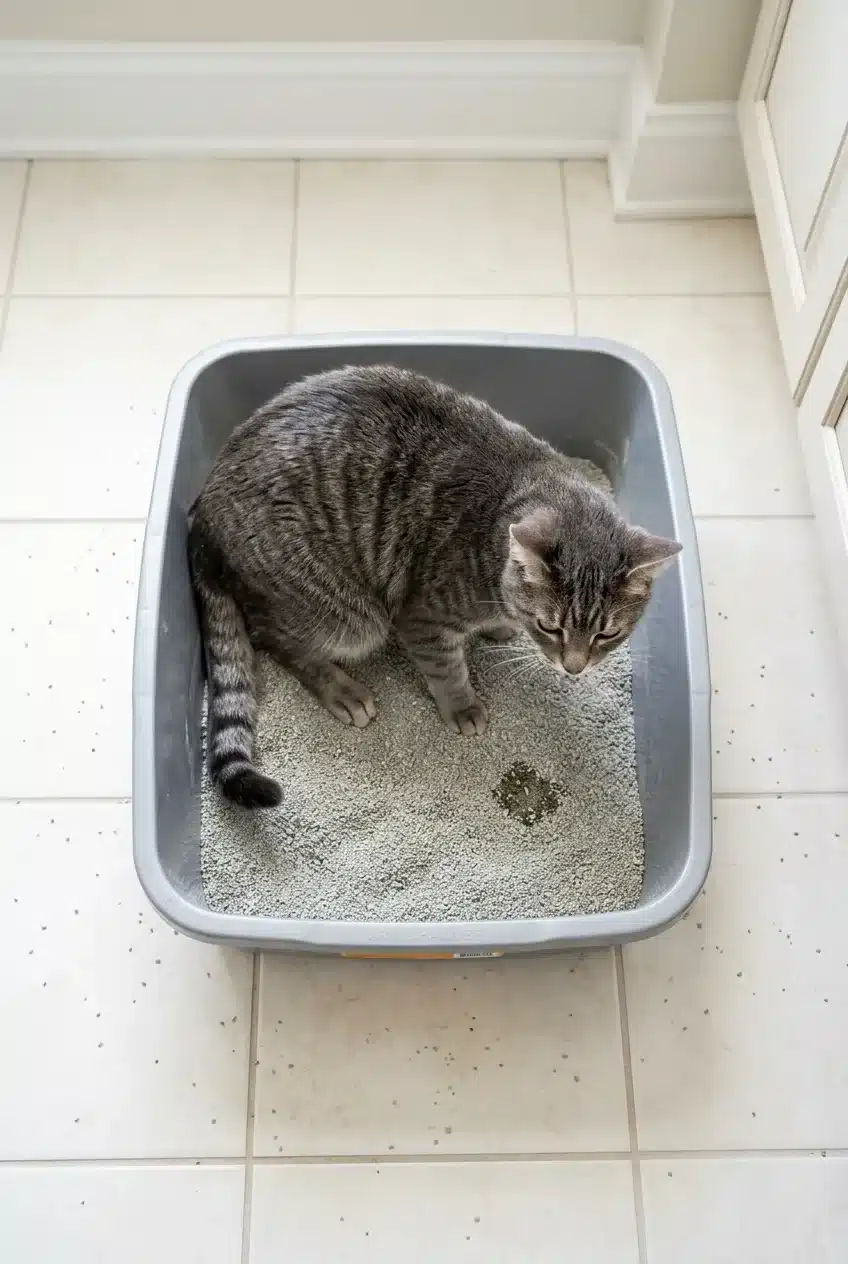
The litter box often gives the clearest warning. A blocked cat may enter the box many times, squat for a long time, and leave with only a few drops or no urine.
This is different from a cat that simply avoids the box for behavior reasons.
Signs You Can See Right Away
Watch for posture changes, repeated straining, and sudden trips that end fast. If your cat cries, trembles, or seems stuck in a squat, that is not normal bladder irritation.
| Pattern | What It May Mean | Urgency |
|---|---|---|
| Normal urine clumps | Urine is flowing | Monitor |
| Small drops only | Possible partial blockage | Urgent |
| No urine at all | Possible complete blockage | Emergency |
If the box contains less urine than usual, compare that with your cat’s normal clump size and number of visits. A sudden change is more useful than guessing based on one trip.
What To Track Before You Leave
Write down the last time you saw a normal urine clump, how often he is trying, and whether blood is present. This gives the veterinary team a clearer picture and can save time.
For cleanup and monitoring, a cat litter scoop and a simple notebook can help you check urine output without disturbing the cat too much.
Which Behavior Changes Suggest A Blocked Male Cat?
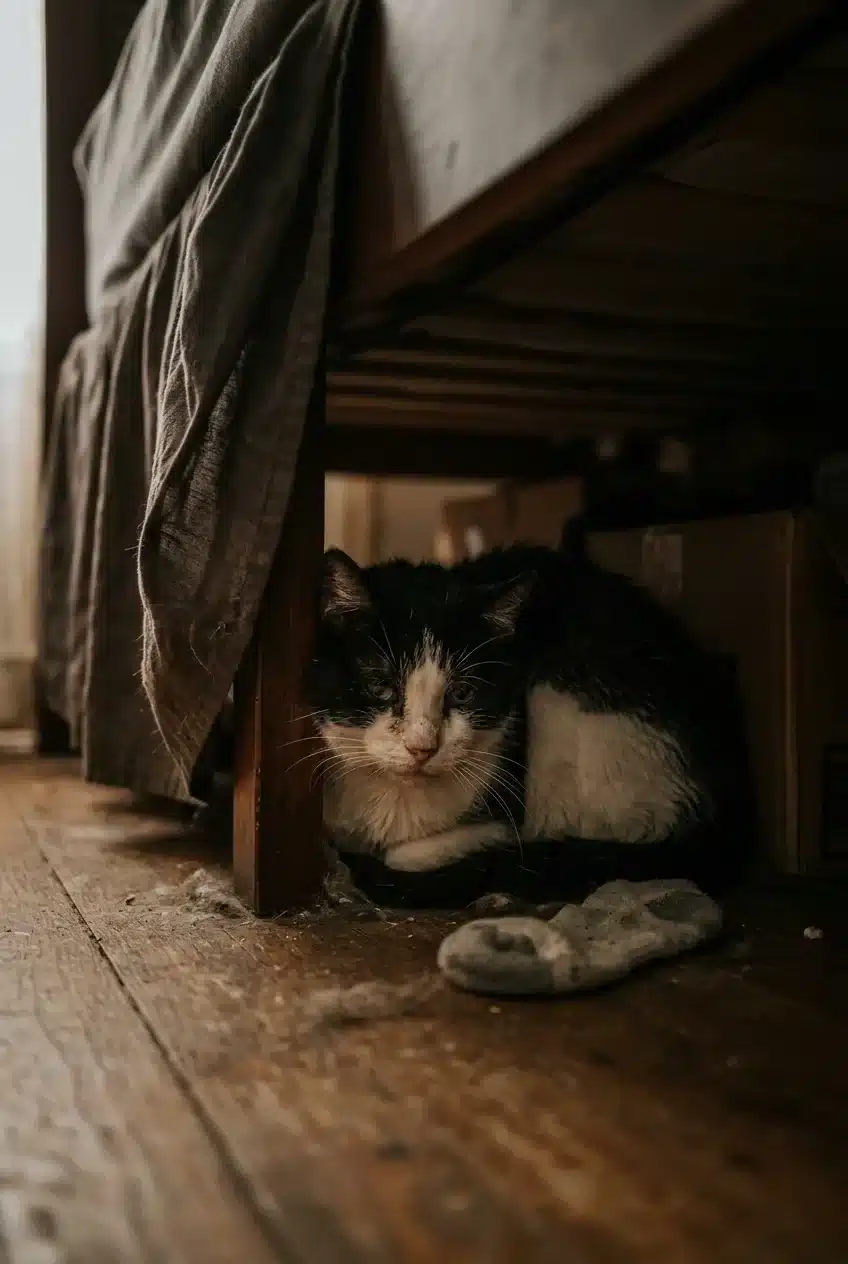
Behavior changes often show pain before the cat stops urinating completely. A blocked male cat may become restless, hide, seem agitated, or act unusually clingy.
Some cats also stop eating, vomit, or look weak as the obstruction progresses.
“Urethral obstruction in cats is an emergency because delay can allow life-threatening electrolyte changes and kidney injury.” This warning is consistent with guidance from the Merck Veterinary Manual and veterinary emergency texts.
Not every painful cat is blocked, but a blocked cat is often painful. That is why behavior changes plus litter box changes should be treated as one problem.
- Hiding in quiet places
- Restlessness and pacing
- Loss of appetite
- Vomiting or drooling
- Sudden aggression when picked up
If your cat is also unusually quiet, weak, or unsteady, do not wait for more signs. Those changes can mean the blockage has already started affecting the whole body.
How Serious Are Male Cat Urinary Blockage Symptoms?
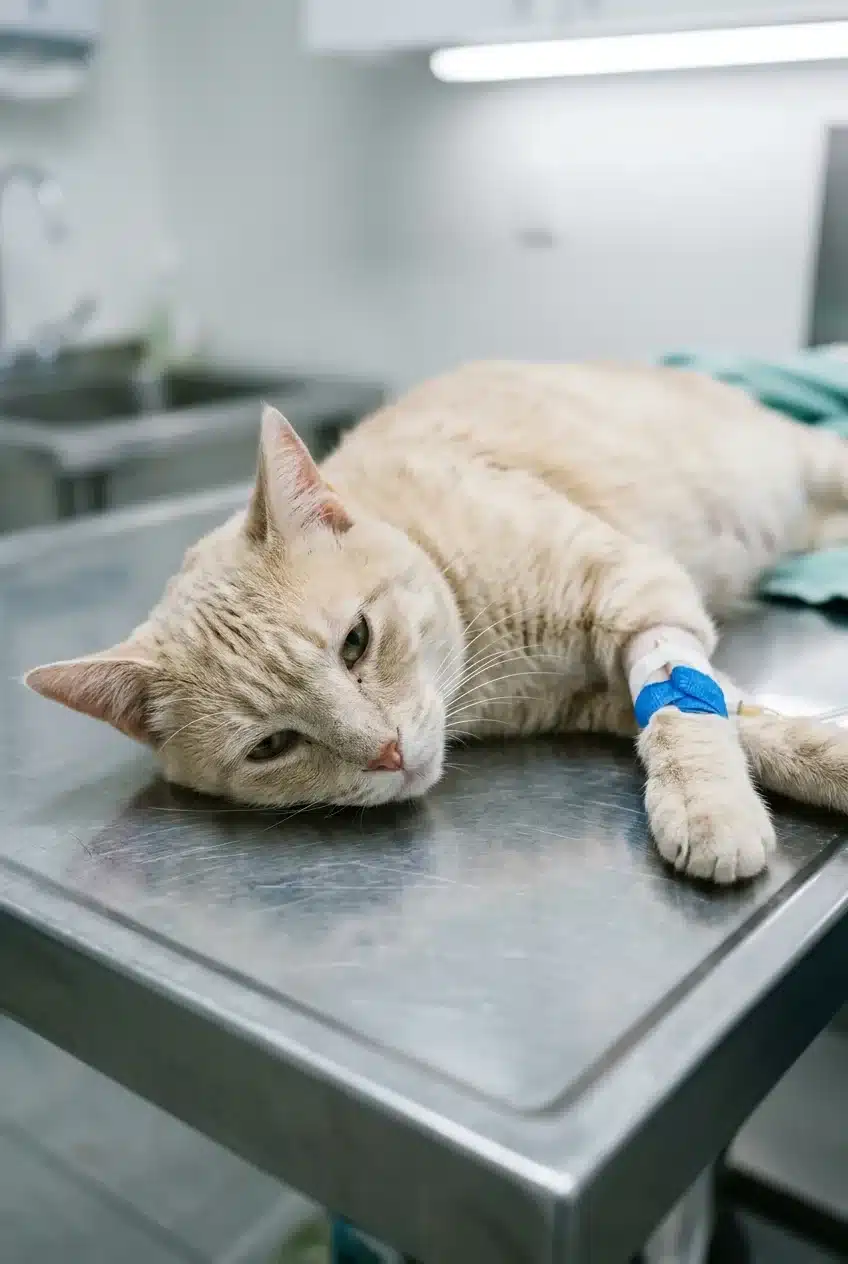
Male cat urinary blockage symptoms are serious because a complete blockage can become fatal within a short time. The exact timeline varies, but emergency care should not wait for “tomorrow” or “after work.”
Blocked cats can develop pain, dehydration, kidney damage, and dangerous heart rhythm changes from rising potassium.
Partial Versus Complete Blockage
A partial blockage may allow a few drops of urine, while a complete blockage stops urine flow almost entirely. Both can worsen, and a partial blockage can become complete without warning.
That is why “he still peed a little” does not rule out danger.
| Type | Urine Output | Typical Risk |
|---|---|---|
| Partial blockage | Small drops | Can progress quickly |
| Complete blockage | None or near none | Medical emergency |
The Merck Veterinary Manual and Cornell both identify urethral obstruction as an emergency that needs prompt veterinary treatment, not home observation. That makes symptom recognition the first step, not the last.
For cats with recurring urinary signs, your vet may discuss diet and stress reduction after the emergency passes, and a product such as a cat water fountain can help encourage drinking once your veterinarian says it is appropriate.
What Should You Do If You Suspect A Urinary Blockage?

If you suspect a blockage, call a veterinarian or emergency clinic right away. Do not wait to see whether the cat will urinate later, and do not try human medications.
The goal is to get the cat seen fast and keep him calm on the way.
- Call the clinic and say you suspect a male cat urinary blockage.
- Describe the symptoms: straining, no urine, blood, vomiting, or pain.
- Transport the cat in a carrier as soon as possible.
- Keep the ride quiet and avoid pressing on the belly.
- Confirm whether the cat has passed urine before you assume the problem is solved.
Success at home looks simple: the cat is calm, safe, and moving toward veterinary care. If he suddenly seems too weak to stand or starts vomiting repeatedly, tell the clinic immediately.
What Not To Do
Do not massage the bladder, force water, or give leftover pain medicine. Those steps can make the situation worse or delay treatment.
A sturdy carrier such as a hard cat carrier can make transport safer if your cat is painful or likely to hide.
What Conditions Can Look Similar To A Urinary Blockage?
Several urinary problems can mimic male cat urinary blockage symptoms, especially feline idiopathic cystitis, bladder stones, and urinary tract infection. The difference is that a true blockage prevents normal urine flow and needs urgent care.
Your vet may use a physical exam, urine testing, imaging, and blood work to sort out the cause.
| Condition | Common Clues | Why It Matters |
|---|---|---|
| Feline idiopathic cystitis | Pain, frequent urination, blood | May be severe without blockage |
| Bladder stones | Straining, blood, recurrent signs | Can trigger obstruction |
| Urethral blockage | No urine or tiny drops | Emergency |
For background on cystitis and ongoing urinary care, see this guide on male cat interstitial cystitis signs and care relief. That topic overlaps with blockage symptoms, but the treatment path can differ a lot.
Because symptoms overlap, the safest rule is simple: if a male cat is straining and barely producing urine, treat it as urgent until a vet says otherwise.
Frequently Asked Questions About Male Cat Urinary Blockage Symptoms
How can I tell if my male cat is blocked or just constipated?
How can I tell if my male cat is blocked or just constipated? A blocked cat strains in the litter box but usually passes little or no urine, while constipation involves trouble passing stool. If you are unsure, urgent veterinary care is still the safest move.
Will a blocked male cat still pee a little?
Will a blocked male cat still pee a little? Yes, a partial blockage may produce a few drops, which is why small output does not mean the problem is harmless. Tiny urine clumps with repeated straining still need prompt attention.
Does blood in the urine mean a blockage?
Does blood in the urine mean a blockage? Not always, but blood can happen with cystitis, stones, or obstruction. If blood appears along with straining or reduced urine, contact a veterinarian the same day.
How fast do blockage symptoms get worse?
How fast do blockage symptoms get worse? They can worsen within hours, especially if the urethra is fully closed. Some cats become weak, vomit, or collapse as toxins and potassium rise.
Can stress cause urinary blockage symptoms in male cats?
Can stress cause urinary blockage symptoms in male cats? Stress can trigger feline lower urinary tract disease signs, including pain and frequent box trips. Stress alone does not equal blockage, but it can be part of the same problem.
Should I wait overnight if my cat is still eating?
Should I wait overnight if my cat is still eating? No, eating does not rule out a blockage, and some cats keep eating early on. If your cat is straining or passing very little urine, contact a vet now.
Conclusion
The most important point is simple: male cat urinary blockage symptoms are an emergency when urine flow drops or stops. Repeated litter box visits, straining, pain, and tiny urine amounts deserve immediate veterinary attention.
For more background on names and general cat care after the emergency has passed, you can also explore male cat names with meanings or cat name ideas for male and female cats.
Call your vet or an emergency clinic now if you suspect a blockage, and keep your cat quiet and ready for transport.
For trusted medical background, see the Cornell Feline Health Center and the Merck Veterinary Manual on urethral obstruction in cats.