American Bullies get scabby bumps on their belly most commonly due to folliculitis, contact allergies, or flea bites — all of which irritate the thin, exposed skin on the underside. The belly has minimal fur coverage, making it one of the first places skin problems appear.
If you’ve noticed crusty, red, or raised bumps under your Bully’s belly, you’re not alone. This is one of the most common concerns among American Bully owners, and understanding the root cause is the first step toward real relief. For a broader look at dog belly rash treatment, causes, and when to see a vet, that guide covers the full picture.
Why Do American Bullies Get Scabby Bumps on Their Belly?
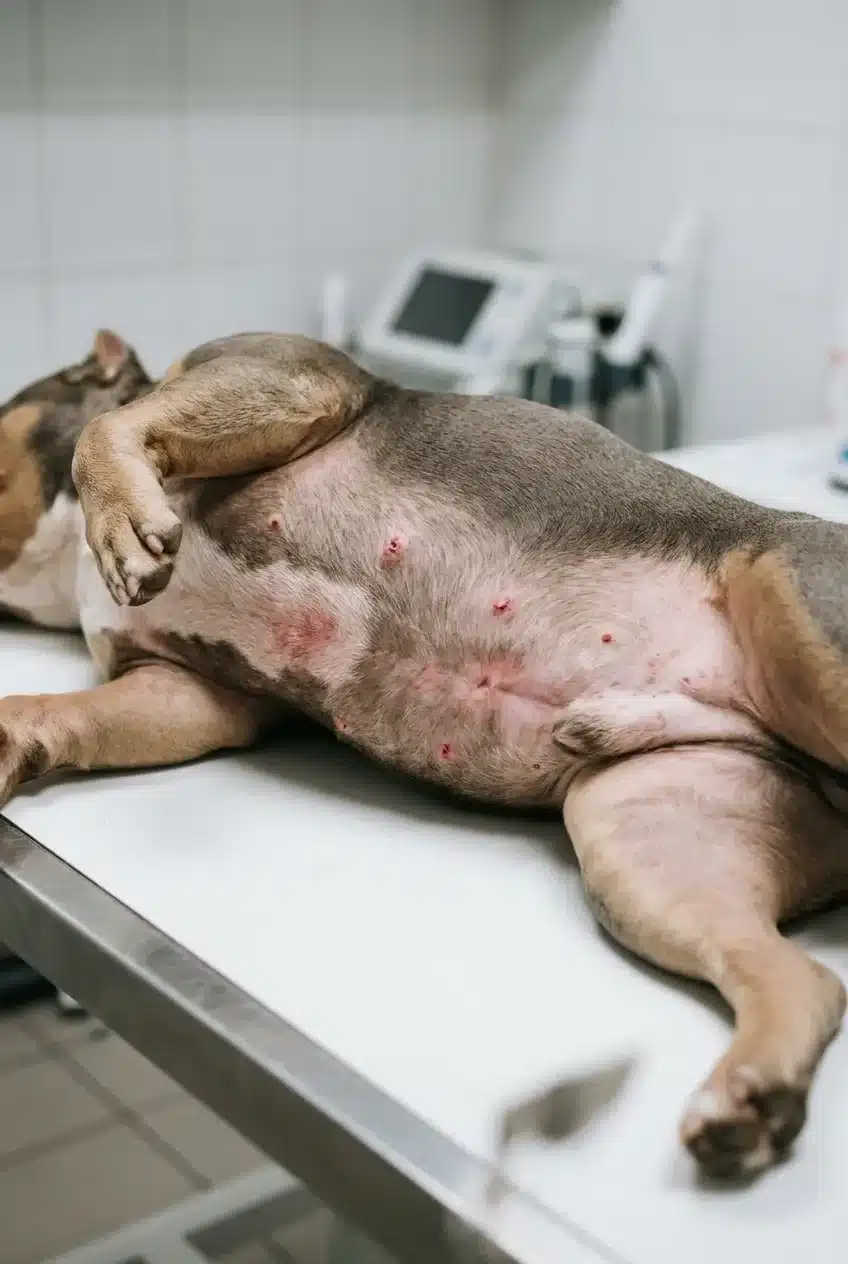
American Bullies get scabby bumps on their belly because their short, thin coat and sensitive skin make the belly area highly vulnerable to bacterial infections, allergens, parasites, and environmental irritants. The bumps often start as small red pustules, then crust over into scabs as the skin responds to inflammation.
- Bacterial folliculitis is the most common cause — infects hair follicles and creates crusty pustules.
- Flea allergy dermatitis causes intense itching and scabbing, especially on the belly and groin.
- Contact allergies from grass, floor cleaners, or fabrics can trigger a belly rash fast.
- Mange (demodex or sarcoptic) causes scabby, hairless patches on thin-skinned belly areas.
- Puppy impetigo is common in young Bullies under 12 months and clears with treatment.
- Hot spots and yeast overgrowth can also produce crusty, inflamed skin on the underside.
The Most Common Causes Explained
Several distinct conditions cause scabby belly bumps in American Bullies. Knowing which one you’re dealing with changes the treatment entirely.
Bacterial Folliculitis
Folliculitis is the leading cause of scabby belly bumps in American Bullies. It happens when bacteria — usually Staphylococcus pseudintermedius — infect individual hair follicles. The result is small, pus-filled pustules that rupture, crust over, and leave circular scabs.
The belly is especially prone because it contacts the ground during rest. Moisture trapped against the skin after swimming or bathing accelerates bacterial growth.
A Merck Veterinary Manual overview of superficial bacterial folliculitis notes this condition is one of the most frequently diagnosed skin disorders in dogs, often requiring antibiotic treatment for resolution.
Flea Allergy Dermatitis
Flea allergy dermatitis (FAD) is a hypersensitive reaction to flea saliva — not the flea bite itself. Even a single flea can trigger intense itching and scabbing in a sensitive Bully.
Get Free Dog Health Tips!
Weekly guides on keeping your dog healthy & happy
🔒 No spam. Unsubscribe anytime.
The belly, inner thighs, and groin are primary target zones. You may not always see fleas, but you’ll often find tiny black specks (flea dirt) in the fur. Using a quality flea comb for dogs can help you confirm flea activity quickly.
Contact Allergies and Environmental Irritants
Contact allergies develop when the belly skin touches something irritating — grass, concrete, synthetic carpet fibers, or household cleaning products. The reaction usually appears within hours of exposure.
MOST POPULAR THIS WEEK
Vet-Recommended Articles: 👇
👉 Why Does My Dogs Skin Turn Dark And Thick After Years Of Allergy Treatment
👉 Best Home Remedies For Arthritis In Dogs With Limping
👉 How Long Does An Elimination Diet Take For Dogs With Skin Allergies
Signs include redness, small bumps, and scabbing concentrated where the skin contacted the surface. Switching to a pet-safe floor cleaner sometimes resolves recurring belly rashes with no other treatment needed.
Mange: Demodectic and Sarcoptic
Mange is caused by microscopic mites living in or on the skin. Demodectic mange (caused by Demodex canis) tends to appear in puppies or immunocompromised dogs and produces patchy, scabby, hairless spots on the belly and face.
Sarcoptic mange is highly contagious, intensely itchy, and spreads quickly. It causes thick, crusty scabs — often starting on the belly, elbows, and ear edges. A skin scraping from your vet confirms which type is present.
Is It Puppy Impetigo or Something More Serious?
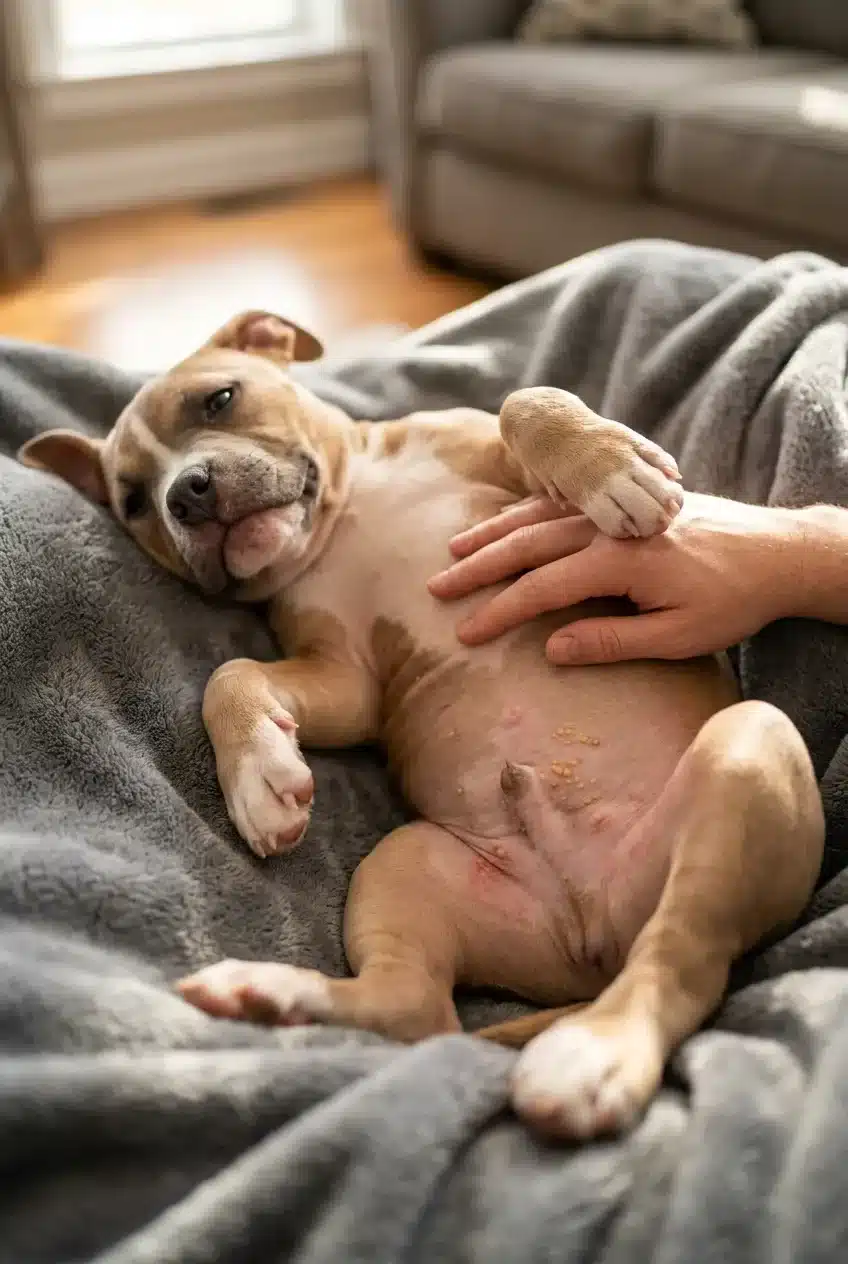
Puppy impetigo — also called juvenile pustular dermatitis — is a bacterial skin infection that commonly affects American Bully puppies between 3 and 12 months old. It appears as clusters of soft, fluid-filled bumps on the hairless belly skin that burst and scab over.
Impetigo in puppies is usually mild and responds well to topical antiseptic washes. It rarely spreads to adult dogs in the same household.
If your puppy’s bumps are spreading rapidly, look infected, or are accompanied by lethargy or loss of appetite, a vet visit is warranted. Distinguishing impetigo from deeper pyoderma early prevents the infection from worsening. American Bullies are loyal and people-focused dogs — stress and anxiety can also compromise their skin barrier, making puppies more susceptible.
How Allergies and Diet Play a Role
Food allergies and environmental allergies are significant drivers of chronic skin issues in American Bullies. The breed is genetically predisposed to atopic dermatitis — an inflammatory skin condition triggered by allergens the immune system overreacts to.
“Atopic dermatitis in dogs is often first noticed on the belly, paws, and face — areas with less protective fur coverage.” — American College of Veterinary Dermatology
Common food allergens in Bullies include beef, chicken, dairy, and wheat. An elimination diet — feeding a novel protein like duck or venison for 8–12 weeks — is the gold standard for diagnosing food-triggered skin reactions.
Environmental allergens like pollen, dust mites, and mold spores cause seasonal flare-ups. Dogs with atopy often show dark spots or hyperpigmentation over time — something covered in detail in this guide on why dogs get dark spots under their eyes.
Yeast Overgrowth
Yeast dermatitis (caused by Malassezia pachydermatis) thrives in warm, moist skin folds and the belly area. It produces greasy, crusty skin with a distinctive musty odor.
Bullies with skin folds near the belly or groin are especially prone. Antifungal dog shampoo containing chlorhexidine or miconazole is typically the first line of treatment while awaiting a vet diagnosis.
How to Treat Scabby Belly Bumps at Home and When to See a Vet
Mild cases of belly bumps can often be managed at home while you monitor for improvement. More serious or spreading infections need professional care.
- Identify the pattern. Note when the bumps appeared, what surfaces your dog contacted, and whether any other symptoms — itching, odor, hair loss — are present.
- Clean the area gently. Use a chlorhexidine antiseptic wipe for dogs on the affected belly skin once daily. Avoid harsh soaps.
- Remove potential triggers. Wash your dog’s bedding, switch to a pet-safe cleaner, and check for flea activity with a fine-tooth comb.
- Monitor for 5–7 days. Mild folliculitis and impetigo often show improvement within a week of basic hygiene measures.
- See a vet if the bumps spread, ooze, smell strongly, or your dog develops a fever. Deep pyoderma and mange require prescription antibiotics or antiparasitic medication.
Never apply human hydrocortisone creams to large belly areas without vet guidance — prolonged use thins the skin.
Common Mistakes That Make Belly Bumps Worse
- Over-bathing without a medicated shampoo: Frequent washing with regular dog shampoo strips natural oils and worsens skin barrier function. Use a vet-recommended medicated formula when treating skin infections.
- Ignoring flea prevention: Many owners treat the bumps but skip consistent flea control. Without monthly prevention, flea allergy dermatitis keeps coming back. Ask your vet about year-round options.
- Assuming it’s “just a rash” and waiting too long: Superficial folliculitis can progress to deep pyoderma within days in Bullies. Early treatment is far less intensive than treating a deep skin infection.
- Feeding the same protein for years without rotation: Chronic exposure to the same protein source increases the chance of developing a food allergy over time. Rotating proteins reduces this risk.
- Skipping a skin scraping at the vet: Mange looks similar to folliculitis visually. Treating a Demodex infection with antibiotics alone won’t work — a skin scraping confirms the diagnosis in minutes.
If you’re also noticing pigmentation changes on your dog’s skin alongside the bumps, the guide on dark skin spots in dogs explains when discoloration signals a deeper issue.
Frequently Asked Questions About Why American Bullies Get Scabby Bumps on Their Belly
Are scabby belly bumps in American Bullies contagious to other dogs?
Scabby belly bumps caused by sarcoptic mange or ringworm are contagious to other dogs and humans. Bacterial folliculitis and contact allergies are not contagious. A vet diagnosis confirms whether isolation is needed.
Can fleas cause scabby bumps even if I rarely see fleas on my dog?
Yes — flea allergy dermatitis can cause severe scabbing from just one or two flea bites. A dog with FAD reacts to flea saliva, so visible flea numbers are often low despite significant skin reaction.
How long does it take for belly bumps to heal with treatment?
Mild bacterial folliculitis typically improves within 7–14 days of topical antiseptic treatment. Deeper infections or mange may take 4–8 weeks of prescription medication before the skin fully clears.
Is it normal for American Bully puppies to get belly bumps?
Yes — puppy impetigo is common in American Bully puppies under 12 months old. It causes clusters of soft bumps on the hairless belly skin and usually responds well to gentle antiseptic washing.
Should I pop the bumps on my Bully’s belly?
No — popping pustules on your dog’s belly introduces more bacteria into the skin and can spread infection. Clean the area gently with an antiseptic wipe and let a vet assess persistent or worsening bumps.
Can diet changes really fix belly scabs in American Bullies?
Diet changes can resolve belly scabs if a food allergy is the underlying cause. An 8–12 week elimination diet using a novel protein is the most reliable way to confirm food-triggered skin inflammation.
The Bottom Line
Scabby belly bumps in American Bullies are almost always caused by something identifiable — bacterial infection, flea allergy, contact irritants, mange, or food sensitivity. The thin, exposed belly skin is simply the first place these issues show up.
Start by ruling out fleas and contact allergens today. If the bumps spread, smell, or don’t improve within a week of basic care, book a vet appointment and ask for a skin scraping alongside any treatment plan.
Your Bully’s skin is a direct window into their overall health — catching these issues early makes a real difference.