You can manage puppy reactivity when you do not have time by using short, structured micro-sessions instead of long training blocks. Even five minutes of focused work, repeated consistently, produces measurable progress with a reactive puppy.
Most owners asking about how to manage puppy reactivity when you do not have time are juggling work, kids, and a dog who lunges or barks at everything. The good news is that consistency matters more than duration.
What Is the Fastest Way to Manage a Reactive Puppy?
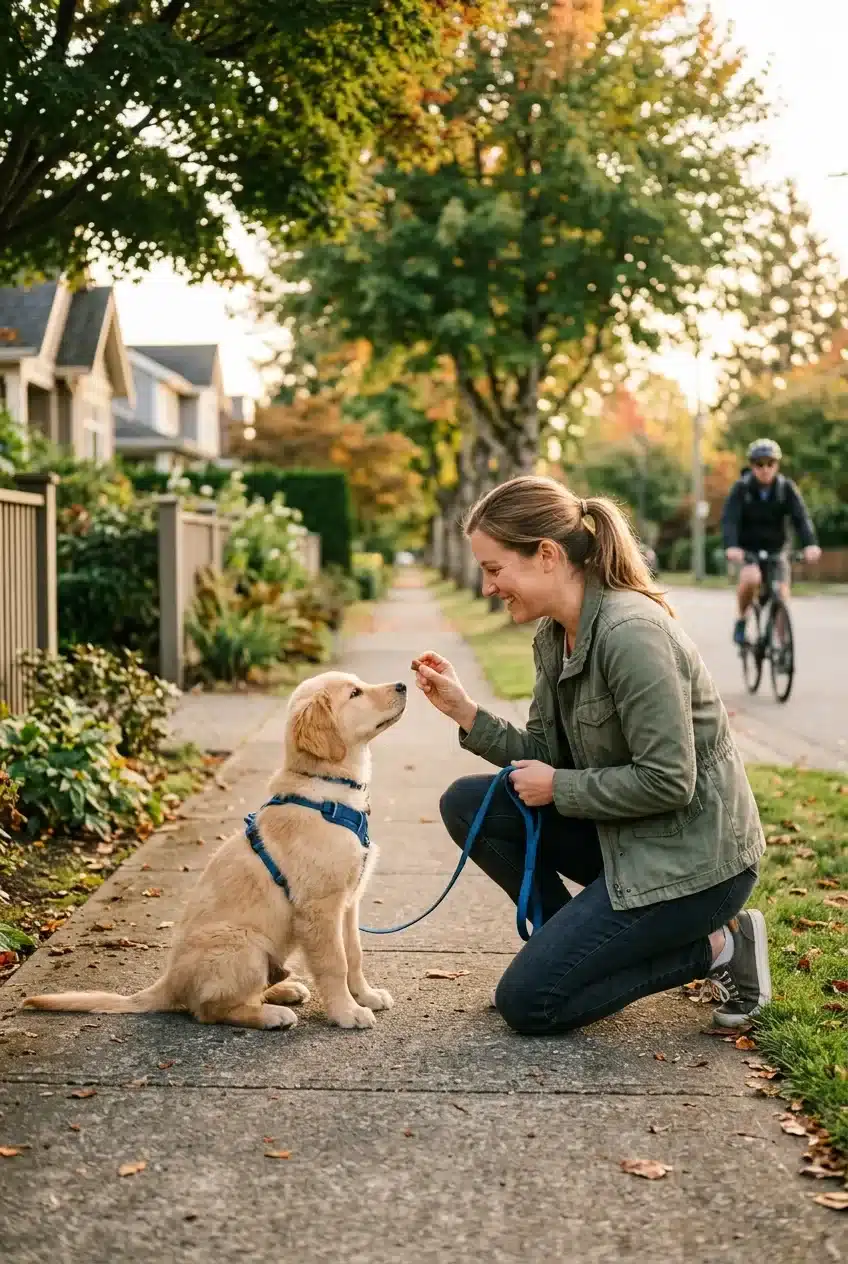
The fastest way to manage puppy reactivity is to use threshold-based desensitization in short daily sessions of three to five minutes. Keep your puppy far enough from triggers that they notice but do not react, then reward calm behavior immediately.
- Work below threshold — distance is your most powerful tool.
- Reward the moment your puppy looks at a trigger and looks back at you.
- Use high-value treats your puppy only gets during reactive-trigger training.
- Three five-minute sessions beat one thirty-minute session most days.
- Progress is measured in weeks, not hours — patience is built in.
Understanding Why Puppies Become Reactive
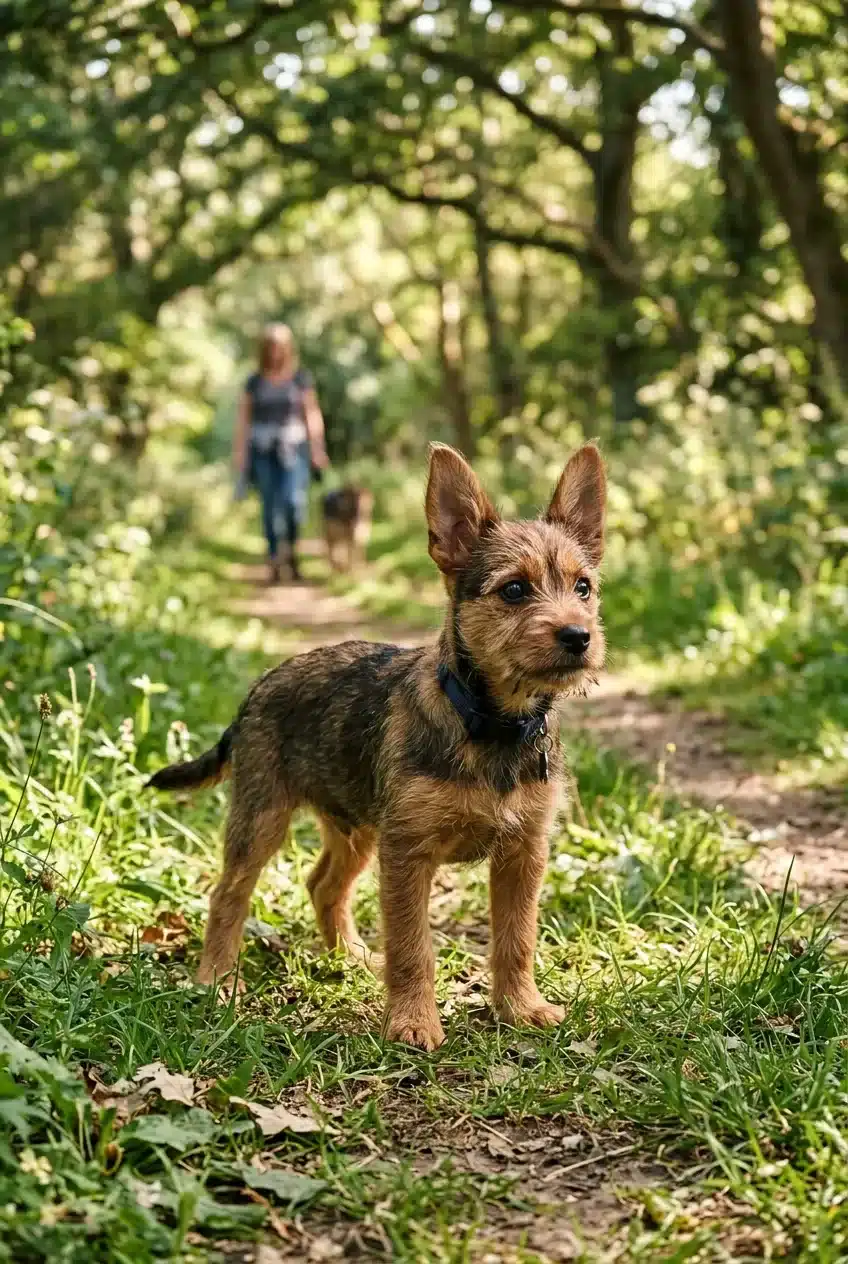
Puppy reactivity is a fear or arousal response to specific triggers — dogs, bikes, strangers, or loud noises. The American Veterinary Society of Animal Behavior (AVSAB) notes that the primary socialization window closes around 12–16 weeks, making early exposure essential.
Missing that window does not doom your puppy. It does mean that desensitization takes more deliberate effort afterward.
“Behavior problems, including fear and aggression, are the number one reason owners relinquish dogs to shelters.” — American Veterinary Society of Animal Behavior, Position Statement on Puppy Socialization
Reactivity is not the same as aggression. Most reactive puppies are overwhelmed, not dangerous. Understanding this changes how you respond during a reaction.
The trigger is not the problem — being over threshold is.
Get Free Dog Health Tips!
Weekly guides on keeping your dog healthy & happy
🔒 No spam. Unsubscribe anytime.
Building a Micro-Training Routine That Fits Your Schedule
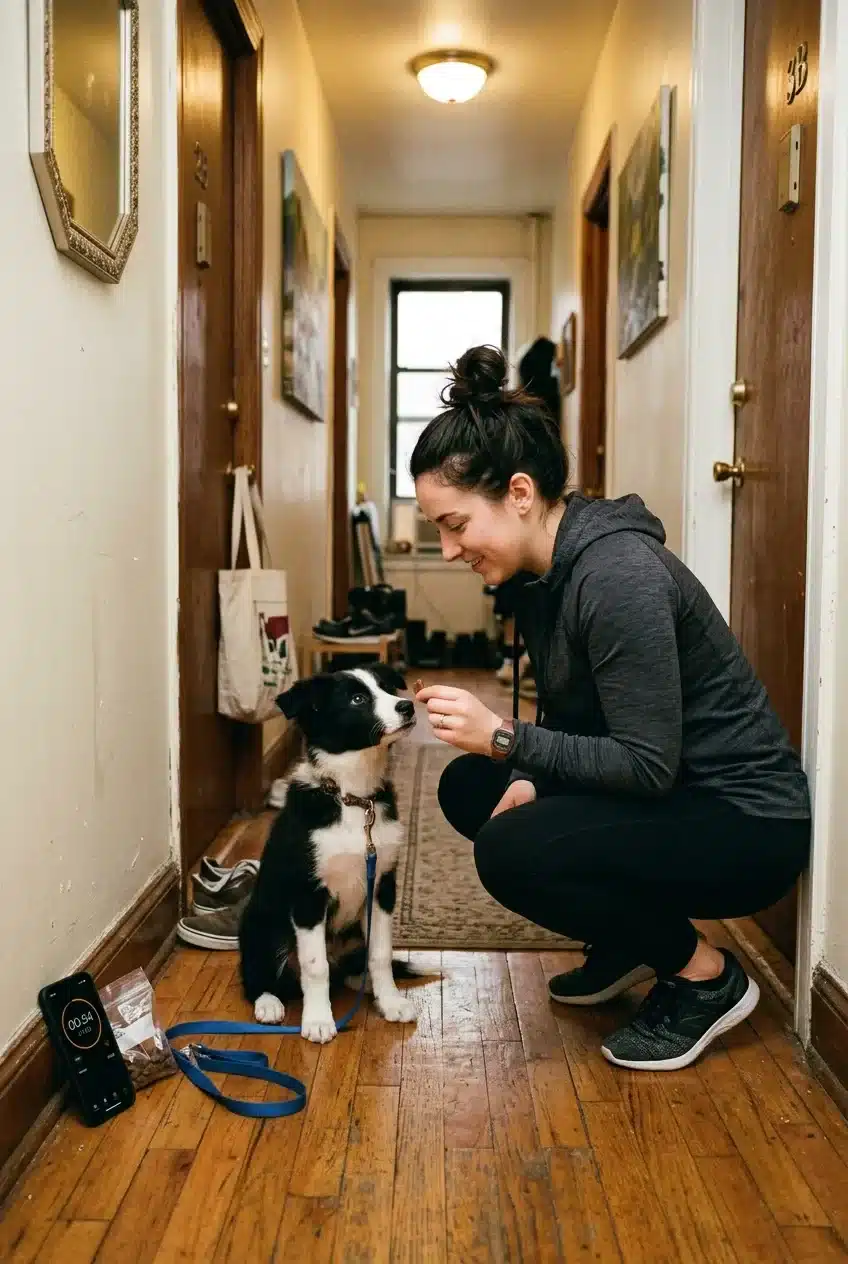
A micro-training routine for reactive puppies focuses on short, repeatable moments rather than long planned sessions. You can attach training to things you already do every day.
The Three-Minute Window Method
Pick three moments in your existing routine: morning coffee, lunch break, evening walk prep. Each moment gets a three-minute training task — nothing longer.
- Morning: Leash manners practice in the hallway or garden.
- Midday: A single controlled exposure from a window or doorway.
- Evening: One calm walk segment with treat rewards for checking in.
Keeping a treat pouch clipped to your bag means you are always ready without extra prep.
MOST POPULAR THIS WEEK
Vet-Recommended Articles: 👇
👉 Why Does My Dogs Skin Turn Dark And Thick After Years Of Allergy Treatment
👉 Best Home Remedies For Arthritis In Dogs With Limping
👉 How Long Does An Elimination Diet Take For Dogs With Skin Allergies
Stacking Training Into Daily Life
You do not need a dedicated training session to make progress. Reactive puppy work happens at the front door, on the pavement, and at the gate — real-life moments you are already navigating.
Ask for a sit before you open the front door. Reward a calm glance at a passing dog on your normal walk. These small wins add up faster than you might expect.
If your puppy is also struggling with destructive behaviors at home, the same micro-session approach applies — short, consistent, calm repetition.
The Core Techniques That Work in Under Five Minutes
These three techniques are used by certified applied animal behaviorists and take under five minutes each. They are ranked by ease of integration into a busy day.
| Technique | Time Needed | Best For |
|---|---|---|
| Look at That (LAT) | 2–3 minutes | Dogs who fixate on triggers |
| Emergency U-Turn | 1–2 minutes of practice | Preventing over-threshold moments |
| Engage-Disengage | 3–5 minutes | Building calm responses over time |
Look at That (LAT)
Developed by trainer Leslie McDevitt in her Control Unleashed program, LAT teaches your puppy to mark a trigger and immediately check back in with you. You click or say “yes” the instant they glance at the trigger, then reward.
The puppy learns that noticing a trigger predicts a treat. Over time, the trigger becomes a cue for calm attention rather than alarm.
The Emergency U-Turn
Practice the U-turn on quiet streets with no triggers present first. Use a cheerful voice, turn 180 degrees, and walk briskly the other way while treating.
Once the puppy knows the cue, you can use it the moment you spot a trigger before your puppy reacts. A good no-pull puppy harness makes U-turns smoother and keeps pressure off the throat during fast pivots.
Engage-Disengage
This two-stage game is described in detail by certified dog behavior consultant Grisha Stewart. Stage one rewards looking at the trigger. Stage two rewards disengaging from the trigger on their own.
It is one of the most well-researched protocols for reactive dogs and takes five minutes per session.
Managing the Environment When You Cannot Train Actively
Environmental management is not a shortcut — it is a legitimate part of any reactive puppy plan. When you cannot train actively, preventing rehearsal of reactive behavior is the next best move.
- Block window access with window privacy film to reduce trigger exposure indoors.
- Walk at off-peak times — early mornings and late evenings have fewer triggers.
- Use a longer lead (not a retractable) to create distance from triggers without pulling.
- Cross the street early — before your puppy notices the trigger, not after.
Managing the environment reduces the number of over-threshold moments your puppy rehearses. Every rehearsal of a reactive response strengthens that neural pathway, according to behavioral neuroscience principles.
If you own a breed with high energy, like a Standard Poodle puppy, channeling energy through mental enrichment also reduces baseline arousal — which directly lowers reactivity intensity.
Common Mistakes That Slow Your Progress
Avoiding these mistakes matters as much as doing the right techniques. One common error can undo a week of careful work.
- Flooding the puppy: Forcing close exposure to triggers overwhelms them. It increases fear rather than reducing it. Always stay below threshold and increase proximity gradually.
- Punishing the reaction: Corrections during a reactive episode teach the puppy that triggers predict both the scary thing AND punishment. It worsens reactivity over time. Redirect instead.
- Inconsistent management: Allowing some over-threshold reactions while training others sends mixed signals. Even one unmanaged explosion can set back progress by days. Block triggers you cannot manage.
- Using the wrong treats: Low-value treats do not compete with a high-arousal trigger. Use real meat, cheese, or a high-value training treat that your puppy only sees during reactive work.
- Training only in one spot: Reactivity is context-specific. Practice in multiple locations so generalization occurs. A puppy who is calm near dogs on one street may still react on another.
When to Call a Professional
A certified dog behavior consultant (CDBC) or veterinary behaviorist should be consulted if your puppy’s reactivity includes snapping, redirected biting, or does not improve after four to six weeks of consistent work.
Some cases have an underlying anxiety component that responds to veterinary support alongside training. Breed, early history, and individual temperament all affect how quickly a puppy responds.
Getting professional help early is faster and cheaper than waiting until the behavior is entrenched.
For puppies who need grooming alongside behavior work — because a stressed puppy is harder to handle at the groomer — using the best-smelling puppy shampoo and building calm handling routines at home reduces that stress too.
Frequently Asked Questions About How to Manage Puppy Reactivity When You Do Not Have Time
Can you really make progress on puppy reactivity in just five minutes a day?
Yes, you can make real progress on puppy reactivity in five minutes a day if sessions are consistent and structured below threshold. Research in applied behavior analysis supports short, frequent repetitions over long, infrequent ones.
What age does puppy reactivity usually start?
Puppy reactivity typically becomes noticeable between four and eight months of age, as the secondary fear period begins. Some puppies show signs earlier if socialization was limited in the first twelve weeks.
Is puppy reactivity the same as aggression?
Puppy reactivity is not the same as aggression. Reactivity is an overreaction driven by fear or frustration, while aggression involves intent to cause harm. Most reactive puppies are overwhelmed, not dangerous.
Should I avoid all triggers while training a reactive puppy?
You should not avoid all triggers — controlled, below-threshold exposure is how desensitization works. Avoid uncontrolled exposure where your puppy goes over threshold, as that rehearses and strengthens the reactive response.
Does punishing a reactive puppy make the reactivity worse?
Punishing a reactive puppy typically makes reactivity worse over time. Corrections add negative associations to an already stressful trigger, increasing fear and anxiety rather than reducing the reaction.
How long does it take for puppy reactivity training to work?
Puppy reactivity training typically shows noticeable improvement within four to eight weeks of consistent daily work. Some puppies improve faster; others with deeper fear responses may take several months.
The One Thing That Makes the Biggest Difference
Managing puppy reactivity when you do not have time comes down to one principle: keep your puppy below threshold, every single day. Distance and prevention do more work than any technique when time is short.
Start today with one three-minute session. Pick a window with a low-distraction view, load up on small, high-value treats, and reward every calm glance at anything that moves outside. That is the entire session.
If you are also working through other puppy challenges alongside reactivity, the same consistent-and-calm approach applies — whether that is stopping a puppy from chewing furniture or building confidence on the lead. Small steps, taken daily, are what actually move the needle.