A dog that suddenly cannot stand or walk is experiencing a medical emergency. The most common causes include spinal cord injury, stroke, vestibular disease, or severe muscle weakness — all of which require immediate veterinary attention.
Watching your dog collapse or struggle to get up is terrifying. Understanding why it happens — and what to do in the next few minutes — can make a real difference in your dog’s outcome.
Why Is My Dog Suddenly Unable to Stand or Walk?
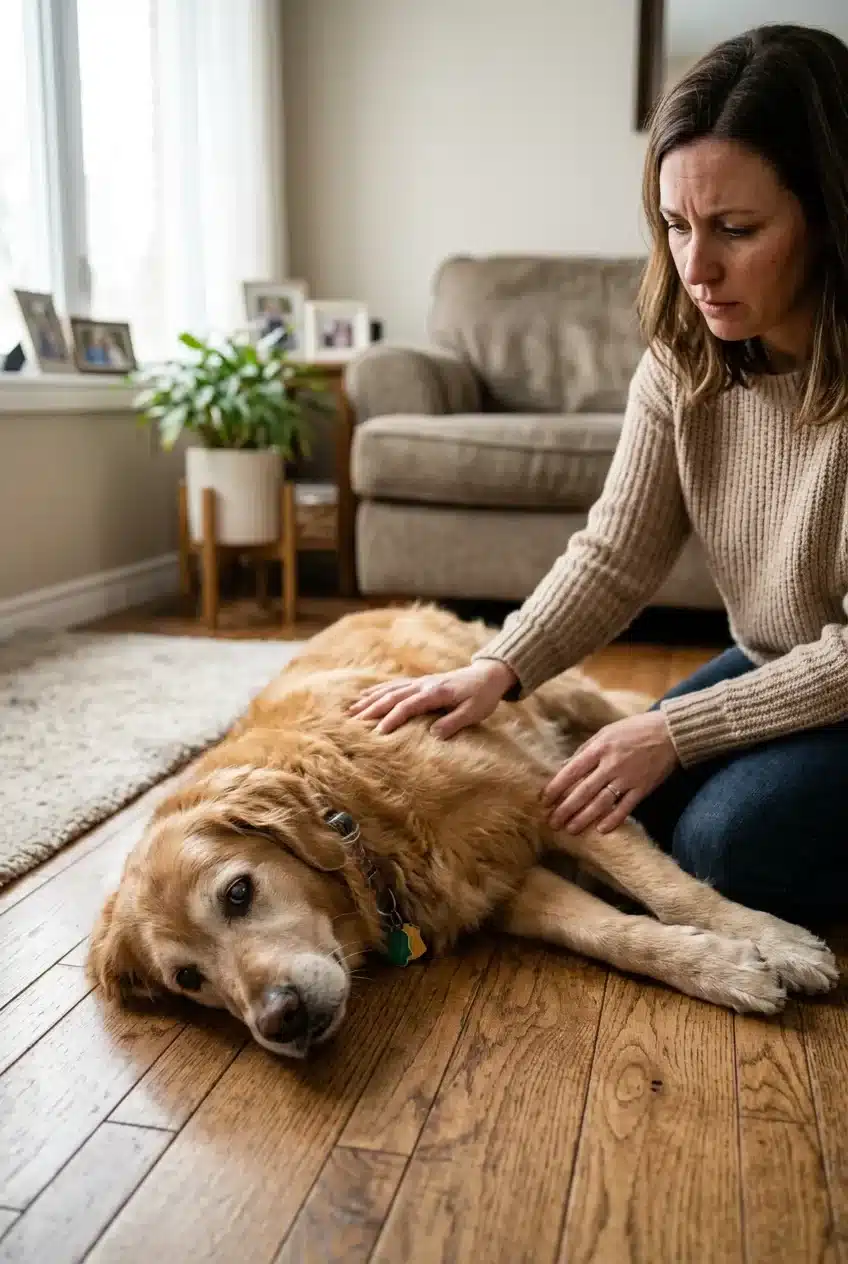
A dog that suddenly cannot stand or walk has likely suffered a neurological event, spinal injury, or severe systemic illness. The loss of coordination or complete inability to bear weight signals that something is wrong with the brain, spinal cord, or musculoskeletal system.
- Sudden paralysis or collapse is always a veterinary emergency — call your vet immediately.
- Spinal disc disease (IVDD) is the most common cause in small and medium breeds.
- Vestibular syndrome mimics a stroke and often resolves within days.
- Degenerative myelopathy causes gradual, then sudden, hind-limb weakness in older dogs.
- Tick paralysis can cause full-body weakness that reverses once the tick is removed.
- Poisoning, low blood sugar, and heart events can also cause sudden collapse.
The Most Common Causes of Sudden Inability to Stand
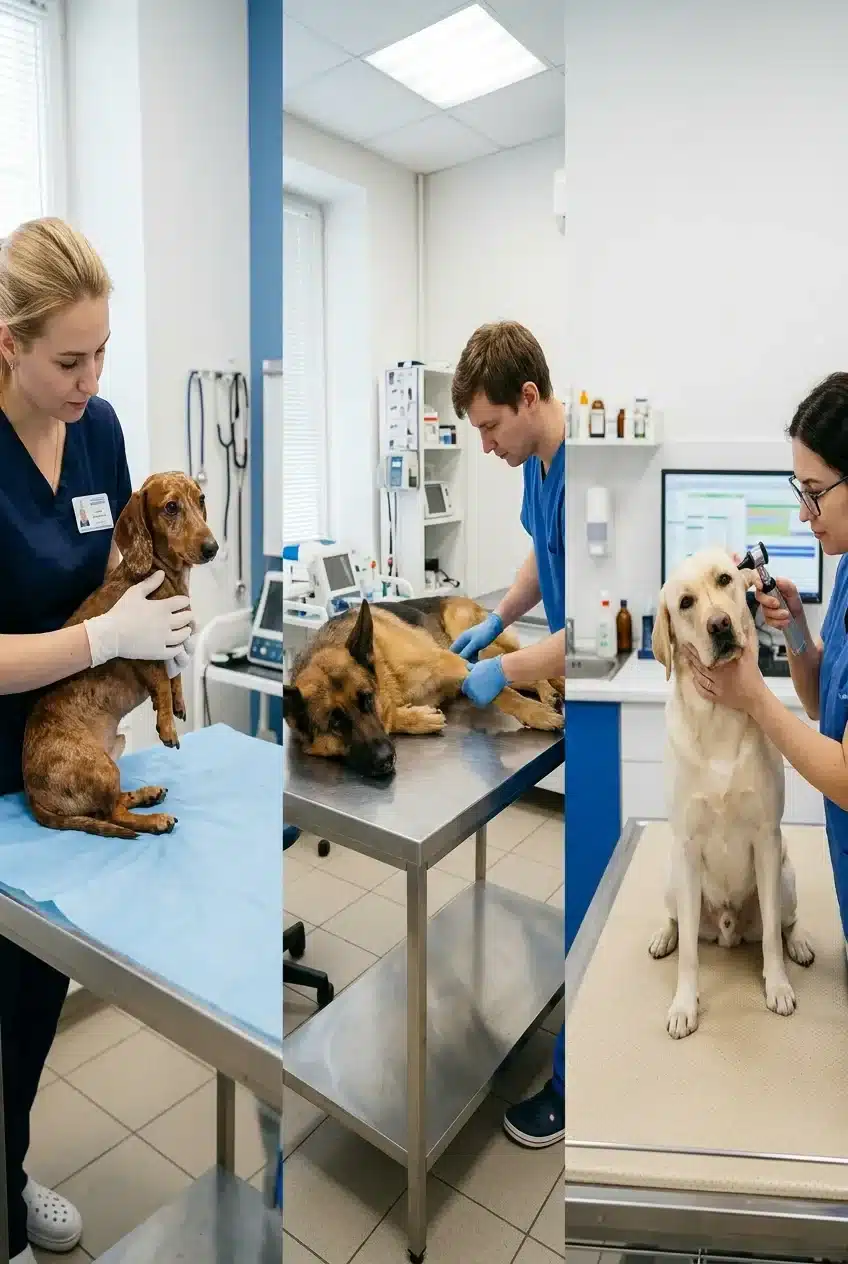
Several conditions can cause a dog to lose the ability to stand or walk without warning. Identifying the most likely cause depends on the dog’s age, breed, speed of onset, and which limbs are affected.
Intervertebral Disc Disease (IVDD)
IVDD is the leading cause of sudden hind-limb paralysis in dogs. It occurs when a spinal disc ruptures and compresses the spinal cord, cutting off nerve signals to the legs.
Breeds like Dachshunds, French Bulldogs, Beagles, and Corgis are genetically predisposed due to their long spines or short legs. The American College of Veterinary Surgeons notes that IVDD accounts for a significant proportion of spinal surgeries in dogs each year.
Signs include a sudden yelp, arched back, and loss of coordination in the back legs. A dog support sling can help you move a dog with suspected spinal injury safely without worsening the damage.
Vestibular Syndrome
Canine vestibular syndrome affects the inner ear or brain stem and causes sudden, dramatic loss of balance. Dogs often tilt their head, fall to one side, and show rapid eye movement (nystagmus).
Get Free Dog Health Tips!
Weekly guides on keeping your dog healthy & happy
🔒 No spam. Unsubscribe anytime.
It can look exactly like a stroke, but idiopathic vestibular syndrome — the most common form — often improves within 72 hours without treatment. Many owners are surprised to see their dog walking again within a week.
If your dog’s eyes are flickering rapidly and they are falling to one side, vestibular disease is a strong possibility — but only a vet can confirm it.
MOST POPULAR THIS WEEK
Vet-Recommended Articles: 👇
👉 Why Does My Dogs Skin Turn Dark And Thick After Years Of Allergy Treatment
👉 Best Home Remedies For Arthritis In Dogs With Limping
👉 How Long Does An Elimination Diet Take For Dogs With Skin Allergies
Degenerative Myelopathy
Degenerative myelopathy (DM) is a progressive spinal cord disease that typically affects dogs over seven years old. German Shepherds, Boxers, and Pembroke Welsh Corgis are among the most affected breeds.
DM usually starts with wobbling in the hind legs and gradually progresses to full paralysis. There is no cure, but physical therapy and mobility aids like dog rear-leg wheelchairs can maintain quality of life.
Neurological and Brain-Related Causes
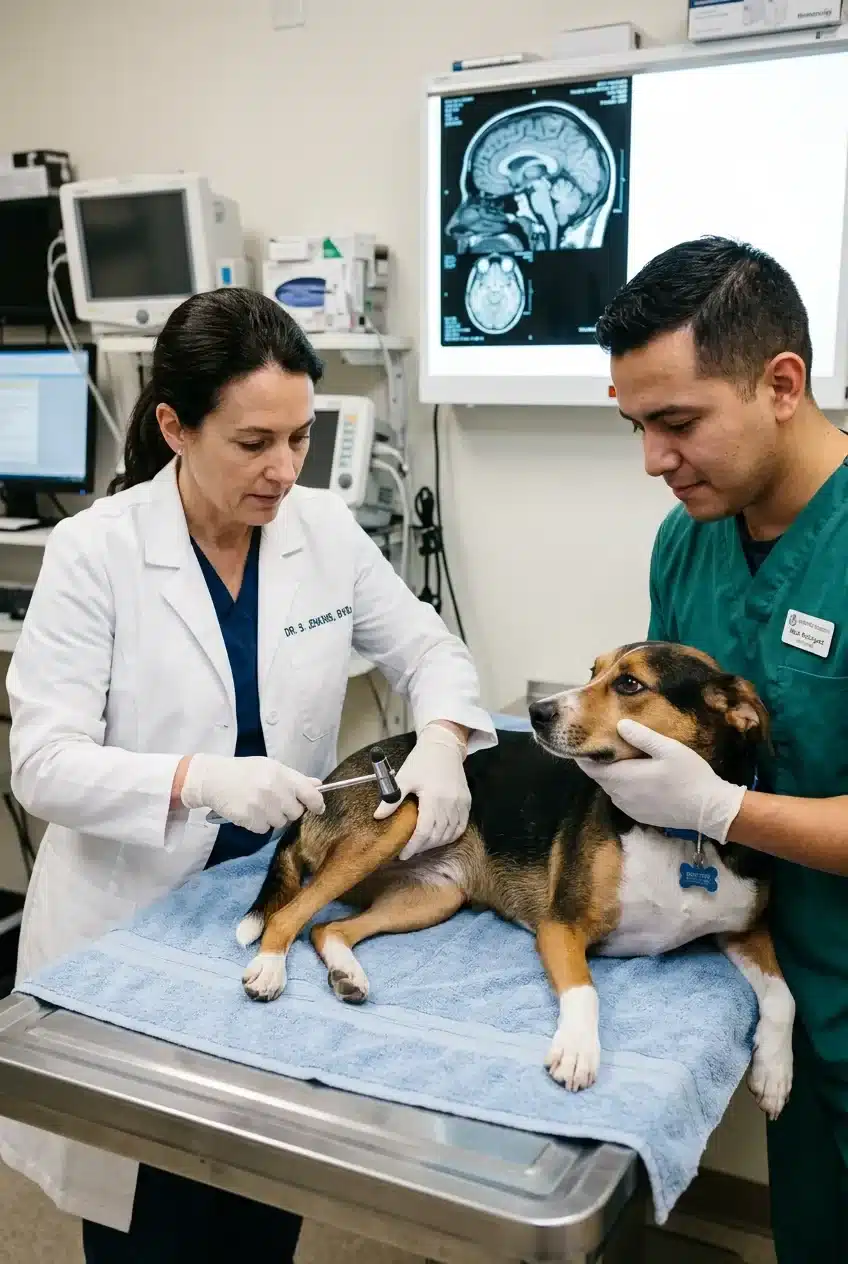
When the brain itself is affected, a dog may lose the ability to stand or walk suddenly. These conditions are among the most serious and require emergency imaging.
Stroke (Cerebrovascular Accident)
Dogs do suffer strokes. A cerebrovascular accident disrupts blood flow to the brain, causing sudden collapse, head tilting, walking in circles, or inability to stand.
Unlike in humans, many dogs recover well from strokes with prompt veterinary care. MRI is the gold standard for diagnosis and is available at most veterinary neurology centers.
Fibrocartilaginous Embolism (FCE)
FCE occurs when a piece of disc material enters the spinal cord’s blood supply, blocking blood flow. It causes sudden, often non-painful paralysis — usually on one side of the body.
FCE is common in large, active breeds like Labrador Retrievers and Border Collies. Recovery depends on the severity of the blockage and how quickly rehabilitation begins.
“The speed of neurological deterioration is one of the most important factors in deciding whether surgery is appropriate and how quickly it must happen.” — American College of Veterinary Surgeons guidance on spinal cord injury
Systemic and Toxic Causes of Sudden Collapse
Not every cause of sudden inability to walk involves the spine or brain. Whole-body illnesses and toxic exposures can cause a dog to collapse just as quickly.
| Cause | Key Sign | Action |
|---|---|---|
| Tick paralysis | Ascending weakness, no pain | Find and remove tick immediately |
| Severe hypoglycemia | Weakness, trembling, glassy eyes | Emergency vet — glucose support |
| Toxin ingestion | Collapse, vomiting, seizures | Call ASPCA Poison Control: 888-426-4435 |
| Cardiac event | Sudden collapse, pale gums | Emergency vet immediately |
| Severe anemia | Weakness, rapid breathing | Bloodwork and emergency vet |
Tick paralysis is one of the most reversible causes. Once the tick is fully removed, most dogs recover within hours to days. Always check your dog thoroughly after outdoor time, especially in wooded areas.
For small hypoallergenic dog breeds that spend time indoors, toxic household substances — including certain plants, medications, and cleaning products — are a more common culprit than ticks.
What to Do When Your Dog Suddenly Can’t Stand
Acting quickly and correctly in the first few minutes can protect your dog from further injury. Do not wait to see if things improve on their own.
- Stay calm — your dog reads your energy. Speak quietly and avoid sudden movements around them.
- Do not force them to stand — attempting to make a dog with spinal injury walk can worsen cord damage significantly.
- Support the spine — if you must move your dog, slide a firm board or a folded blanket under them to keep the back flat. A pet stretcher board is ideal for larger dogs.
- Call your vet immediately — describe exactly which legs are affected, whether there is pain, and how fast the onset was.
- Note what happened beforehand — did your dog jump off furniture, eat something unusual, or show signs of illness earlier? This history helps the vet enormously.
- Avoid giving any medication — human pain relievers like ibuprofen are toxic to dogs. Wait for veterinary guidance before administering anything.
Time matters most with spinal cord injuries. Dogs treated for IVDD within 24 hours of symptom onset have significantly better outcomes than those treated later.
Common Mistakes Dog Owners Make in This Situation
- Waiting to see if it passes: Delaying veterinary care by even a few hours can mean the difference between a dog that walks again and one that doesn’t. Call your vet the moment you notice the problem.
- Carrying the dog incorrectly: Picking up a dog with a spinal injury by the belly or under the arms can flex the spine and worsen cord compression. Always support the full length of the body.
- Assuming it is just tiredness or aging: Sudden inability to stand is never normal at any age. Gradual weakness in older dogs — especially in small breeds like Bichon Frises — still warrants a veterinary check.
- Giving human pain medication: NSAIDs like ibuprofen and acetaminophen are toxic to dogs. They can cause kidney failure or internal bleeding on top of the existing emergency.
- Skipping the neurological history: Forgetting to mention that your dog jumped off a bed or was in the yard before collapsing can delay the correct diagnosis. Write it down before you go to the vet.
Frequently Asked Questions About Why Is My Dog Suddenly Unable to Stand or Walk?
Can a dog recover from sudden paralysis?
Yes, many dogs recover from sudden paralysis, especially when treated quickly. Recovery depends heavily on the underlying cause — IVDD and vestibular syndrome have good outcomes with prompt care.
How do I know if my dog had a stroke?
Signs of a stroke in dogs include sudden collapse, head tilting, rapid eye movement, and inability to walk in a straight line. A veterinary MRI is needed to confirm a stroke diagnosis.
Is vestibular disease in dogs life-threatening?
Idiopathic vestibular disease is not life-threatening and often resolves within one to two weeks. However, a brain tumor or middle-ear infection causing similar symptoms can be serious and requires diagnosis.
What breeds are most at risk for sudden paralysis?
Dachshunds, French Bulldogs, Beagles, and Corgis have the highest IVDD risk due to their spinal structure. German Shepherds and Boxers are more prone to degenerative myelopathy as they age.
Should I use a dog wheelchair if my dog can’t walk?
A dog wheelchair can be a valuable long-term aid for dogs with permanent or slow-recovery paralysis. Your vet or a veterinary rehabilitation specialist should guide the fitting to ensure it supports the dog correctly.
Can diet affect a dog’s ability to walk?
Severe nutritional deficiencies — particularly thiamine or calcium imbalances — can cause muscle weakness and coordination problems. A vet-recommended mobility support diet may be suggested during recovery.
When Your Dog Can’t Walk: The One Thing That Matters Most
A dog that suddenly cannot stand or walk needs a veterinarian — not a wait-and-see approach. Every hour of delay with a spinal cord injury narrows the window for full recovery.
Call your vet or the nearest emergency animal hospital right now. While you wait, keep your dog still, warm, and calm. Avoid lifting them incorrectly, and bring a written timeline of exactly what happened.
Your dog is counting on you to act fast. The single most important step you can take today is picking up the phone.