You notice a small white bump on your dog’s skin. It wasn’t there last week, and now it’s bigger. Naturally, your mind goes straight to worst-case scenarios.
Knowing what does a growing white papule on your dog mean can save you from unnecessary panic — or help you catch something serious before it gets worse. Skin changes in dogs are common, but not all of them are equal.
This guide breaks down the most likely causes, the warning signs that need a vet visit, and exactly what to do next. If you’ve also noticed warning signs your dog is unhappy, a physical checkup is worth scheduling sooner rather than later.
What Does a Growing White Papule on a Dog Actually Mean?
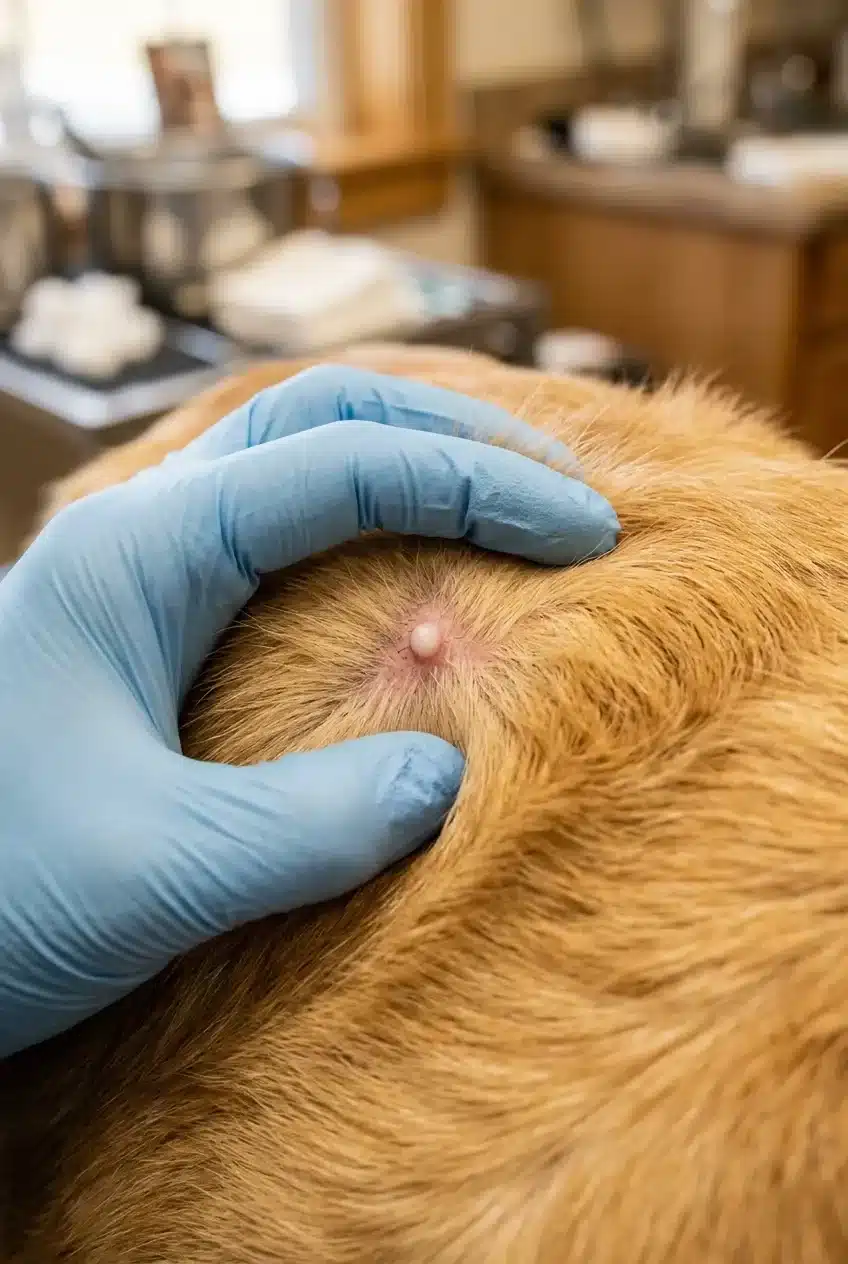
A growing white papule on a dog is a small, raised, white or pale bump on the skin that is increasing in size over days or weeks. It can signal anything from a harmless cyst or pimple to an infected follicle, a benign tumor, or — less commonly — a malignant growth that needs prompt veterinary attention.
- A papule is medically defined as a raised skin lesion under 1 cm in diameter.
- White or pale color often indicates keratin, pus, or fatty tissue inside.
- Growth over time is the key factor that separates minor issues from serious ones.
- Location on the body (face, paw, belly, eyelid) affects the likely diagnosis.
- Most white papules in dogs are benign, but only a vet can confirm that.
- Any papule that bleeds, ulcerates, or doubles in size quickly warrants same-week vet care.
What Are the Most Common Causes of White Papules in Dogs?
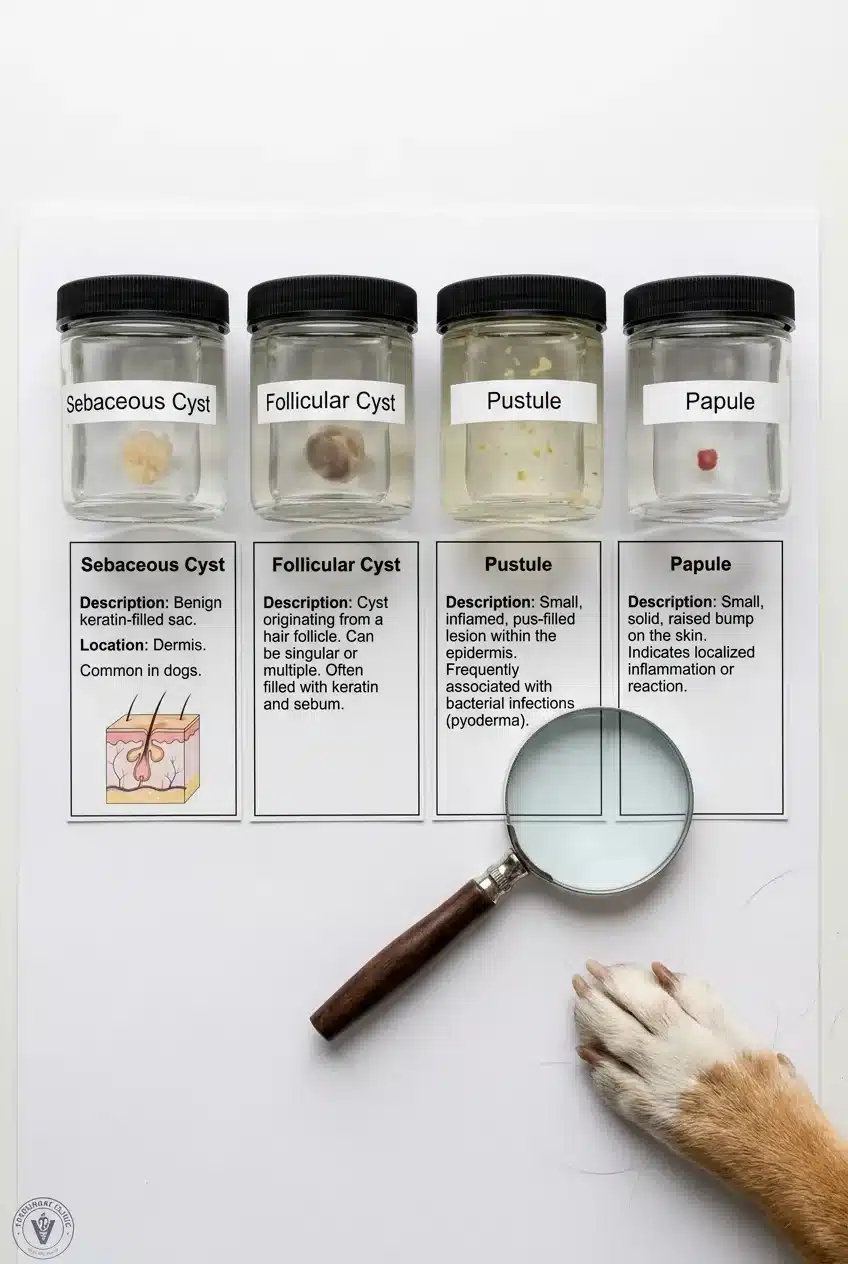
Most white papules on dogs fall into a handful of well-recognized categories. Understanding each one helps you describe the bump accurately when you call your vet.
DON’T MISS THESE
You’ll Want to Read These Too: 👇
👇 What Makes A Dog Hypoallergenic
Get Free Dog Health Tips!
Weekly guides on keeping your dog healthy & happy
🔒 No spam. Unsubscribe anytime.
👇 Best Low Carb Dog Foods Reviews
Sebaceous Cysts
Sebaceous cysts are the most frequent culprit. They form when a hair follicle or oil gland becomes blocked, trapping keratin and sebum beneath the skin surface.
These cysts are usually soft, slow-growing, and moveable under the skin. They often have a white or cream-colored center that may eventually rupture on its own.
Sebaceous cysts are almost always benign, but infected cysts become painful and may need drainage or surgical removal.
Follicular Cysts and Milia
Follicular cysts develop deeper in the hair follicle than sebaceous cysts. Milia are tiny, superficial white cysts that sit just under the skin’s surface and are especially common around the face and eyes.
Both types tend to stay small. If one is growing rapidly, that growth pattern alone is enough reason to get it checked.
Canine Acne and Pustules
Young dogs — especially short-coated breeds like Boxers, Bulldogs, and Great Danes — commonly develop acne-like pustules on the chin and muzzle. These white-headed bumps are caused by follicular inflammation, not bacterial infection in most cases, according to the American College of Veterinary Dermatology.
Canine acne typically resolves after puberty. Persistent or spreading pustules may indicate a secondary bacterial infection called superficial pyoderma.
Warts (Canine Viral Papillomatosis)
Canine warts are caused by the canine papillomavirus (CPV) and appear as rough, white or pale, cauliflower-like growths. They are most common in puppies and immunocompromised dogs and often cluster around the mouth, eyes, or between the toes.
Most warts regress on their own within 1–5 months once the immune system responds. A wart that keeps growing instead of shrinking should be evaluated — rarely, papillomavirus-associated lesions can progress.
When Is a White Papule a Sign of Something Serious?

A white papule becomes a serious concern when specific warning signs appear alongside it. The American Veterinary Medical Association (AVMA) advises owners to monitor any new skin mass for changes in size, shape, color, and texture.
“Any lump that doubles in size within a month, bleeds without cause, or becomes firmly attached to the tissue beneath it deserves prompt veterinary evaluation.” — General guidance from the AVMA on canine skin masses.
Watch for these red-flag features:
- The bump has grown noticeably within 2–4 weeks.
- It bleeds, oozes, or forms a crust that doesn’t heal.
- The surrounding skin is red, swollen, or warm to the touch.
- Your dog is scratching, licking, or biting at the site constantly.
- The lump feels hard and is fixed to the skin or tissue below it.
- You notice multiple new papules appearing at once.
Mast cell tumors can sometimes mimic benign cysts in early stages and are one of the most common malignant skin tumors in dogs, according to Veterinary Cancer Society data. Early biopsy is the only way to rule them out definitively.
How to Examine Your Dog’s White Papule at Home

A careful home examination gives your vet useful information before the appointment. It also helps you track whether the bump is truly growing or staying stable.
- Part the fur gently around the bump using clean fingers or a fine-tooth dog grooming comb — good lighting reveals the true size and color.
- Measure it by holding a ruler next to the bump and photographing it. Record the date so you have an objective baseline.
- Note the texture — soft and moveable usually means cyst; hard and fixed raises more concern.
- Check the skin around it for redness, warmth, or discharge that signals infection.
- Avoid squeezing it. Squeezing can rupture the cyst wall, introduce bacteria, and cause a painful abscess.
- Log your observations in a simple note on your phone — dates, size estimates, and any changes help your vet make a faster diagnosis.
If the bump has grown between your first and second measurement, book a vet appointment within the week. Stable, slow-growing bumps in older dogs can usually wait for a scheduled wellness visit.
Keeping your dog clean and comfortable during this monitoring period matters. Cleaning your dog without a bath can reduce skin irritation around the affected area without disturbing the bump.
What Will Your Vet Do About a Growing White Papule?
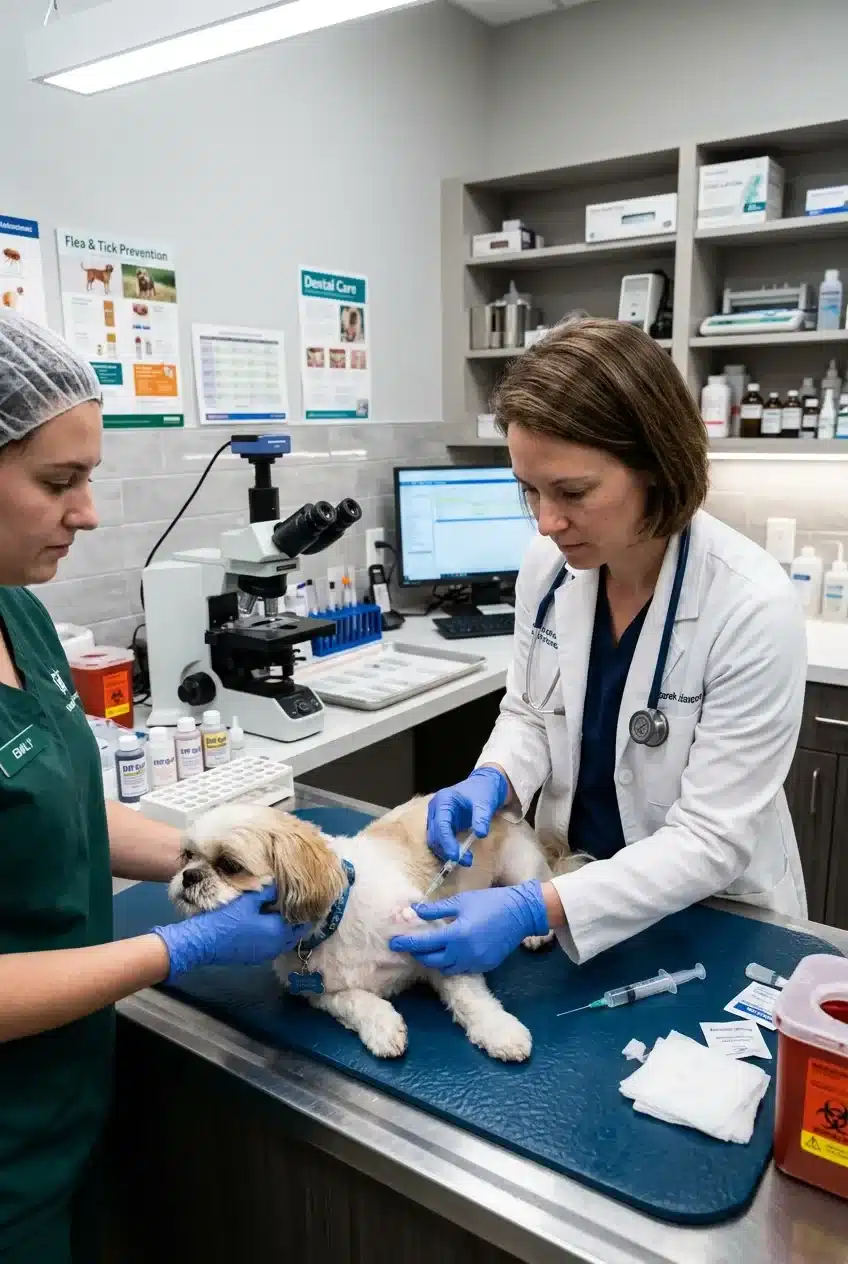
Your vet will assess the papule using a combination of physical examination, cytology, or biopsy. The approach depends on how suspicious the bump looks and how long it has been growing.
Fine Needle Aspiration (FNA)
FNA is usually the first diagnostic step. A thin needle draws cells from the mass, and those cells are examined under a microscope — often giving a same-day or next-day answer. It is minimally invasive and does not require anesthesia in most cases.
Using a pet first aid kit at home for post-procedure wound care can help keep the site clean after FNA if mild bleeding occurs.
Biopsy and Histopathology
If FNA results are inconclusive, a tissue biopsy sends a sample to a veterinary pathologist. This is the definitive test for ruling out malignancy.
A biopsy result changes everything — it tells your vet exactly what the mass is and whether complete removal is needed.
Treatment Options
| Diagnosis | Typical Treatment | Urgency |
|---|---|---|
| Sebaceous cyst | Monitor or surgical removal | Low — unless infected |
| Infected pustule | Topical or oral antibiotics | Moderate |
| Viral wart | Monitor; immune support | Low — usually self-resolving |
| Mast cell tumor | Surgical excision ± chemotherapy | High — act promptly |
| Lipoma | Monitor or removal if growing | Low to moderate |
Some dogs manage chronic skin conditions better with supportive care. If your vet recommends managing inflammation, giving CBD to your dog is one option some owners explore — always discuss it with your vet first before adding any supplement.
Common Mistakes Owners Make With Dog Skin Lumps
Handling a white papule the wrong way can delay treatment or make the problem worse. These are the most frequent missteps.
- Waiting too long to act: Watching a growing bump for months without a vet visit allows potentially malignant tumors extra time to spread. Fix: book an appointment if any lump grows within 4 weeks.
- Squeezing or popping the bump: This introduces bacteria and can rupture the cyst wall deeper into tissue, causing a painful abscess. Fix: leave it completely alone until your vet advises otherwise.
- Assuming all white bumps are cysts: Mast cell tumors and other malignancies can look identical to benign cysts without testing. Fix: get cytology or biopsy — never diagnose by appearance alone.
- Skipping follow-up after a benign diagnosis: Even confirmed benign cysts can become infected or — rarely — undergo malignant change over years. Fix: recheck any growing mass at annual wellness exams.
- Using human topical treatments on the bump: Products like salicylic acid or benzoyl peroxide at human concentrations can be toxic to dogs. Fix: use only vet-approved topical treatments on canine skin lesions.
Noticing physical changes like a new lump is part of reading your dog’s overall health. Changes in behavior are equally telling — learning to recognize signs your dog is unhappy gives you a fuller picture of how they’re feeling.
Frequently Asked Questions About What Does a Growing White Papule on Your Dog Mean?
Is a white bump on my dog always something to worry about?
A white bump on your dog is not always serious — most are benign cysts or follicular blockages. However, any bump that grows noticeably within weeks, bleeds, or changes texture deserves a vet evaluation to rule out malignancy.
Can I pop or squeeze my dog’s white papule at home?
You should never squeeze or pop a white papule on your dog at home. Doing so risks introducing bacteria, rupturing the cyst wall into deeper tissue, and creating a painful, potentially serious abscess.
How fast do malignant skin tumors in dogs grow?
Malignant tumors like mast cell tumors can double in size within weeks, though growth rate alone does not confirm malignancy. A fine needle aspiration or biopsy performed by a vet is the only reliable way to determine whether a lump is cancerous.
What breeds are most prone to skin cysts and papules?
Breeds prone to skin cysts and papules include Cocker Spaniels, Schnauzers, Golden Retrievers, and Boxers. Short-coated breeds like Bulldogs and Great Danes are especially prone to follicular cysts and canine acne on the face and muzzle.
My dog’s papule disappeared on its own — should I still see a vet?
A papule that resolves on its own is usually benign, such as a ruptured cyst or self-resolving wart. Mention it at your dog’s next wellness visit so your vet can document it in the record and watch for recurrence.
Can diet or allergies cause white papules on dogs?
Food allergies and environmental allergens can trigger skin inflammation that leads to secondary folliculitis and pustule formation in dogs. A vet-guided elimination diet or allergy testing can identify triggers if your dog develops recurring skin papules alongside other allergy symptoms like itching or excessive water consumption.
The Bottom Line on Growing White Papules in Dogs
A growing white papule on your dog is a signal worth taking seriously — not a reason to panic, but definitely not something to ignore. Most turn out to be benign, but the only way to know for certain is through proper veterinary testing.
The single most important action you can take today is to photograph the bump, measure it, and call your vet if it has grown at all in the past two to four weeks. Early diagnosis keeps treatment options open and outcomes better.
Your dog counts on you to notice these changes. Trust that instinct — it’s usually right.