You notice it first under your dog’s belly or around their armpits — skin that looks darker than usual, almost leathery, and feels thicker when you touch it. It does not look like a normal rash, and your dog has been scratching for months. Dark thickened skin patches in dogs with chronic allergies are one of the most common — and most misunderstood — signs that a skin condition has moved beyond a simple flare-up.
This change in skin texture and color is not cosmetic. It signals that your dog’s immune system and skin barrier have been under sustained stress, and it often means the underlying allergy needs more targeted management. Understanding what causes it, how to spot it early, and what treatment actually looks like can make a real difference for your dog’s comfort.
If your dog has been dealing with ongoing skin issues, learning how dogs live with allergies long-term can help you set realistic expectations and make better decisions alongside your vet.
What Are Dark Thickened Skin Patches in Dogs With Chronic Allergies?
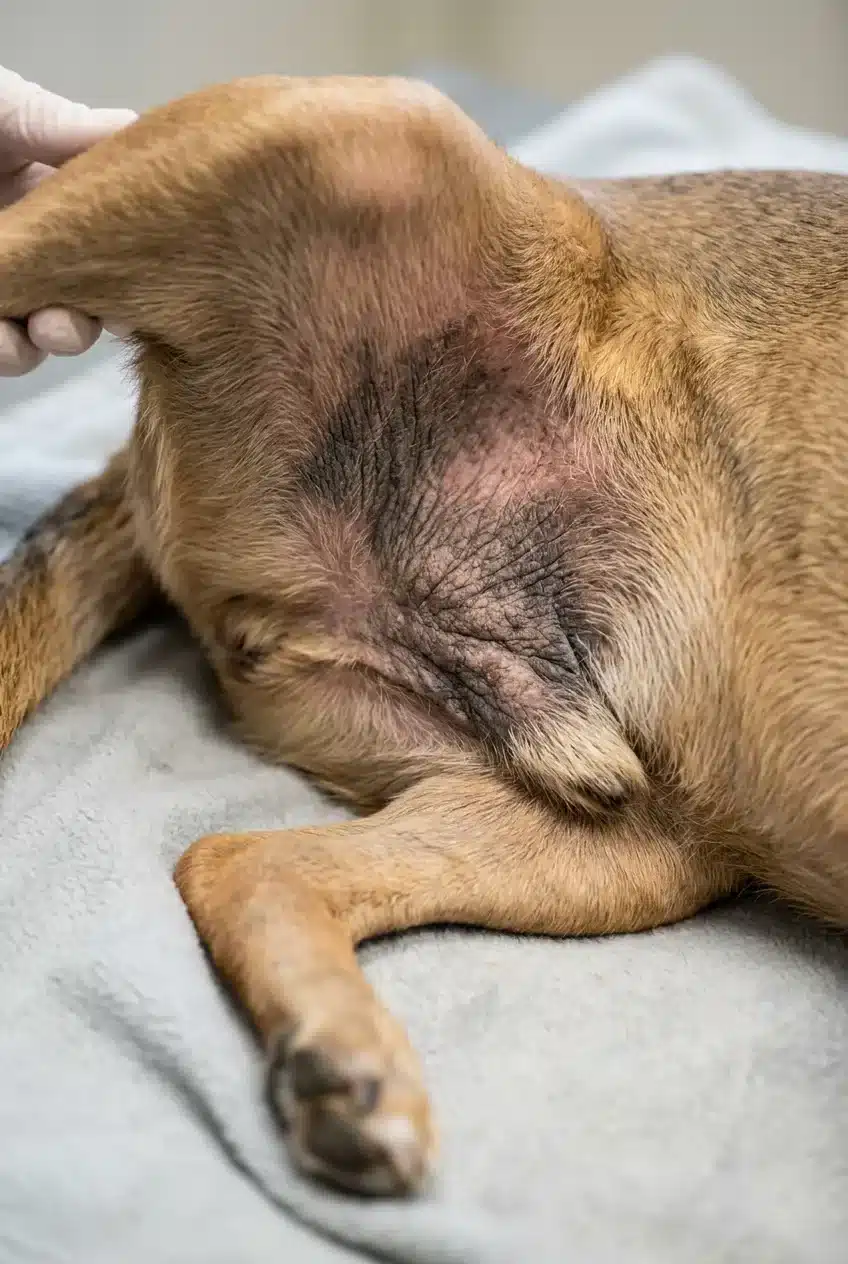
Dark thickened skin patches in dogs with chronic allergies are areas where the skin has undergone a process called lichenification — a thickening and hardening of the skin caused by repeated scratching, licking, or rubbing over weeks or months. These patches typically appear darker than the surrounding skin due to increased melanin production triggered by chronic inflammation. The condition is a secondary change, meaning it develops because of an unresolved underlying problem, not as a primary disease on its own.
- The darkening is called hyperpigmentation; the thickening is called lichenification.
- Both changes are driven by long-term inflammation and physical trauma to the skin.
- Common locations: armpits, groin, inner thighs, belly, and between paw pads.
- Most often associated with atopic dermatitis, food allergies, or flea allergy dermatitis.
- Secondary bacterial or yeast infections frequently develop in the same areas.
Why Do Chronic Allergies Cause Skin to Darken and Thicken?

When a dog scratches, licks, or chews the same spot repeatedly, the skin responds by producing extra layers of cells as a protective response. This is the same biological mechanism that creates calluses in humans under repeated pressure. Over time, the skin’s outer layer becomes denser, and melanocyte activity increases in the inflamed area, producing the characteristic dark discoloration.
DON’T MISS THESE
You’ll Want to Read These Too: 👇
👇 What Makes A Dog Hypoallergenic
Get Free Dog Health Tips!
Weekly guides on keeping your dog healthy & happy
🔒 No spam. Unsubscribe anytime.
👇 Best Low Carb Dog Foods Reviews
The process is directly tied to how long the allergy has gone without adequate control. According to the International Committee on Allergic Diseases of Animals (ICADA), atopic dermatitis is a progressive condition, and skin barrier dysfunction worsens with each prolonged flare.
Chronic itch — not the allergy itself — is the direct cause of lichenification and hyperpigmentation.
The Role of Secondary Infections
Thickened skin creates warm, folded environments where bacteria like Staphylococcus pseudintermedius and yeast like Malassezia pachydermatis can multiply quickly. These secondary infections intensify itching, which drives more scratching, which worsens the skin changes. This cycle is sometimes called the itch-scratch cycle, and breaking it is one of the core goals of treatment.
Yeast infections, in particular, can deepen the hyperpigmentation and add a greasy texture or musty odor to the affected patches. If you notice a strong smell coming from a dark skin patch, a secondary infection is very likely involved.
Which Allergies Most Commonly Lead to These Skin Changes?

Not every allergy causes dark thickened patches — it depends on how long the inflammation has been present and how severely the dog has been scratching. These three allergy types are most commonly linked to this outcome.
| Allergy Type | Trigger | Typical Patch Locations | Speed of Skin Change |
|---|---|---|---|
| Atopic Dermatitis | Environmental allergens (pollen, dust mites) | Armpits, groin, face, paws | Months to years |
| Food Allergy | Dietary proteins (chicken, beef, dairy) | Belly, paws, ears, rectal area | Months if untreated |
| Flea Allergy Dermatitis | Flea saliva | Base of tail, lower back, inner thighs | Weeks to months |
Atopic dermatitis is the most frequent culprit. A 2015 study published in Veterinary Dermatology estimated that atopic dermatitis affects between 10% and 15% of the global dog population, making it one of the most prevalent chronic skin conditions in veterinary medicine.
Dogs with year-round environmental allergies — triggered by dust mites rather than seasonal pollen — are especially prone to developing lichenification because there is no natural off-season for the itch to resolve. If outdoor exposure is part of the picture, knowing how to soothe dog skin allergies from grass exposure can reduce one contributing trigger.
How Vets Diagnose and Treat These Skin Changes
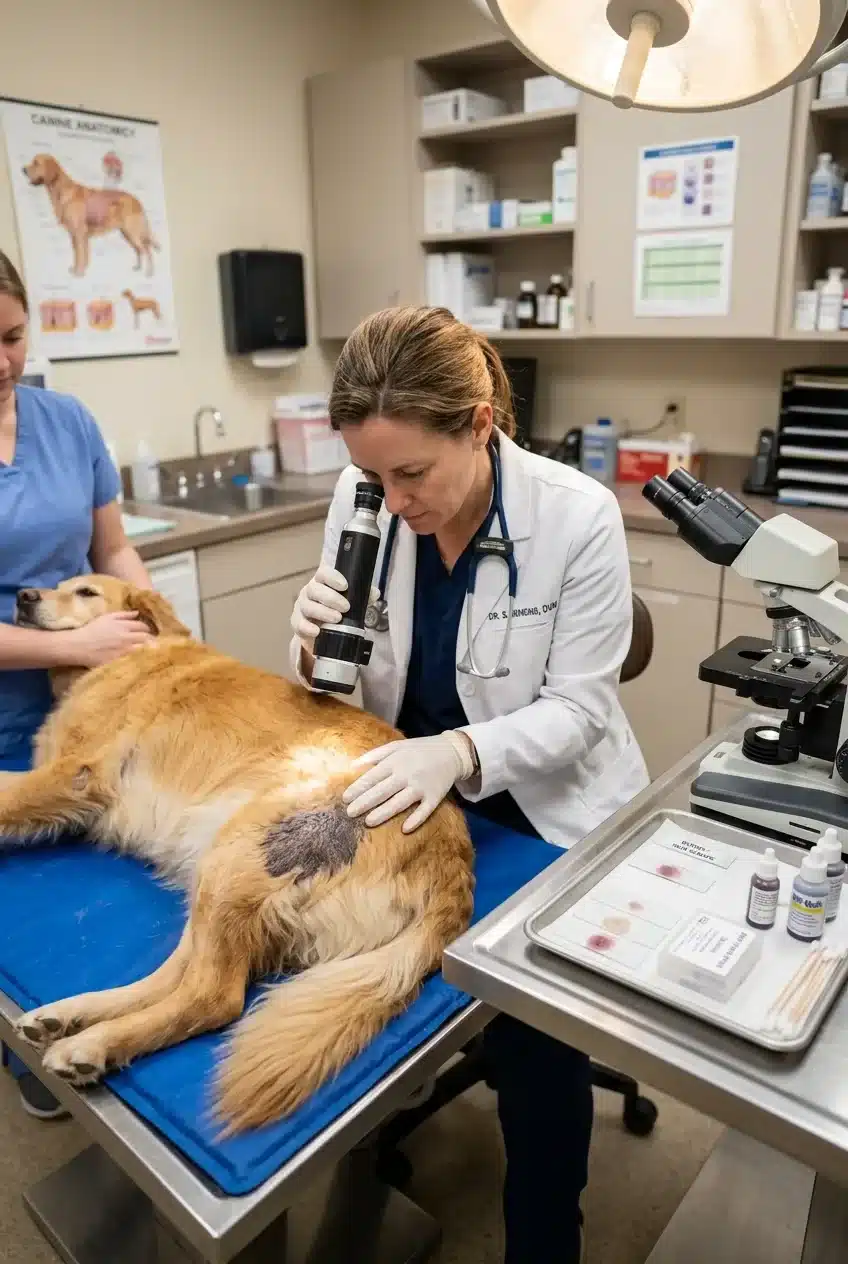
A veterinarian diagnosing dark thickened skin patches will typically start with a full skin examination and history, followed by cytology — a simple in-clinic test where cells are collected from the patch using tape or a swab and examined under a microscope. This identifies whether bacteria or yeast are present and guides the initial treatment plan.
Diagnosing the Underlying Allergy
Treating the visible skin change without finding the root cause will only provide short-term relief. Your vet may recommend an elimination diet trial lasting 8–12 weeks to rule out food allergy, or intradermal allergy testing to identify environmental triggers for suspected atopic dermatitis.
- Cytology: identifies secondary bacterial or yeast infections.
- Skin scraping: rules out mites (mange).
- Elimination diet: diagnoses food allergy over 8–12 weeks.
- Intradermal or serum allergy testing: maps environmental allergen sensitivity.
- Biopsy: used when other diagnoses are ruled out or cancer is a concern.
Medical Treatment Options
Once the cause is identified, treatment targets both the inflammation and any secondary infection. Antibiotics or antifungals are prescribed when cytology confirms infection. Oclacitinib (Apoquel) and lokivetmab (Cytopoint) are commonly used to control the itch that drives the skin changes, and both are approved by the FDA for canine atopic dermatitis.
For home management, a medicated chlorhexidine dog shampoo used regularly can reduce surface bacteria and yeast between vet visits. Moisturizing with a ceramide-based dog skin barrier spray can also help restore the skin’s protective function over time.
The skin changes themselves — the darkening and thickening — may not fully reverse, but they often improve significantly once the underlying allergy is controlled.
How to Monitor Your Dog’s Skin at Home

Consistent home monitoring helps you catch worsening changes early and gives your vet useful information at check-ups. A simple routine takes less than five minutes and does not require any special equipment.
- Do a weekly visual check — part the fur in common problem areas (armpits, groin, belly, paws) and look for new dark or thickened patches.
- Feel the skin texture — healthy skin feels soft and pliable; early lichenification feels slightly rough or raised compared to surrounding skin.
- Check for odor — a yeasty or musty smell from a dark patch is a reliable early sign of secondary infection.
- Photograph changes — a dated photo log gives your vet a clear picture of how quickly skin changes are progressing.
- Track scratching frequency — note which body areas your dog targets most and how often, so you can report changes in behavior accurately.
Using a soft grooming brush designed for sensitive skin during these checks makes the process comfortable for your dog and gives you better access to the skin surface.
You might also notice color changes near the face, which can have different causes. Understanding why dogs get dark spots under their eyes helps distinguish allergy-related pigmentation from other types of skin discoloration.
Common Mistakes Dog Owners Make With These Skin Patches
Getting the approach wrong early can allow the skin changes to become permanent and harder to manage. These are the most frequent errors and how to avoid them.
- Treating only the surface: Using topical creams without identifying the allergy trigger brings temporary relief but does not stop the cycle. Work with your vet to find the root cause first.
- Stopping medication too early: Infections in thickened skin can be deeper than they appear. Ending antibiotic or antifungal treatment before the full course is complete leads to relapse and antibiotic resistance.
- Assuming the patch will fade on its own: Hyperpigmentation and lichenification from chronic inflammation do not resolve without controlling the itch. Waiting makes permanent skin changes more likely.
- Using human skin products: Many human moisturizers and steroid creams contain ingredients toxic to dogs or disruptive to the skin’s pH. Only use products formulated for veterinary use.
- Ignoring flea prevention: Even one flea bite every few days is enough to keep a flea-allergic dog in a constant itch cycle. Year-round, vet-recommended flea control is non-negotiable for these dogs. If you are unsure how parasites spread between pets, understanding how bed bugs interact with dogs adds useful context on parasite exposure.
Frequently Asked Questions About Dark Thickened Skin Patches in Dogs With Chronic Allergies
Can dark thickened skin patches in dogs go away completely?
Dark thickened skin patches in dogs can improve significantly once the underlying allergy is well-controlled, but complete reversal depends on how long the changes have been present. Long-standing lichenification may leave some permanent texture change even after successful treatment.
Are these skin patches painful for my dog?
The patches themselves are not typically painful, but the itching that causes them is intensely uncomfortable. Secondary infections within the patches can add soreness or sensitivity when the area is touched.
How long does it take for the skin to improve after starting treatment?
Skin improvement after starting allergy treatment usually takes four to eight weeks for mild cases, and several months for areas with deep lichenification. Secondary infections must clear first before the skin texture can start to normalize.
Is hyperpigmentation in dogs always caused by allergies?
Hyperpigmentation in dogs is not always caused by allergies — hormonal conditions like hypothyroidism and Cushing’s disease also cause skin darkening. Your vet will run blood tests to rule out endocrine causes, especially if your dog is not particularly itchy.
Should I consider a hypoallergenic breed if my current dog has severe allergies?
Breed choice matters for future dogs, though no breed is completely allergen-free. If you are researching lower-allergy options, medium-sized hypoallergenic dog breeds offer a practical middle ground for families with allergy-sensitive households.
Can I use an oatmeal bath to help with these patches?
Colloidal oatmeal baths can soothe surface irritation and mild itching, but they will not treat an underlying infection or resolve lichenification. They are a useful supportive measure alongside veterinary treatment, not a replacement for it. A good colloidal oatmeal dog shampoo is worth having on hand for regular bathing between prescribed treatments.
The Single Most Important Step You Can Take Today
Dark thickened skin patches are a sign that your dog’s allergy has been running the show for too long. The skin is telling you the current management plan needs adjustment — whether that means a more aggressive allergy workup, better infection control, or a different approach to itch management.
Book a veterinary dermatology appointment this week if these patches are new, spreading, or have a smell. Bring photos, a scratching diary, and a list of every product currently used on your dog’s skin. The more information your vet has from the start, the faster you can get your dog to a more comfortable baseline.
Your dog does not have to live in chronic itch. With the right diagnosis and consistent management, most dogs with chronic allergies experience meaningful improvement in both skin health and quality of life.