You do not need to brush your F1 Medium goldendoodle every single day, but 4–5 times per week is the minimum most groomers recommend to prevent matting. Daily brushing is ideal if your dog has a curlier coat. Do I really need to brush my F1 Medium goldendoodle every day? The honest answer depends on your dog’s specific coat texture — and that varies even within the F1 generation.
F1 goldendoodles are a 50/50 cross between a Golden Retriever and a Poodle. That mix means coat texture can lean wavy, curly, or straight — and each type has a different maintenance schedule. If you’ve ever wondered whether you’re over- or under-brushing, you’re asking exactly the right question. For similar coat-care insight on other mixed breeds, see this guide on medium-sized hypoallergenic dogs.
Does an F1 Medium Goldendoodle Need Daily Brushing?

An F1 Medium goldendoodle needs brushing at least 4–5 times per week, and daily if the coat is curly. The F1 generation inherits an unpredictable mix of Golden Retriever and Poodle genetics, which means some dogs develop a tightly curled coat that mats within 24–48 hours without brushing, while others have a loose wave that tolerates 2–3 day gaps.
- Curly coat: brush daily (every 24 hours) to prevent tight mats
- Wavy coat: brush every 1–2 days, focusing on friction zones
- Flat/straight coat: brush every 2–3 days minimum
- Active dogs or dogs that swim: brush within 2–4 hours of getting wet
- Post-grooming (puppy trim or teddy bear cut): shorter coats can go 2–3 days between brushing
- Mat-prone areas (ears, armpits, collar line): check daily regardless of coat type
Bottom line: daily brushing is never wrong, but it’s not always mandatory — coat type is the deciding factor.
F1 Medium Goldendoodle Coat Facts at a Glance

- Generation: F1 = first-generation cross, 50% Golden Retriever and 50% Poodle
- Coat types: Curly, wavy, or flat — determined by which parent’s genes dominate
- Mat risk window: Mats can form in as little as 24–48 hours in curly coats left unbrushed
- Adult coat transition: Puppy coat changes to adult coat between 5–8 months of age — the highest-risk matting period
- Shedding level: Low to moderate; the American Kennel Club notes Poodle-cross coats shed significantly less than purebred Retrievers
- Grooming cost if mats form: A full dematting session at a professional groomer typically costs $50–$150 on top of a standard groom
- Confused with: F1B goldendoodles (75% Poodle, curlier, higher maintenance) and F2 goldendoodles (more variable coat)
What Happens If You Skip Brushing for a Few Days?
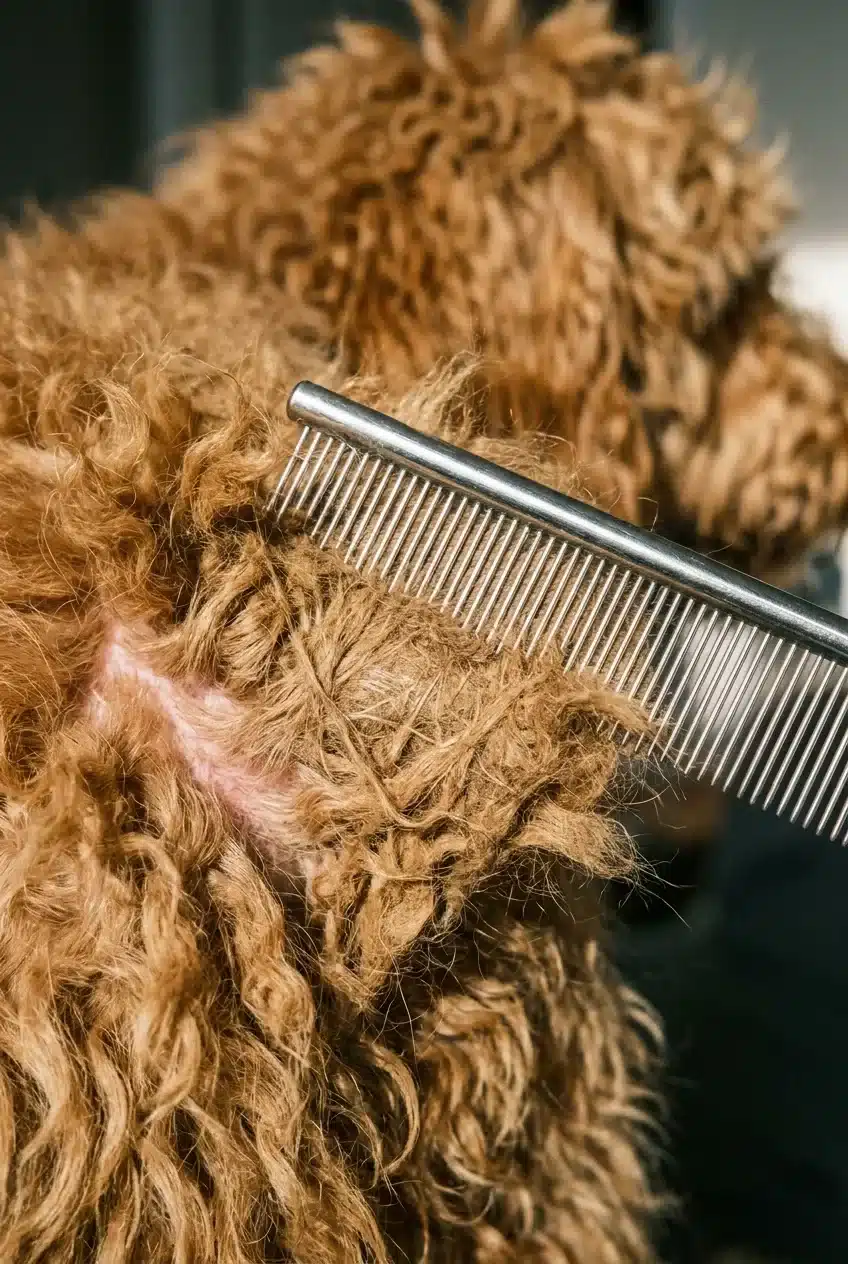
Skipping brushing for 3 or more consecutive days on a curly F1 Medium goldendoodle significantly raises the risk of pelting — a severe, sheet-like mat that forms close to the skin. Once pelting occurs, the only humane option is a close shave, which removes months of coat growth. The American Veterinary Medical Association (AVMA) emphasizes that skin conditions including hot spots and dermatitis are more common under matted coats because moisture and bacteria become trapped.
DON’T MISS THESE
You’ll Want to Read These Too: 👇
Get Free Dog Health Tips!
Weekly guides on keeping your dog healthy & happy
🔒 No spam. Unsubscribe anytime.
👇 What Makes A Dog Hypoallergenic
👇 Best Low Carb Dog Foods Reviews
Wavy coats are more forgiving — a 2–3 day gap rarely causes irreversible damage, but debris and tangles still accumulate in high-friction zones.
- Day 1–2 skipped: Minor tangles in ears and armpits; easily brushed out
- Day 3–4 skipped: Tangles tighten into mats; may need a dematting comb
- Day 5–7 skipped: Mats may be too tight to brush out safely without causing pain
- 7+ days skipped (curly coat): Risk of pelting; professional intervention often required
A dematting comb can rescue early-stage tangles before they progress — but prevention is faster and cheaper every time.
How to Brush an F1 Medium Goldendoodle Correctly
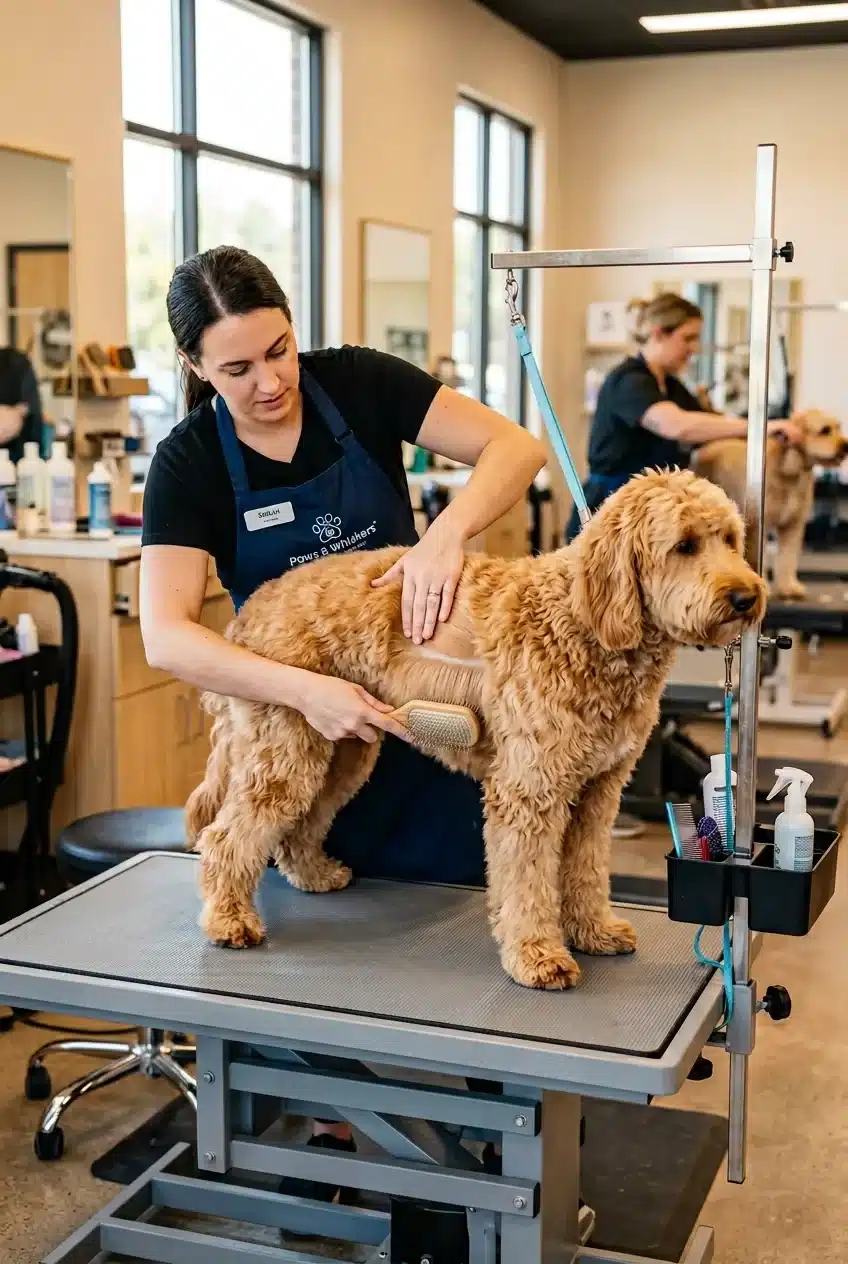
Brushing technique matters as much as frequency. Brushing only the surface of a fluffy coat — called “touch brushing” — leaves the undercoat untouched and allows mats to form underneath a smooth-looking top layer. The correct method is line brushing, which parts the coat in sections and works from skin to tip in short, overlapping strokes.
- Start at the legs and paws — the most mat-prone and most resisted areas; getting them done first builds compliance
- Part the coat in a horizontal line using your free hand, exposing the skin layer by layer as you work upward
- Use a slicker brush in short strokes (2–3 inches) from root to tip — a high-quality slicker brush for goldendoodles reaches the undercoat without scratching the skin
- Follow with a metal comb — run it through each section after the slicker brush; if it catches, there’s still a tangle
- Check friction zones last — behind the ears, under the collar, armpits, and groin; these need extra passes
- Confirm success — the metal comb should glide through the entire coat with zero resistance before you stop
A full line-brush session on a Medium goldendoodle takes approximately 15–25 minutes. A quick daily touch-up takes 5–10 minutes when the coat is already maintained. Keeping a metal greyhound comb nearby lets you do fast daily checks without a full session every time.
F1 Wavy vs. Curly Coat: Which Needs More Brushing?
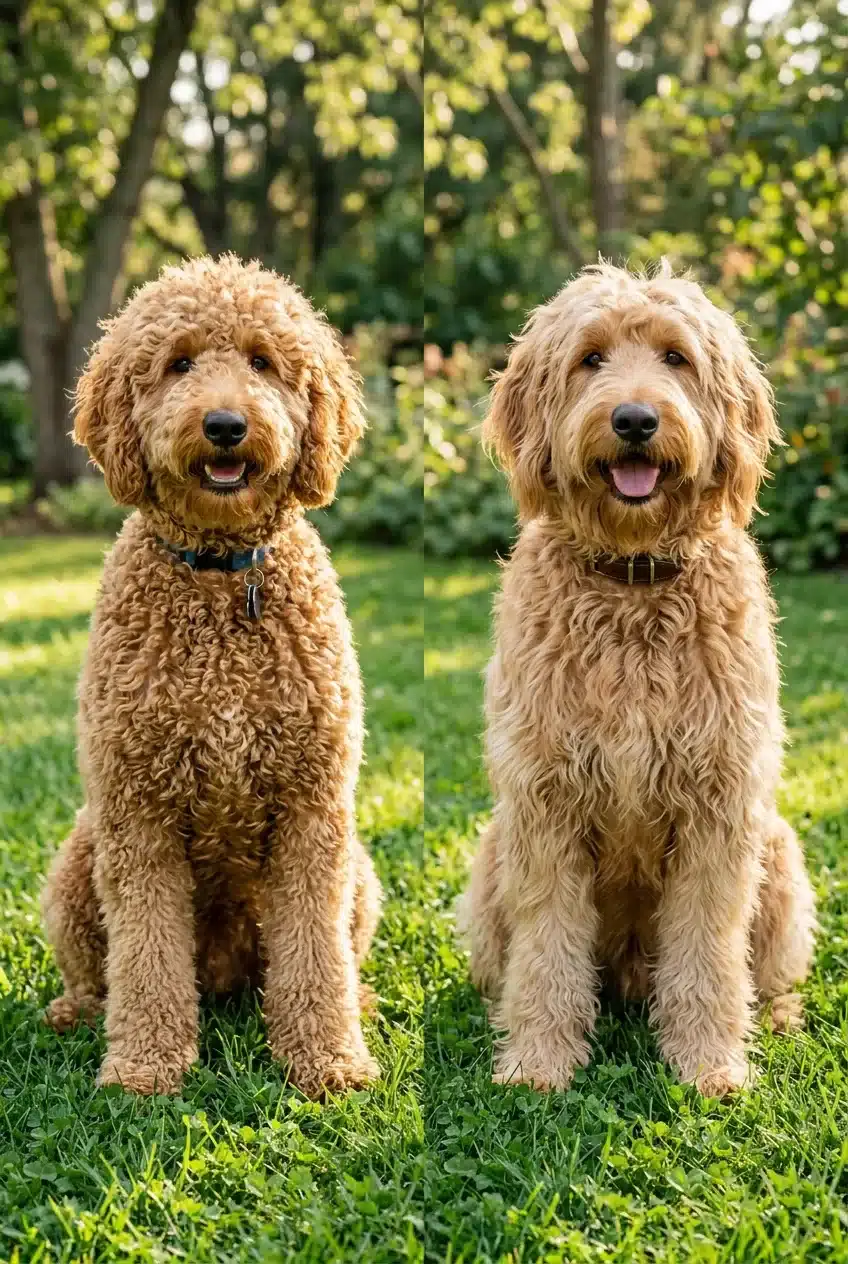
Within the F1 generation, curly coats need significantly more brushing than wavy coats — roughly twice as often. This is the most important distinction F1 goldendoodle owners overlook when reading general grooming advice, because most online guides treat all goldendoodles as one category.
| Coat Type | Brushing Frequency | Mat Risk | Best Brush |
|---|---|---|---|
| Curly (Poodle-dominant) | Daily (every 24 hrs) | High — mats in 1–2 days | Slicker + metal comb |
| Wavy (balanced F1) | Every 1–2 days | Moderate — mats in 3–5 days | Slicker + pin brush |
| Flat/Straight (Retriever-dominant) | Every 2–3 days | Low — sheds instead of matting | Bristle brush + undercoat rake |
PetMD notes that wavy coats are the most common outcome in true F1 crosses, but a litter can produce all three types. Check your dog’s coat behind the ears — that area reliably shows the dominant coat gene. A pin brush for wavy goldendoodle coats works better than a slicker alone if your F1 leans toward the Retriever side.
The Puppy Coat Change: The Highest-Risk Period for Matting
Between 5 and 8 months of age, F1 Medium goldendoodles shed their puppy coat and grow their permanent adult coat. During this transition, both coat layers are present simultaneously — loose puppy fur tangles with incoming adult fur and forms mats at an accelerated rate. Daily brushing is non-negotiable during this 8–12 week window, regardless of coat type.
“The coat transition period in doodle breeds is when most owners first encounter severe matting — and it’s often mistaken for poor grooming habits rather than a predictable biological phase.” — widely noted by professional groomers certified through the National Dog Groomers Association of America (NDGAA)
Using a detangling spray for dog coats during this period reduces friction and makes brushing faster and more comfortable for your puppy. Apply lightly before each session — never brush a completely dry, tangled coat.
After the adult coat fully comes in (typically by 10–12 months), you can return to your regular 4–5 times per week schedule if the coat is wavy, or continue daily if it’s curly. For other dog care routines, this article on must-have accessories for every dog owner covers the brushes and tools worth keeping on hand.
Common Goldendoodle Brushing Mistakes to Avoid
- Mistake: Brushing only the top layer. This hides mats underneath a smooth surface. Fix: always use a metal comb to confirm you’ve reached the skin.
- Mistake: Brushing a wet coat without detangler. Wet fur expands and tangles more tightly. Fix: either blow-dry on low heat first or apply a detangling spray before brushing.
- Mistake: Skipping mat-prone zones (ears, armpits, groin). These areas mat 2–3x faster than the body. Fix: check these spots at every session, even short ones.
- Mistake: Using only a slicker brush and calling it done. Slicker brushes fluff the coat but miss deep knots. Fix: always finish with a metal comb to confirm the coat is fully clear.
- Mistake: Waiting until the annual vet visit to notice matting. Mats cause skin irritation within days. Fix: run your fingers through the coat weekly to feel for knots before they become mats.
Frequently Asked Questions About Brushing Your F1 Medium Goldendoodle
How long does it take to brush a medium goldendoodle?
A full line-brushing session on a medium goldendoodle takes 15–25 minutes. A quick daily maintenance brush on a well-kept coat takes 5–10 minutes — the more consistent you are, the shorter each session gets.
Can I brush my goldendoodle too much?
Brushing your goldendoodle too frequently is rarely a problem, but using too much pressure or brushing the same area repeatedly can cause brush burn — mild skin irritation. Use light strokes and move continuously through the coat rather than scrubbing one spot.
What’s the best brush for an F1 Medium goldendoodle?
The best combination for an F1 Medium goldendoodle is a slicker brush for detangling and fluffing, paired with a metal greyhound comb to confirm no mats remain close to the skin. Coat type determines whether you also need a pin brush or undercoat rake.
Should I brush my goldendoodle before or after a bath?
Brush your goldendoodle thoroughly before bathing to remove tangles, then brush again after blow-drying. Bathing a matted coat tightens the mats significantly — pre-bath brushing is the step most owners skip and later regret.
At what age do F1 goldendoodles need daily brushing most?
F1 goldendoodles need daily brushing most urgently between 5 and 8 months of age, when the puppy coat transitions to the adult coat. This 8–12 week window carries the highest mat risk of the dog’s entire life.
How do I know if my goldendoodle’s coat is curly or wavy?
Check the fur behind your goldendoodle’s ears — this area reliably mirrors the dominant coat gene. Tight ringlets indicate a curly, high-maintenance coat; loose S-shaped waves indicate a wavy coat; and flat, smooth fur indicates a Retriever-dominant flat coat.
The Bottom Line on Daily Brushing for Your F1 Goldendoodle
The single most important number to remember: brush your F1 Medium goldendoodle a minimum of 4–5 times per week, and every day if the coat is curly or if your dog is between 5 and 8 months old. The cost of skipping — a $50–$150 dematting fee or a full shave — far outweighs 10 minutes of daily brushing.
Start today by doing the metal comb test: run a comb through your dog’s coat from skin to tip in three zones — behind the ears, the armpits, and the lower back. If it catches anywhere, that’s where to focus first. For a broader look at tools that make dog ownership easier, this guide to essential accessories for dog owners is worth bookmarking. And if you’re researching whether a goldendoodle is a good fit for allergy-prone households, the overview of medium-sized hypoallergenic dogs puts the breed in useful context.
Sources
This article references guidance from the following authorities:
- American Veterinary Medical Association (AVMA) — skin health risks associated with matted coats in dogs
- National Dog Groomers Association of America (NDGAA) — coat transition phases in doodle breeds
- PetMD — goldendoodle coat types and grooming frequency recommendations