Choose between an abstract and solid Standard Poodle based mostly on your taste, breeder goals, and comfort with coat markings, not health or temperament. How to choose between an abstract and solid standard poodle? Start by knowing that the difference is mainly about color pattern.
If you are feeling stuck, that makes sense. Coat terms can sound confusing, and you do not want to pick the wrong puppy for your home, budget, or future plans.
If you are still comparing puppies, this guide pairs well with how to measure your Standard Poodle size, weight, and height.
How to choose between an abstract and solid standard poodle?
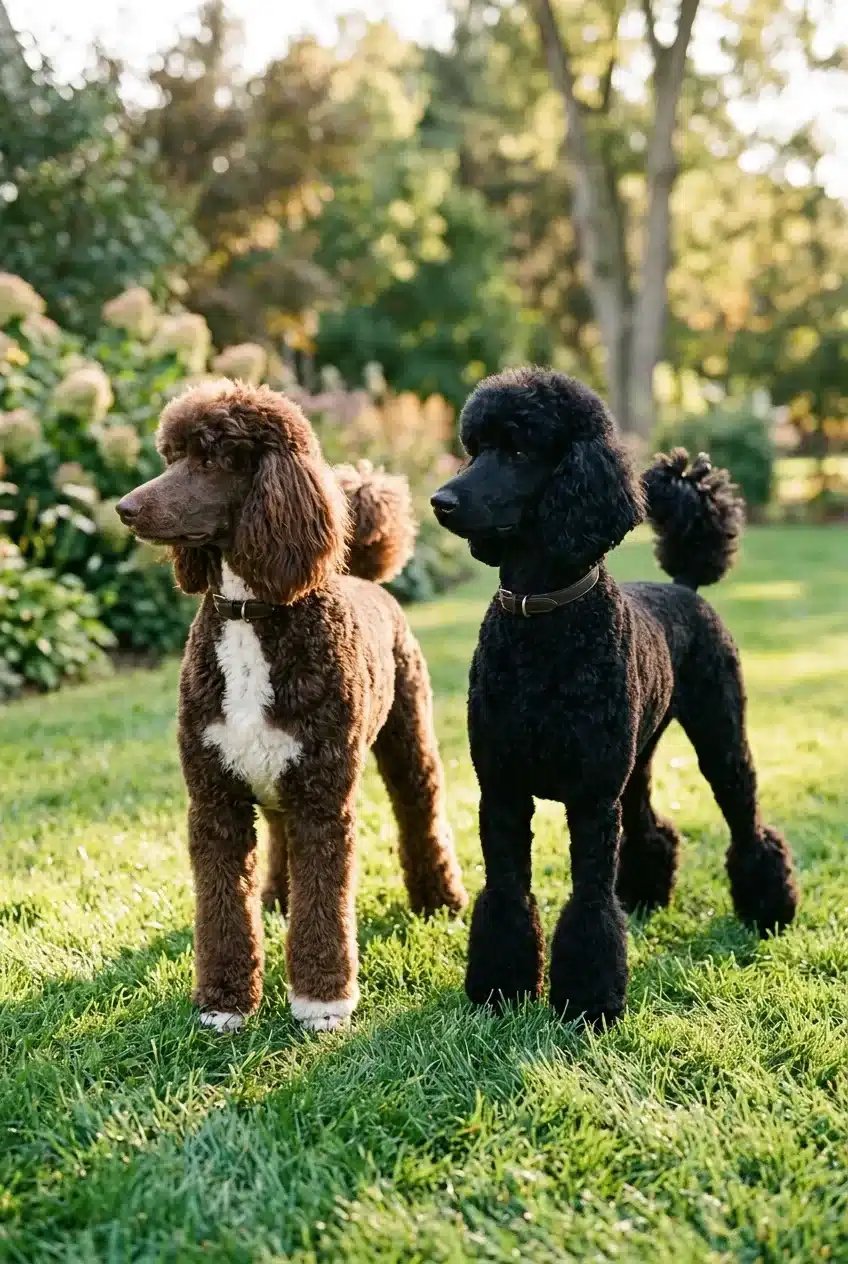
An abstract Standard Poodle has a mostly solid coat with small white markings, while a solid Standard Poodle is one uniform color. For most pet parents, the best choice comes down to which look you prefer, whether you plan to show your dog, and how carefully you want to review breeding records and adult coat changes.
- Abstract is a color pattern, not a separate breed type.
- Solid means one accepted base color without visible white patches.
- Temperament is shaped more by breeding and socialization than coat pattern.
- Show eligibility can differ by registry rules and marking extent.
- Puppy coats often change shade as the dog matures.
What abstract and solid mean in Standard Poodles
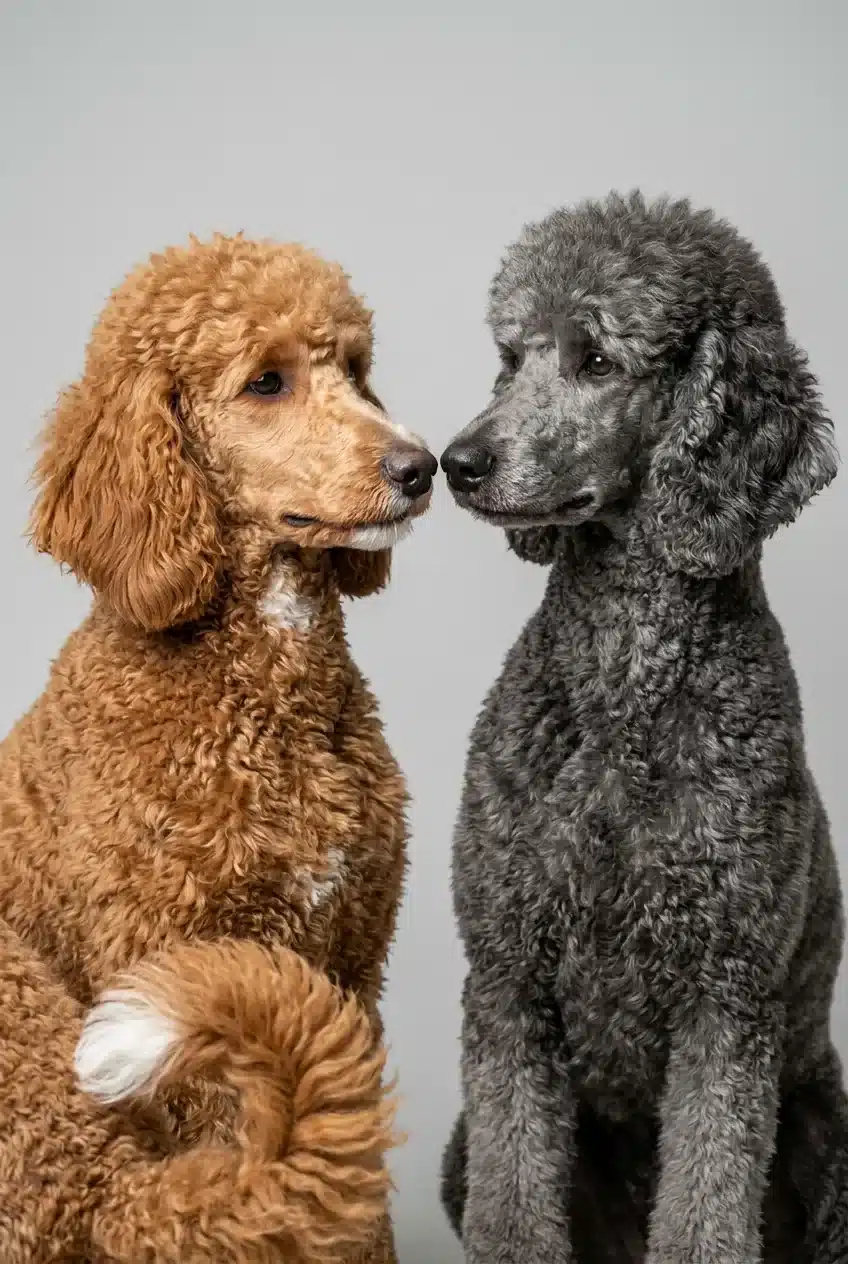
Abstract and solid describe coat appearance, not personality, intelligence, or trainability. An abstract poodle is mostly one color with limited white on the chest, toes, chin, or tail tip.
A solid poodle is expected to appear one even color all over. Common solid colors include black, white, brown, blue, gray, silver, cream, and apricot, depending on registry wording and bloodline history.
| Type | What It Looks Like | Best Fit For |
|---|---|---|
| Abstract | Mainly one color with small white markings | Pet homes that love unique markings |
| Solid | One even color with no obvious white | Pet homes or show-focused buyers |
The biggest difference is appearance, not day-to-day life with your dog.
The American Kennel Club describes the Poodle as an active, proud, very smart breed, and those traits are not tied to abstract versus solid markings. You can review the American Kennel Club Standard Poodle breed information for the official breed picture and color context.
Get Free Dog Health Tips!
Weekly guides on keeping your dog healthy & happy
🔒 No spam. Unsubscribe anytime.
The AKC breed standard emphasizes overall soundness, structure, and carriage in Poodles, not personality differences based on minor white markings.
Why some Standard Poodles are abstract and others are solid

Abstract versus solid happens because of genetics that affect pigment placement in the coat. In plain terms, some puppies inherit genes that leave a little white in an otherwise solid coat.
This is usually normal and planned, especially when breeders work with lines known for abstract markings. It is not, by itself, a sign of poor breeding.
- Inherited color genes: The most common reason. Markings come from how pigment genes are passed from parents to puppies.
- Breeding goals: Some breeders aim for strictly solid show prospects, while others like striking pet-quality abstract coats.
- Registry preferences: In some circles, small white markings matter more because of conformation show rules.
- Coat development: A puppy may look darker, lighter, or more sharply marked before the adult coat comes in.
Most pet parents should focus more on health testing, temperament, and breeder honesty than on whether white toes appear at eight weeks. Building on the coat basics, this is why photos alone can be misleading.
Dr. Karen Becker, DVM, has repeatedly advised pet parents to prioritize health, temperament, and ethical breeding over cosmetic traits when choosing a puppy.
MOST POPULAR THIS WEEK
Vet-Recommended Articles: 👇
👉 Why Does My Dogs Skin Turn Dark And Thick After Years Of Allergy Treatment
👉 Best Home Remedies For Arthritis In Dogs With Limping
👉 How Long Does An Elimination Diet Take For Dogs With Skin Allergies
Signs an abstract or solid Standard Poodle is the right choice for you
There are no medical symptoms here, but there are decision signs that help you choose well. Think of these as checkpoints before you place a deposit.
- You want a one-of-a-kind look (Normal variation – not a cause for concern): Abstract markings often make each dog look a little different.
- You plan to enter conformation shows (Monitor – watch for 24-48 hours): Review registry rules and ask the breeder how markings may affect show plans.
- You care most about family temperament (Normal variation – not a cause for concern): Either coat pattern can suit a calm, active, trainable dog if breeding is good.
- You are worried the dog is mixed breed because of white markings (Monitor – watch for 24-48 hours): Small white patches can occur in purebred Poodles.
- You feel pressured to choose fast (Monitor – watch for 24-48 hours): Slow down and ask for parent photos, health tests, and updated puppy pictures.
- You notice the breeder avoids color questions (Emergency – see a vet immediately): Not a medical emergency, but it is a serious buyer red flag and reason to walk away.
The right puppy should fit your home and goals, not just your favorite color.
When to talk to a veterinarian or breed-savvy expert before choosing
Abstract versus solid is usually not a veterinary issue, but health and genetics absolutely are. Speak with your regular vet before bringing home any puppy if you are unsure about breeder claims, color-linked concerns, or coat-related skin questions.
If a breeder uses coat color to distract you from missing health tests, pause the sale and get independent advice first.
- Talk to an emergency vet tonight: Only if the puppy you are being sold appears sick, weak, has diarrhea, trouble breathing, or severe lethargy.
- Book a regular vet appointment: If you want a pre-purchase review of health records, vaccination timing, and inherited disease screening.
- Ask a veterinary dermatologist: If the puppy has unusual hair thinning, persistent itching, scabs, or skin color changes that go beyond normal markings.
- Monitor at home: If your question is only about minor white markings and the puppy is otherwise healthy and active.
If you live in a rural area without a 24-hour clinic, ask the breeder for a written exam window so your local veterinarian can assess the puppy within one to three days. That gives you a safer backup if a problem appears after pickup.
What you can do at home before deciding
You can make a smart choice from home by comparing puppies the same way each time. The goal is to avoid falling for a pretty coat and missing bigger issues.
- List your priorities. Decide whether you want a family dog, sport prospect, or future show dog before comparing colors.
- Study adult examples. Ask for photos of related adult dogs because puppy coats and markings can change as they mature.
- Check grooming needs. Both patterns need the same coat care, so budget for tools like a dog slicker brush and a stainless steel greyhound comb.
- Compare breeder paperwork. Look for health testing, registration details, feeding notes, and a clear contract instead of color marketing alone.
- Watch the puppy move. Good structure, confidence, and comfort with people matter more than a perfect chest patch.
- Prepare your home. If you bring one home, basics like a crate with divider and a washable dog bed help the first week go smoother.
If you are choosing a light-colored puppy, this guide to a white Standard Poodle puppy can help you compare coat expectations. Curly coat texture can also vary, so it helps to review why a Poodle may have straight hair before assuming a puppy looks unusual.
Safe to do at home: compare markings, ask questions, and review records. Not safe to do at home: diagnose genetic quality from color alone.
Treatment options if your concern is really about skin, coat, or breeder quality
There is no treatment needed for abstract markings themselves. Treatment only matters if your concern turns out to be a skin problem, poor coat care, or a health issue unrelated to color pattern.
| Treatment | What It Does | When It Is Used |
|---|---|---|
| Veterinary skin exam | Checks for infection, parasites, allergies, or hair disorders | When white patches are confused with skin disease or hair loss |
| Routine grooming | Prevents mats and helps you spot true skin changes early | For all Standard Poodles, abstract or solid |
| Diet review | Supports coat quality and skin health | If the coat looks dull, brittle, or thin |
| Breeder follow-up | Clarifies genetics, adult color changes, and registration status | When markings do not match what you were told |
Most true coat-care issues improve once grooming and skin treatment are started, but timelines vary by cause. Simple matting can improve right away, while skin infections or allergy problems may take days to weeks.
If your new puppy seems itchy or flaky, your veterinarian may suggest a gentle product such as an oatmeal dog shampoo until a diagnosis is made. Avoid whitening or harsh color-enhancing shampoos on a young puppy unless your veterinarian says they are appropriate.
Breed-specific notes for Standard Poodles
This topic is specific to Standard Poodles, but the same general color-pattern idea appears in other breeds. What matters here is that Poodles also have breed-related health concerns that deserve more attention than coat markings.
- Standard Poodle: Ask about orthopedic, eye, and breed-recommended health testing before discussing color preferences.
- White and light cream lines: Tear staining and visible dirt may stand out more, but that is grooming, not a sign of lower quality.
- Darker solid lines: Fading to blue, silver, or gray can happen with age, so puppy color may not stay exactly the same.
If your long-term plan includes breeding, color choices matter more because you will need to understand inheritance and litter expectations. These guides on how many puppies a Poodle can have and how long a Poodle is pregnant help frame that bigger picture.
Common mistakes dog owners make when choosing
These are easy mistakes to make when you are excited. They matter because a color-first decision can hide bigger problems.
- Picking by photos alone. A puppy can photograph beautifully and still have weak structure or a poor temperament fit. The fix is to ask for videos, parent details, and health records.
- Assuming abstract means mixed breed. Small white markings do not automatically mean the puppy is not purebred. The fix is to verify registration and parentage instead of guessing from coat color.
- Ignoring adult coat change. Apricot, silvering, and fading can surprise first-time poodle families. The fix is to ask what the parents and older siblings looked like at one year and beyond.
- Overpaying for rare-sounding terms. Some sellers use color language to raise prices without offering better breeding. The fix is to compare health testing, contract terms, and support, not just labels.
Prevention tips for making the right choice the first time
You can prevent most regret by slowing the process down and checking the right details. A good choice today makes puppy life much easier later.
- Ask for breed-recommended health testing first. Color should be one of your last questions, not your first.
- Set a grooming plan before pickup. Tools like a dog detangling spray help with regular coat care between professional visits.
- Schedule social time early. Use ideas from fun games and activities to play with your Poodle so confidence grows along with training.
- Keep written breeder notes. Save screenshots about color promises, registration terms, and return policy in case something changes.
- Book a new-puppy vet visit within days. Early exams help catch health concerns that coat color can distract from.
Prevention is simple here: choose the healthiest, best-bred puppy whose look you also love.
Frequently Asked Questions About How to choose between an abstract and solid standard poodle?
Is an abstract Standard Poodle purebred?
Yes, an abstract Standard Poodle can be purebred. Abstract describes a mostly solid coat with small white markings, not a mixed-breed background.
Are abstract Standard Poodles healthier than solid ones?
No, abstract Standard Poodles are not automatically healthier than solid ones. Health depends more on genetics, breeding practices, and veterinary care than on visible markings.
Can I show an abstract Standard Poodle?
Maybe, but can I show an abstract Standard Poodle depends on the registry and the amount of white marking. Ask the breeder and review current show rules before buying a puppy for conformation.
Do abstract Poodles cost more?
Sometimes, abstract Poodles cost more if breeders market the pattern as unusual. Higher price does not always mean better quality, so compare health testing and contract terms first.
Can I choose between abstract and solid based on home grooming?
You can choose between abstract and solid based on looks, but grooming needs are basically the same. Both need regular brushing, clipping, bathing, and skin checks.
Will my puppy stay the same color as an adult?
No, your puppy may not stay the same color as an adult. Many Standard Poodles lighten, fade, or develop a softer shade as the adult coat comes in.
Final thoughts
The most helpful answer is simple: pick the Standard Poodle with the soundest health, best temperament, and breeder transparency, then choose the coat pattern you enjoy most. Abstract versus solid is usually a style choice, not a quality ranking.
One smart step you can take today is to make a comparison checklist with health tests, parent temperament, grooming needs, and show goals. Once that is clear, the right puppy often becomes much easier to spot.