My French Bulldog has back pain is a scary thought, especially when your dog suddenly yelps, trembles, or refuses to jump. Frenchies face a higher risk of spine problems, so fast action can protect their comfort and mobility.
Back pain matters because some causes improve with strict rest, while others need urgent veterinary care within hours. French Bulldogs also hide pain well, which means small behavior changes can signal a bigger problem.
This guide will help you spot warning signs, know when to call the vet, and support recovery at home. You will also learn what not to do, which can prevent a painful setback.
My French Bulldog Has Back Pain — What Should I Do Right Now?

If your French Bulldog has back pain, stop all jumping, stairs, and rough play right away. Call your veterinarian the same day, and seek emergency care now if your dog cannot walk, drags legs, or loses bladder control.
- Confine your Frenchie to a crate or small pen.
- Carry your dog instead of using stairs.
- Do not give human pain medicine.
- Watch for weakness, wobbling, or knuckling.
- Check for crying, shaking, or a hunched back.
- Use a harness, not a neck collar.
- Go to an emergency vet for paralysis signs.
Why French Bulldogs Get Back Pain More Often
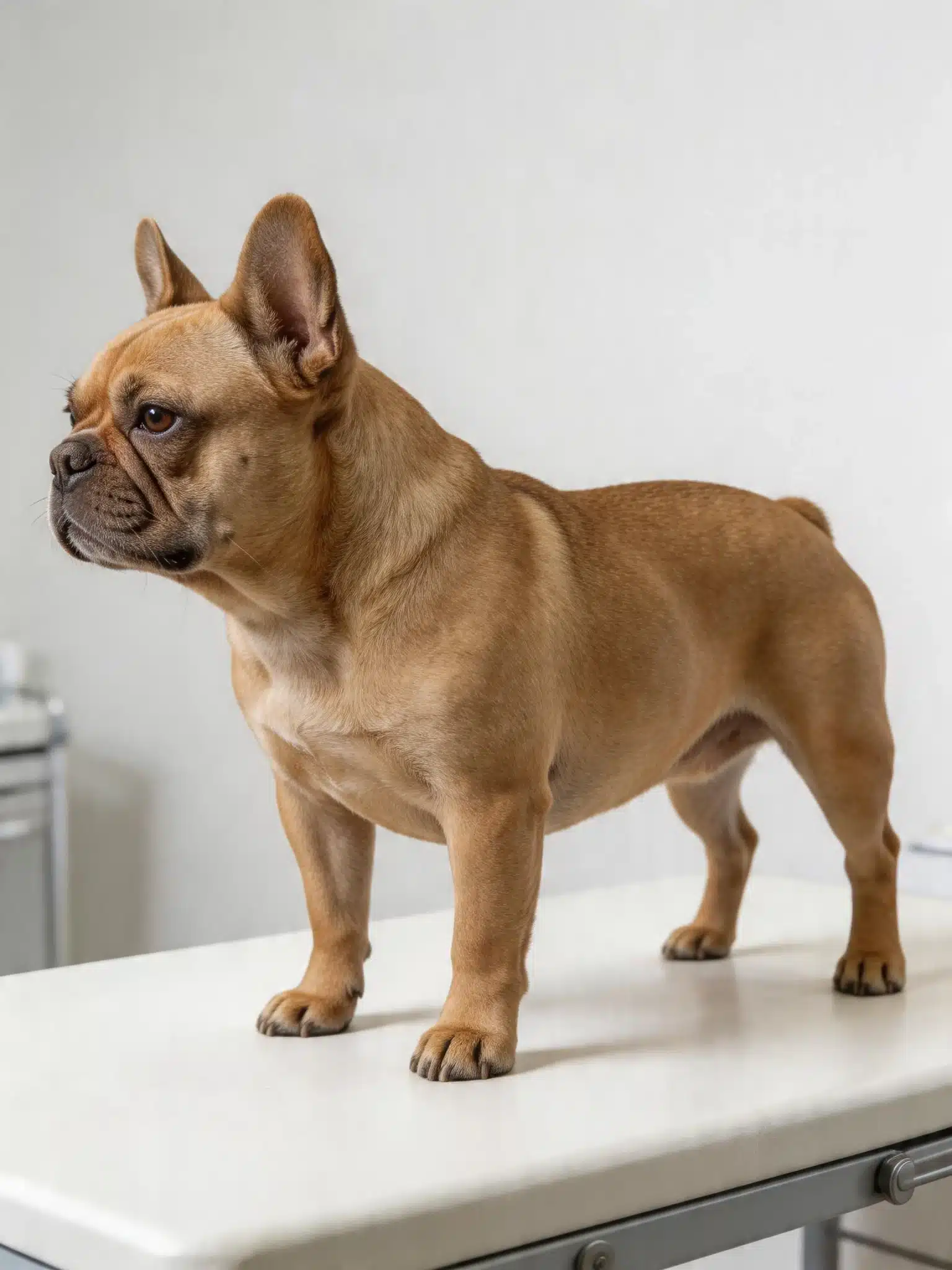
French Bulldogs often develop back pain because their breed can carry spinal changes called hemivertebrae and disk disease risks. Their compact build, heavy front end, and love of jumping off furniture add stress to the spine.
In our experience, owners often notice pain after a normal day, not a dramatic injury. A simple leap from a couch or twisting during play can be enough to trigger symptoms in a vulnerable back.
Common Causes
The biggest concern is intervertebral disc disease, often called IVDD. This happens when a spinal disc bulges or ruptures and presses on the spinal cord.
Other causes include muscle strain, slipped discs, arthritis, trauma, or a congenital spinal shape issue. Less often, infections, tumors, or inflammatory conditions cause back pain.
Get Free Dog Health Tips!
Weekly guides on keeping your dog healthy & happy
🔒 No spam. Unsubscribe anytime.
A Denver owner named Carla noticed her 4-year-old Frenchie, Bruno, scream after jumping from a 22-inch sofa. X-rays later showed vertebral abnormalities, and strict rest plus medication helped him walk normally within three weeks.
Signs Your Frenchie Has Back Pain And Needs Help
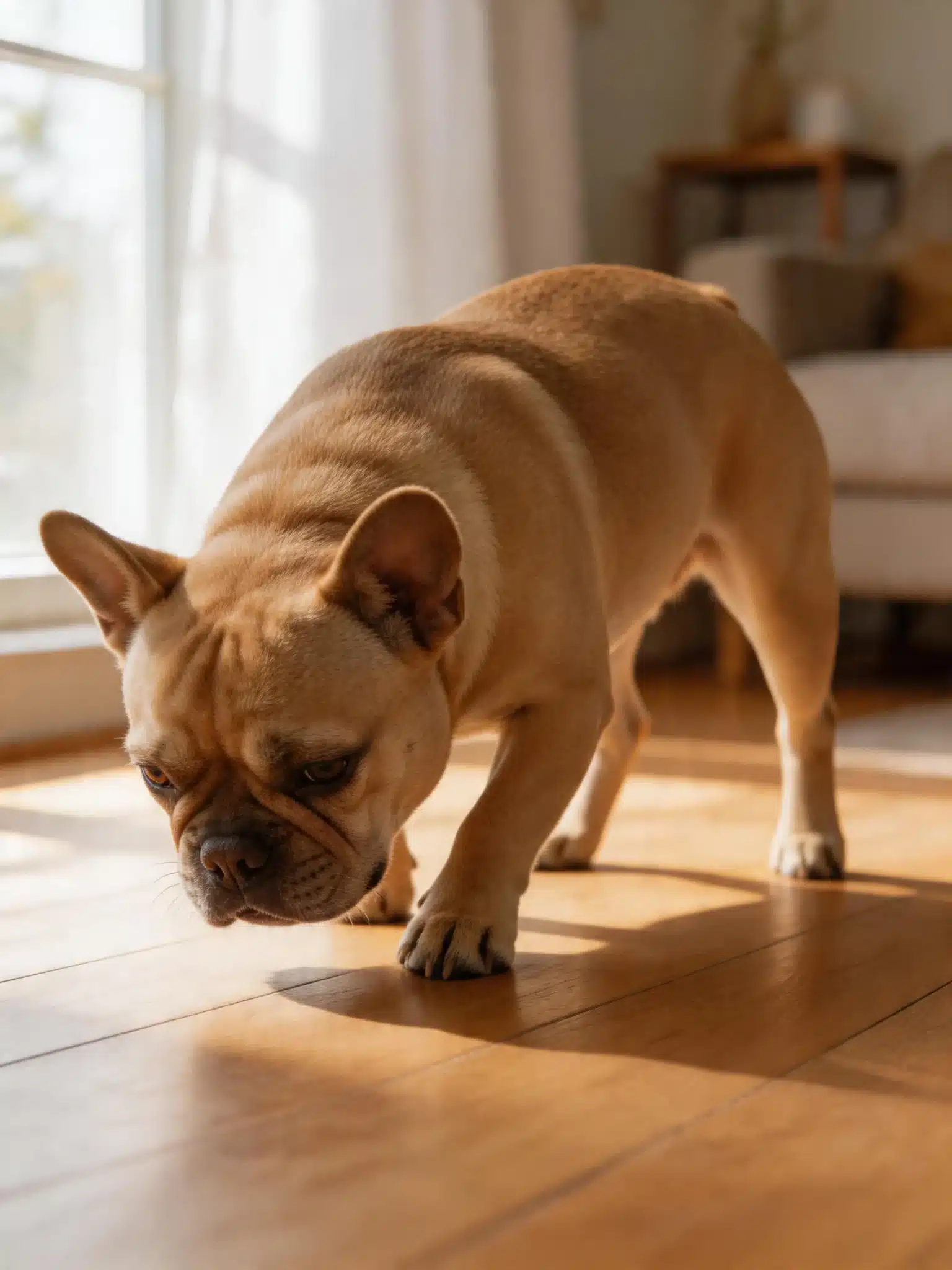
Back pain does not always look dramatic at first. Your Frenchie may simply move less, resist being touched, or seem oddly quiet after waking up.
What we have found works best is watching for clusters of signs, not one symptom alone. Two or three mild changes together often mean your dog needs a veterinary exam soon.
Common Pain Signs
- Yelping when picked up
- Shivering or tense muscles
- Arched or hunched back
- Reluctance to jump or climb
- Stiff walking or slow rising
- Weakness in the rear legs
- Dragging paws or knuckling
Emergency Warning Signs
Go to an emergency vet right away if your Frenchie cannot stand, suddenly collapses, or drags one or both back legs. Loss of bladder or bowel control also needs urgent care.
Building on what we covered about common causes, nerve compression can worsen fast. We have seen this consistently, especially in Frenchies that seemed only mildly sore earlier in the day.
One reader, Marcus from Tampa, saw his Frenchie Luna wobble at 7 a.m. By noon, she could not support her rear legs, and emergency surgery that evening restored deep pain sensation.
What To Do At Home Before The Vet Visit
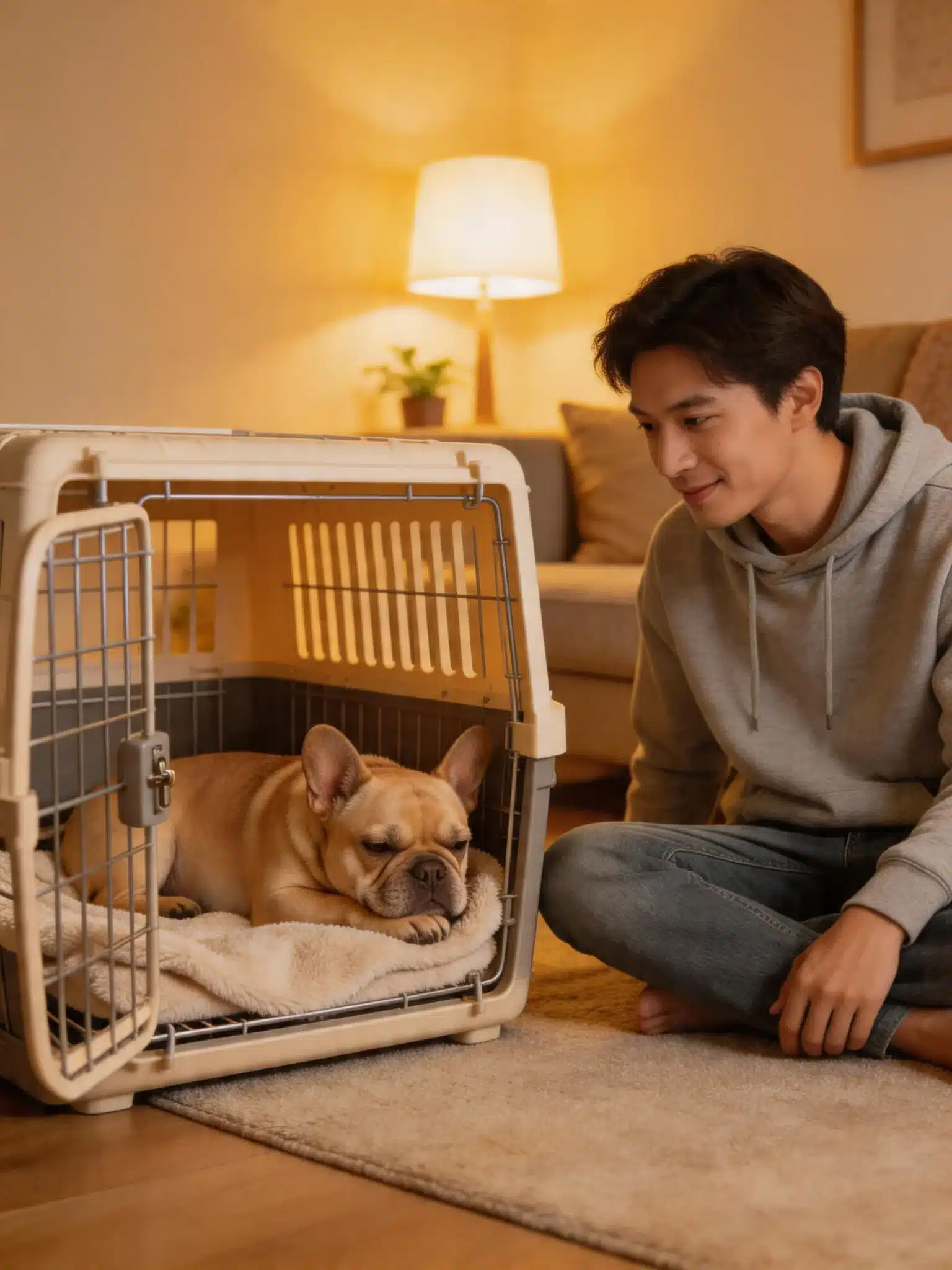
Your main job is preventing more spinal movement. Keep your dog calm, confined, and supported until a veterinarian gives you a diagnosis and treatment plan.
BEFORE YOU SCROLL PAST
Don’t Miss to Read: 👇
👉 Tear Stains Worse In Puppies
Many of our readers tell us they want to massage the area or stretch the legs. Skip both, because hands-on home treatment can increase pain or worsen a disc injury.
Safe First Steps
- Crate your dog immediately. Use a small crate, pen, or laundry room with non-slip flooring.
- Carry your Frenchie. Support both chest and rear end during every move.
- Use a harness. A French Bulldog harness reduces neck strain during bathroom trips.
- Limit bathroom breaks. Keep them short, slow, and on leash only.
- Record symptoms. Note when pain started, mobility changes, and any falls or jumps.
What Not To Do
- Do not give ibuprofen, naproxen, or acetaminophen.
- Do not let your dog test the stairs.
- Do not use heating pads without vet advice.
- Do not delay care if weakness appears.
If your Frenchie also struggles at night, breathing and rest can affect recovery comfort. Our guide on French Bulldog breathing problems while sleeping can help you set up a safer sleep space.
Austin, a 6-year-old Frenchie in Ohio, improved after his owner used crate rest within 30 minutes of the first yelp. His vet later confirmed a mild disc flare, and quick confinement likely prevented a worse injury.
How Vets Diagnose Back Pain In French Bulldogs
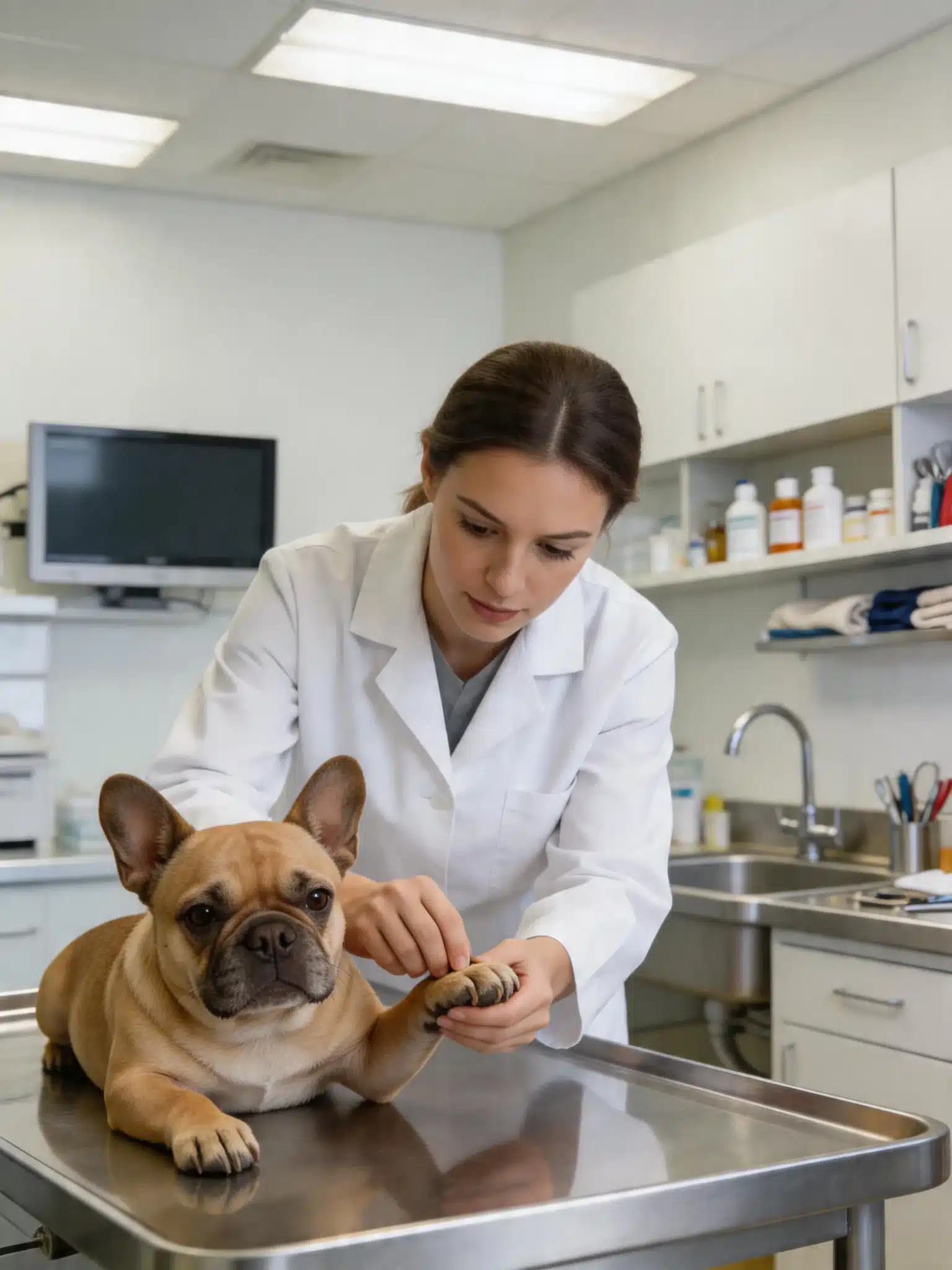
Your vet will start with a physical exam and a neurologic exam. They will check pain, paw placement, reflexes, walking, and whether your dog can feel deep pressure in the toes.
As the emergency warning signs section showed, weakness changes the urgency level. Dogs with only pain may start conservative treatment, while dogs with neurologic deficits often need imaging and faster specialist care.
Tests Your Vet May Recommend
- X-rays to screen bones and vertebral shape
- Bloodwork before medications or anesthesia
- MRI for discs and spinal cord detail
- CT in some specialty cases
- Referral to a neurologist or surgeon
X-rays can suggest a spinal issue, but they do not show the spinal cord well. MRI gives the clearest picture when a vet suspects IVDD or cord compression.
Dr. Natasha Olby, a veterinary neurologist at North Carolina State University, has published widely on spinal cord injury in dogs. Her work helps vets predict recovery by checking deep pain sensation and early neurologic status.
Bailey, a 5-year-old Frenchie from Phoenix, had normal bloodwork and suspicious x-rays but still worsened overnight. An MRI the next morning found a ruptured disc at T13-L1, which explained his sudden rear-leg weakness.
Treatment Options And Recovery Expectations
Treatment depends on the cause, the pain level, and whether your Frenchie has weakness or paralysis. Your vet may recommend medications and crate rest, or they may send you straight to a neurologist.
In our experience, owners do best when they think in phases instead of days. The first phase controls pain and prevents more damage, while the second rebuilds strength safely.
Conservative Treatment
For mild cases, vets often prescribe pain relief, anti-inflammatory medicine, muscle relaxants, and very strict rest. Crate rest commonly lasts several weeks, even if your dog seems better after a few days.
You may also use non-slip rugs and a supportive orthopedic dog bed once your vet allows more freedom. A calm recovery room often helps more than extra gadgets.
Surgical Treatment
Surgery often becomes the best choice when a dog loses the ability to walk, has severe pain, or fails conservative treatment. A board-certified surgeon removes pressure from the spinal cord and stabilizes recovery.
The American College of Veterinary Surgeons notes that timing matters in many spinal cases. Dogs that still have deep pain sensation generally have a better outlook than dogs that lose it.
Recovery At Home
- Follow medication times exactly
- Keep leash walks brief
- Block couches and beds
- Use ramps after vet approval
- Attend rehab if recommended
We have seen this consistently with Frenchies recovering from IVDD: owners who enforce rest get better outcomes than owners who trust early improvement. Feeling better does not mean the spine has healed.
Nina from Portland kept her Frenchie Moose on six weeks of crate rest after a disc flare. He hated it for the first four days, but he returned to short walks without pain by week seven.
How To Prevent Future Back Problems
You cannot remove every risk, but you can lower the odds of another painful episode. Prevention focuses on body weight, safer movement, and reducing strain during normal daily life.
What we have found works best is changing the environment before symptoms return. Small home changes save your Frenchie from repeating the same risky jump dozens of times each week.
Prevention Tips That Help
- Keep your Frenchie lean
- Use ramps for couches and beds
- Avoid tugging with sudden twists
- Choose a harness over a collar
- Trim nails for better traction
- Place rugs on slippery floors
- Skip high-impact fetch jumps
Weight matters more than many owners realize. The Association for Pet Obesity Prevention has repeatedly reported that excess weight remains common in dogs, and extra pounds add strain to joints and the spine.
If your Frenchie also deals with skin or paw issues, comfort changes their movement patterns. Helpful guides include French Bulldog skin rash treatment, yeast infection in paws fixes, and itching like crazy causes and home remedies.
One family in Raleigh added two foam ramps, six washable rugs, and a dog ramp for bed after their Frenchie’s first back scare. Over the next 11 months, Theo had no repeat yelping episodes.
Expert Insights On French Bulldog Back Pain
Dr. Scott J. Schatzberg, a veterinary neurologist, has written about genetic links and spinal disease risks in dogs. His work supports what many Frenchie owners see firsthand: some dogs carry a stronger inherited risk for disc problems.
Dr. Natasha Olby’s research has also emphasized the value of neurologic grading and prompt treatment after spinal cord injury. That helps explain why early veterinary assessment can strongly shape recovery chances.
A 2024 UK breed health report from The Kennel Club listed spinal problems among notable concerns for French Bulldogs. While your dog is an individual, breed trends can guide smarter prevention and faster action.
Many of our readers tell us they delayed the first visit because their dog still ate dinner. Appetite does not rule out serious pain, and Frenchies often stay food-motivated even when their backs hurt.
Frenchies often have overlapping health issues that complicate recovery behavior. You may also find these guides useful on French Bulldog reverse sneezing, ear infection signs and treatment, and food versus environmental allergies.
A neurologist in Dallas told one owner to judge progress by weekly function, not hourly mood. That mindset helped her stay consistent through eight weeks of rehab after her Frenchie Pip had surgery.
Frequently Asked Questions About My French Bulldog Has Back Pain — What Should I Do?
Can A French Bulldog Recover From Back Pain Without Surgery?
Yes, many mild cases improve with strict crate rest and veterinary medication. Dogs with weakness, paralysis, or severe disc compression often need surgery for the best chance of recovery.
Should I Massage My French Bulldog’s Back?
No, not unless your veterinarian or rehab therapist tells you to do it. Massage can worsen pain or increase spinal movement in a dog with IVDD.
How Do I Carry A Frenchie With Back Pain?
Support both the chest and rear end at the same time. Keep the spine level and avoid dangling the back legs.
Can I Walk My French Bulldog If His Back Hurts?
Only for short leash bathroom breaks until your vet examines him. Skip regular walks, stairs, and play sessions.
What Pain Medicine Can I Give At Home?
Give only medicine your veterinarian prescribed for your dog. Human pain relievers can cause severe harm and even death.
When Should I Go To The Emergency Vet?
Go now if your Frenchie cannot walk, drags legs, cries constantly, or loses bladder or bowel control. Those signs can point to serious spinal cord compression.
Conclusion
If your French Bulldog has back pain, act fast, restrict movement, and call your vet the same day. Early rest and early treatment can make a huge difference, especially if IVDD is involved.
Today, block off furniture, set up a small recovery space, and switch to a harness for bathroom trips. Your calm, quick response gives your Frenchie the best shot at a safer recovery.