If you’ve ever watched your French Bulldog suddenly stand still, extend their neck, and make a loud honking or snorting sound — you know exactly how alarming it can be. Most owners panic the first time it happens, convinced their dog is choking or having some kind of respiratory crisis.
The good news is that reverse sneezing in French Bulldogs is extremely common and, in most cases, completely harmless. But because Frenchies are already a brachycephalic (flat-faced) breed with naturally compromised airways, it’s worth understanding what’s happening, when it’s normal, and when it might signal something that needs veterinary attention.
This guide breaks it all down clearly — no fluff, no unnecessary alarm — just practical, trustworthy information so you can make the right call for your dog.
🛒 My Recommended Amazon Picks
Quick Answer: Is French Bulldog Reverse Sneezing Dangerous?
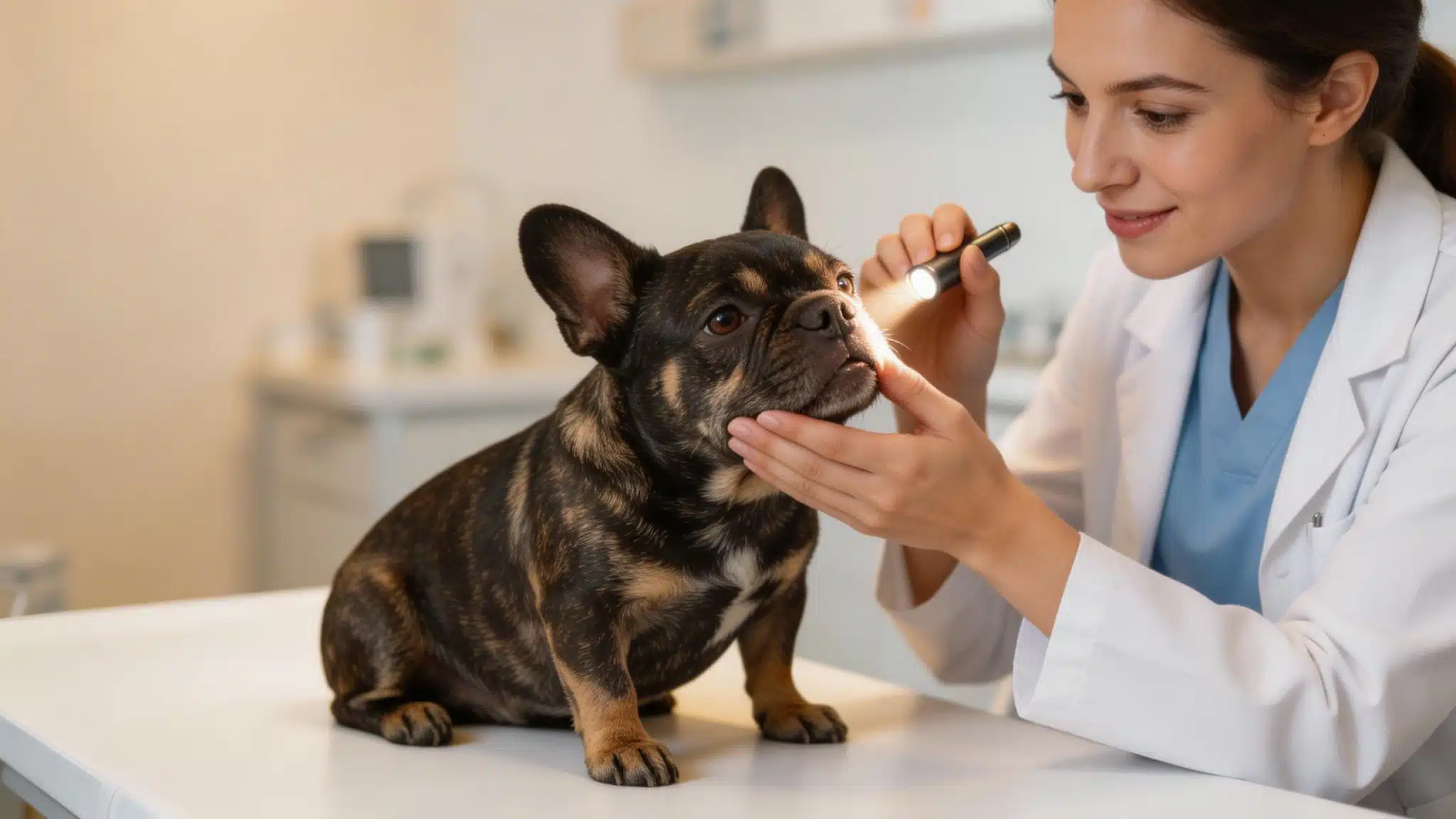
In most cases, no — reverse sneezing is not dangerous for French Bulldogs. It’s a reflex action where the dog rapidly inhales through the nose to clear an irritant from the nasopharynx (the area at the back of the nasal passage). Episodes typically last 15–30 seconds and resolve on their own without any medical intervention.
However, because French Bulldogs are brachycephalic dogs with shorter airways, elongated soft palates, and narrower nostrils, they are more prone to reverse sneezing than other breeds — and in rare cases, frequent episodes can be linked to an underlying condition that does need treatment.
Get Free Dog Health Tips!
Weekly guides on keeping your dog healthy & happy
🔒 No spam. Unsubscribe anytime.
What Is Reverse Sneezing in French Bulldogs?

Reverse sneezing — medically known as paroxysmal respiration or inspiratory paroxysmal respiration — is essentially the opposite of a normal sneeze. In a regular sneeze, air is rapidly expelled outward through the nose. In a reverse sneeze, air is rapidly and forcefully inhaled inward through the nose instead.
During an episode, your Frenchie may:
🛒 Vet Recommended for Yeasty Paws
- Stand still or brace themselves with a wide stance
- Extend their neck forward
- Pull their elbows out slightly
- Make a repetitive honking, snorting, or gagging sound
- Appear momentarily distressed or confused
The episode typically lasts anywhere from 10 seconds to about a minute. Afterward, the dog returns to completely normal behavior — often acting as if nothing happened at all. That abrupt return to normal is one of the key signs it was a reverse sneeze and not a more serious episode.
Why Are French Bulldogs So Prone to Reverse Sneezing?

French Bulldogs reverse sneeze more frequently than most other dog breeds because of their unique anatomy. As a brachycephalic breed, they are specifically predisposed to upper airway irritation and dysfunction.
Brachycephalic Anatomy Is the Root Cause
French Bulldogs have been selectively bred for their flat faces and compact skull shape. This creates several anatomical features that directly contribute to reverse sneezing:
- Elongated soft palate: The soft tissue at the back of the roof of the mouth extends further than in other dogs, which can occasionally get sucked into the throat during rapid inhalation
- Stenotic nares: Narrow or pinched nostrils that restrict airflow and make irritation more likely
- Narrow nasopharynx: A tighter passage for air means even minor irritants cause a stronger reflex response
- Hypoplastic trachea: Some Frenchies also have an underdeveloped windpipe, compounding breathing sensitivity
According to a 2022 study published in Veterinary Record, brachycephalic breeds including French Bulldogs, Pugs, and Boston Terriers are significantly more likely to experience upper respiratory events — including reverse sneezing — compared to non-brachycephalic breeds. French Bulldogs have consistently ranked among the top five breeds presenting to vets for respiratory concerns in the USA.
What Triggers Reverse Sneezing in French Bulldogs?

Reverse sneezing is triggered by irritation or inflammation of the nasopharynx. Identifying your dog’s personal triggers can significantly reduce how often it happens.
Common Triggers Include:
- Excitement or sudden activity: One of the most common triggers in Frenchies — the rapid change in breathing rate irritates the airway
- Pulling on the leash or collar pressure: Direct pressure on the throat stimulates the reflex; this is why a French Bulldog harness is almost always recommended over a collar
- Allergens: Pollen, dust, mold spores, and household chemicals can all irritate the nasal lining — if your Frenchie is also scratching, check our guide on French Bulldog allergies: food vs. environmental
- Strong scents: Perfumes, cleaning products, candles, and air fresheners
- Eating or drinking too fast: Rapid consumption can trigger the reflex
- Post-nasal drip: Mucus draining from the nasal cavity into the throat
- Temperature changes: Moving from cold to warm air (or vice versa)
- Sleep positions: Some Frenchies reverse sneeze more during or after sleep — which connects to their broader breathing problems while sleeping
How to Stop a French Bulldog Reverse Sneezing Episode

Most episodes will stop on their own within 30 seconds. But there are a few things you can do to help your Frenchie recover faster and feel more comfortable.
Step-by-Step Guide During an Episode:
- Stay calm. Your Frenchie picks up on your energy. Panicking or hovering over them anxiously can make them more distressed.
- Gently massage their throat. Light, slow strokes along the throat can help relax the nasopharyngeal muscles and stop the spasm.
- Cover their nostrils briefly. Gently placing a finger over one or both nostrils for 1–2 seconds encourages the dog to swallow, which often resets the reflex. Never fully block airflow.
- Encourage swallowing. Offer a small amount of water or a treat to prompt a swallow reflex.
- Blow gently on their face. A light puff of air toward their nose can sometimes trigger a swallow and end the episode.
- Keep them still and relaxed. Avoid picking them up suddenly or moving them around during an episode.
Important: Never try to restrain your Frenchie tightly or force their mouth open during a reverse sneezing episode. It won’t help and may cause additional stress.
When Should You Be Concerned About Reverse Sneezing?
While most reverse sneezing is benign, there are specific warning signs that indicate a vet visit is warranted. Knowing the difference between a normal episode and a potential red flag can be genuinely life-saving for a brachycephalic dog.
See a Vet If You Notice:
- Episodes lasting longer than 1–2 minutes consistently
- Reverse sneezing happening multiple times per hour or every day
- Nasal discharge (especially colored or bloody discharge)
- Open-mouth breathing or obvious difficulty breathing outside of episodes
- Blue or purple tint to the gums or tongue (cyanosis — a respiratory emergency)
- Coughing, gagging, or retching in addition to the sneezing
- Weight loss or lethargy accompanying the episodes
- Signs of a possible ear issue — since Frenchies’ ears and airways are connected, an ear infection in French Bulldogs can sometimes coincide with upper respiratory irritation
Increased frequency can be a sign of nasal polyps, a foreign body in the nasal passage, a collapsing trachea, or an unmanaged allergy. A veterinarian may recommend rhinoscopy or imaging to rule out structural issues, particularly in dogs over 4–5 years old whose reverse sneezing pattern suddenly changes.
Can Allergies Make Reverse Sneezing Worse?
Yes — and this is a particularly important connection for French Bulldog owners. Allergies cause inflammation in the nasal passages and increased mucus production, both of which heighten sensitivity in the nasopharynx and directly increase the likelihood of reverse sneezing episodes.
If your Frenchie is itching constantly alongside frequent reverse sneezing, allergies should be a top suspect. Environmental allergens like dust mites, grass, and pollen are among the most common culprits. Your vet may recommend antihistamines, hypoallergenic diets, or allergy testing.
Using a HEPA air purifier for pets in your home can meaningfully reduce airborne allergens and help decrease episode frequency — especially if your Frenchie’s symptoms are worse indoors.
Practical Tips to Reduce Reverse Sneezing Frequency
You can’t completely eliminate reverse sneezing in a brachycephalic dog, but you can significantly reduce how often it happens with a few smart management strategies:
- Switch from a collar to a well-fitted no-pull harness for French Bulldogs to remove throat pressure during walks
- Keep your home free of strong chemical smells — use fragrance-free cleaning products where possible
- Use a slow feeder bowl to prevent gulping food and water too fast
- Maintain a healthy weight — obesity worsens all brachycephalic breathing issues
- Vacuum and clean bedding regularly to reduce dust mite exposure
- Avoid walking your Frenchie in high-pollen environments during peak allergy season
- Keep their sleeping area cool and well-ventilated
- Consider a pet-safe humidifier during dry winter months to keep nasal passages from drying out
Expert Insight: What Veterinarians Say
Dr. Lindsey Wendt, DVM, a veterinary specialist in brachycephalic breed care, notes: “Reverse sneezing in French Bulldogs is one of the most misunderstood respiratory events I see owners panic about. The vast majority of episodes are benign. But I always tell owners: if the pattern changes — more frequent, longer, or accompanied by new symptoms — that’s when we need to investigate further. Don’t normalize something that’s getting progressively worse.”
This advice reflects the general consensus across veterinary medicine: observe the pattern, not just individual episodes. A Frenchie who reverse sneezes occasionally after excitement is very different from one who does it 10 times a day with nasal discharge.
Frequently Asked Questions
Is reverse sneezing the same as a seizure in French Bulldogs?
No. During a reverse sneeze, your dog remains conscious, standing, and responsive. In a seizure, the dog typically falls to the side, loses consciousness, and may paddle their legs.
How often is too often for reverse sneezing?
If your Frenchie is reverse sneezing more than a few times a day consistently, or episodes are increasing in frequency over weeks, a vet check is warranted to rule out underlying causes.
Can reverse sneezing hurt my French Bulldog?
No, the act of reverse sneezing itself is not painful or harmful. However, if an underlying condition like a nasal polyp or severe allergy is causing it, the root issue does need treatment.
Should I film a reverse sneezing episode to show my vet?
Yes — this is genuinely useful. A short video clip helps your vet distinguish between reverse sneezing, a tracheal collapse episode, or a seizure, especially if the event has passed by the time you reach the clinic.
Do French Bulldogs outgrow reverse sneezing?
Not typically. Because it’s largely anatomical, most Frenchies reverse sneeze throughout their lives. However, good management strategies can reduce the frequency significantly.
Conclusion
Reverse sneezing in French Bulldogs is almost always harmless — but it deserves your attention. Know your dog’s baseline, reduce known triggers, and trust your instincts if something feels different. When in doubt, your vet is always the right call.