French Bulldog IVDD: signs every owner should know can show up fast, and early action can protect your dog’s ability to walk. If your Frenchie suddenly yelps, shakes, or refuses stairs, you need clear guidance right away.
This topic matters because French Bulldogs face a higher risk of back and neck disc problems than many other breeds. A few hours can change the outcome when weakness or paralysis starts.
This guide will help you spot warning signs, know when to call your vet, and avoid common mistakes at home. We will also cover treatment basics, recovery tips, and what experts want owners to watch for.
If your Frenchie also struggles with sleep or airway issues, this guide on French Bulldog breathing problems while sleeping can help you separate back pain from breathing distress.
French Bulldog IVDD: Signs Every Owner Should Know At A Glance
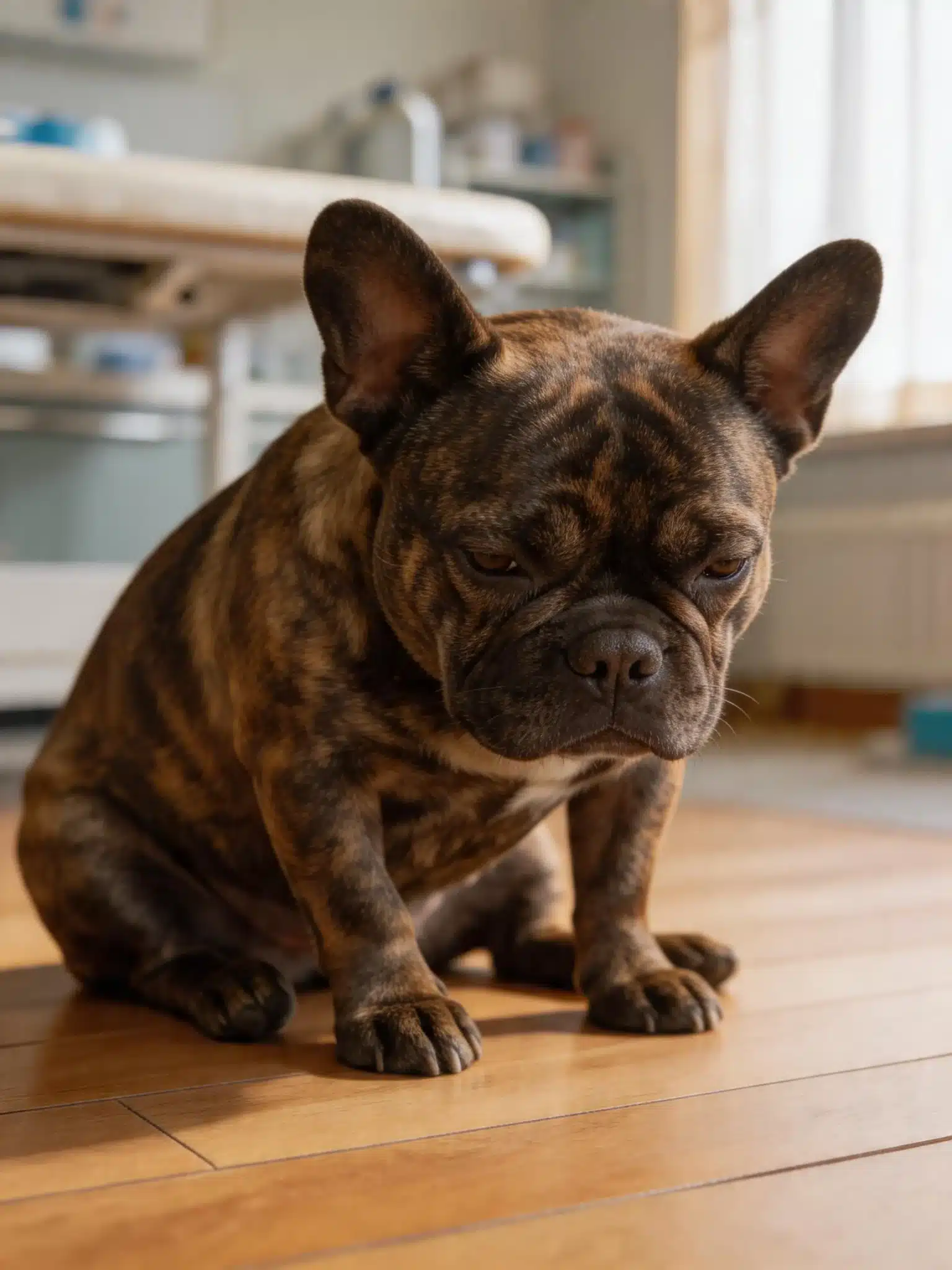
French Bulldog IVDD often starts with pain, stiffness, or trouble jumping before it turns into weakness or paralysis. The biggest red flags are sudden pain, wobbling, dragging paws, and loss of bladder control.
- Yelping when picked up or touched
- Shaking, tense belly, or hunched posture
- Reluctance to jump, climb, or use stairs
- Wobbly walking or crossing back legs
- Knuckling or dragging paws
- Sudden weakness or collapse
- Loss of bladder or bowel control
What IVDD Means In French Bulldogs
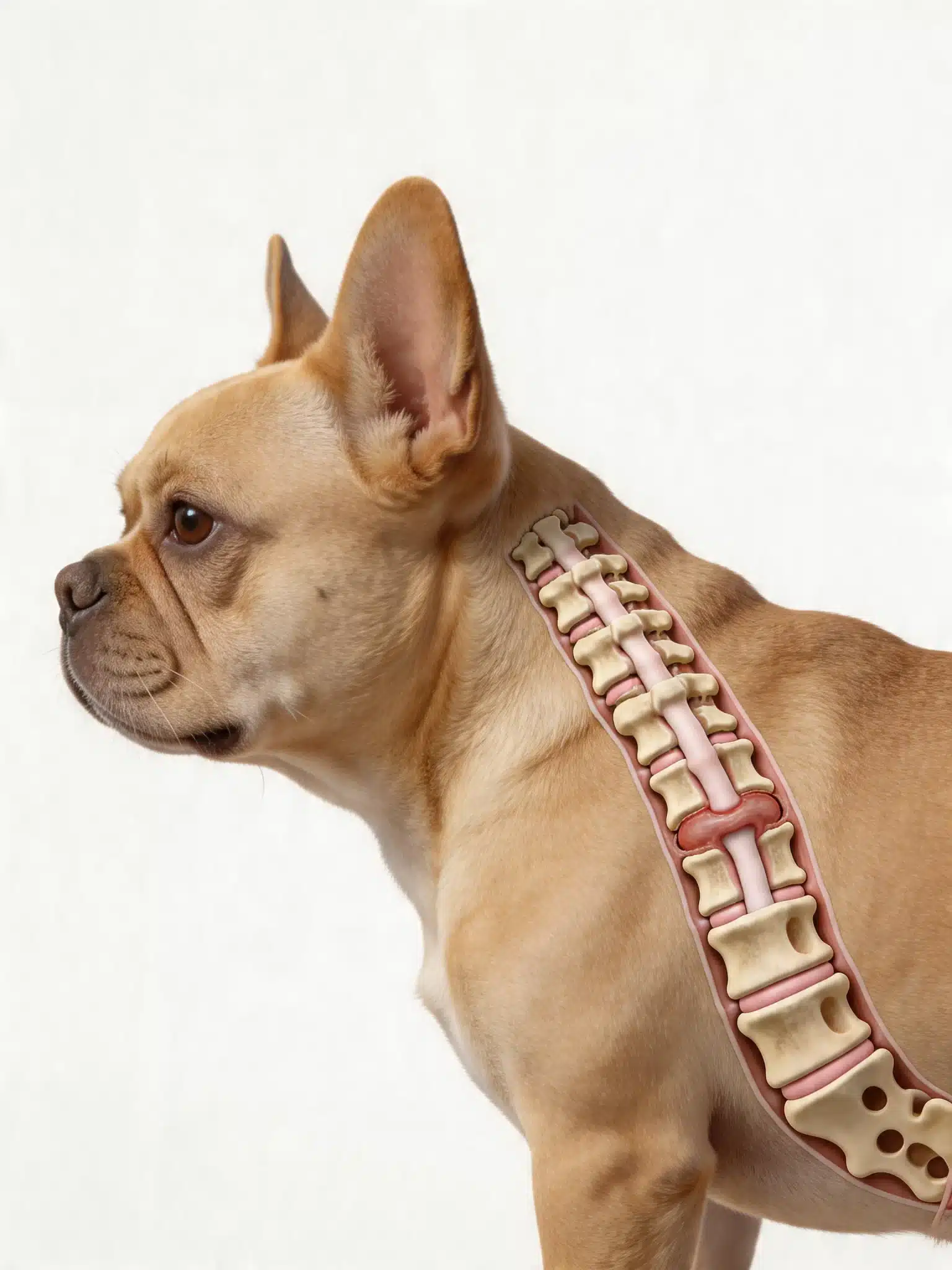
IVDD stands for intervertebral disc disease, a condition where a spinal disc bulges or ruptures and presses on the spinal cord. French Bulldogs often develop it in the neck or back because their body shape and genetics put extra stress on discs.
In our experience, owners often notice behavior changes before dramatic mobility problems. A dog that usually zooms across the house may suddenly freeze at the couch or cry during normal handling.
IVDD is a medical emergency when weakness appears. Pain alone needs a same-day vet call, but dragging legs, falling, or losing bladder control needs urgent veterinary care now.
Get Free Dog Health Tips!
Weekly guides on keeping your dog healthy & happy
🔒 No spam. Unsubscribe anytime.
Take Max, a 4-year-old Frenchie from Ohio. He went from refusing stairs at breakfast to dragging one back foot by lunch, and surgery that evening helped him walk again within six weeks.
Why Frenchies Face Higher Risk
French Bulldogs belong to a group of breeds with a known tendency toward early disc degeneration. Research on chondrodystrophic breeds has linked their body type with disc changes that can happen at a younger age.
That means a young adult Frenchie can have a back crisis that looks shocking and sudden. Many of our readers tell us they thought IVDD only affected senior dogs, but that is not true for this breed.
Early Warning Signs Owners Often Miss
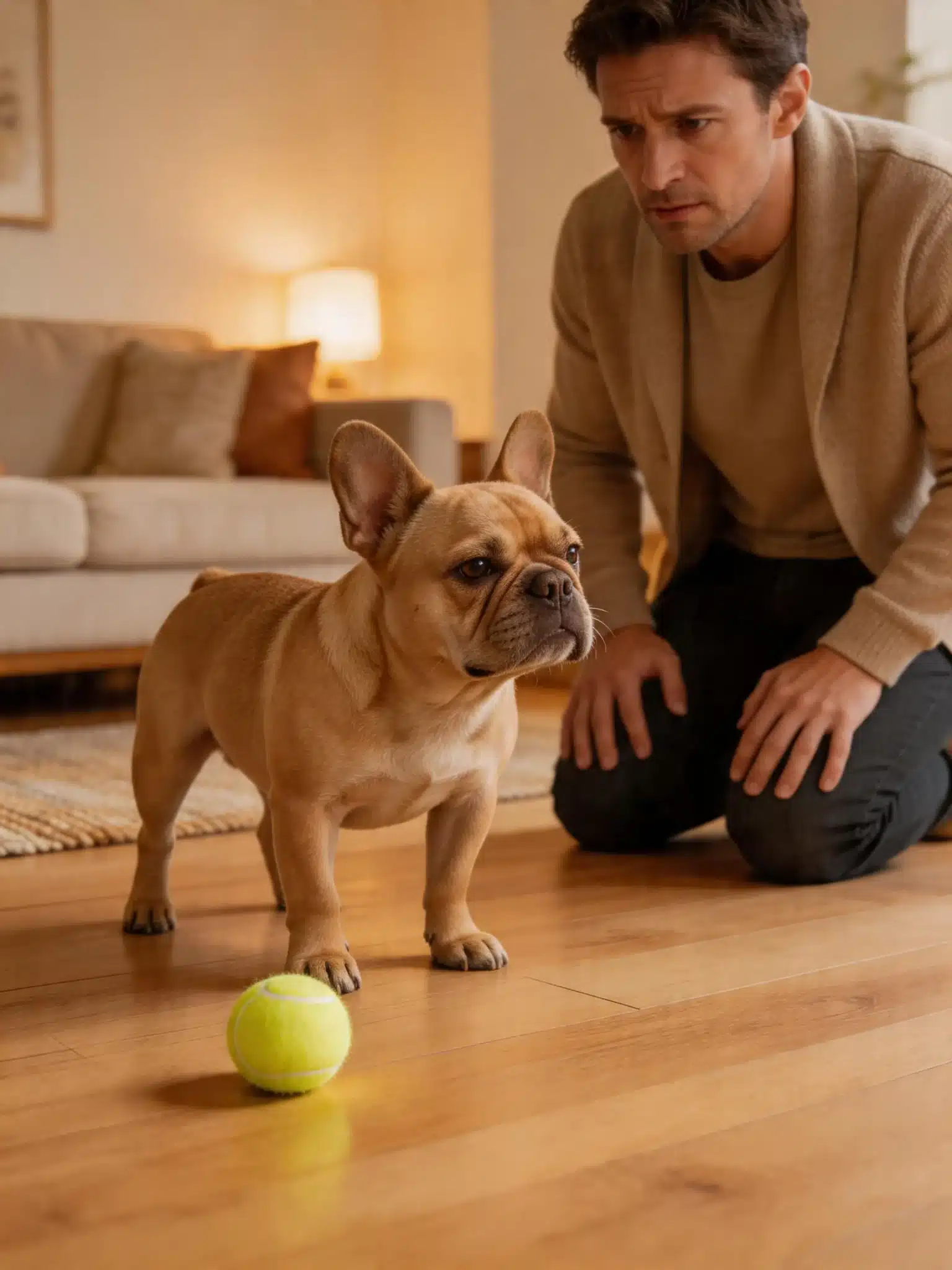
The earliest IVDD signs can look small and easy to brush off. Your Frenchie may seem grumpy, slower, less playful, or unwilling to turn the head fully to one side.
Building on what we covered about breed risk, pain usually shows before paralysis. A painful dog might pant at rest, tremble, guard the neck, or stand with a curved back.
Subtle Pain Clues
Watch for these early clues during normal daily routines. They often appear hours or days before more obvious weakness.
- Refusing to jump on furniture
- Stopping halfway on stairs
- Crying out when lifted
- Holding the head low
- Walking stiffly after rest
- Acting restless and unable to settle
What we have found works best is watching your dog during the first five minutes after waking up. That is when stiffness, tucked belly posture, and an uneven gait often show most clearly.
BEFORE YOU SCROLL PAST
Don’t Miss to Read: 👇
👉 Tear Stains Worse In Puppies
Luna, a 3-year-old Frenchie in Texas, first showed IVDD by skipping her usual leap off the bed. Her owner recorded the stiff walk on a phone, which helped the veterinarian decide she needed immediate spinal imaging.
Signs In The Neck Versus The Back
Neck disc problems often cause a low head carriage, neck stiffness, and crying during movement. Back disc problems more often cause a hunched posture, trouble with rear legs, and reluctance to squat.
Some dogs hide pain very well and only show it as unusual quietness. If your Frenchie also scratches or seems uncomfortable for skin reasons, compare those signs with French Bulldog itching like crazy causes and home remedies.
Serious IVDD Symptoms That Need Emergency Care
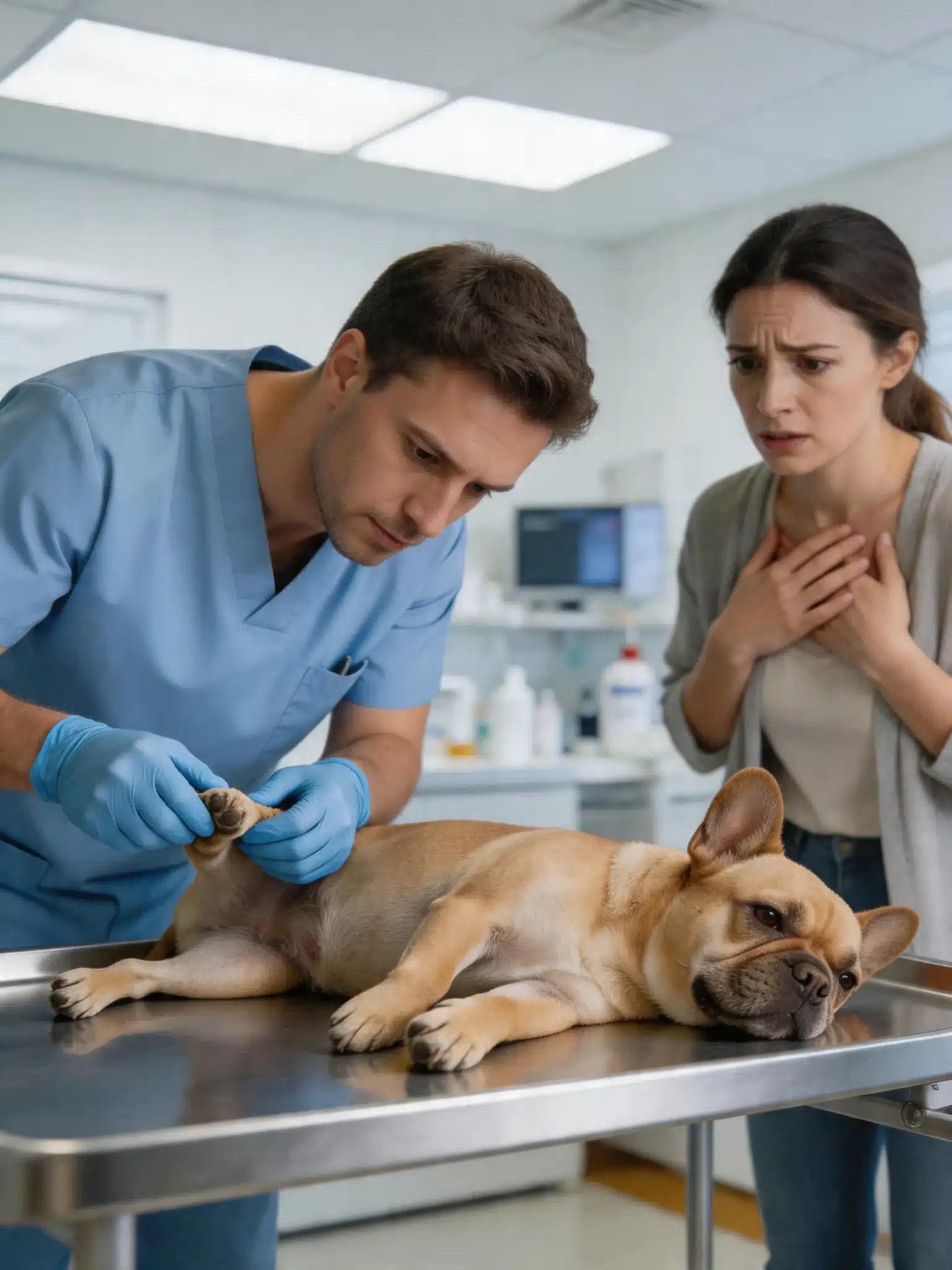
Some signs mean you should stop reading and call an emergency veterinarian. Sudden weakness, inability to stand, dragging legs, or loss of bladder control are urgent signs.
We have seen this consistently with Frenchies that decline fast over just a few hours. The sooner a vet checks deep pain sensation and neurologic function, the better your dog’s chances can be.
Emergency Red Flags
- Cannot stand or walk normally
- Back legs buckle or collapse
- Paws knuckle under repeatedly
- Dragging nails or scuffing toes
- Crying nonstop with rigid posture
- Cannot urinate or leaks urine suddenly
- Seems painful and cannot get comfortable
If your Frenchie becomes paralyzed, do not wait overnight to “see how things look tomorrow.” Time matters because spinal cord pressure can cause more damage as hours pass.
Bella, a 5-year-old Frenchie in Florida, lost the ability to use both back legs within one afternoon. Her family got her to a specialty hospital in under three hours, and she regained assisted standing two weeks later.
Do not confuse IVDD distress with other Frenchie issues that can also look sudden. Ear pain can trigger yelping and head sensitivity, so this guide to French Bulldog ear infection signs and best treatment may help you tell them apart.
What To Do Right Away If You Suspect IVDD

Your first job is to limit movement and get veterinary help. Do not encourage walking, stairs, jumping, or couch time while you decide what to do.
As the Serious IVDD Symptoms That Need Emergency Care section showed, weakness means urgency. Even if signs improve after a few minutes, your dog still needs prompt medical evaluation.
Step-By-Step: Safe First Actions At Home
- Keep your Frenchie still in a crate, laundry basket, or small padded area. Use a towel under the chest and belly only if you must help with balance.
- Call your veterinarian or emergency clinic and describe the exact signs. Mention when the pain or weakness started and whether your dog can urinate.
- Carry your dog with the spine level if possible. Support both the chest and rear end during every move.
- Do not give human pain medicine. Drugs like ibuprofen, naproxen, and acetaminophen can harm dogs.
- Take short videos of walking, knuckling, or dragging before transport if safe. Those clips can help the vet judge progression.
A firm dog crate for French Bulldogs can help you enforce strict rest during those first stressful hours. A washable rear support dog harness can also make bathroom trips safer after your vet approves it.
Charlie, a 6-year-old Frenchie from Arizona, tried to run to the door after his first yelp. His owner confined him immediately, and the neurologist later said that reducing movement likely prevented a worse disc extrusion.
How Vets Diagnose And Treat French Bulldog IVDD
Your vet will start with a physical exam and neurologic exam. They check pain, paw placement, reflexes, coordination, and whether your dog can feel the toes deeply.
Many dogs need advanced imaging to confirm the disc problem and exact location. MRI often gives the clearest picture of spinal cord compression, especially before surgery.
Nonsurgical Treatment
Milder cases may improve with strict crate rest, pain control, anti-inflammatory medicine, and close monitoring. This route works best when the dog can still walk and the neurologic deficits stay mild.
Strict rest means strict rest, not “mostly calm with a little couch time.” What we have found works best is two to six weeks of controlled confinement exactly as your veterinarian directs.
When Surgery Makes Sense
Surgery often becomes the best option when a dog cannot walk, keeps worsening, or has severe spinal cord compression on imaging. A veterinary neurologist or surgeon removes pressure from the spinal cord as quickly as possible.
The American College of Veterinary Surgeons explains that dogs generally have better outcomes when surgery happens before severe deficits remain too long. That does not guarantee recovery, but speed can matter a lot.
Rocky, a 4-year-old Frenchie from New Jersey, lost bladder control and rear leg function overnight. After decompressive surgery the next morning, he took supported steps by day 10 and walked independently by week eight.
During recovery, supportive basics matter more than fancy gear. This roundup of must-have accessories for every dog owner includes practical items that can help with cleanup, transport, and comfort.
Recovery, Home Care, And Preventing Future Flare-Ups
Recovery takes patience, structure, and regular vet follow-up. Your Frenchie may need weeks of crate rest, rehab exercises, sling support, and careful monitoring for pain or setbacks.
In our experience, the hardest part for owners is enforcing rest after a dog starts to feel better. One excited leap from the couch can undo progress and trigger another painful episode.
Smart Home Care Habits
- Use ramps instead of stairs when possible
- Block access to beds and couches
- Keep nails trimmed for traction
- Use rugs on slippery floors
- Maintain a lean body weight
- Follow rehab instructions exactly
Weight control protects the spine. Even a few extra pounds can add stress to a compact Frenchie body, especially during recovery.
A washable dog ramp for small dogs can reduce jumping around furniture. Non-slip runners and yoga mats also help dogs who slide on hardwood floors.
Milo, a 27-pound Frenchie in Colorado, had two painful back flare-ups in one year. After his family used ramps, removed stair access, and helped him slim down to 24 pounds, he stayed stable for the next 11 months.
Some owners confuse licking paws or reluctance to walk with spinal pain. Compare those patterns with French Bulldog yeast infection in paws and French Bulldog allergies: food vs environmental.
Expert Insights On French Bulldog IVDD
Dr. Curtis Dewey, a board-certified veterinary neurologist, has long emphasized that prompt neurologic evaluation improves decision-making in spinal cases. He teaches owners to watch for pain progression, weakness, and changes in bladder function.
Dr. Nick Jeffery, a veterinary neurologist and researcher, has published widely on spinal cord injury and recovery in dogs. His work highlights how neurologic grade at presentation strongly affects outcome after disc extrusion.
A 2024 study in the UK VetCompass Programme identified French Bulldogs among breeds with notable IVDD risk. That kind of large-scale population data supports what vets and owners have already seen in clinics for years.
We have seen this consistently with readers who acted early. Dogs treated at the pain stage alone often faced a smoother recovery path than dogs who stayed active until they collapsed.
Do not ignore other noisy Frenchie symptoms while watching the back. If your dog has sudden snorting spells, this guide on French Bulldog reverse sneezing can help you separate airway episodes from pain distress.
Frequently Asked Questions About French Bulldog IVDD: Signs Every Owner Should Know
Can A French Bulldog Recover From IVDD Without Surgery?
Yes, some dogs recover with strict rest and medicine if they still walk and have mild deficits. Your veterinarian should decide that plan after an exam.
How Fast Can IVDD Get Worse In A Frenchie?
IVDD can worsen within hours, especially after jumping or rough movement. A dog that only seems sore in the morning can become weak or paralyzed later that day.
What Age Do French Bulldogs Usually Get IVDD?
Many Frenchies develop IVDD in young to middle adulthood, often between ages 3 and 7. Some dogs show signs earlier because disc degeneration can start young in this breed.
Should I Walk My Dog If I Think It Has IVDD?
No, keep movement to an absolute minimum until a veterinarian guides you. Walking, stairs, and jumping can make spinal cord compression worse.
What Does IVDD Pain Look Like In A French Bulldog?
IVDD pain often looks like shaking, panting, yelping, a hunched back, or refusal to move normally. Some dogs simply seem quiet, stiff, and unwilling to jump.
Can I Prevent IVDD In My French Bulldog?
You cannot remove the breed risk completely, but you can lower strain on the spine. Keep your dog lean, use ramps, limit jumping, and address pain signs quickly.
Conclusion
French Bulldog IVDD signs every owner should know include pain, stiffness, wobbling, dragging paws, and bladder changes. The safest move is fast action, strict rest, and prompt veterinary care the moment neurologic signs appear.
Today, check your home for jumping risks and save your nearest emergency vet number in your phone. With quick attention and smart home habits, you can give your Frenchie the best chance at a strong recovery.