You can teach a puppy its name without treats by using praise, play, eye contact, and your own excited voice as rewards. These non-food methods work just as well for most puppies, especially when started early.
If treats aren’t an option — maybe your pup has allergies, you’ve run out, or you simply want to build a deeper connection — knowing how to teach a puppy its name without treats is a skill every pet parent needs.
How Do You Teach a Puppy Its Name Without Treats?
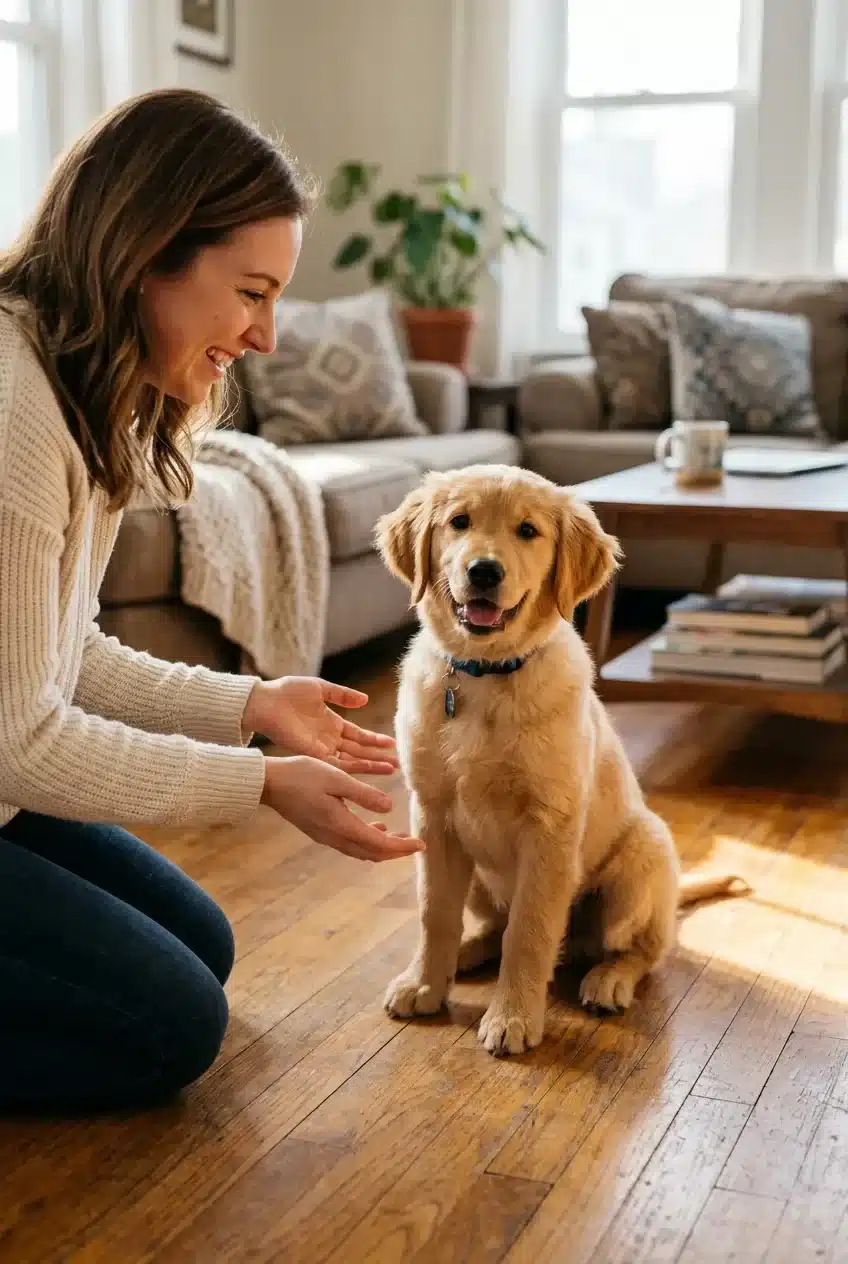
Puppies learn their names through repeated, positive association. Say the name once in a happy tone, and the moment your puppy looks at you, reward that attention immediately — with clapping, a toy, or enthusiastic praise. Repetition and consistency build the connection over days, not hours.
- Use a bright, cheerful voice — never a flat or stern tone when teaching the name
- Reward eye contact the instant it happens — timing matters more than the reward type
- Keep sessions to 2-3 minutes — puppy attention spans are short
- Say the name once per attempt — repeating it dilutes its meaning
- Practice in quiet spaces before adding distractions
- Never use the name when scolding — it must stay positive
Why Name Recognition Matters More Than You Might Think
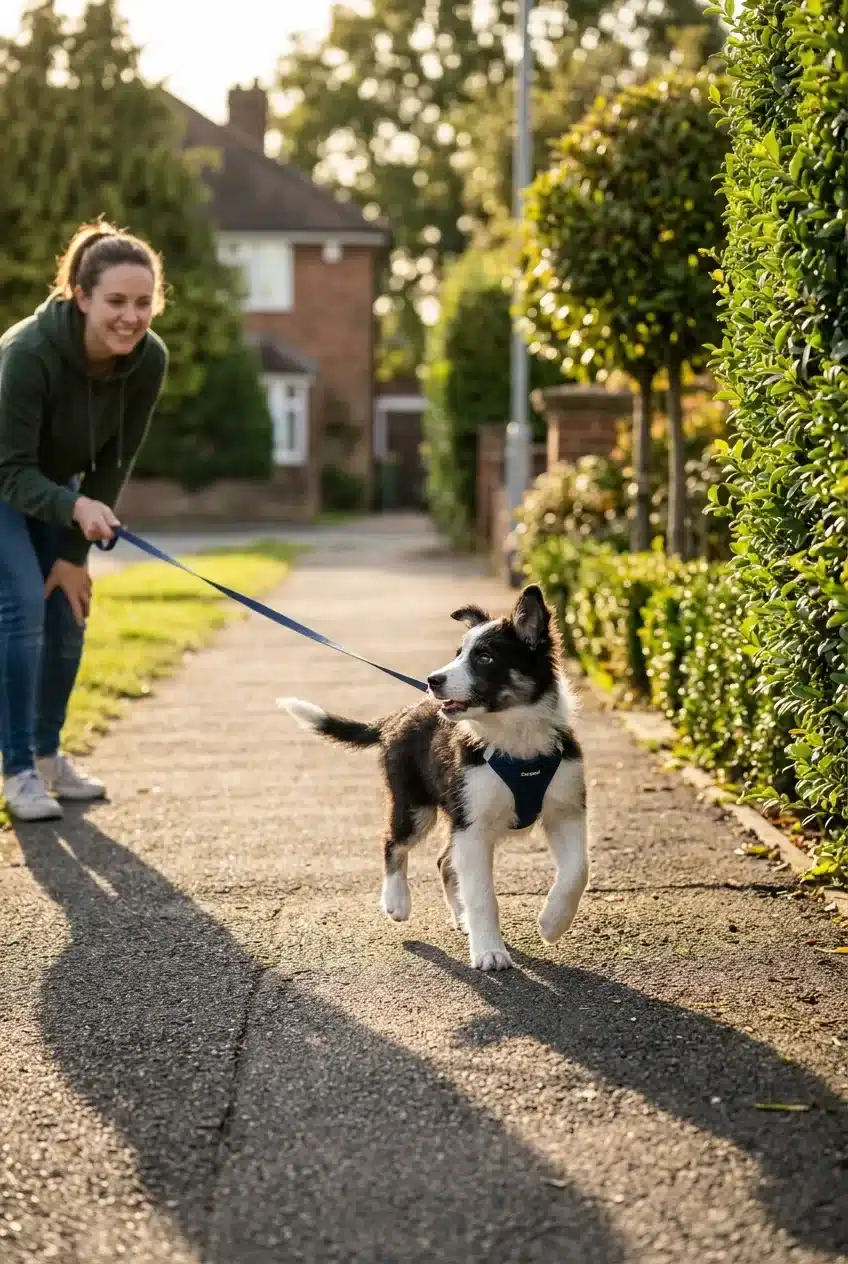
A puppy that responds to its name is a safer puppy. That split-second recall when you call their name can stop them running into traffic or approaching a dangerous dog.
Name recognition is also the foundation of almost every other training skill. According to the American Kennel Club, a puppy that reliably looks up when called is primed to learn sit, stay, come, and leash manners far more quickly.
Puppies begin processing distinct sounds and associating them with outcomes as early as 3-4 weeks of age. By 7-8 weeks — when most puppies arrive in their new home — their brains are in a prime socialization window that makes name learning remarkably fast with the right approach.
The name is not just a label. It is the first word your puppy learns means: pay attention to me right now.
Why Some Puppies Don’t Respond to Their Name at First
Get Free Dog Health Tips!
Weekly guides on keeping your dog healthy & happy
🔒 No spam. Unsubscribe anytime.
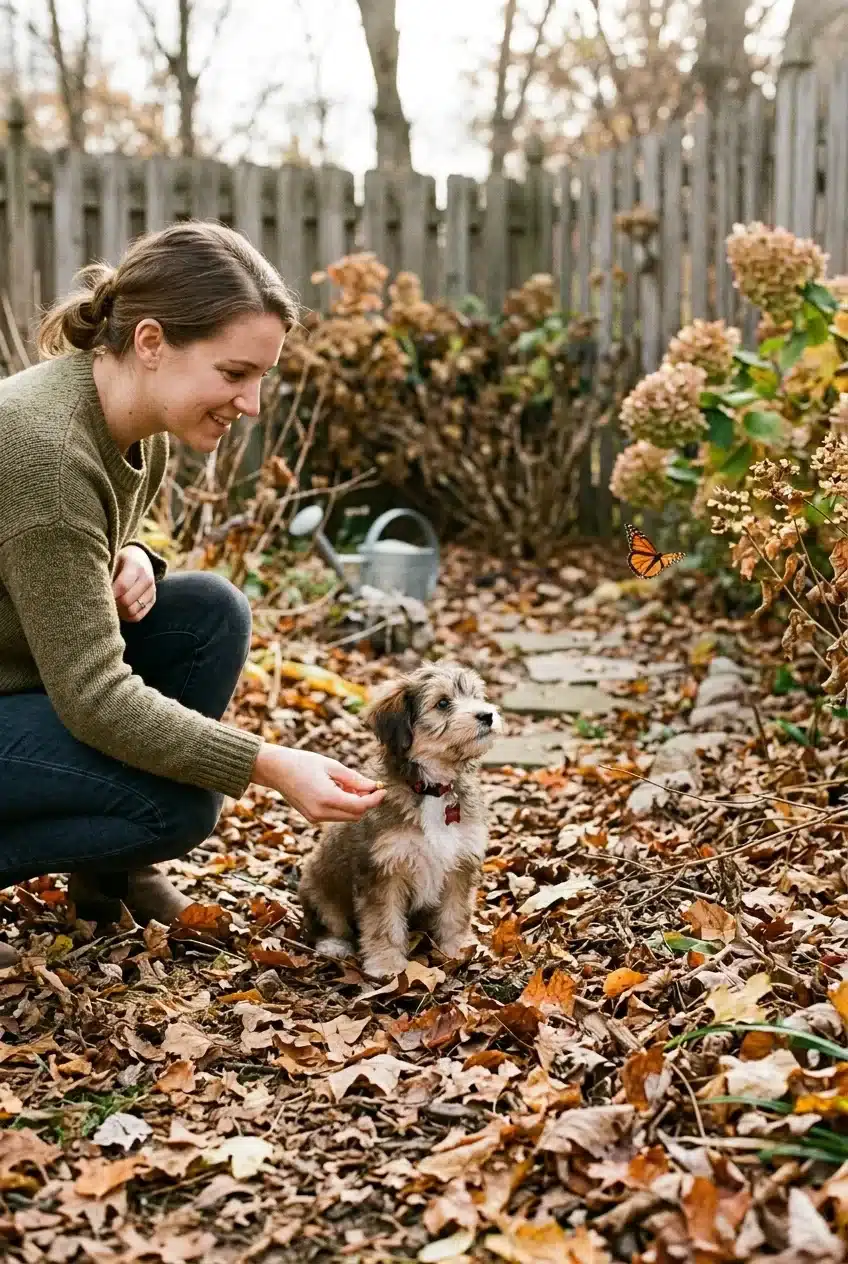
There are several reasons a new puppy might ignore their name, and none of them mean your dog is stubborn or slow.
- Too many distractions: A busy room floods a puppy’s senses. Start in a quiet, familiar space before expecting the name to cut through noise.
- Inconsistent use: If five family members call the puppy by three different nicknames, the dog never locks in on one sound. Pick one name and one form of it.
- Flat or anxious tone: Puppies respond to emotional cues. A monotone or tense voice gives them nothing exciting to orient toward.
- Overuse without reward: Saying the name constantly — while the puppy ignores it — teaches them the sound doesn’t require a response.
- Age and development: Very young puppies under 8 weeks may simply need more time. Their hearing and attention systems are still maturing.
The most common cause is starting in a high-distraction environment too soon. This is an easy mistake to make, and fixing it is simple: move sessions somewhere calm and try again.
Signs Your Puppy Is Starting to Recognize Its Name
Knowing what progress looks like helps you adjust your training approach at the right time.
MOST POPULAR THIS WEEK
Vet-Recommended Articles: 👇
👉 Why Does My Dogs Skin Turn Dark And Thick After Years Of Allergy Treatment
👉 Best Home Remedies For Arthritis In Dogs With Limping
👉 How Long Does An Elimination Diet Take For Dogs With Skin Allergies
- Ear flick or head turn — a subtle ear movement toward you when you say the name (Normal variation – not a cause for concern — this is early-stage recognition)
- Full head turn toward you — your puppy physically orients in your direction (Normal variation – not a cause for concern — this is the target behavior)
- Eye contact held for 1-2 seconds — the puppy looks at your face, not just toward a sound (Normal variation – not a cause for concern — strong sign of name learning)
- No response after 3+ weeks of consistent practice — the puppy does not orient toward the name at all in a quiet setting (Monitor – watch for 24-48 hours — and consider a veterinary hearing check)
- Startles easily or does not respond to any sounds — possible hearing concern rather than a training issue (Emergency – see a vet immediately if combined with other signs of sensory difficulty)
Most puppies show early recognition within 5-7 days of consistent, reward-based practice. Full reliable response in mildly distracting environments typically takes 2-4 weeks.
When to Talk to Your Vet
If your puppy does not respond to any sounds — not just their name — book a vet appointment promptly, as this could indicate congenital hearing loss.
Certain breeds carry a higher rate of hereditary deafness. Dalmatians, white Bull Terriers, and merle-coated dogs are among those more commonly affected.
- Emergency vet tonight: If your puppy shows signs of disorientation, head tilting, or loss of balance alongside non-responsiveness to sound
- Regular vet appointment: If your puppy does not respond to its name or any environmental sounds after 3-4 weeks of consistent training in a quiet setting
- Monitor at home: If your puppy responds to sounds generally but is still learning name recognition — this is normal and not a health concern
Pet parents in rural areas without easy vet access can start with a simple home hearing check: stand behind your puppy where they cannot see you, clap sharply, and observe whether they react. No reaction to a sharp clap warrants a vet call regardless of location.
How to Teach a Puppy Its Name Without Treats — Step by Step
These steps use praise, play, and eye contact as your primary rewards. No food required.
- Choose a quiet room with no TV, other pets, or foot traffic. Distractions at this stage set your puppy up to fail.
- Get down to your puppy’s level — sit on the floor or crouch. This makes you less intimidating and easier to orient toward.
- Say the name once in a bright, warm tone. One time only. Wait up to five seconds for a response.
- The instant your puppy looks at you, react big — clap happily, use a high-pitched “yes!”, offer a quick petting session, or toss a favorite puppy squeaky toy as a play reward.
- Pause 10-15 seconds before repeating. Let the moment land before starting again.
- End the session after 2-3 minutes — always while the puppy is still engaged, not after they’ve wandered off.
- Repeat 3-4 times daily for the first two weeks, then gradually increase difficulty by adding mild distractions.
Once your puppy reliably turns toward you in quiet settings, try calling the name from across the room. Graduate to the garden or yard only after indoor success is consistent.
The American Kennel Club recommends beginning name training the very first day a puppy arrives home, noting that early positive associations with the name form a foundation for all future recall training.
If you’re also working on independence skills alongside name training, the guide on teaching your puppy to be alone without separation anxiety covers a complementary set of early training techniques worth reading alongside this one.
Training Methods Compared: Treats vs. No Treats
| Method | What It Uses | Best For |
|---|---|---|
| Treat-based training | Food reward the instant the puppy looks up | Puppies motivated by food; fast initial results |
| Praise and voice reward | Excited verbal response, clapping, happy tone | Puppies sensitive to their pet parent’s emotional state |
| Play reward | Toy, tug, or chase game immediately after name response | High-energy puppies who are toy-driven rather than food-driven |
| Petting and contact | Immediate, warm physical attention | Affectionate puppies who thrive on closeness |
Many pet parents find a combination of praise and play works better long-term than food alone, because it builds a response that doesn’t rely on you having a treat in your hand.
Breed-Specific Notes
Most puppies of any breed can learn their name at roughly the same pace with consistent training. However, a few differences are worth knowing.
- Hounds (Beagles, Basset Hounds): Nose-driven and easily distracted by scent; quiet environments and short sessions matter even more for these breeds.
- Independent breeds (Chow Chows, Shiba Inus, Afghan Hounds): These dogs respond to a name well but may not feel urgency to act on it — persistence and high-value play rewards help.
- Herding breeds (Border Collies, Australian Shepherds): Quick learners who may begin responding to name within days; they benefit from early name training to channel their focus.
- Standard Poodle puppies: Highly intelligent and respond well to voice and play rewards — name training often progresses quickly.
Common Mistakes Pet Parents Make
- Repeating the name over and over without a response: This teaches your puppy the name is just background noise. Say it once, wait, and only repeat if there is genuinely no response after five seconds. Consistency here is everything.
- Using the name in a negative context: Calling “Bella!” right before a bath your puppy hates, or when scolding, poisons the association. The name must always predict something good is coming.
- Expecting too much too soon: Asking a puppy to respond to its name in a busy dog park after three days of training sets everyone up for frustration. Progress in stages — quiet room first, mild distraction second.
- Inconsistent naming across the household: If one person says “Buddy,” another says “Bud,” and a child says “Buddy-boy,” the puppy has three sounds to figure out. Agree on one form and stick to it.
- Skipping short sessions in favor of long ones: A 15-minute naming session exhausts a puppy’s attention and often ends with the dog tuning out. Two-minute sessions repeated throughout the day outperform long ones.
Prevention Tips: Building a Strong Name Response From Day One
- Start on day one at home: The first 48 hours are ideal for introducing the name repeatedly in a calm, positive context. Use a puppy clicker training kit to mark the exact moment of eye contact if you want precise timing without food.
- Make every family member use the same name form: Post it on the fridge if you need to — one name, one form, no exceptions during the learning phase.
- Practice in new environments gradually: Once indoor response is solid, move to the yard, then a quiet street, then busier settings. Each new environment effectively resets the difficulty level.
- Keep a puppy training log for the first four weeks: Tracking session length, location, and response rate helps you spot plateaus early and adjust your approach.
- Never let the name become white noise: Avoid chatting the name casually while scrolling your phone. Reserve it for deliberate training moments and genuine recall needs so it keeps its attention-grabbing power.
If you’re picking a name and haven’t settled on one yet, browsing name ideas for male and female pets or black cat name ideas can spark ideas — the same naming principles apply to dogs too, including choosing a name with a sharp consonant sound that cuts through ambient noise.
Frequently Asked Questions About How to Teach a Puppy Its Name Without Treats
How long does it take to teach a puppy its name without treats?
Most puppies show early name recognition within 5-7 days of consistent, short daily sessions. Reliable response in mildly distracting environments typically takes 2-4 weeks with praise and play as rewards.
Can I teach a puppy its name using only praise and toys?
Yes. Praise, play, and excited vocal tones are effective rewards for name training without treats. Many puppies respond just as quickly to a toy reward or enthusiastic clapping as they do to food.
What if my puppy still ignores its name after two weeks?
Check that sessions happen in a quiet space, that only one name form is used, and that the name has never been paired with something negative. If the puppy ignores all sounds — not just its name — book a vet check for hearing.
Is there a best age to start teaching a puppy its name?
Start the day your puppy arrives home, typically at 8 weeks. Puppies in this early socialization window absorb name associations faster than at any other developmental stage.
Does it cost anything to teach a puppy its name without treats?
No. Voice praise and existing toys are completely free. Optional tools like a clicker cost under $10 and can sharpen your timing, but they are not required for success.
Can I still use treats sometimes even if I’m teaching the name without them?
Absolutely. Using play or praise as the primary reward does not mean treats can never appear. Mixing reward types occasionally can actually strengthen the response by making it unpredictable and exciting.
The Bottom Line
Teaching a puppy its name without treats is absolutely achievable — and for many puppies, a warm voice and a toy work just as well as food ever could.
Start today: find a quiet room, get down to your puppy’s level, say the name once in your happiest voice, and react big the moment those eyes meet yours.
That moment of connection is the beginning of every training skill your dog will ever learn. Building on the step-by-step method above, you now have everything you need to make it happen.