Your dog is losing weight during a flea infestation because fleas drain blood, trigger allergic reactions, and cause enough discomfort to reduce appetite — all at the same time. In severe cases, the blood loss alone can cause anemia, which burns through your dog’s energy reserves fast.
If you noticed this tonight and you’re worried, that instinct is right. Weight loss during a flea infestation is a real medical signal, not just a cosmetic problem.
Why Is My Dog Losing Weight During a Flea Infestation?
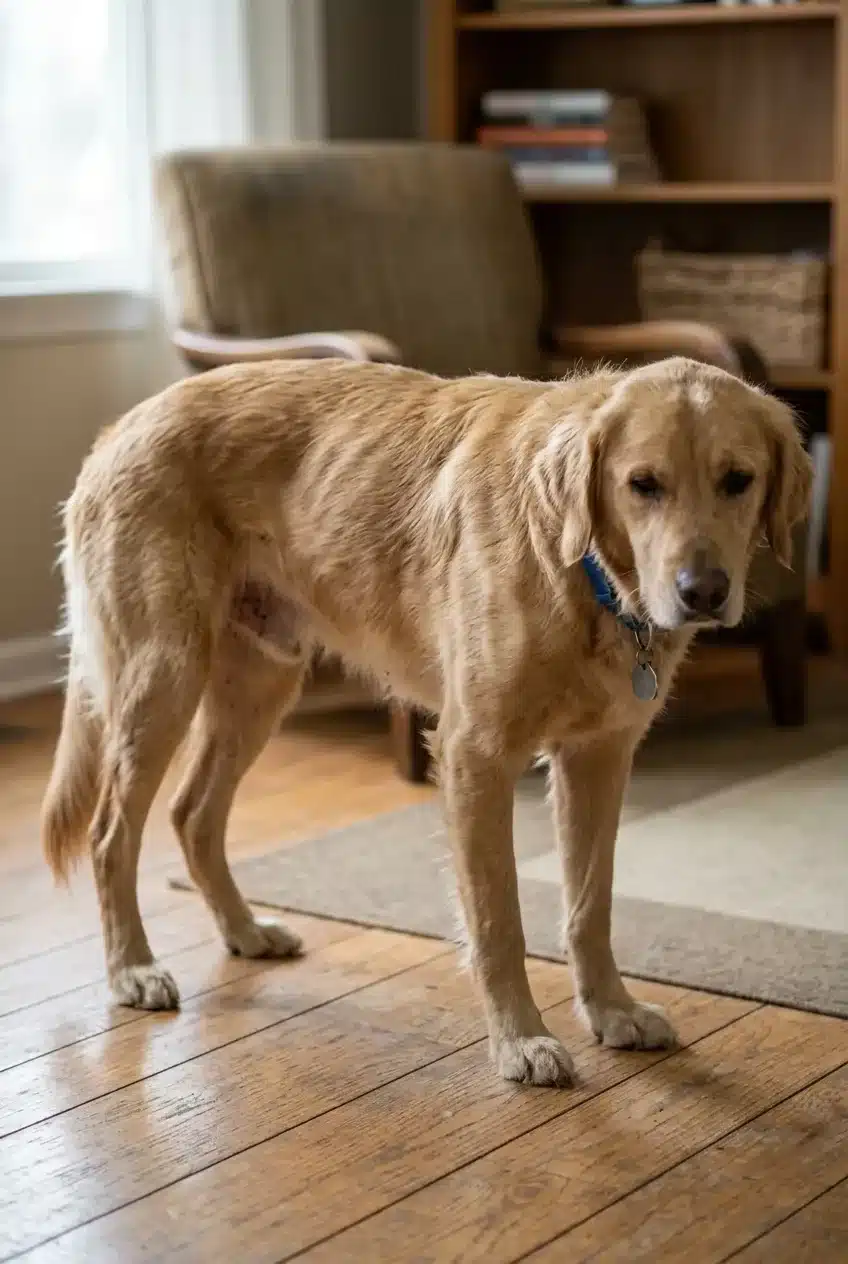
Dogs lose weight during flea infestations because of a combination of blood loss, allergic stress, reduced appetite, and — in some cases — internal parasites like tapeworms that fleas can carry. Even a moderate flea burden places serious physical strain on a dog’s body.
- Fleas consume blood, which depletes your dog’s iron and protein stores
- Flea allergy dermatitis causes chronic stress that suppresses appetite
- Tapeworm infections from swallowed fleas steal nutrients from food
- Constant itching burns extra calories your dog cannot replace if not eating
- Puppies and small dogs face the highest risk of noticeable weight loss
How a Flea Infestation Actually Drains Your Dog’s Body
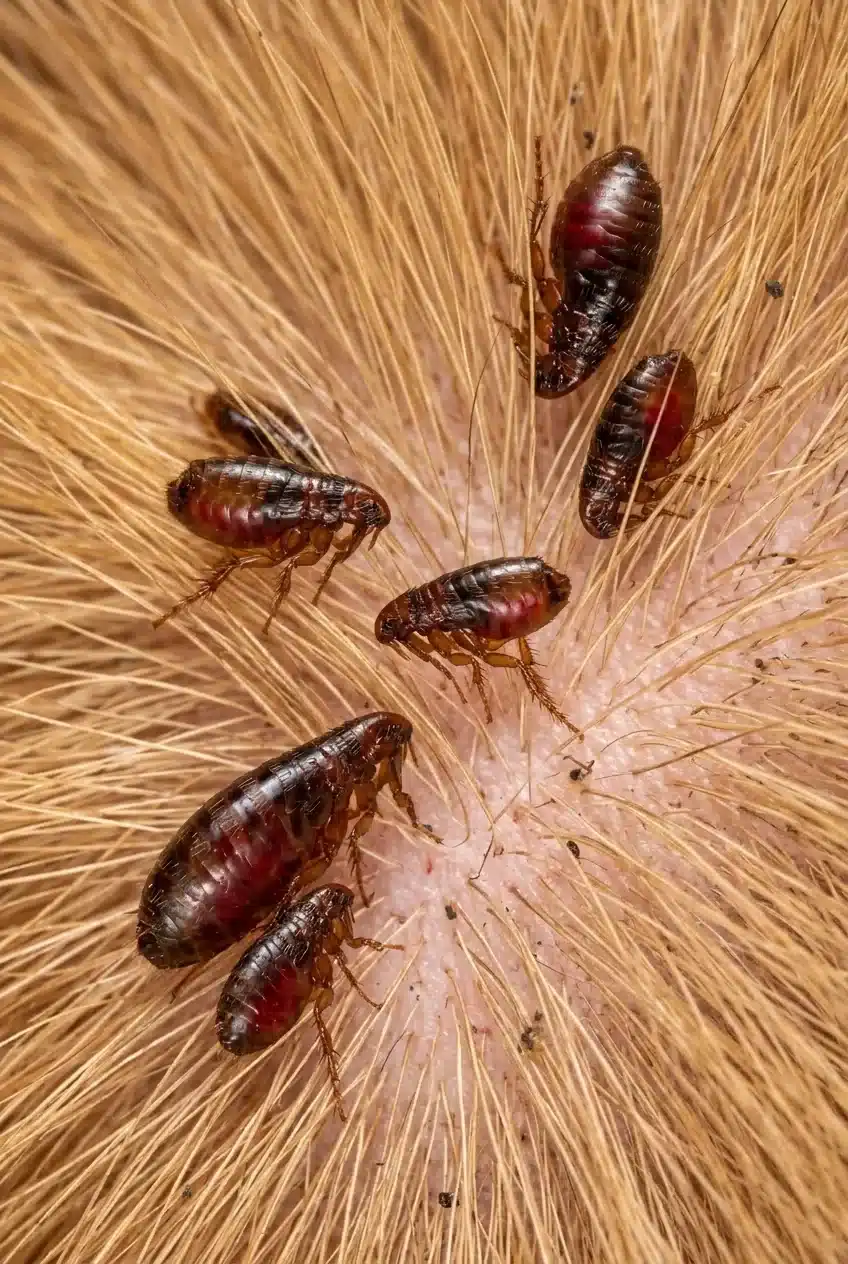
Fleas are not just an itch problem. A single flea consumes up to 15 times its body weight in blood every day, according to research published in veterinary parasitology literature.
A dog dealing with hundreds of fleas — which is common in a full household infestation — can lose a medically significant amount of blood over days and weeks. This leads to flea-induced anemia, where the body simply cannot keep up.
On top of that, the immune system’s response to flea saliva is genuinely exhausting. Flea allergy dermatitis causes chronic inflammation, and chronic inflammation increases a dog’s caloric needs while simultaneously making them feel too uncomfortable to eat normally.
The result: your dog is burning more energy than it’s taking in, and the gap widens every day the infestation goes untreated.
Tapeworms add another layer. Fleas are the most common vector for Dipylidium caninum, the dog tapeworm. When a dog grooms itself and swallows an infected flea, tapeworm larvae take hold in the intestines and absorb nutrients directly from digested food. You may be dealing with two separate parasites at once without realizing it. If you’re already managing a severe household problem, the guide on how to get rid of a severe flea infestation with cats and dogs walks through the full environmental treatment process.
Get Free Dog Health Tips!
Weekly guides on keeping your dog healthy & happy
🔒 No spam. Unsubscribe anytime.
Causes of Weight Loss in Dogs With Fleas
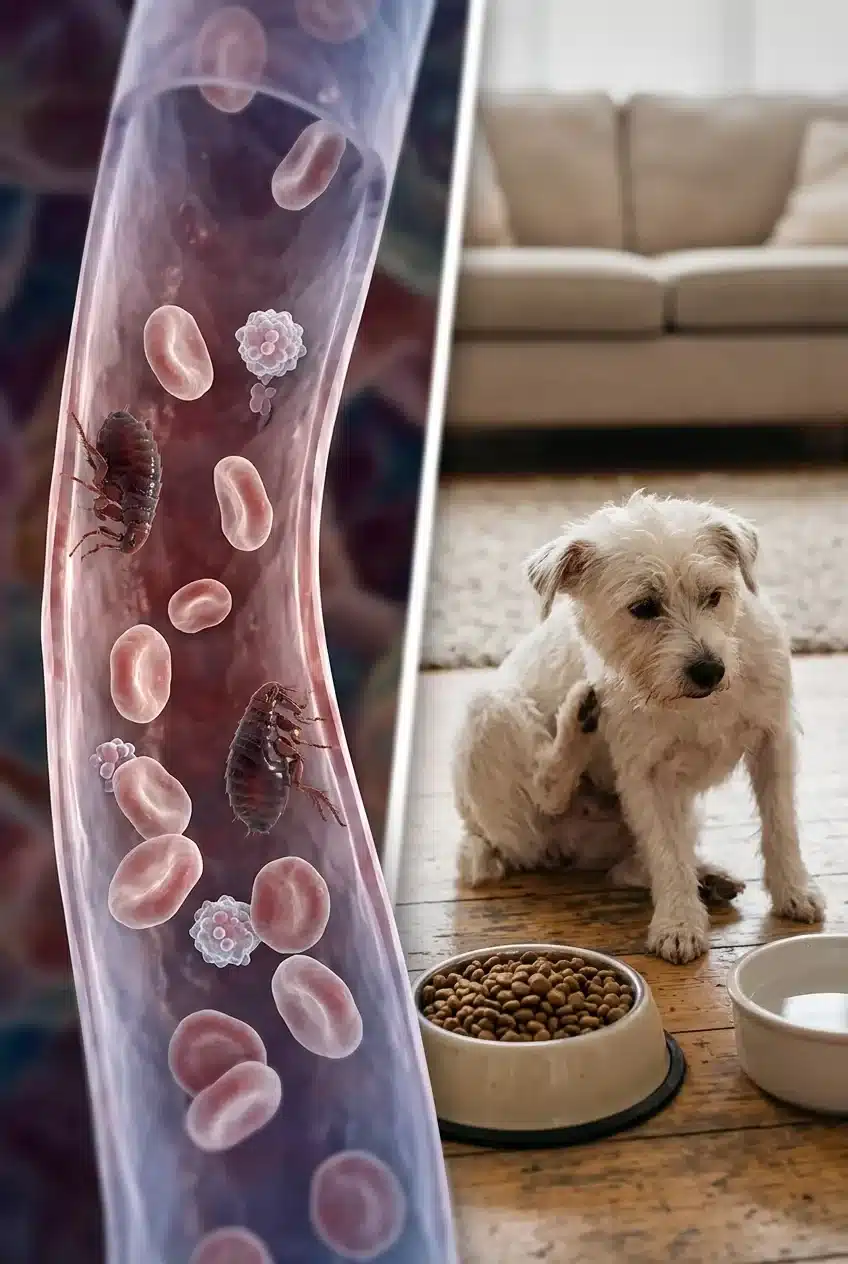
Several mechanisms work together — and understanding each one helps you explain the situation clearly to your vet.
- Blood loss and anemia: Flea feeding directly reduces red blood cells. Small dogs and puppies can become clinically anemic within days in a heavy infestation.
- Flea allergy dermatitis (FAD): The most common cause of skin disease in dogs in the US, according to the American Kennel Club. Chronic allergic response increases metabolic stress and reduces appetite.
- Tapeworm infection: Dipylidium caninum is transmitted by fleas and competes with your dog for the nutrients in every meal. Weight loss follows even when food intake looks normal.
- Pain and discomfort: Intense itching, skin infections from scratching, and inflammation all suppress normal eating behavior. A dog that feels awful often simply stops finishing its bowl.
- Secondary infections: Open sores from scratching can become infected, triggering a systemic immune response that diverts energy away from normal body maintenance.
According to the American Veterinary Medical Association (AVMA), flea allergy dermatitis is one of the most frequently diagnosed skin conditions in companion animals in the United States, and its effects extend well beyond skin symptoms.
Signs of Weight Loss and Flea-Related Illness in Dogs
Weight loss is often one of the last things a pet parent notices — by then, other signs have usually been present for a while. Here is what to look for:
MOST POPULAR THIS WEEK
Vet-Recommended Articles: 👇
👉 Why Does My Dogs Skin Turn Dark And Thick After Years Of Allergy Treatment
👉 Best Home Remedies For Arthritis In Dogs With Limping
👉 How Long Does An Elimination Diet Take For Dogs With Skin Allergies
- Visible ribs or spine: If you can see bones without pressing, weight loss is significant. (Monitor – watch for 24-48 hours, then call your vet)
- Pale gums: Pale, white, or bluish gums signal anemia from blood loss. (Emergency – see a vet immediately)
- Extreme fatigue or collapse: A dog that cannot stand or seems unresponsive needs urgent care. (Emergency – see a vet immediately)
- Constant scratching, biting, or licking: Especially at the base of the tail, belly, and inner thighs. (Monitor – watch for 24-48 hours)
- Hair loss and hot, red skin: Signs of flea allergy dermatitis and possible secondary infection. (Monitor – watch for 24-48 hours)
- Rice-like segments near the tail or in stool: Classic sign of tapeworm infection. (Monitor – call your vet within 24-48 hours)
- Reduced appetite over multiple days: If your dog has not eaten normally for more than two days. (Monitor – watch for 24-48 hours, then call your vet)
- Rapid breathing at rest: Can indicate severe anemia. (Emergency – see a vet immediately)
When To See a Vet
If your dog has pale or white gums, is breathing rapidly at rest, or cannot stand up, go to an emergency vet tonight — do not wait.
These signs point to severe anemia, which is life-threatening in dogs with heavy flea infestations, especially in puppies or small breeds.
For less urgent but still serious situations, contact your regular vet within 24-48 hours if you notice:
- Visible ribs or spine that were not noticeable before
- Appetite loss lasting more than two days
- Rice-grain segments near the tail or in feces (tapeworm)
- Open skin sores or signs of infection from scratching
- Lethargy that does not improve after a night’s rest
If your dog is losing weight but still eating, acting mostly normal, and shows no gum color changes, a scheduled vet appointment within a week is appropriate. Do not delay past that — weight loss always has a cause that needs treatment.
Pet parents in rural areas without 24-hour emergency vet access should call the nearest emergency animal hospital by phone first. Many can advise over the phone whether the situation requires a long drive tonight or can wait until morning.
What You Can Do at Home Right Now
Home care supports — but never replaces — veterinary treatment for weight loss. These steps reduce your dog’s burden while you arrange care.
- Start a vet-approved flea treatment immediately. Over-the-counter topical spot treatments and flea collars can reduce the flea load fast. A medicated flea treatment shampoo for dogs can provide short-term relief while you get prescription treatment arranged. Check the Animology Flea and Tick Dog Shampoo reviews for an accessible option many pet parents use as a first step.
- Wash all bedding in hot water (above 140°F). Flea eggs survive in fabric. Every piece of bedding, soft toy, and fabric your dog contacts needs laundering the same day.
- Vacuum every floor surface thoroughly. Flea larvae live in carpet fibers. Vacuum daily during treatment and seal the bag immediately after each session.
- Offer small, frequent, high-quality meals. A dog that has lost weight needs calorie-dense food. A high-protein dog food for weight recovery can help rebuild body condition while the infestation is cleared. Split into 3-4 smaller meals rather than one large bowl.
- Add a digestive support supplement if tapeworm is suspected. Do not treat tapeworm without vet confirmation, but a probiotic supplement for dogs can support gut health while you wait for your appointment.
- Prevent further self-injury. If your dog is scratching wounds open, an Elizabethan collar for dogs stops secondary infections from developing while the skin heals.
Never apply flea treatments meant for cats to a dog, and never double-dose any treatment — both can cause serious toxicity.
Treatment Options Your Vet May Recommend
A vet will assess the severity of weight loss, check gum color for anemia, and may run blood work before recommending a treatment plan. Here is what that plan often includes:
| Treatment | What It Does | When It Is Used |
|---|---|---|
| Prescription oral flea treatment | Kills adult fleas within hours and breaks the reproduction cycle | All moderate-to-severe infestations; faster and more reliable than OTC options |
| Deworming medication | Eliminates tapeworm infection caused by ingested fleas | When tapeworm segments are confirmed or strongly suspected |
| Iron supplementation or blood transfusion | Corrects flea-induced anemia in severe cases | Reserved for dogs with confirmed anemia, especially puppies |
| Corticosteroids or antihistamines | Reduces allergic inflammation and allows skin to begin healing | For dogs with flea allergy dermatitis causing severe discomfort |
| Antibiotics | Treats secondary bacterial skin infections from scratching | When open wounds show signs of infection |
| High-calorie prescription diet | Rebuilds body weight and muscle mass | For dogs with significant weight loss once the infestation is controlled |
Most dogs with mild-to-moderate weight loss from flea infestation show clear improvement within 2-4 weeks of starting treatment. Severe anemia or tapeworm cases may take 4-8 weeks for full weight recovery.
Breeds That Face Higher Risk
Weight loss from flea infestation affects all dogs, but certain breeds are more vulnerable because of size, coat type, or skin sensitivity.
- Chihuahuas and toy breeds: Their small blood volume means even a moderate flea burden can cause anemia faster than in large dogs.
- Greyhounds and Whippets: Low body fat means weight loss becomes visible almost immediately and compromises health quickly.
- Golden Retrievers and Labrador Retrievers: Genetically predisposed to flea allergy dermatitis, making the immune stress component more severe.
- Cocker Spaniels: Dense coats can hide large flea populations until the infestation is already advanced.
- All puppies under 12 weeks: Underdeveloped immune systems and tiny blood reserves make any flea infestation potentially life-threatening.
Common Mistakes Pet Parents Make
- Treating only the dog, not the home. Up to 95% of a flea population lives off the host — in carpets, furniture, and bedding — according to the ASPCA. Treating your dog without treating the environment means reinfestation within days.
- Stopping treatment once scratching slows down. Flea life cycles last up to 3 months. Stopping treatment early leaves eggs ready to hatch into a new infestation. Most vets recommend continuing treatment for a full 3 months.
- Assuming weight loss will fix itself once fleas are gone. If tapeworms are present, the weight loss will continue until the worm infection is treated separately. Always mention weight loss to your vet so both problems get addressed.
- Using multiple flea products simultaneously. Layering a flea collar on top of a spot treatment on top of a medicated shampoo can cause toxicity. Stick to one primary treatment at a time unless your vet directs otherwise.
Prevention Tips to Stop This From Happening Again
- Use a year-round veterinary flea preventative. Monthly oral or topical prescription preventatives are far more reliable than seasonal over-the-counter products. Ask your vet which format suits your dog’s lifestyle.
- Vacuum weekly and treat carpets with a flea growth regulator spray. A flea spray for home carpets used monthly during warm seasons breaks the reproduction cycle before it starts.
- Check your dog after outdoor time in tall grass or wooded areas. Part the fur at the base of the tail, belly, and behind the ears — flea dirt (tiny black specks) is the earliest sign of an infestation.
- Treat all pets in the household simultaneously. One untreated cat or dog becomes the reservoir that re-infests everyone else. The same preventative protocol applies to every animal under your roof.
- Wash your dog’s bedding every 1-2 weeks during flea season. A washable dog bed cover makes this easier and reduces the time eggs spend in your home.
Staying on top of your dog’s overall health routine also matters. Understanding behaviors like why ignoring your dog during potty time could be a mistake helps you notice changes in normal habits that can be early signals of health problems.
Frequently Asked Questions About Why Is My Dog Losing Weight During a Flea Infestation?
Can fleas really make a dog lose that much weight?
Yes, fleas can cause significant weight loss through blood loss, anemia, appetite suppression, and tapeworm infection. In puppies or small dogs, a heavy flea infestation can cause dangerous weight loss within one to two weeks.
How long does it take for a dog to regain weight after a flea infestation?
Most dogs begin regaining weight within 2-4 weeks once the infestation and any secondary infections like tapeworm are fully treated. Severely underweight dogs may take 6-8 weeks to reach a healthy body condition score.
How much does it cost to treat a dog losing weight from fleas?
A standard vet visit plus prescription flea treatment and deworming typically costs between $100 and $300 in the US. If anemia requires blood work or additional treatment, costs can rise to $500 or more depending on severity and location.
Can I treat my dog’s weight loss from fleas at home without a vet?
Home treatment — high-quality food, flea shampoo, and environmental cleaning — helps, but it does not address anemia or tapeworm, which require prescription medication. A vet visit is necessary when weight loss is visible or your dog seems lethargic.
How do I know if my dog has tapeworms from fleas?
Look for small, rice-like white segments around your dog’s tail area, in their bedding, or in their stool. Your vet can confirm tapeworm with a fecal test and prescribe the appropriate deworming medication.
Are puppies in more danger from weight loss during a flea infestation?
Puppies are at significantly higher risk because their blood volume is small and their immune systems are not fully developed. A flea infestation can cause life-threatening anemia in puppies faster than in adult dogs — treat it as urgent.
The Bottom Line
Your dog is losing weight during a flea infestation because fleas are actively draining their body — through blood loss, allergic stress, and in many cases, tapeworm infection. None of that resolves on its own.
The single most important thing you can do today is check your dog’s gums. Pink means there is time to call your vet in the morning. Pale or white means go tonight.
Once you have spoken to a vet and started treatment, focus on eliminating fleas from your home at the same time as treating your dog — that is the combination that actually stops the cycle. For more detail on tackling a household outbreak, the guide on supporting your dog through a sudden health crisis offers practical framing for how to stay calm and act fast when your dog needs you most.
Your dog is counting on you to notice these signs — and you already did.