Easter is one of the most fun holidays of the year — colorful eggs, excited kids, and a yard full of surprises. But if you share your home with a dog, cat, or other pet, that same festive setup can quickly turn stressful.
From chocolate-filled eggs to small plastic pieces, Easter egg hunts are packed with hidden hazards your pet could stumble across. The good news? With a little planning, you can keep the fun going without putting your furry friend at risk.
This guide walks you through everything you need to know to host a pet-safe Easter egg hunt. Whether you have a curious dog, a sneaky cat, or a small animal like a guinea pig, we’ve got you covered.
🛒 My Recommended Amazon Picks
What Makes Easter Egg Hunts Dangerous for Pets?
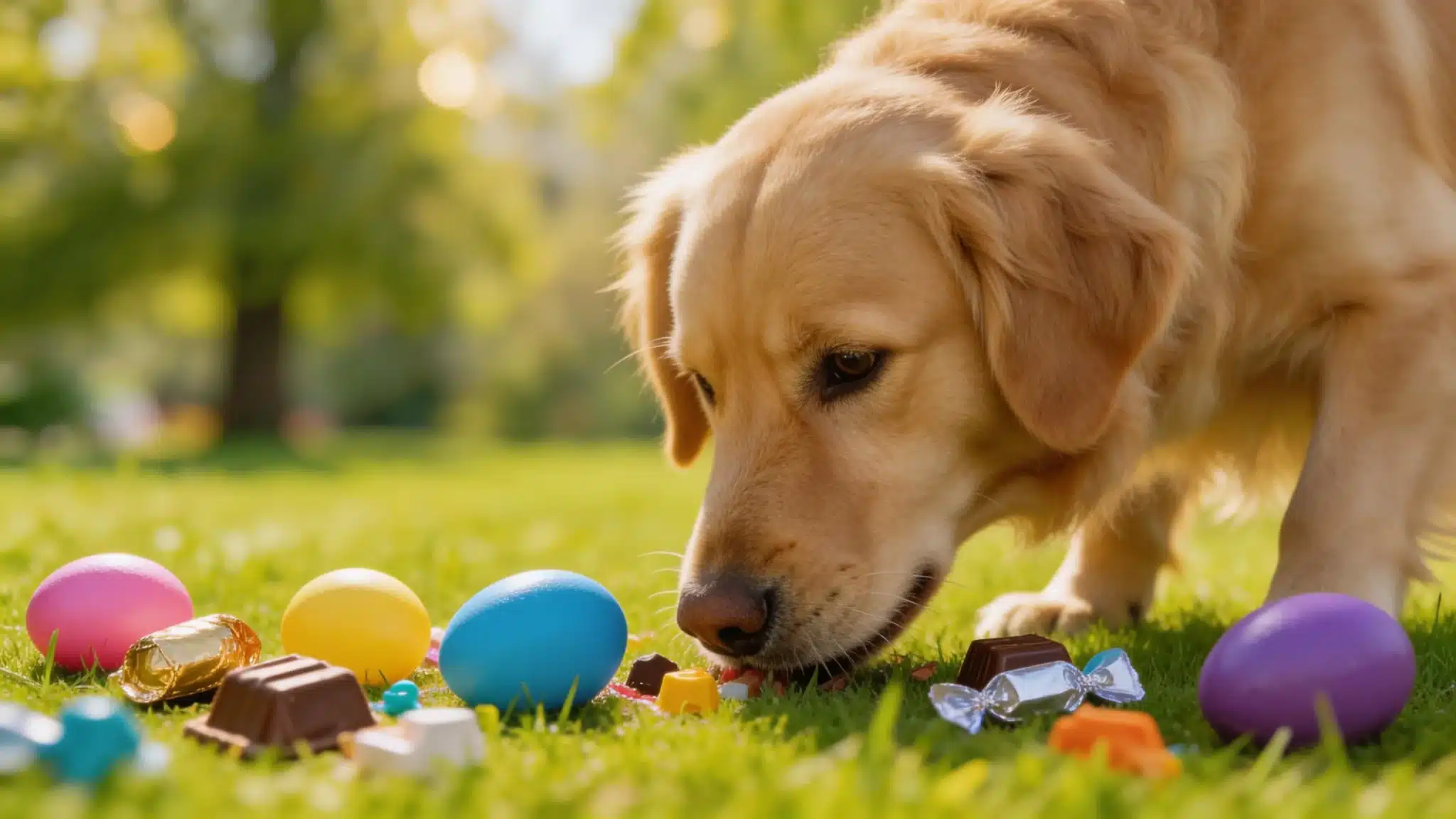
Easter egg hunts seem harmless, but they come with a surprising number of risks for animals. Pets explore the world with their noses and mouths, which means anything left on the ground is fair game.
Here’s a quick snapshot of what you need to watch out for:
Get Free Dog Health Tips!
Weekly guides on keeping your dog healthy & happy
🔒 No spam. Unsubscribe anytime.
- Chocolate and xylitol — both are toxic to dogs and cats
- Small plastic eggs — can be swallowed or choked on
- Candy wrappers — cause intestinal blockages if ingested
- Artificial grass filler — a major choking and blockage risk
- Essential oil-scented eggs — harmful to birds and cats
- Dyed hard-boiled eggs left outside — can spoil quickly in warm weather
- Crowded, noisy environments — can stress out small or shy pets
Knowing these risks upfront helps you make simple swaps that protect your pet without ruining the fun for your family.
Choose Pet-Safe Fillings for Your Easter Eggs

The filling inside plastic eggs is one of the biggest dangers for pets. Most store-bought candy contains ingredients that are toxic to animals — especially dogs.
🛒 Vet Recommended for Yeasty Paws
Skip These Ingredients Completely
Chocolate, xylitol (found in sugar-free gum and candy), and raisins are all potentially fatal to dogs. Even a small amount can trigger vomiting, seizures, or kidney failure.
Cats are also at risk, even if they’re less likely to eat candy. Don’t assume your cat won’t investigate — some cats are surprisingly bold around food left at ground level.
Better Options for Pet-Friendly Homes
You don’t have to give up on sweet treats — just get creative with what goes inside the eggs.
- Coins or dollar bills for older kids
- Stickers, temporary tattoos, or small erasers
- Mini puzzles or tiny toy figures
- Small pet-safe dog treats in a separate set of eggs for your pup
- Fold-up notes with fun challenges or jokes
Making a separate set of pet-friendly eggs your dog can “find” too is a great way to include them in the fun safely.
Pick the Right Eggs and Decorations
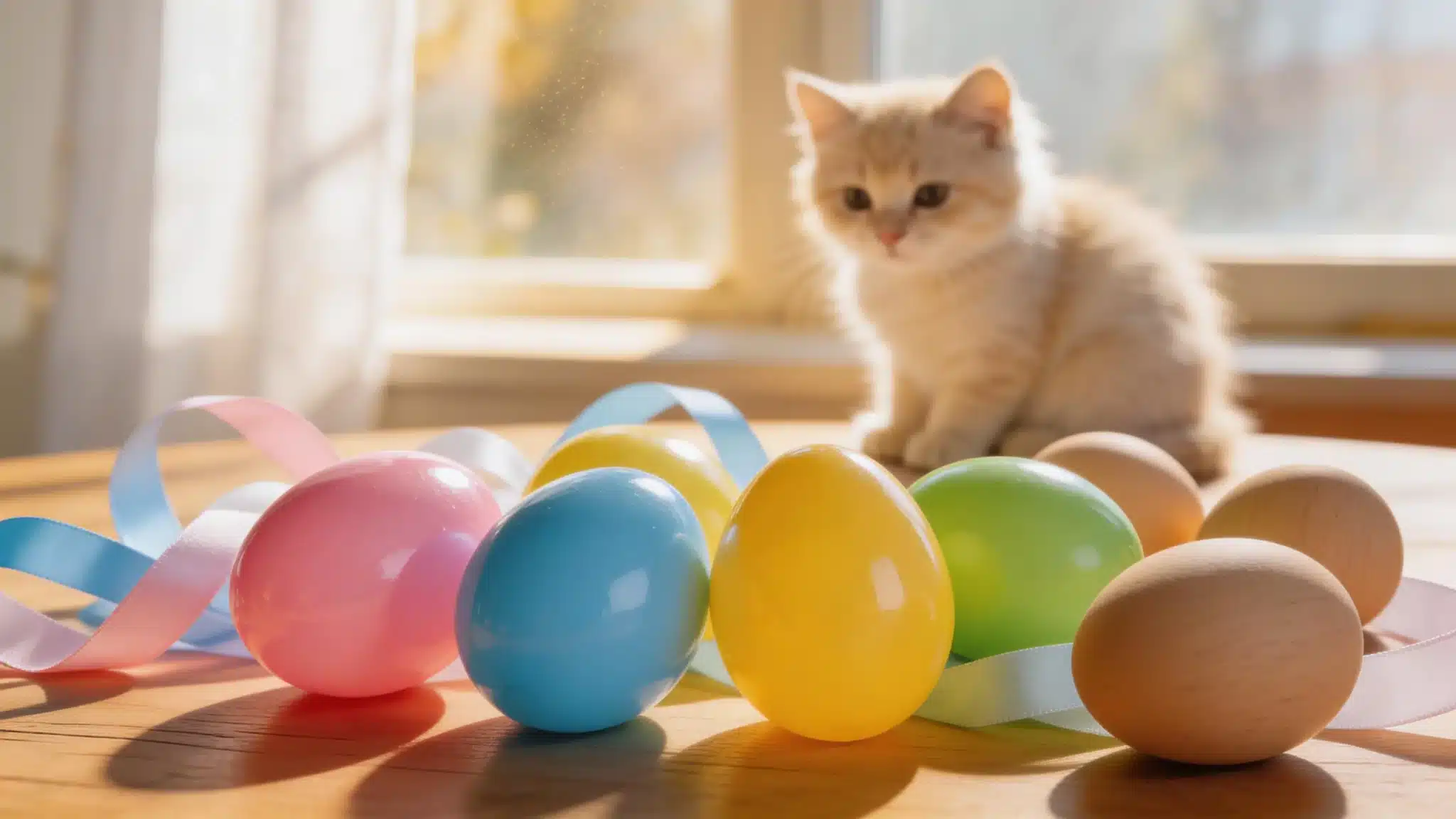
Not all plastic eggs are created equal. Size, color, and material all matter when you have pets around.
Go Bigger to Reduce Choking Risk
Smaller plastic eggs — especially the tiny ones — are easy for a dog to swallow whole. Choose larger eggs that are harder to fit in a pet’s mouth.
Look for eggs with secure closures that don’t pop open easily. Large plastic Easter eggs are widely available and much safer for households with pets.
Ditch the Artificial Grass
That bright green Easter basket filler looks adorable — but it’s one of the most dangerous decorations for pets. Dogs and cats frequently ingest the plastic strands, which can wrap around the intestines and cause life-threatening blockages.
Swap it out for crinkle paper filler, real grass clippings, or shredded tissue paper instead. These are still festive and much safer if your pet sneaks a bite.
Keep Hard-Boiled Eggs Tracked
If you’re hiding real dyed eggs, keep a written count of how many you hid and where. A forgotten hard-boiled egg left in the yard can spoil in just a few hours on a warm spring day — and a dog who finds it later could get seriously sick.
Use a simple numbered list and check each egg off as kids find them. It takes two minutes and could save a vet visit.
Set Up a Safe Hunt Zone

Where you hide the eggs matters just as much as what’s inside them. A little spatial planning goes a long way in keeping your pet safe during the hunt.
Create a Pet-Free Area During the Hunt
The safest option is to keep your pet in a separate room or fenced area while the egg hunt is happening. This removes the temptation entirely and prevents accidental ingestion mid-hunt.
Set your pet up with a comfortable space, fresh water, and a favorite toy or chew to keep them happy. If you’re worried about outdoor bugs near your pet’s space, check out our guide on dog-safe insect repellent to protect them while they wait outside.
Hide Eggs at Human Height, Not Ground Level
Hiding eggs low to the ground is perfect for toddlers — and perfect for sniffing dogs. Try hiding eggs slightly higher up, like in flowerpots, on porch steps, or tucked in bushes at waist height for small children.
This way, kids can still find them easily but your dog is less likely to sniff them out first. It also adds a fun challenge for older egg hunters.
How to Run a Pet-Safe Easter Egg Hunt Step by Step
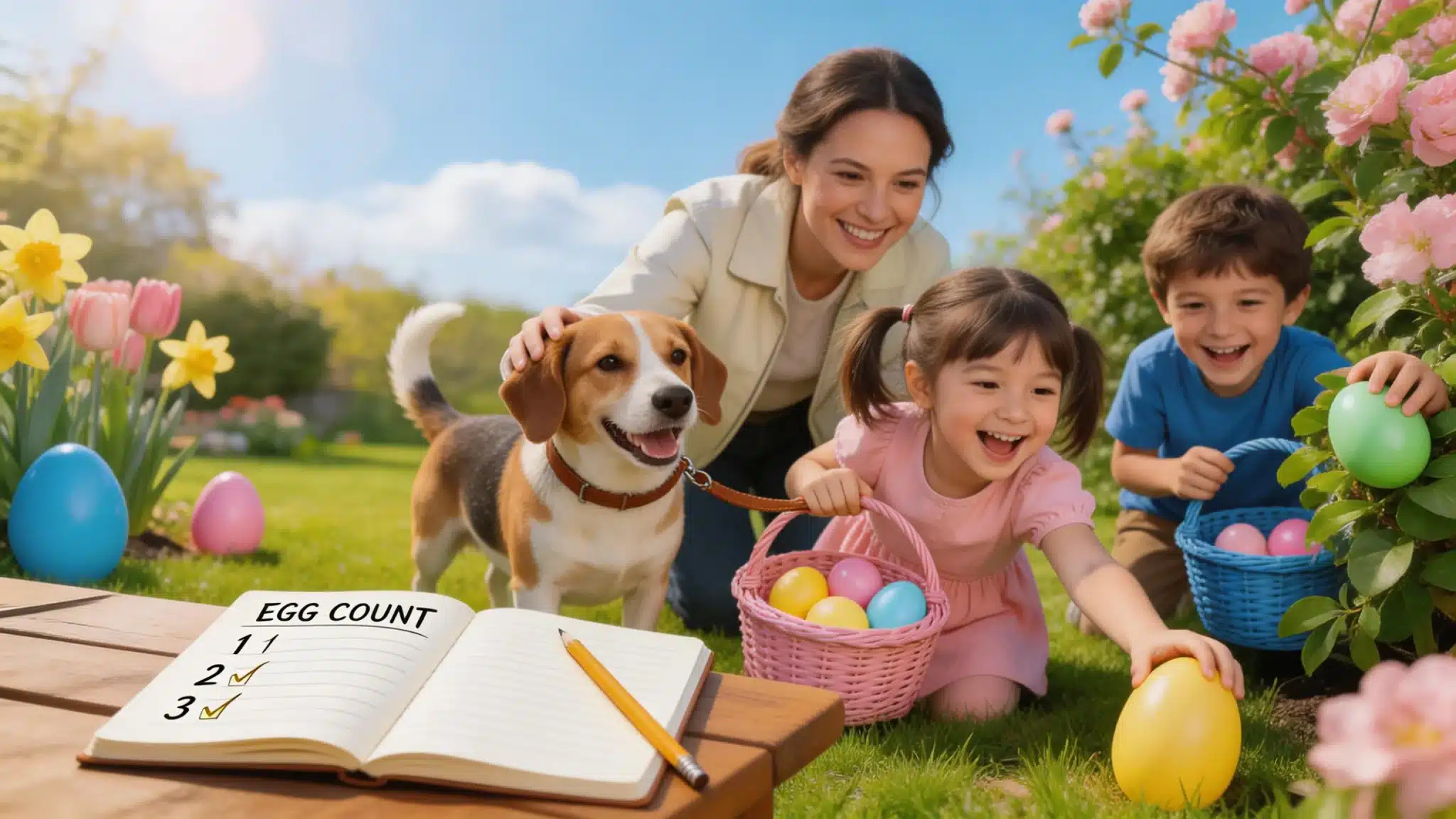
Want a simple game plan you can follow on Easter morning? Here’s how to pull it off smoothly.
- Count your eggs before hiding them — write down the number so nothing gets left behind.
- Fill eggs with pet-safe or non-food items — no chocolate, xylitol, or raisins.
- Set your pet up in a safe space — indoors or in a fenced yard away from the hunt area.
- Hide eggs at a safe height — avoid ground level where possible.
- Run the hunt and collect all eggs — do a sweep of the area when kids are done.
- Check your egg count — confirm every egg has been found before releasing your pet.
- Dispose of wrappers and packaging immediately — don’t leave candy bags or egg trays lying around.
- Let your pet join the fun safely — give them their own pet-friendly egg to sniff out as a reward.
Following these steps takes the guesswork out of the day and lets everyone — including your pet — enjoy Easter stress-free.
Don’t Forget About Small Pets and Birds
Dogs and cats get most of the attention when we talk about pet safety, but small animals and birds deserve the same care.
If you have guinea pigs, rabbits, hedgehogs, or birds, keep them indoors during the egg hunt. Loud noise and sudden foot traffic can cause serious stress for small animals. If you’re curious about why your small pets react the way they do to household commotion, our article on why guinea pigs make noises is a helpful read.
Birds are especially sensitive to scented products. Avoid using scented plastic eggs, candles, or air fresheners near your bird’s space during holiday gatherings. If you keep a bird, you may also find our guide on what bird cage cleaner is safe useful for keeping their environment clean and toxin-free around the holidays.
Expert Insight and Key Safety Stats
Veterinarians consistently flag Easter as one of the most dangerous holidays for pets. According to the ASPCA, chocolate is one of the top five toxins reported to their Animal Poison Control Center every year — and calls spike sharply in the days around Easter.
Dr. Ahna Brutlag, a veterinary toxicologist, notes that “even small amounts of dark chocolate can cause serious symptoms in small dogs, including vomiting, tremors, and rapid heart rate.” She recommends treating all chocolate as dangerous regardless of the amount.
A 2024 report from the Pet Poison Helpline confirmed that Easter weekend consistently ranks among their highest call volume days of the year, with candy and basket filler among the most common culprits. The best protection is prevention — not just having your vet’s number ready.
Frequently Asked Questions About Making an Easter Egg Hunt Safe for Pets
Can Dogs Join in an Easter Egg Hunt?
Yes — but only with the right setup. Create a separate set of eggs filled with natural dog treats and let your pup hunt for those once the main hunt is over. Keep them away from the kids’ eggs, which may contain toxic candy.
Is Plastic Easter Egg Grass Safe for Pets?
No — plastic Easter grass is one of the most dangerous holiday decorations for pets. It can wrap around the intestines if swallowed, requiring emergency surgery. Always use paper-based alternatives in pet-friendly homes.
What Should I Do If My Pet Eats Chocolate?
Call your vet or the ASPCA Animal Poison Control Center (888-426-4435) immediately. Don’t wait for symptoms to appear. The faster you act, the better the outcome — time is critical with chocolate ingestion.
Are Easter Egg Dyes Toxic to Pets?
Most commercial egg dye kits are mildly toxic if ingested in large amounts. Keep dyed eggs away from pets and supervise the dyeing process. Opt for natural food-based dyes if you want a safer option around curious animals.
How Can I Keep My Cat Away From Easter Decorations?
Cats are climbers and investigators by nature. Use cat deterrent spray around decoration areas, keep baskets elevated, and remove any items with strings, ribbons, or small parts that could tempt your cat. Supervision during the holiday is the most effective tool.
Enjoy a Happy, Safe Easter With Your Whole Family
Your pet is part of the family — and with a few simple swaps, they can be part of the Easter celebration too. Start by checking your egg fillings and swapping out plastic grass, and you’ll already be ahead of most pet owners. Have a wonderful Easter!