Easter is one of the most festive times of the year, and for many households, that means fresh flowers, potted plants, and spring-themed bouquets filling every room. It looks beautiful — but for pet owners, this time of year quietly brings one of the most serious toxic hazard windows of the season.
Every year, the ASPCA Animal Poison Control Center fields thousands of calls related to plant ingestion by pets, and Easter weekend consistently represents one of the highest-volume periods. Many of the plants associated with Easter decorating are severely toxic to cats and dogs — some fatally so.
This guide covers exactly which Easter plants are dangerous, how toxic they are, what symptoms to watch for, and what to do if your pet gets into one. Whether you’re hosting Easter dinner or shopping for spring decor, this is information worth having before a problem starts.
🛒 My Recommended Amazon Picks
Which Easter Plants Are Most Dangerous for Cats and Dogs?
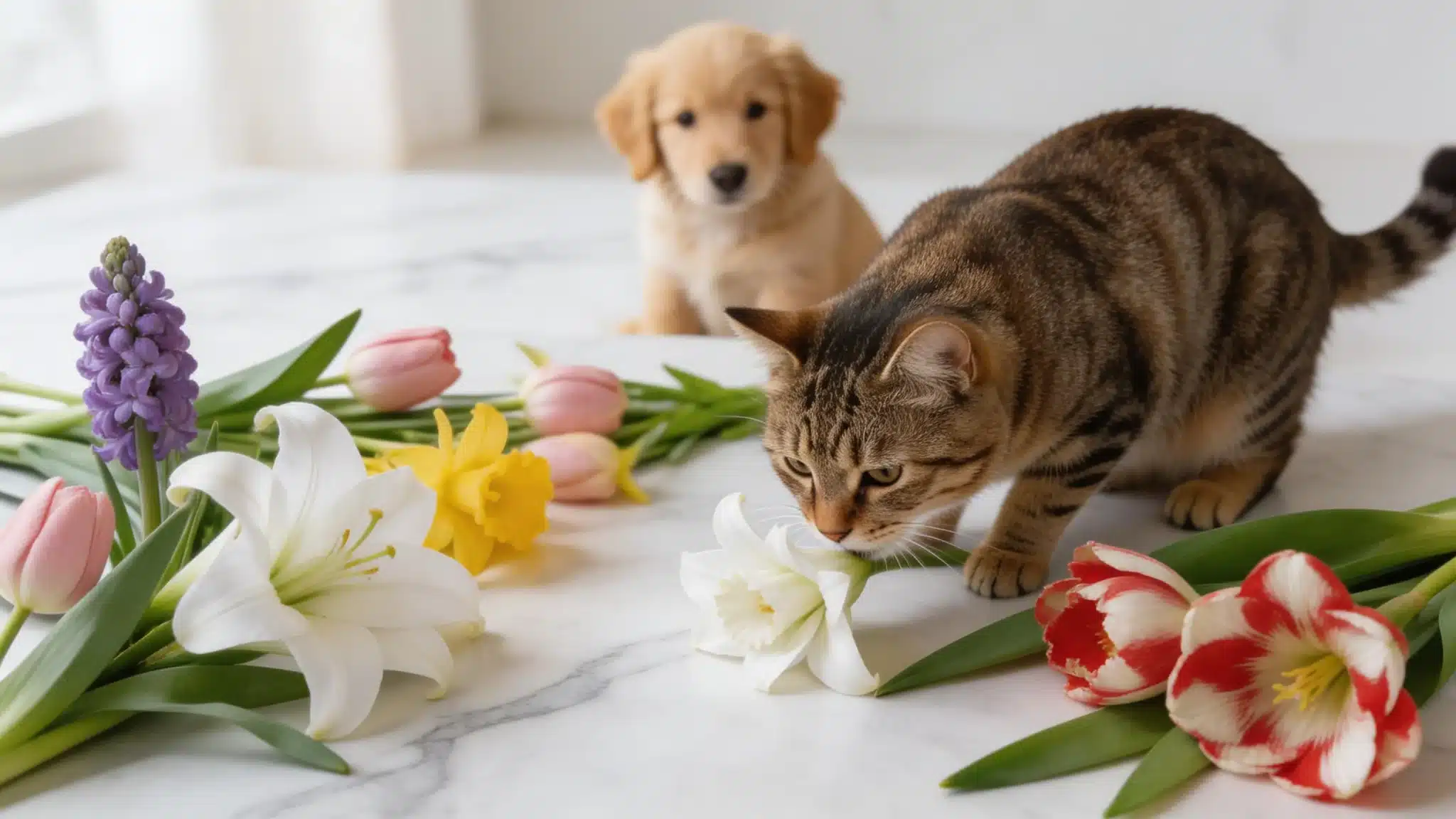
The most dangerous Easter plant for cats is the Easter lily — it can cause acute kidney failure and death with even a small exposure. For dogs, daffodils, tulips, and hyacinths are among the most harmful Easter plants, capable of causing severe vomiting, heart irregularities, and neurological symptoms.
Below is a detailed breakdown of the most common offenders found in Easter arrangements and home gardens.
Get Free Dog Health Tips!
Weekly guides on keeping your dog healthy & happy
🔒 No spam. Unsubscribe anytime.
Easter Lily: Deadly for Cats, Mildly Toxic for Dogs
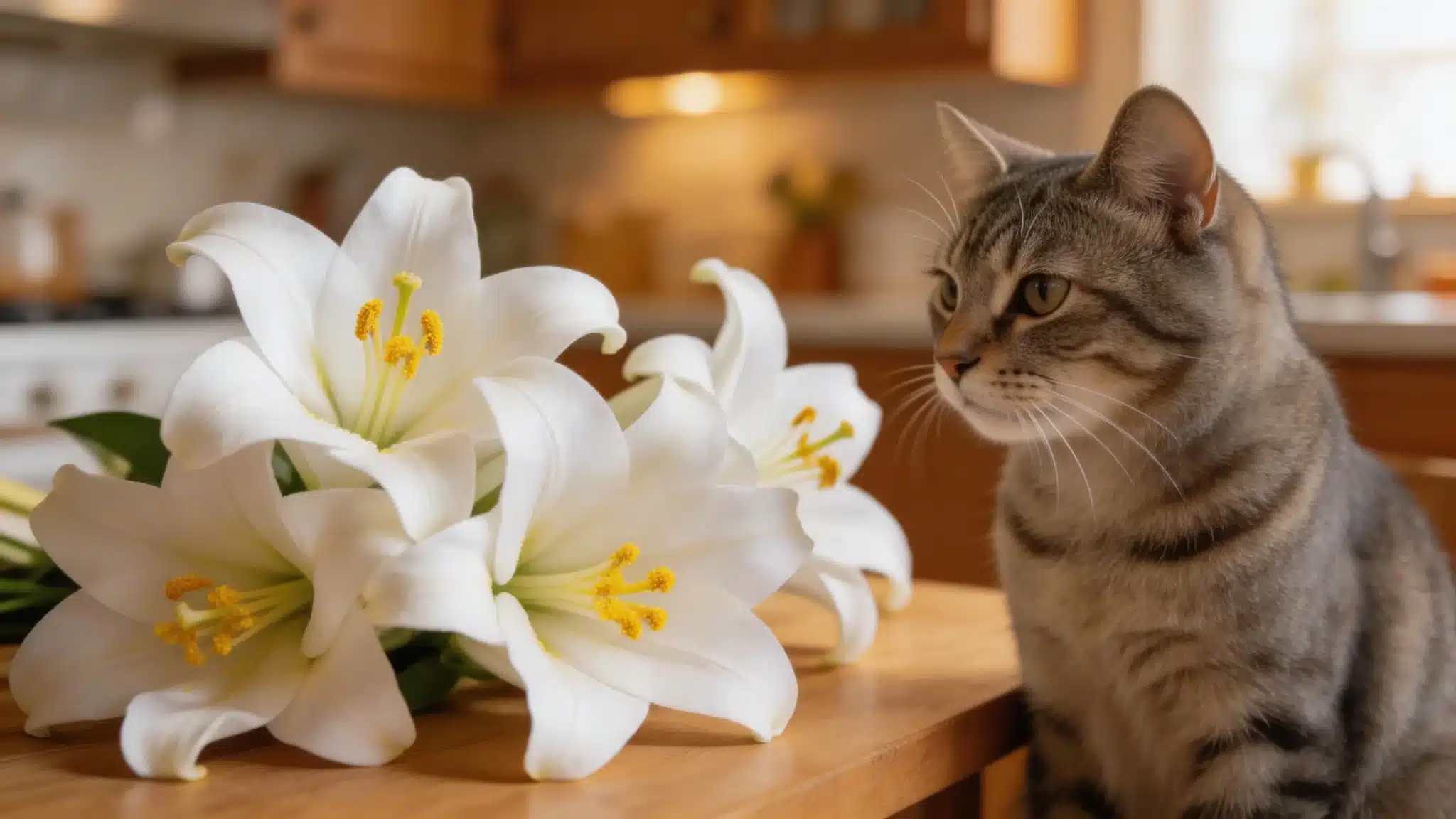
Easter lilies (Lilium longiflorum) are arguably the most dangerous plant in this entire list — specifically for cats. The ASPCA classifies true lilies in the Lilium and Hemerocallis genera as highly toxic to cats, with kidney failure occurring within 24–72 hours of ingestion.
Every part of the Easter lily is toxic to cats: the petals, leaves, stem, pollen, and even the water in the vase. A cat grooming pollen off its fur after brushing against the plant can develop life-threatening toxicity.
🛒 Vet Recommended for Yeasty Paws
Easter Lily Symptoms in Cats
- Vomiting within 0–2 hours of exposure
- Lethargy and loss of appetite
- Increased urination followed by decreased or no urination
- Dehydration and drooling
- Kidney failure (within 24–72 hours if untreated)
For dogs, Easter lilies cause mild gastrointestinal upset — vomiting and diarrhea — but do not carry the same lethal kidney risk. That said, even mild toxicity warrants a call to your vet.
Expert Insight: Dr. Tina Wismer, Medical Director at the ASPCA Animal Poison Control Center, has publicly stated that lily toxicity in cats remains one of the most preventable causes of acute renal failure they see each spring. Early intervention — within the first few hours — dramatically improves survival outcomes.
If you share your home with a cat, consider replacing Easter lily arrangements with pet-safe alternatives. A realistic artificial Easter lily gives you the look without the life-threatening risk.
Daffodils: One of the Most Underestimated Easter Hazards

Daffodils (Narcissus species) are a classic Easter flower, but they contain lycorine and other alkaloids that are toxic to both cats and dogs. The highest concentration of toxins is found in the bulb, but all parts of the plant — flowers, leaves, and stems — can cause illness.
Ingesting even a small amount can trigger severe vomiting, diarrhea, abdominal pain, and drooling. In more serious cases, daffodil poisoning leads to cardiac arrhythmias, low blood pressure, tremors, and convulsions.
Signs of Daffodil Poisoning in Pets
- Profuse drooling
- Nausea and vomiting
- Diarrhea
- Lethargy
- Tremors or muscle weakness
- Abnormal heart rhythm (in severe cases)
Many pet owners keep daffodil bulbs stored in garages or sheds during non-growing months. Dogs especially can chew through bulb bags — so safe storage matters year-round, not just at Easter.
Tulips and Hyacinths: Both Dangerous, Especially the Bulbs

Tulips and hyacinths are in the same plant family (Liliaceae) and share a similar toxicity profile. Both contain allergenic lactones and other compounds concentrated primarily in the bulb.
Mild exposure from chewing a leaf or petal typically causes oral irritation, excessive drooling, and gastrointestinal upset. Ingesting the bulb — which dogs may dig up from garden beds — causes significantly more serious symptoms including tremors, difficulty breathing, and increased heart rate.
Comparing Tulip vs. Hyacinth Toxicity
- Tulips: The bulb is the most toxic part. Causes vomiting, diarrhea, drooling, and in large amounts, cardiac symptoms and central nervous system effects.
- Hyacinths: The bulb contains the highest toxin load. Causes similar GI symptoms plus intense skin and mucous membrane irritation. The scent alone may cause sneezing and respiratory irritation in some pets.
If your dog has access to your garden this Easter, make sure freshly planted tulip or hyacinth bulbs are covered or fenced off. Consider a garden pet barrier fence to block access to flower beds during the spring planting season.
Amaryllis: A Common Easter Houseplant With Hidden Danger
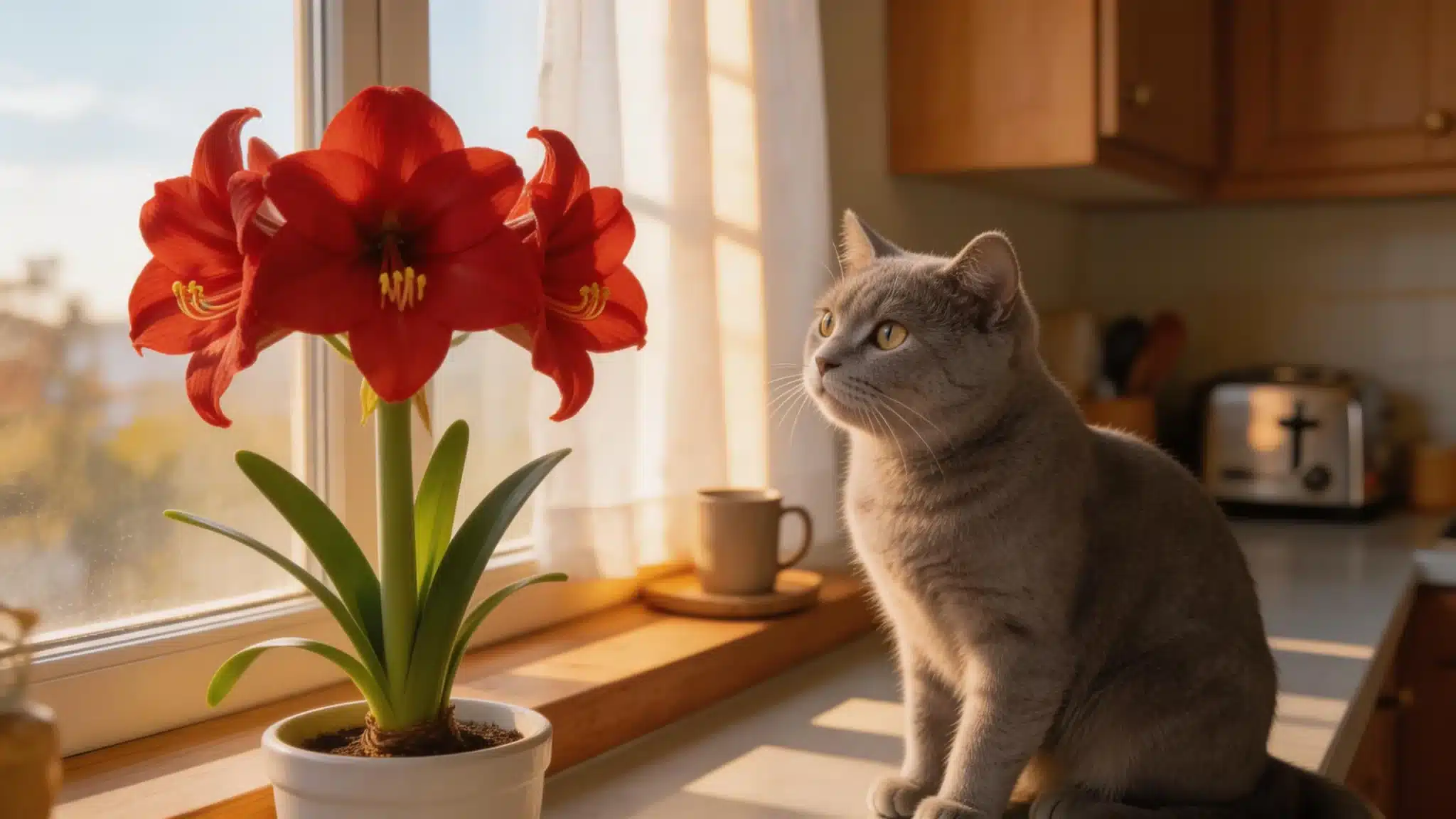
Amaryllis is frequently sold as a potted Easter gift plant and is toxic to both cats and dogs. It contains lycorine — the same alkaloid found in daffodils — along with other harmful phenanthridine alkaloids.
Symptoms include vomiting, depression, diarrhea, abdominal pain, hypersalivation, anorexia, and tremors. The bulb carries the highest toxin concentration, but the leaves and flowers are also dangerous.
Amaryllis is sometimes confused with the Easter lily in gift shops, so if you’re purchasing plants this season, always check the label carefully before bringing anything home to a household with pets.
Hydrangea: A Cyanide Risk That Often Goes Overlooked
Hydrangeas are popular in Easter floral arrangements and garden borders. They contain cyanogenic glycosides — compounds that the body converts into hydrogen cyanide when metabolized. Both cats and dogs are at risk.
Ingesting hydrangea leaves or flowers typically causes vomiting, diarrhea, and lethargy. Large ingestions can lead to more serious cyanide-related symptoms, including rapid breathing, weakness, and in severe cases, collapse. The risk is real enough that the ASPCA lists hydrangeas as toxic to dogs, cats, and horses.
Other Easter Plants That Are Toxic to Pets
Several additional plants commonly appear in Easter decor and gardens that pet owners should know about:
- Cyclamen: Contains saponins throughout the plant, with the highest concentration in the root. Causes drooling, vomiting, diarrhea, heart rhythm abnormalities, and seizures in severe cases.
- Kalanchoe: Toxic to both cats and dogs. Causes vomiting, diarrhea, and in serious cases, heart arrhythmias.
- Azalea and Rhododendron: Both contain grayanotoxins, which disrupt normal nerve and muscle function. Can cause vomiting, drooling, weakness, low blood pressure, and life-threatening cardiac effects.
- Iris: Contains irisin and other compounds toxic to dogs and cats, causing GI upset, drooling, lethargy, and skin irritation.
For a broader look at seasonal hazards beyond plants, our article on Easter dangers for dogs covers chocolate, xylitol, and other holiday threats your dog may encounter.
What to Do If Your Pet Ingests a Toxic Plant
Act immediately — do not wait for symptoms to develop. The sooner your vet or poison control center is contacted, the better the outcome.
- Stay calm and contain your pet. Prevent them from eating more of the plant.
- Identify the plant. Take a photo or bring a sample. Knowing the exact plant species helps veterinarians choose the right treatment.
- Call your vet or poison control immediately. ASPCA Animal Poison Control: 888-426-4435 (available 24/7, consultation fee applies). Pet Poison Helpline: 800-213-6680.
- Do not induce vomiting unless instructed. Some toxins cause more damage coming back up. Always follow professional guidance first.
- Bring the plant or packaging with you if you go to an emergency vet. This speeds up diagnosis significantly.
According to a 2024 report from the Pet Poison Helpline, plant toxicity cases involving cats and dogs spike by over 30% during Easter weekend compared to an average spring weekend — underscoring just how preventable these emergencies are with the right information.
It’s worth having a pet first aid kit and the poison control number saved in your phone well before the holiday weekend arrives.
Pet-Safe Alternatives to Toxic Easter Plants
You don’t have to give up beautiful spring decor — you just need safer plant choices. Several attractive plants are considered non-toxic to cats and dogs by the ASPCA:
- Roses: Non-toxic (though thorns can cause physical injury)
- Snapdragons: Safe for both cats and dogs
- Sunflowers: Non-toxic and cheerful for spring displays
- Orchids: Generally considered non-toxic to cats and dogs
- African Violets: Safe for pets and easy to maintain as houseplants
- Spider Plants: Non-toxic, though they may cause mild GI upset if eaten in large quantities
If you want the look of Easter lilies without the risk, high-quality faux spring flower arrangements are a smart, reusable option for pet households.
Cat owners especially may find our piece on why cats are better than dogs an enjoyable read — though regardless of your preference, keeping both species safe around plants is equally important.
How to Pet-Proof Your Home During Easter
Prevention is far cheaper — financially and emotionally — than emergency veterinary treatment. Here’s a practical checklist for making your Easter setup safer for pets:
- Keep all cut flower arrangements and potted plants in rooms your pets cannot access
- Avoid placing Easter lilies in any home with cats — even one room away is not safe enough
- Supervise garden time, especially around freshly planted bulbs
- Ask guests not to bring plants as Easter gifts without checking with you first
- Check every bouquet or arrangement you receive — florists often add filler plants that can be toxic
- Store bulbs and seeds in sealed containers in areas pets cannot reach
- Consider a pet deterrent spray for furniture and shelves where plants are displayed
If you have multiple pets at home — including smaller animals — it’s also worth reading about how cats can affect other pets in the household, since spring and Easter activity can stress even the most adaptable small animals.
Frequently Asked Questions
Are Easter lilies dangerous for dogs as well as cats?
Easter lilies cause only mild GI upset in dogs, unlike in cats where they cause life-threatening kidney failure. However, any ingestion by a dog should still be reported to a vet.
How quickly do lily toxicity symptoms appear in cats?
Vomiting typically begins within 0–2 hours of ingestion, but kidney damage progresses over 24–72 hours, which is why immediate treatment is critical even if a cat initially seems okay.
Can pollen from Easter lilies harm a cat?
Yes. Even pollen that falls on a cat’s coat and is ingested during grooming can trigger lily toxicity and kidney failure. The entire plant — including pollen — is dangerous.
What is the ASPCA poison control number for pets?
The ASPCA Animal Poison Control Center hotline is 888-426-4435, available 24 hours a day, 7 days a week. A consultation fee typically applies.
Are orchids safe Easter plants for homes with cats and dogs?
Orchids are considered non-toxic to cats and dogs by the ASPCA, making them one of the better choices for pet-safe Easter floral displays.
The Bottom Line
Easter plants are genuinely beautiful — and genuinely dangerous for pets. Easter lilies can kill a cat. Daffodil bulbs can send a dog to the emergency room. Knowing the risks before the holiday is the simplest way to protect the animals in your care.