Hip dysplasia and CCL tears cause similar limping in dogs, but they affect different joints and require different treatments. Hip dysplasia is a chronic condition of the hip socket, while a CCL tear is an acute or gradual injury to the knee’s cranial cruciate ligament.
Telling them apart matters — the wrong treatment plan can delay recovery and cause lasting damage. Understanding hip dysplasia or CCL tear in dogs and how to tell the difference could save your dog months of unnecessary pain.
What Is the Difference Between Hip Dysplasia and a CCL Tear in Dogs?
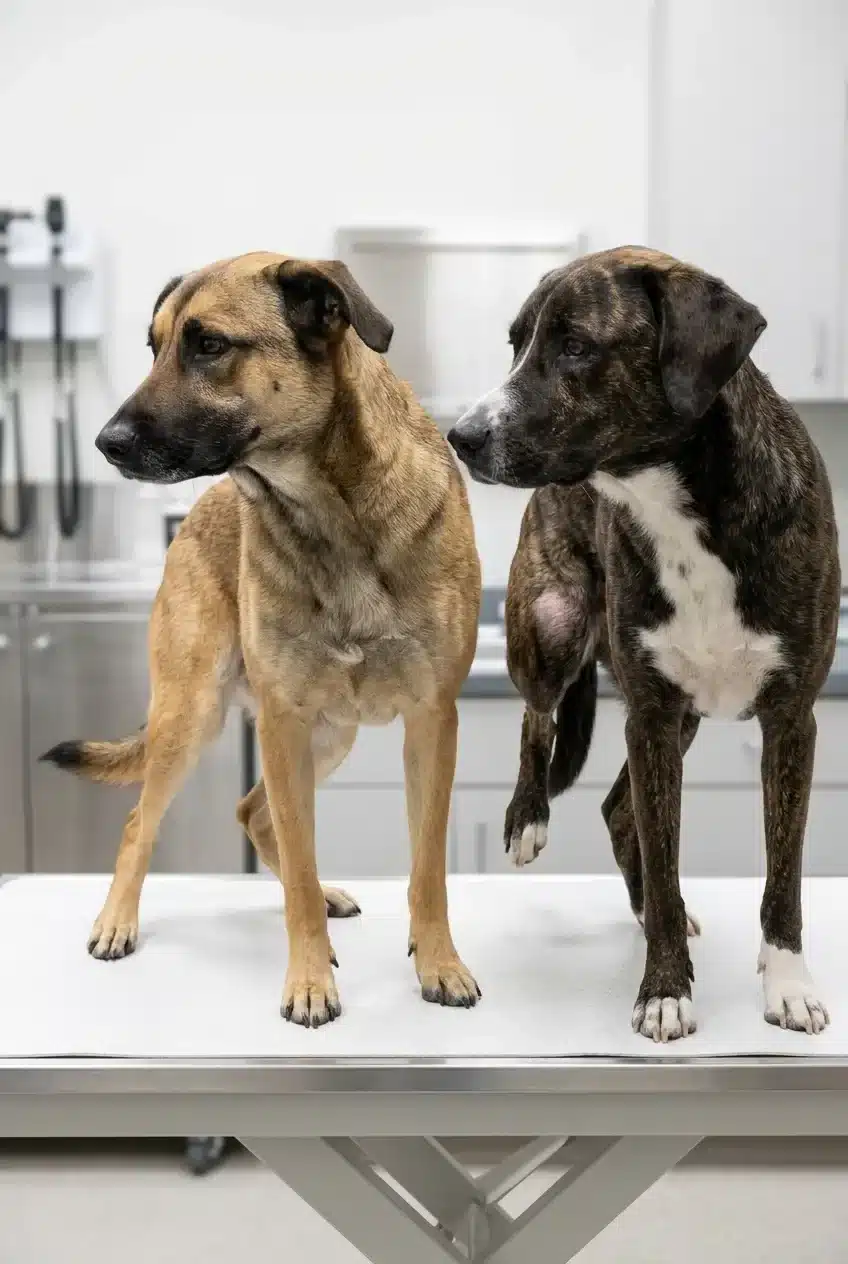
Hip dysplasia is a developmental condition where the hip joint forms abnormally, causing instability and arthritis over time. A CCL tear is a traumatic or degenerative injury to the cranial cruciate ligament inside the knee joint, causing sudden or progressive lameness.
- Hip dysplasia affects the hip joint; CCL tears affect the stifle (knee) joint
- Hip dysplasia develops gradually over months or years
- CCL tears often cause sudden, non-weight-bearing lameness in one hind leg
- Hip dysplasia typically affects both hind legs; CCL tears are usually one-sided at first
- Diagnosis requires a physical exam and X-rays for both conditions
- Treatment options differ significantly — surgery is standard for CCL tears, variable for hip dysplasia
Where Does Each Condition Actually Hurt?
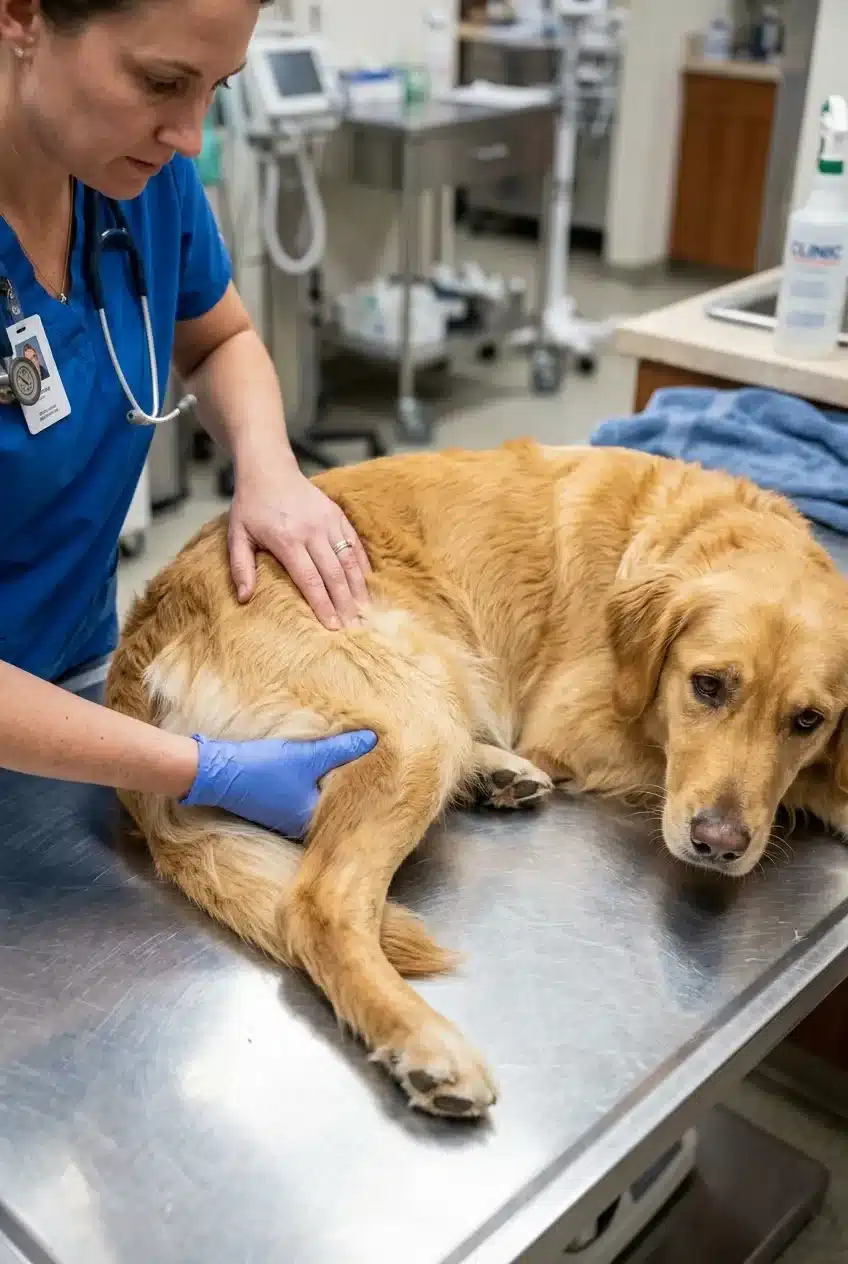
The location of pain is one of the most reliable early clues. Hip dysplasia causes pain deep in the hip socket, near the top of the hind leg where it meets the pelvis.
A CCL tear hurts in the knee — the joint that bends mid-leg, roughly equivalent to a human’s knee. Pressing gently on that area will often cause a dog to flinch or pull away.
If your dog reacts to pressure on the knee, suspect a CCL tear. If they react higher up near the hip, suspect hip dysplasia.
The Drawer Test vs. Ortolani Sign
Veterinarians use specific physical tests to isolate each condition. The Drawer Test checks for abnormal forward movement in the knee joint — a hallmark of CCL rupture.
The Ortolani Sign checks for hip laxity by rotating the femoral head within the hip socket. A positive result suggests hip dysplasia, especially in younger dogs.
Get Free Dog Health Tips!
Weekly guides on keeping your dog healthy & happy
🔒 No spam. Unsubscribe anytime.
Neither test is something to attempt at home. Both require a trained vet to avoid causing additional injury.
Recognizing the Symptoms: Side-by-Side Comparison
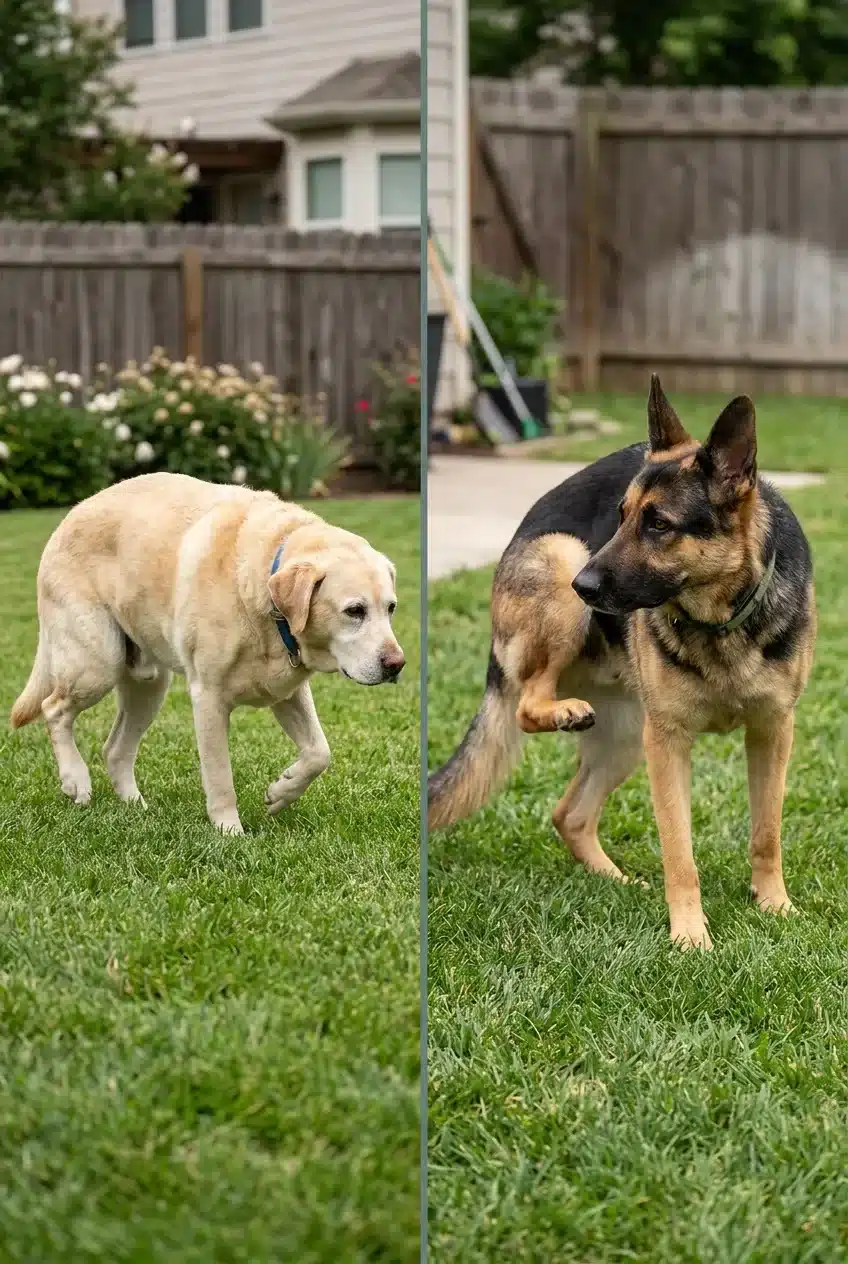
Symptoms overlap enough to confuse even experienced dog owners. This table breaks down the key differences.
MOST POPULAR THIS WEEK
Vet-Recommended Articles: 👇
👉 Why Does My Dogs Skin Turn Dark And Thick After Years Of Allergy Treatment
👉 Best Home Remedies For Arthritis In Dogs With Limping
👉 How Long Does An Elimination Diet Take For Dogs With Skin Allergies
| Symptom | Hip Dysplasia | CCL Tear |
|---|---|---|
| Onset | Gradual over weeks/months | Often sudden, can be gradual |
| Legs affected | Usually both hind legs | Typically one leg |
| Lameness type | Mild to moderate, worsens with exercise | Sudden severe lameness; toe-touching or non-weight-bearing |
| Sitting posture | Sits with legs splayed out (“lazy sit”) | Avoids bending the affected knee |
| Muscle loss | Gradual loss in both hindquarters | Rapid loss in the affected leg |
| Clicking sounds | Occasional in the hip area | Possible in the knee (stifle effusion) |
| Age at onset | Often under 2 years or in senior dogs | Any age; common in middle-aged dogs |
One important overlap: dogs with hip dysplasia have a higher risk of developing a CCL tear. The altered gait puts extra strain on the knees.
Which Dog Breeds Are Most at Risk?
Both conditions are more common in certain breeds, but the lists are not identical.
Breeds Prone to Hip Dysplasia
- German Shepherds
- Golden Retrievers
- Labrador Retrievers
- Rottweilers
- Saint Bernards
According to the Orthopedic Foundation for Animals (OFA), German Shepherds have a hip dysplasia prevalence of around 20%, while breeds like Bulldogs exceed 70% in some evaluations.
Understanding how dogs live with hip dysplasia long-term helps set realistic expectations for affected breeds.
Breeds Prone to CCL Tears
- Labrador Retrievers
- Rottweilers
- Newfoundlands
- Staffordshire Bull Terriers
- West Highland White Terriers
Obesity significantly increases CCL tear risk in any breed. A study published in Veterinary Surgery (2020) found that overweight dogs were nearly three times more likely to rupture their CCL than dogs at a healthy weight.
If your dog is one of the medium-sized hypoallergenic dog breeds like a Poodle, note that Poodles still carry some CCL risk despite not being on the highest-risk list.
How Vets Diagnose Each Condition
A definitive diagnosis requires a veterinary exam — not just symptom-watching at home. Here is how the process typically unfolds.
- Physical examination: The vet checks for pain responses, muscle atrophy, and joint stability using tests like the Drawer Test and Ortolani Sign.
- X-rays (radiographs): Hip dysplasia shows characteristic shallow hip sockets and remodeling. CCL tears show joint swelling and the “tibial thrust” sign on stress X-rays.
- Sedation if needed: Anxious or painful dogs are often sedated so the vet can fully assess joint laxity without muscle guarding hiding the results.
- Ruling out both conditions simultaneously: Because they can coexist, vets often assess the hip and knee in the same appointment.
- MRI or CT scan (advanced cases): Recommended when X-rays are inconclusive or surgery is being planned for complex presentations.
The Orthopedic Foundation for Animals (OFA) maintains breed-specific health databases and provides guidance on hip and elbow evaluations used by veterinary professionals.
Treatment Options for Each Condition
Treatment paths diverge significantly once a diagnosis is confirmed.
Treating Hip Dysplasia
Mild to moderate hip dysplasia is often managed with weight control, physical therapy, and anti-inflammatory medications. A supportive orthopedic dog bed can reduce pressure on the hip joints overnight and improve daily comfort.
Swimming therapy for dogs with hip and joint pain is a low-impact option that builds muscle without stressing the joint.
Severe cases may require surgery — including total hip replacement or femoral head ostectomy (FHO), depending on the dog’s size and the degree of joint damage.
Treating CCL Tears
Partial tears in small dogs (under 15 lbs) are sometimes managed conservatively with rest and a dog knee brace for CCL support. Full tears in medium and large dogs almost always require surgery.
The two most common surgical procedures are TPLO (Tibial Plateau Leveling Osteotomy) and TTA (Tibial Tuberosity Advancement). Both stabilize the knee by altering the joint mechanics rather than replacing the torn ligament.
Post-surgery rehabilitation with controlled leash walks and canine rehabilitation balance discs is standard practice to restore full function.
Common Mistakes Dog Owners Make
- Assuming all hind-leg limping is hip dysplasia. Many owners fixate on hips because the term is well known. A sudden one-leg limp after play is far more likely to be a CCL tear. Consequence: delayed surgery worsens joint damage. Fix: see a vet within 48 hours of any sudden lameness.
- Resting a CCL tear without veterinary guidance. Rest alone rarely heals a full CCL rupture in medium or large dogs. Consequence: progressive joint instability and arthritis. Fix: get a confirmed diagnosis before choosing a conservative path.
- Using joint supplements as a substitute for diagnosis. Dog joint supplements with glucosamine and chondroitin support cartilage health but cannot stabilize a ruptured ligament. Fix: use supplements as an adjunct, not a first-line treatment.
- Ignoring early symptoms because the dog “seems fine.” Dogs hide pain well. A slight “bunny hop” gait or reluctance to climb stairs is a red flag for both conditions. Consequence: irreversible joint damage. Fix: document gait changes and video them for your vet.
Frequently Asked Questions About Hip Dysplasia or CCL Tear in Dogs — How To Tell the Difference
Can a dog have both hip dysplasia and a CCL tear at the same time?
Yes, a dog can have both hip dysplasia and a CCL tear simultaneously. Dogs with hip dysplasia often shift weight onto their knees abnormally, which increases the risk of CCL injury over time.
How quickly does a CCL tear need surgery?
A CCL tear in a medium or large dog should be surgically treated within a few weeks of diagnosis. Delaying surgery accelerates cartilage breakdown and meniscal damage inside the knee joint.
Is hip dysplasia painful all the time?
Hip dysplasia is not always painful every moment, but it causes chronic, intermittent discomfort that worsens with activity or cold weather. Dogs often appear stiff after rest and loosen up with movement.
What does a dog with a CCL tear look like when walking?
A dog with a CCL tear typically holds the affected leg up or barely touches the toe to the ground when walking. The leg often trembles slightly when the dog sits or stands still.
Can young dogs get a CCL tear?
Yes, young dogs can get a CCL tear, although it is more common in middle-aged dogs. Active young dogs can rupture the ligament during sudden turns, jumps, or high-impact play.
Does hip dysplasia show up on X-rays?
Hip dysplasia is visible on X-rays as a shallow acetabulum (hip socket) and abnormal femoral head shape. X-rays taken under sedation provide the most accurate view of joint conformation and arthritis.
The Bottom Line
The single most reliable way to tell hip dysplasia from a CCL tear is the location of pain and the pattern of lameness. Hip dysplasia causes gradual, bilateral stiffness; a CCL tear usually causes sudden, one-sided non-weight-bearing lameness in the knee.
One concrete action you can take today: video your dog walking and trotting from behind and from the side. That footage gives your vet an objective baseline and often speeds up diagnosis significantly.
Both conditions are manageable — and catching them early makes every treatment option more effective. If something looks off in your dog’s gait, book a vet appointment rather than waiting to see if it resolves on its own.