To find a board certified animal behaviorist, start with the Animal Behavior Society (ABS) or the American College of Veterinary Behaviorists (ACVB) — both maintain searchable online directories of certified professionals. These are the two primary credentialing bodies in the United States, and their directories are updated regularly.
If your pet is showing aggression, anxiety, or compulsive behaviors, knowing how to find a board certified animal behaviorist quickly can make a real difference in your animal’s quality of life. Not all pet behavior experts are equal, and credentials matter more than most owners realize.
How Do You Find a Board Certified Animal Behaviorist?

The fastest way to find a board certified animal behaviorist is to use the official online directories maintained by the Animal Behavior Society (ABS) or the American College of Veterinary Behaviorists (ACVB). Both allow you to filter by location and species. Most searches return results within 10–15 minutes.
- Visit the ABS website and use the “Find a Certified Applied Animal Behaviorist” search tool.
- Visit the ACVB website for diplomates who are also licensed veterinarians.
- Ask your primary vet for a referral — most vets know local specialists.
- Expect a waitlist of 2–8 weeks for an initial appointment in many regions.
- Telehealth consultations are now available through some certified behaviorists, often within 5–7 days.
- Certification titles to look for: CAAB, ACAAB, or Dip ACVB.
Board Certified Animal Behaviorist: Key Facts at a Glance
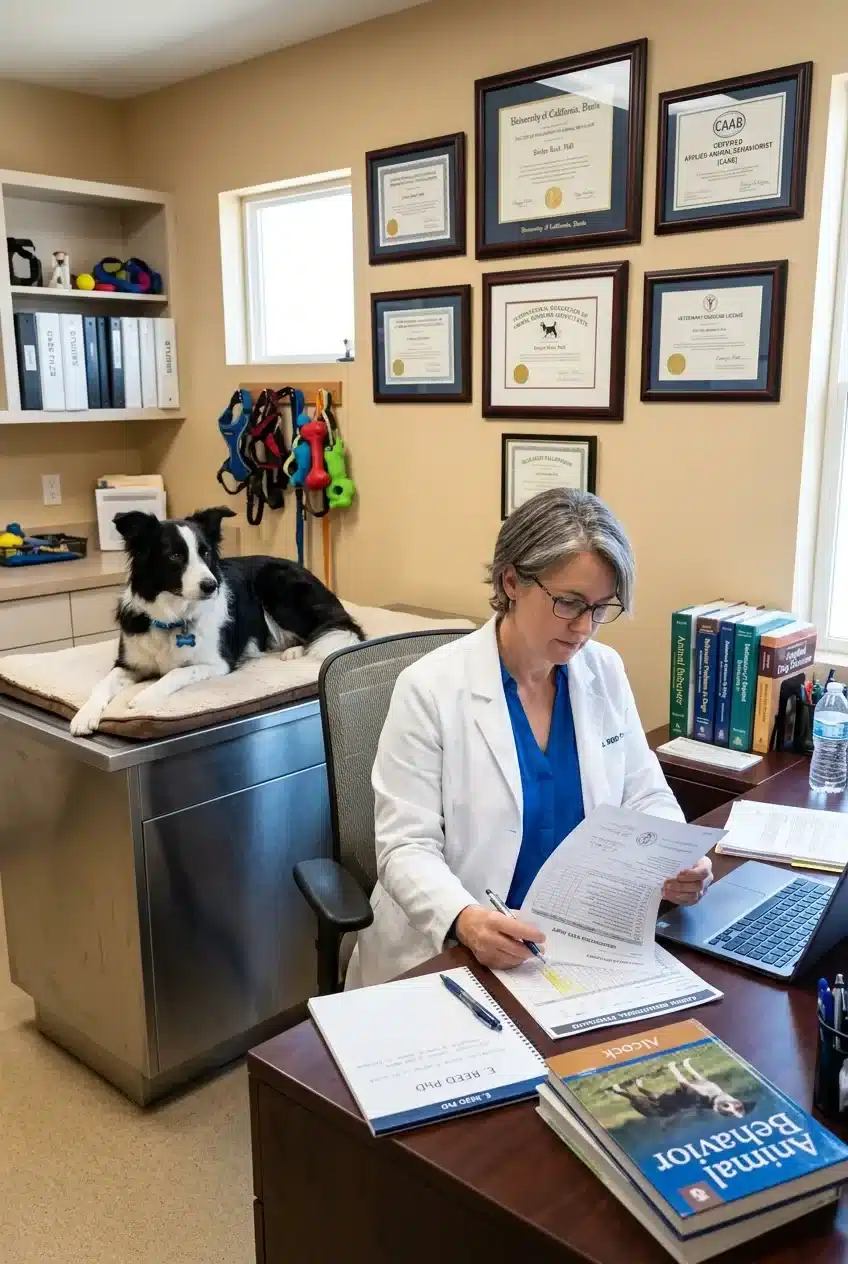
- Definition: A board certified animal behaviorist holds formal credentials from the ABS (CAAB/ACAAB) or ACVB (Dip ACVB), requiring advanced degrees and supervised clinical hours.
- Minimum education: A CAAB requires a PhD or equivalent in animal behavior; an ACAAB requires a master’s degree plus 5 years of professional experience.
- Who they help: Dogs, cats, horses, birds, and exotic species — not exclusively companion animals.
- Common reasons to consult one: Aggression, separation anxiety, compulsive disorders, fear responses, and inter-animal conflict.
- Cost range: Initial consultations typically run $150–$350 per hour; follow-up sessions average $75–$200.
- Commonly confused with: Dog trainers, pet behaviorists, and veterinary behaviorists — each with very different qualifications.
What Is the Difference Between a Certified Animal Behaviorist and a Dog Trainer?
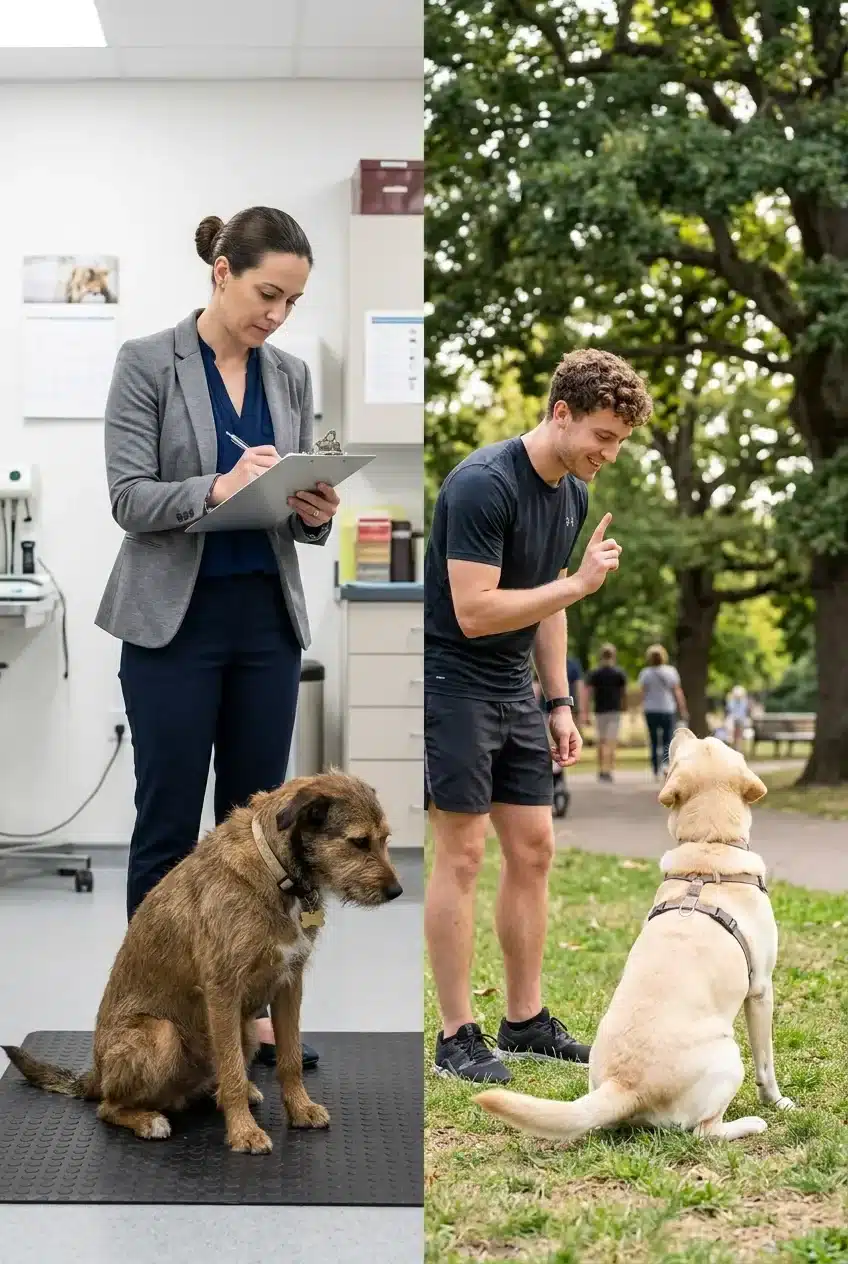
A certified applied animal behaviorist (CAAB) holds a PhD-level credential and is trained to diagnose and treat complex behavioral disorders.
A dog trainer typically has no mandated formal education and focuses on teaching commands and manners — not treating clinical conditions.
This distinction is one of the most commonly misunderstood in pet care. Someone calling themselves a “behaviorist” online may have completed a weekend course. The table below breaks down the key differences.
| Title | Credential Body | Minimum Education | Can Prescribe Medication? |
|---|---|---|---|
| CAAB | Animal Behavior Society | PhD in animal behavior | No |
| ACAAB | Animal Behavior Society | Master’s + 5 years experience | No |
| Dip ACVB | American College of Veterinary Behaviorists | Veterinary degree + residency | Yes |
| Dog Trainer | Varies (CCPDT, IAABC, or none) | No minimum requirement | No |
If your pet’s behavior issue involves medication — such as anti-anxiety drugs — only a Dip ACVB specialist can prescribe treatment directly.
Get Free Dog Health Tips!
Weekly guides on keeping your dog healthy & happy
🔒 No spam. Unsubscribe anytime.
If you are also researching responsible pet ownership more broadly, learning which habits accidentally shorten your dog’s life can help you spot early warning signs before they become behavioral problems.
How to Use the ABS and ACVB Directories to Find a Specialist
The Animal Behavior Society’s directory at animalbehaviorsociety.org is the most widely used starting point. You can search by ZIP code, state, or species. The ACVB directory at dacvb.org lists veterinary behaviorists specifically — useful when your vet suspects a medical component to the behavior.
Step-by-Step: Using the ABS Directory
- Go to animalbehaviorsociety.org and click “Find a CAAB or ACAAB.”
- Enter your location using ZIP code or state to filter nearby professionals.
- Filter by species — the directory separates companion animal specialists from those working with livestock or wildlife.
- Contact 2–3 candidates and ask about their experience with your specific issue before booking.
- Confirm credentials by asking for their certification number — legitimate CAABs will provide this in under 24 hours.
- Check telehealth availability if no local specialist appears within a 50-mile radius.
According to the American Veterinary Medical Association (AVMA), behavioral problems are among the top reasons pet owners surrender animals to shelters. Getting a certified evaluation early — ideally within the first 4–6 weeks of a problem emerging — significantly improves outcomes.
When Should You See a Veterinary Behaviorist Instead of a CAAB?
See a veterinary behaviorist (Dip ACVB) when your pet’s behavior may have a medical origin, when previous training-based interventions haven’t worked within 8–12 weeks, or when medication is likely needed. Veterinary behaviorists are licensed vets who completed a 3-year post-doctoral residency in behavior.
MOST POPULAR THIS WEEK
Vet-Recommended Articles: 👇
👉 Why Does My Dogs Skin Turn Dark And Thick After Years Of Allergy Treatment
👉 Best Home Remedies For Arthritis In Dogs With Limping
👉 How Long Does An Elimination Diet Take For Dogs With Skin Allergies
Conditions that typically require a Dip ACVB include severe separation anxiety, rage syndrome in dogs, feline hyperesthesia, and stereotypic behaviors in horses. For a dog showing aggression toward people, a veterinary behaviorist can rule out pain, neurological issues, or thyroid dysfunction — all of which can mimic behavioral aggression.
The American College of Veterinary Behaviorists notes that approximately 40% of dogs referred to board certified specialists have an underlying medical condition contributing to the behavioral problem.
For pet owners researching specific breeds prone to anxiety, understanding how to find a reputable Golden Retriever breeder who screens for temperament can reduce the likelihood of inheriting behavioral issues in the first place.
What to Expect During Your First Appointment
Your first appointment with a board certified animal behaviorist typically lasts 90–120 minutes. Expect a detailed behavioral history interview covering the animal’s age, diet, daily routine, social environment, and the exact circumstances in which the problem behavior occurs.
Most specialists will ask you to fill out a pre-visit questionnaire 48–72 hours before the appointment. Some will want to observe your pet directly — either in person or via video — to assess body language, triggers, and response patterns. A written behavior modification plan is usually provided within 3–5 business days of the initial consultation.
- Bring vet records, vaccination history, and any previous training notes.
- Record video of the problem behavior on your phone if it doesn’t occur on demand.
- Follow-up sessions are typically scheduled every 3–4 weeks during active treatment.
- Most behavior modification programs run 8–16 weeks in total.
Enrichment tools — like a puzzle feeder for dogs — are often recommended as part of a home plan between sessions to reduce anxiety and redirect energy.
Common Mistakes When Searching for a Behaviorist
- Trusting the title “behaviorist” without checking credentials: This word is unregulated. Always verify CAAB, ACAAB, or Dip ACVB status through the issuing organization directly.
- Choosing a trainer for a clinical behavior problem: Trainers are great for obedience but are not qualified to treat aggression with a medical component or compulsive disorders. The consequence can be worsening symptoms.
- Waiting too long to seek help: Behavioral problems treated within the first 3 months have a significantly higher resolution rate than those addressed after 12+ months of the behavior being established.
- Skipping the vet before the behaviorist: A full veterinary workup — including thyroid panel and pain assessment — should happen before or alongside the behavioral consultation.
- Choosing based on price alone: Lower-cost practitioners may lack board certification. The $150–$350 initial fee for a CAAB is often cheaper long-term than repeated, ineffective trainer sessions.
If you have birds and are navigating behavioral concerns related to stress or environment, understanding how to locate a lost bird highlights just how critical environmental management is for avian species.
Frequently Asked Questions About How to Find a Board Certified Animal Behaviorist
Is a board certified animal behaviorist the same as a veterinary behaviorist?
No — a board certified animal behaviorist (CAAB/ACAAB) holds credentials from the Animal Behavior Society, while a veterinary behaviorist (Dip ACVB) is also a licensed vet. Only Dip ACVB specialists can prescribe behavioral medications directly.
How much does a board certified animal behaviorist cost?
Initial consultations typically cost $150–$350 per hour. Follow-up sessions average $75–$200. Some specialists offer package rates for multi-session programs, which can reduce the per-session cost by 15–25%.
Can I see a board certified animal behaviorist via telehealth?
Yes — many CAAB and Dip ACVB specialists now offer telehealth appointments, often with availability within 5–7 days compared to 2–8 week waits for in-person slots. Telehealth works well for behavior history review and plan delivery.
What species do board certified animal behaviorists work with?
Most work with dogs and cats, but many CAABs specialize in horses, birds, rabbits, or exotic animals. The ABS directory lets you filter by species to find the right specialist for your animal.
Should I see a behaviorist or a trainer for dog aggression?
For dog aggression — especially toward people — see a board certified specialist first. Aggression can have medical causes, and a CAAB or Dip ACVB is trained to assess and treat the root cause, not just manage the symptom.
How long does behavioral treatment usually take?
Most behavior modification programs run 8–16 weeks, with follow-up appointments every 3–4 weeks. Simpler issues like mild resource guarding may resolve in 4–6 weeks; severe anxiety or aggression can take 6 months or longer.
Conclusion
Finding a board certified animal behaviorist comes down to one clear step: use the official ABS or ACVB directory, verify the credential title (CAAB, ACAAB, or Dip ACVB), and book within the first 3 months of a problem appearing — that’s when treatment success rates are highest.
Start today by searching animalbehaviorsociety.org or dacvb.org with your ZIP code. If you want to track behavioral patterns at home between sessions, a pet behavior log book can help you record triggers, timing, and progress in one place.
Your pet deserves evidence-based care. The right credential is the fastest route to the right help.
Sources
This article references guidance from the following authorities:
- Animal Behavior Society (ABS) — CAAB and ACAAB certification standards and directory
- American College of Veterinary Behaviorists (ACVB) — Dip ACVB credentialing requirements and specialist directory
- American Veterinary Medical Association (AVMA) — Behavioral health and shelter surrender data